
Structuring and Analyzing Arguments The Rogerian Model AP
- Slides: 5
Structuring and Analyzing Arguments: The Rogerian Model AP English 11
Rogerian Model ¡ Developed by psychologist Carl Rogers (also in the ’ 50 s) ¡ Emphasizes problem-solving and/or coming to a consensus ¡ Unlike in Classical argument, this is not an argument to win; instead, emphasizes a “win-win” solution benefiting both parties ¡ Useful in psychological and emotional arguments, where pathos and ethos dominate.
Benefits of Rogerian Argument ¡ ¡ Allows the author to appear openminded or even objective Appropriate in contexts where you need to convince a resistant opponent to at least respect your views
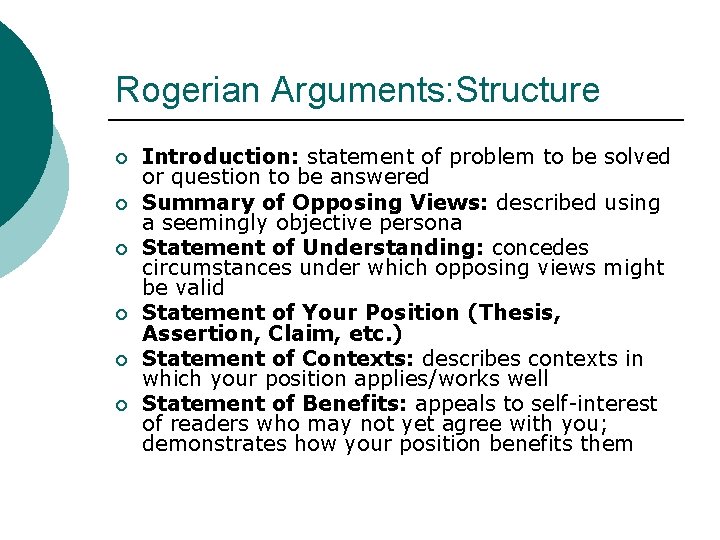
Rogerian Arguments: Structure ¡ ¡ ¡ Introduction: statement of problem to be solved or question to be answered Summary of Opposing Views: described using a seemingly objective persona Statement of Understanding: concedes circumstances under which opposing views might be valid Statement of Your Position (Thesis, Assertion, Claim, etc. ) Statement of Contexts: describes contexts in which your position applies/works well Statement of Benefits: appeals to self-interest of readers who may not yet agree with you; demonstrates how your position benefits them
Practice ¡ See if you can go through the Rogerian framework with the following issue: l The cell phone policy in VBCPS