
Structures Understanding Business Higher Business Management 1 Organisation
Structures Understanding Business Higher Business Management 1
Organisation Business Structures Charts • Shows how the business operates • Defines the role and responsibility of employees • Could be formal or informal

Organisation Structures Charts Hierarchical Structure Eg Coltness High School Decisions and instructions are passed from one level to another – one level is above another Mr Mc. Gilp Deputes Faculty Heads Teaching Staff
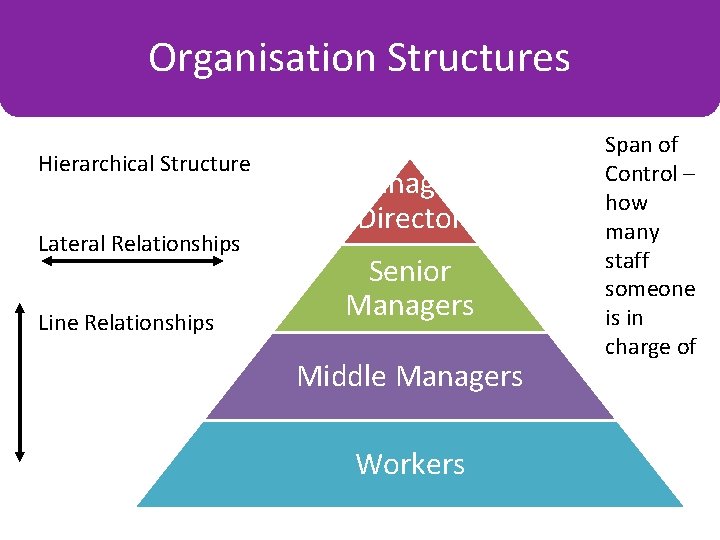
Organisation Structures Charts Hierarchical Structure Lateral Relationships Line Relationships Managing Director Senior Managers Middle Managers Workers Span of Control – how many staff someone is in charge of
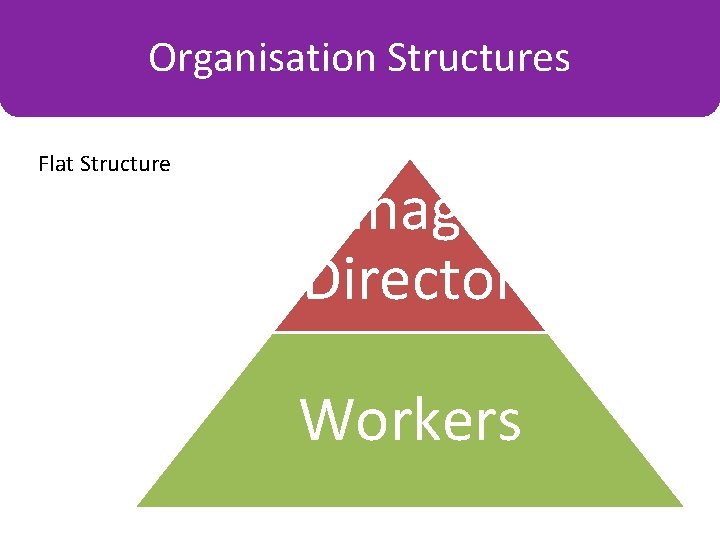
Organisation Structures Charts Flat Structure Managing Director Workers
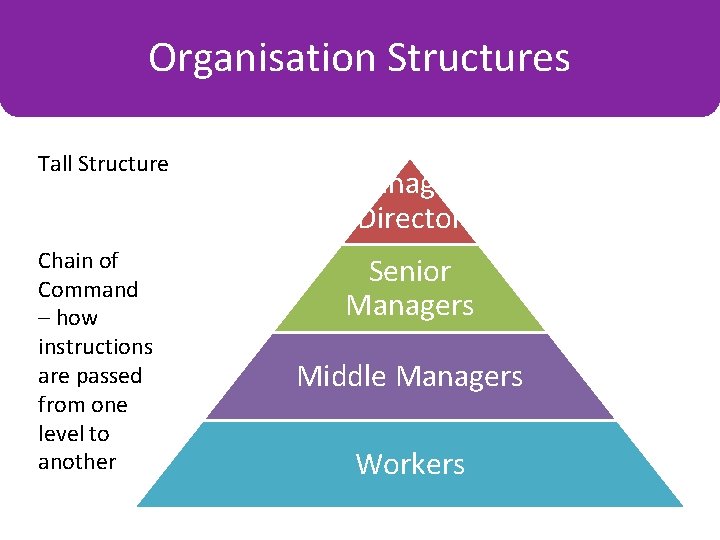
Organisation Structures Charts Tall Structure Chain of Command – how instructions are passed from one level to another Managing Director Senior Managers Middle Managers Workers
Organisation Structures § Centralised § Important decisions are made at the head office § Very little delegation § Easier to promote a corporate image § Decentralised § Important decisions made by managers § Employees are motivated and empowered
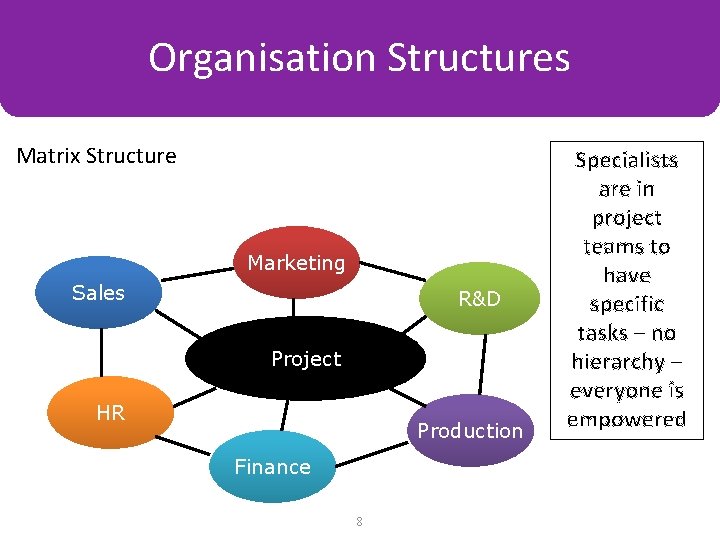
Organisation Structures Charts Matrix Structure Marketing Sales R&D Project HR Production Finance 8 Specialists are in project teams to have specific tasks – no hierarchy – everyone is empowered
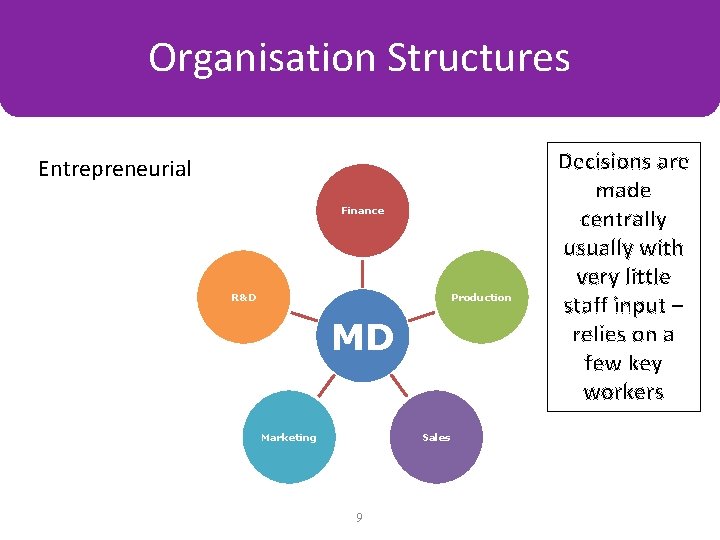
Organisation Structures Organisation Charts Entrepreneurial Finance R&D Production MD Marketing Sales 9 Decisions are made centrally usually with very little staff input – relies on a few key workers
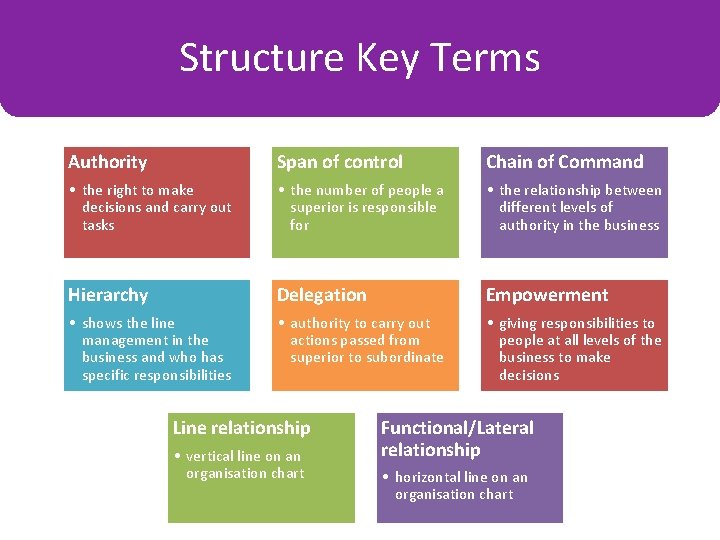
Structure Key Terms Some Key Terms Authority Span of control Chain of Command • the right to make decisions and carry out tasks • the number of people a superior is responsible for • the relationship between different levels of authority in the business Hierarchy Delegation Empowerment • shows the line management in the business and who has specific responsibilities • authority to carry out actions passed from superior to subordinate • giving responsibilities to people at all levels of the business to make decisions Line relationship • vertical line on an organisation chart Functional/Lateral relationship • horizontal line on an organisation chart
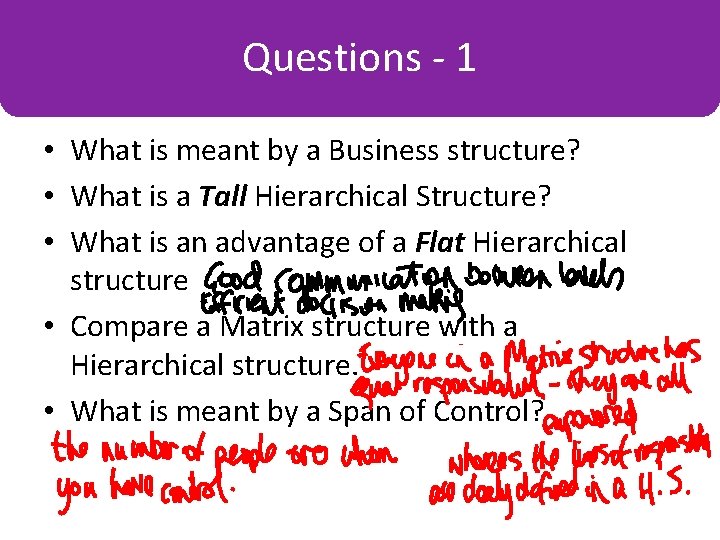
Questions -1 Some Key Terms • What is meant by a Business structure? • What is a Tall Hierarchical Structure? • What is an advantage of a Flat Hierarchical structure • Compare a Matrix structure with a Hierarchical structure. • What is meant by a Span of Control?
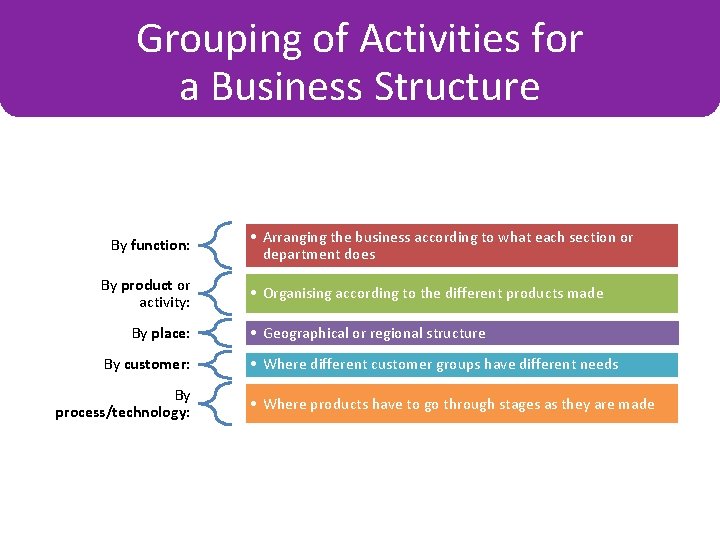
Grouping of Activities for a Business Structure By function: By product or activity: By place: By customer: By process/technology: • Arranging the business according to what each section or department does • Organising according to the different products made • Geographical or regional structure • Where different customer groups have different needs • Where products have to go through stages as they are made
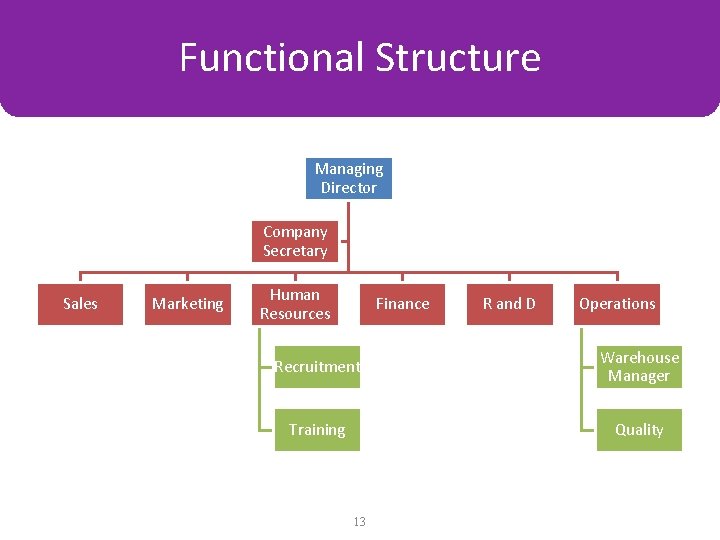
Functional Structure Managing Director Company Secretary Sales Marketing Human Resources Finance R and D Operations Recruitment Warehouse Manager Training Quality 13
Functional Structure Advantages § Specialisation – each department focuses on its own work § Accountability – someone is responsible for the section § Clarity – know your and others’ roles Disadvantages § Closed communication could lead to lack of focus § Departments can become resistant to change § Coordination may take too long § Gap between top and bottom
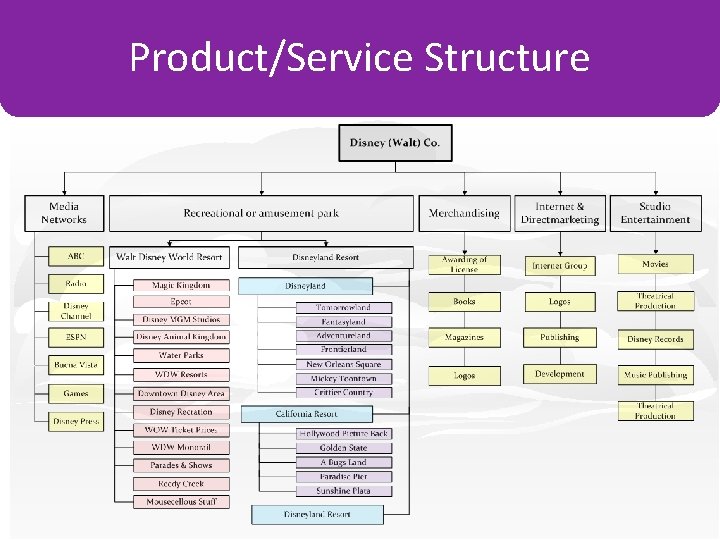
Product/Service Structure
Product/Service Structure Organisation by Product/Activity Advantages § Expertise can develop in dealing with each product/service § Managers can easily identify how each product is performing § Decisions can be more responsive to changes in the business environment Disadvantages § Duplication of functions (e. g. different sales force for each division) § Divisions may find themselves competing with each other § Lack of central control over each separate division
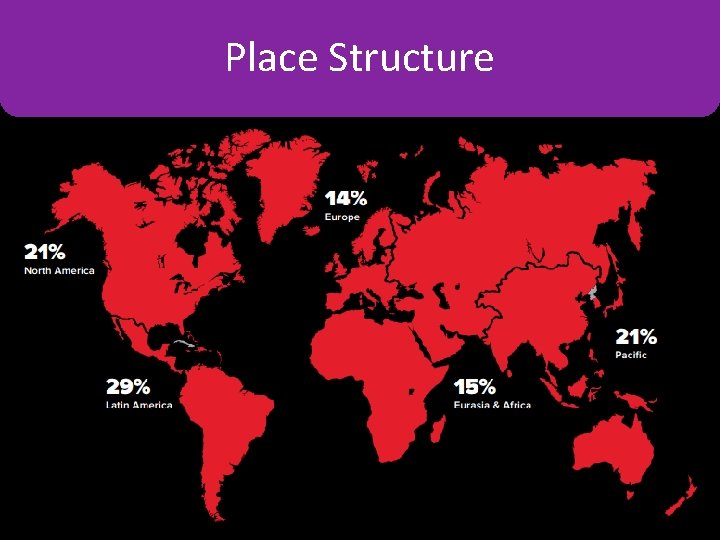
Place Structure Organisation by Place
Place Structure Organisation by Place Advantages § Serve local needs better § More effective communication between firm and local customers § Better knowledge of local staff Disadvantages § Conflict between local and central management § Duplication of resources and functions
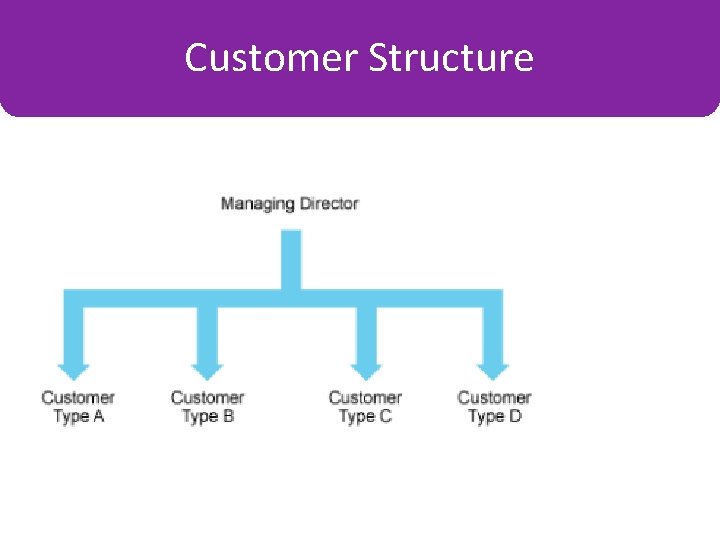
Customer Structure Organisation by Place
Customer Structure Organisation by Place Advantages § Service, price and promotion are geared towards the specific customer needs § Improved customer loyalty due to the service given § Management can identify poorly performing groupings § Can change responses due to the changing needs of customers Disadvantages § New groups of customers require a whole new group of staff to be employed § Duplication of equipment, administration and staffing
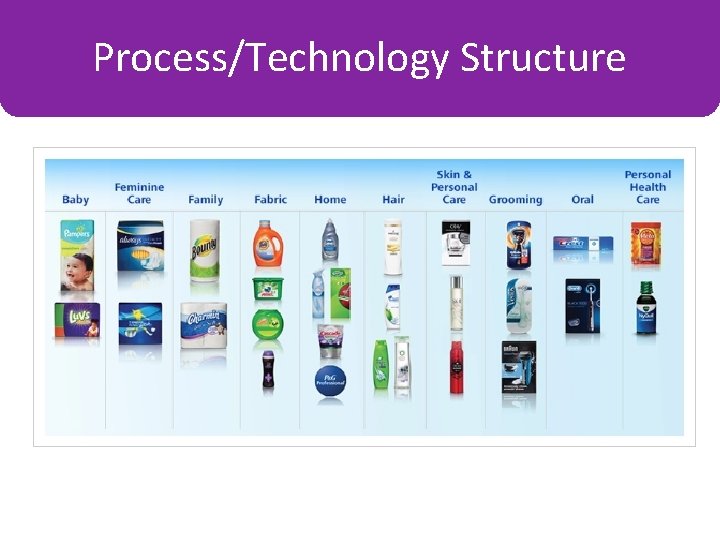
Process/Technology Structure Organisation by Place
Process/Technology Structure Organisation by Place Advantages § Good for large manufacturing business with different production processes § Increased specialisation of employees as their training is concentrated § Easier for management to identify production problems Disadvantages § Often technology groupings focus on their own objectives instead of organisational objectives § Duplication of equipment, administration and staffing
Questions -2 Some Key Terms • Give 3 ways of structuring a business according to the grouping of activities. • Why are there lots of ways of organising activities? • What is the difference between Place Structure and Product Structure and give an example of a company who would organise themselves these ways?
Your Some Key. Task Terms • Use the worksheet and find out companies who would organise their activities in each category of grouping.
Past Paper Some Key. Questions Terms 1. Discuss the use of Geographical grouping. 3 marks 2. Describe the effects of widening the span of control for a manager. 5 marks 3. Describe the main features of an entrepreneurial structure 3 marks 4. Explain the advantages to an organisation of using functional grouping. 4 marks
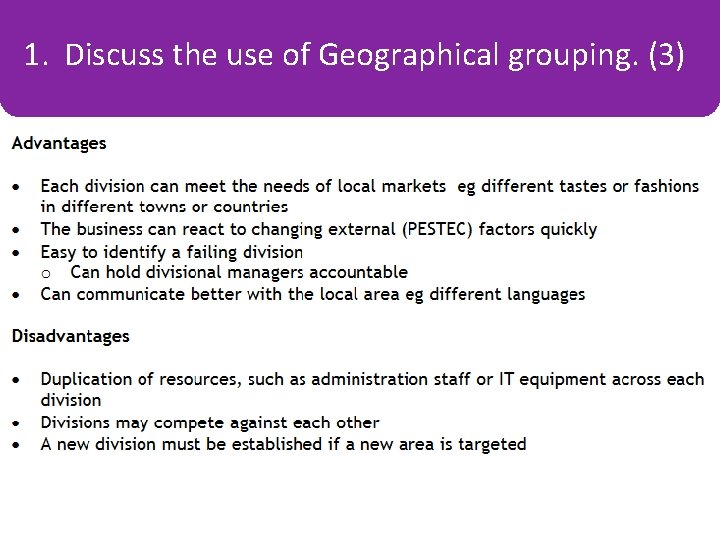
1. Discuss the. Some use of Geographical Key Termsgrouping. (3)
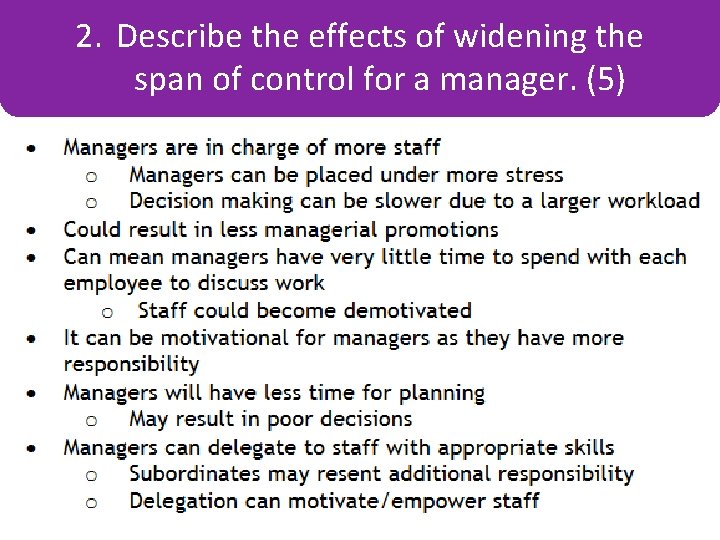
2. Describe the effects of widening the Some Key Terms span of control for a manager. (5)
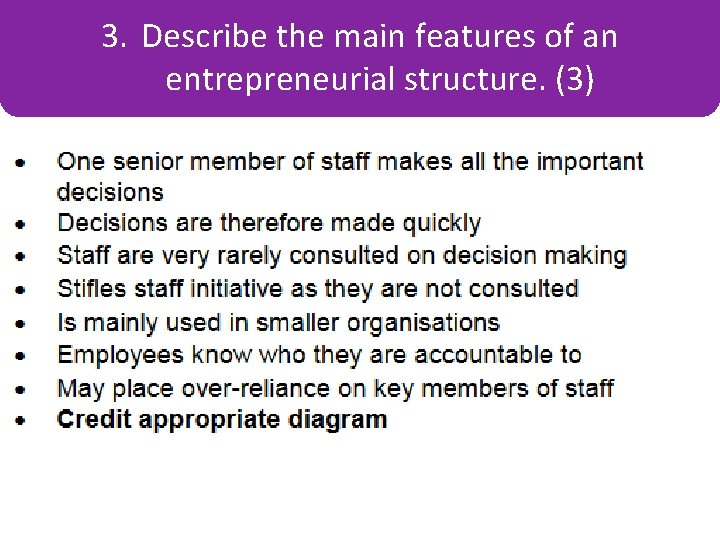
3. Describe the main features of an Some Key Terms entrepreneurial structure. (3)
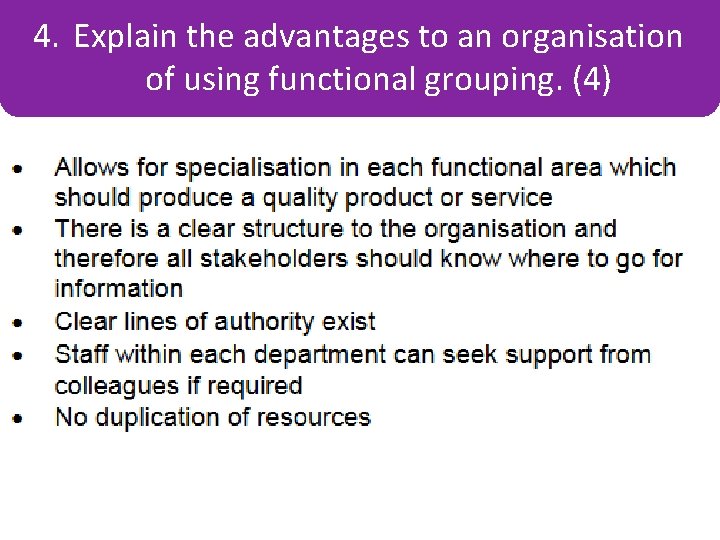
4. Explain the advantages to an organisation Some Key Terms of using functional grouping. (4)
- Slides: 29