
STRUCTURES AND MECHANISMS FOR INTERSECTORAL COLLABORATION MODULE 5
STRUCTURES AND MECHANISMS FOR INTERSECTORAL COLLABORATION MODULE 5 PART 2 The role of government in Hi. AP/ Whole-of-government approaches 5
5 LEARNING OBJECTIVES tnereffid esiarppa dna tsi. L dna serutcurts tnemnrevog rof smsinahcem noitca larotcesretni 1
5 Hi. AP IMPLEMENTATION VARIES IN DIFFERENT CONTEXTS Hi. AP has been implemented differently in different contexts reflecting local social and political cultures as well as government structures. Nevertheless, it is possible to make some generalizations about the structures and mechanisms commonly used for intersectoral action.

5 STRUCTURES AND MECHANISMS COMMONLY USED FOR INTERSECTORAL ACTION Some of the most common government structures and mechanisms for intersectoral action include: 1 Cabinet committees and secretariats; 2 Parliamentary committees; 3 Interdepartmental committees and units; 4 Mega-ministries and merges; 5 Joint budgeting; 6 Intersectoral policy-making procedures; and 7 Non-government stakeholder engagement.
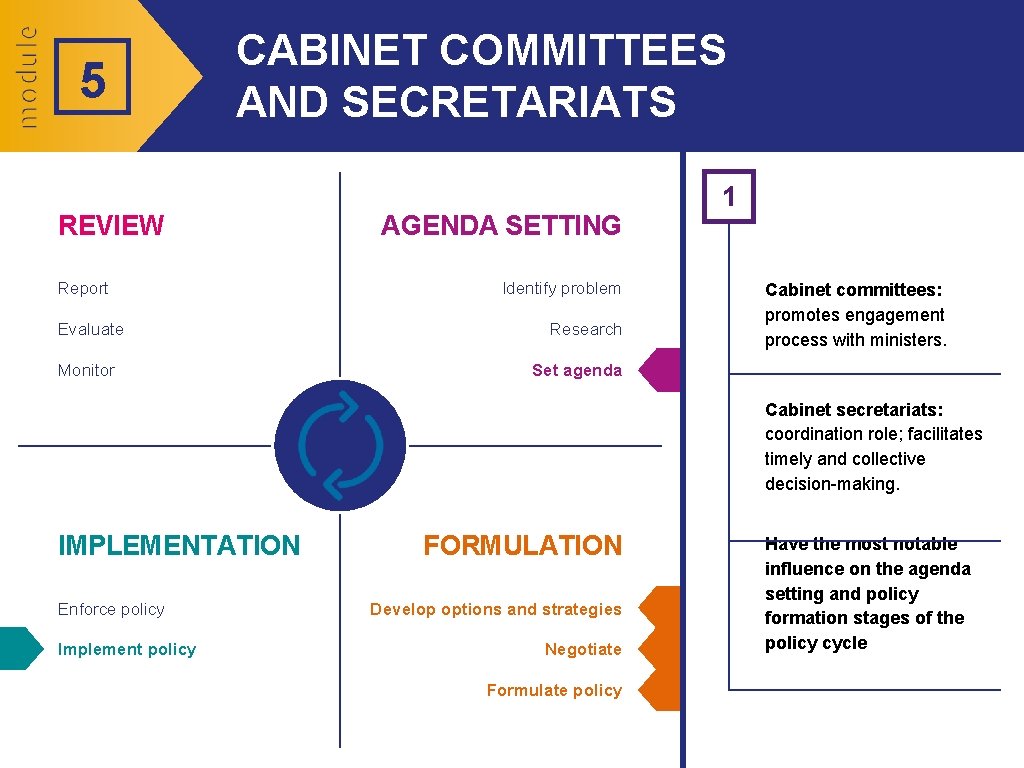
5 CABINET COMMITTEES AND SECRETARIATS REVIEW Report Evaluate Monitor AGENDA SETTING Identify problem Research 1 Cabinet committees: promotes engagement process with ministers. Set agenda Cabinet secretariats: coordination role; facilitates timely and collective decision-making. IMPLEMENTATION Enforce policy Implement policy FORMULATION Develop options and strategies Negotiate Formulate policy Have the most notable influence on the agenda setting and policy formation stages of the policy cycle
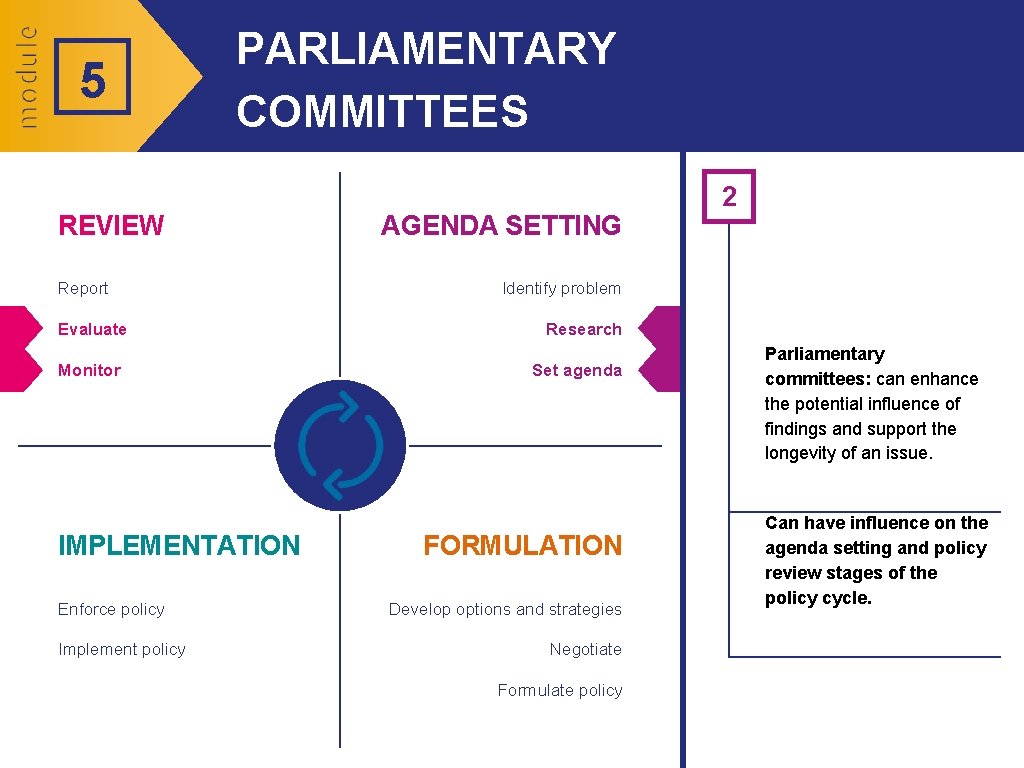
5 PARLIAMENTARY COMMITTEES REVIEW Report Evaluate Monitor IMPLEMENTATION Enforce policy Implement policy AGENDA SETTING 2 Identify problem Research Set agenda FORMULATION Develop options and strategies Negotiate Formulate policy Parliamentary committees: can enhance the potential influence of findings and support the longevity of an issue. Can have influence on the agenda setting and policy review stages of the policy cycle.
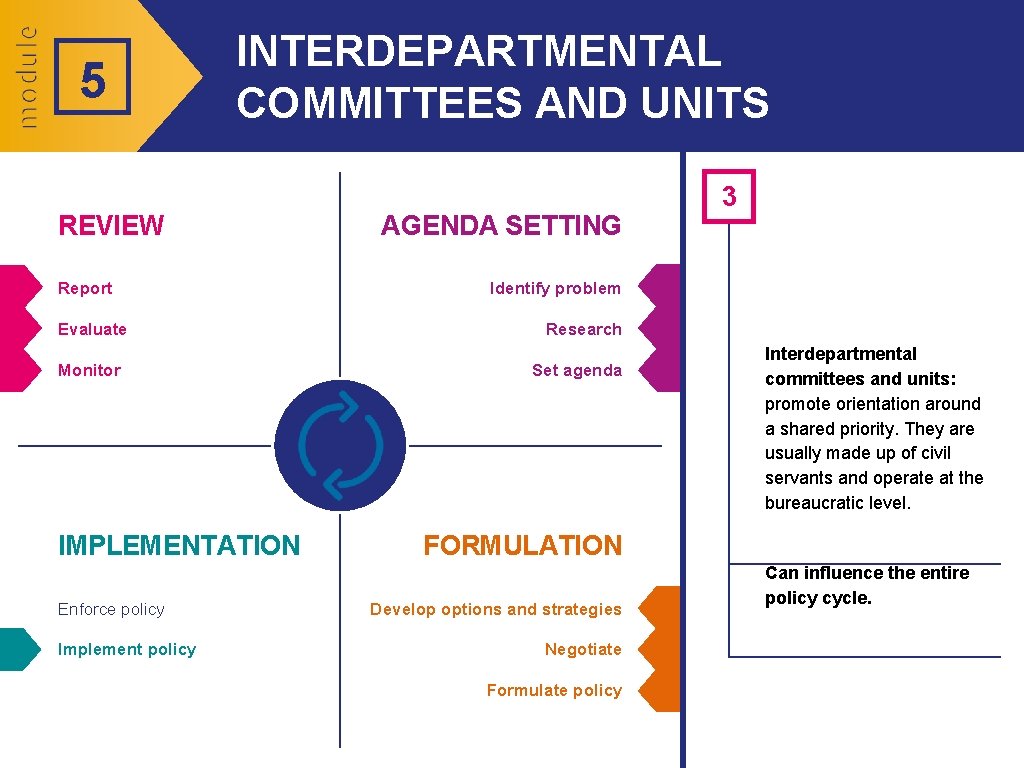
5 INTERDEPARTMENTAL COMMITTEES AND UNITS REVIEW Report Evaluate Monitor IMPLEMENTATION Enforce policy Implement policy AGENDA SETTING 3 Identify problem Research Set agenda Interdepartmental committees and units: promote orientation around a shared priority. They are usually made up of civil servants and operate at the bureaucratic level. FORMULATION Develop options and strategies Negotiate Formulate policy Can influence the entire policy cycle.
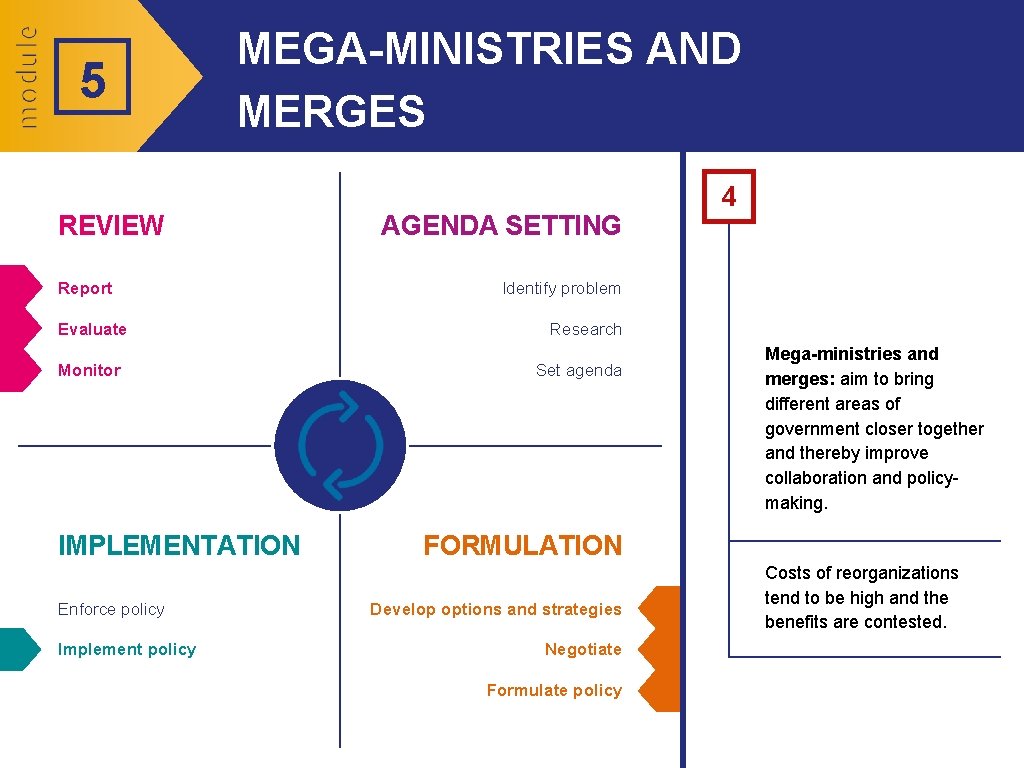
5 MEGA-MINISTRIES AND MERGES REVIEW Report Evaluate Monitor IMPLEMENTATION Enforce policy Implement policy AGENDA SETTING 4 Identify problem Research Set agenda Mega-ministries and merges: aim to bring different areas of government closer together and thereby improve collaboration and policymaking. FORMULATION Develop options and strategies Negotiate Formulate policy Costs of reorganizations tend to be high and the benefits are contested.
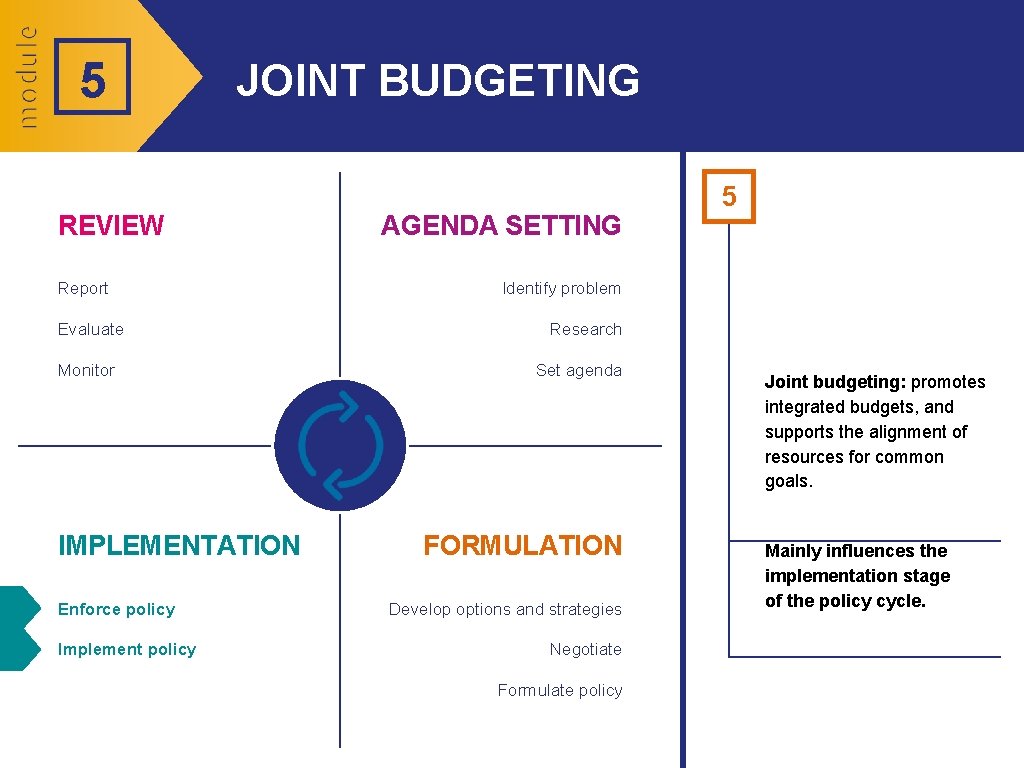
5 JOINT BUDGETING REVIEW Report Evaluate Monitor IMPLEMENTATION Enforce policy Implement policy AGENDA SETTING 5 Identify problem Research Set agenda FORMULATION Develop options and strategies Negotiate Formulate policy Joint budgeting: promotes integrated budgets, and supports the alignment of resources for common goals. Mainly influences the implementation stage of the policy cycle.
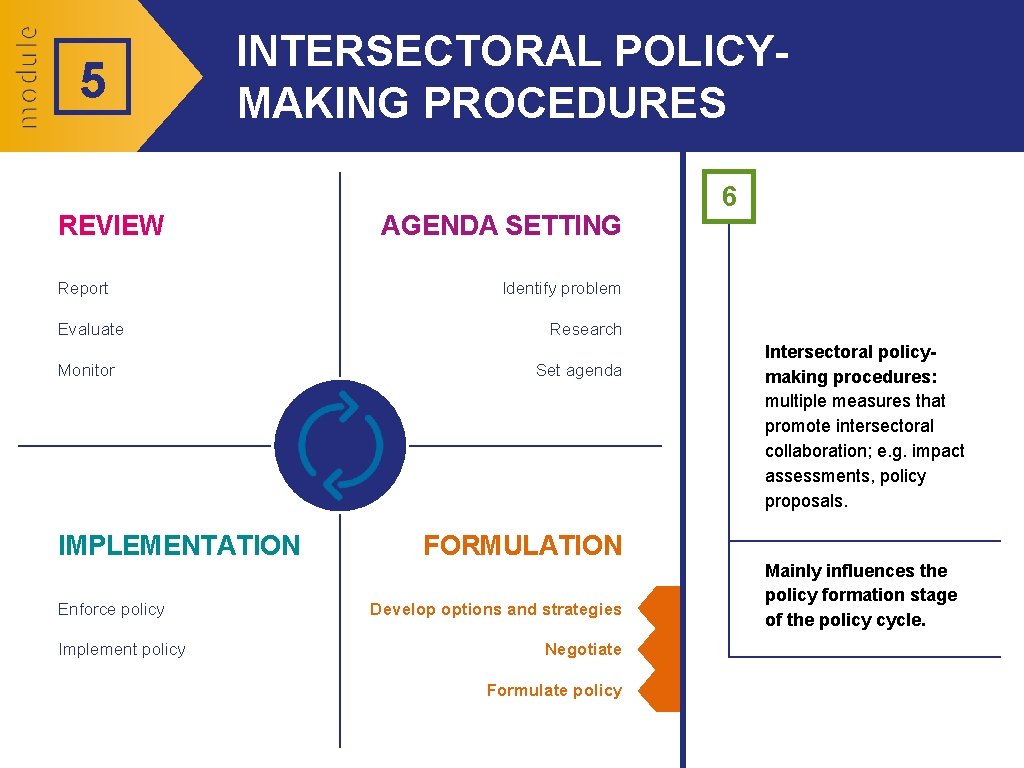
5 INTERSECTORAL POLICYMAKING PROCEDURES REVIEW Report Evaluate Monitor IMPLEMENTATION Enforce policy Implement policy AGENDA SETTING 6 Identify problem Research Set agenda FORMULATION Develop options and strategies Negotiate Formulate policy Intersectoral policymaking procedures: multiple measures that promote intersectoral collaboration; e. g. impact assessments, policy proposals. Mainly influences the policy formation stage of the policy cycle.
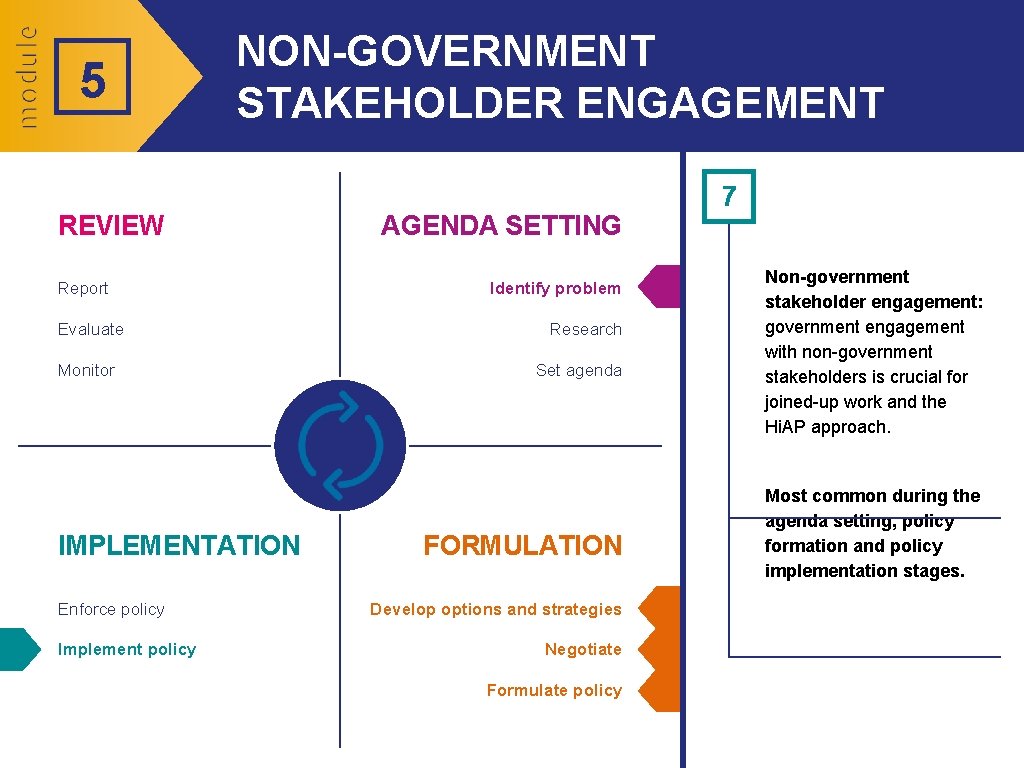
5 NON-GOVERNMENT STAKEHOLDER ENGAGEMENT REVIEW Report Evaluate Monitor IMPLEMENTATION Enforce policy Implement policy AGENDA SETTING Identify problem Research Set agenda FORMULATION Develop options and strategies Negotiate Formulate policy 7 Non-government stakeholder engagement: government engagement with non-government stakeholders is crucial for joined-up work and the Hi. AP approach. Most common during the agenda setting, policy formation and policy implementation stages.
End of Module 5 Part 2 Please continue to Module 6
- Slides: 12