
Structure of the Skeleton System Understanding how the
- Slides: 10
Structure of the Skeleton System Understanding how the body moves and its role in protecting the vital organs
Session Outcomes: • By the end of this session we should be able to: • Identify the functions of the skeleton • Be aware of the bones that make up the skeletal system • Be aware of how movement occurs through joints You will need to know how the skeletal system allows the body to move and the roles of vital organs.
Date – 12/9/2013 Title – Structure of the Skeletal System CW Underline all with a ruler Keywords: Joints Patella Ball & Socket Saddle Blood-cell production Quadriceps Hinge Pivot Gliding Movement Support Shape Protection
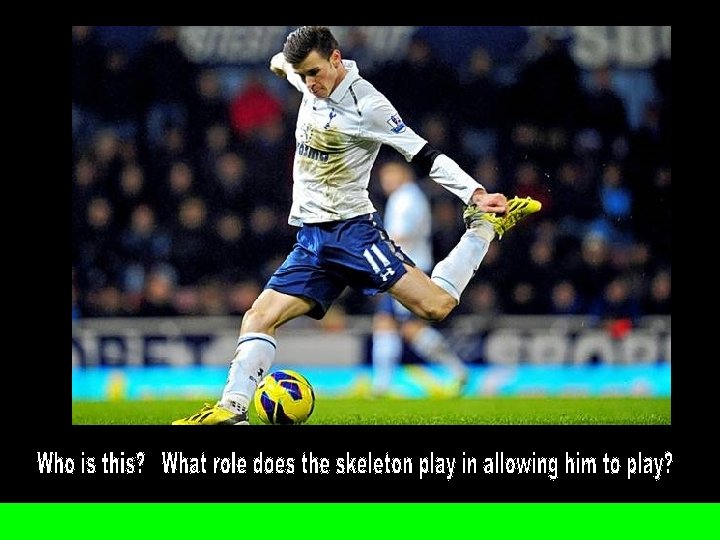
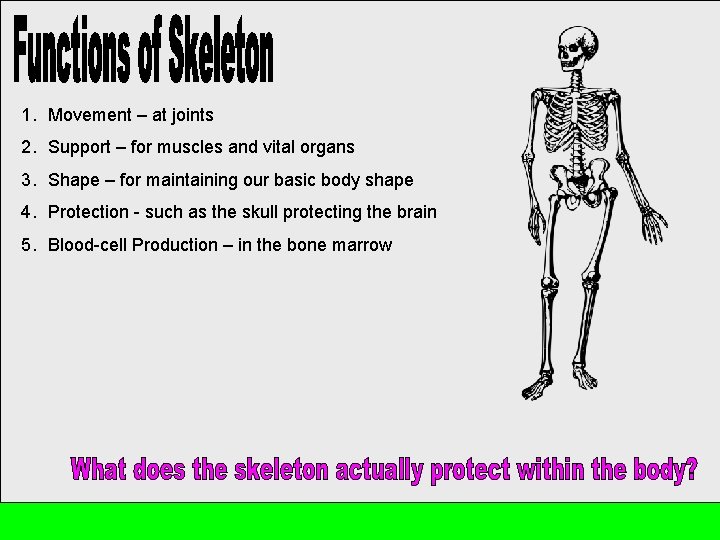
1. Movement – at joints 2. Support – for muscles and vital organs 3. Shape – for maintaining our basic body shape 4. Protection - such as the skull protecting the brain 5. Blood-cell Production – in the bone marrow
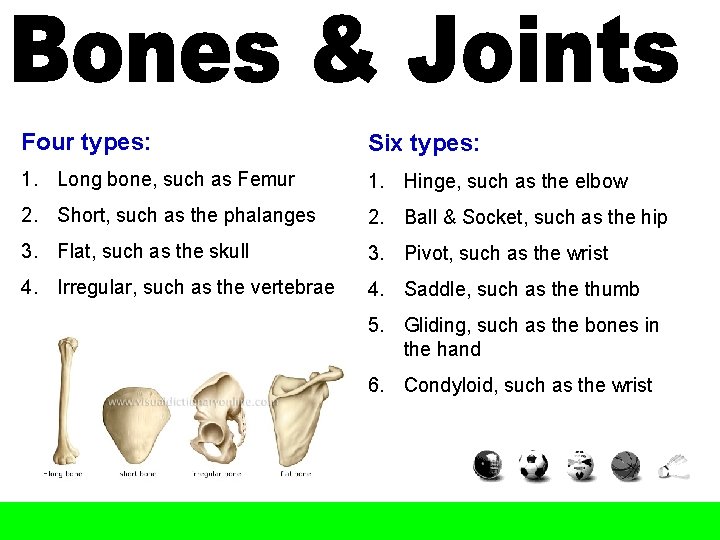
Four types: Six types: 1. Long bone, such as Femur 1. Hinge, such as the elbow 2. Short, such as the phalanges 2. Ball & Socket, such as the hip 3. Flat, such as the skull 3. Pivot, such as the wrist 4. Irregular, such as the vertebrae 4. Saddle, such as the thumb 5. Gliding, such as the bones in the hand 6. Condyloid, such as the wrist
Three types of connective tissue: 1. Tendons – very strong, non-elastic cords that join the muscles to the bone. e. g. Quadricep muscle to the patella 2. Cartilage – a tough but flexible tissue that acts as a buffer between the bones at joints. e. g. Ends of the Femur and Tibia 3. Ligaments – bands of fibre attached to the bones that link the joints. They help keep the joints stable.
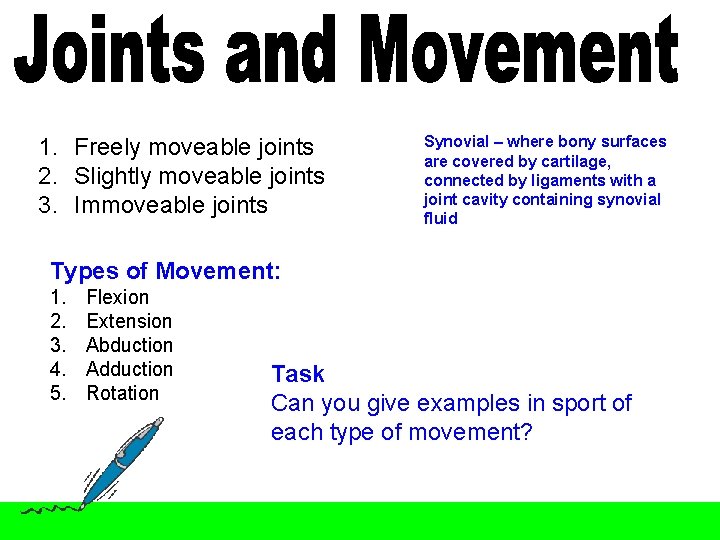
1. Freely moveable joints 2. Slightly moveable joints 3. Immoveable joints Synovial – where bony surfaces are covered by cartilage, connected by ligaments with a joint cavity containing synovial fluid Types of Movement: 1. 2. 3. 4. 5. Flexion Extension Abduction Adduction Rotation Task Can you give examples in sport of each type of movement?
1. 2. 3. 4. 5. List the 5 functions of the skeletal system? Identify 2 categories of bone List 3 types of joint Identify a connective tissue and its primary function Identify two types of movement with an example of where they happen in the body 6. Name two bones that begin with ‘F’ and two beginning with ‘R’