
Structure of the sentence Sentence is defined as
- Slides: 37
Structure of the sentence Sentence is defined as “a group of words containing a subject and a predicate and expressing a complete thought”.
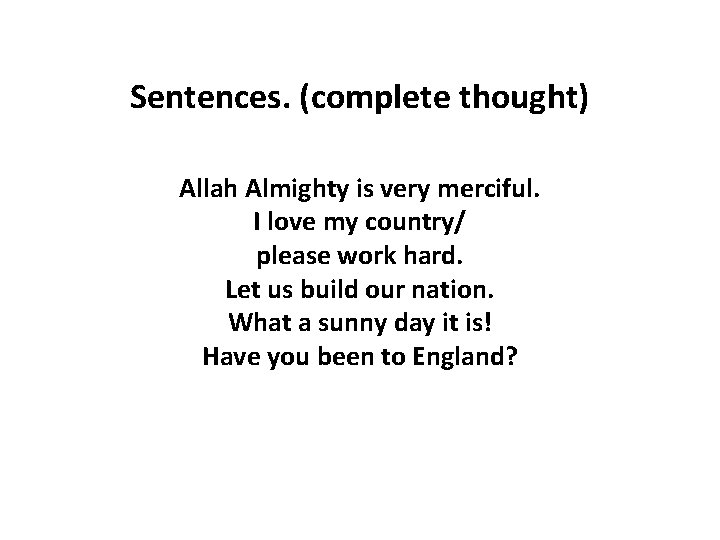
Sentences. (complete thought) Allah Almighty is very merciful. I love my country/ please work hard. Let us build our nation. What a sunny day it is! Have you been to England?
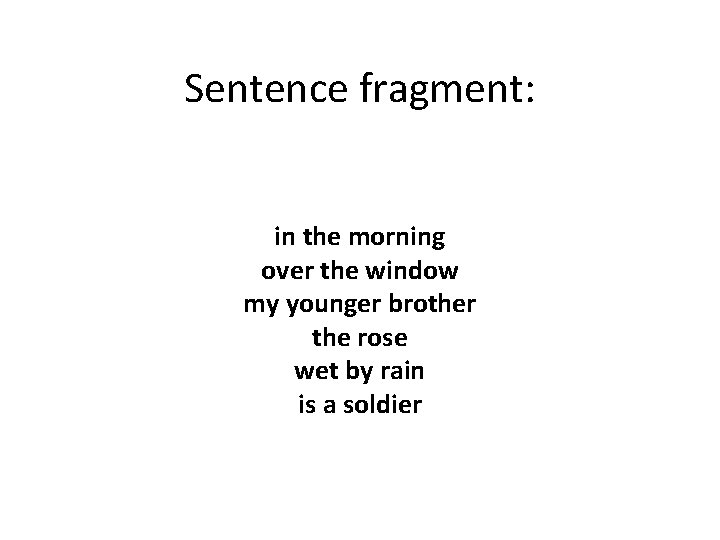
Sentence fragment: in the morning over the window my younger brother the rose wet by rain is a soldier
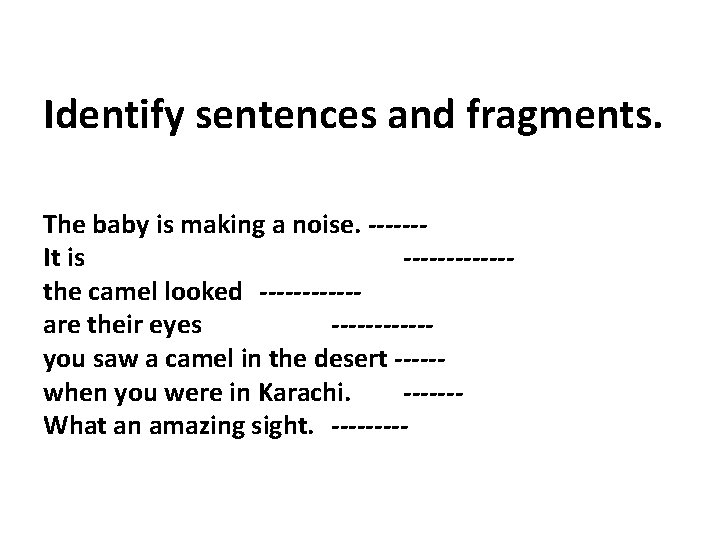
Identify sentences and fragments. The baby is making a noise. ------It is ------the camel looked ------are their eyes ------you saw a camel in the desert -----when you were in Karachi. ------What an amazing sight. -----
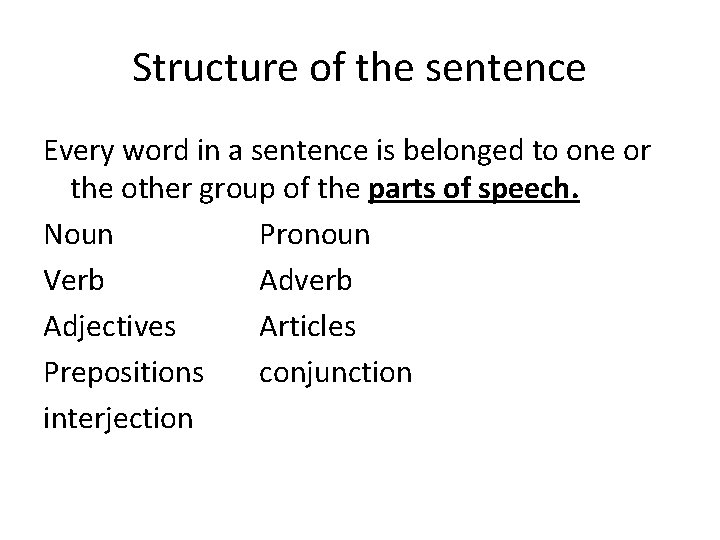
Structure of the sentence Every word in a sentence is belonged to one or the other group of the parts of speech. Noun Pronoun Verb Adverb Adjectives Articles Prepositions conjunction interjection
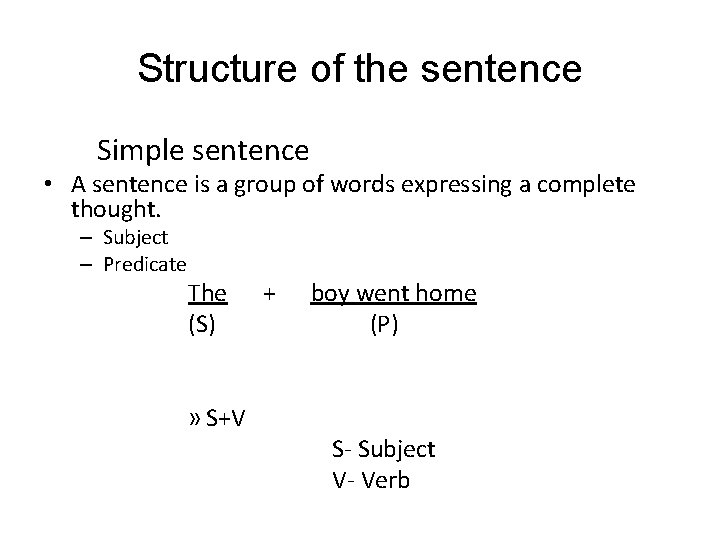
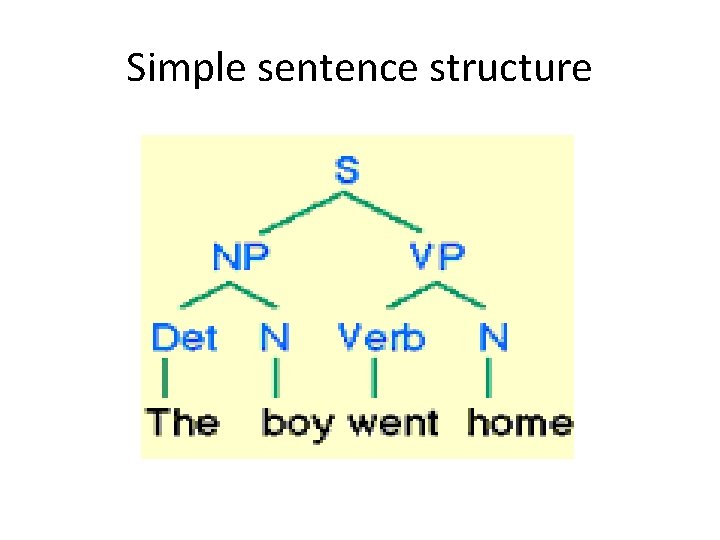
Structure of the sentence Simple sentence • A sentence is a group of words expressing a complete thought. – Subject – Predicate The (S) » S+V + boy went home (P) S- Subject V- Verb
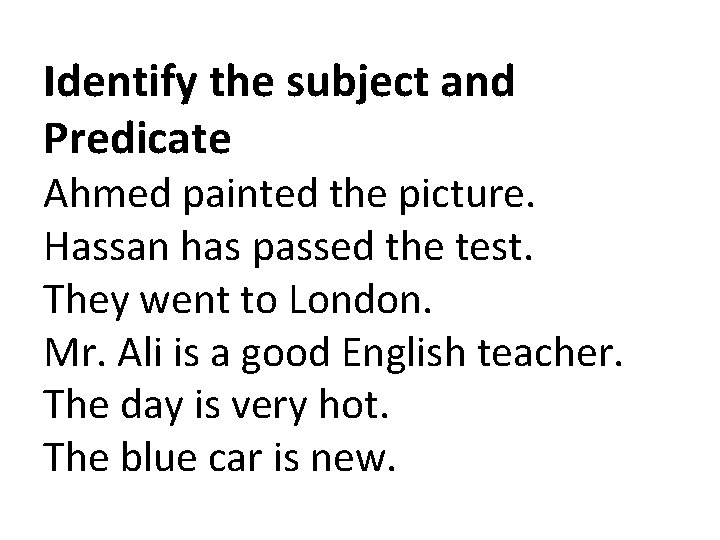
Identify the subject and Predicate Ahmed painted the picture. Hassan has passed the test. They went to London. Mr. Ali is a good English teacher. The day is very hot. The blue car is new.
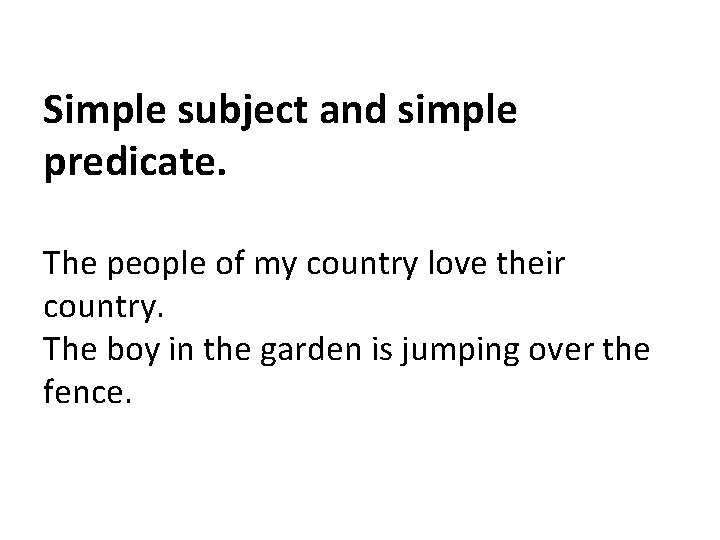
Simple subject and simple predicate. The people of my country love their country. The boy in the garden is jumping over the fence.
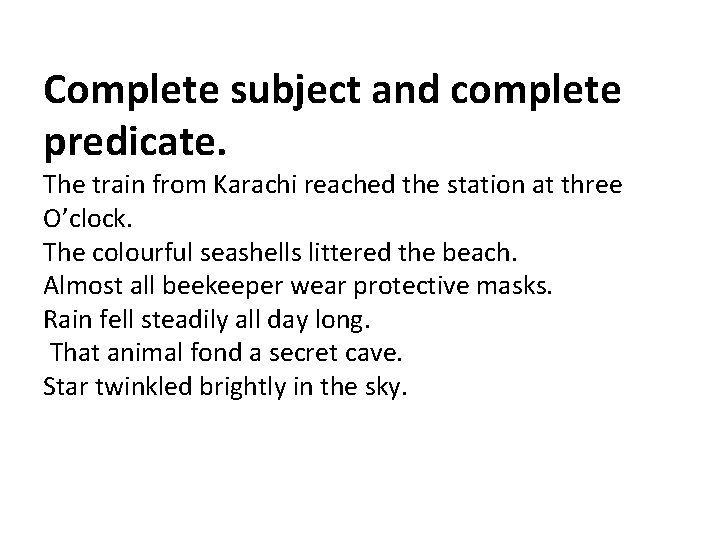
Complete subject and complete predicate. The train from Karachi reached the station at three O’clock. The colourful seashells littered the beach. Almost all beekeeper wear protective masks. Rain fell steadily all day long. That animal fond a secret cave. Star twinkled brightly in the sky.
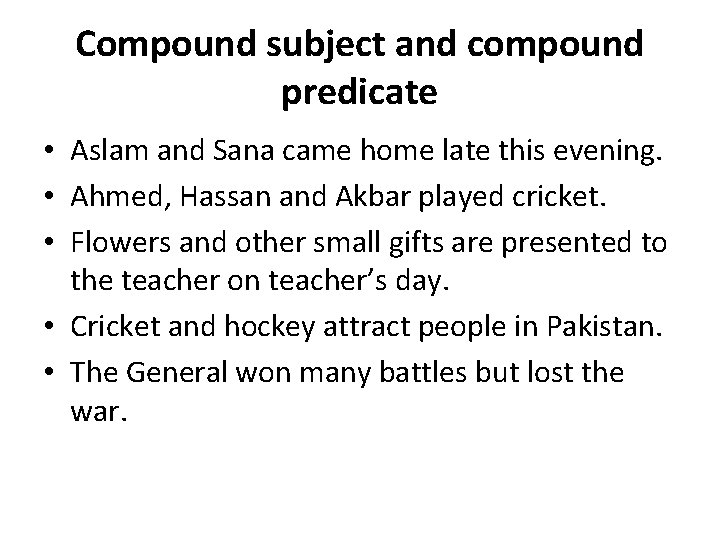
Compound subject and compound predicate • Aslam and Sana came home late this evening. • Ahmed, Hassan and Akbar played cricket. • Flowers and other small gifts are presented to the teacher on teacher’s day. • Cricket and hockey attract people in Pakistan. • The General won many battles but lost the war.
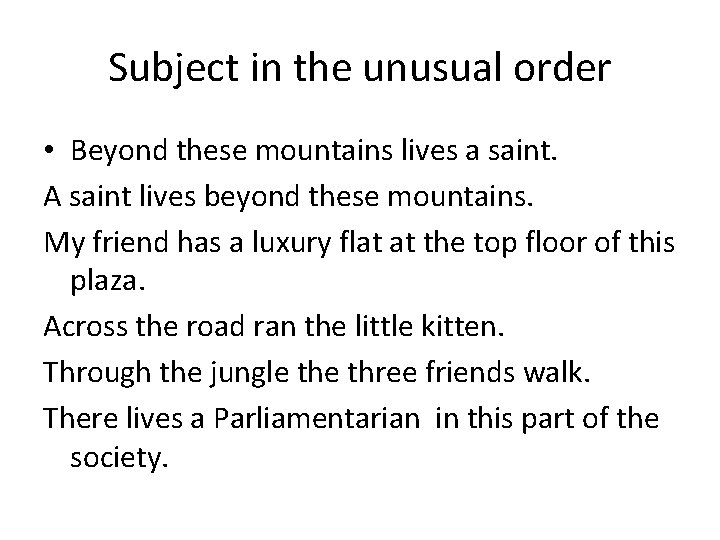
Subject in the unusual order • Beyond these mountains lives a saint. A saint lives beyond these mountains. My friend has a luxury flat at the top floor of this plaza. Across the road ran the little kitten. Through the jungle three friends walk. There lives a Parliamentarian in this part of the society.
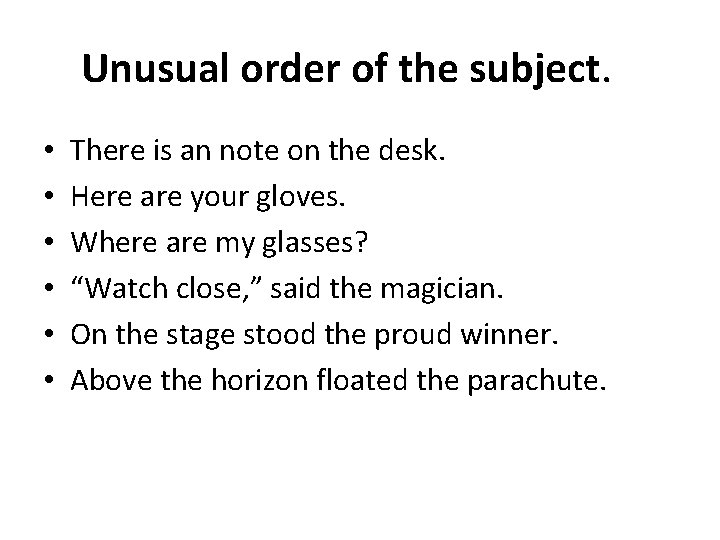
Unusual order of the subject. • • • There is an note on the desk. Here are your gloves. Where are my glasses? “Watch close, ” said the magician. On the stage stood the proud winner. Above the horizon floated the parachute.
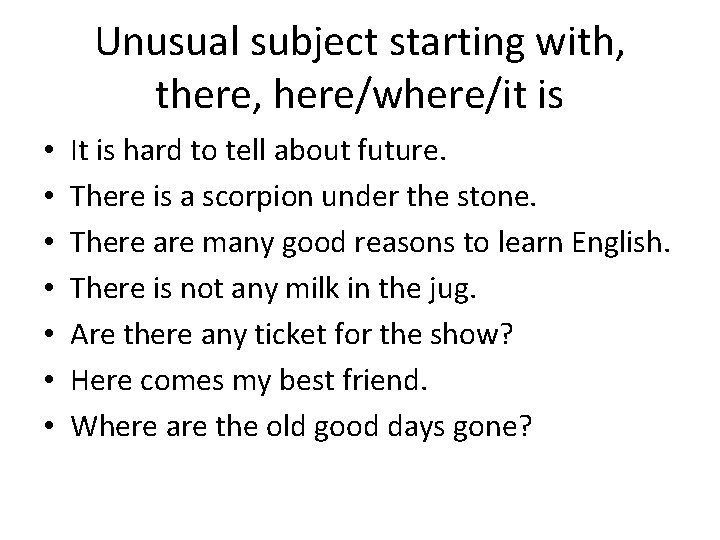
Unusual subject starting with, there, here/where/it is • • It is hard to tell about future. There is a scorpion under the stone. There are many good reasons to learn English. There is not any milk in the jug. Are there any ticket for the show? Here comes my best friend. Where are the old good days gone?
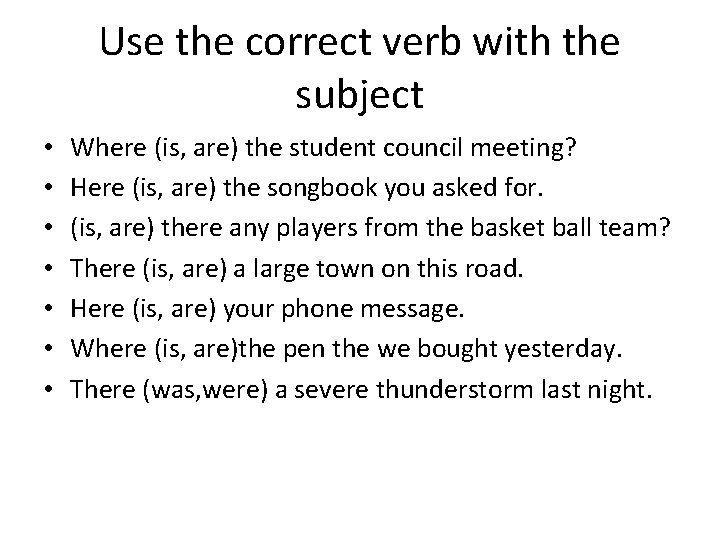
Use the correct verb with the subject • • Where (is, are) the student council meeting? Here (is, are) the songbook you asked for. (is, are) there any players from the basket ball team? There (is, are) a large town on this road. Here (is, are) your phone message. Where (is, are)the pen the we bought yesterday. There (was, were) a severe thunderstorm last night.
Structure of a simple sentence We are learning English.
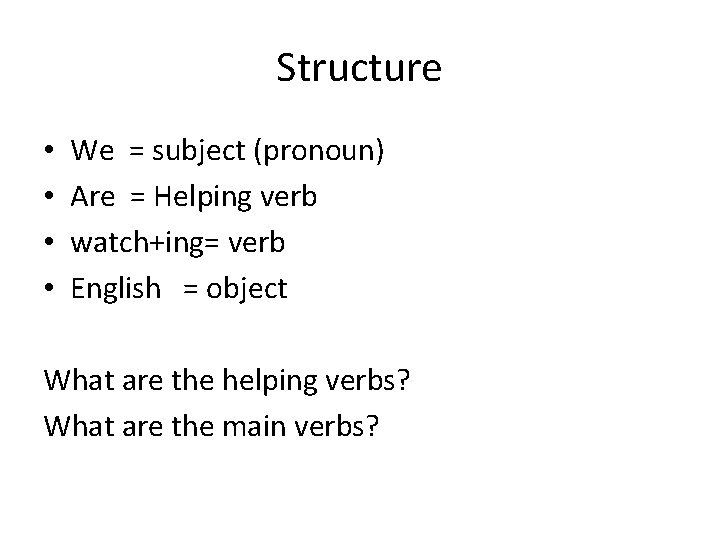
Structure • • We = subject (pronoun) Are = Helping verb watch+ing= verb English = object What are the helping verbs? What are the main verbs?
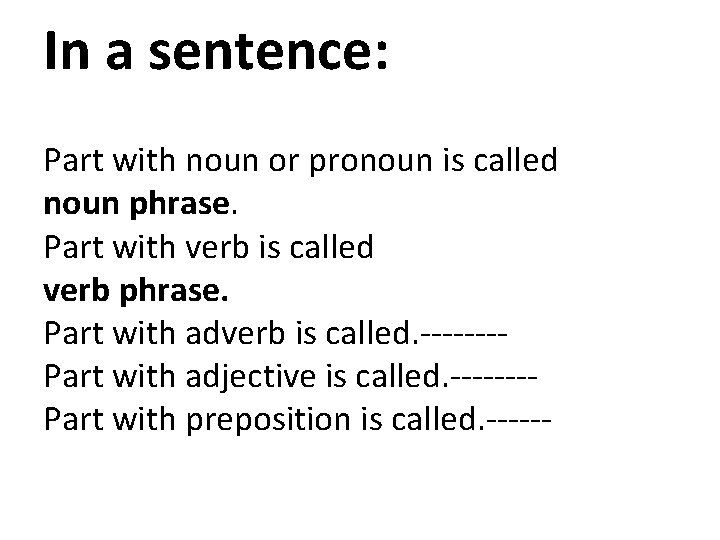
In a sentence: Part with noun or pronoun is called noun phrase. Part with verb is called verb phrase. Part with adverb is called. -------Part with adjective is called. -------Part with preposition is called. ------
Simple sentence structure
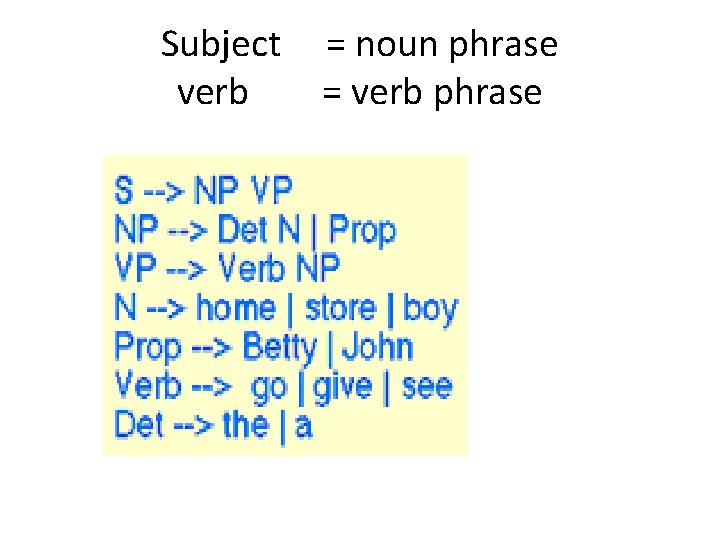
Subject verb = noun phrase = verb phrase
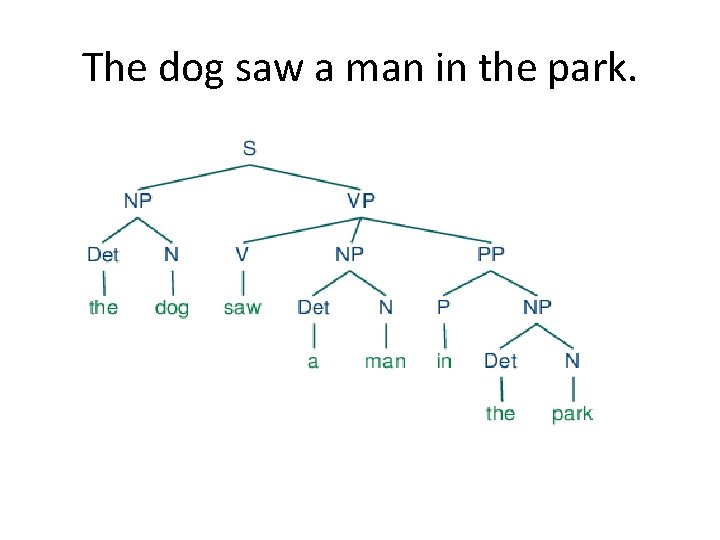
The dog saw a man in the park.
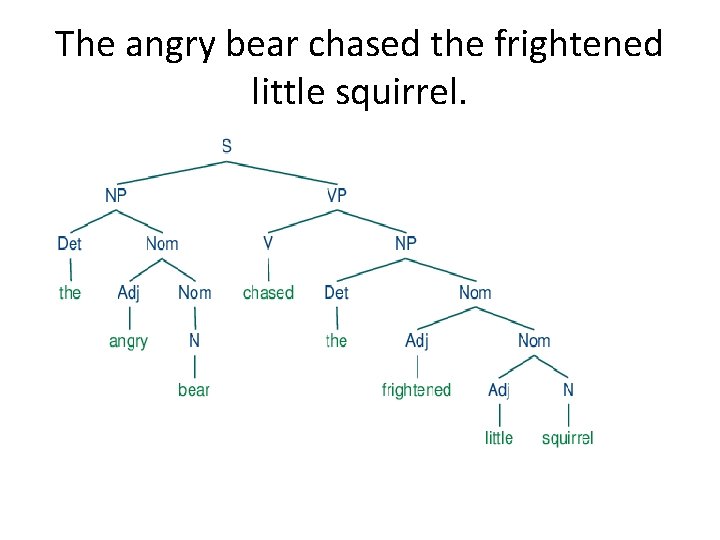
The angry bear chased the frightened little squirrel.
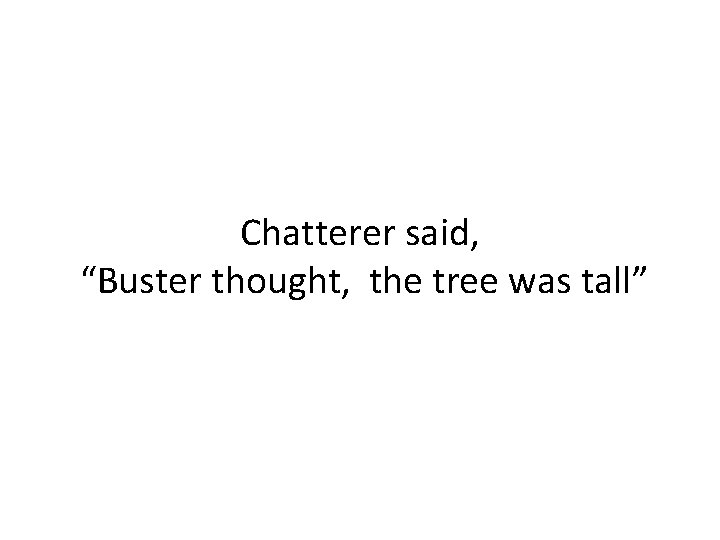
Chatterer said, “Buster thought, the tree was tall”
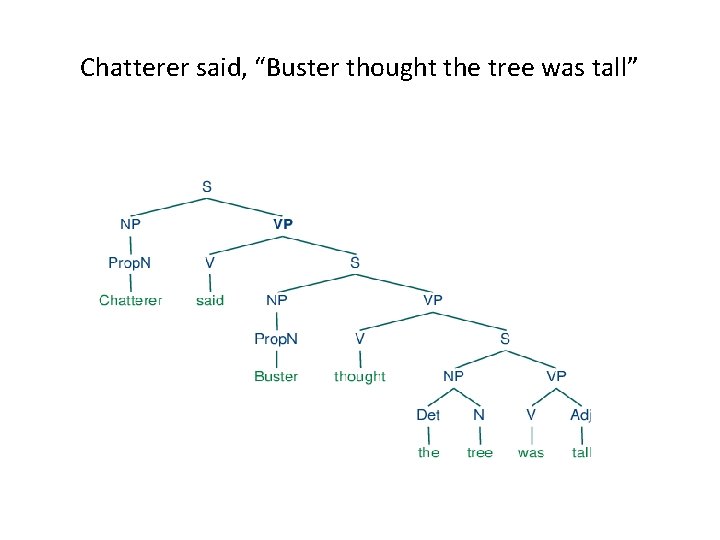
Chatterer said, “Buster thought the tree was tall”
Just revise what we have done so far
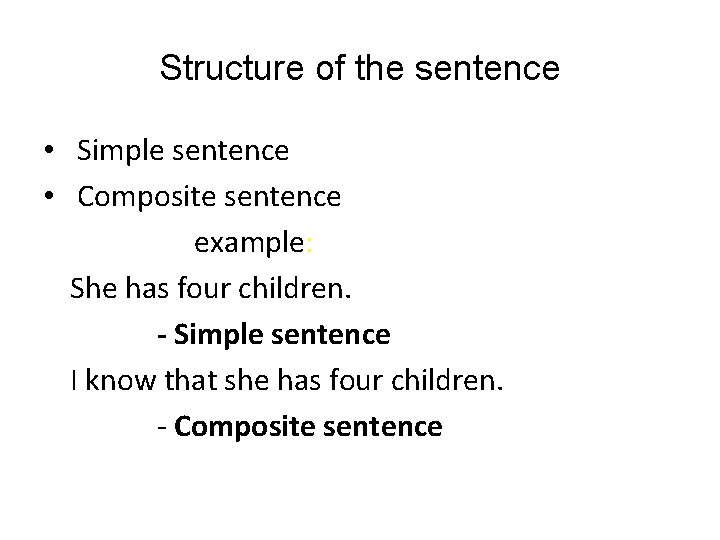
Structure of the sentence • Simple sentence • Composite sentence example: She has four children. - Simple sentence I know that she has four children. - Composite sentence
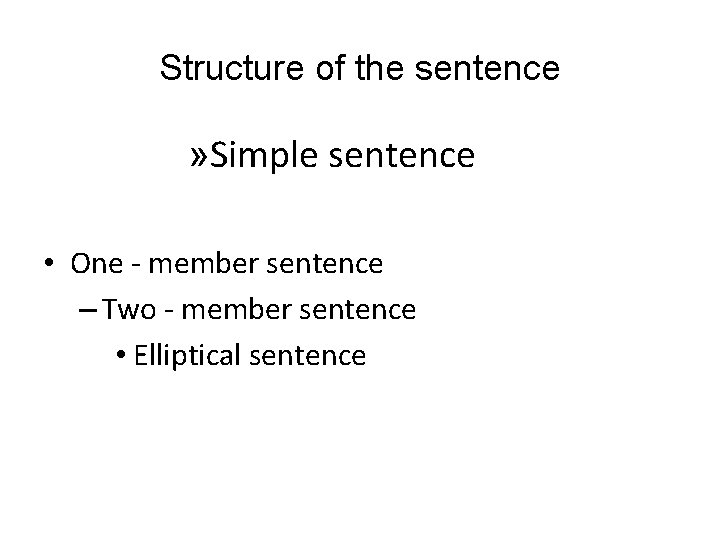
Structure of the sentence » Simple sentence • One - member sentence – Two - member sentence • Elliptical sentence
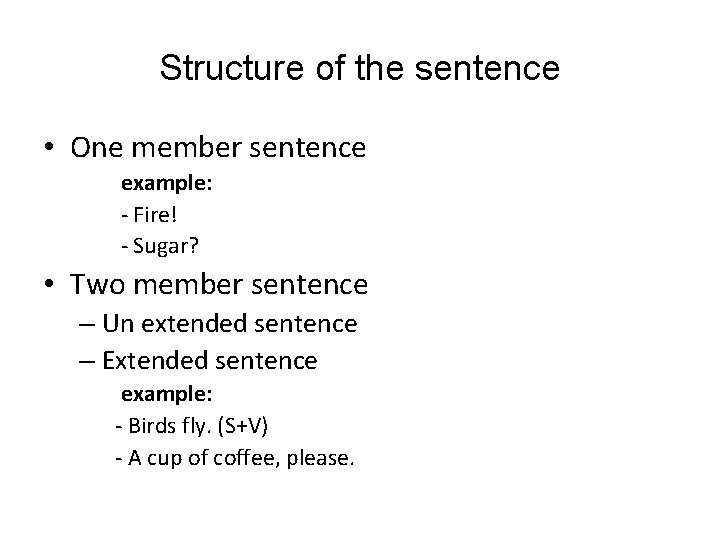
Structure of the sentence • One member sentence example: - Fire! - Sugar? • Two member sentence – Un extended sentence – Extended sentence example: - Birds fly. (S+V) - A cup of coffee, please.
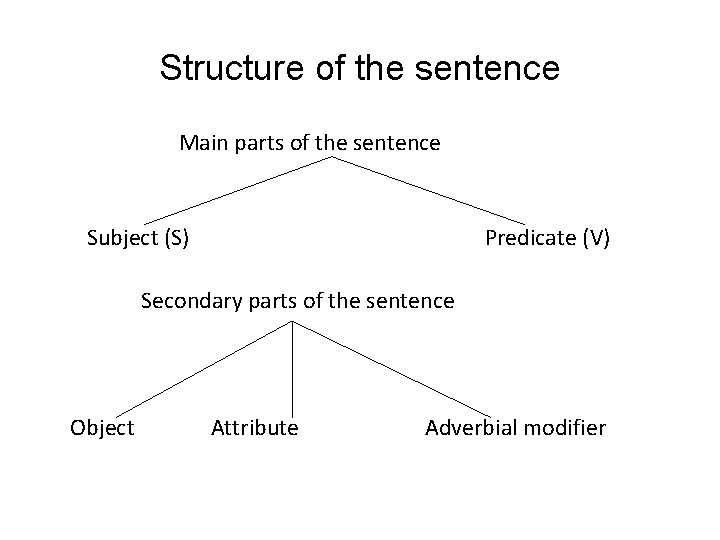
Structure of the sentence Main parts of the sentence Subject (S) Predicate (V) Secondary parts of the sentence Object Attribute Adverbial modifier
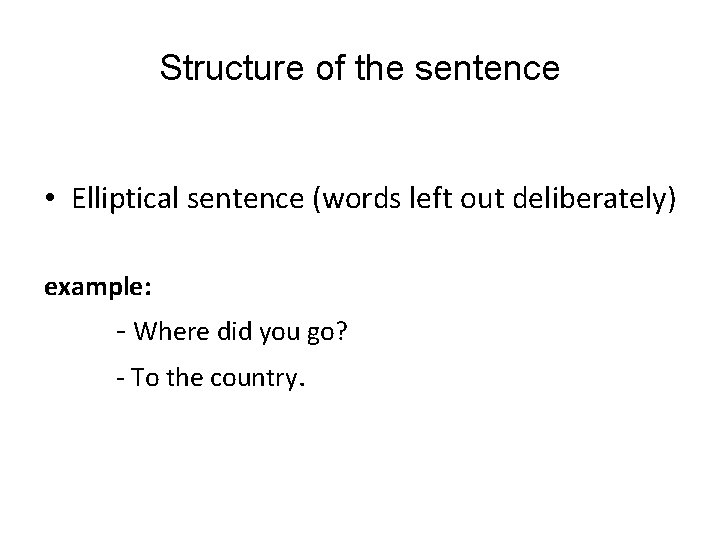
Structure of the sentence • Elliptical sentence (words left out deliberately) example: - Where did you go? - To the country.
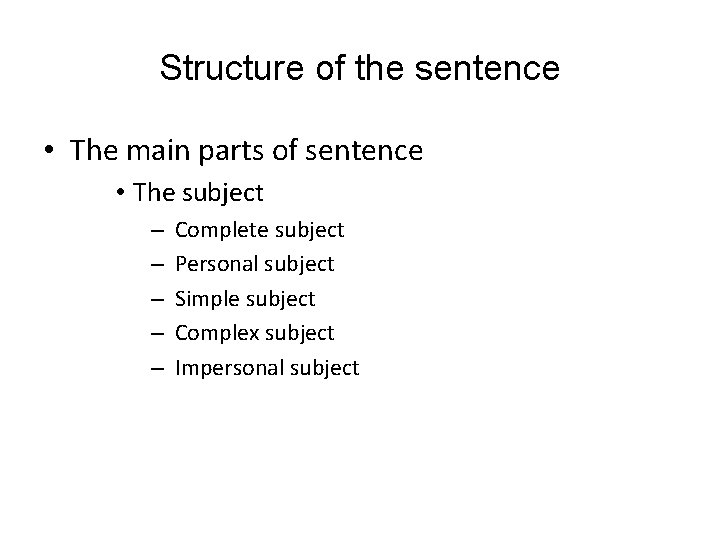
Structure of the sentence • The main parts of sentence • The subject – – – Complete subject Personal subject Simple subject Complex subject Impersonal subject
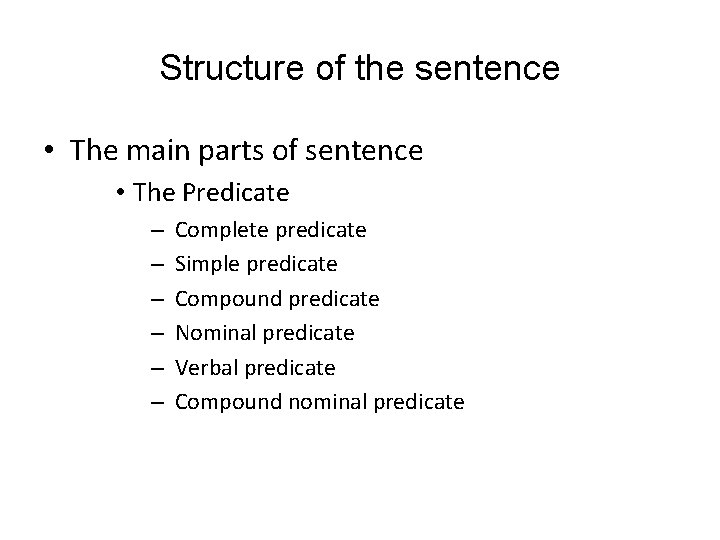
Structure of the sentence • The main parts of sentence • The Predicate – – – Complete predicate Simple predicate Compound predicate Nominal predicate Verbal predicate Compound nominal predicate
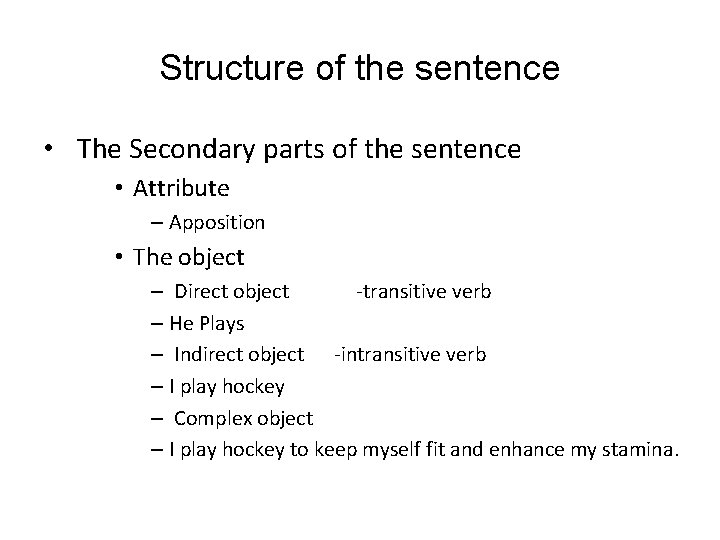
Structure of the sentence • The Secondary parts of the sentence • Attribute – Apposition • The object – Direct object -transitive verb – He Plays – Indirect object -intransitive verb – I play hockey – Complex object – I play hockey to keep myself fit and enhance my stamina.
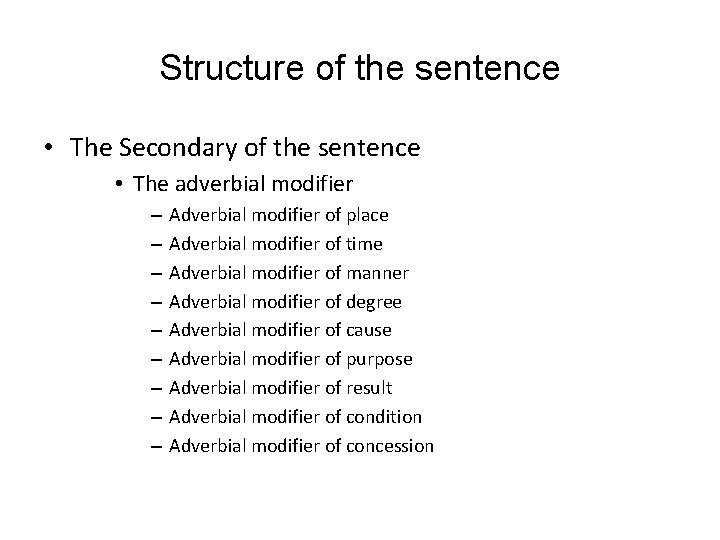
Structure of the sentence • The Secondary of the sentence • The adverbial modifier – – – – – Adverbial modifier of place Adverbial modifier of time Adverbial modifier of manner Adverbial modifier of degree Adverbial modifier of cause Adverbial modifier of purpose Adverbial modifier of result Adverbial modifier of condition Adverbial modifier of concession
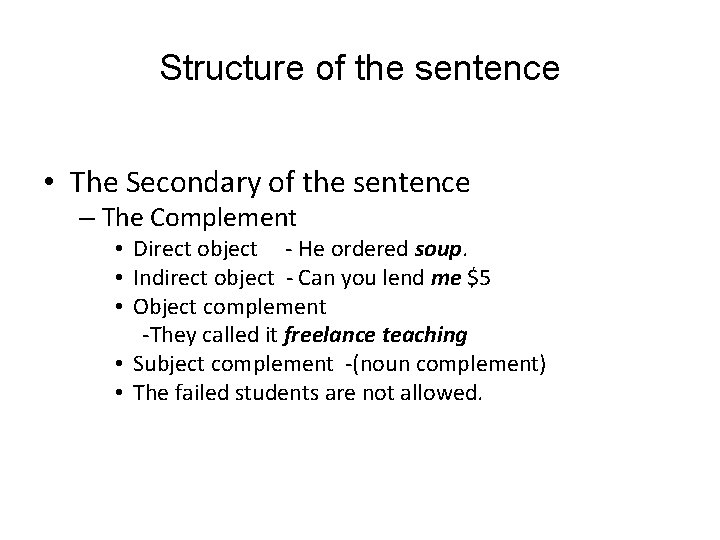
Structure of the sentence • The Secondary of the sentence – The Complement • Direct object - He ordered soup. • Indirect object - Can you lend me $5 • Object complement -They called it freelance teaching • Subject complement -(noun complement) • The failed students are not allowed.
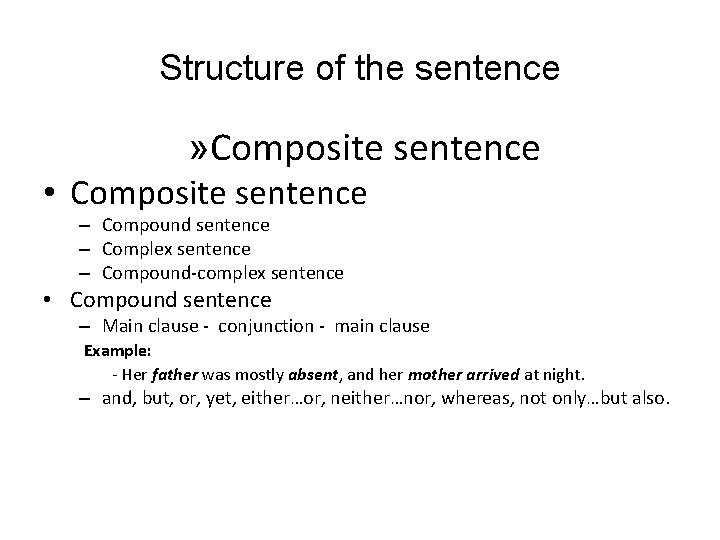
Structure of the sentence » Composite sentence • Composite sentence – Compound sentence – Complex sentence – Compound-complex sentence • Compound sentence – Main clause - conjunction - main clause Example: - Her father was mostly absent, and her mother arrived at night. – and, but, or, yet, either…or, neither…nor, whereas, not only…but also.
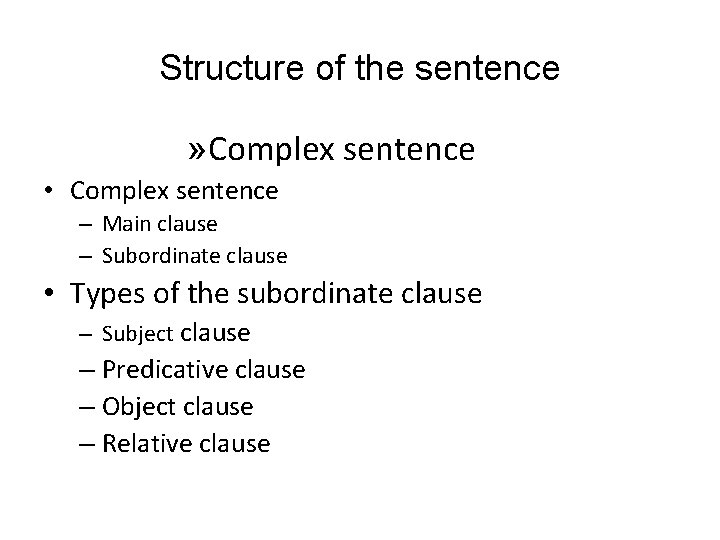
Structure of the sentence » Complex sentence • Complex sentence – Main clause – Subordinate clause • Types of the subordinate clause – Subject clause – Predicative clause – Object clause – Relative clause
We will discuss in the next class types of sentences and complex structure of the sentences. Thank you