
Structure of the Code Don Thomson Task Force


- Slides: 15
Structure of the Code Don Thomson, Task Force Chair IESBA Meeting New York, USA September 15 -16, 2015 Page 1 | Proprietary and Copyrighted Information
Structure of the Code Background • Enhance understandability and improve usability – Facilitate compliance and enforcement – Facilitate adoption, effective implementation, consistent application • Draft Restructured Code reflects Consultation Paper input and subsequent input from CAG and the Board, as well as National Standard-setters, Forum of Firms, SMP Committee • Liaising with IAASB (re responsibility) and Safeguards TF Page 2 | Proprietary and Copyrighted Information
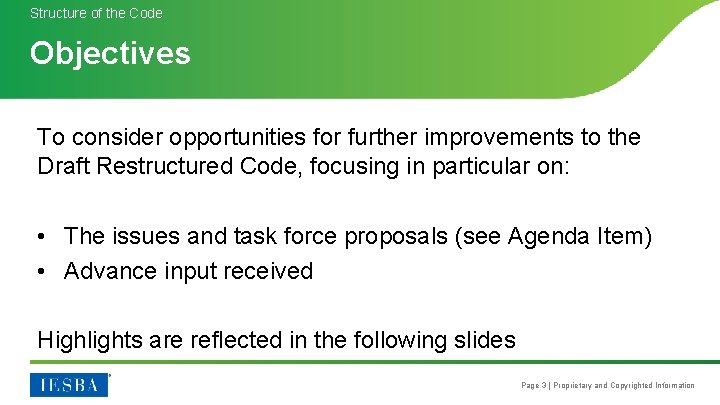
Structure of the Code Objectives To consider opportunities for further improvements to the Draft Restructured Code, focusing in particular on: • The issues and task force proposals (see Agenda Item) • Advance input received Highlights are reflected in the following slides Page 3 | Proprietary and Copyrighted Information
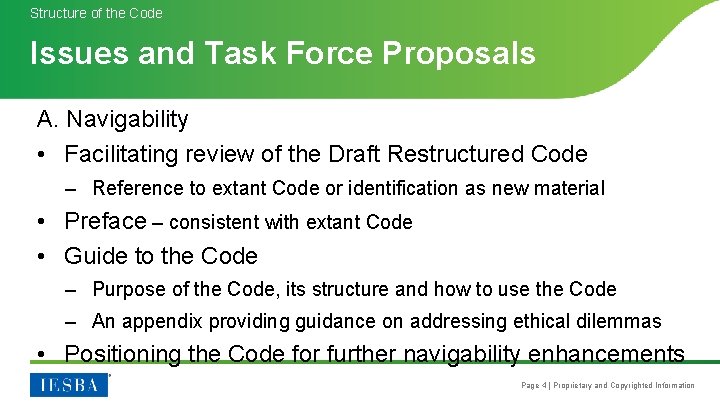
Structure of the Code Issues and Task Force Proposals A. Navigability • Facilitating review of the Draft Restructured Code – Reference to extant Code or identification as new material • Preface – consistent with extant Code • Guide to the Code – Purpose of the Code, its structure and how to use the Code – An appendix providing guidance on addressing ethical dilemmas • Positioning the Code for further navigability enhancements Page 4 | Proprietary and Copyrighted Information
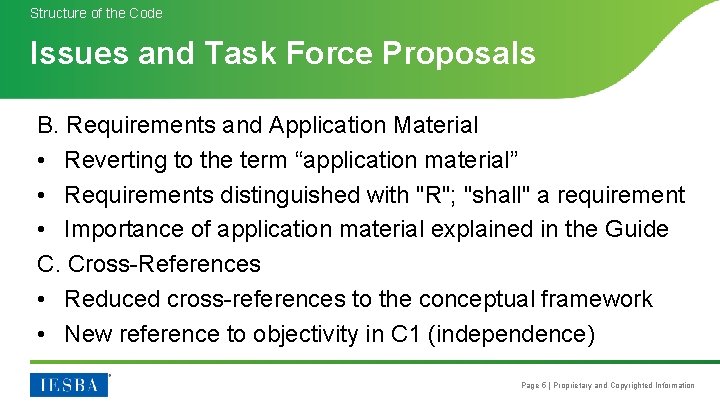
Structure of the Code Issues and Task Force Proposals B. Requirements and Application Material • Reverting to the term “application material” • Requirements distinguished with "R"; "shall" a requirement • Importance of application material explained in the Guide C. Cross-References • Reduced cross-references to the conceptual framework • New reference to objectivity in C 1 (independence) Page 5 | Proprietary and Copyrighted Information
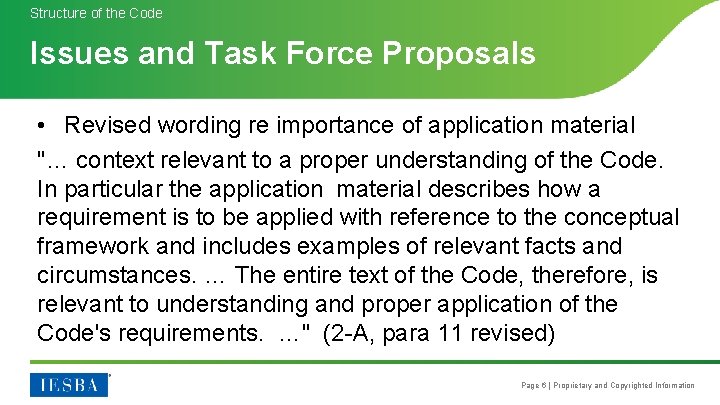
Structure of the Code Issues and Task Force Proposals • Revised wording re importance of application material "… context relevant to a proper understanding of the Code. In particular the application material describes how a requirement is to be applied with reference to the conceptual framework and includes examples of relevant facts and circumstances. … The entire text of the Code, therefore, is relevant to understanding and proper application of the Code's requirements. …" (2 -A, para 11 revised) Page 6 | Proprietary and Copyrighted Information
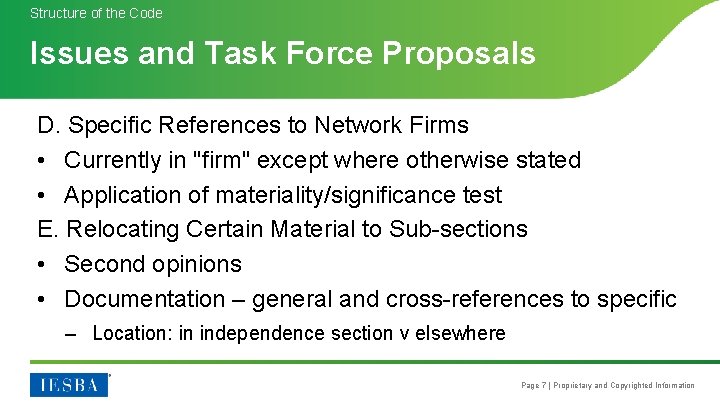
Structure of the Code Issues and Task Force Proposals D. Specific References to Network Firms • Currently in "firm" except where otherwise stated • Application of materiality/significance test E. Relocating Certain Material to Sub-sections • Second opinions • Documentation – general and cross-references to specific – Location: in independence section v elsewhere Page 7 | Proprietary and Copyrighted Information
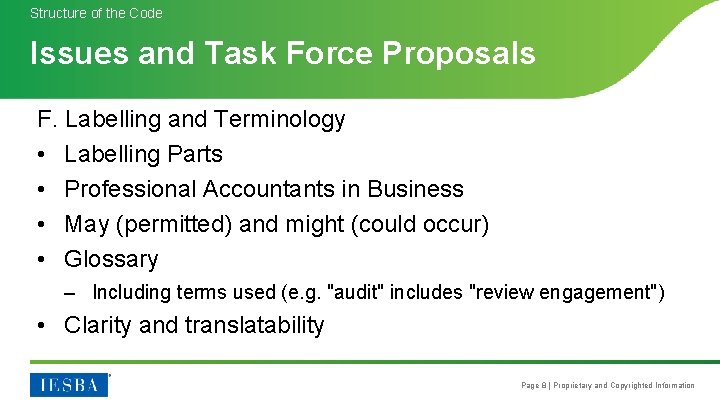
Structure of the Code Issues and Task Force Proposals F. Labelling and Terminology • Labelling Parts • Professional Accountants in Business • May (permitted) and might (could occur) • Glossary – Including terms used (e. g. "audit" includes "review engagement") • Clarity and translatability Page 8 | Proprietary and Copyrighted Information
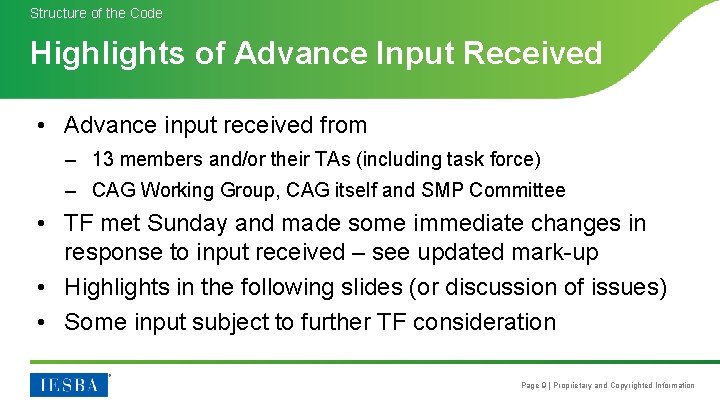
Structure of the Code Highlights of Advance Input Received • Advance input received from – 13 members and/or their TAs (including task force) – CAG Working Group, CAG itself and SMP Committee • TF met Sunday and made some immediate changes in response to input received – see updated mark-up • Highlights in the following slides (or discussion of issues) • Some input subject to further TF consideration Page 9 | Proprietary and Copyrighted Information
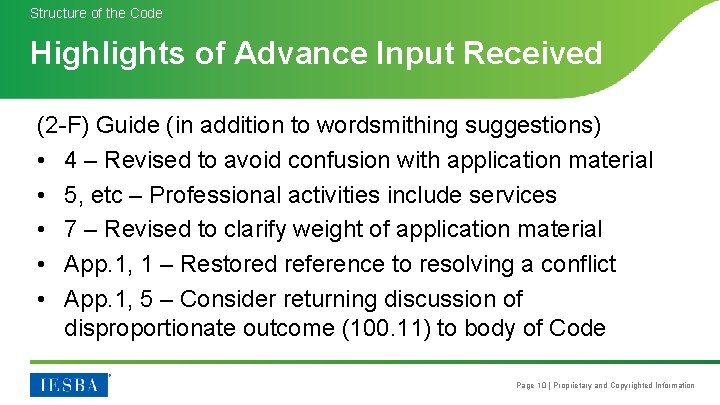
Structure of the Code Highlights of Advance Input Received (2 -F) Guide (in addition to wordsmithing suggestions) • 4 – Revised to avoid confusion with application material • 5, etc – Professional activities include services • 7 – Revised to clarify weight of application material • App. 1, 1 – Restored reference to resolving a conflict • App. 1, 5 – Consider returning discussion of disproportionate outcome (100. 11) to body of Code Page 10 | Proprietary and Copyrighted Information
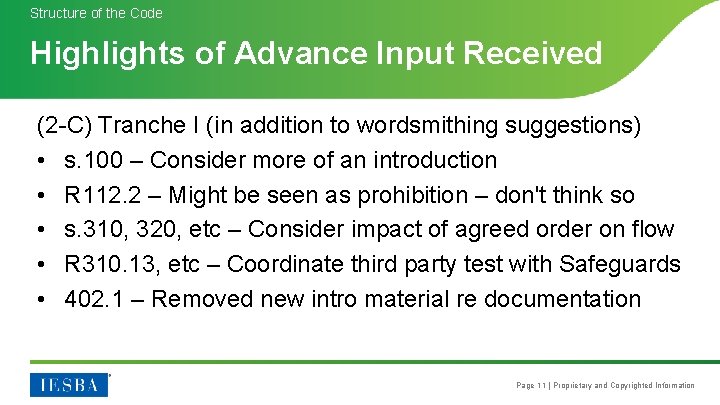
Structure of the Code Highlights of Advance Input Received (2 -C) Tranche I (in addition to wordsmithing suggestions) • s. 100 – Consider more of an introduction • R 112. 2 – Might be seen as prohibition – don't think so • s. 310, 320, etc – Consider impact of agreed order on flow • R 310. 13, etc – Coordinate third party test with Safeguards • 402. 1 – Removed new intro material re documentation Page 11 | Proprietary and Copyrighted Information
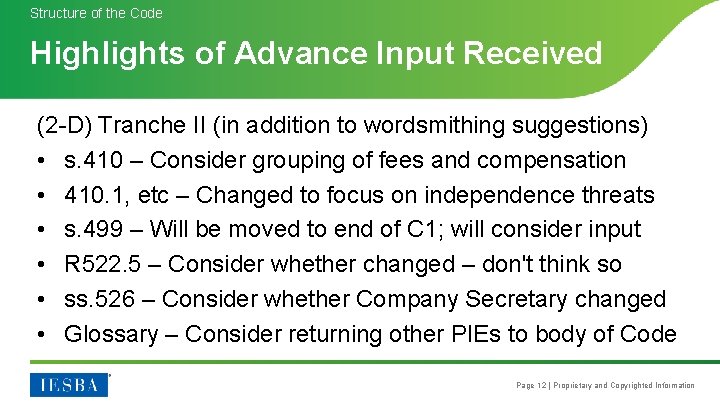
Structure of the Code Highlights of Advance Input Received (2 -D) Tranche II (in addition to wordsmithing suggestions) • s. 410 – Consider grouping of fees and compensation • 410. 1, etc – Changed to focus on independence threats • s. 499 – Will be moved to end of C 1; will consider input • R 522. 5 – Consider whether changed – don't think so • ss. 526 – Consider whether Company Secretary changed • Glossary – Consider returning other PIEs to body of Code Page 12 | Proprietary and Copyrighted Information
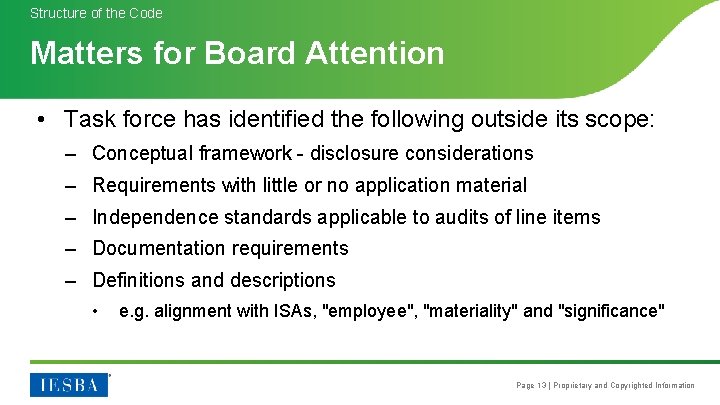
Structure of the Code Matters for Board Attention • Task force has identified the following outside its scope: – Conceptual framework - disclosure considerations – Requirements with little or no application material – Independence standards applicable to audits of line items – Documentation requirements – Definitions and descriptions • e. g. alignment with ISAs, "employee", "materiality" and "significance" Page 13 | Proprietary and Copyrighted Information
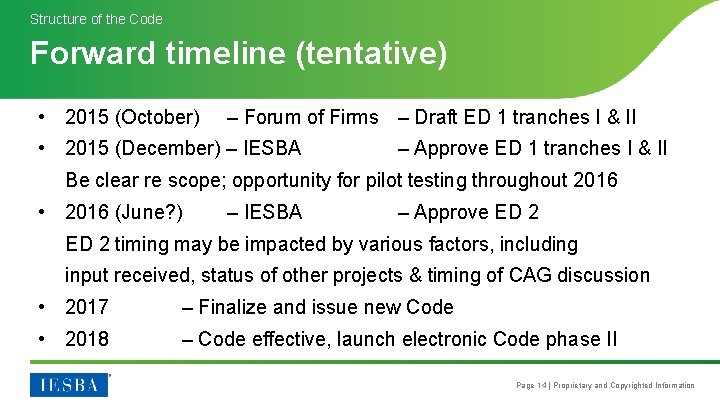
Structure of the Code Forward timeline (tentative) • 2015 (October) – Forum of Firms – Draft ED 1 tranches I & II • 2015 (December) – IESBA – Approve ED 1 tranches I & II Be clear re scope; opportunity for pilot testing throughout 2016 • 2016 (June? ) – IESBA – Approve ED 2 timing may be impacted by various factors, including input received, status of other projects & timing of CAG discussion • 2017 – Finalize and issue new Code • 2018 – Code effective, launch electronic Code phase II Page 14 | Proprietary and Copyrighted Information
The Ethics Board www. ethicsboard. org