
Structure of the Cell Membrane The two layers
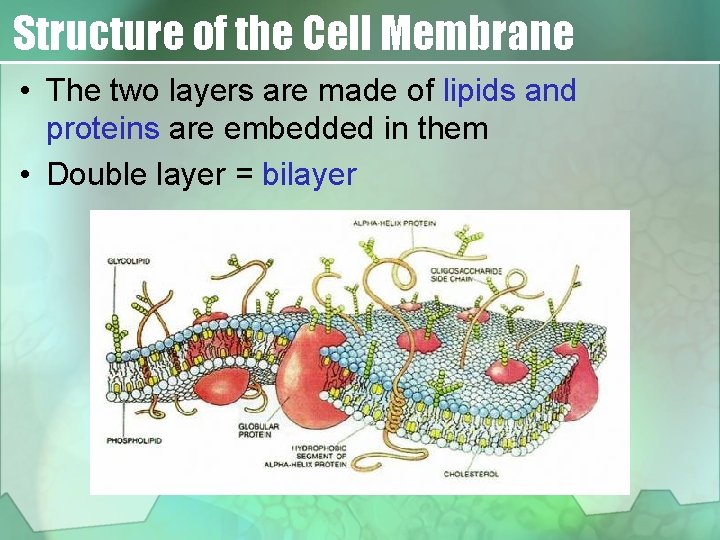
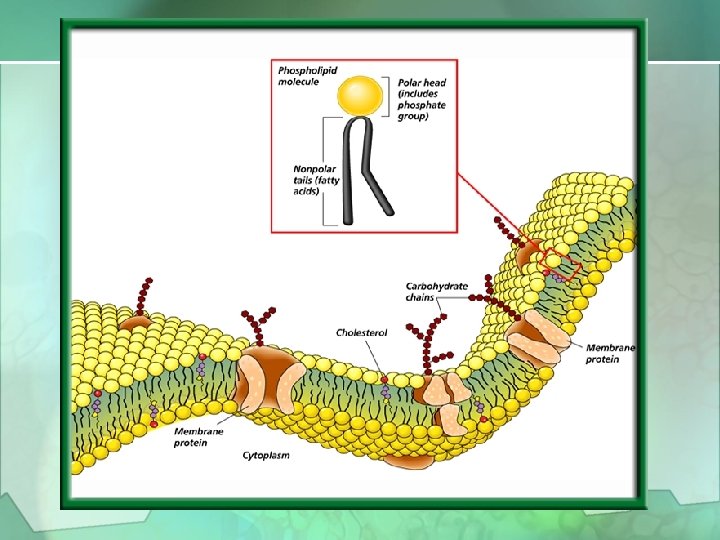
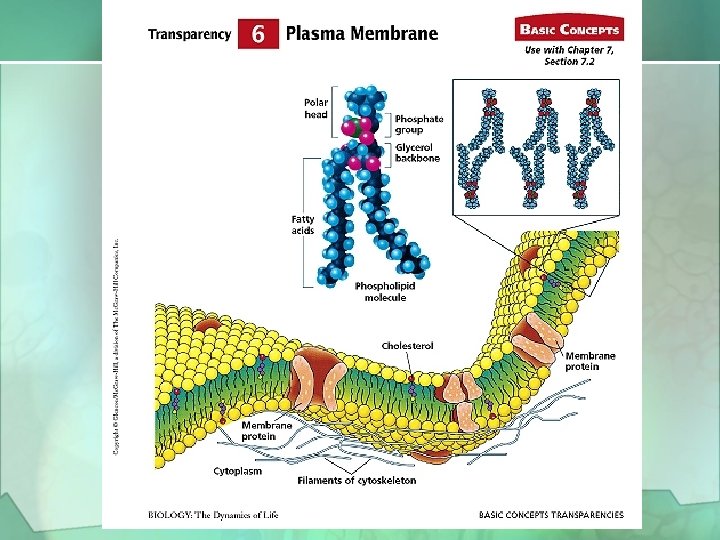
Structure of the Cell Membrane • The two layers are made of lipids and proteins are embedded in them • Double layer = bilayer

Membrane Proteins • Peripheral proteins – proteins attached to the surface of the cell membrane • Integral proteins – proteins that go through the membrane – carbohydrates can be attached to them • Transport molecules through the lipid bilayer (channels and pumps)
Fluid Mosaic Model • Lipid molecules that form the membrane are fluid • The proteins are free to move about • The cell membrane has fluid properties
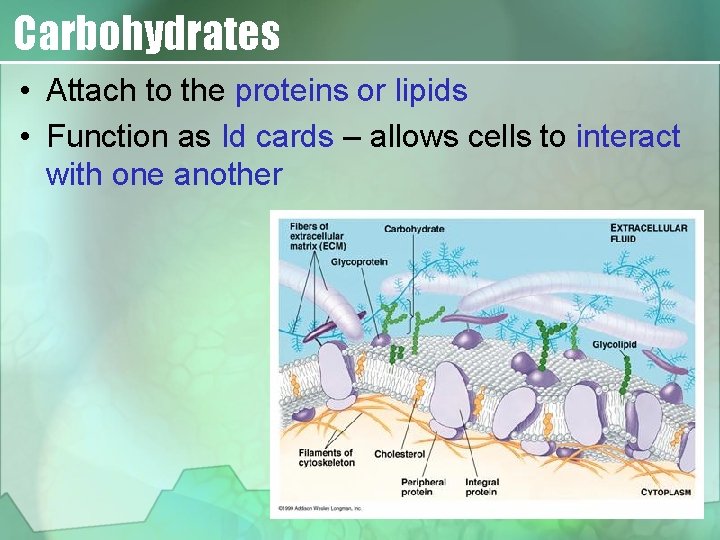
Carbohydrates • Attach to the proteins or lipids • Function as Id cards – allows cells to interact with one another
The Cell Membrane
Cell Membrane • plasma membrane • Separates the cell from the surrounding environment • Controls the movement of materials in and out of the cell – lets some in and some out • Protection • Support

Structure of the Cell Membrane • The two layers are made of lipids and proteins are embedded in them • Double layer = bilayer
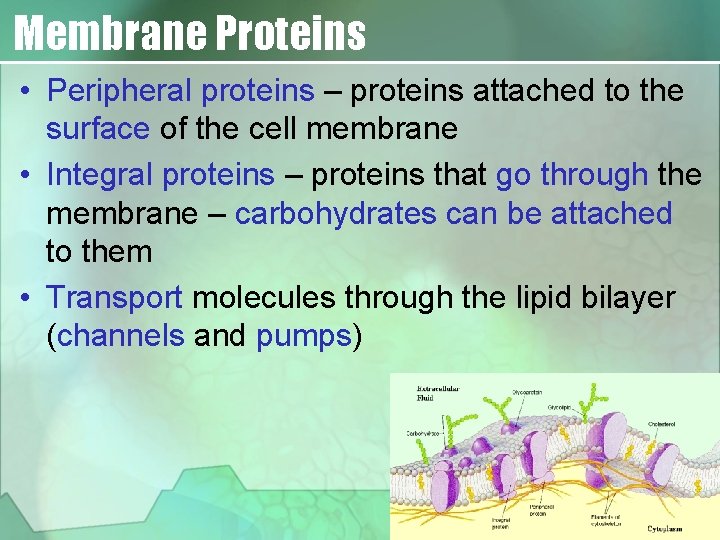
Membrane Proteins • Peripheral proteins – proteins attached to the surface of the cell membrane • Integral proteins – proteins that go through the membrane – carbohydrates can be attached to them • Transport molecules through the lipid bilayer (channels and pumps)
Fluid Mosaic Model • Lipid molecules that form the membrane are fluid • The proteins are free to move about • The cell membrane has fluid properties
5 -4 Movement of Materials through the cell membrane
• Every cell is in a liquid environment • Liquid environment makes it easier food, oxygen and water to move in and out
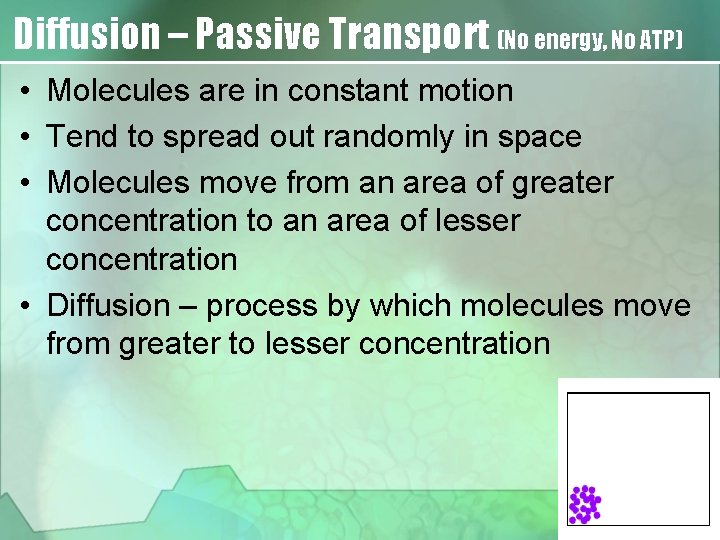
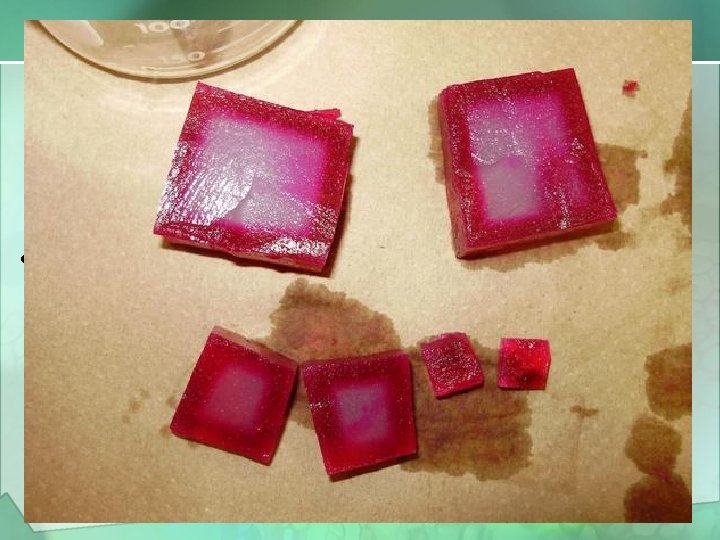
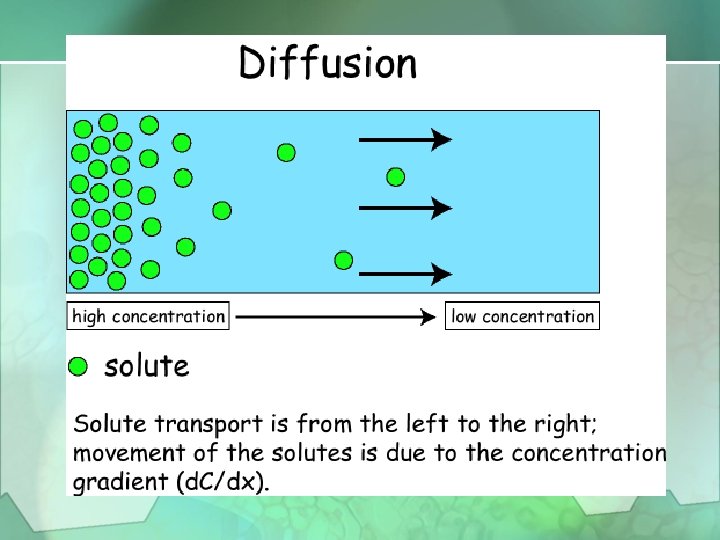
Diffusion – Passive Transport (No energy, No ATP) • Molecules are in constant motion • Tend to spread out randomly in space • Molecules move from an area of greater concentration to an area of lesser concentration • Diffusion – process by which molecules move from greater to lesser concentration
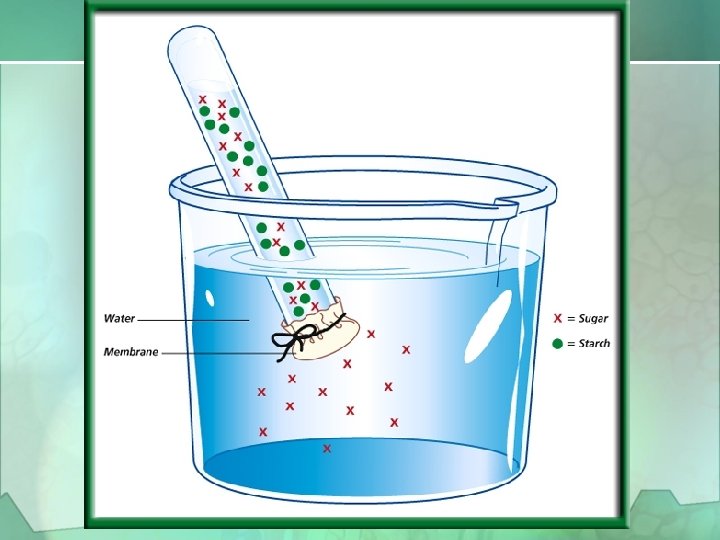
Equilibrium • Concentration of substances on both sides of the membrane are the same • Molecules are still moving back and forth but equally • Molecules always try to get to this
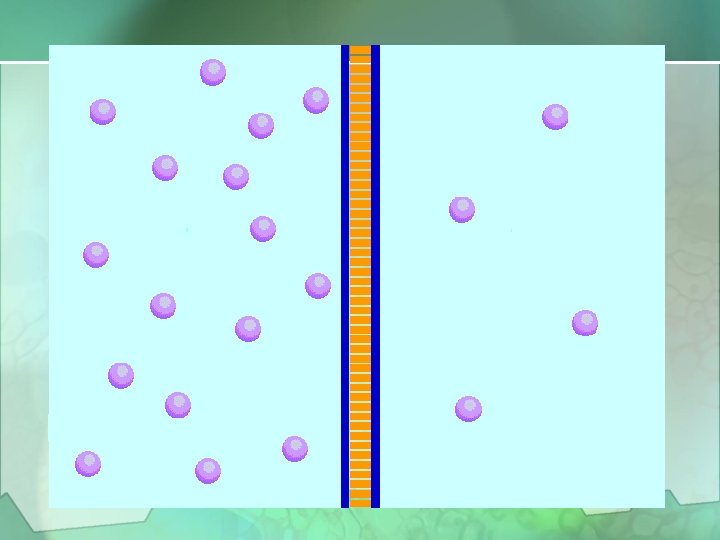
Permeability • • Determines what moves across Permeable – substance can move in and out Impermeable – substance can’t move Selectively permeable – some things can pass some can’t – characteristic of biological membranes
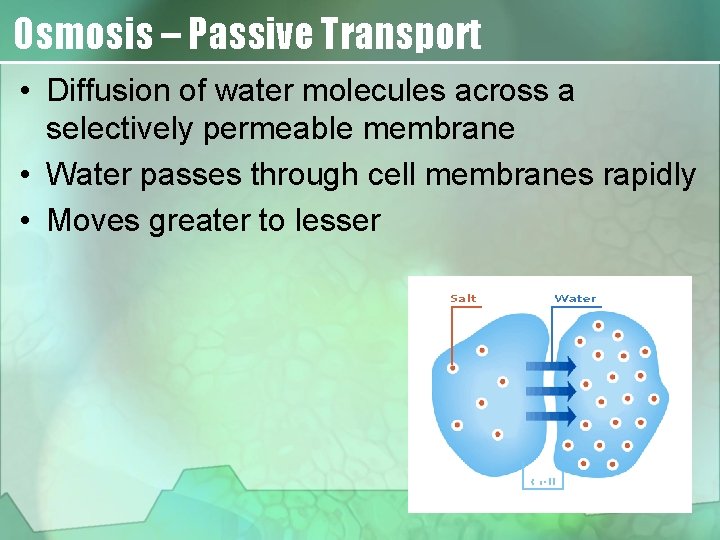
Osmosis – Passive Transport • Diffusion of water molecules across a selectively permeable membrane • Water passes through cell membranes rapidly • Moves greater to lesser
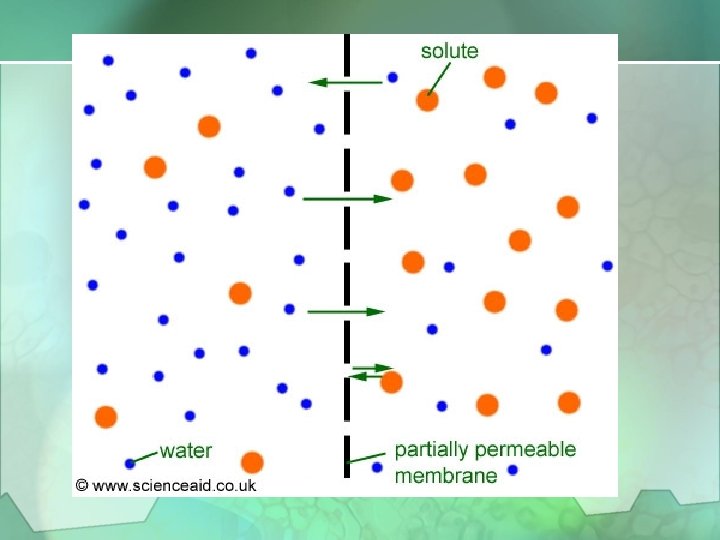
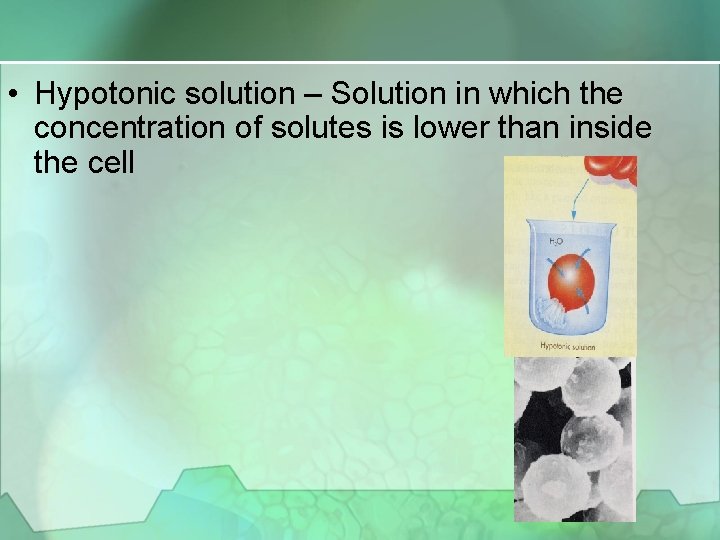
• Hypotonic solution – Solution in which the concentration of solutes is lower than inside the cell
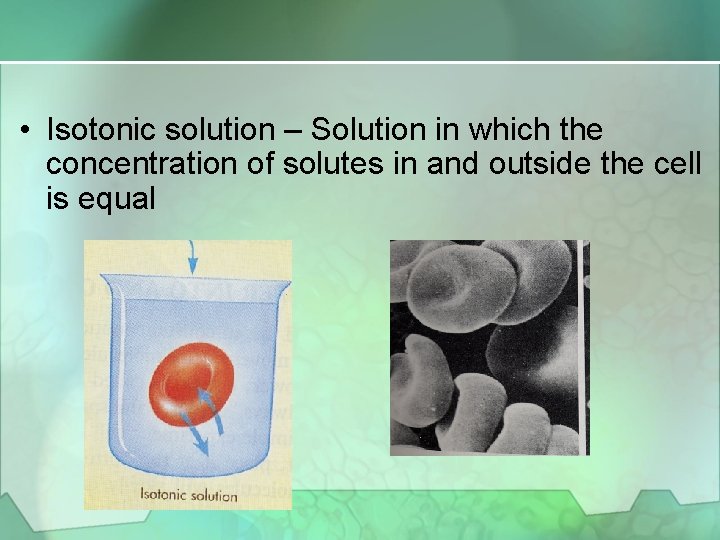
• Isotonic solution – Solution in which the concentration of solutes in and outside the cell is equal
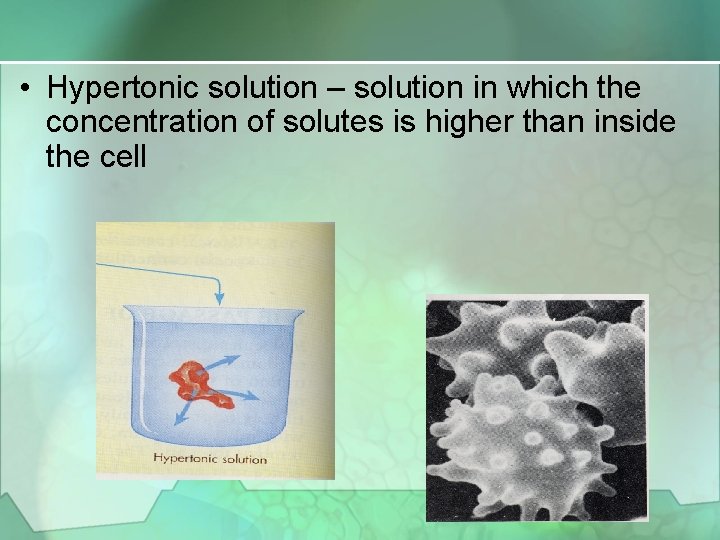
• Hypertonic solution – solution in which the concentration of solutes is higher than inside the cell
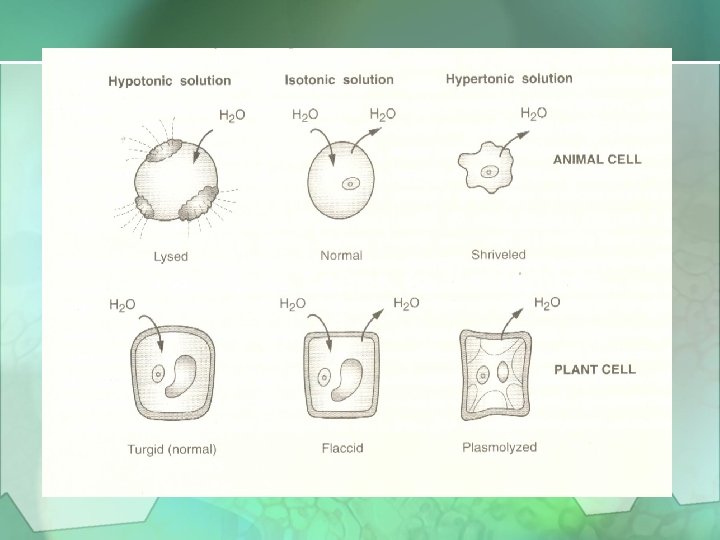
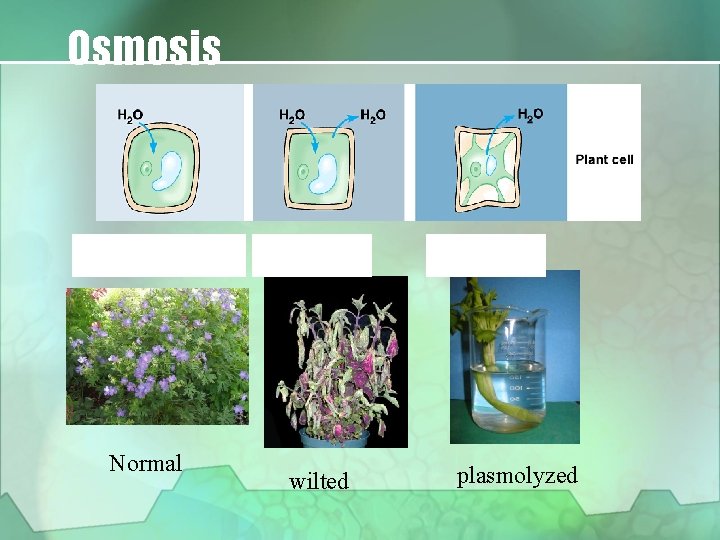
Osmosis Hypotonic Normal Isotonic wilted Hypertonic plasmolyzed
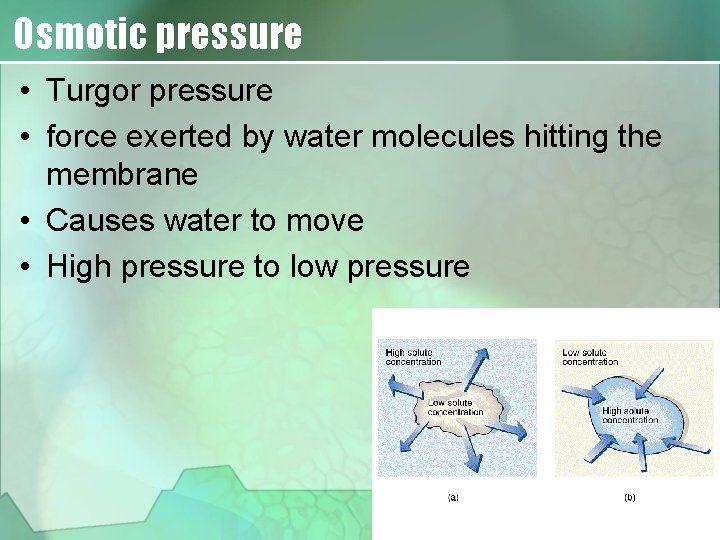
Osmotic pressure • Turgor pressure • force exerted by water molecules hitting the membrane • Causes water to move • High pressure to low pressure

Osmotic pressure – Problems for a cell • Cytoplasm filled with salts, sugars and proteins • Cell has a low concentration of water inside as compared to outside • Water would continuously move in – cell would burst
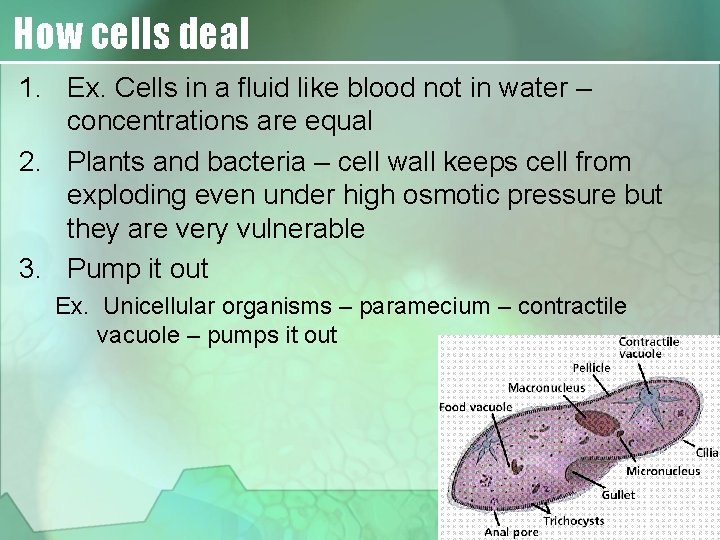
How cells deal 1. Ex. Cells in a fluid like blood not in water – concentrations are equal 2. Plants and bacteria – cell wall keeps cell from exploding even under high osmotic pressure but they are very vulnerable 3. Pump it out Ex. Unicellular organisms – paramecium – contractile vacuole – pumps it out
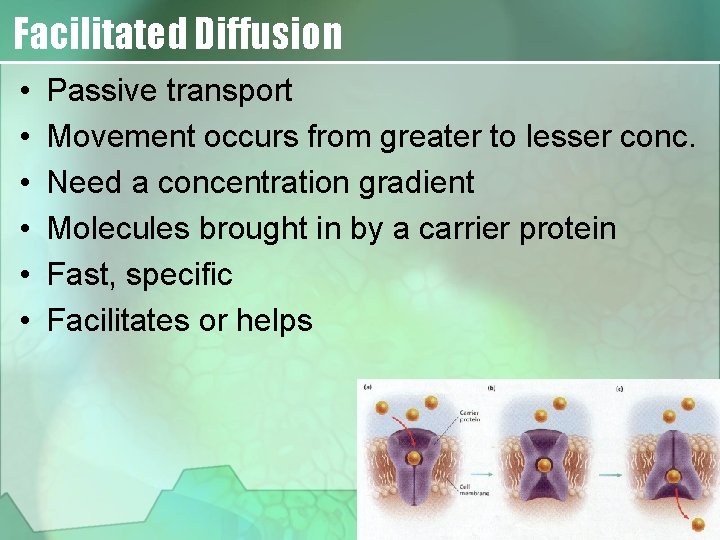
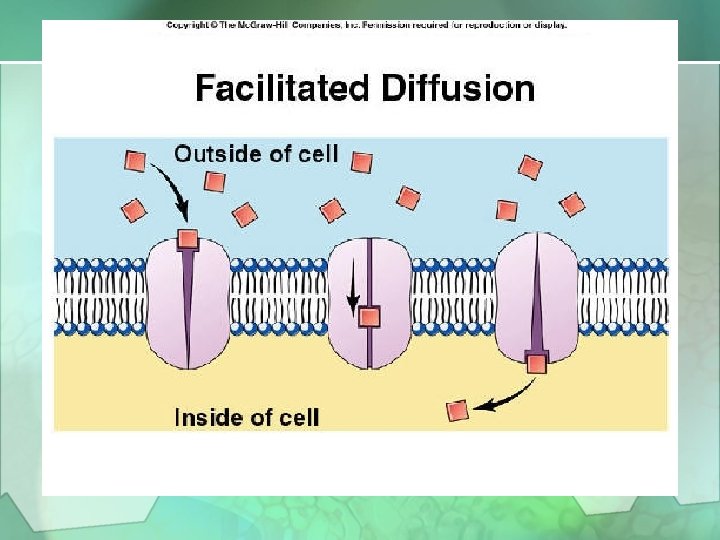
Facilitated Diffusion • • • Passive transport Movement occurs from greater to lesser conc. Need a concentration gradient Molecules brought in by a carrier protein Fast, specific Facilitates or helps
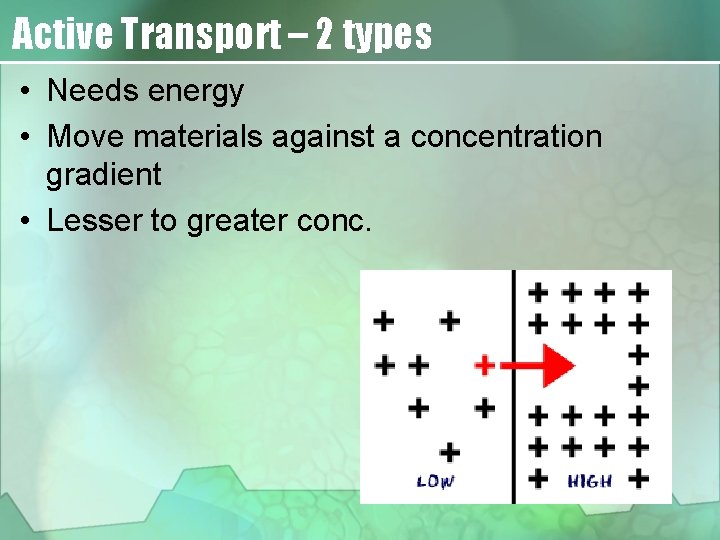
Active Transport – 2 types • Needs energy • Move materials against a concentration gradient • Lesser to greater conc.
1. Protein Pumps • Pump molecules into the cell Ca, K, Na • Need energy • Sodium potassium pump
2. Endocytosis (In) • Process of taking food into the cell by surrounding it with the cell membrane • Brings in large molecules, clumps of food and whole cells • Two Types – Phagocytosis – large particles – Pinocytosis – liquid, small particles • Exocytosis – large molecules out of cell - exit

The End
- Slides: 37