
Structure of T Cell Receptor Alpha Beta chain
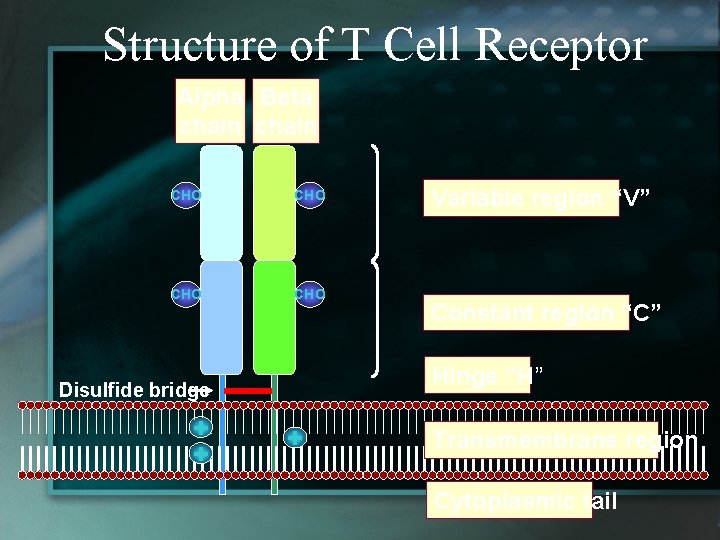
Structure of T Cell Receptor Alpha Beta chain CHO CHO Constant region “C” Hinge “H” Disulfide bridge + + Variable region “V” + Transmembrane region Cytoplasmic tail
Structure of T Cell Receptor (TCR) • Two polypeptide chains, α and β, of roughly equal length • Both chains consist of a variable (V) and a constant (C) region • α chain V region has a joining (J) segment • β chain V region has both a J and diversity (D) segment
Structure of T Cell Receptor (continued) • Hypervariable regions in V contribute to diversity of TCR • TCR recognizes portions of MHC molecule and peptide bound in the groove • Small population of T cells has a TCR comprised of γ and δ chains – γδ TCR specificity differs from αβ TCR
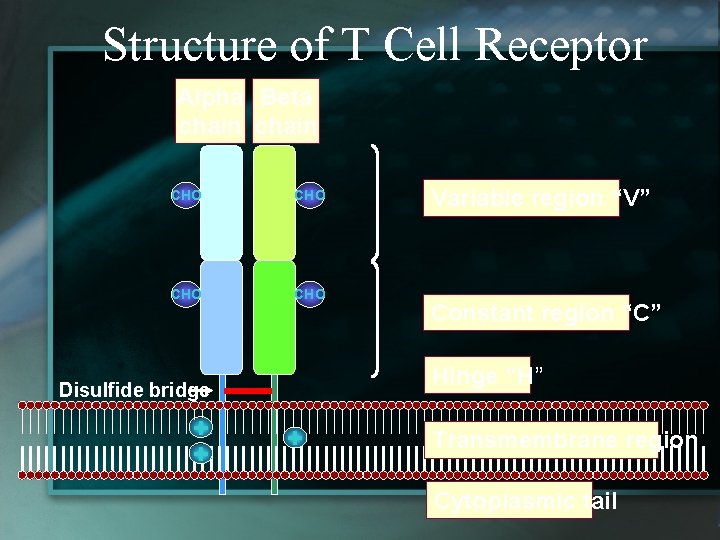
Structure of T Cell Receptor Alpha Beta chain CHO CHO Constant region “C” Hinge “H” Disulfide bridge + + Variable region “V” + Transmembrane region Cytoplasmic tail
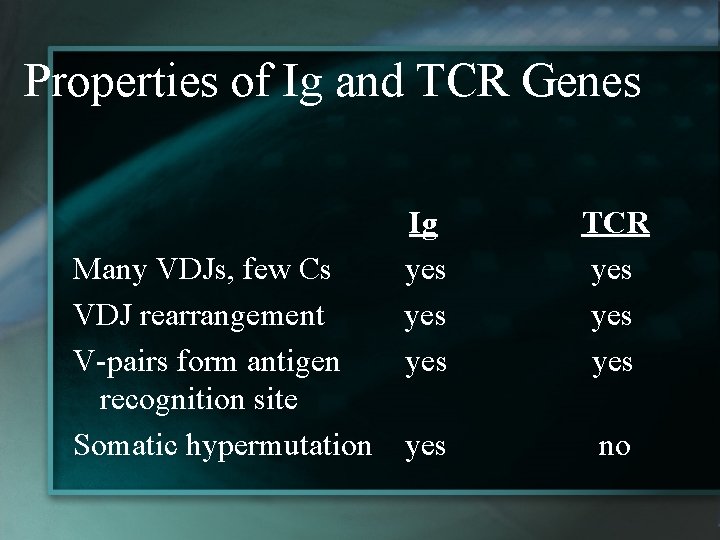
Properties of Ig and TCR Genes Many VDJs, few Cs VDJ rearrangement V-pairs form antigen recognition site Somatic hypermutation Ig yes yes TCR yes yes no
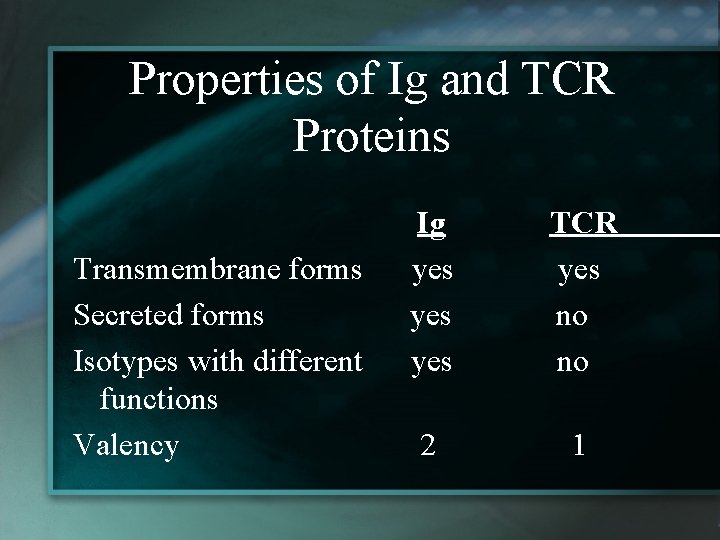
Properties of Ig and TCR Proteins Transmembrane forms Secreted forms Isotypes with different functions Valency Ig yes yes TCR yes no no 2 1
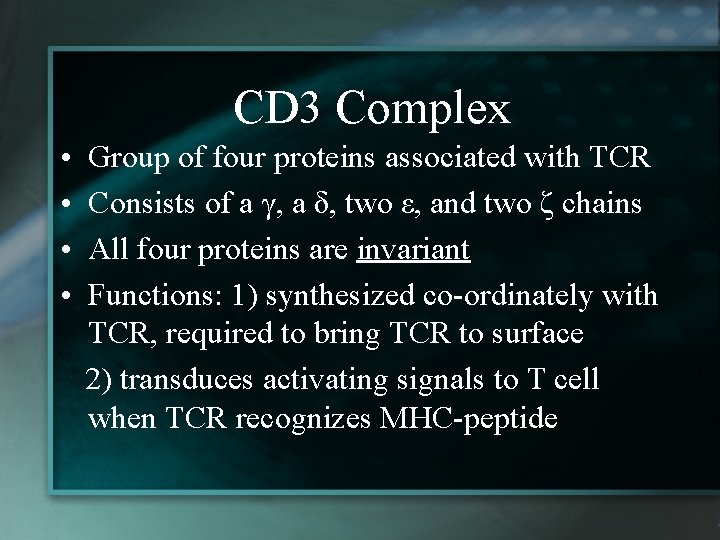
CD 3 Complex • • Group of four proteins associated with TCR Consists of a γ, a δ, two ε, and two ζ chains All four proteins are invariant Functions: 1) synthesized co-ordinately with TCR, required to bring TCR to surface 2) transduces activating signals to T cell when TCR recognizes MHC-peptide
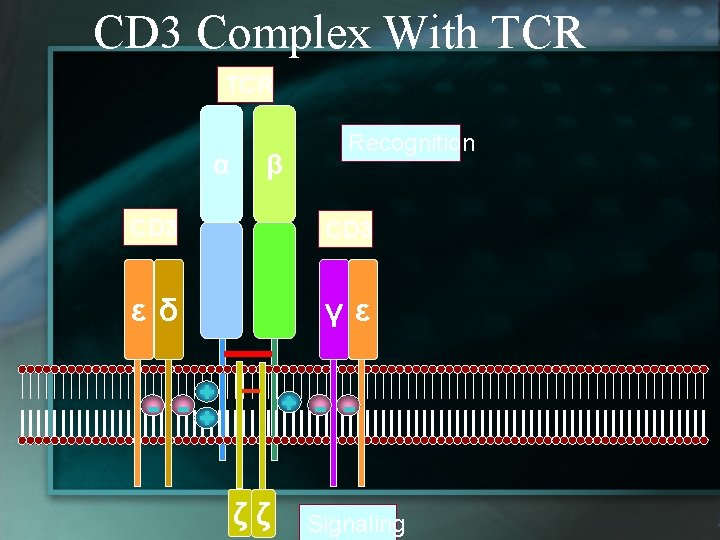
CD 3 Complex With TCR α β Recognition CD 3 εδ γε - - + + + ζζ -Signaling
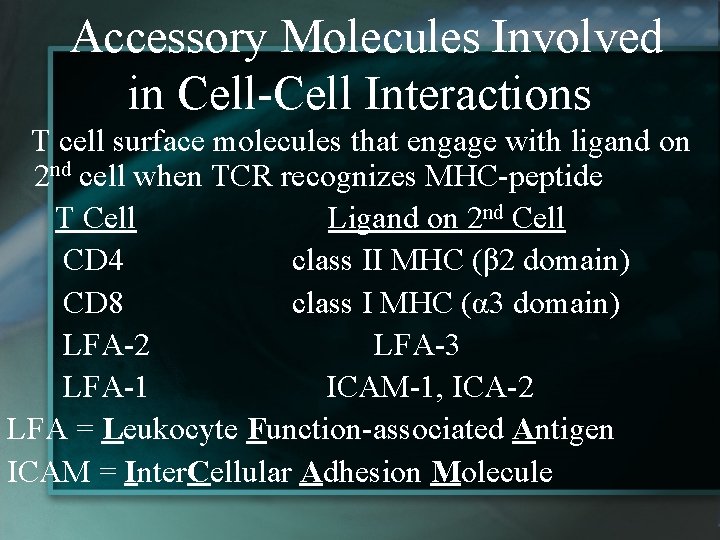
Accessory Molecules Involved in Cell-Cell Interactions T cell surface molecules that engage with ligand on 2 nd cell when TCR recognizes MHC-peptide T Cell Ligand on 2 nd Cell CD 4 class II MHC (β 2 domain) CD 8 class I MHC (α 3 domain) LFA-2 LFA-3 LFA-1 ICAM-1, ICA-2 LFA = Leukocyte Function-associated Antigen ICAM = Inter. Cellular Adhesion Molecule
Accessory Molecules • All are invariant • Increase adhesion between two engaged cells • Some show increased expression in response to cytokines
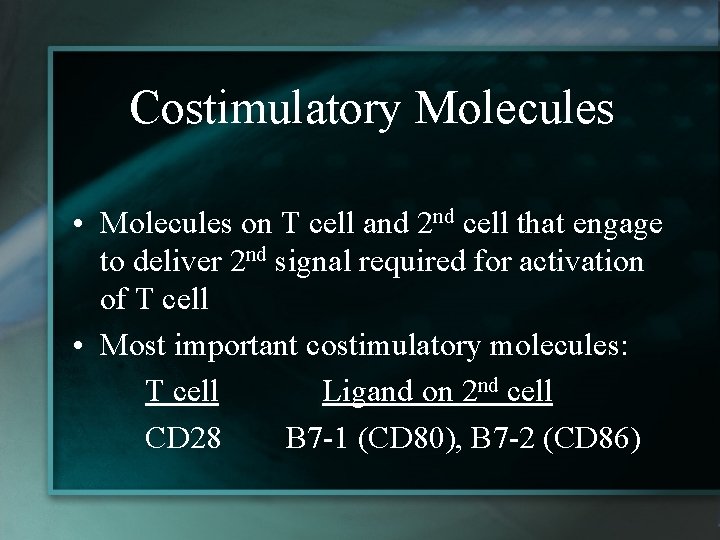
Costimulatory Molecules • Molecules on T cell and 2 nd cell that engage to deliver 2 nd signal required for activation of T cell • Most important costimulatory molecules: T cell Ligand on 2 nd cell CD 28 B 7 -1 (CD 80), B 7 -2 (CD 86)
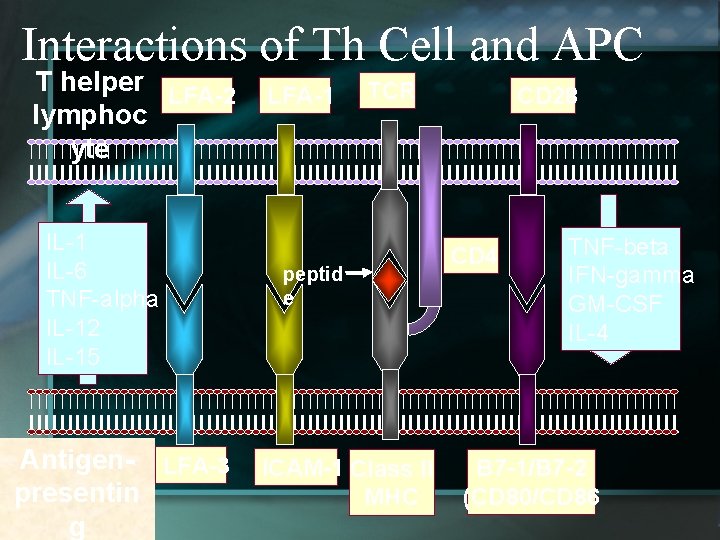
Interactions of Th Cell and APC T helper LFA-2 lymphoc yte IL-1 IL-6 TNF-alpha IL-12 IL-15 Antigen- LFA-3 presentin g LFA-1 TCR peptid e ICAM-1 Class II MHC CD 28 CD 4 TNF-beta IFN-gamma GM-CSF IL-4 B 7 -1/B 7 -2 (CD 80/CD 86
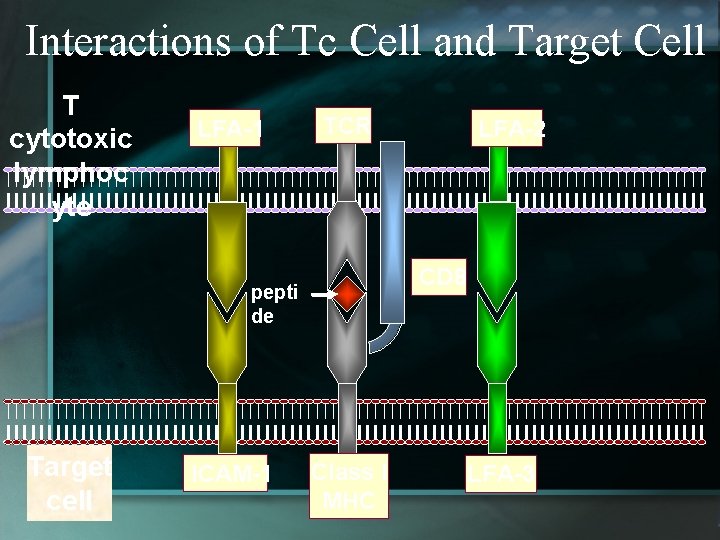
Interactions of Tc Cell and Target Cell T cytotoxic lymphoc yte LFA-1 TCR CD 8 pepti de Target cell ICAM-1 LFA-2 Class I MHC LFA-3
- Slides: 13