
STRUCTURE OF PROTEIN PROTEIN Proteins are major components
- Slides: 17
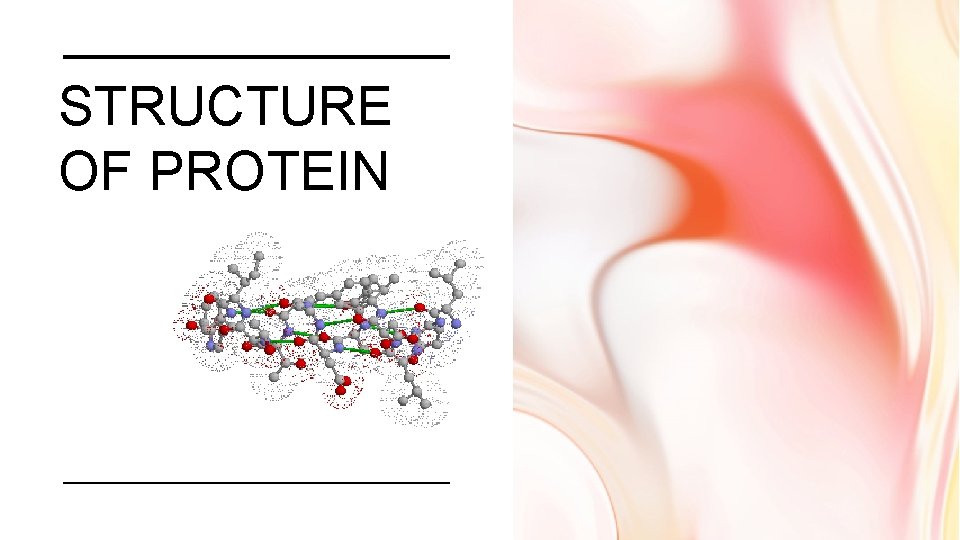
STRUCTURE OF PROTEIN
PROTEIN • Proteins are major components of all cellular systems • Proteins consist of one or more linear polymers called polypeptides • Proteins are linear and never branched • Different AA’s are linked together via PEPTIDE bonds • The individual amino acids within a protein are known as RESIDUES • The smallest known Protein is just nine residues long - OXYTOCIN • The largest is over 35, 000 residues - the structural protein TITIN
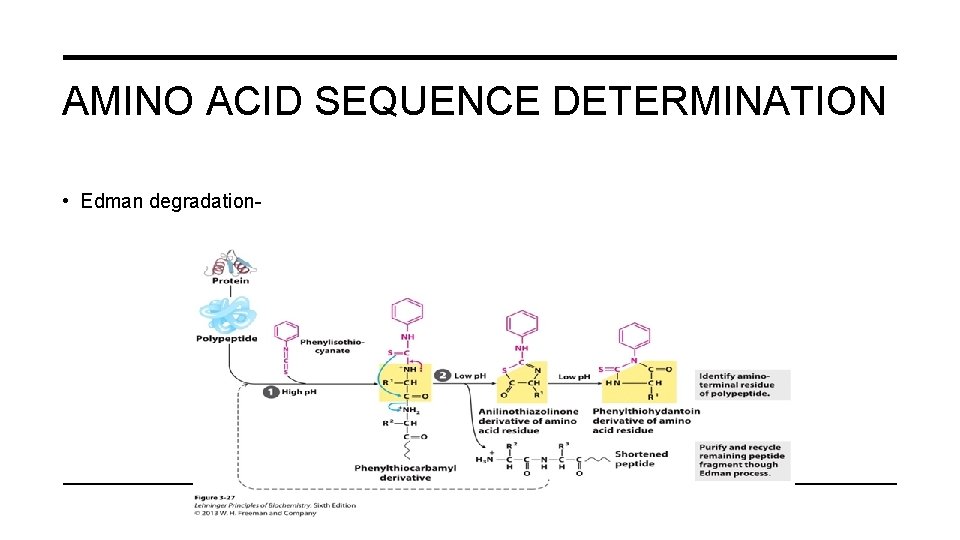
PROTEIN • In the absence of stabilizing forces a minimum of 40 residues is needed to adopt a stable 3 D structure in water. • Protein sequence can be determined by systematically removing the AA’s one at a time from the amino end - Edman degradation • Sequence the gene or c. DNA for any protein and use the genetic code to determine the AA sequence
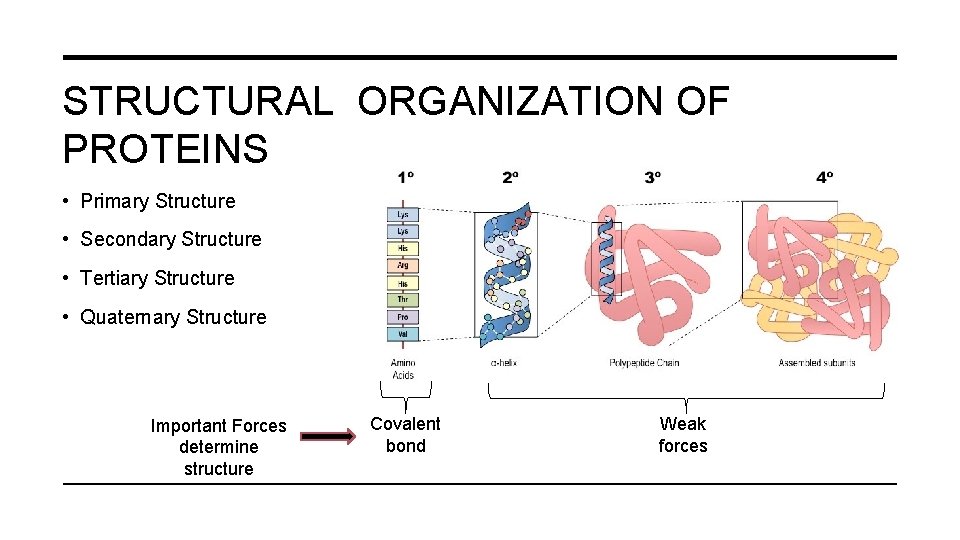
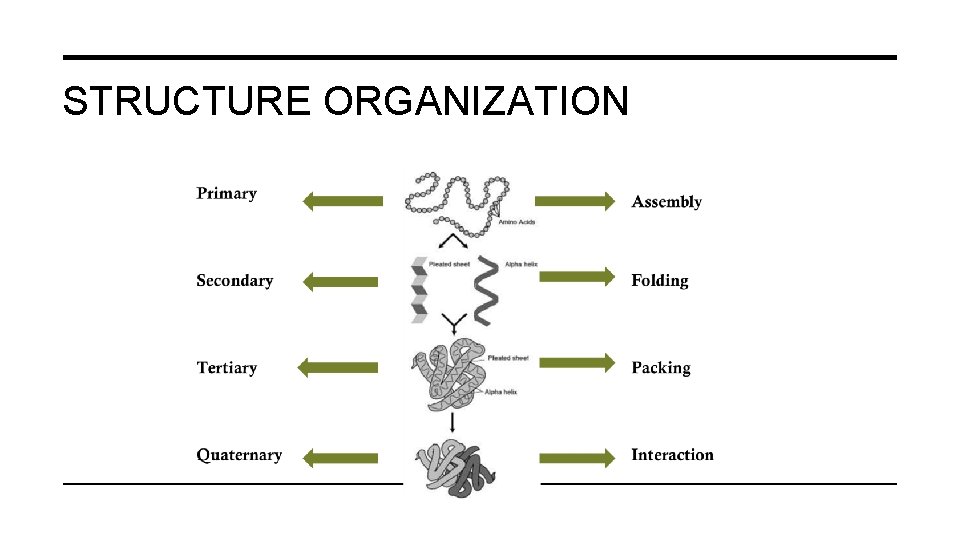
STRUCTURAL ORGANIZATION OF PROTEINS • Primary Structure • Secondary Structure • Tertiary Structure • Quaternary Structure Important Forces determine structure Covalent bond Weak forces
STRUCTURE ORGANIZATION
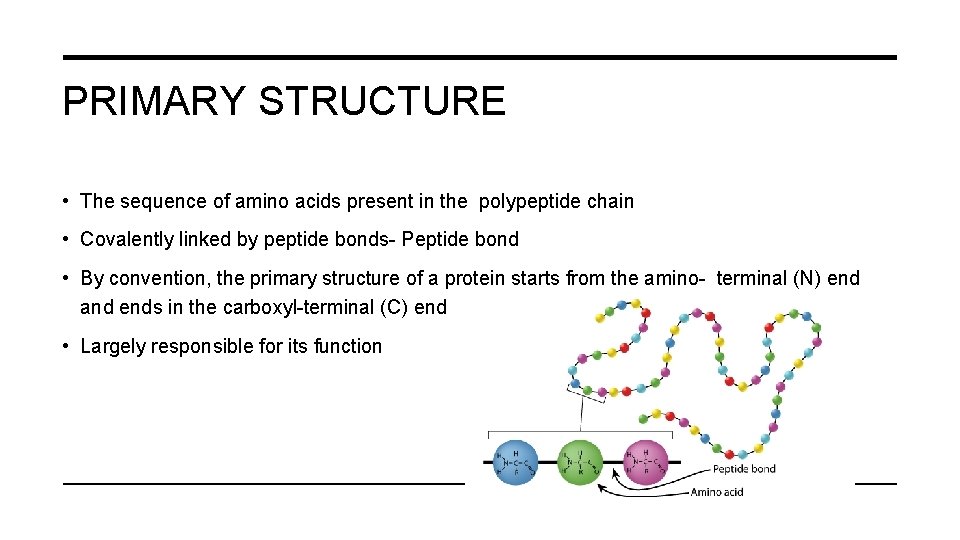
PRIMARY STRUCTURE • The sequence of amino acids present in the polypeptide chain • Covalently linked by peptide bonds- Peptide bond • By convention, the primary structure of a protein starts from the amino- terminal (N) end and ends in the carboxyl-terminal (C) end • Largely responsible for its function
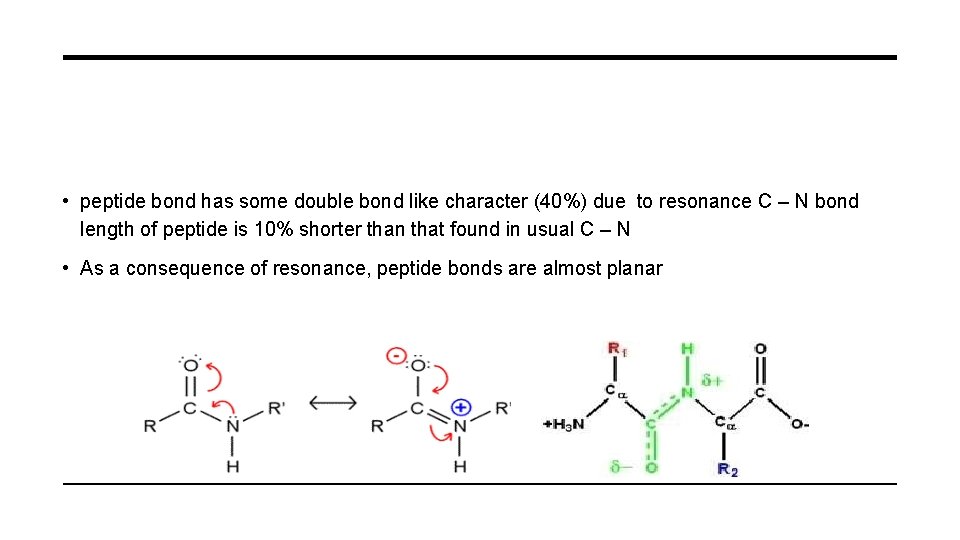
• peptide bond has some double bond like character (40%) due to resonance C – N bond length of peptide is 10% shorter than that found in usual C – N • As a consequence of resonance, peptide bonds are almost planar
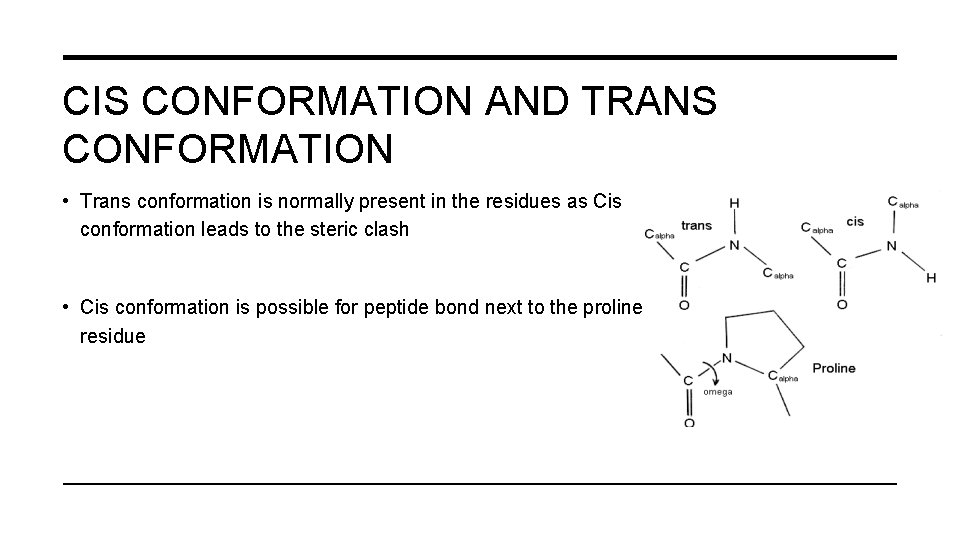
CIS CONFORMATION AND TRANS CONFORMATION • Trans conformation is normally present in the residues as Cis conformation leads to the steric clash • Cis conformation is possible for peptide bond next to the proline residue
IMPORTANCE OF PRIMARY STRUCTURE • To predict secondary and tertiary structures from sequence homologies with related proteins. (Structure prediction) • Many genetic diseases result from abnormal amino acid sequences • To understand the molecular mechanism of action of proteins • To trace evolutionary paths
METHODS OF PRIMARY STRUCTURE DETERMINATION 1. Amino Acid Composition 2. Degradation of protein into smaller fraction 3. Determination of amino acid sequence
AMINO ACID COMPOSITION • unordered amino acid composition of a protein prior to attempting to find the ordered sequence • Knowledge of the frequency of certain amino acids may also be used to choose which protease to use for digestion of the protein • Misincorporation of low levels of non-standard amino acids 2 steps • Hydrolyse a known quantity of protein into its constituent amino acids- by acid or alkali treatment • Separate and quantify the amino acids- by chromatography
N-AND C-TERMINAL AMINO ACID ANALYSIS • Reagents used which can label N-terminal amino acids • Sanger's reagent (1 -fluoro-2, 4 -dinitrobenzene) • and dansyl derivatives such as dansyl chloride are used
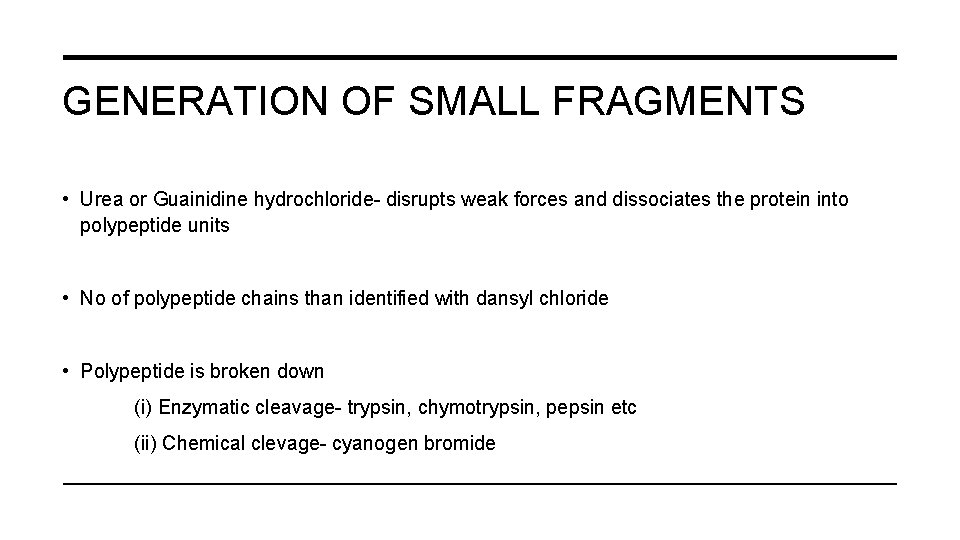
GENERATION OF SMALL FRAGMENTS • Urea or Guainidine hydrochloride- disrupts weak forces and dissociates the protein into polypeptide units • No of polypeptide chains than identified with dansyl chloride • Polypeptide is broken down (i) Enzymatic cleavage- trypsin, chymotrypsin, pepsin etc (ii) Chemical clevage- cyanogen bromide
AMINO ACID SEQUENCE DETERMINATION • Edman degradation-
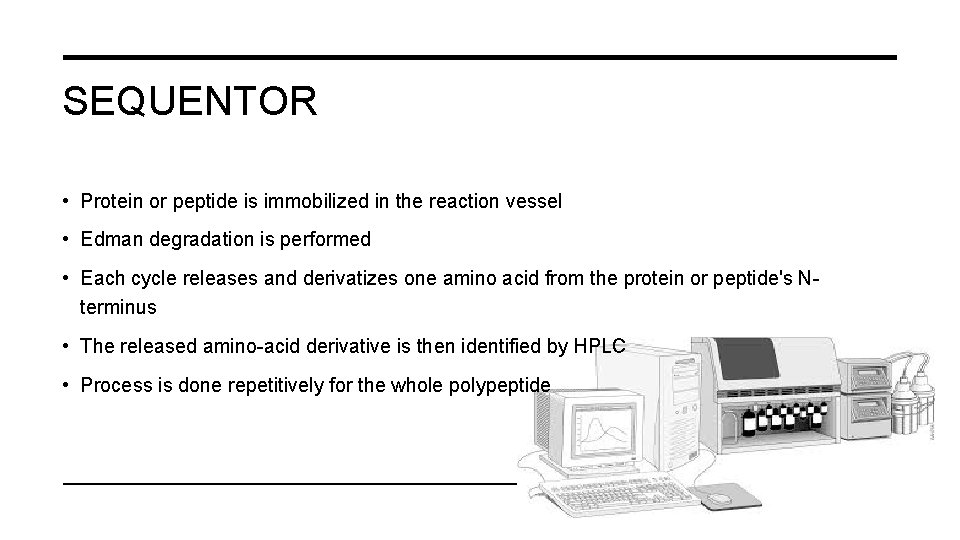
SEQUENTOR • Protein or peptide is immobilized in the reaction vessel • Edman degradation is performed • Each cycle releases and derivatizes one amino acid from the protein or peptide's Nterminus • The released amino-acid derivative is then identified by HPLC • Process is done repetitively for the whole polypeptide
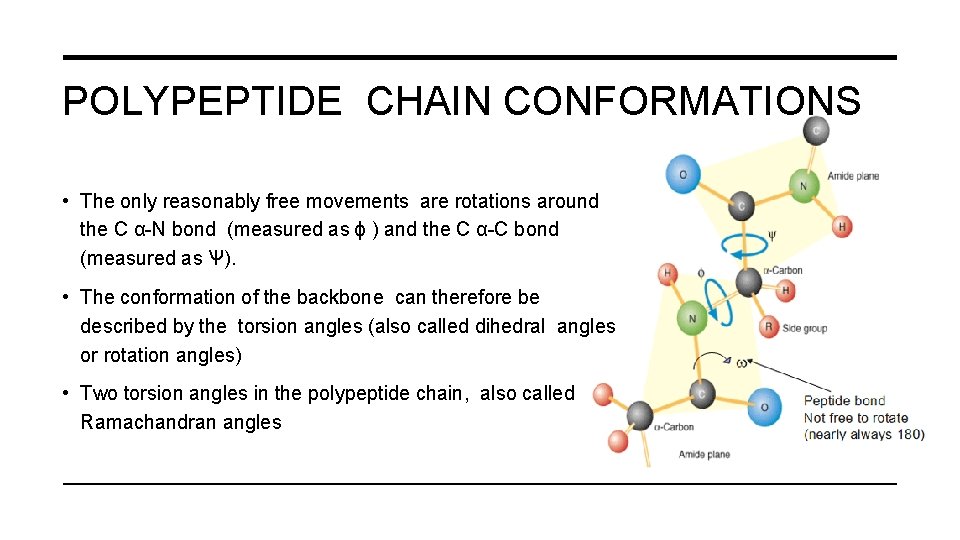
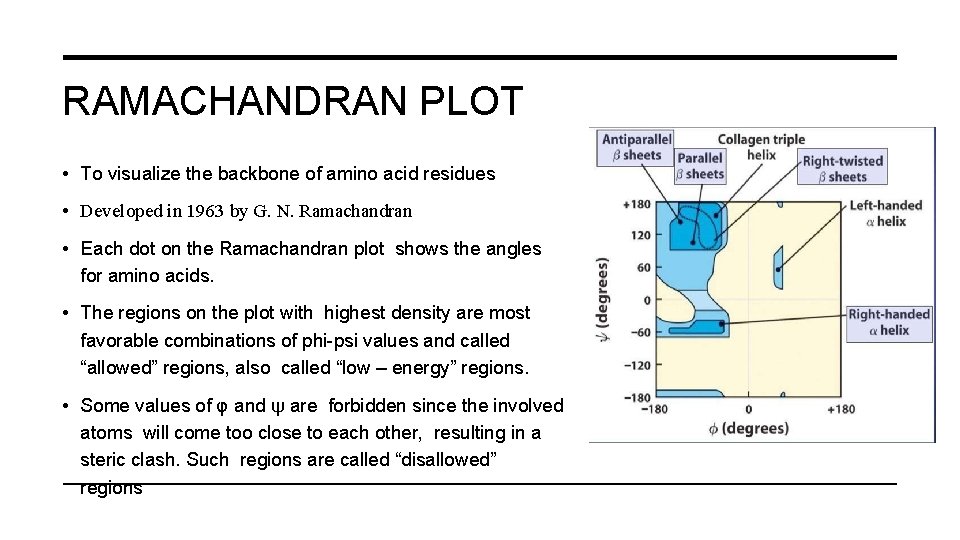
POLYPEPTIDE CHAIN CONFORMATIONS • The only reasonably free movements are rotations around the C α-N bond (measured as ϕ ) and the C α-C bond (measured as Ѱ). • The conformation of the backbone can therefore be described by the torsion angles (also called dihedral angles or rotation angles) • Two torsion angles in the polypeptide chain, also called Ramachandran angles
RAMACHANDRAN PLOT • To visualize the backbone of amino acid residues • Developed in 1963 by G. N. Ramachandran • Each dot on the Ramachandran plot shows the angles for amino acids. • The regions on the plot with highest density are most favorable combinations of phi-psi values and called “allowed” regions, also called “low – energy” regions. • Some values of φ and ψ are forbidden since the involved atoms will come too close to each other, resulting in a steric clash. Such regions are called “disallowed” regions