
Structure of Knowledge Generalisations two or more concepts
- Slides: 6
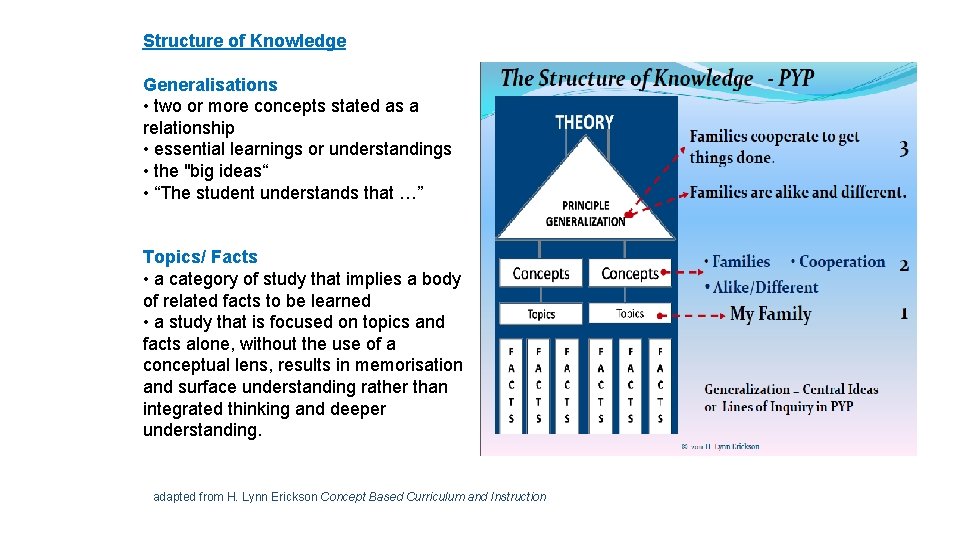
Structure of Knowledge Generalisations • two or more concepts stated as a relationship • essential learnings or understandings • the "big ideas“ • “The student understands that …” Topics/ Facts • a category of study that implies a body of related facts to be learned • a study that is focused on topics and facts alone, without the use of a conceptual lens, results in memorisation and surface understanding rather than integrated thinking and deeper understanding. adapted from H. Lynn Erickson Concept Based Curriculum and Instruction
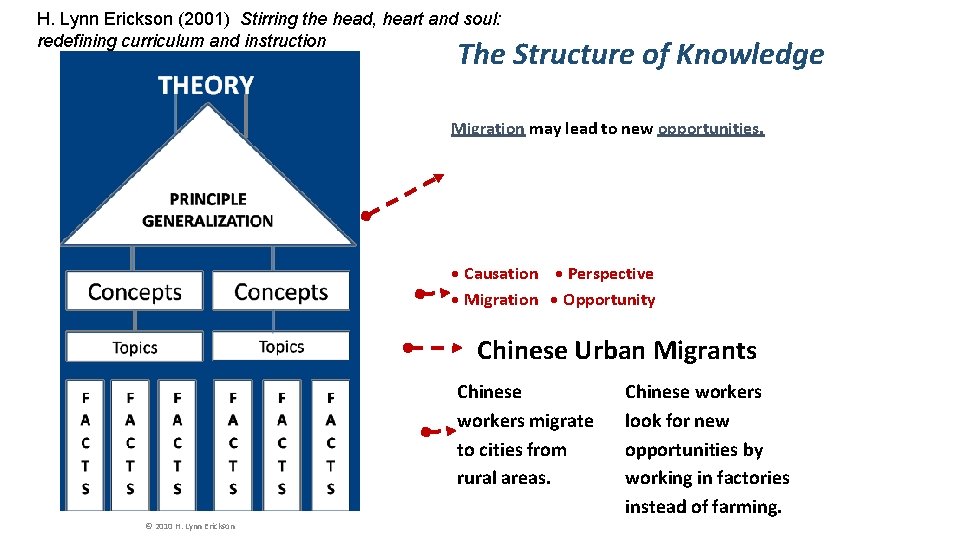
H. Lynn Erickson (2001) Stirring the head, heart and soul: redefining curriculum and instruction The Structure of Knowledge Migration may lead to new opportunities. • Causation • Perspective • Migration • Opportunity Chinese Urban Migrants Chinese workers migrate to cities from rural areas. © 2010 H. Lynn Erickson Chinese workers look for new opportunities by working in factories instead of farming.
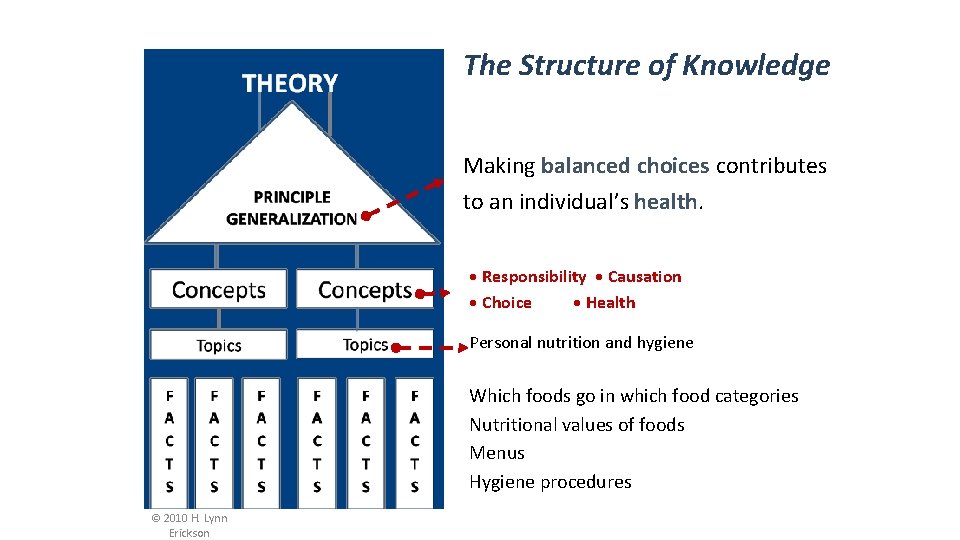
The Structure of Knowledge Making balanced choices contributes to an individual’s health. • Responsibility • Causation • Choice • Health Personal nutrition and hygiene Which foods go in which food categories Nutritional values of foods Menus Hygiene procedures © 2010 H. Lynn Erickson
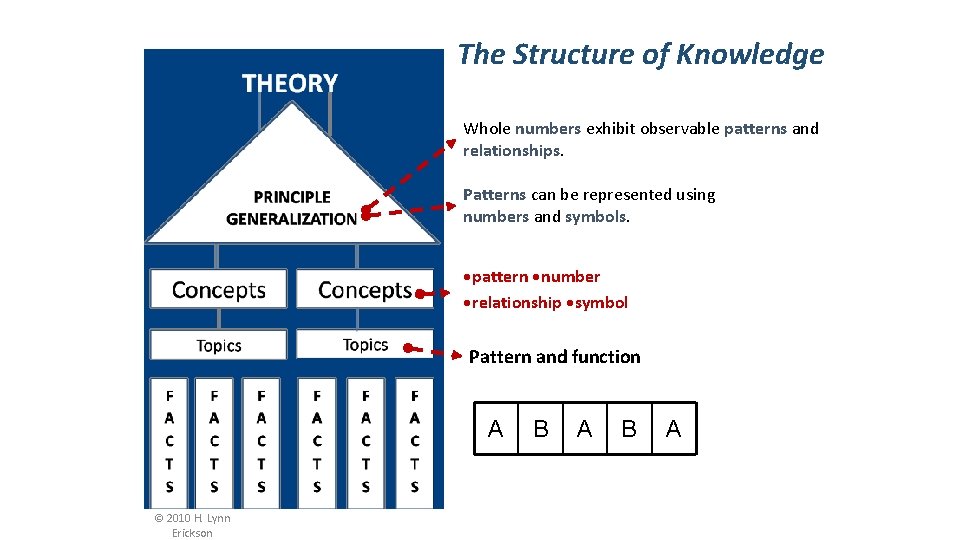
The Structure of Knowledge Whole numbers exhibit observable patterns and relationships. Patterns can be represented using numbers and symbols. • pattern • number • relationship • symbol Pattern and function A © 2010 H. Lynn Erickson B A
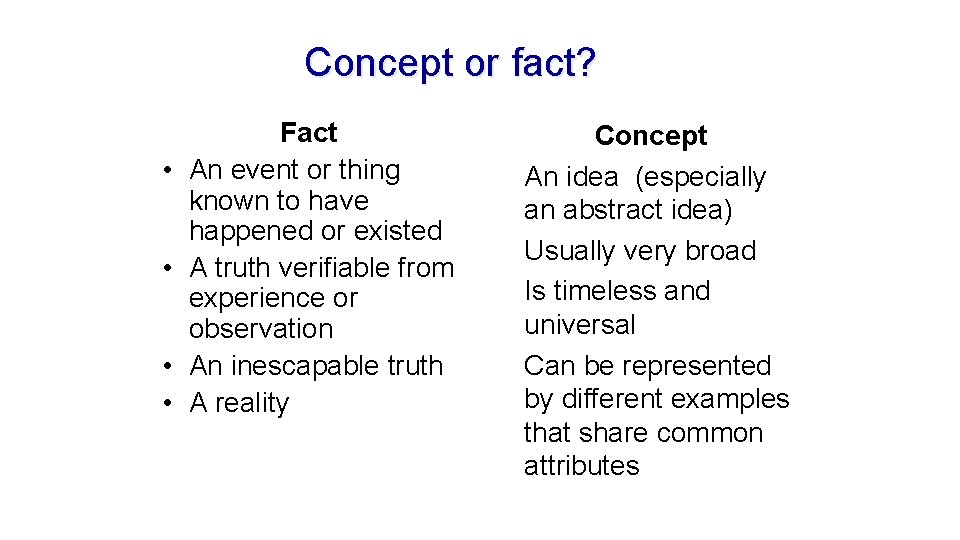
Concept or fact? • • Fact An event or thing known to have happened or existed A truth verifiable from experience or observation An inescapable truth A reality • • Concept An idea (especially an abstract idea) Usually very broad Is timeless and universal Can be represented by different examples that share common attributes
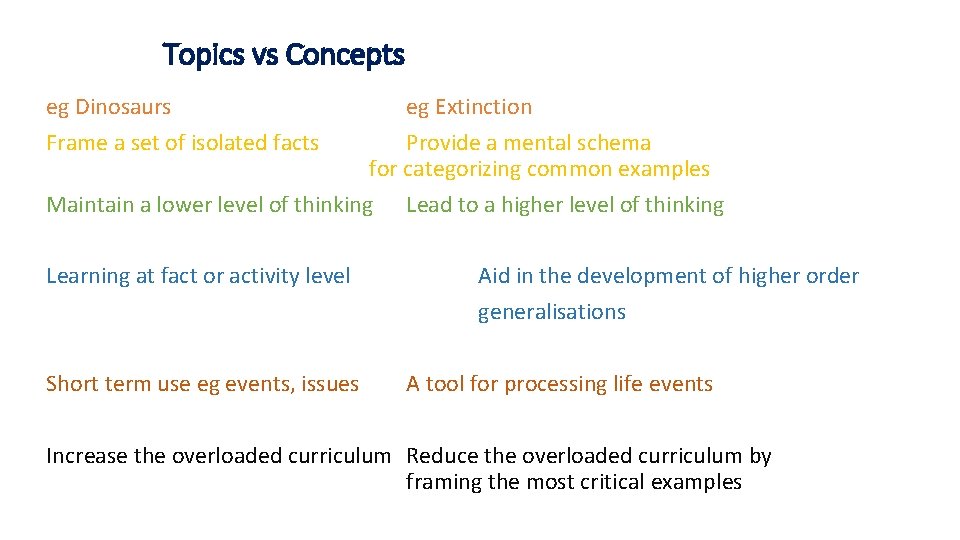
Topics vs Concepts eg Dinosaurs Frame a set of isolated facts eg Extinction Provide a mental schema for categorizing common examples Maintain a lower level of thinking Lead to a higher level of thinking Learning at fact or activity level Short term use eg events, issues Aid in the development of higher order generalisations A tool for processing life events Increase the overloaded curriculum Reduce the overloaded curriculum by framing the most critical examples