
Structure of Flowering Plants You need to know


- Slides: 38
Structure of Flowering Plants
You need to know details on… 1. Structure & function of root and shoot systems 2. Root zonations and all outer stem parts 3. Meristem function / location in root & shoot 4. Location of 3 tissue types in transverse and long sections of root and stem 5. Xylem & Phloem structure and function 6. Distinguish between Monocots and Dicots 7. Mandatory Activity…. TS Dicot stem
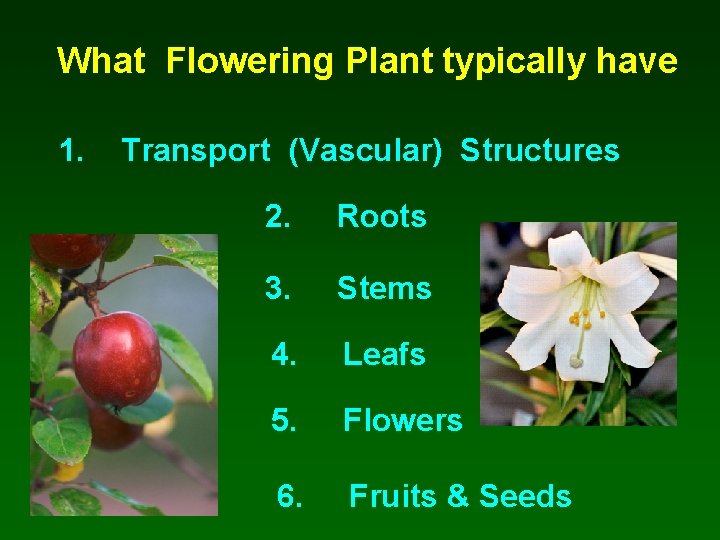
What Flowering Plant typically have 1. Transport (Vascular) Structures 2. Roots 3. Stems 4. Leafs 5. Flowers 6. Fruits & Seeds
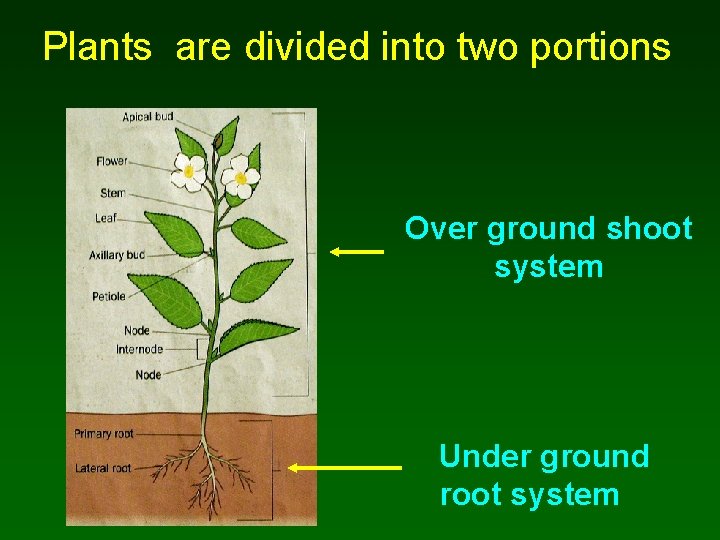
Plants are divided into two portions Over ground shoot system Under ground root system
Meristem An area of active cell division Apical meristems are found at the tip of the shoot and tip of the root and give an increase in length Lateral meristems are found around the edges of some plants and give an ìncrease in width
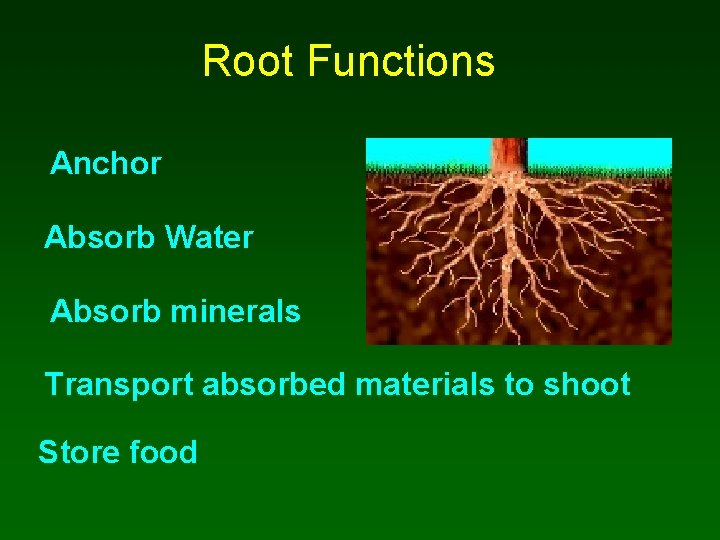
Root Functions Anchor Absorb Water Absorb minerals Transport absorbed materials to shoot Store food
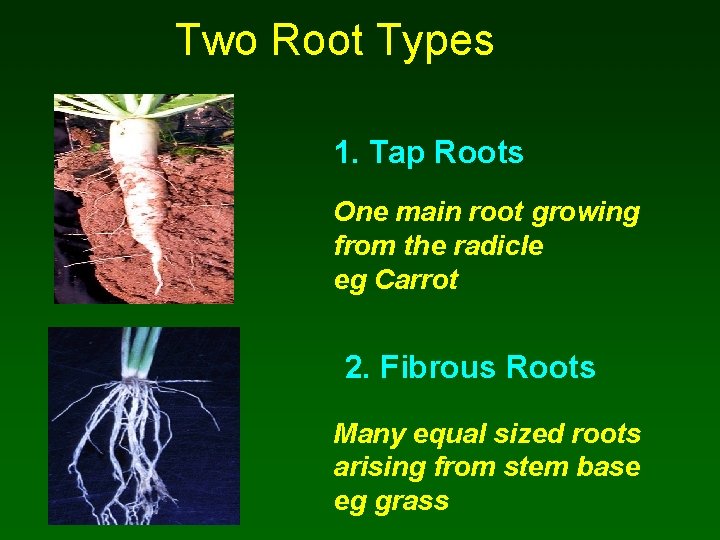
Two Root Types 1. Tap Roots One main root growing from the radicle eg Carrot 2. Fibrous Roots Many equal sized roots arising from stem base eg grass
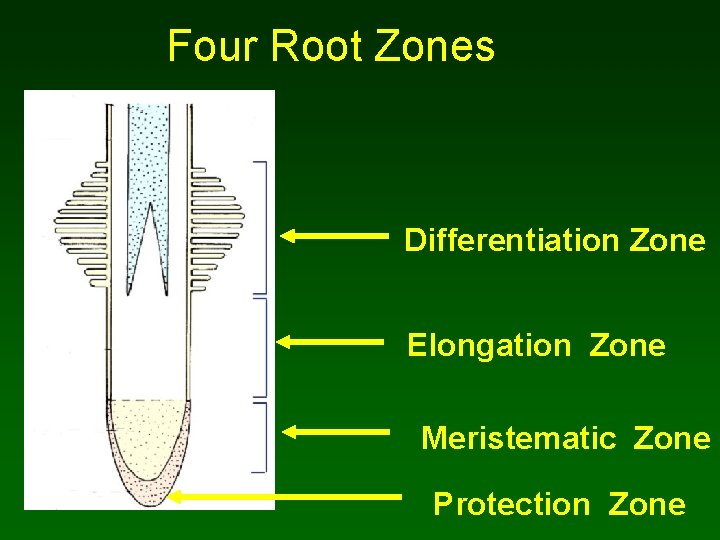
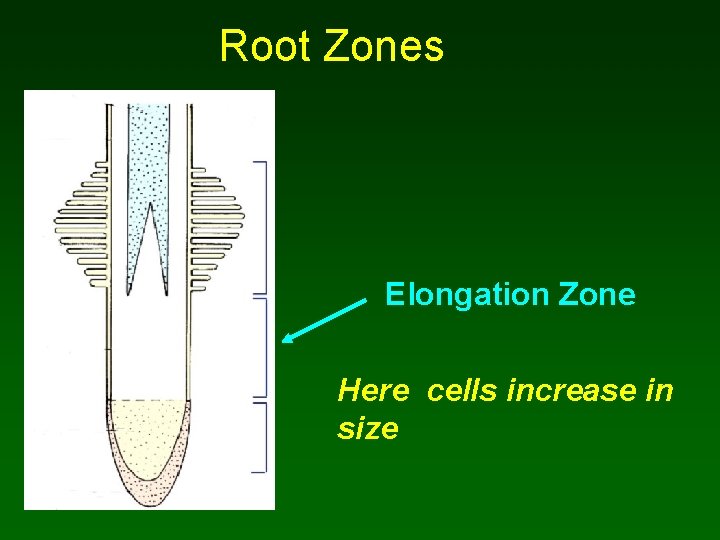
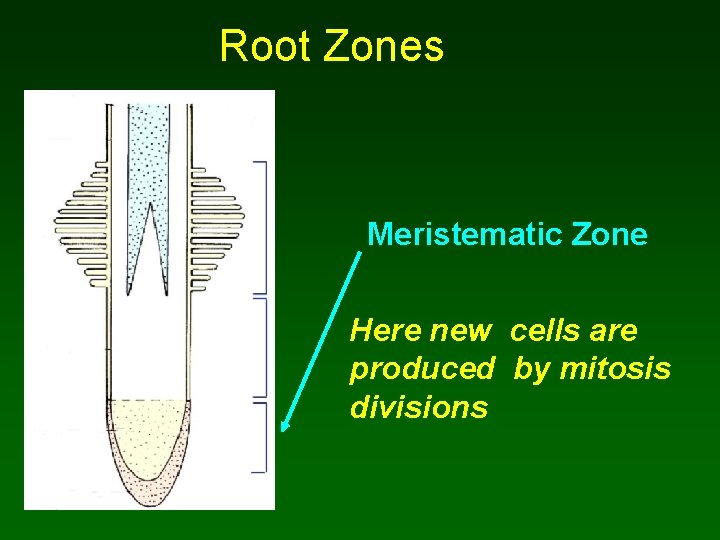
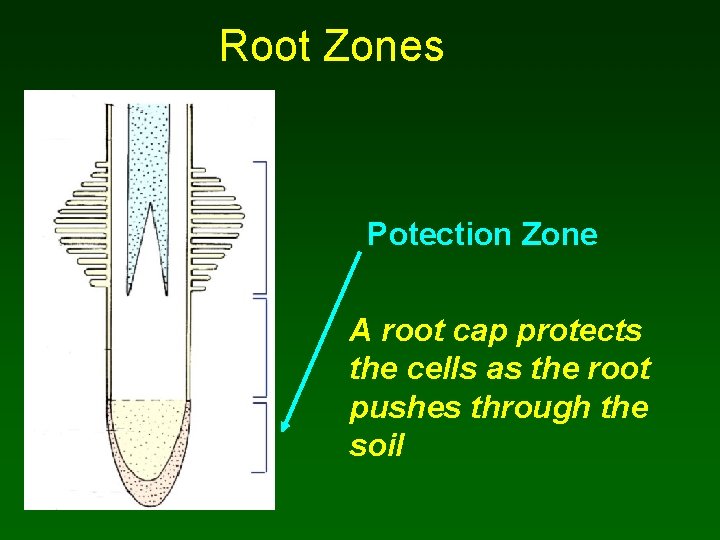
Four Root Zones Differentiation Zone Elongation Zone Meristematic Zone Protection Zone
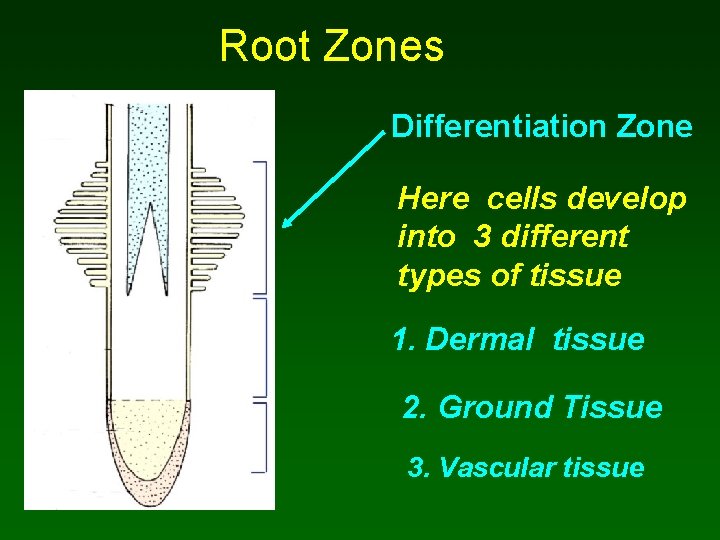
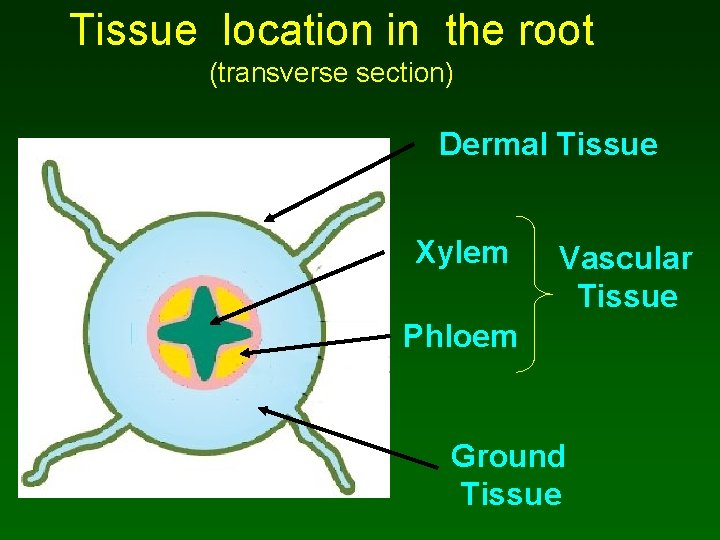
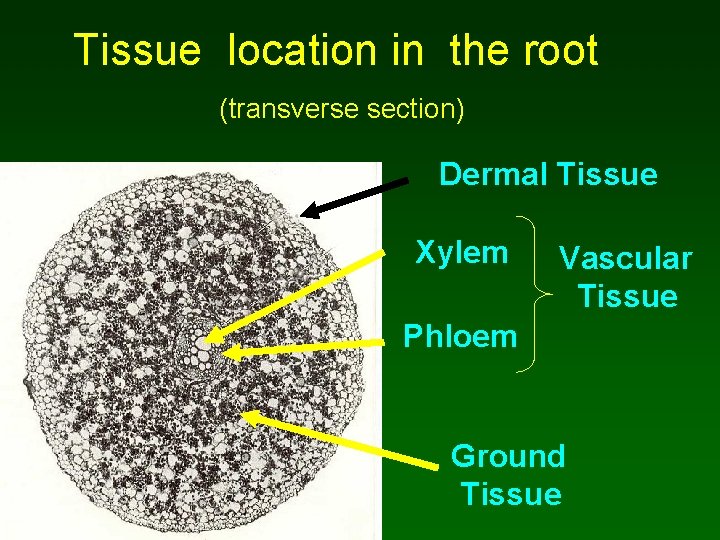
Root Zones Differentiation Zone Here cells develop into 3 different types of tissue 1. Dermal tissue 2. Ground Tissue 3. Vascular tissue
Root Zones Elongation Zone Here cells increase in size
Root Zones Meristematic Zone Here new cells are produced by mitosis divisions
Root Zones Potection Zone A root cap protects the cells as the root pushes through the soil
Learning Check 1 1. Name the two types of root system 2. Explain the term Meristem 3. Name the four zones in a root 4. What is the function of the root cap ?
Tissue location in the root (transverse section) Dermal Tissue Xylem Vascular Tissue Phloem Ground Tissue
Tissue location in the root (transverse section) Dermal Tissue Xylem Vascular Tissue Phloem Ground Tissue
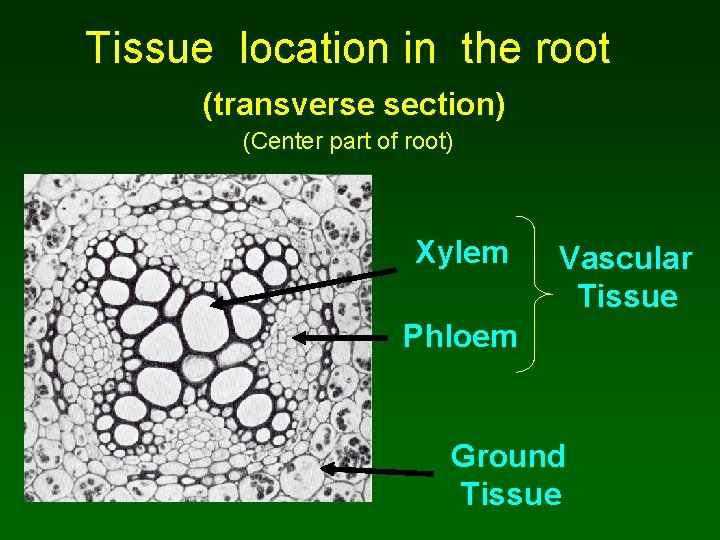
Tissue location in the root (transverse section) (Center part of root) Xylem Vascular Tissue Phloem Ground Tissue
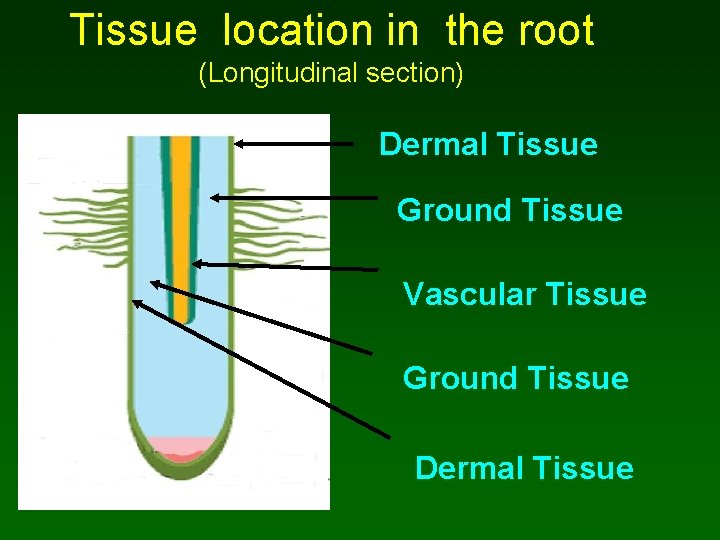
Tissue location in the root (Longitudinal section) Dermal Tissue Ground Tissue Vascular Tissue Ground Tissue Dermal Tissue
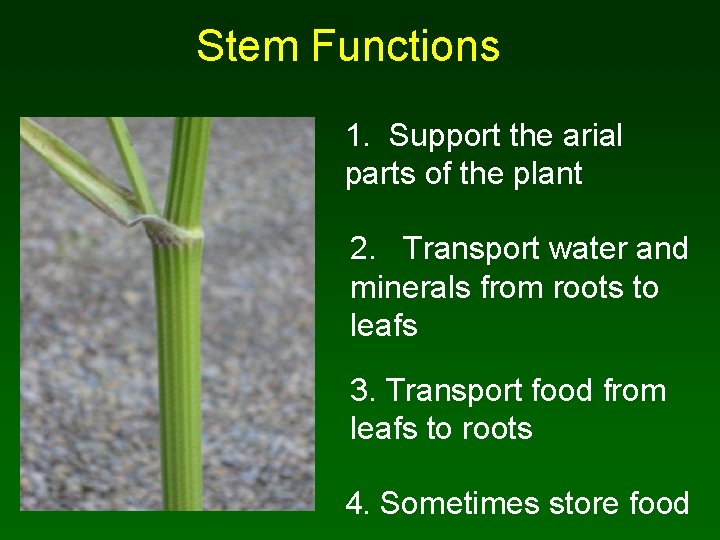
Stem Functions 1. Support the arial parts of the plant 2. Transport water and minerals from roots to leafs 3. Transport food from leafs to roots 4. Sometimes store food
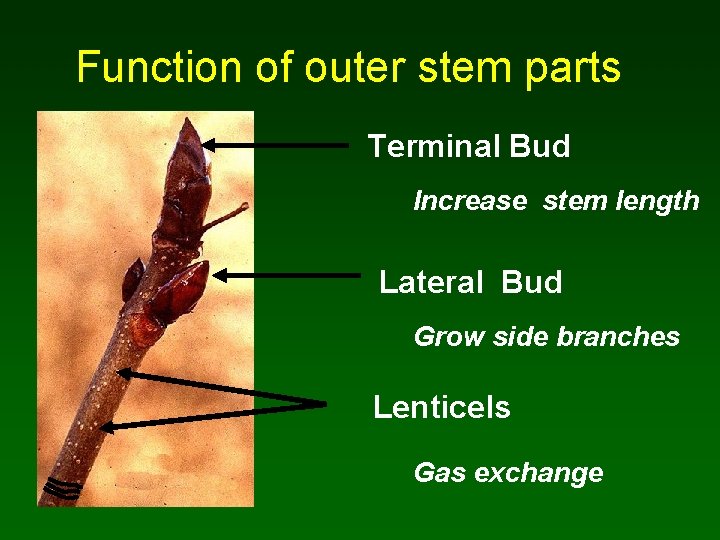
Function of outer stem parts Terminal Bud Increase stem length Lateral Bud Grow side branches Lenticels Gas exchange
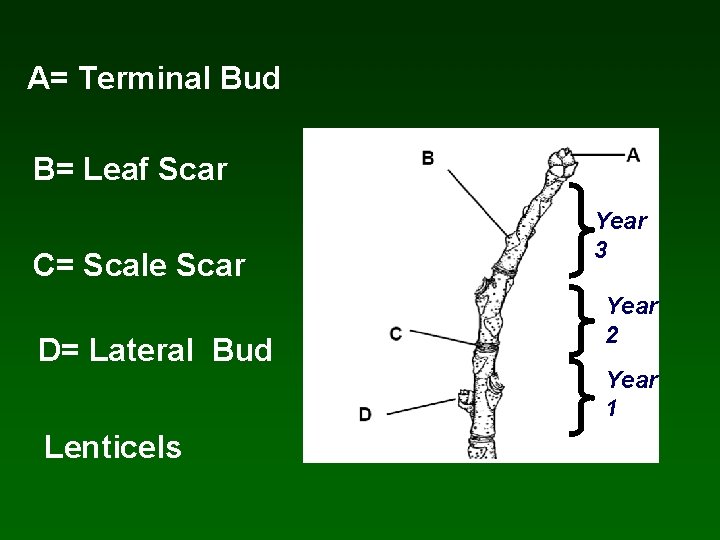
A= Terminal Bud B= Leaf Scar C= Scale Scar D= Lateral Bud Lenticels Year 3 Year 2 Year 1
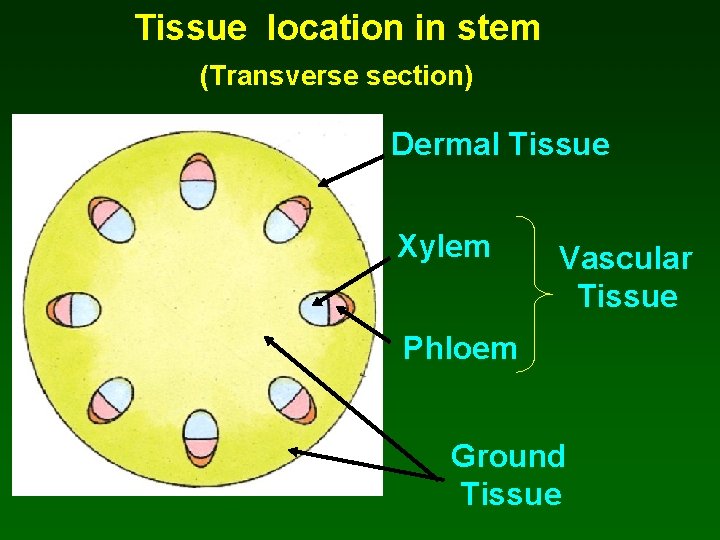
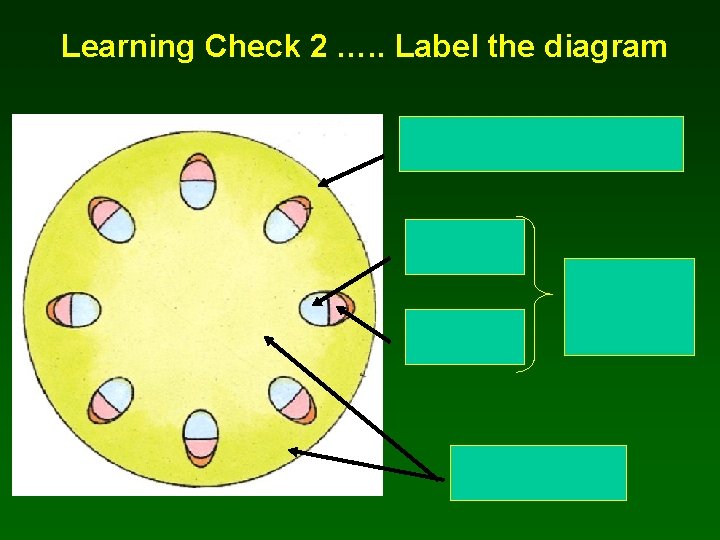
Tissue location in stem (Transverse section) Dermal Tissue Xylem Vascular Tissue Phloem Ground Tissue
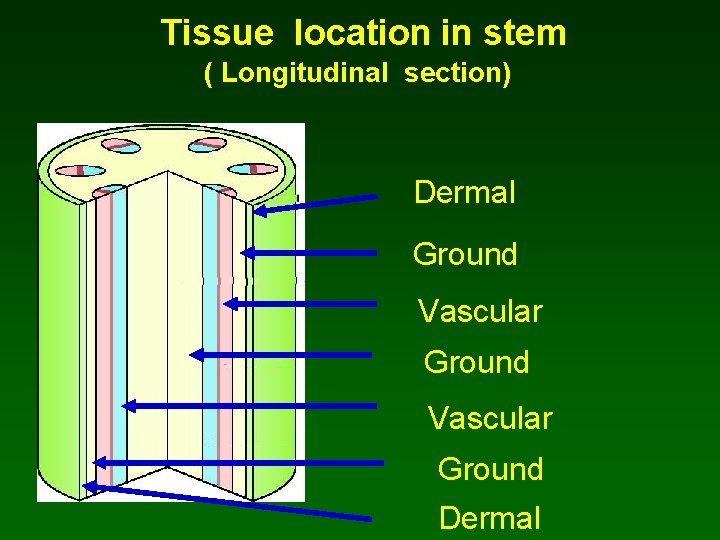
Tissue location in stem ( Longitudinal section) Dermal Ground Vascular Ground Dermal
Learning Check 2 …. . Label the diagram
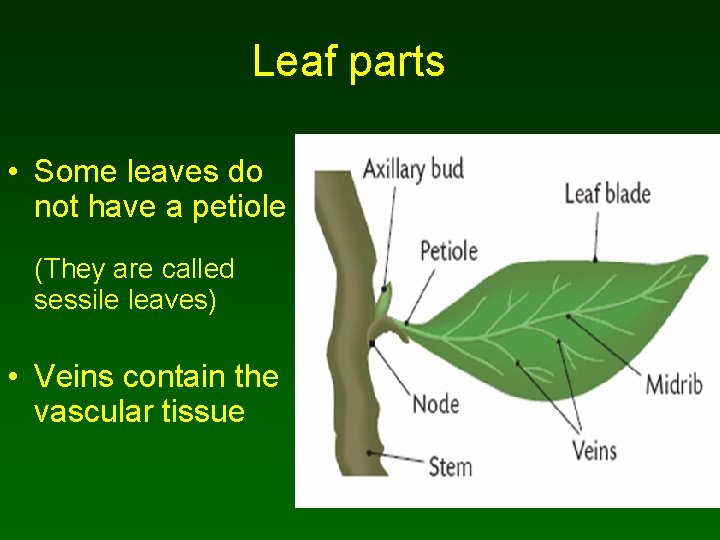
Leaf parts • Some leaves do not have a petiole (They are called sessile leaves) • Veins contain the vascular tissue
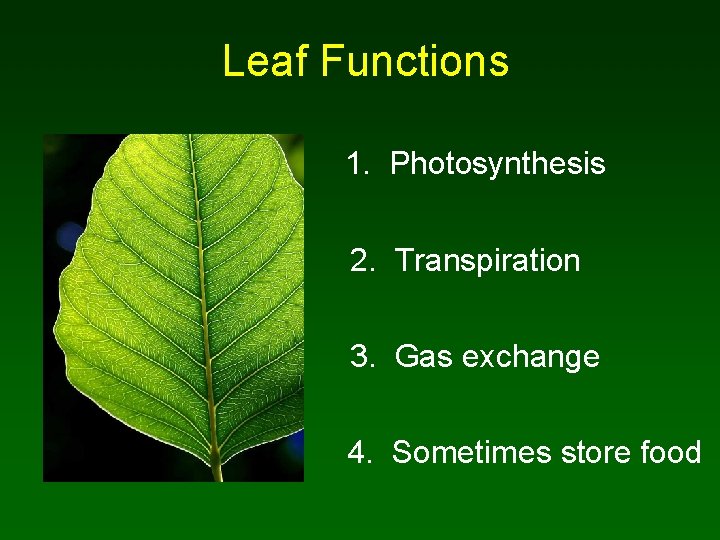
Leaf Functions 1. Photosynthesis 2. Transpiration 3. Gas exchange 4. Sometimes store food
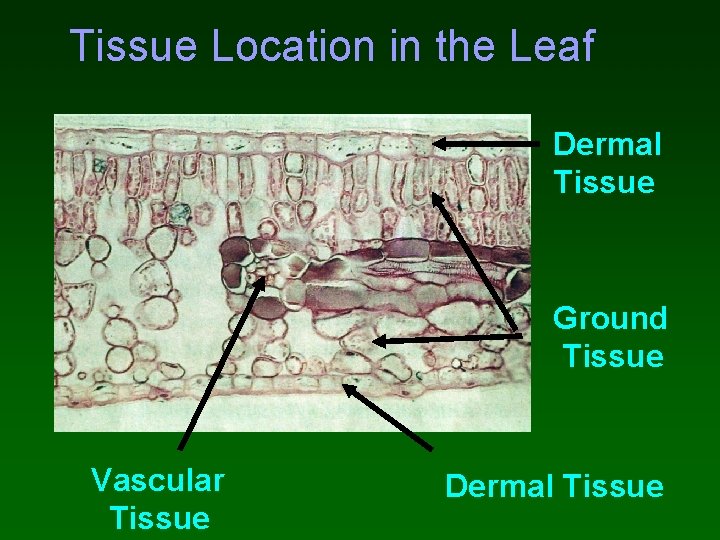
Tissue Location in the Leaf Dermal Tissue Ground Tissue Vascular Tissue Dermal Tissue
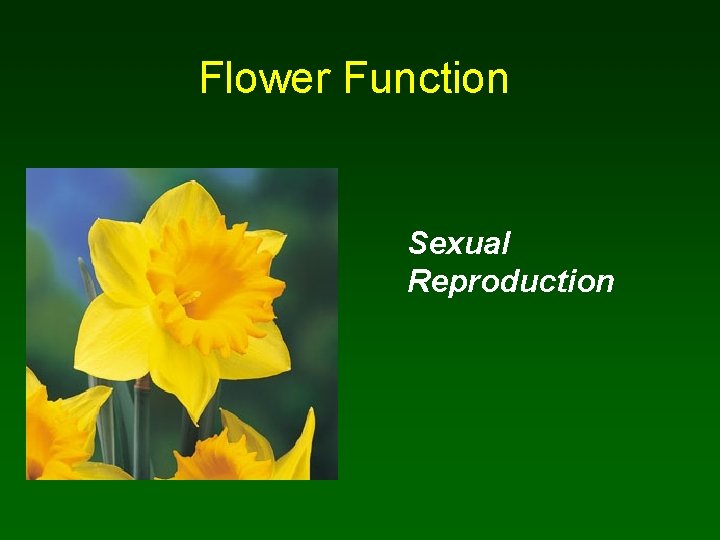
Flower Function Sexual Reproduction
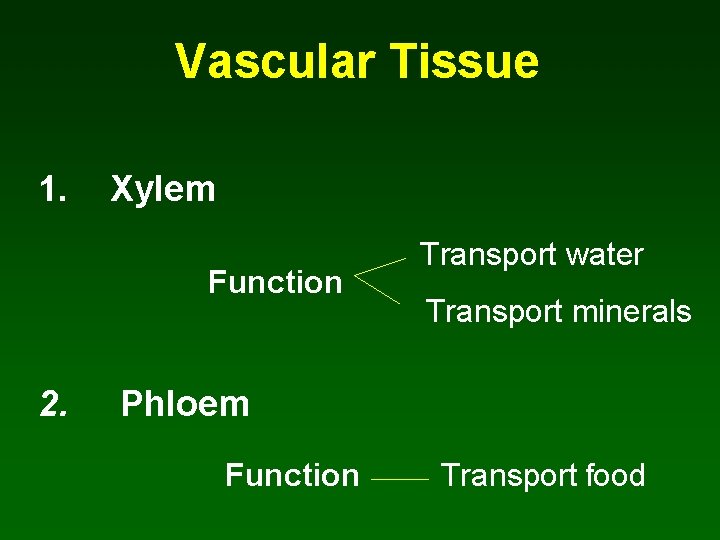
Vascular Tissue 1. Xylem Function 2. Transport water Transport minerals Phloem Function Transport food
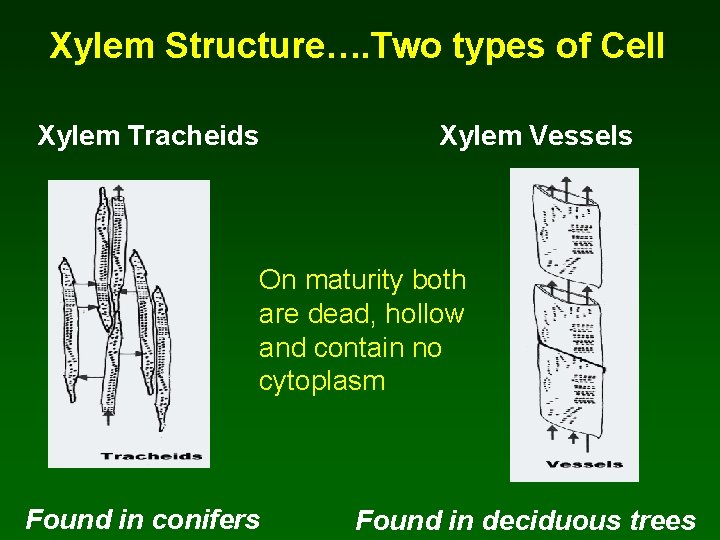
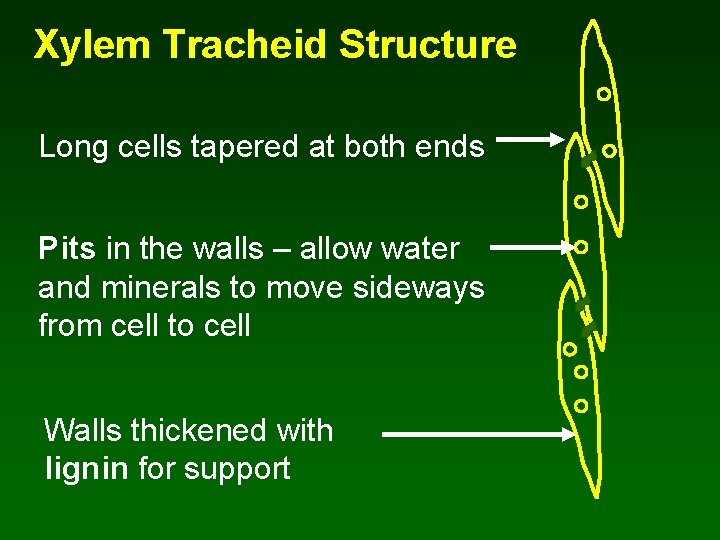
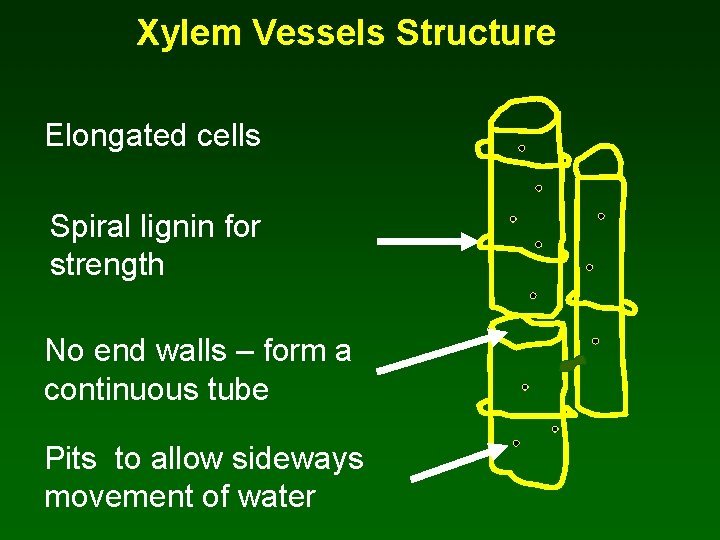
Xylem Structure…. Two types of Cell Xylem Tracheids Xylem Vessels On maturity both are dead, hollow and contain no cytoplasm Found in conifers Found in deciduous trees
Xylem Tracheid Structure Long cells tapered at both ends Pits in the walls – allow water and minerals to move sideways from cell to cell Walls thickened with lignin for support
Xylem Vessels Structure Elongated cells Spiral lignin for strength No end walls – form a continuous tube Pits to allow sideways movement of water
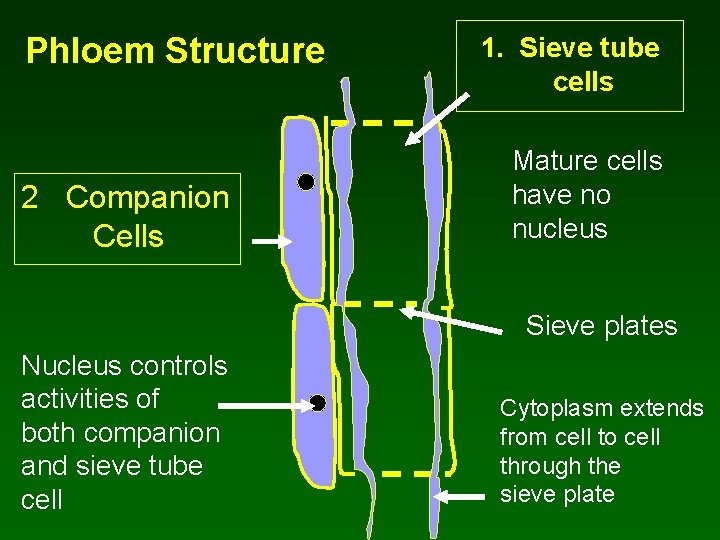
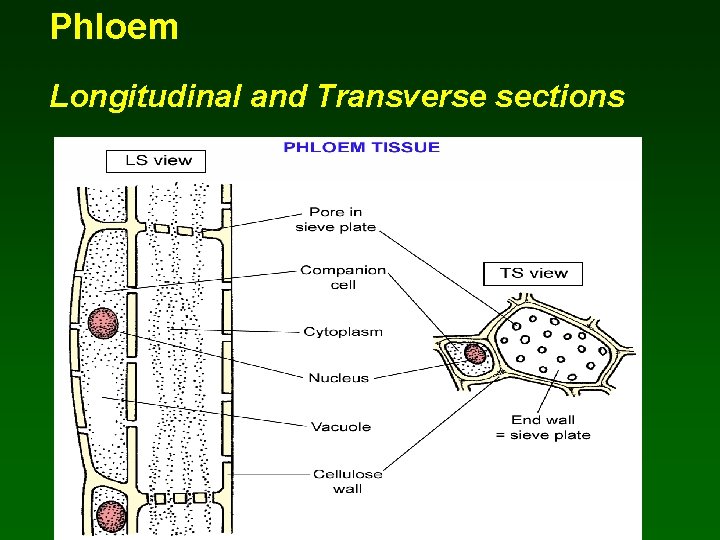
Phloem Structure 2 Companion Cells 1. Sieve tube cells Mature cells have no nucleus Sieve plates Nucleus controls activities of both companion and sieve tube cell Cytoplasm extends from cell to cell through the sieve plate
Phloem Longitudinal and Transverse sections
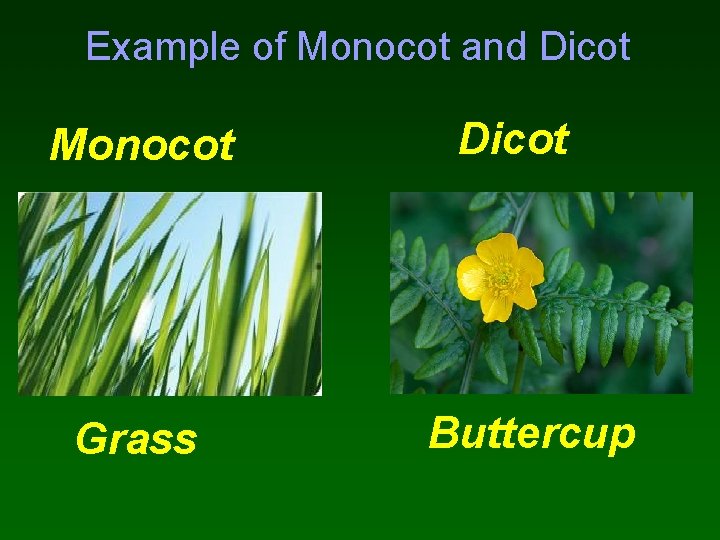
Example of Monocot and Dicot Monocot Grass Dicot Buttercup
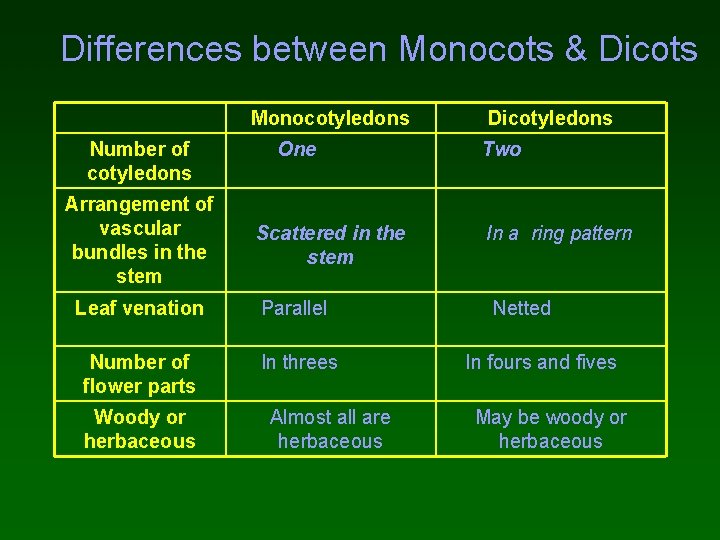
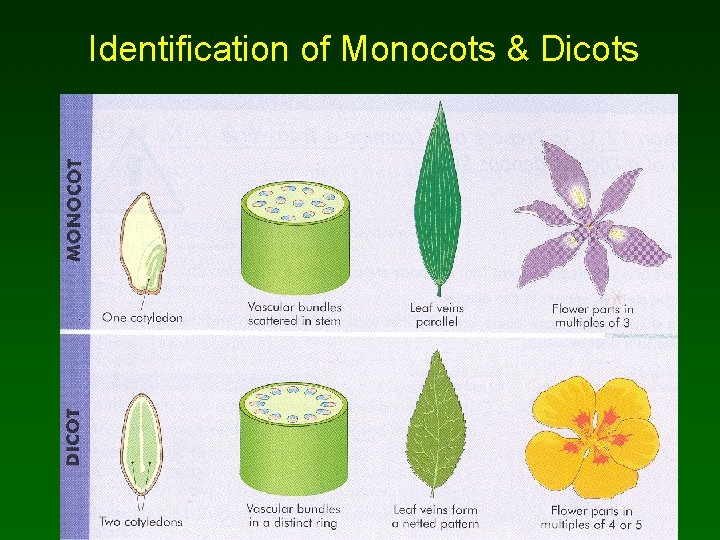
Differences between Monocots & Dicots Monocotyledons Number of cotyledons Arrangement of vascular bundles in the stem One Scattered in the stem Leaf venation Parallel Number of flower parts In threes Woody or herbaceous Almost all are herbaceous Dicotyledons Two In a ring pattern Netted In fours and fives May be woody or herbaceous
Identification of Monocots & Dicots
Learning Check 3 1. State two functions of a leaf 2. Distinguish between xylem vessels and xylem tracheids 3. What is the role of the companion cell in phloem tissue 4. How is a transverse section of a monocot stem different to the TS od a Dicot stem ?
End