
Structure of flowering plants The Structure of a
- Slides: 20
Structure of flowering plants
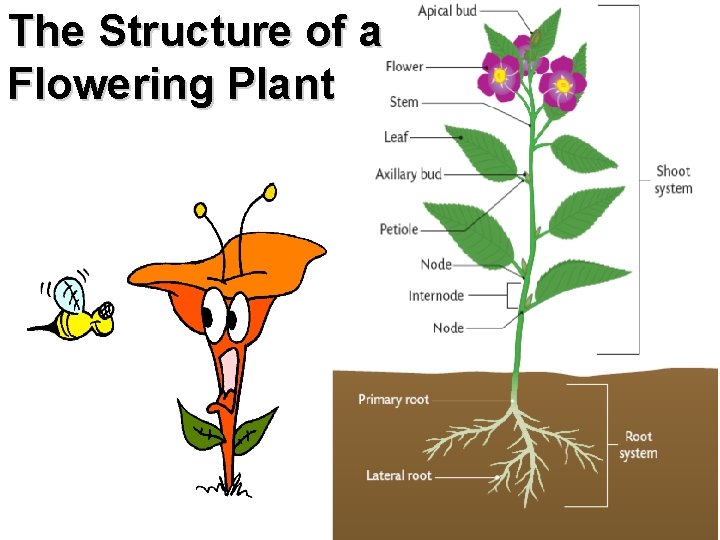
The Structure of a Flowering Plant
Syllabus links 3. 2. 1 Organisational Complexity of the Flowering Plant Organisational complexity of the flowering plant as exemplified by the root, stem, leaf, flower, seed, and transport/vascular structures. Function of the root and shoot system. Explanation of the term "meristem" – location in the root and shoot. Location of three tissue types – dermal, ground and vascular in transverse and in longitudinal sections of the root and stem. Xylem and phloem as examples of vascular tissues – their function and structure.
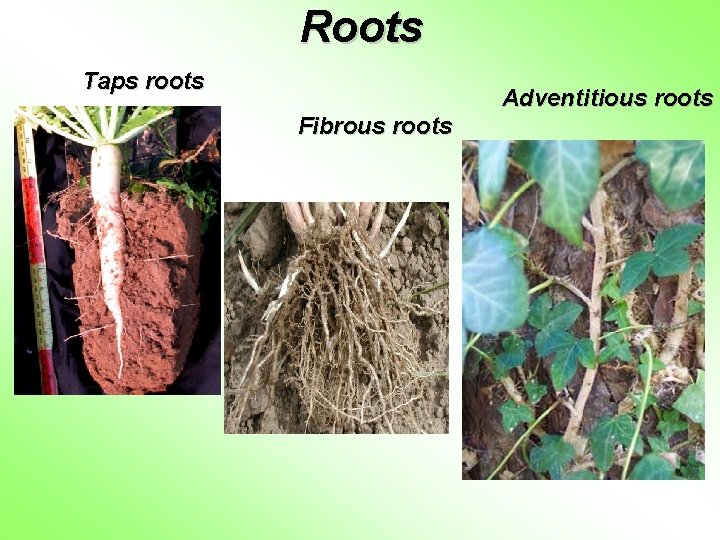
Roots Taps roots Adventitious roots Fibrous roots
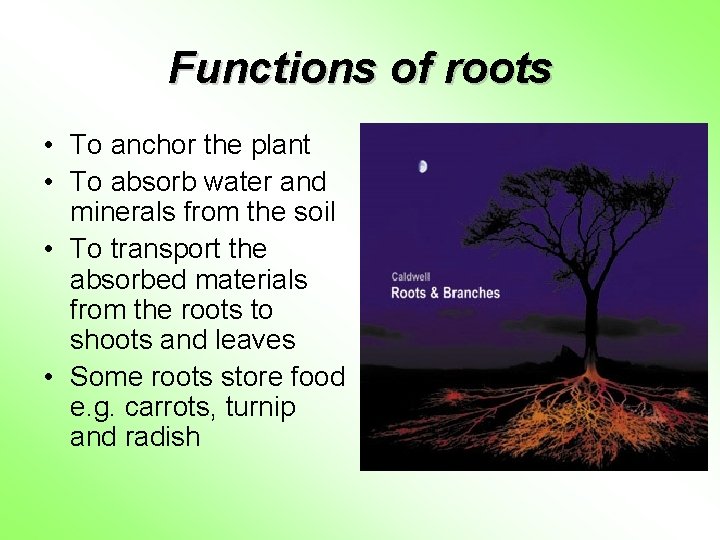
Functions of roots • To anchor the plant • To absorb water and minerals from the soil • To transport the absorbed materials from the roots to shoots and leaves • Some roots store food e. g. carrots, turnip and radish
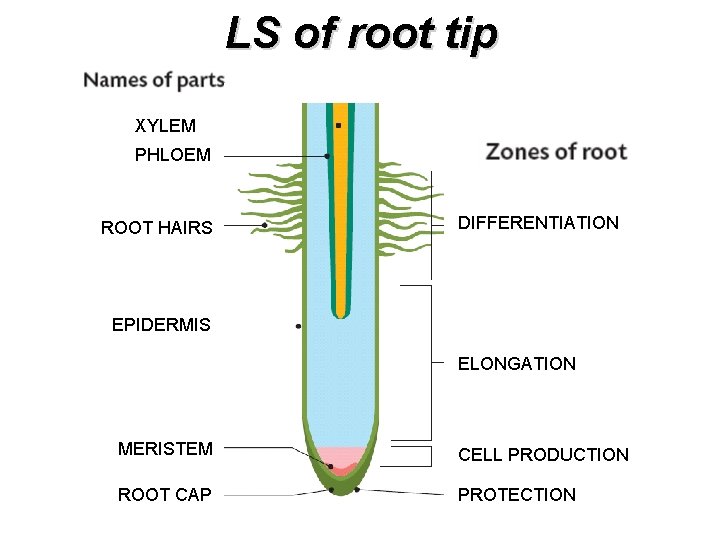
LS of root tip XYLEM PHLOEM ROOT HAIRS DIFFERENTIATION EPIDERMIS ELONGATION MERISTEM CELL PRODUCTION ROOT CAP PROTECTION
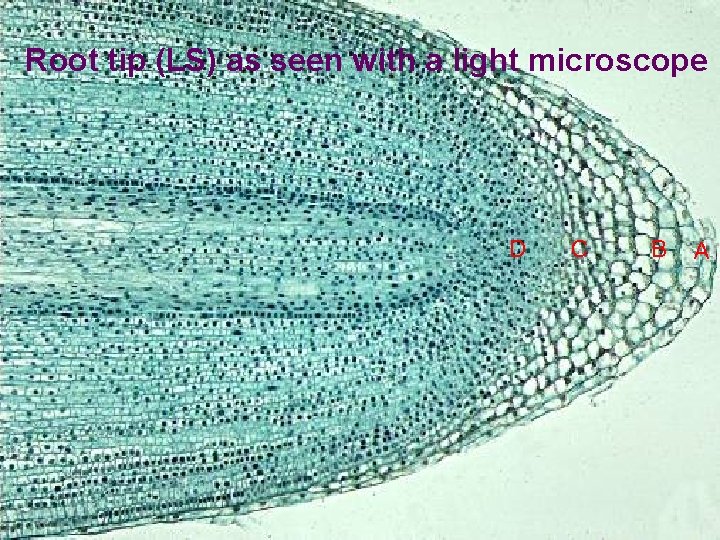
Root tip (LS) as seen with a light microscope D C B A
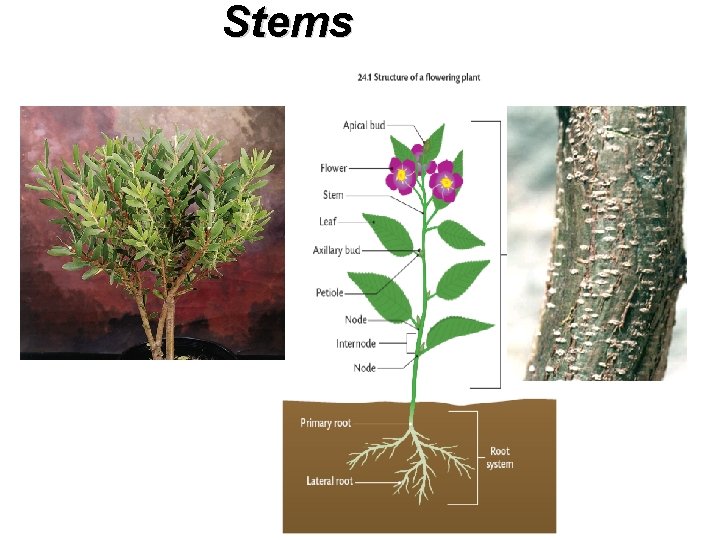
Stems
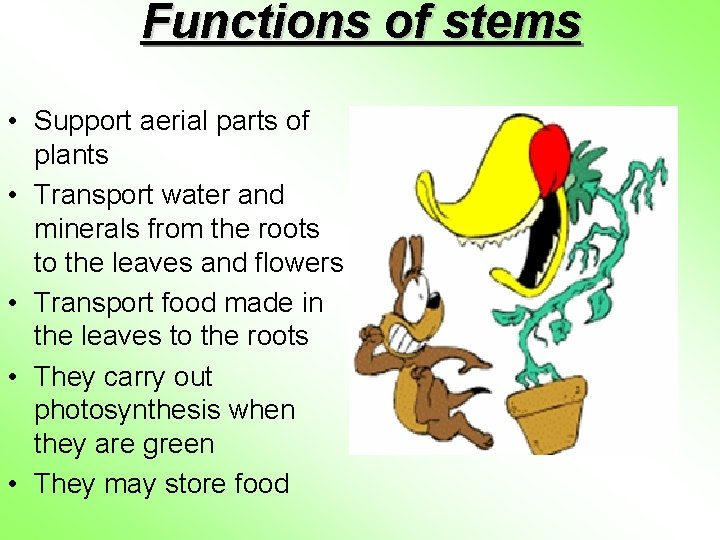
Functions of stems • Support aerial parts of plants • Transport water and minerals from the roots to the leaves and flowers • Transport food made in the leaves to the roots • They carry out photosynthesis when they are green • They may store food
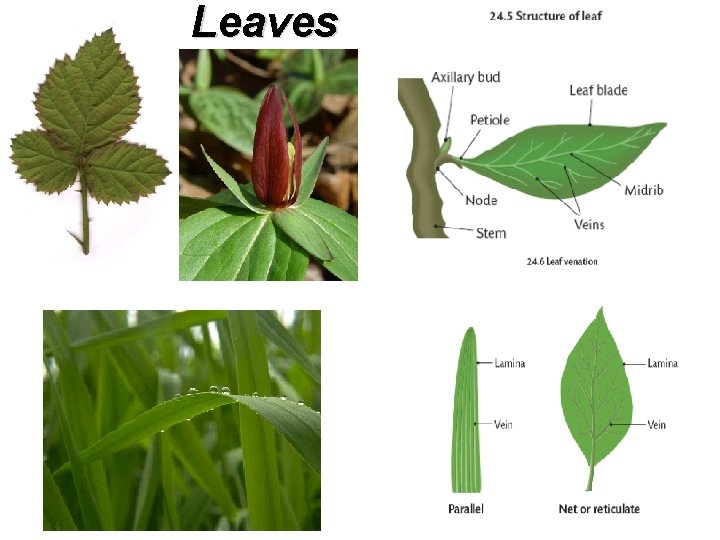
Leaves
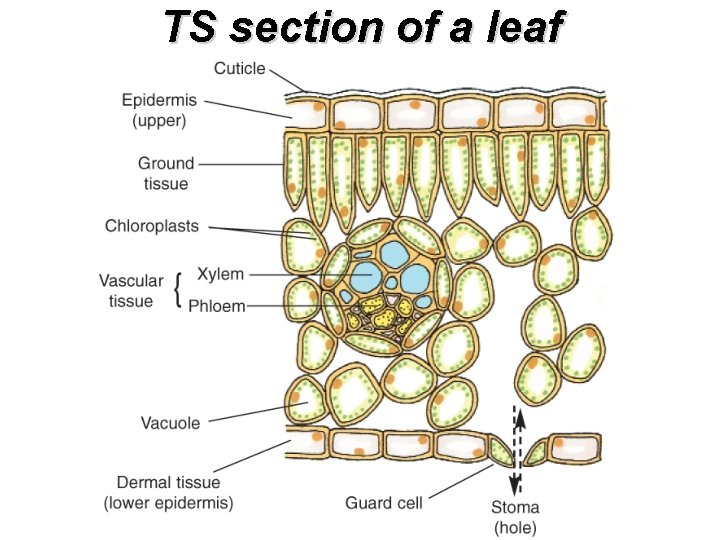
TS section of a leaf
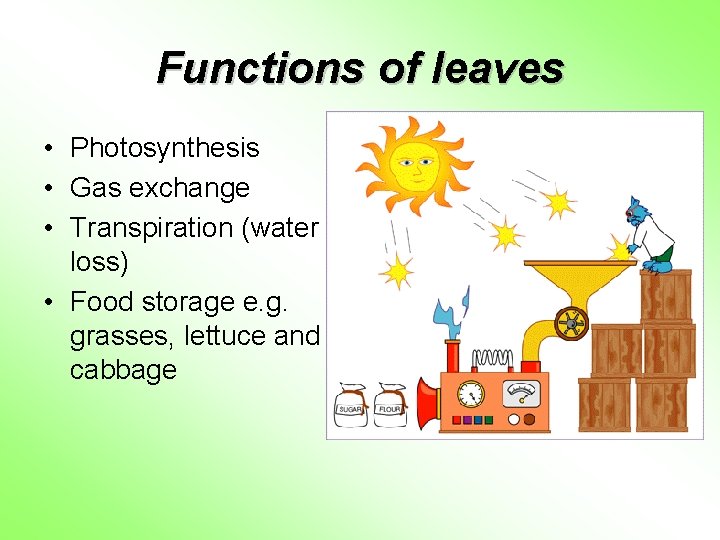
Functions of leaves • Photosynthesis • Gas exchange • Transpiration (water loss) • Food storage e. g. grasses, lettuce and cabbage
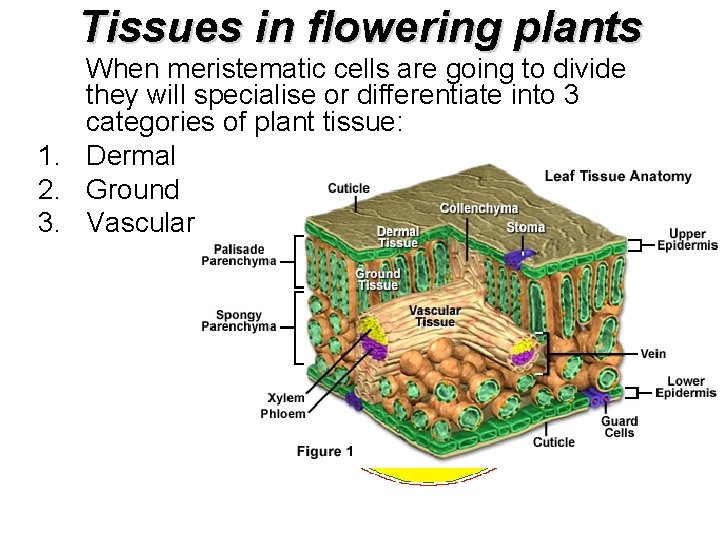
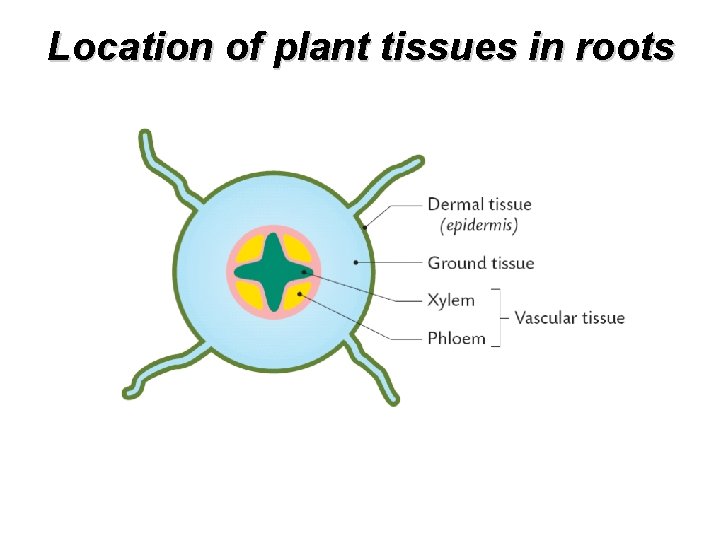
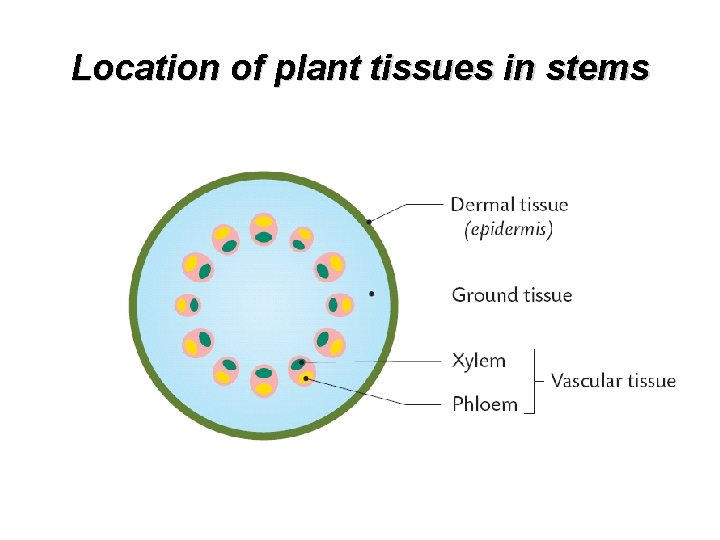
Tissues in flowering plants When meristematic cells are going to divide they will specialise or differentiate into 3 categories of plant tissue: 1. Dermal 2. Ground 3. Vascular
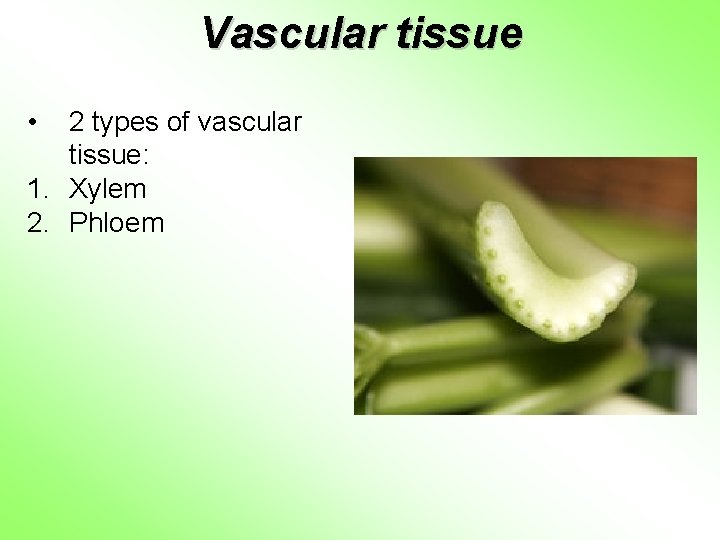
Vascular tissue • 2 types of vascular tissue: 1. Xylem 2. Phloem
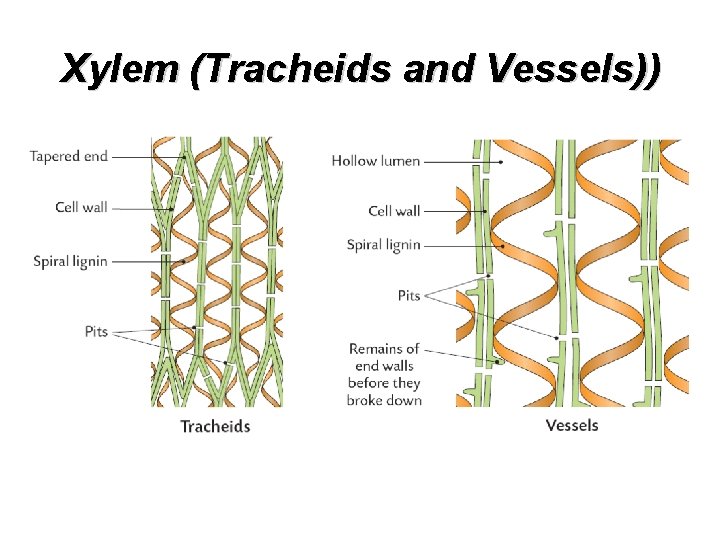
Xylem (Tracheids and Vessels))
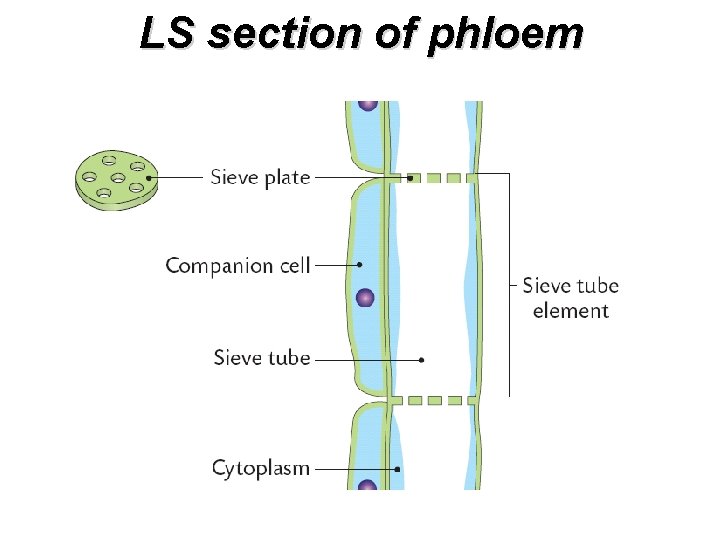
LS section of phloem
Location of plant tissues in roots
Location of plant tissues in stems
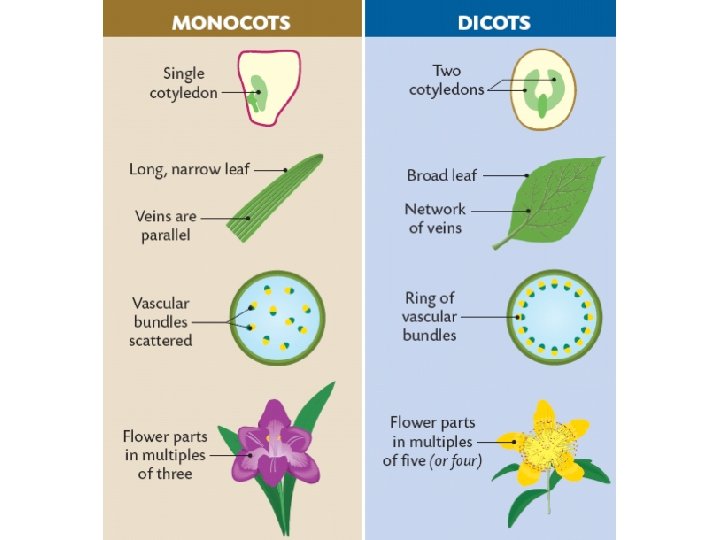
Syllabus links 3. 2. 1 Organisational Complexity of the Flowering Plant Identification of dicotyledons and monocotyledons under the headings: woody/herbaceous, arrangement of floral parts, arrangement of vascular bundles, cotyledon or seed leaf number.