
Structure of chlorophyll molecule o Long nonpolar hydrophobic
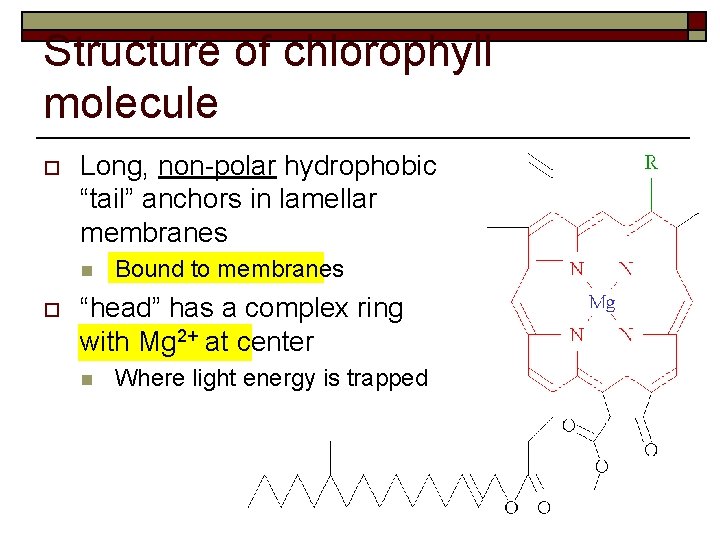
Structure of chlorophyll molecule o Long, non-polar hydrophobic “tail” anchors in lamellar membranes n o Bound to membranes “head” has a complex ring with Mg 2+ at center n Where light energy is trapped
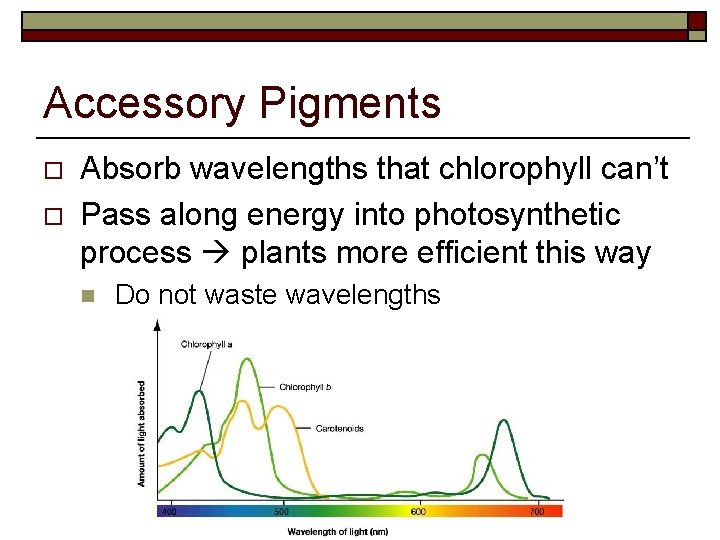
Accessory Pigments o o Absorb wavelengths that chlorophyll can’t Pass along energy into photosynthetic process plants more efficient this way n Do not waste wavelengths
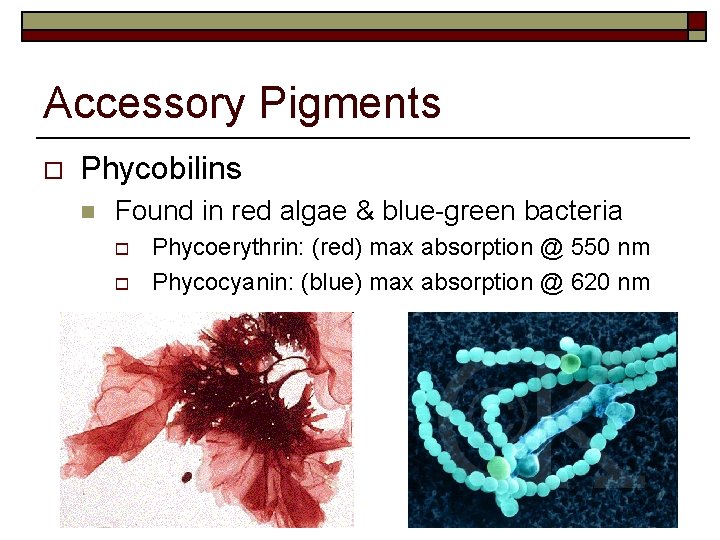
Accessory Pigments o Phycobilins n Found in red algae & blue-green bacteria o o Phycoerythrin: (red) max absorption @ 550 nm Phycocyanin: (blue) max absorption @ 620 nm
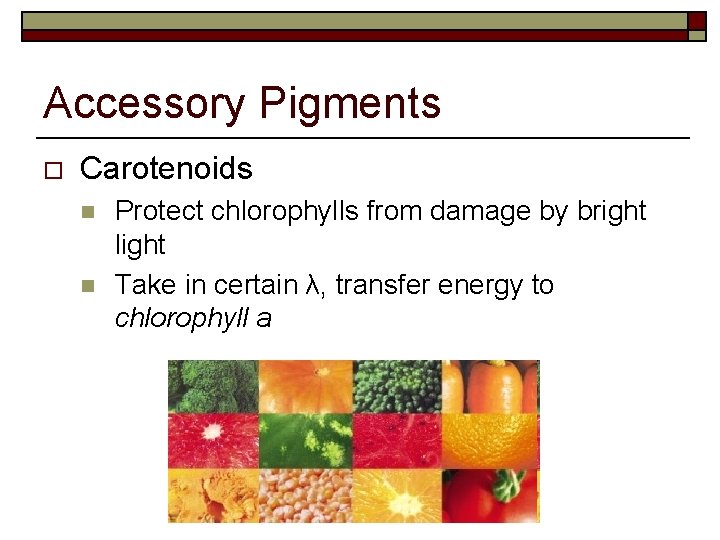
Accessory Pigments o Carotenoids n n Protect chlorophylls from damage by bright light Take in certain λ, transfer energy to chlorophyll a
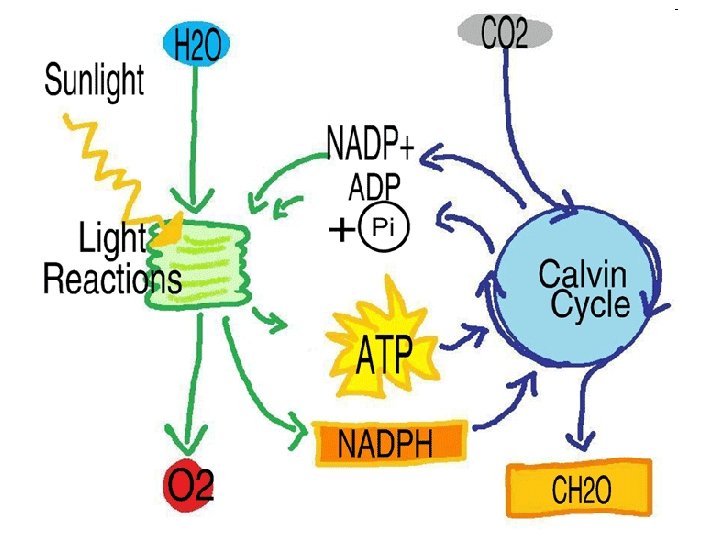
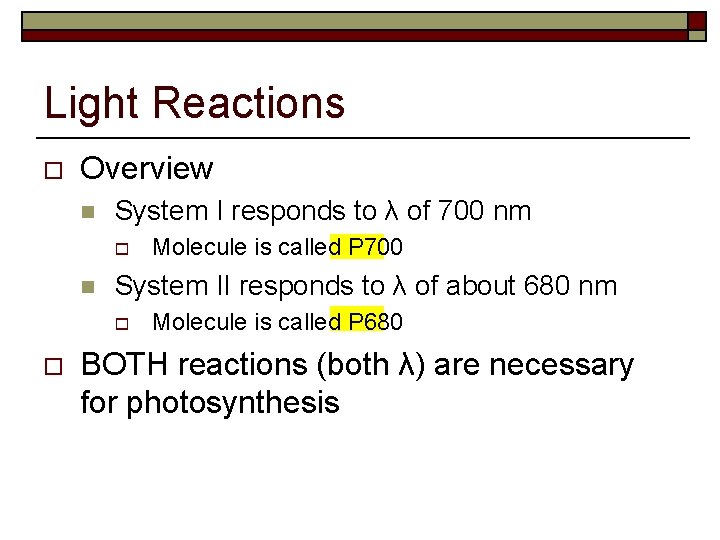
Light Reactions o Overview n System I responds to λ of 700 nm o n System II responds to λ of about 680 nm o o Molecule is called P 700 Molecule is called P 680 BOTH reactions (both λ) are necessary for photosynthesis

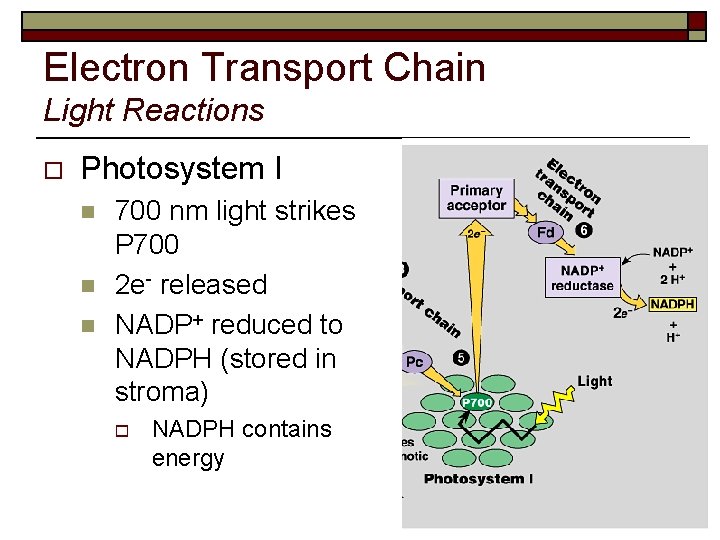
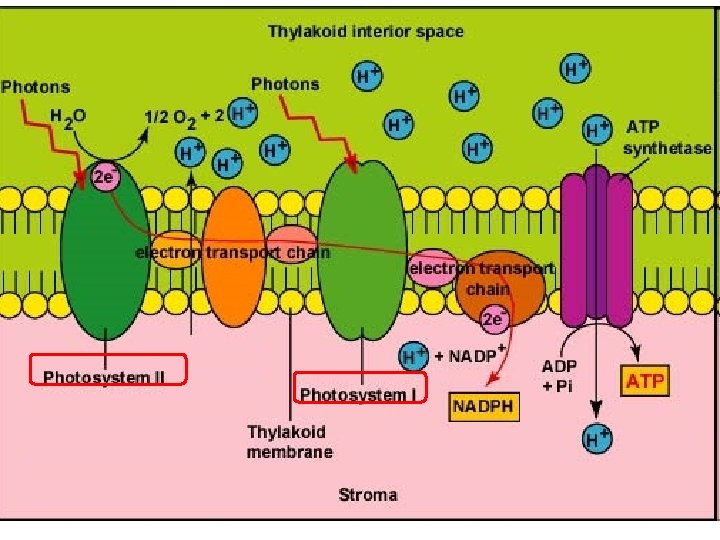
Electron Transport Chain Light Reactions o Photosystem I n n n 700 nm light strikes P 700 2 e- released NADP+ reduced to NADPH (stored in stroma) o NADPH contains energy
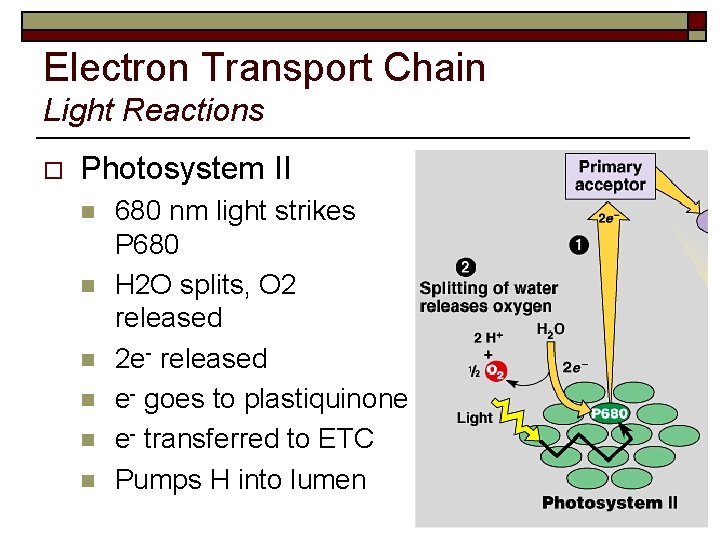
Electron Transport Chain Light Reactions o Photosystem II n n n 680 nm light strikes P 680 H 2 O splits, O 2 released 2 e- released e- goes to plastiquinone e- transferred to ETC Pumps H into lumen
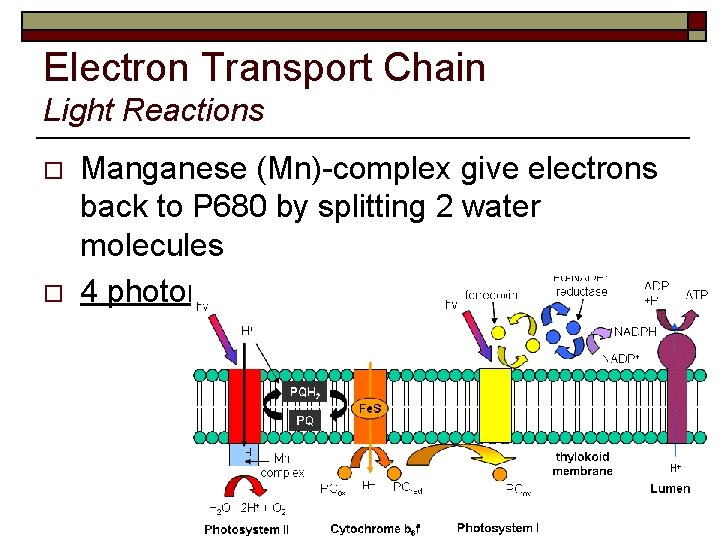
Electron Transport Chain Light Reactions o o Manganese (Mn)-complex give electrons back to P 680 by splitting 2 water molecules 4 photons need to split 2 water molecules
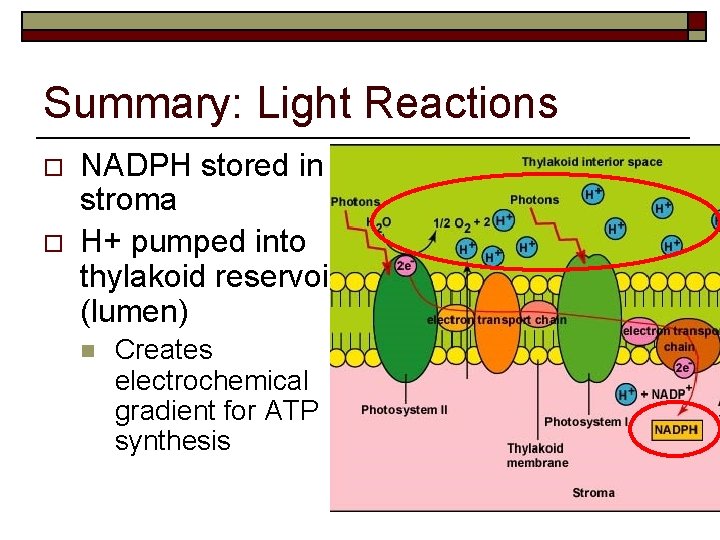
Summary: Light Reactions o o NADPH stored in stroma H+ pumped into thylakoid reservoir (lumen) n Creates electrochemical gradient for ATP synthesis
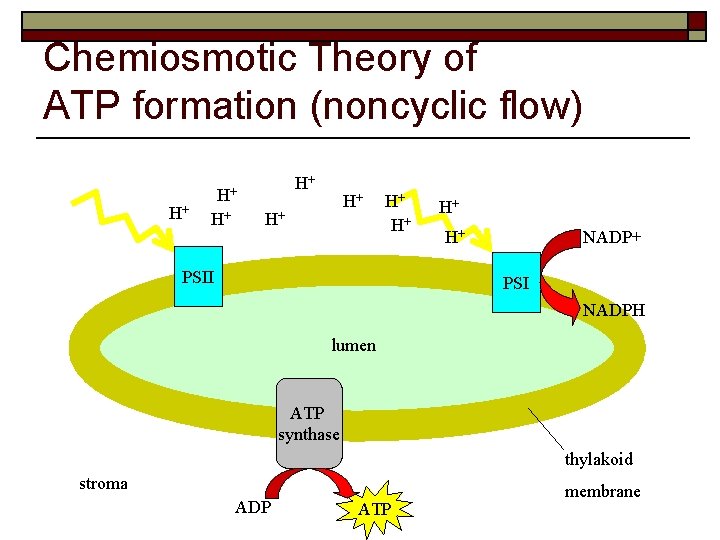
Chemiosmotic Theory of ATP formation (noncyclic flow) H+ H+ PSII H+ H+ NADP+ PSI NADPH lumen ATP synthase thylakoid stroma ADP ATP membrane

Cyclic flow
- Slides: 14