
Structure of blood GCSE Applied Science Life Care
Structure of blood GCSE Applied Science Life Care
Structure of blood - Objective • To be able to remember the types of cells in blood and what they do • To be able re remember from last lesson, the names of the major bones in the body
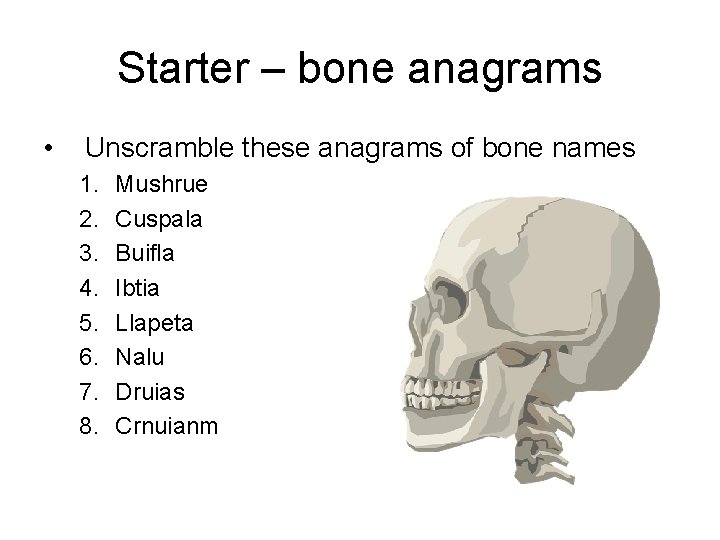
Starter – bone anagrams • Unscramble these anagrams of bone names 1. 2. 3. 4. 5. 6. 7. 8. Mushrue Cuspala Buifla Ibtia Llapeta Nalu Druias Crnuianm
Blood • Functions of blood – Carries oxygen and nutrients to all your tissues – Removes wastes such as carbon dioxide and urea – Transports hormones – Helps to regulate the body’s temperature and water content

Structure of blood

Structure of blood Plasma White blood cells Red blood cells platelets

Copy this table Plasma White blood cells Red blood cells Platelets • As we go through the next few slides, fill in the information on the types of cells in the blood.
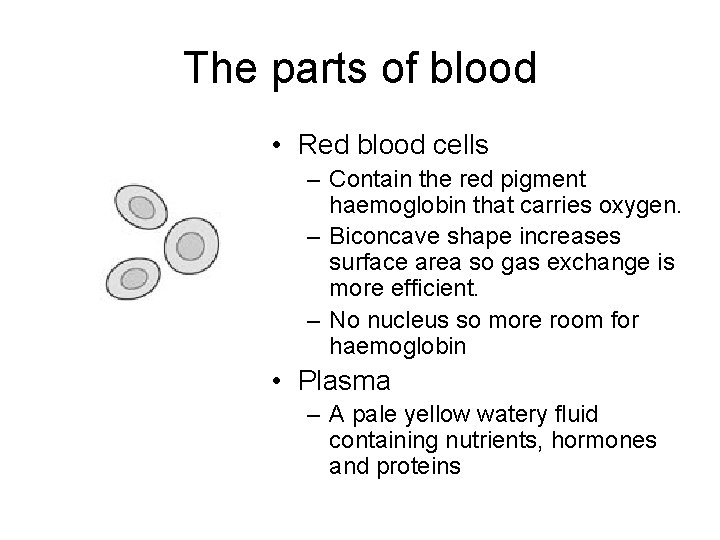
The parts of blood • Red blood cells – Contain the red pigment haemoglobin that carries oxygen. – Biconcave shape increases surface area so gas exchange is more efficient. – No nucleus so more room for haemoglobin • Plasma – A pale yellow watery fluid containing nutrients, hormones and proteins
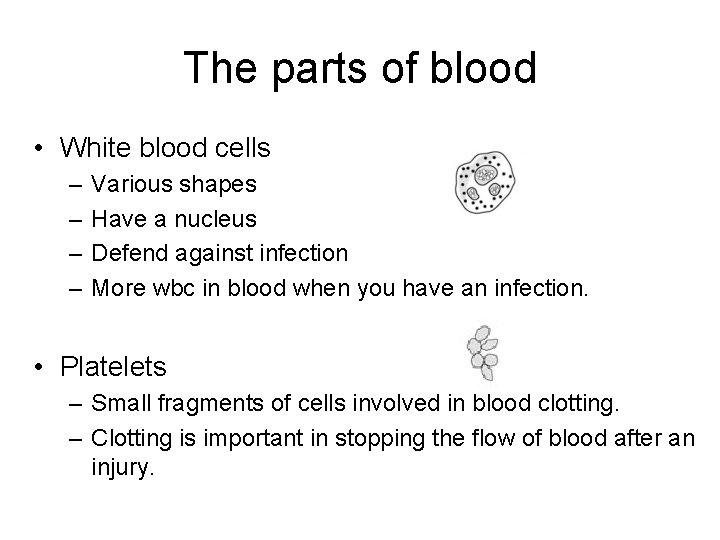
The parts of blood • White blood cells – – Various shapes Have a nucleus Defend against infection More wbc in blood when you have an infection. • Platelets – Small fragments of cells involved in blood clotting. – Clotting is important in stopping the flow of blood after an injury.

Problems with blood • Sickle – cell anaemia • Some of the red blood cells are shaped like sickles, meaning they don’t carry oxygen as efficiently
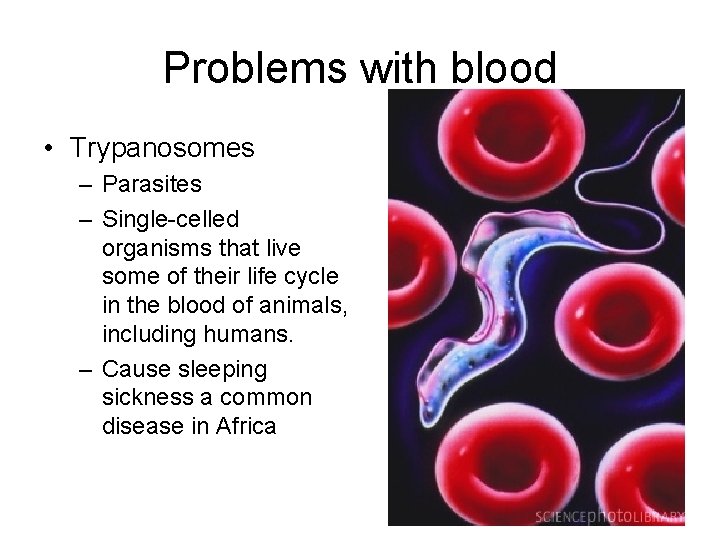
Problems with blood • Trypanosomes – Parasites – Single-celled organisms that live some of their life cycle in the blood of animals, including humans. – Cause sleeping sickness a common disease in Africa
Quick quiz • What is the name of the red pigment in blood? – Haemoglobin • Which component of blood is responsible for clotting? – Platelets • Which type of blood cell has a nucleus? – White blood cells
- Slides: 12