
Structure Function of DNA Replication Genetic Code 3












- Slides: 30
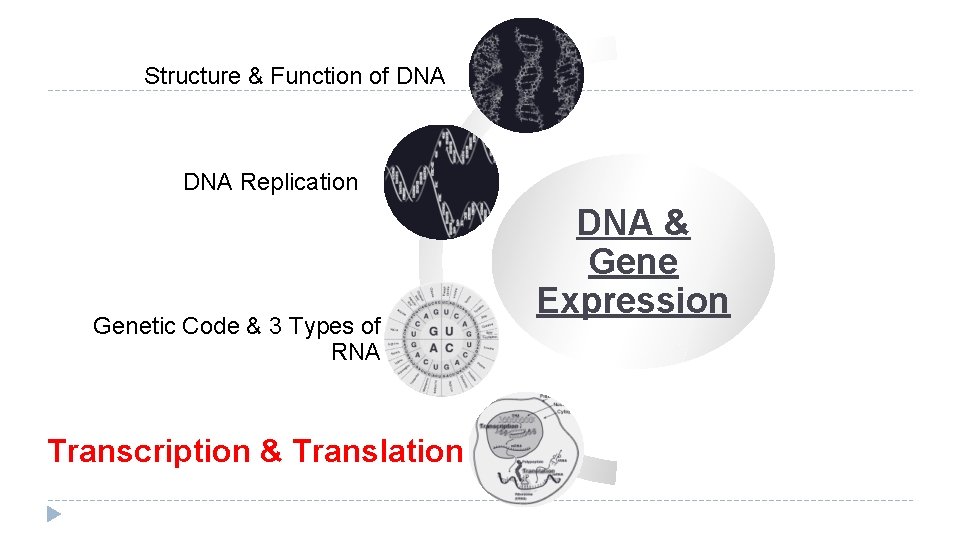
Structure & Function of DNA Replication Genetic Code & 3 Types of RNA Transcription & Translation DNA & Gene Expression
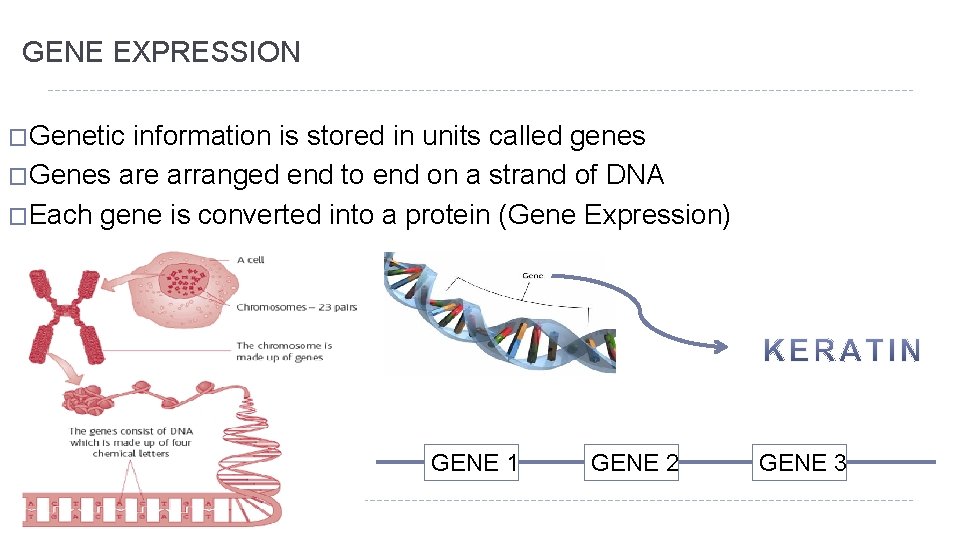
GENE EXPRESSION �Genetic information is stored in units called genes �Genes are arranged end to end on a strand of DNA �Each gene is converted into a protein (Gene Expression) GENE 1 GENE 2 GENE 3
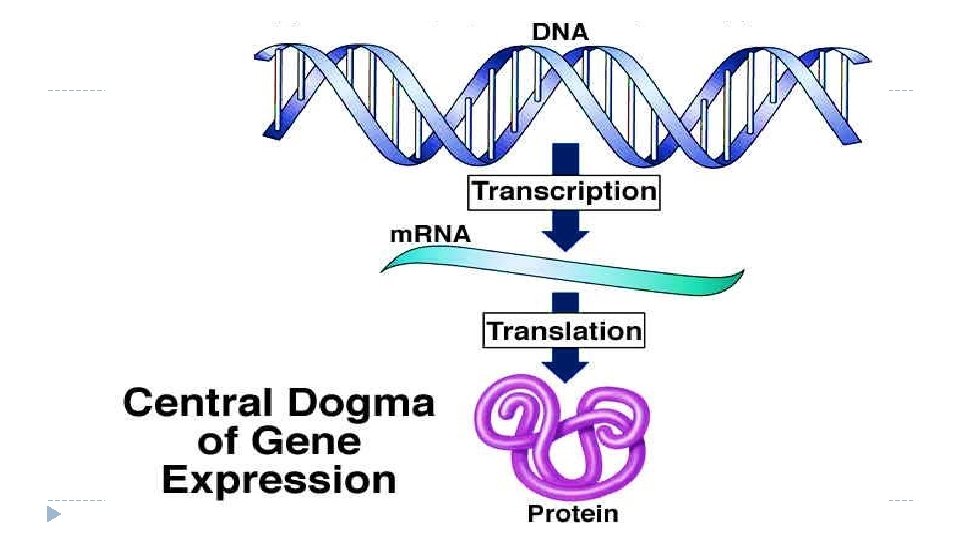
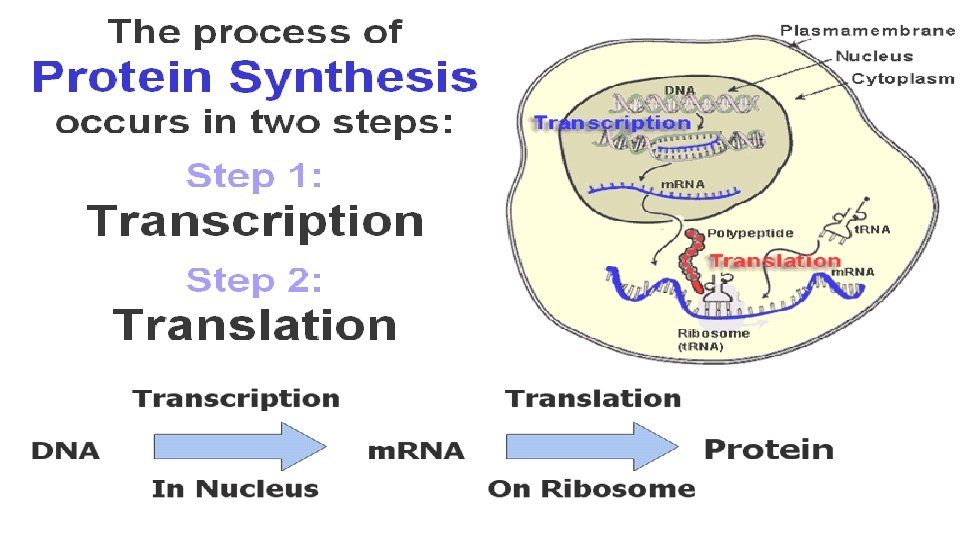
Transcription �The first step of gene expression, in which a particular segment of DNA is copied into m. RNA by the enzyme RNA polymerase.
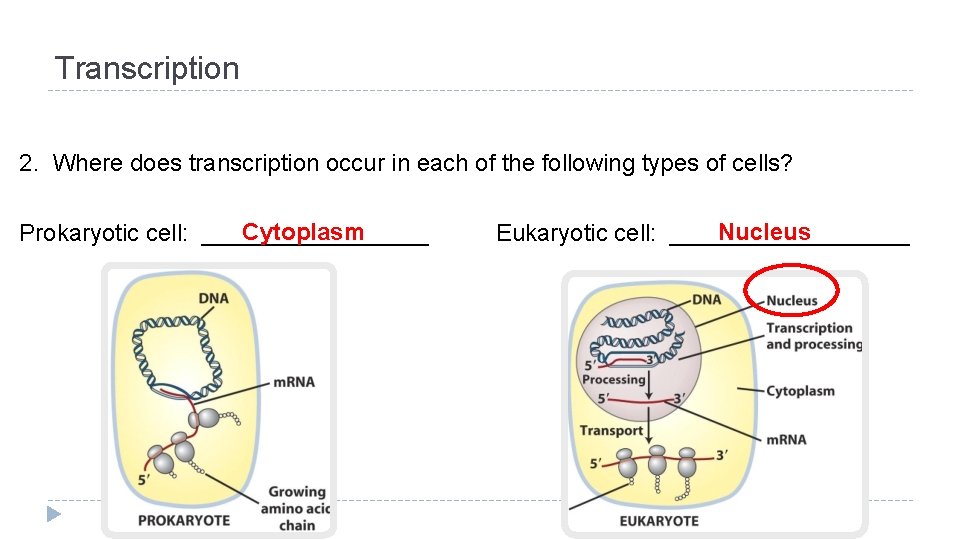
Transcription – Making m. RNA 1. Transcription Messenger RNA (m. RNA) molecules are made by the process called • _______ Transcription occurs in the cytoplasm in prokaryotes, and in the nucleus in eukaryotes. • In transcription, a gene is transcribed/copied onto m. RNA in order to synthesize a protein.
Transcription 2. Where does transcription occur in each of the following types of cells? Cytoplasm Prokaryotic cell: _________ Nucleus Eukaryotic cell: _________
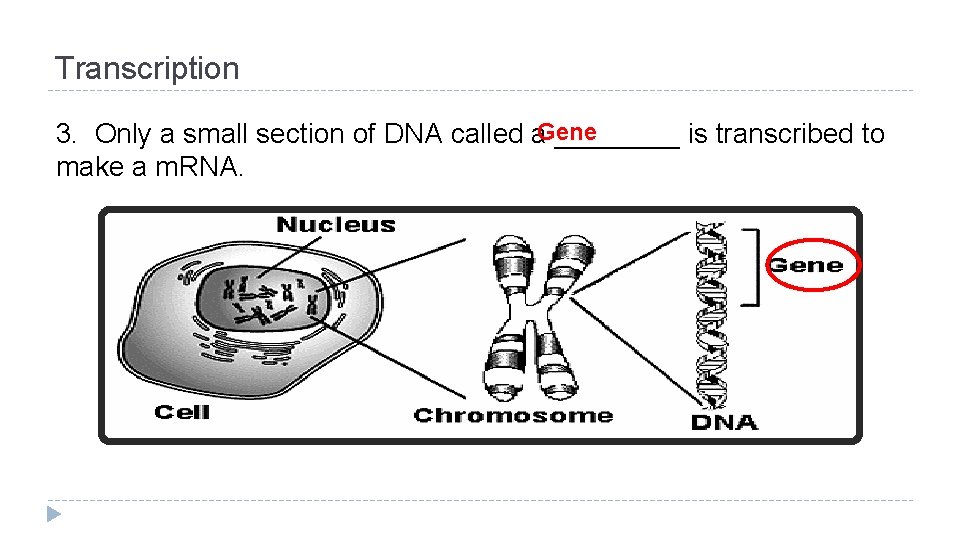
Transcription 3. Only a small section of DNA called a. Gene ____ is transcribed to make a m. RNA.
Transcription one 4. Only _______ strand of the DNA molecule called the ______ template strand is transcribed to make a m. RNA.
5. Process of Transcription A. A small section of the _____ molecule called. DNA a gene unwinds. B. The two strands of DNA separate. This exposes the nitrogen _________ of thebase DNA molecule.
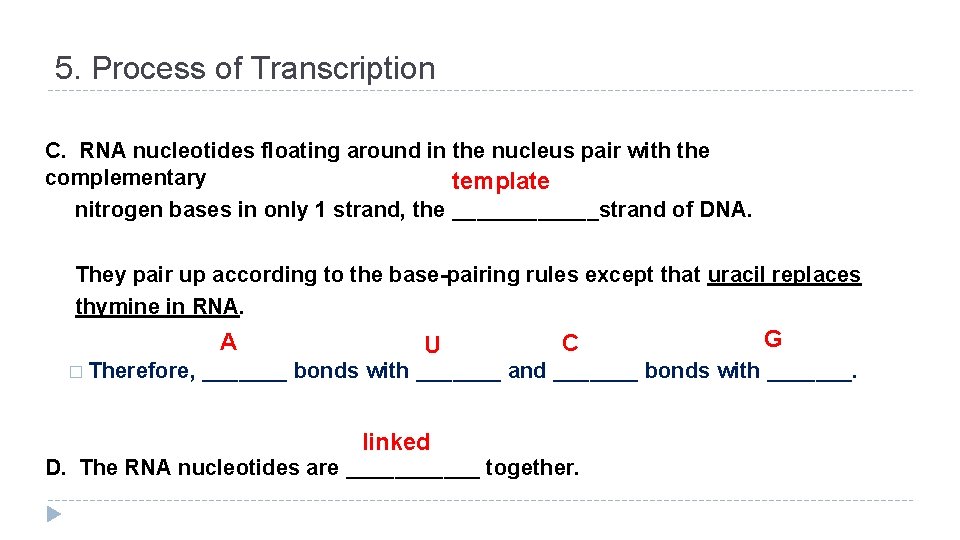
5. Process of Transcription C. RNA nucleotides floating around in the nucleus pair with the complementary template nitrogen bases in only 1 strand, the ______strand of DNA. They pair up according to the base-pairing rules except that uracil replaces thymine in RNA. A � Therefore, U C G _______ bonds with _______ and _______ bonds with _______. linked D. The RNA nucleotides are ______ together.
5. Process of Transcription E. The new m. RNA molecule is released, leaves the nucleus, and travels to a ribosome ______________. F. The section of the DNA molecule that closes was transcribed _____ up.
Make the m. RNA molecule for the DNA A T G C A G A T Template DNA Strand m. RNA Strand T A C G T C T A Non-template DNA Strand
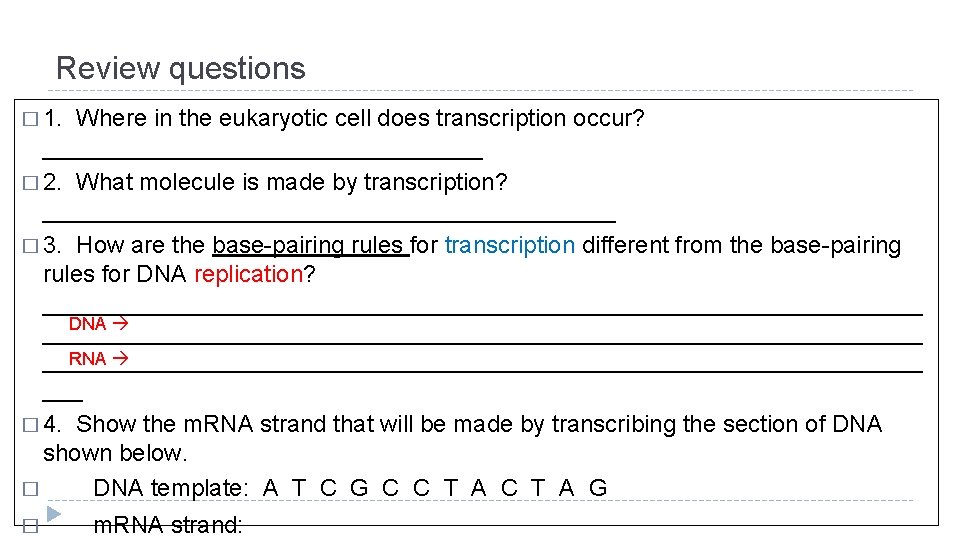
Review questions � 1. Where in the eukaryotic cell does transcription occur? _________________ � 2. What molecule is made by transcription? ______________________ � 3. How are the base-pairing rules for transcription different from the base-pairing rules for DNA replication? _________________________________ DNA _________________________________ RNA _________________________________ ___ � 4. Show the m. RNA strand that will be made by transcribing the section of DNA shown below. � DNA template: A T C G C C T A G � m. RNA strand:
Structure & Function of DNA Replication Genetic Code & 3 Types of RNA Transcription & Translation DNA & Gene Expression
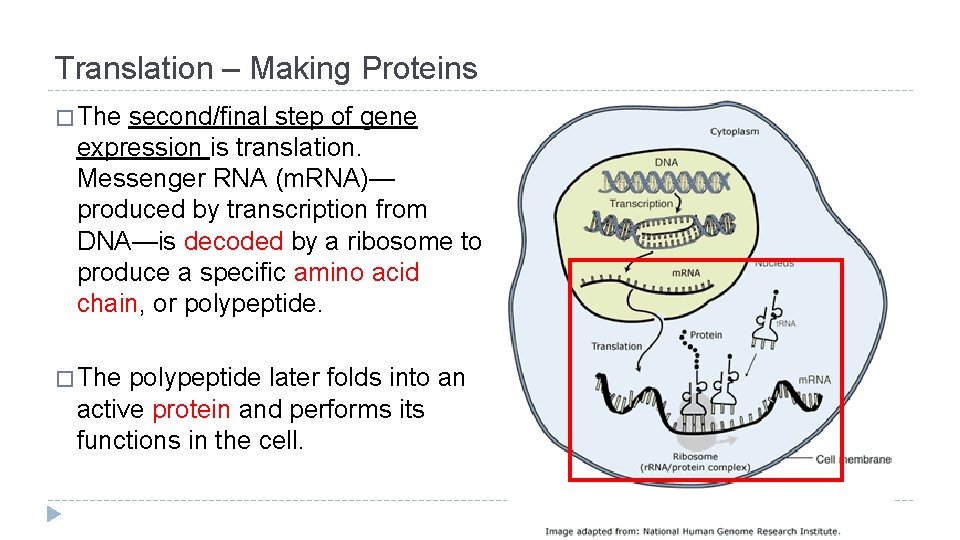
Translation – Making Proteins � The second/final step of gene expression is translation. Messenger RNA (m. RNA)— produced by transcription from DNA—is decoded by a ribosome to produce a specific amino acid chain, or polypeptide. � The polypeptide later folds into an active protein and performs its functions in the cell.
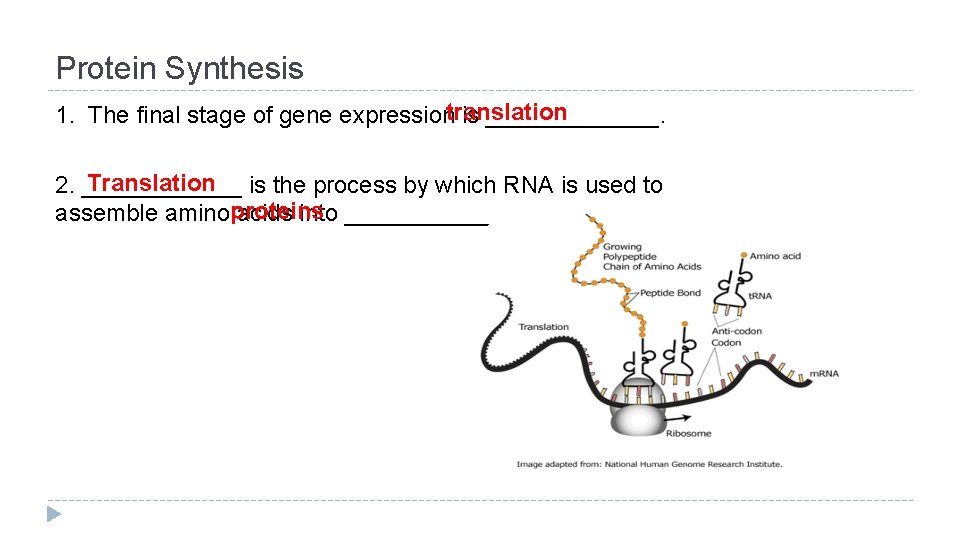
Protein Synthesis 1. The final stage of gene expressiontranslation is _______. Translation is the process by which RNA is used to 2. ______ assemble aminoproteins acids into ______.
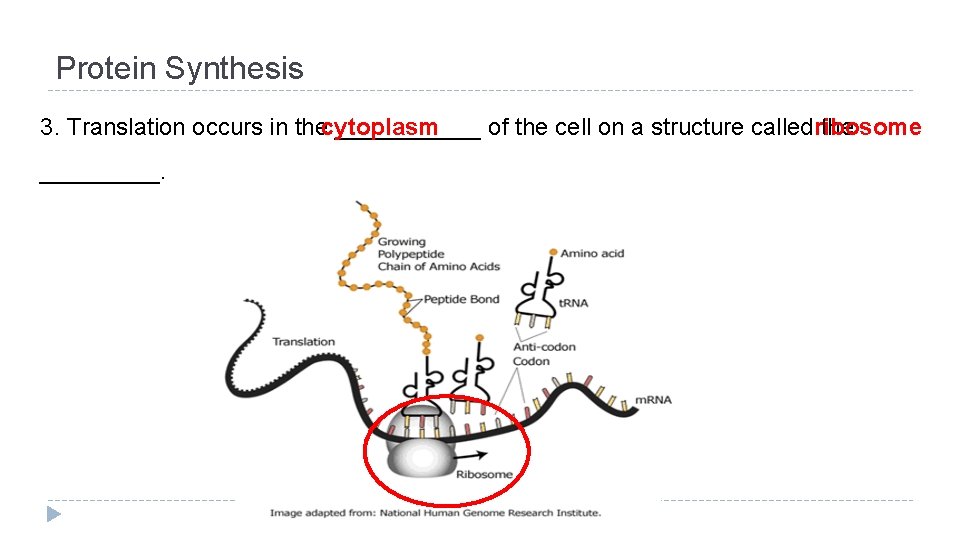
Protein Synthesis 3. Translation occurs in thecytoplasm ______ of the cell on a structure calledribosome the _____.
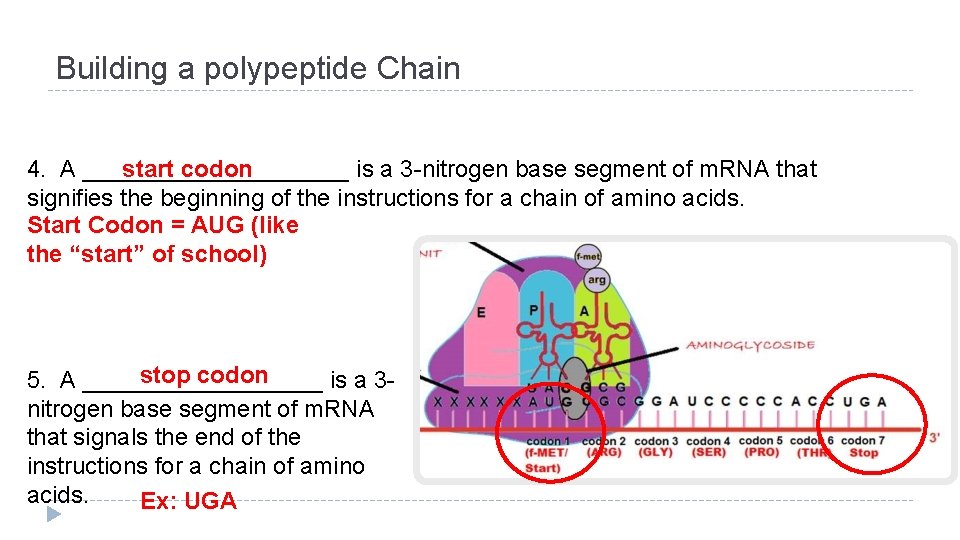
Building a polypeptide Chain start codon 4. A __________ is a 3 -nitrogen base segment of m. RNA that signifies the beginning of the instructions for a chain of amino acids. Start Codon = AUG (like the “start” of school) stop codon 5. A _________ is a 3 nitrogen base segment of m. RNA that signals the end of the instructions for a chain of amino acids. Ex: UGA
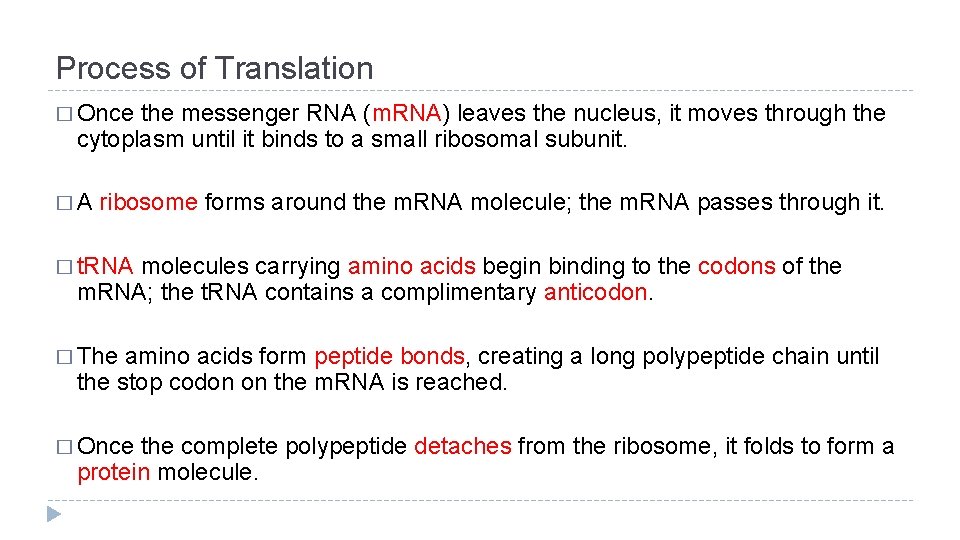
Process of Translation � Once the messenger RNA (m. RNA) leaves the nucleus, it moves through the cytoplasm until it binds to a small ribosomal subunit. �A ribosome forms around the m. RNA molecule; the m. RNA passes through it. � t. RNA molecules carrying amino acids begin binding to the codons of the m. RNA; the t. RNA contains a complimentary anticodon. � The amino acids form peptide bonds, creating a long polypeptide chain until the stop codon on the m. RNA is reached. � Once the complete polypeptide detaches from the ribosome, it folds to form a protein molecule.
Process of Translation m. RNA A. A _________ molecule binds to a small ribosomal subunit. B. A large ribosomal subunit attaches to the small ribosomal subunit to form a ribosome complete ___________. The m. RNA will pass through it.
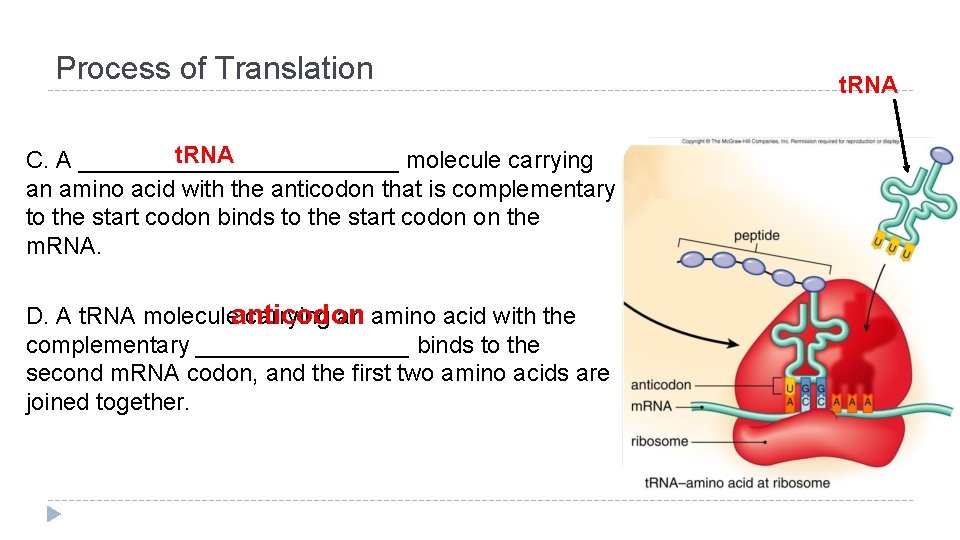
Process of Translation t. RNA C. A ____________ molecule carrying an amino acid with the anticodon that is complementary to the start codon binds to the start codon on the m. RNA. D. A t. RNA moleculeanticodon carrying an amino acid with the complementary ________ binds to the second m. RNA codon, and the first two amino acids are joined together. t. RNA
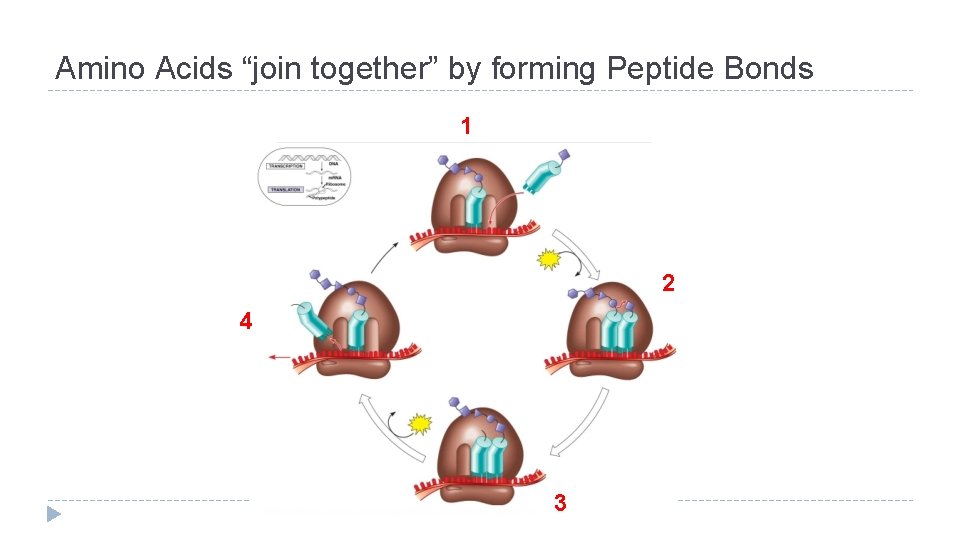
Amino Acids “join together” by forming Peptide Bonds 1 2 4 3
Process of Translation E. The first t. RNA molecule detaches _______ and moves away from the ribosome. Translation continues until a stop codon enters the ribosome. F. The completed amino acid chain is released. It begins to fold and may combine with other amino acids to form a ______ molecule. protein
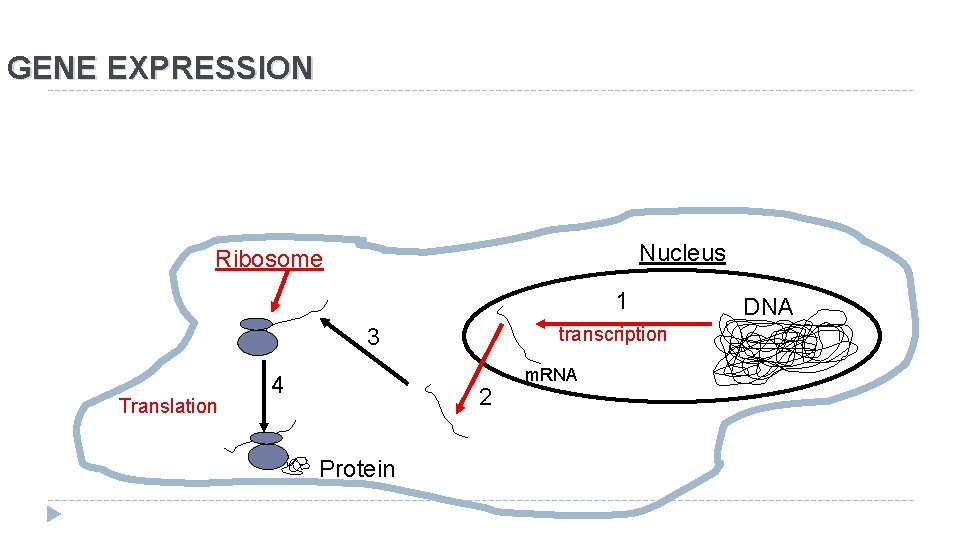
Gene Expression 1 2 3 Watch the animation of Gene Expression at: https: //www. youtube. com/watch? v=g. G 7 u. Csk. UOr. A
GENE EXPRESSION Nucleus Ribosome 1 transcription 3 Translation 4 2 Protein m. RNA DNA
Name the Parts of the Diagram:
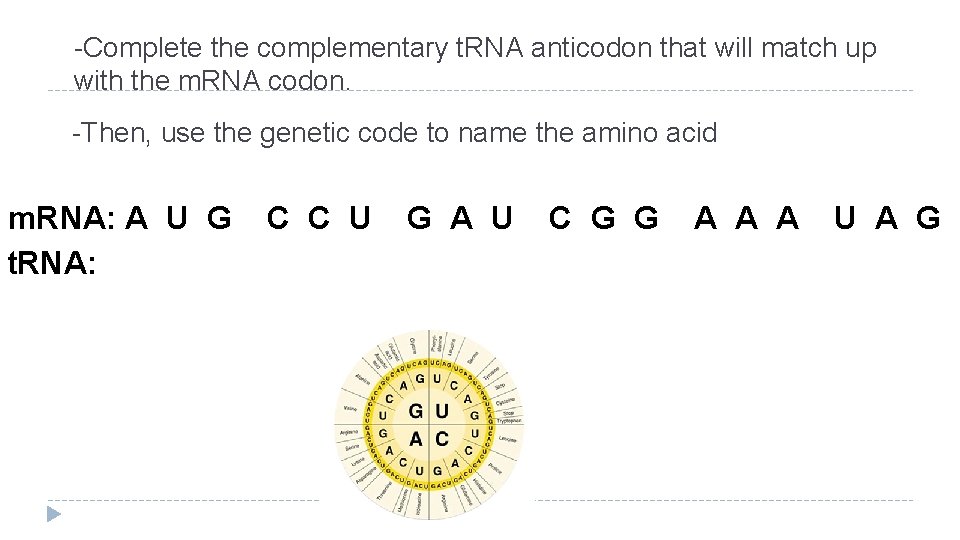
-Complete the complementary t. RNA anticodon that will match up with the m. RNA codon. -Then, use the genetic code to name the amino acid m. RNA: A U G t. RNA: C C U G A U C G G A A A U A G
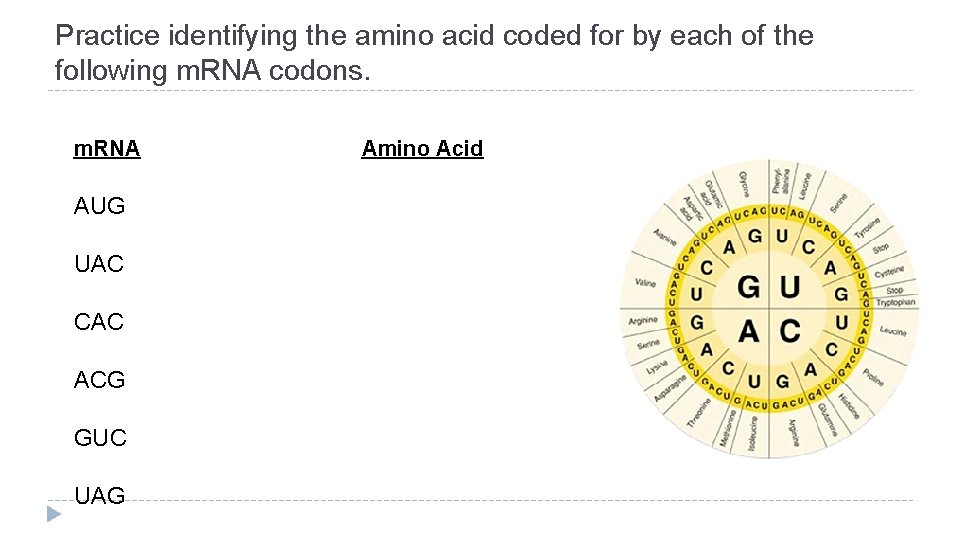
Practice identifying the amino acid coded for by each of the following m. RNA codons. m. RNA AUG UAC CAC ACG GUC UAG Amino Acid
Stages of Protein Synthesis: