
Structure and Sedimentary Rocks Lab 2 Fold geometry
Structure and Sedimentary Rocks (Lab #2)
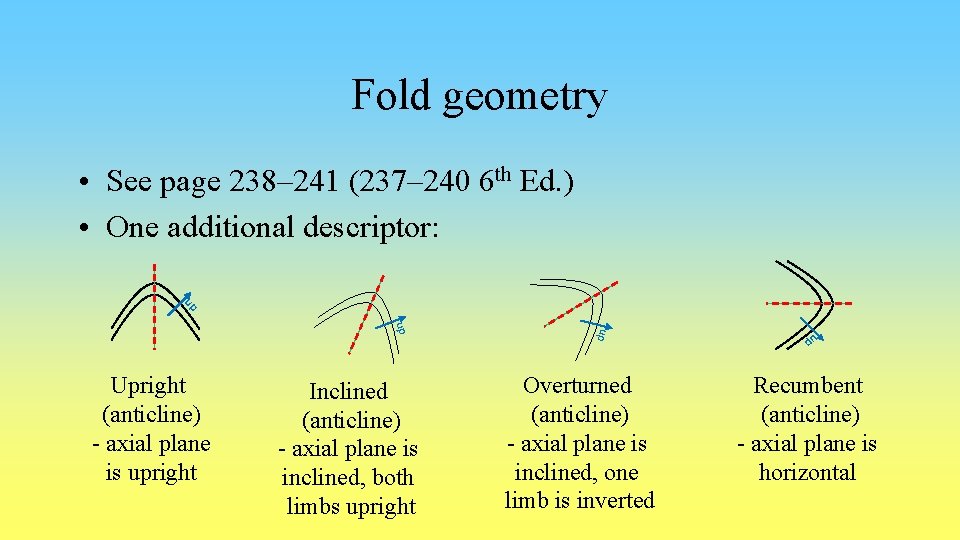
Fold geometry • See page 238– 241 (237– 240 6 th Ed. ) • One additional descriptor: up Overturned (anticline) - axial plane is inclined, one limb is inverted up Inclined (anticline) - axial plane is inclined, both limbs upright up up Upright (anticline) - axial plane is upright Recumbent (anticline) - axial plane is horizontal
Faults • What’s the footwall? • What’s the hanging wall? • Different types of faults – See pages 243– 245 (242– 243, 6 th Ed. )
The Compass, drawing strike and dip symbols, and the Right Hand Rule
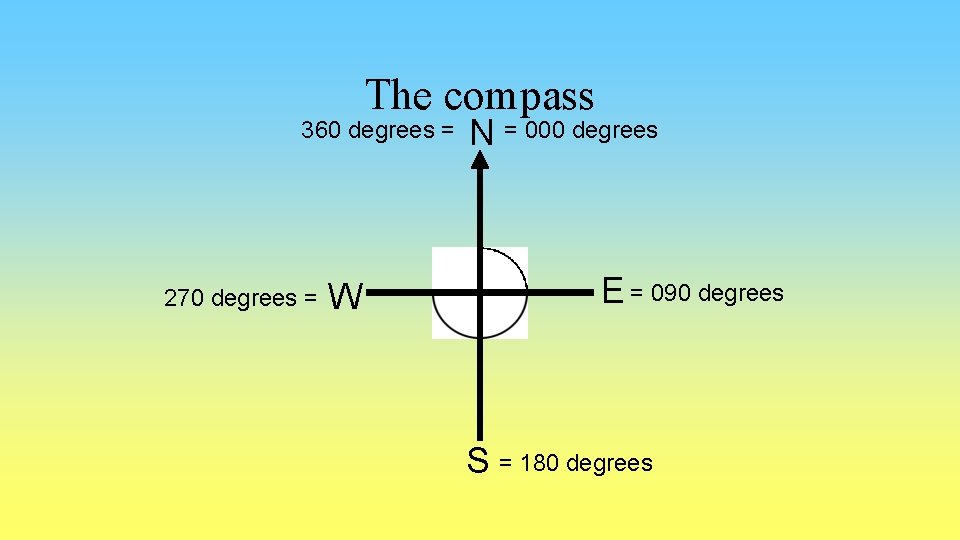
The compass 360 degrees = 270 degrees = W N = 000 degrees E = 090 degrees S = 180 degrees
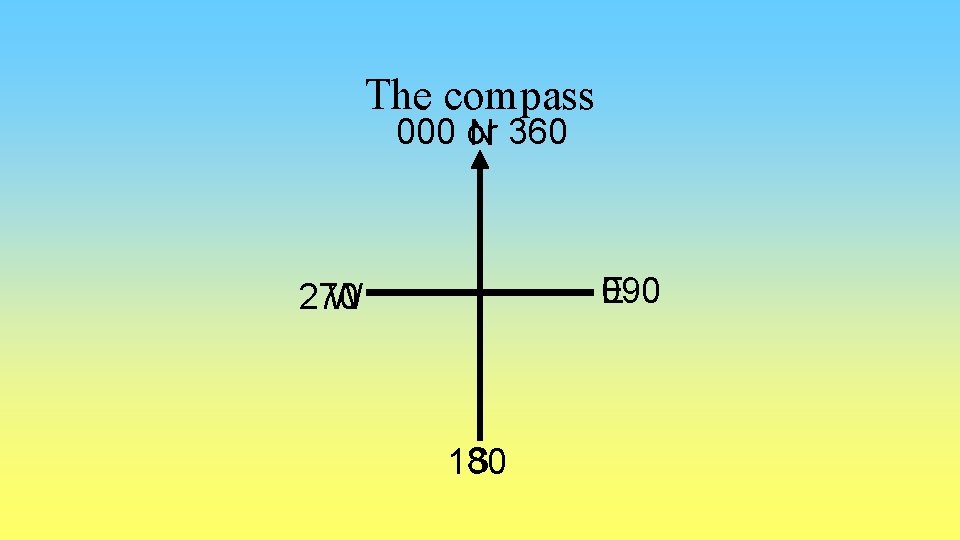
The compass 000 or N 360 090 E W 270 S 180
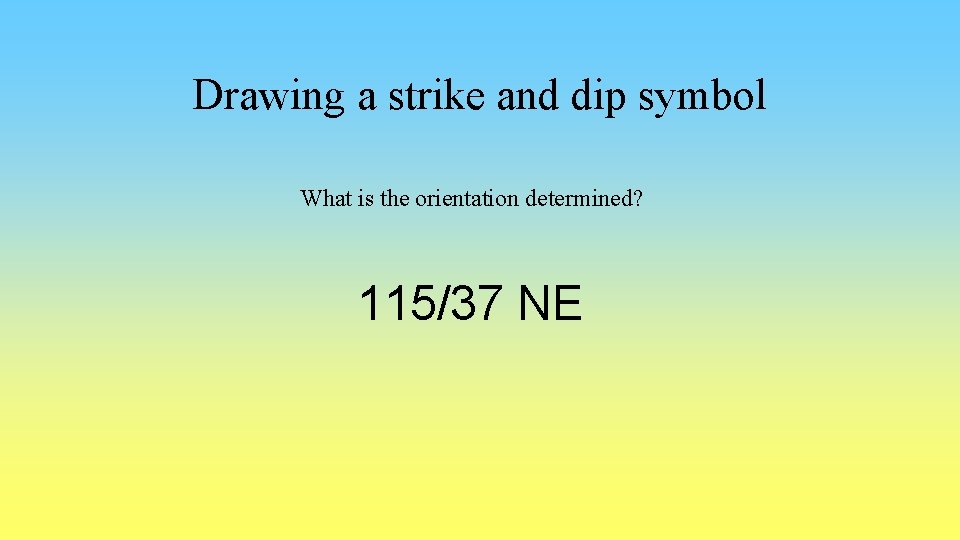
Drawing a strike and dip symbol What is the orientation determined? 115/37 NE
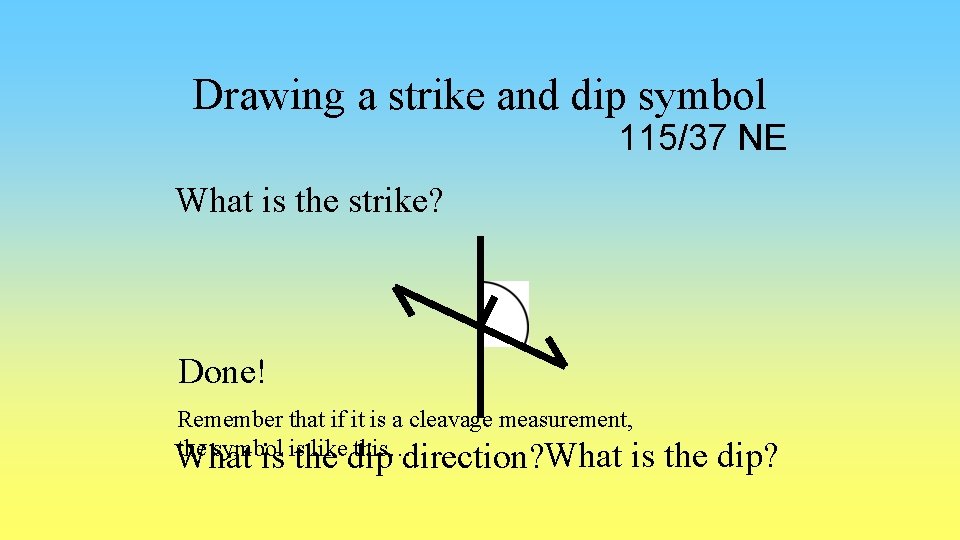
Drawing a strike and dip symbol 115/37 115 37 NE What is the strike? Done! Remember that if it is a cleavage measurement, the symbol likedip this…direction? What is isthe dip?
The Right Hand Rule • The Right Hand Rule is a convention that is used so that strike and dip is always written so that the dip is to the right of the strike direction. • This allows us to show strike and dip without dip direction (particularly important for computer applications). • Examples…
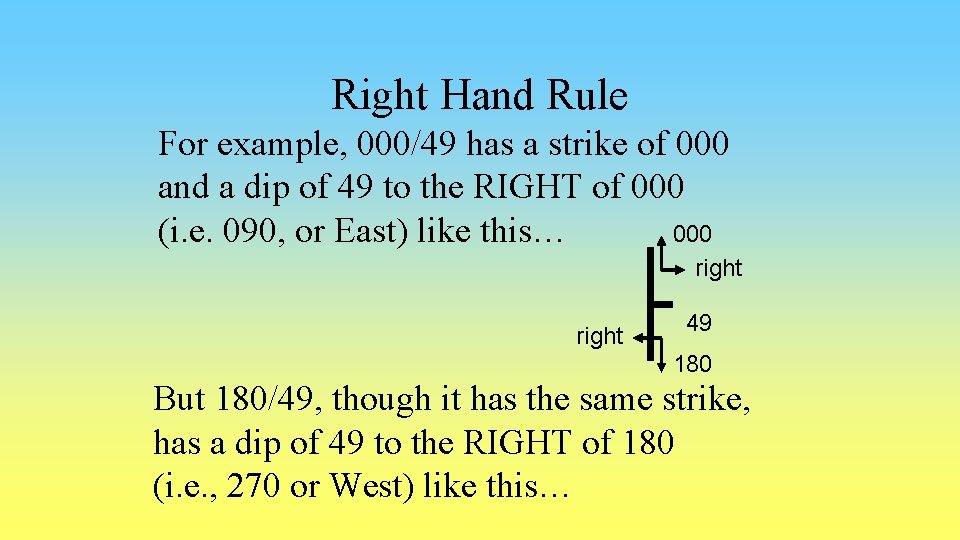
Right Hand Rule For example, 000/49 has a strike of 000 and a dip of 49 to the RIGHT of 000 (i. e. 090, or East) like this… 000 right 49 180 But 180/49, though it has the same strike, has a dip of 49 to the RIGHT of 180 (i. e. , 270 or West) like this…
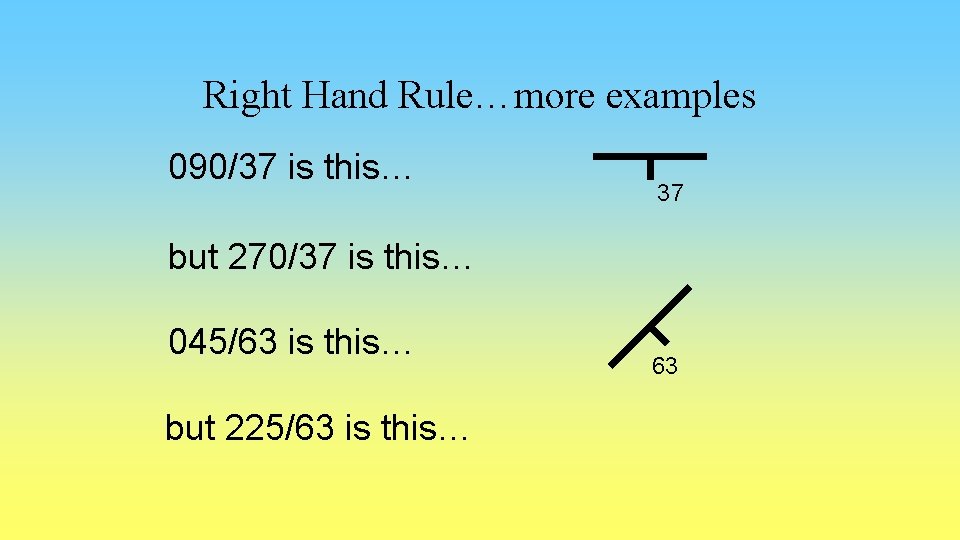
Right Hand Rule…more examples 090/37 is this… 37 but 270/37 is this… 045/63 is this… but 225/63 is this… 63
Right Hand Rule…last comment As a precaution most people continue to indicate direction of dip even when they adhere to the Right Hand Rule. 045/63 SE 265/12 N 225/43 NW 130/27 SW 315/29 SW 010/82 E Which of these isn’t correct (i. e. , doesn’t follow the Right Hand Rule)?
Maps and block diagrams • Map (a) on p. 4 shows geological contacts that dip away from a central point at a consistent angle. • Map (b) shows 3 geological units that dip slightly to the east. The outcrop pattern is the result of topography.
Maps and block diagrams • Block diagram (c) shows a folded sequence (younger beds in the middle) but with all units dipping in the same direction. • Block diagram (d) shows a plunging fold. This diagram is made harder by not showing the junction between the units on all the faces.
Sedimentary rocks Supplementary information on sedimentary rocks available in Monroe & Wicander pp. 162– 167 (161 – 165, 6 th Ed. )
Sedimentary Rocks & Structure • Clastic — rocks made up of fragments deposited by a flowing medium (air, water, ice) • Non-clastic — rocks made from chemically or biologically derived material
Clastic rocks are classified according to the nature of the following components: • • Grains Matrix Cement Pores
Pores • 10% pore space is not unheard of • Doesn’t sound like much but… • • 10 km x 10 m = 1 x 10⁹ m 3 at 10% porosity 1 x 10⁸ m 3 of pore space (oil? ) = 1 x 10¹¹ litres = 2. 64 x 1010 US gals = 6. 29 x 108 barrels worth $3. 27 x 1010 (at $58/barrel on January 14) That’s $36, 482, 000 (≈$36. 5 billion)!
Non clastic rocks Non-clastic rocks classified by composition • • Carbonate Evaporite Biochemical Chemical
Texture • Refers to the nature and inter-relationship of the constituent particles – most non-clastic rocks are “crystalline” – texture of clastic rocks described by various features
Clastic rock texture • • Grain size Roundness Sphericity (equidimensionality) Sorting – size – composition
Grain size • C. g. : > 2 mm • M. g. : 1/16 – 2 mm (visible grains) • F. g. : <1/16 mm (too fine to see)
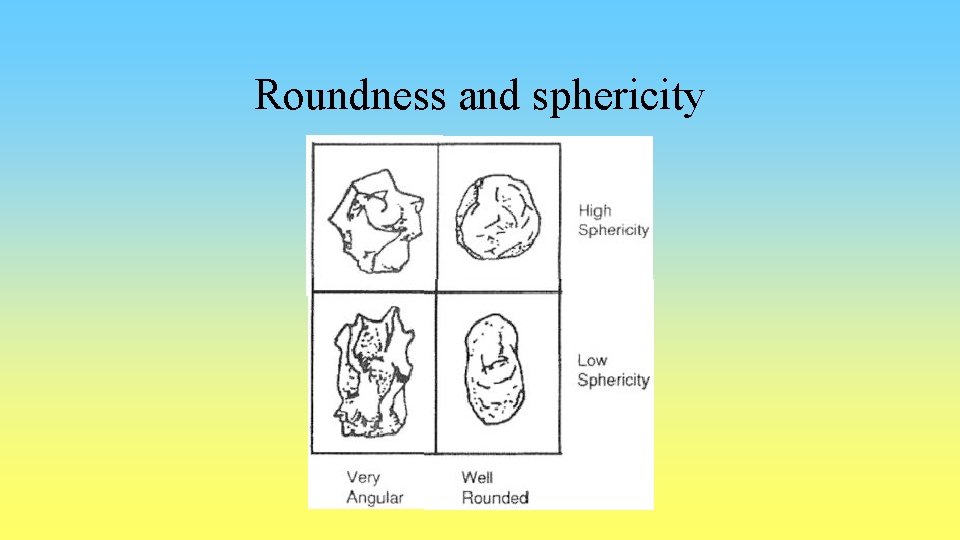
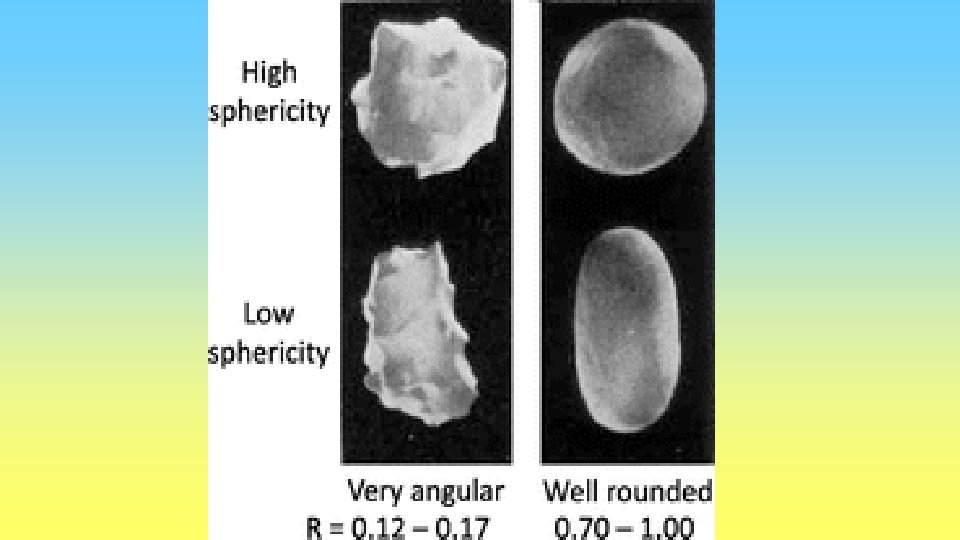
Roundness and sphericity
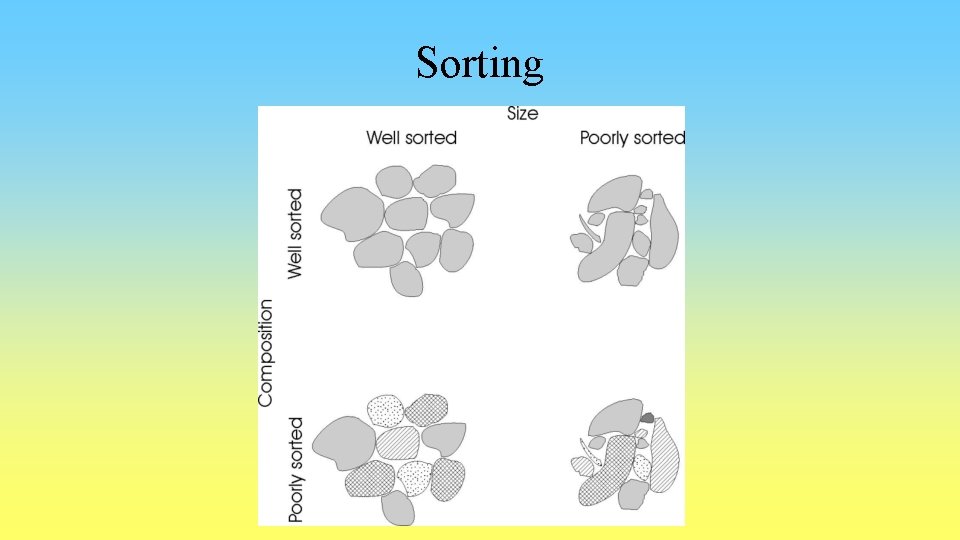
Sorting
Sedimentary structures • Primary (physical) – bedding – ripples – cross laminations – graded bedding – cracks – raindrop imprints – etc.
Sedimentary structures • Primary (organic) – Tracks & trails – Burrows – Bioturbation – Stromatolites (moderate scale) – Reefs (large)
Sedimentary structures • Secondary (physical) – Load – Dewatering (fissility, cone-in-cone) • Secondary (chemical) – Nodules & concretions – Dendrites
Other sedimentary features • Colour — can be loosely indicative of the environment of deposition. – Red (hematite) indicates subaerial deposition – Black (carbon) indicates reducing environment
Last exercise • Apply the revised sedimentary rocks information to a suite of 5 rocks found in the 6 drawers at the back of the labeled “rock and fossil samples” (not the sedimentary rocks in the drawers in the tables)
To make the lab go more smoothly… • Because of the number of people and the small numbers of samples at the back of the lab, it would help if some people started with the Sedimentary Rocks part of the lab (Part IV, p. 5) first and do the Structure parts (Parts I, II and III) later.
Questions?
- Slides: 32