
Structure and Properties of Si Incorporated Tetrahedral Amorphous
- Slides: 17
Structure and Properties of Si Incorporated Tetrahedral Amorphous Carbon Films Prepared by Hybrid Filtered Vacuum Arc Process Churl Seung Lee a), b) , Kwang –Ryeol Lee a) , Kwang Yong Eun, Ki Hyun Yoon b) a) Thin Film Research Center, Korea Institute of Science and Technology b) Department of Ceramic Engineering, Yonsei University
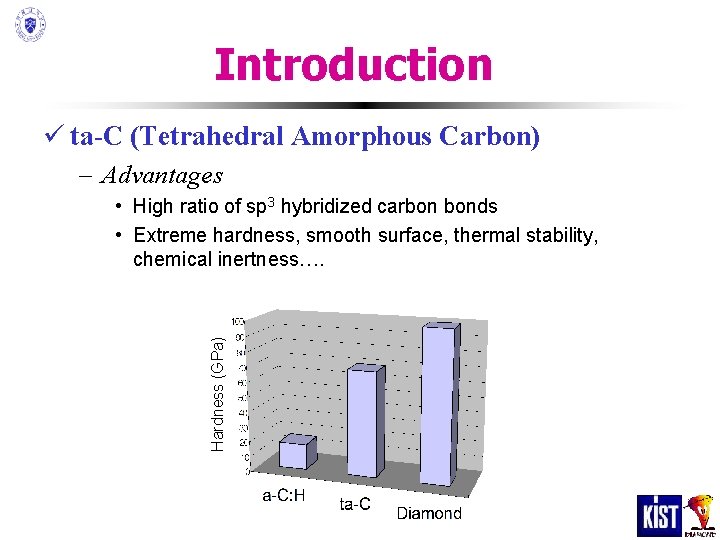
Introduction ü ta-C (Tetrahedral Amorphous Carbon) – Advantages Hardness (GPa) • High ratio of sp 3 hybridized carbon bonds • Extreme hardness, smooth surface, thermal stability, chemical inertness….
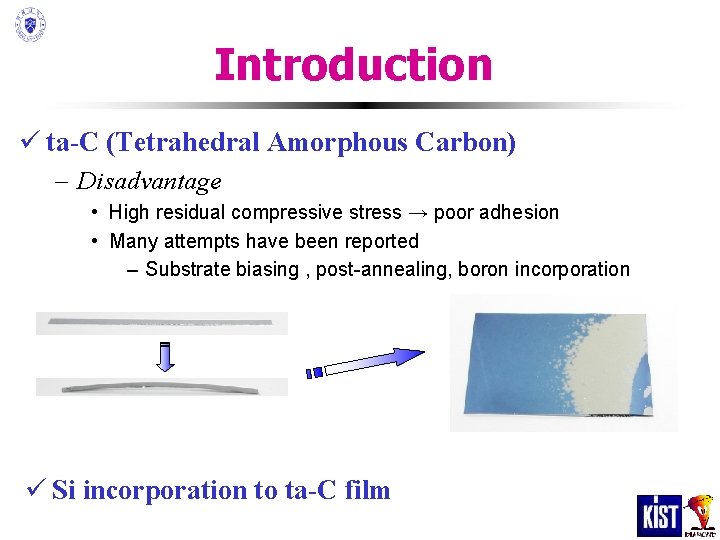
Introduction ü ta-C (Tetrahedral Amorphous Carbon) – Disadvantage • High residual compressive stress → poor adhesion • Many attempts have been reported – Substrate biasing , post-annealing, boron incorporation ü Si incorporation to ta-C film
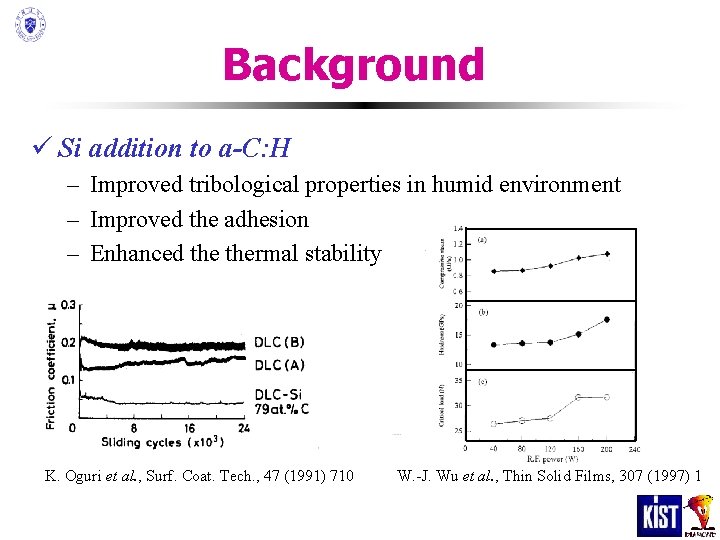
Background ü Si addition to a-C: H – Improved tribological properties in humid environment – Improved the adhesion – Enhanced thermal stability K. Oguri et al. , Surf. Coat. Tech. , 47 (1991) 710 W. -J. Wu et al. , Thin Solid Films, 307 (1997) 1
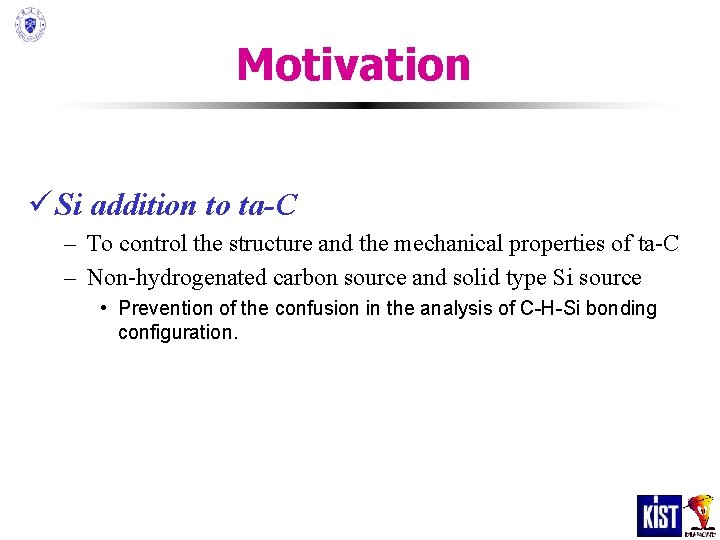
Motivation ü Si addition to ta-C – To control the structure and the mechanical properties of ta-C – Non-hydrogenated carbon source and solid type Si source • Prevention of the confusion in the analysis of C-H-Si bonding configuration.
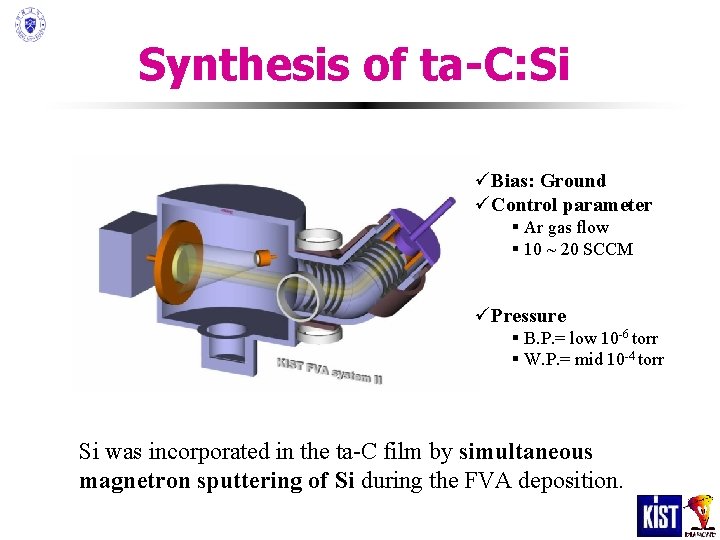
Synthesis of ta-C: Si üBias: Ground üControl parameter § Ar gas flow § 10 ~ 20 SCCM üPressure § B. P. = low 10 -6 torr § W. P. = mid 10 -4 torr Si was incorporated in the ta-C film by simultaneous magnetron sputtering of Si during the FVA deposition.
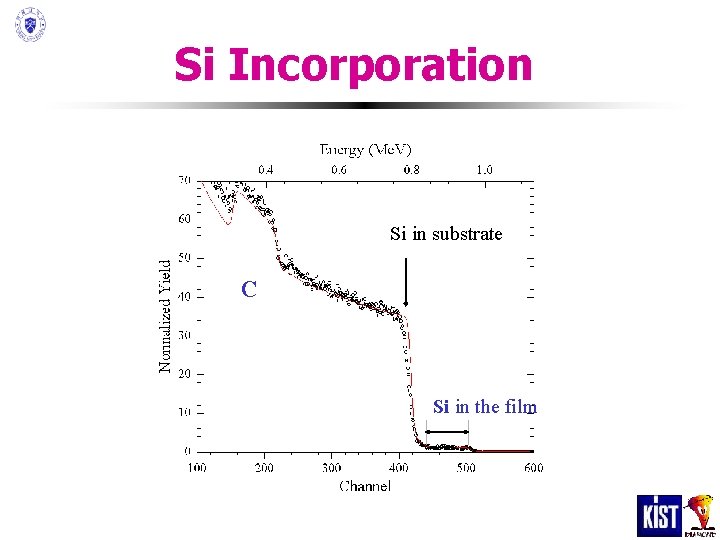
Si Incorporation Si in substrate C Si in the film
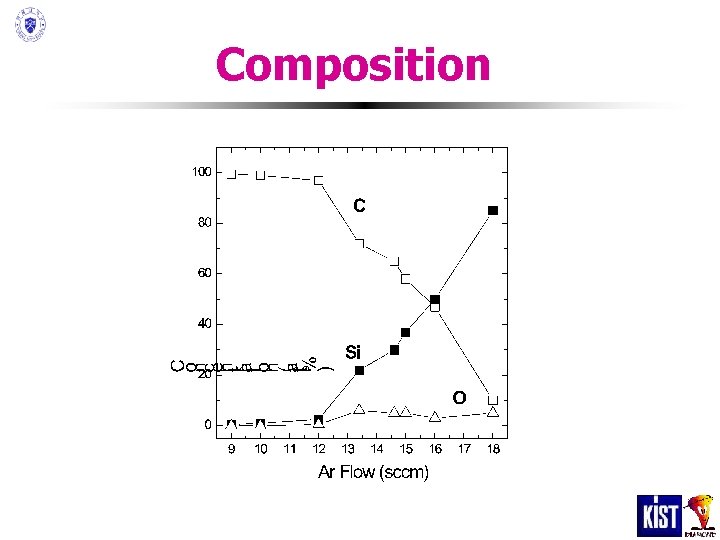
Composition
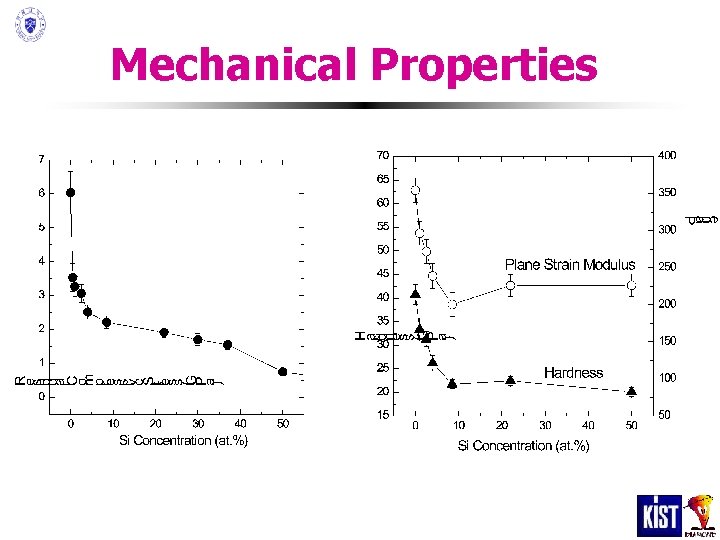
Mechanical Properties
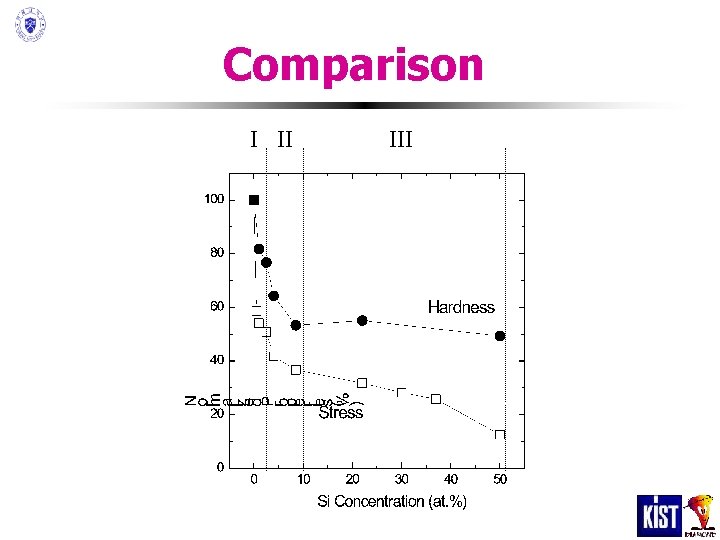
Comparison I II III
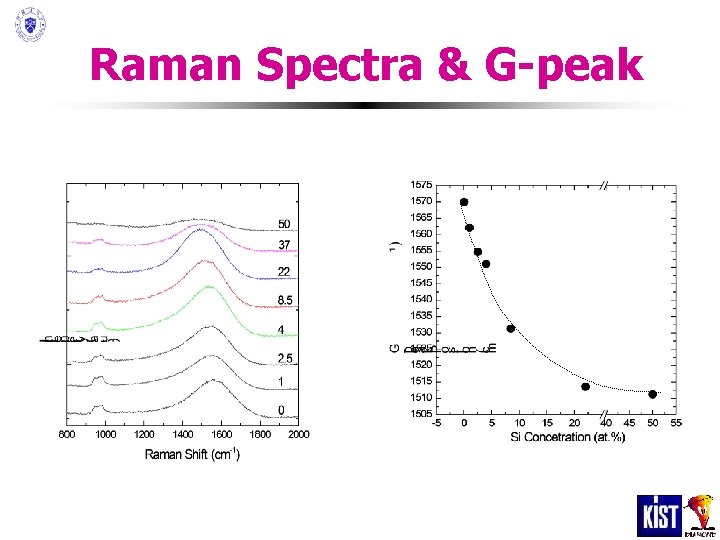
Raman Spectra & G-peak
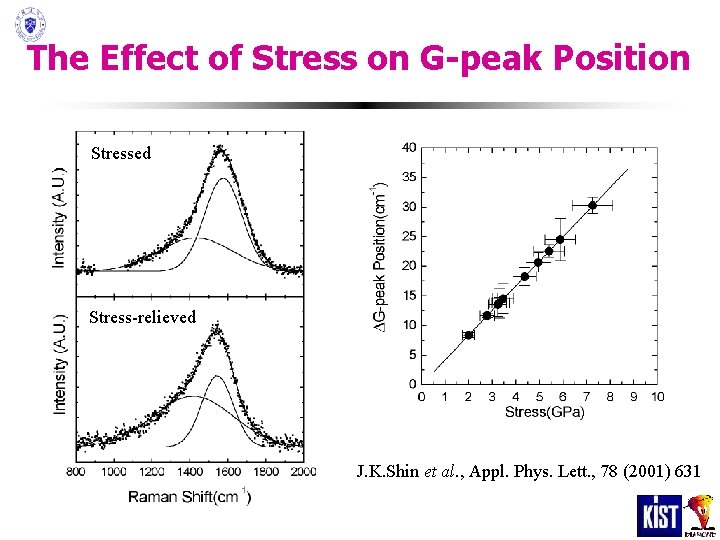
The Effect of Stress on G-peak Position Stressed Stress-relieved J. K. Shin et al. , Appl. Phys. Lett. , 78 (2001) 631
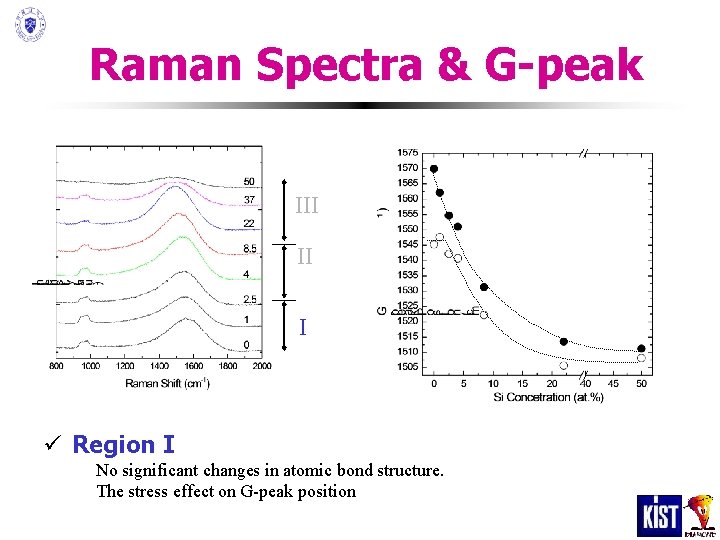
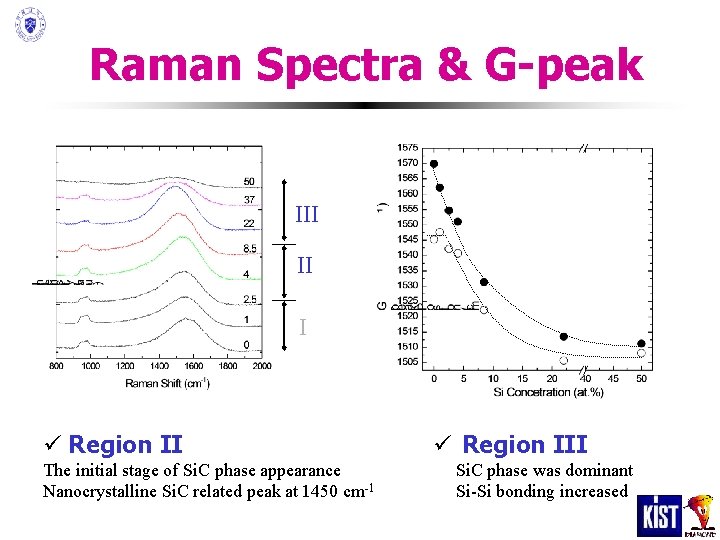
Raman Spectra & G-peak III II I ü Region I No significant changes in atomic bond structure. The stress effect on G-peak position
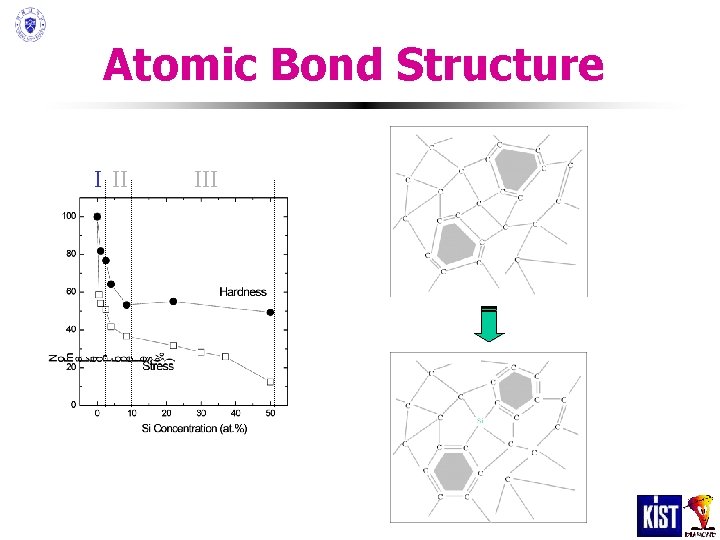
Atomic Bond Structure I II III
Raman Spectra & G-peak III II I ü Region II The initial stage of Si. C phase appearance Nanocrystalline Si. C related peak at 1450 cm-1 ü Region III Si. C phase was dominant Si-Si bonding increased
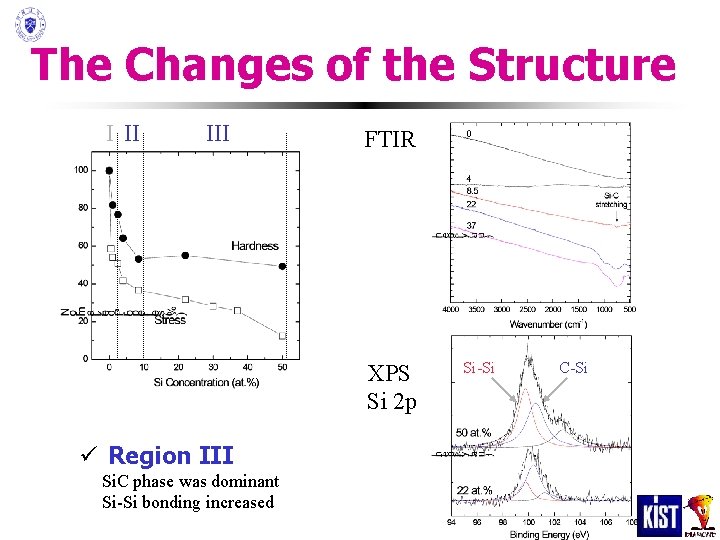
The Changes of the Structure I II III FTIR XPS Si 2 p ü Region III Si. C phase was dominant Si-Si bonding increased Si-Si C-Si
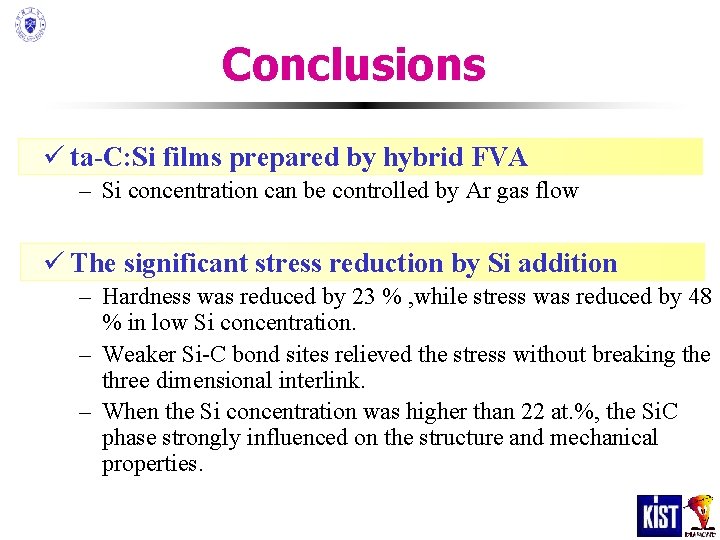
Conclusions ü ta-C: Si films prepared by hybrid FVA – Si concentration can be controlled by Ar gas flow ü The significant stress reduction by Si addition – Hardness was reduced by 23 % , while stress was reduced by 48 % in low Si concentration. – Weaker Si-C bond sites relieved the stress without breaking the three dimensional interlink. – When the Si concentration was higher than 22 at. %, the Si. C phase strongly influenced on the structure and mechanical properties.