
Structure and Power of the Federal Government Legislature

- Slides: 41
Structure and Power of the Federal Government
Legislature The Legislative branch consists of two houses Senate House of Representatives
Legislative Power: Congress has two branches— House and Senate Represent the states to the Federal Government. Power to make laws. Acts mainly through committees.
Executive Branch The Executive office is that of… The President And his cabinet
Executive Power: The President has the power to enforce laws. Below the President is an informal “cabinet” and a formal “administrative branch” Department of Justice is part of administrative branch. Federal Prosecutors are part of Department of Justice.
Judicial Branch The Judicial Branch consists of… The nine justices of the Supreme Court (right click the seal to visit the Supreme Court) And all lower Federal Courts (right click the gavel to visit all the courts)
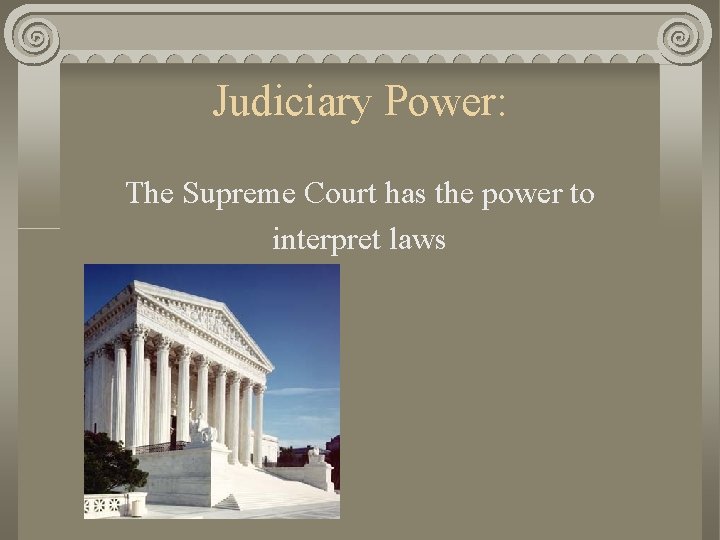
Judiciary Power: The Supreme Court has the power to interpret laws Click here to find out what checks and balances the Supreme Court performs
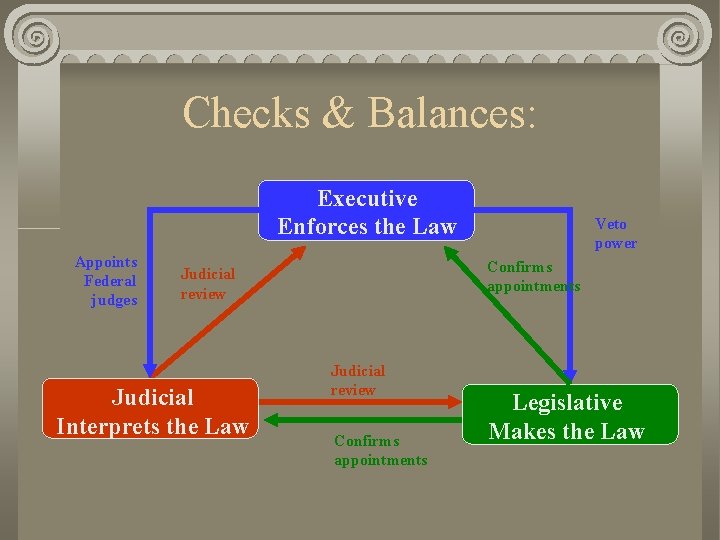
Checks & Balances: Executive Enforces the Law Appoints Federal judges Confirms appointments Judicial review Judicial Interprets the Law Veto power Judicial review Confirms appointments Legislative Makes the Law
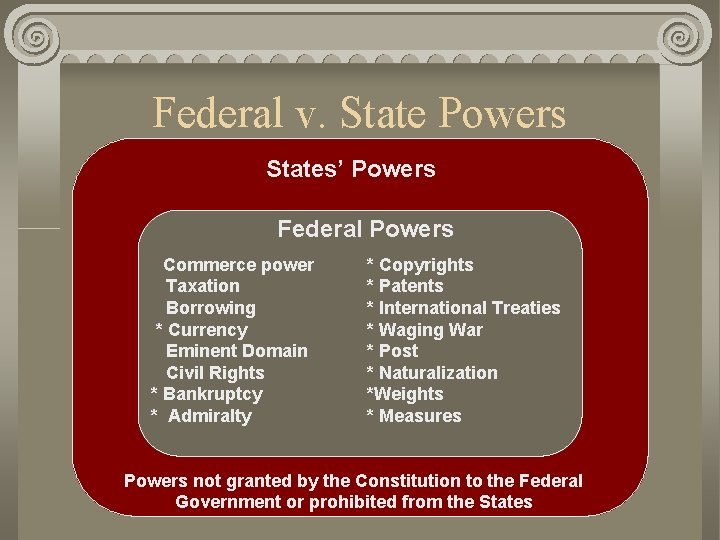
Federal v. State Powers States’ Powers Federal Powers Commerce power Taxation Borrowing * Currency Eminent Domain Civil Rights * Bankruptcy * Admiralty * Copyrights * Patents * International Treaties * Waging War * Post * Naturalization *Weights * Measures Powers not granted by the Constitution to the Federal Government or prohibited from the States
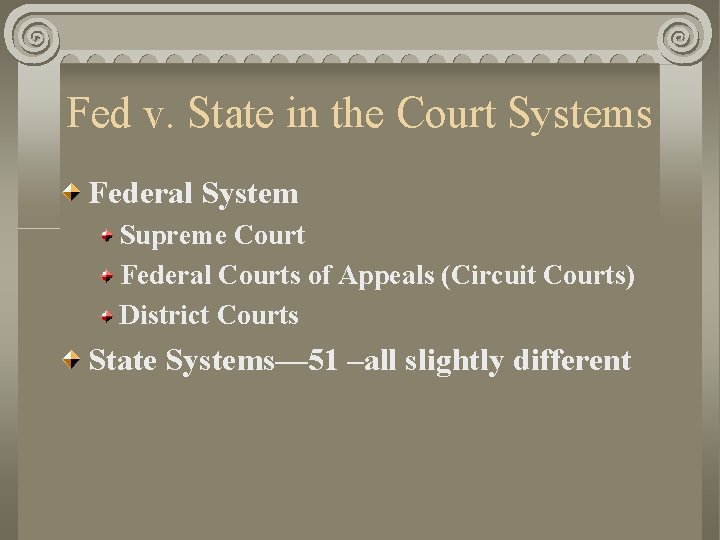
Fed v. State in the Court Systems Federal System Supreme Court Federal Courts of Appeals (Circuit Courts) District Courts State Systems— 51 –all slightly different
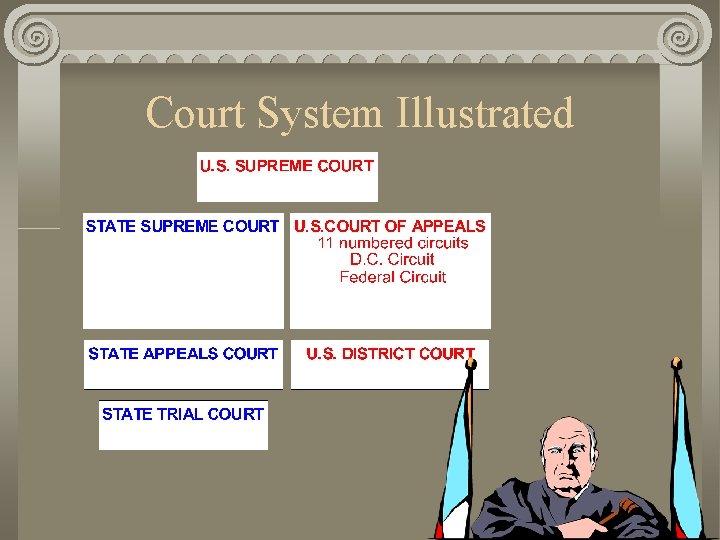
Court System Illustrated
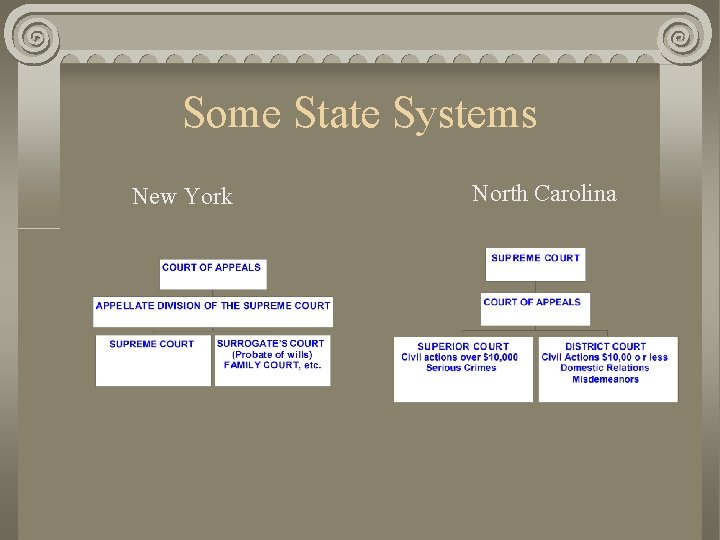
Some State Systems New York North Carolina
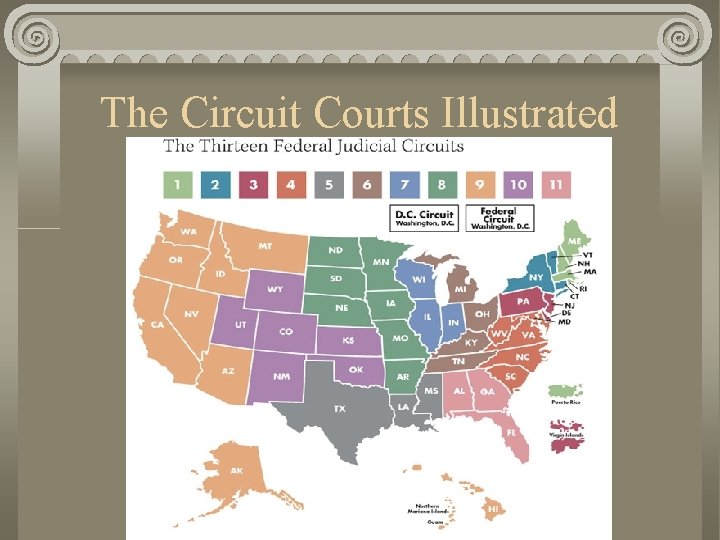
The Circuit Courts Illustrated
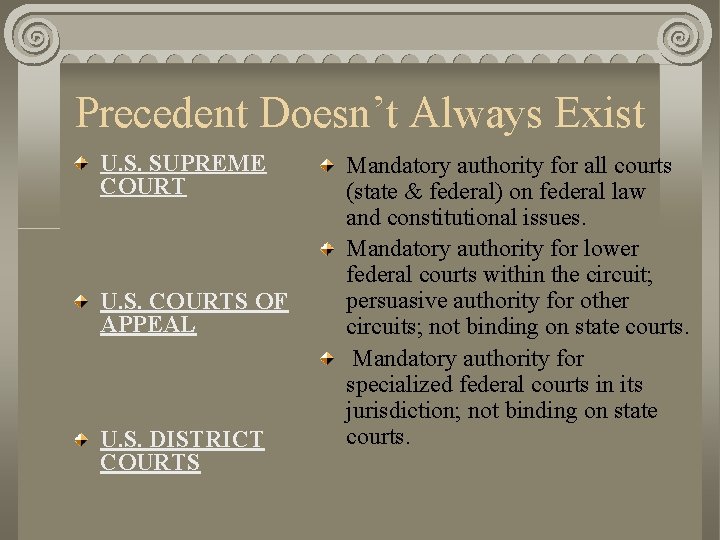
Precedent Doesn’t Always Exist U. S. SUPREME COURT U. S. COURTS OF APPEAL U. S. DISTRICT COURTS Mandatory authority for all courts (state & federal) on federal law and constitutional issues. Mandatory authority for lower federal courts within the circuit; persuasive authority for other circuits; not binding on state courts. Mandatory authority for specialized federal courts in its jurisdiction; not binding on state courts.
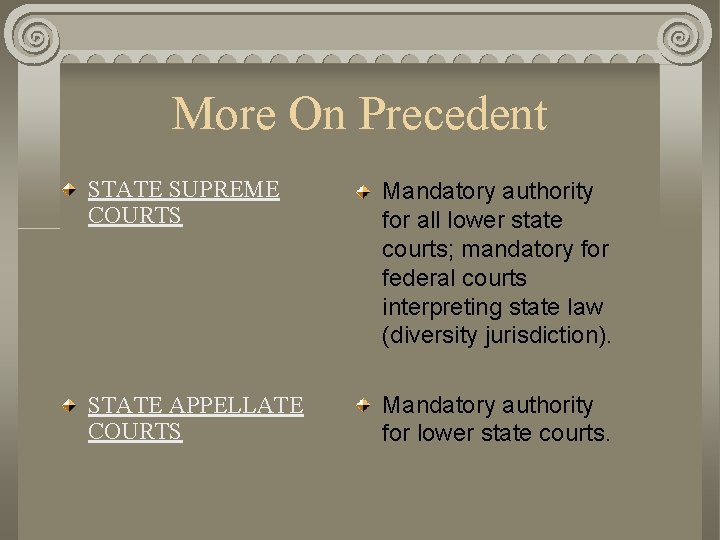
More On Precedent STATE SUPREME COURTS Mandatory authority for all lower state courts; mandatory for federal courts interpreting state law (diversity jurisdiction). STATE APPELLATE COURTS Mandatory authority for lower state courts.
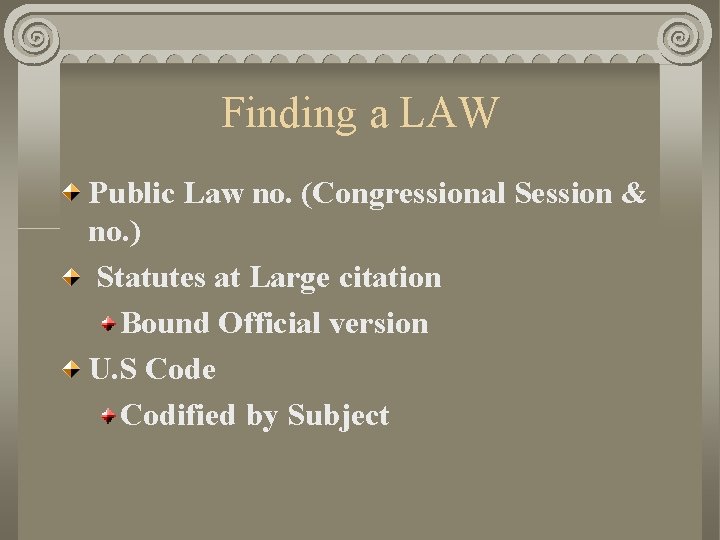
Finding a LAW Public Law no. (Congressional Session & no. ) Statutes at Large citation Bound Official version U. S Code Codified by Subject
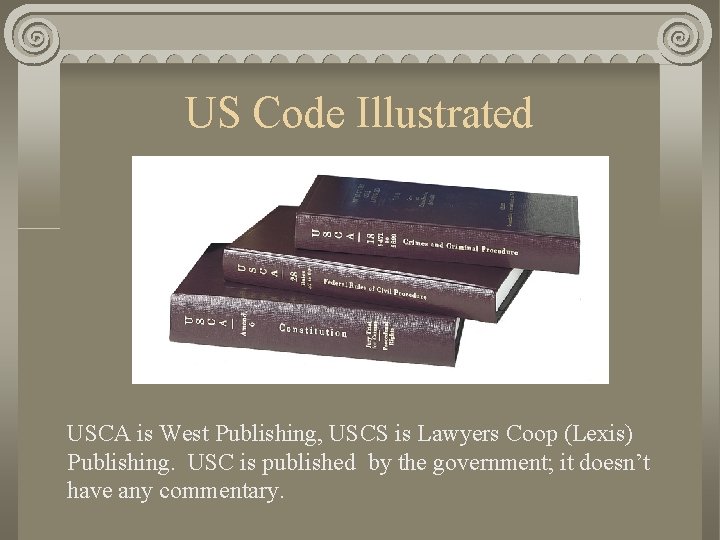
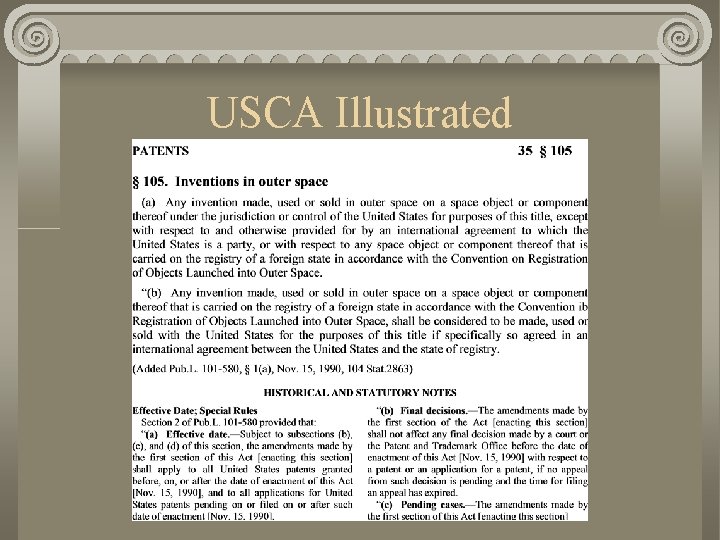
US Code Illustrated USCA is West Publishing, USCS is Lawyers Coop (Lexis) Publishing. USC is published by the government; it doesn’t have any commentary.
USCA Illustrated
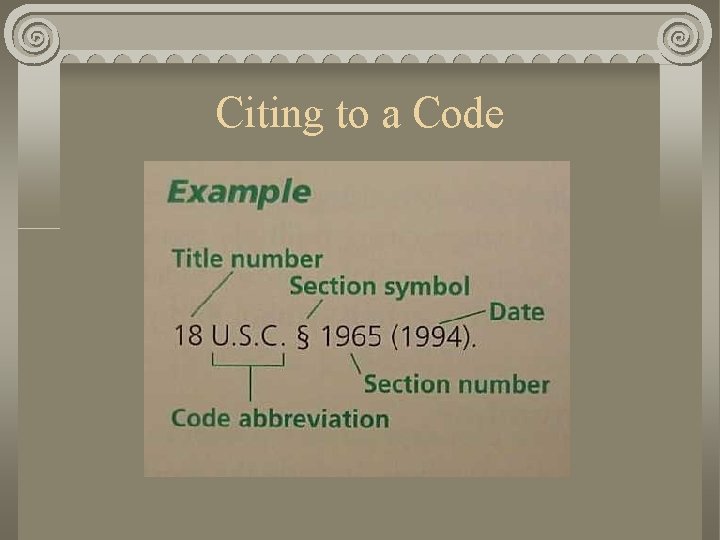
Citing to a Code
Finding a Regulations are passed by administrative agencies Published first in Federal Register Then in Code of Federal Regulations Codified by subject.
State Laws and Regulations Differ from state to state, so can most easily by found on line. Some states don’t widely publish their regulations on paper anymore.
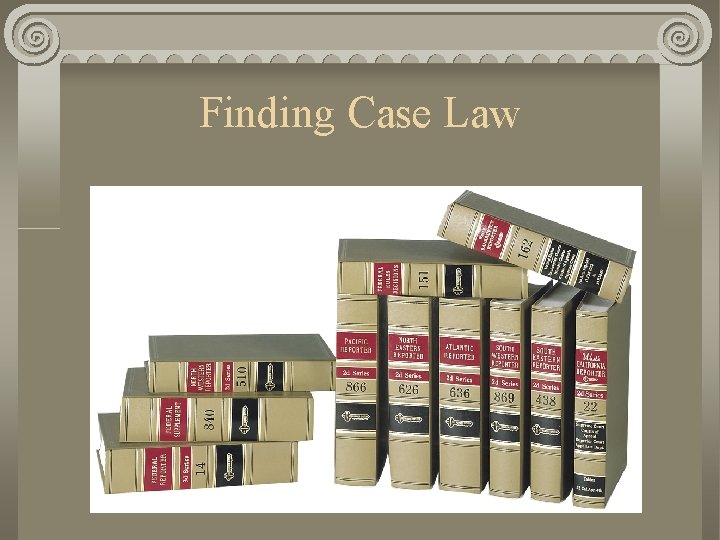
Finding Case Law
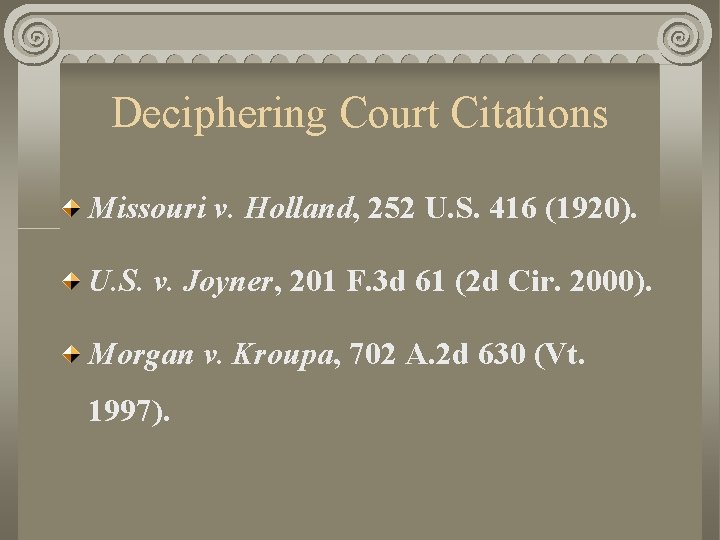
Deciphering Court Citations Missouri v. Holland, 252 U. S. 416 (1920). U. S. v. Joyner, 201 F. 3 d 61 (2 d Cir. 2000). Morgan v. Kroupa, 702 A. 2 d 630 (Vt. 1997).
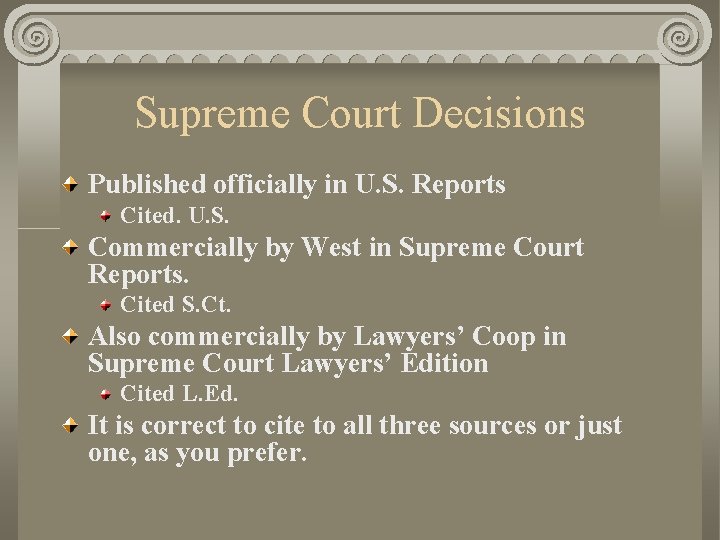
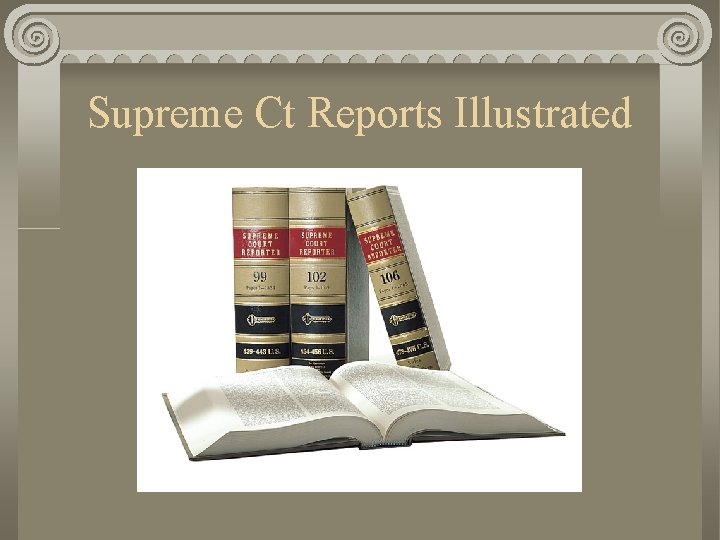
Supreme Court Decisions Published officially in U. S. Reports Cited. U. S. Commercially by West in Supreme Court Reports. Cited S. Ct. Also commercially by Lawyers’ Coop in Supreme Court Lawyers’ Edition Cited L. Ed. It is correct to cite to all three sources or just one, as you prefer.
Supreme Ct Reports Illustrated
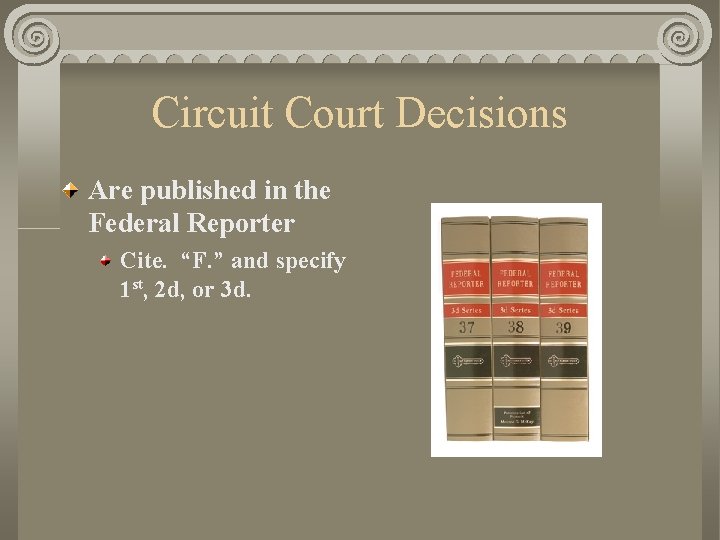
Circuit Court Decisions Are published in the Federal Reporter Cite. “F. ” and specify 1 st, 2 d, or 3 d.
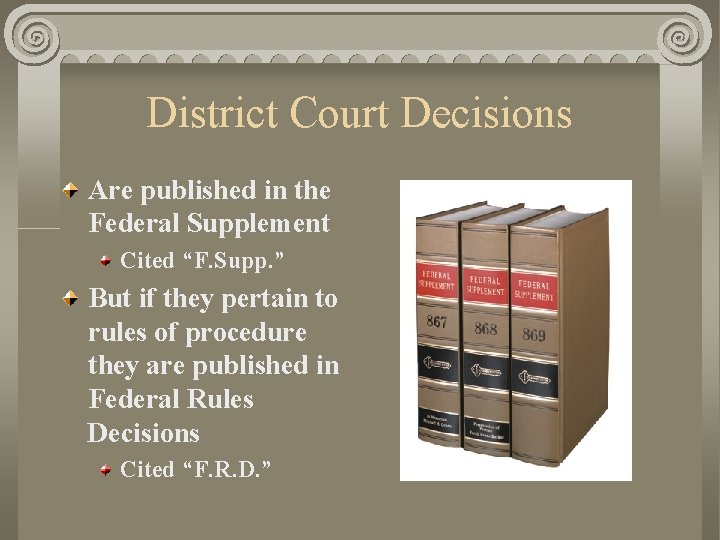
District Court Decisions Are published in the Federal Supplement Cited “F. Supp. ” But if they pertain to rules of procedure they are published in Federal Rules Decisions Cited “F. R. D. ”
State Court Decisions Some States have official reporters which usually have the name of the state on them. E. g. , New York Reports Other States’ decisions are printed in Regional reporters, which report a number of state’s decisions together E. g. , Northeast Reports (by West). Citing to either or both is appropriate.
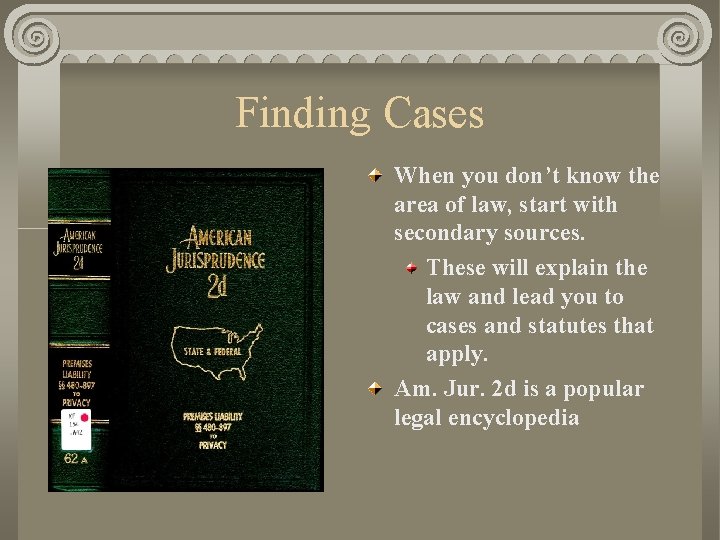
Finding Cases When you don’t know the area of law, start with secondary sources. These will explain the law and lead you to cases and statutes that apply. Am. Jur. 2 d is a popular legal encyclopedia
Citing to Encyclopedias and Treatises Cite to Encyclopedias in the same way that you cite to codes Vol. #, Topic, Section # Cite to treatises similarly to other books R. Joseph Smith & Patrice J. Goodwin, Foreign Relations in the Post-Modern World vol. 2, § 42, 310 (3 d ed. , West 1999). Cite to Law Reviews Like this: Cass R. Sunstein, Affirmative Action, Caste, and Cultural Comparisons, 97 Mich. L. Rev. 1311, 1315 (1999).
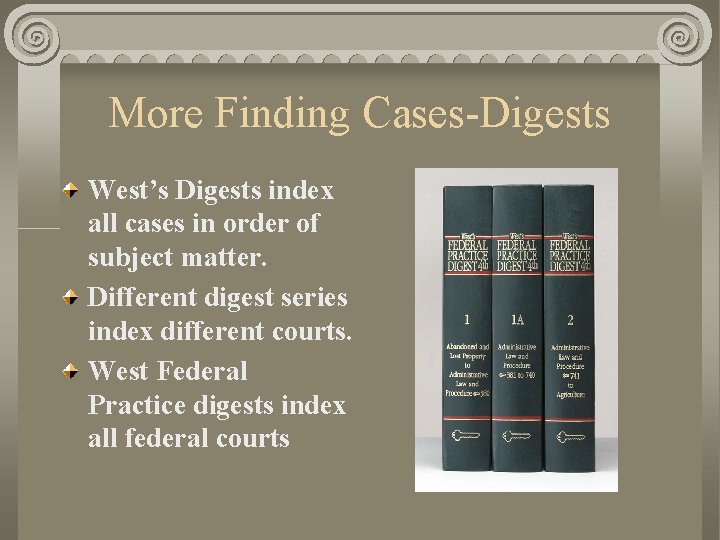
More Finding Cases-Digests West’s Digests index all cases in order of subject matter. Different digest series index different courts. West Federal Practice digests index all federal courts
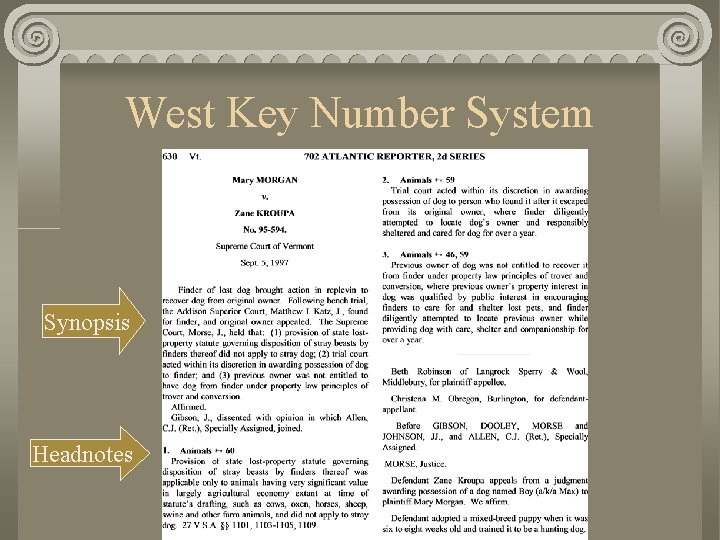
West Key Number System Synopsis Headnotes
More Finding Cases-Start with the Statute or Regulation U. S. C. A. and U. S. C. S. provide “annotations” to cases that discuss the particular statute. USCA Follows West Key Numbers The C. F. R. does the same to a limited extent.
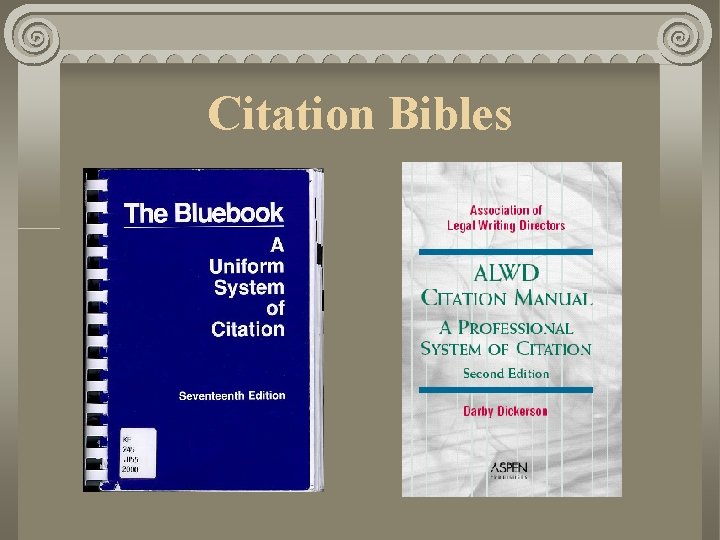
Citation Bibles
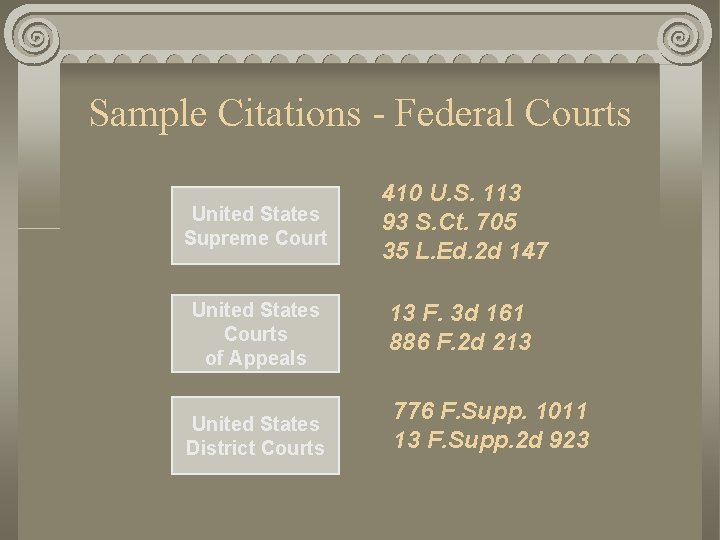
Sample Citations - Federal Courts United States Supreme Court 410 U. S. 113 93 S. Ct. 705 35 L. Ed. 2 d 147 United States Courts of Appeals 13 F. 3 d 161 886 F. 2 d 213 United States District Courts 776 F. Supp. 1011 13 F. Supp. 2 d 923
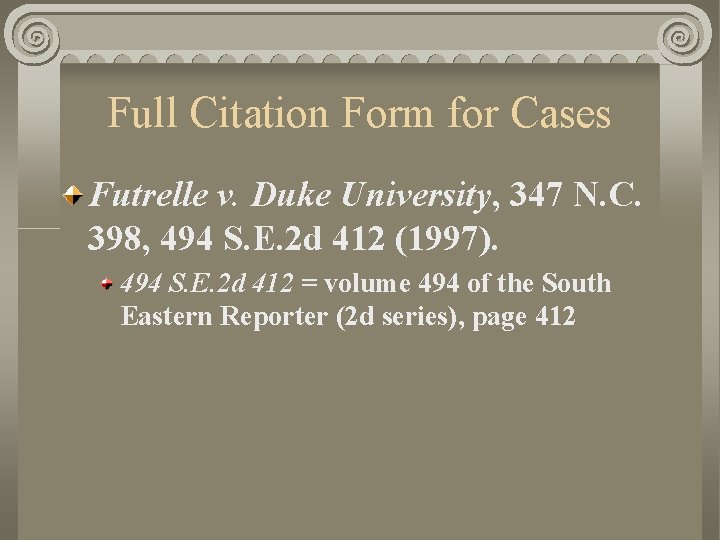
Full Citation Form for Cases Futrelle v. Duke University, 347 N. C. 398, 494 S. E. 2 d 412 (1997). 494 S. E. 2 d 412 = volume 494 of the South Eastern Reporter (2 d series), page 412
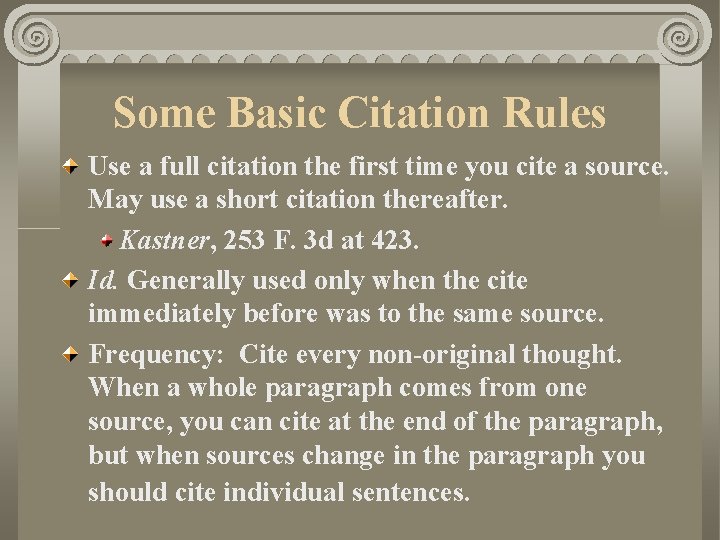
Some Basic Citation Rules Use a full citation the first time you cite a source. May use a short citation thereafter. Kastner, 253 F. 3 d at 423. Id. Generally used only when the cite immediately before was to the same source. Frequency: Cite every non-original thought. When a whole paragraph comes from one source, you can cite at the end of the paragraph, but when sources change in the paragraph you should cite individual sentences.
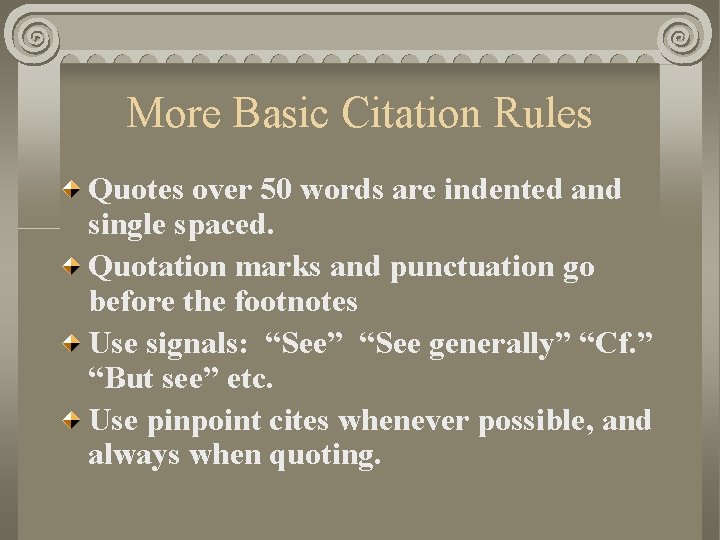
More Basic Citation Rules Quotes over 50 words are indented and single spaced. Quotation marks and punctuation go before the footnotes Use signals: “See” “See generally” “Cf. ” “But see” etc. Use pinpoint cites whenever possible, and always when quoting.
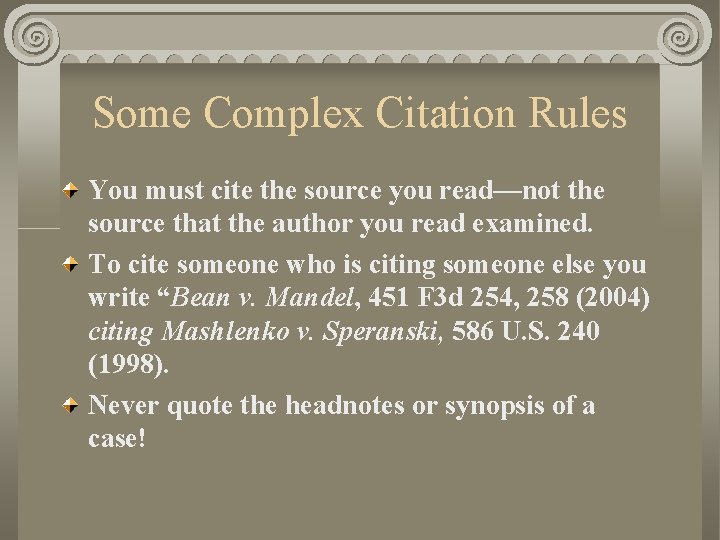
Some Complex Citation Rules You must cite the source you read—not the source that the author you read examined. To cite someone who is citing someone else you write “Bean v. Mandel, 451 F 3 d 254, 258 (2004) citing Mashlenko v. Speranski, 586 U. S. 240 (1998). Never quote the headnotes or synopsis of a case!
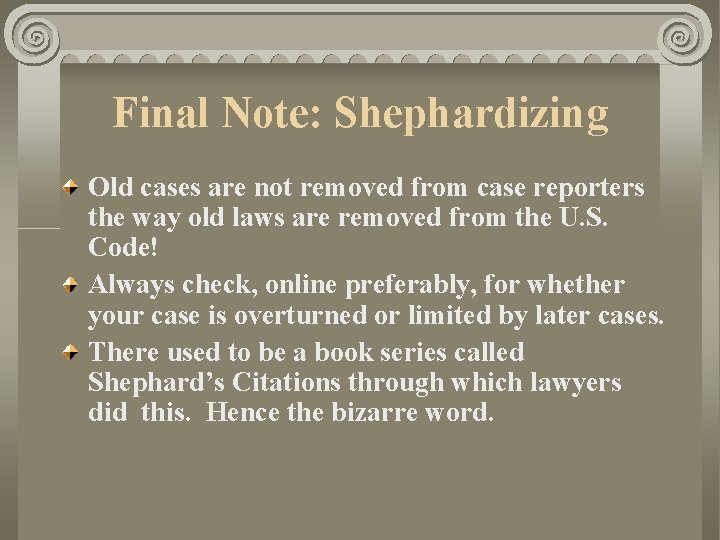
Final Note: Shephardizing Old cases are not removed from case reporters the way old laws are removed from the U. S. Code! Always check, online preferably, for whether your case is overturned or limited by later cases. There used to be a book series called Shephard’s Citations through which lawyers did this. Hence the bizarre word.
Footnote This powerpoint uses material from other powerpoints found on the 2003 University of Virginia “Intro to Political Science” webpage, and the 1999 University of Iowa law school’s webpage. The pages are no longer available. Book illustrations were taken from the West Publishing website in 2005 and also are no longer available at that site.