
Structure and Movement Ch 14 The Skeletal System





- Slides: 15
Structure and Movement Ch. 14
The Skeletal System Lesson 1
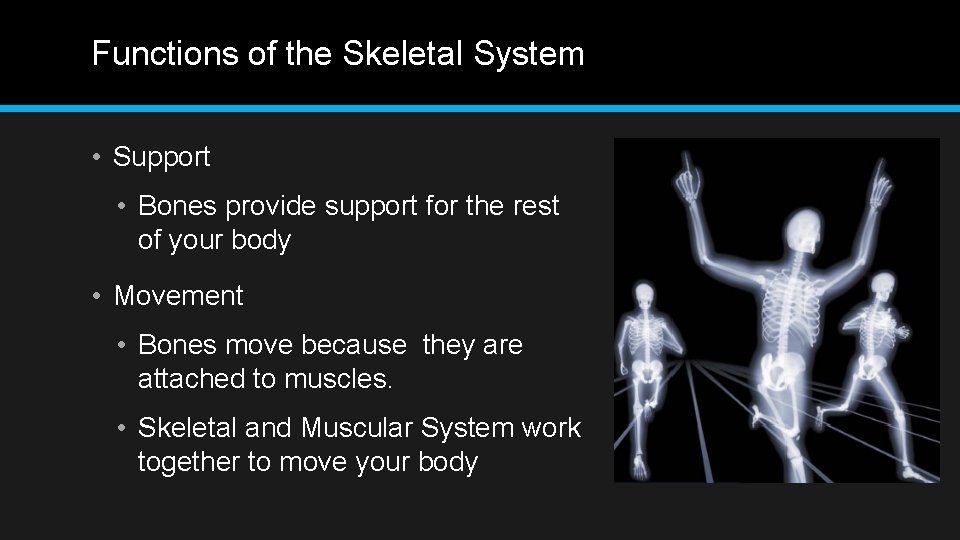
Functions of the Skeletal System • Support • Bones provide support for the rest of your body • Movement • Bones move because they are attached to muscles. • Skeletal and Muscular System work together to move your body
Functions of the Skeletal Systems • Protection • Bones protect fragile tissues • Brain, spinal cord, heart, lungs and others • Production and Storage • Bones produce Red Blood Cells • Bones store fat and calcium • When calcium is needed, it’s released from bones into your blood
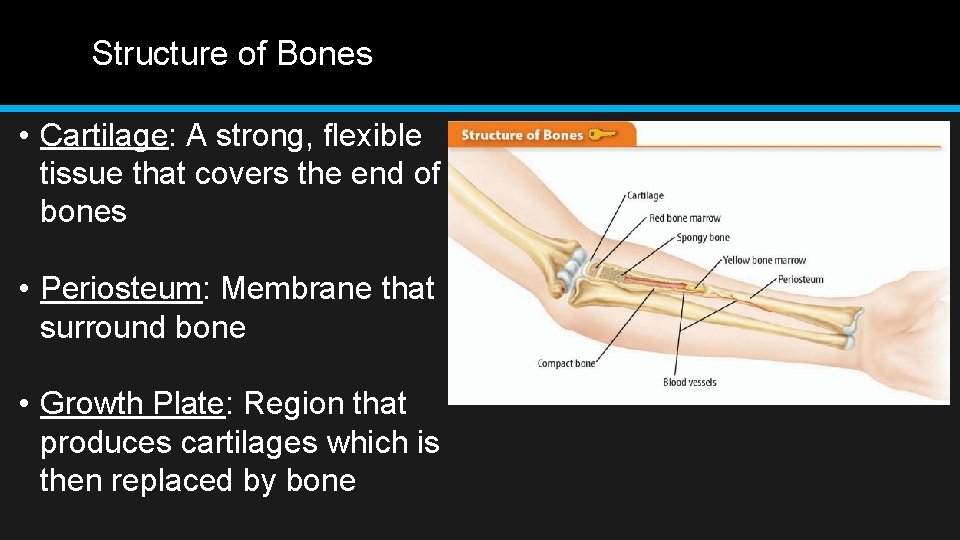
Structure of Bones • Compact Bone Tissue: Hard, outer portion • Spongy Bone Tissue: Less dense • Bone marrow: Soft tissue • Red Marrow: Makes red blood cells • Yellow Marrow: Stores fat
Structure of Bones • Cartilage: A strong, flexible tissue that covers the end of bones • Periosteum: Membrane that surround bone • Growth Plate: Region that produces cartilages which is then replaced by bone
Joints • A Joint is a place where two or more bones meet • Joints enable a skeleton to move • Bones are connected to other bones by tissues called ligaments • When bones in joints move, ligaments stretch and keep bones from shifting away from each other • Immovable Joints contain bones that connect but do not move • Movable Joints allow for a wide range of motion
The Muscular System Lesson 2
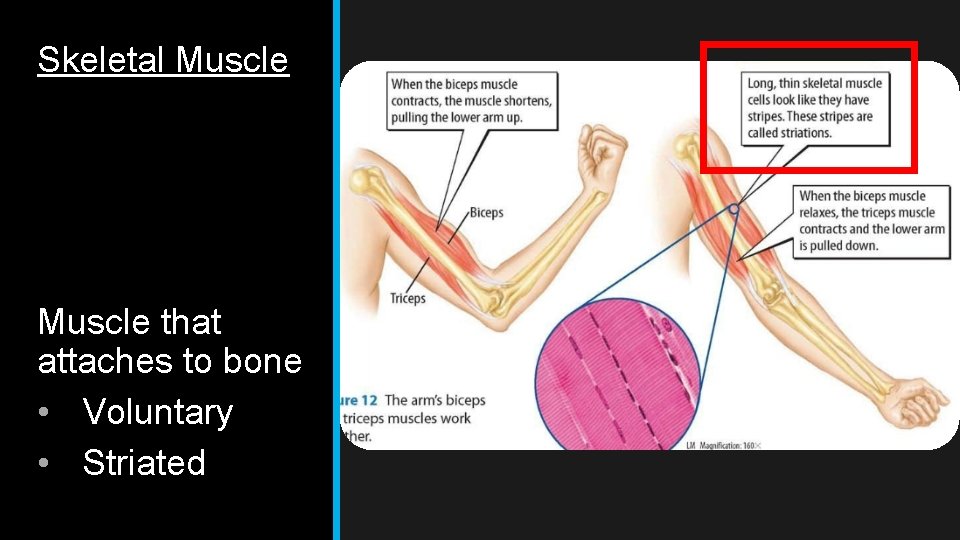
Functions of the Muscular System Movement Stability • Some muscles are attached to bone and cause movement of the body • Tendons attach muscle to bone • Other muscles are not attached to bone and cause blood and food to move • Tendons work with muscles and keep joints in place when your body moves
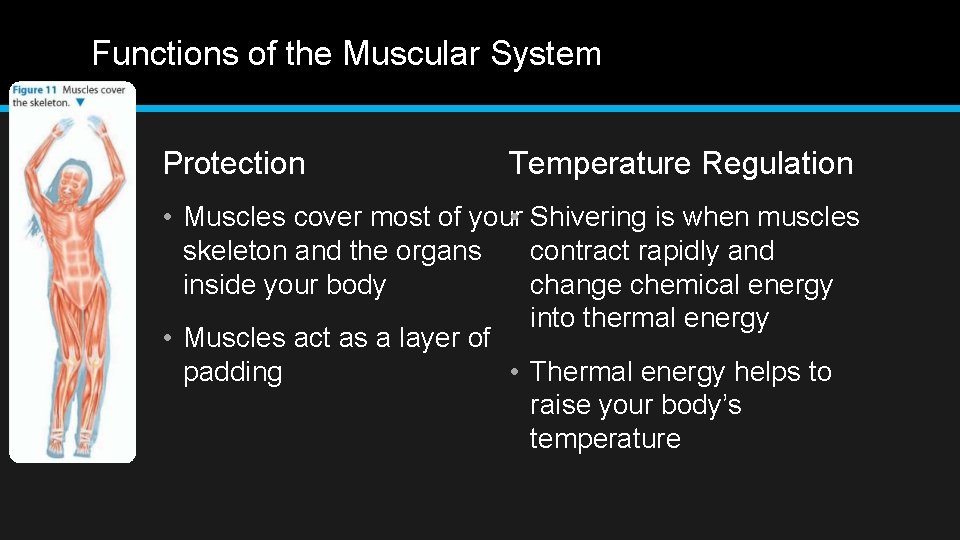
Functions of the Muscular System Protection Temperature Regulation • Muscles cover most of your • Shivering is when muscles skeleton and the organs contract rapidly and inside your body change chemical energy into thermal energy • Muscles act as a layer of padding • Thermal energy helps to raise your body’s temperature
Skeletal Muscle that attaches to bone • Voluntary • Striated
Cardiac Muscle Found only in the Heart • Involuntary • Striated
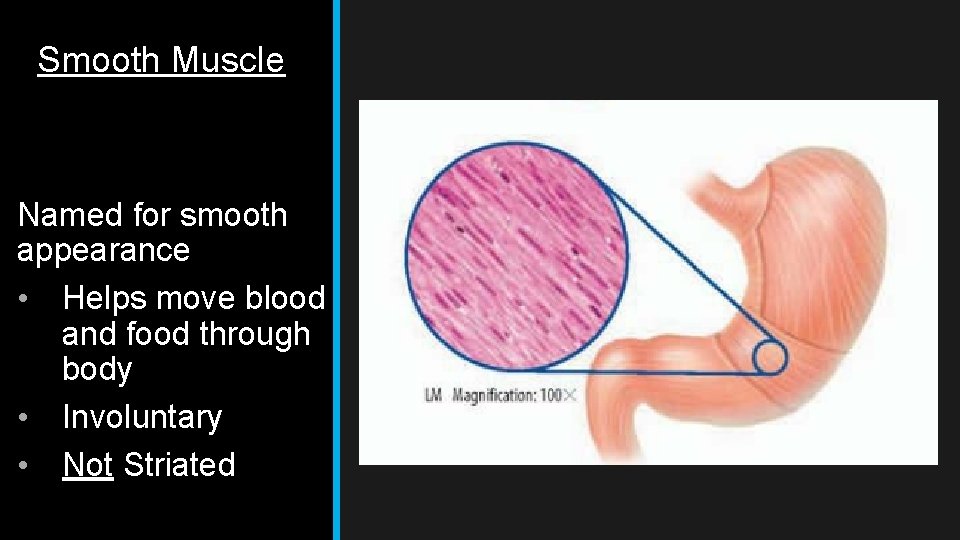
Smooth Muscle Named for smooth appearance • Helps move blood and food through body • Involuntary • Not Striated
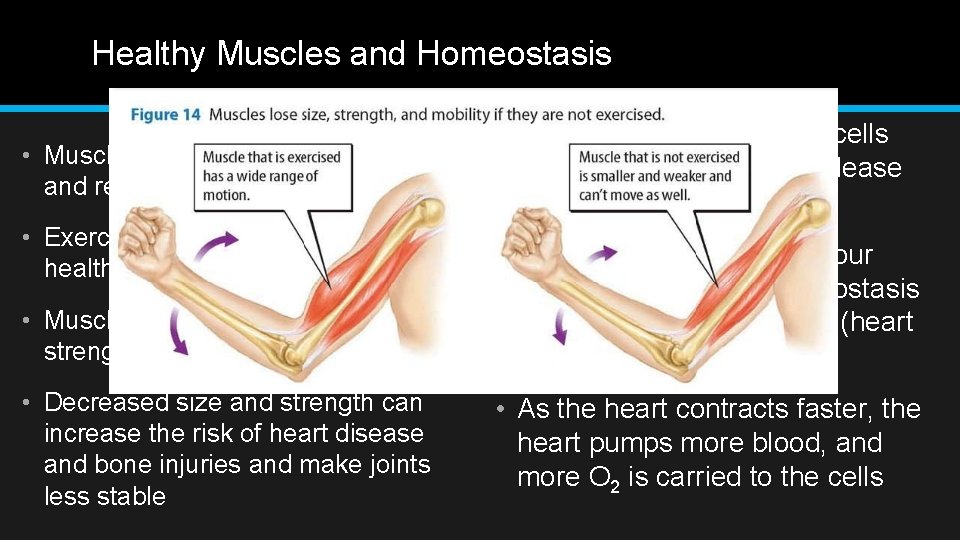
Healthy Muscles and Homeostasis • Muscles benefit from a healthy diet and require energy to contract • Exercise also helps keep muscles healthy • Muscle cells decrease in size and strength without exercise • Decreased size and strength can increase the risk of heart disease and bone injuries and make joints less stable • When you exercise, your cells need more oxygen and release more waste, such as CO 2 • The Cardiac muscles of your heart help maintain homeostasis by contracting more often (heart beating) • As the heart contracts faster, the heart pumps more blood, and more O 2 is carried to the cells