
Structure and Functions of the Executive Branch Who
Structure and Functions of the Executive Branch
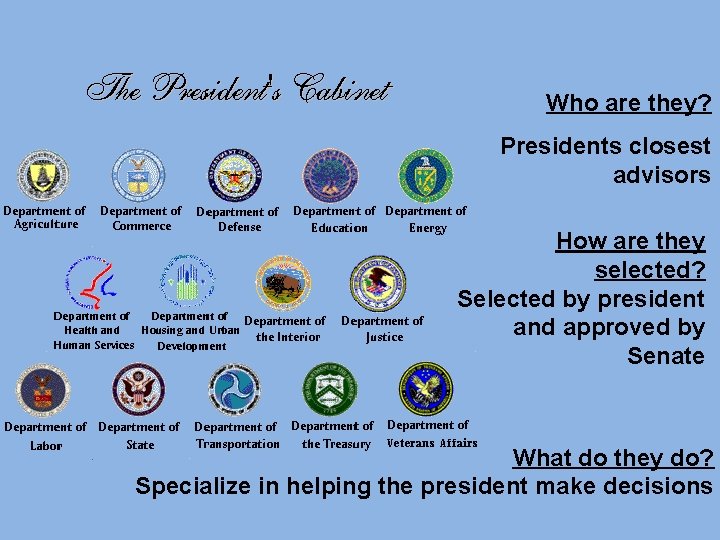
Who are they? Presidents closest advisors How are they selected? Selected by president and approved by Senate What do they do? Specialize in helping the president make decisions
The Role of the Cabinet • President selects cabinet – Cabinet – close adviser to the president – VP and 15 other departments – Senate must approve all nominations – this is an example of Check and Balance • Factors in choosing cabinet – Experience in Policy » Experience in their area/department – Administrative experience » Manage and supervise many people and programs – Support president’s plans » Loyalty to party and president – Support from various groups » Support from interest groups – Demographic Diversity » Represent different demographics (race/gender/location)
Steps in the Process of Appointing Members of the Cabinet • Presidential nomination – White House review – Paperwork financial disclosure – FBI investigation • Senate confirmation hearings – Senate vote (majority needed)
The First Executive Departments: George Washington’s Presidency • Department of State - Secretary of State Thomas Jefferson • Department of the Treasury - Secretary of the Treasury Alexander Hamilton • Department of War - Secretary of Defense Henry Knox • Office of the Attorney General - Edmund Randolph -became the Department of Justice in 1870 Today there are fifteen departments.
Presidential Cabinet Today • Secretary of State • Secretary of the Treasury • Attorney General (Justice Dept. ) • Secretary of Defense • Secretary of the Interior • Secretary of Agriculture • Secretary of Commerce • Secretary of Labor • Secretary of Health and Human Services • Secretary of Housing and Urban Development • Secretary of Transportation • Secretary of Energy • Secretary of Education • Secretary of Veterans Affairs • Secretary of Homeland Security
Functions and limits of the Cabinet • Functions – Advise the president / run the executive branch • Importance? – Some presidents do not rely on their cabinet members. » Lincoln – Some rely heavily on cabinet » FDR • Limitations – Loyalty • • President Officials in their dept. Members of congress Special interest groups
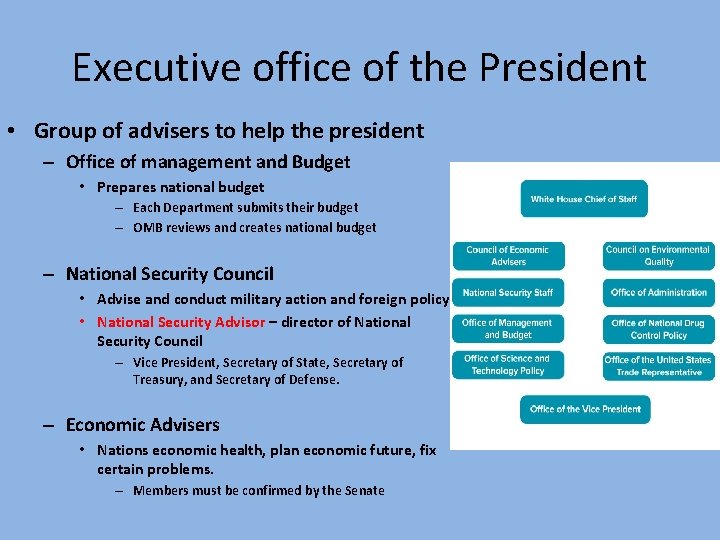
Executive office of the President • Group of advisers to help the president – Office of management and Budget • Prepares national budget – Each Department submits their budget – OMB reviews and creates national budget – National Security Council • Advise and conduct military action and foreign policy • National Security Advisor – director of National Security Council – Vice President, Secretary of State, Secretary of Treasury, and Secretary of Defense. – Economic Advisers • Nations economic health, plan economic future, fix certain problems. – Members must be confirmed by the Senate
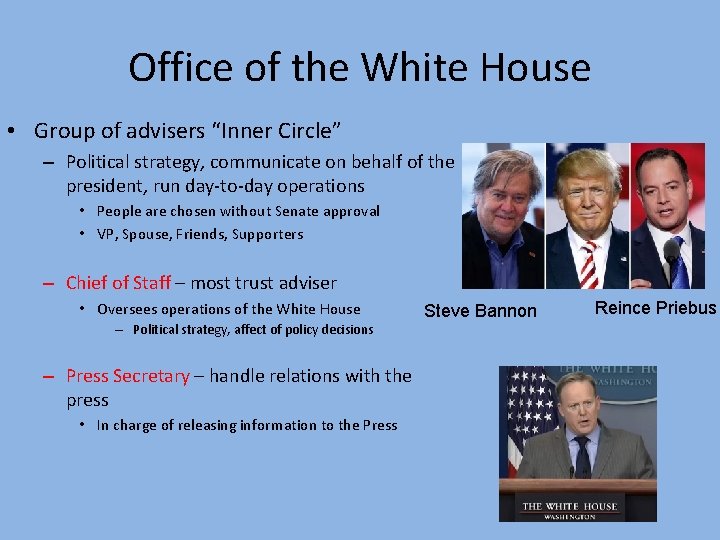
Office of the White House • Group of advisers “Inner Circle” – Political strategy, communicate on behalf of the president, run day-to-day operations • People are chosen without Senate approval • VP, Spouse, Friends, Supporters – Chief of Staff – most trust adviser • Oversees operations of the White House – Political strategy, affect of policy decisions – Press Secretary – handle relations with the press • In charge of releasing information to the Press Steve Bannon Reince Priebus
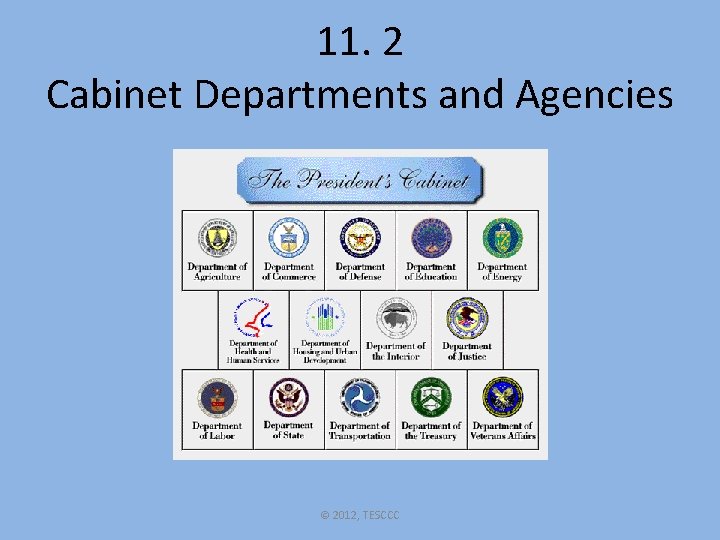
11. 2 Cabinet Departments and Agencies © 2012, TESCCC
Department of State & Treasury • Secretary of State • Handles the foreign policy of the nation • Staffs embassies • Analyzes data about American interests in other nations • Speaks for the United States at the United Nations Secretary of the Treasury
Department of Homeland Security • Charged with protecting the security of America’s borders, shores, land the safety of its people • Newest department created in 2002 after September 11, 2001 © 2012, TESCCC
Department of Justice & Defense • Attorney General • Oversees the nation’s legal affairs • Supervises the agencies that serve as the nation’s police and prison system • Enforces antitrust laws Secretary of Defense
Department of Interior & Agriculture • • • Protects the public lands and natural resources throughout the United States Oversees relationships with American Indian nations I. e. Indian Casinos • Helps farmers improve incomes and production for home and abroad • Develops conservation programs • Safeguards the nation’s food supply
Department of Commerce & Labor • Promotes and protects the industrial and commercial parts of the economy • Carries out the census
Department of Health and Human Services & Housing and Urban Development • Oversees programs concerned with health and social services of the American people • Manages federal Medicare and Medicaid
Department of Transportation and Energy • Regulates America’s transportation needs, policies and planning • Works to ensure safe, efficient, and convenient land, sea, rail, and air transportation including monitoring inland waterways and highways
Department of Education & Veteran Affairs • Establishes policy for, administers and coordinates most federal assistance to education, collects data on US schools, and enforces federal educational laws regarding privacy and civil rights • Its mission is: to promote student achievement and preparation for global competitiveness by fostering educational excellence and ensuring equal access
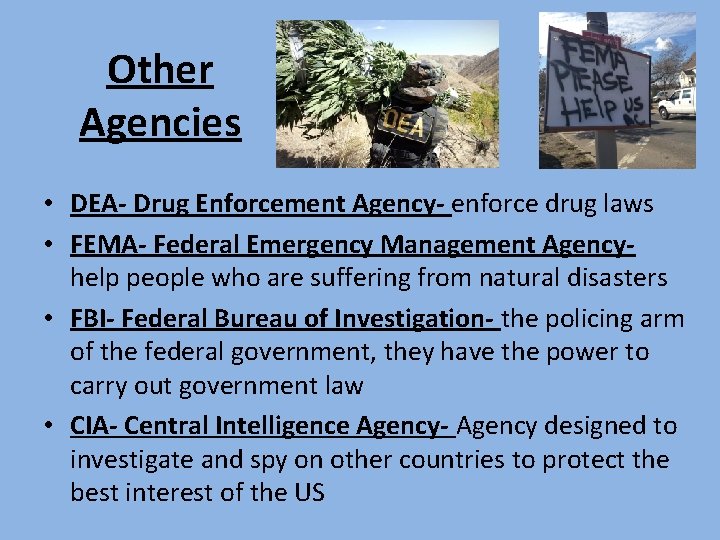
Other Agencies • DEA- Drug Enforcement Agency- enforce drug laws • FEMA- Federal Emergency Management Agencyhelp people who are suffering from natural disasters • FBI- Federal Bureau of Investigation- the policing arm of the federal government, they have the power to carry out government law • CIA- Central Intelligence Agency- Agency designed to investigate and spy on other countries to protect the best interest of the US
Other Agencies • NASA – National Aeronautics and Space Administration • Government Corporations – business that the Federal government runs • FDIC – Federal Deposit Insurance Corporation- protects your deposits made in a bank if it gets robbed or goes out of business • USPS – United States Postal Service- delivers mail and packages • Commissions – • independent agencies that have government’s authority to issue licenses and punish people – FCC – Federal communication commission- Regulates TV, Internet and Radio – EPA – Environmental Protection Agency- regulates environment and pollution – FTC – Federal Trade Commission- regulates businesses to prevent monopolies
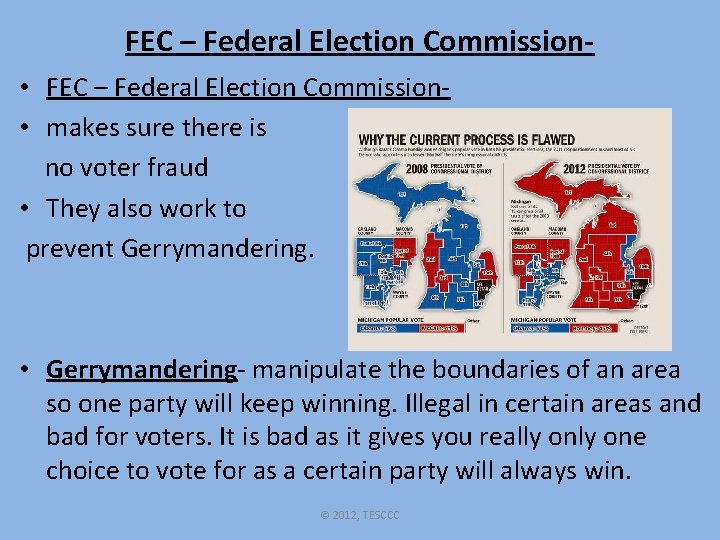
FEC – Federal Election Commission • makes sure there is no voter fraud • They also work to prevent Gerrymandering. • Gerrymandering- manipulate the boundaries of an area so one party will keep winning. Illegal in certain areas and bad for voters. It is bad as it gives you really one choice to vote for as a certain party will always win. © 2012, TESCCC
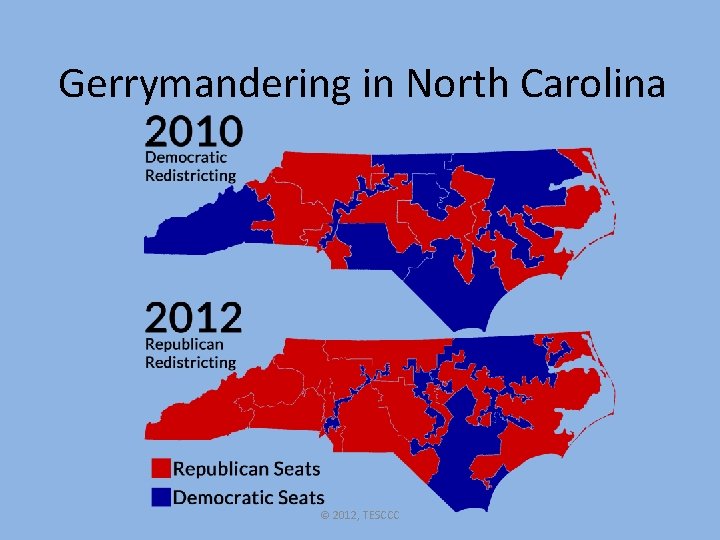
Gerrymandering in North Carolina © 2012, TESCCC
11. 3 Federal Workforce and Civil Service
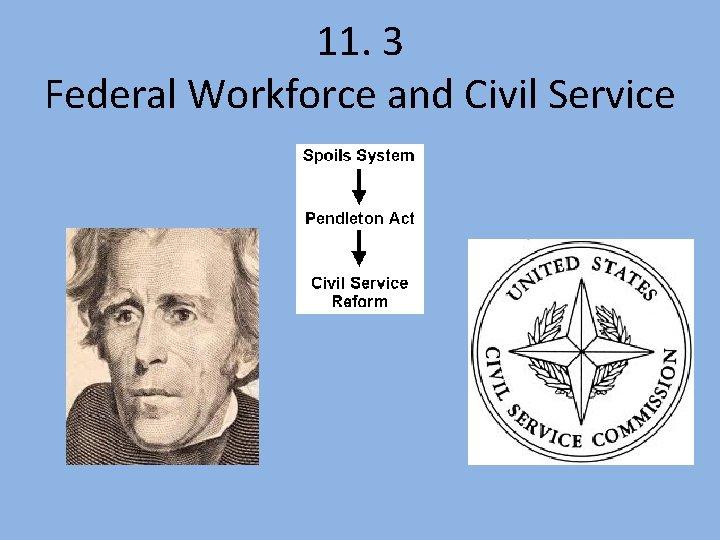
Spoil System & Civil Service • • Spoil System Politician rewarding loyal political supporters • “to the victor goes the Spoil” • Andrew Jackson appointed loyal members of political party • Leads to corruption • You give money to a candidate or support them you get a position in their administration • Civil Service – Government employment based on competitive exams and merit – Pendleton Act – Hires and employs people who are qualified for the job. – Illegal to hire or fire someone based on political reasons.
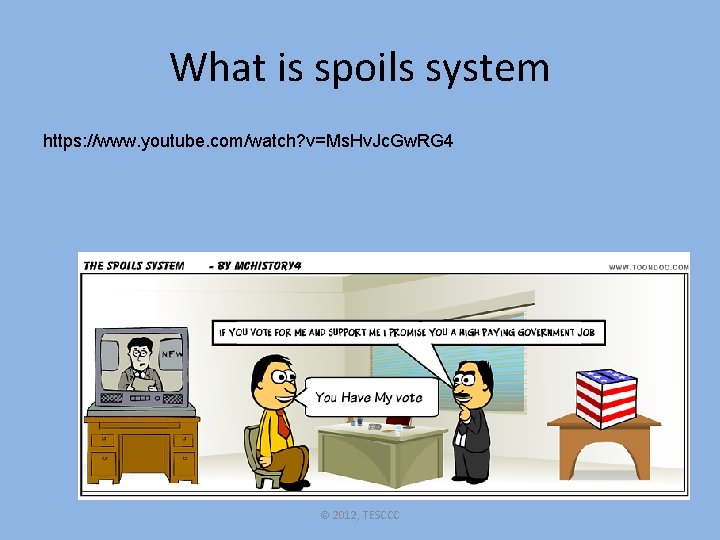
What is spoils system https: //www. youtube. com/watch? v=Ms. Hv. Jc. Gw. RG 4 © 2012, TESCCC
Civil Service • Office of Personal Management – Responsible for filling federal jobs • Jobs are attractive to people – many benefits – Health insurance, paid vacations, retirement – Federal employees join unions • Job security – can’t be fired “at will” • Whistleblowers – employees who report corruption by the government – Whistleblower Protection Enhancement Act (2012) » Protects whistleblowers from being fired.
Public Policy • Public Policy – plan of action adopted by government decision makers – Solve a problem or reach a goal • Different agencies help conduct public policy – Bureaucracy – implement laws created by public policyanybody who works for government that isn’t a high ranking official • Liaison officers – Officers within cabinets-assistants and workers – Officer who helps to make sure bills are being passed through congress » Supply information to law makers
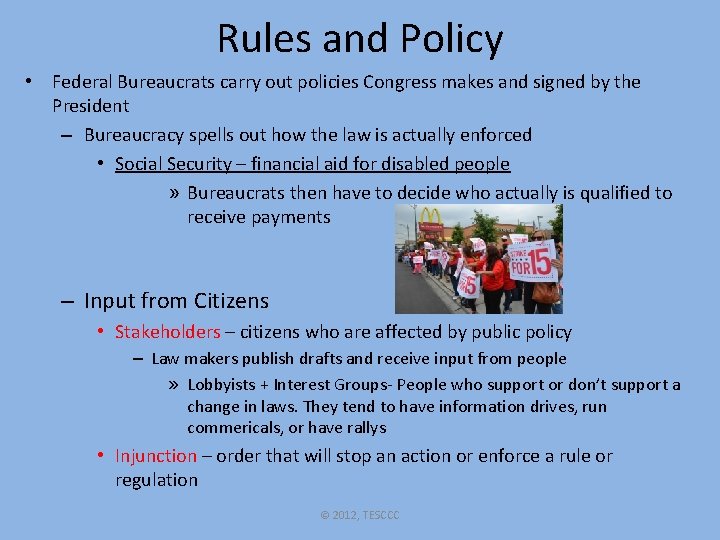
Rules and Policy • Federal Bureaucrats carry out policies Congress makes and signed by the President – Bureaucracy spells out how the law is actually enforced • Social Security – financial aid for disabled people » Bureaucrats then have to decide who actually is qualified to receive payments – Input from Citizens • Stakeholders – citizens who are affected by public policy – Law makers publish drafts and receive input from people » Lobbyists + Interest Groups- People who support or don’t support a change in laws. They tend to have information drives, run commericals, or have rallys • Injunction – order that will stop an action or enforce a rule or regulation © 2012, TESCCC
Size of Bureaucracy • Helpful to run the country? • Federal government becoming too large? 2. 9 million people work in the US bureaucracy – Growth of Bureaucracy • Population of the Country – 300+ million people – requires government to grow • Industrial and Technology – Urban and technological age- i. e. how do you regulate the internet? • Global Economy – US economy involved with many other nations • National Security – Threats to our nation + international conflicts • Economic Crises – Government creates programs to help stimulate jobs © 2012, TESCCC
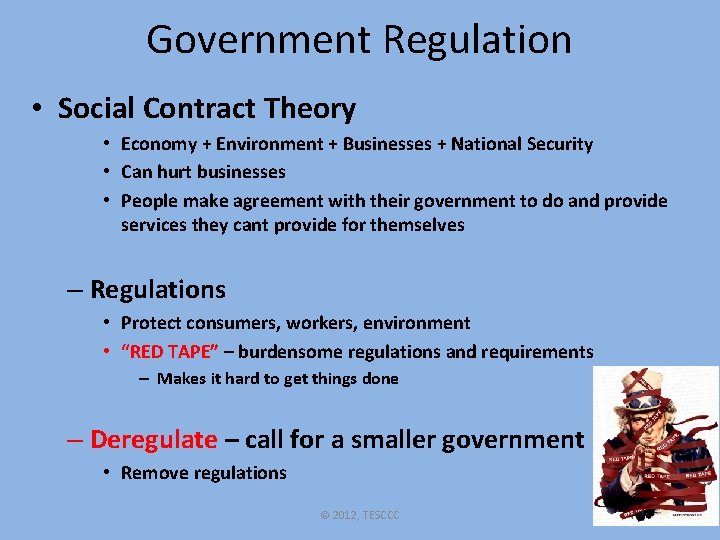
Government Regulation • Social Contract Theory • Economy + Environment + Businesses + National Security • Can hurt businesses • People make agreement with their government to do and provide services they cant provide for themselves – Regulations • Protect consumers, workers, environment • “RED TAPE” – burdensome regulations and requirements – Makes it hard to get things done – Deregulate – call for a smaller government • Remove regulations © 2012, TESCCC
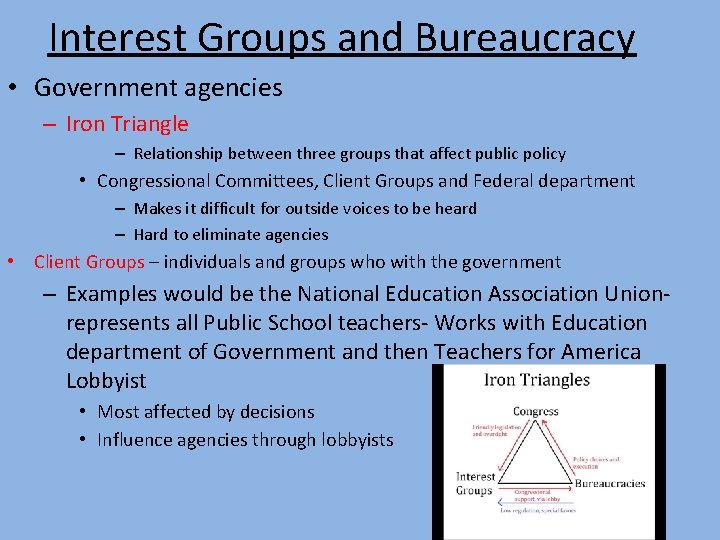
Interest Groups and Bureaucracy • Government agencies – Iron Triangle – Relationship between three groups that affect public policy • Congressional Committees, Client Groups and Federal department – Makes it difficult for outside voices to be heard – Hard to eliminate agencies • Client Groups – individuals and groups who with the government – Examples would be the National Education Association Unionrepresents all Public School teachers- Works with Education department of Government and then Teachers for America Lobbyist • Most affected by decisions • Influence agencies through lobbyists
- Slides: 31