
Structure and Functions of Microorganisms Classification of Life
- Slides: 41
Structure and Functions of Microorganisms Classification of Life - Prokaryotes vs. Eukaryotes - Bacteria, Parasites, Fungi & Viruses
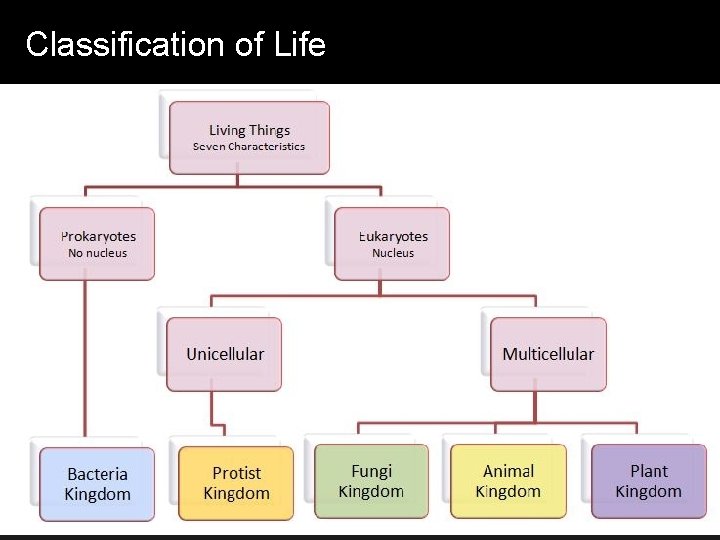
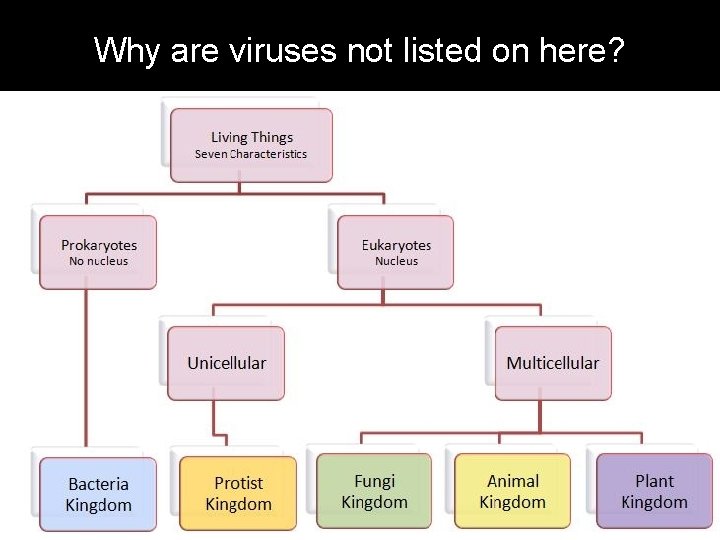
Classification of Life
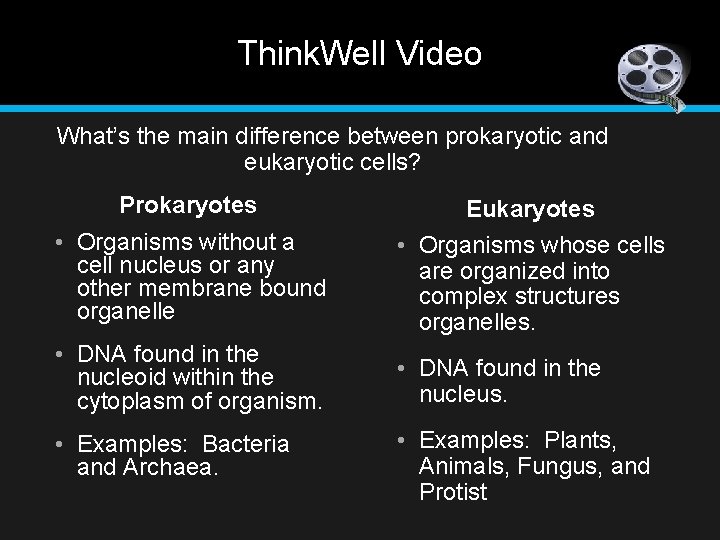
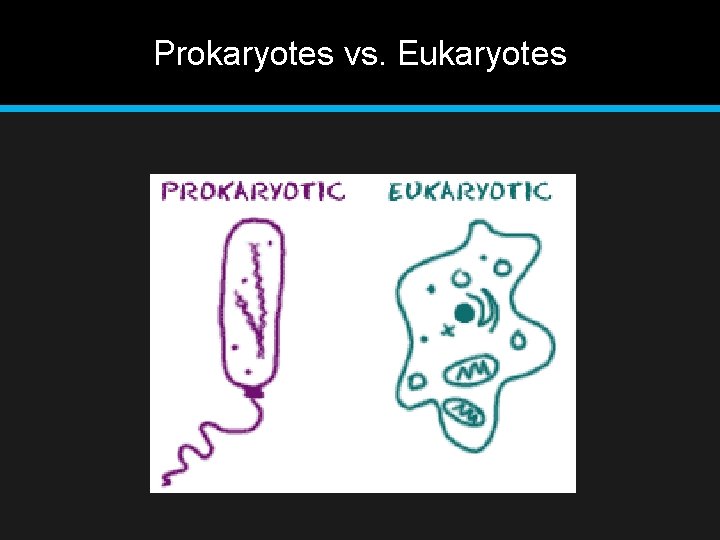
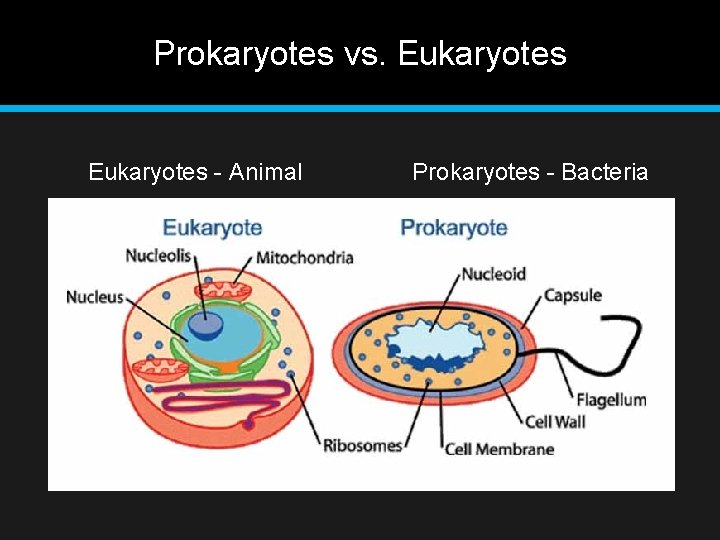
Think. Well Video What’s the main difference between prokaryotic and eukaryotic cells? Prokaryotes • Organisms without a cell nucleus or any other membrane bound organelle Eukaryotes • Organisms whose cells are organized into complex structures organelles. • DNA found in the nucleoid within the cytoplasm of organism. • DNA found in the nucleus. • Examples: Bacteria and Archaea. • Examples: Plants, Animals, Fungus, and Protist
Prokaryotes vs. Eukaryotes
Prokaryotes vs. Eukaryotes - Animal Prokaryotes - Bacteria
Review of Prokaryotes vs. Eukaryotes & Classification of Life. • Brain Pop- Cell Specialization, Six Kingdoms
BACTERIA
Bacteria – Quick Facts • Size – Single Cell (1 -2 micrometers) • Structure – Prokaryotic Cell (No Nucleus) • Food – By absorbing nutrients from the material they live on or in. (Heterotrophs) • Movement – Flagella and Pili.
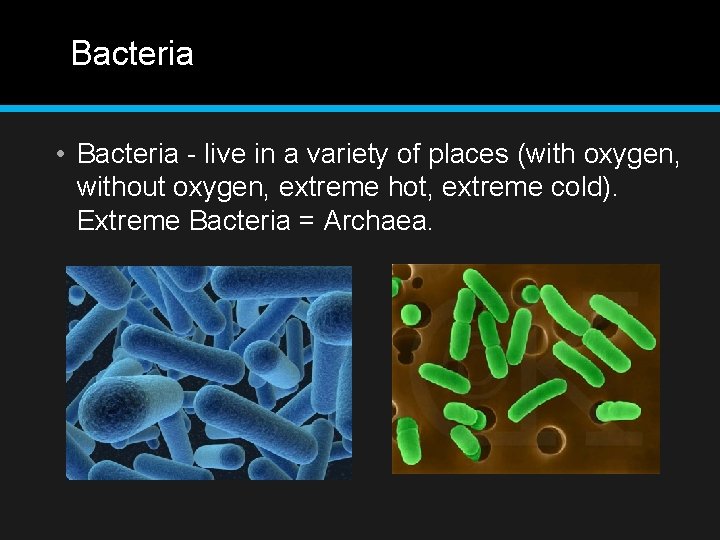
Bacteria • Bacteria - live in a variety of places (with oxygen, without oxygen, extreme hot, extreme cold). Extreme Bacteria = Archaea.
• Millions of bacteria live on the skin and in the intestines. • The vast majority of bacteria do not cause disease, and many bacteria are actually helpful and even necessary for good health. • Harmful bacteria that cause bacterial infections and disease are called pathogenic bacteria. • Bacterial diseases occur when pathogenic bacteria get into the body and begin to reproduce and crowd out healthy bacteria.
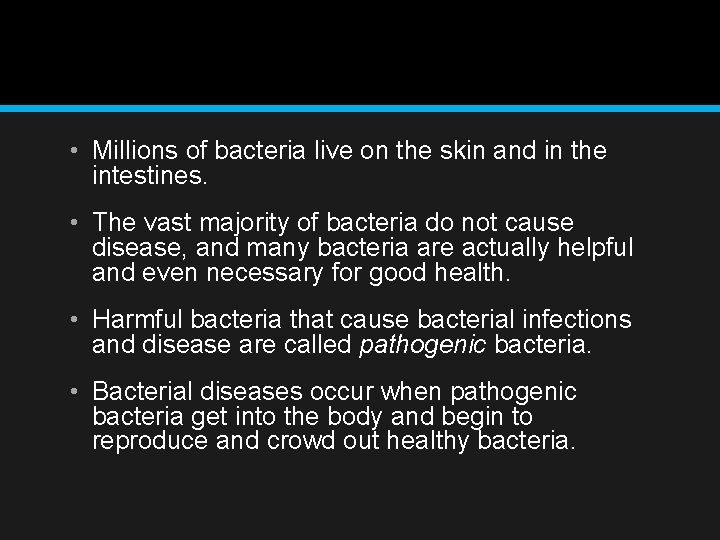
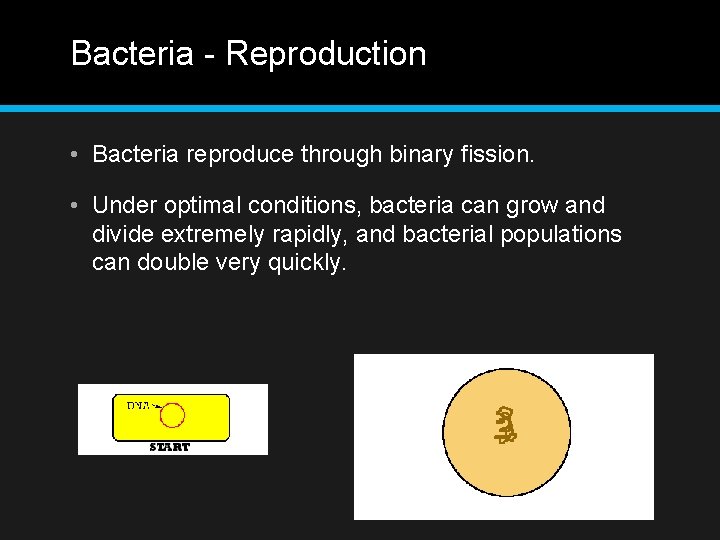
Bacteria - Reproduction • Bacteria reproduce through binary fission. • Under optimal conditions, bacteria can grow and divide extremely rapidly, and bacterial populations can double very quickly.
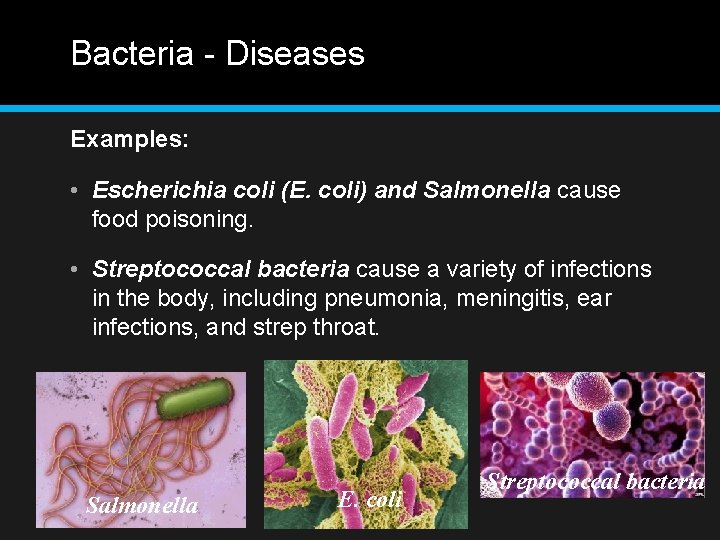
Bacteria - Diseases Examples: • Escherichia coli (E. coli) and Salmonella cause food poisoning. • Streptococcal bacteria cause a variety of infections in the body, including pneumonia, meningitis, ear infections, and strep throat. Salmonella E. coli Streptococcal bacteria
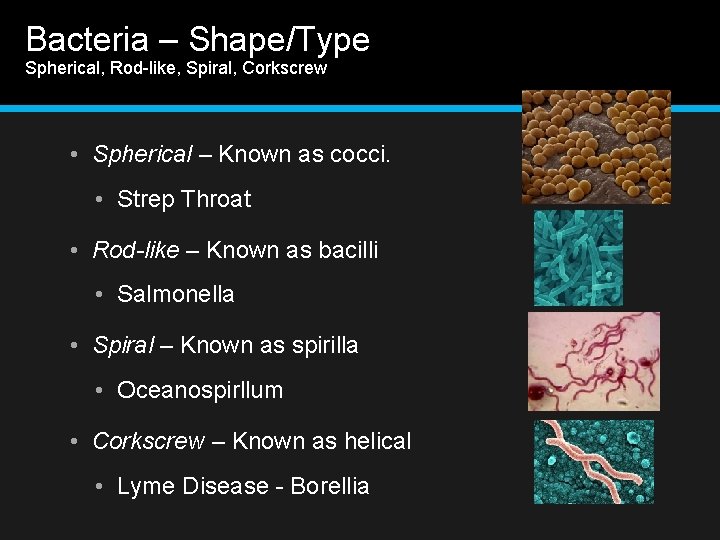
Bacteria – Shape/Type Spherical, Rod-like, Spiral, Corkscrew • Spherical – Known as cocci. • Strep Throat • Rod-like – Known as bacilli • Salmonella • Spiral – Known as spirilla • Oceanospirllum • Corkscrew – Known as helical • Lyme Disease - Borellia
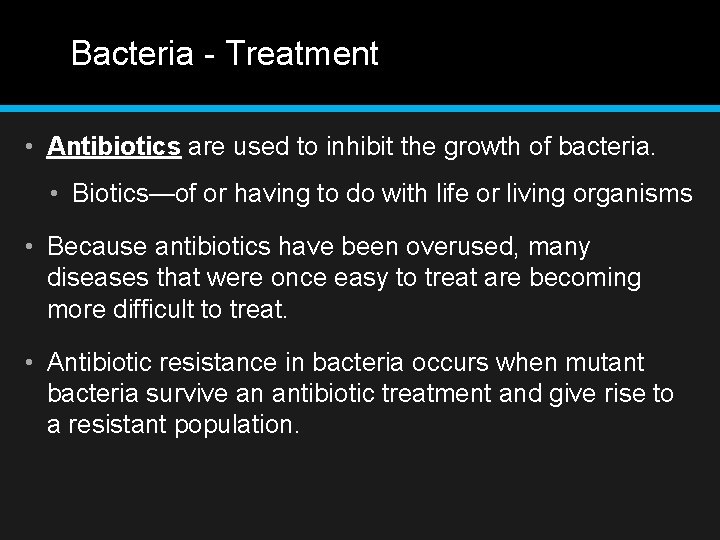
Bacteria - Treatment • Antibiotics are used to inhibit the growth of bacteria. • Biotics—of or having to do with life or living organisms • Because antibiotics have been overused, many diseases that were once easy to treat are becoming more difficult to treat. • Antibiotic resistance in bacteria occurs when mutant bacteria survive an antibiotic treatment and give rise to a resistant population.
Bacteria Wrap Up • Brain Pop – Bacteria, Antibiotic Resistance
VIRUS
Virus – Quick Facts • Size – 0. 03 -. 003 micrometers (um) • Structure –protein coat with DNA or RNA • Food – host cell ? ? ? ? • Movement – vectors, blood, air, contact, water, food
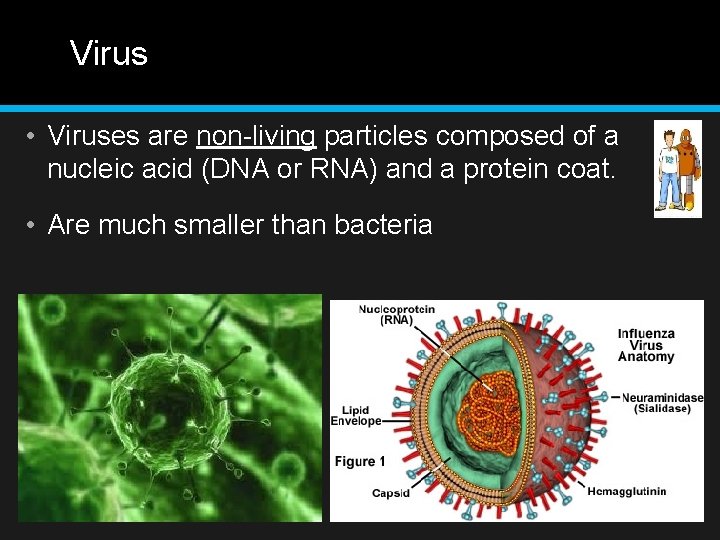
Virus • Viruses are non-living particles composed of a nucleic acid (DNA or RNA) and a protein coat. • Are much smaller than bacteria
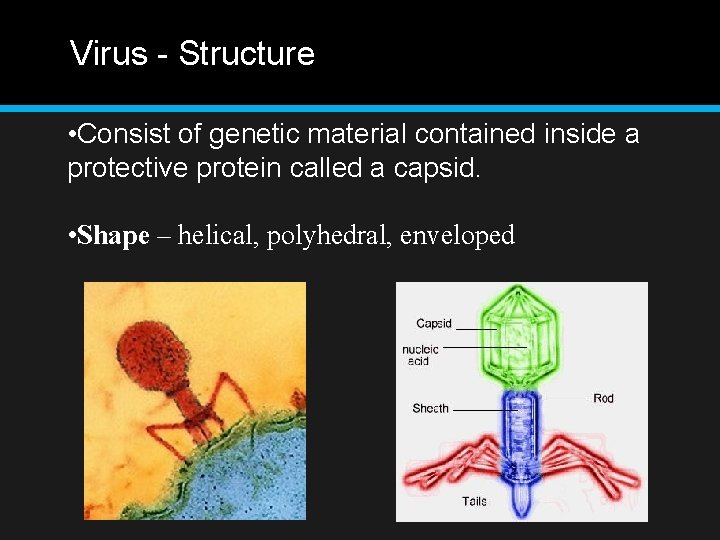
Virus - Structure • Consist of genetic material contained inside a protective protein called a capsid. • Shape – helical, polyhedral, enveloped
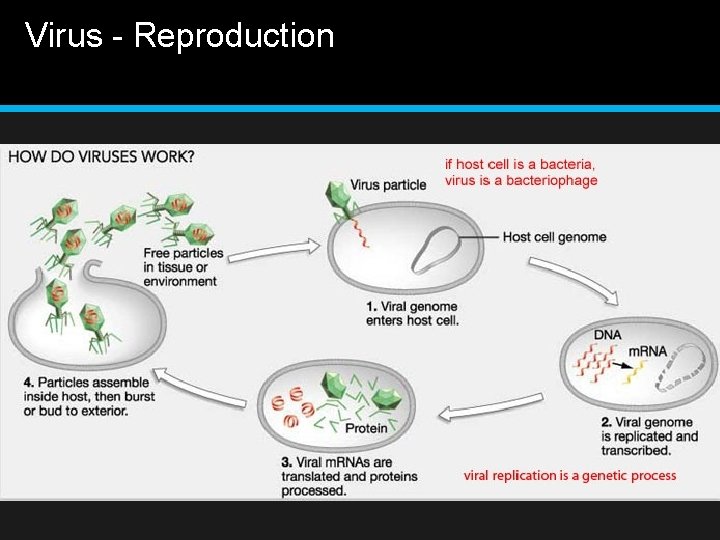
Virus - Reproduction • Viruses need a host cell to reproduce. • Viruses enter their DNA into the host cell. • Once they enter their DNA, they replicate, and burst the cell to exit.
Virus - Reproduction
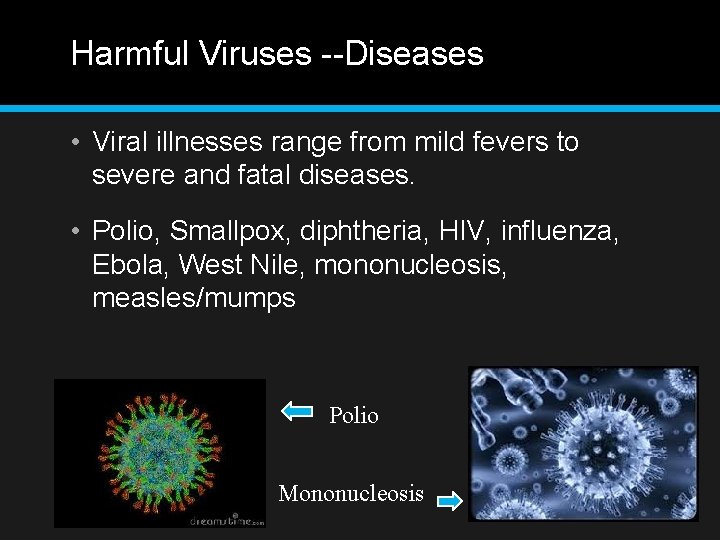
Harmful Viruses --Diseases • Viral illnesses range from mild fevers to severe and fatal diseases. • Polio, Smallpox, diphtheria, HIV, influenza, Ebola, West Nile, mononucleosis, measles/mumps Polio Mononucleosis
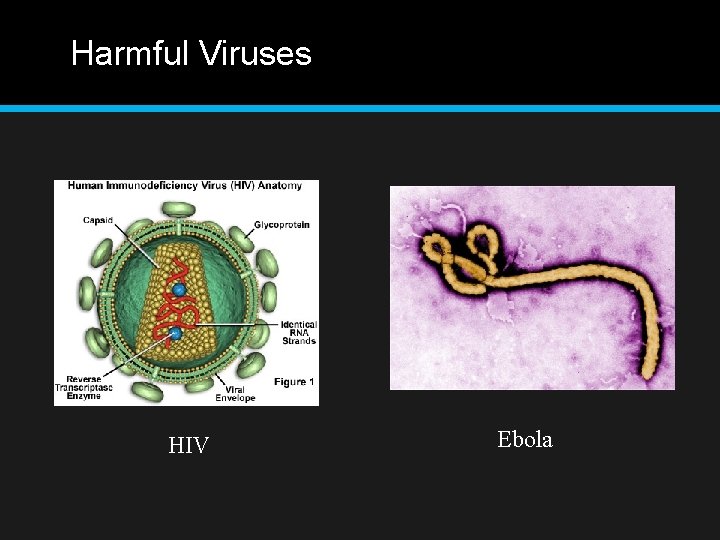
Harmful Viruses HIV Ebola
Viral Transmission • Viral diseases are among the most widespread illnesses in humans. • Transmission of these illnesses varies; some are transmitted by human contact, while others are transmitted through water or an insect bite. • Sometimes a virus is harmful sometimes it is not.
Virus – Treatment/Prevention • When you get a virus your body fights it off and builds immunities against it in the form of antibodies. • Vaccines drugs are used to control and prevent the spread of viral diseases.
PARASITES
Parasites – Quick Facts • Size – 70% of all parasites are MICROSCOPIC only 30% are visible to the naked eye. • Structure – specialized anatomically and physiologically to exploit host • Food – it’s host’s body • Movement – food, water, blood, vectors
Parasite • Natural selection favors adaptations that allow a parasite to efficiently exploit its host. • A parasite is an organism that lives in another organism, called the host, and often harms it. It is dependent on its host for survival - it has to be in the host to live, grow and multiply.
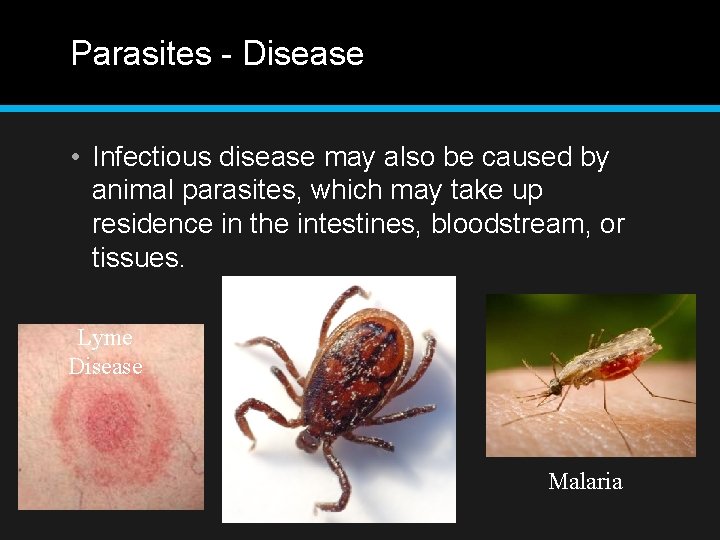
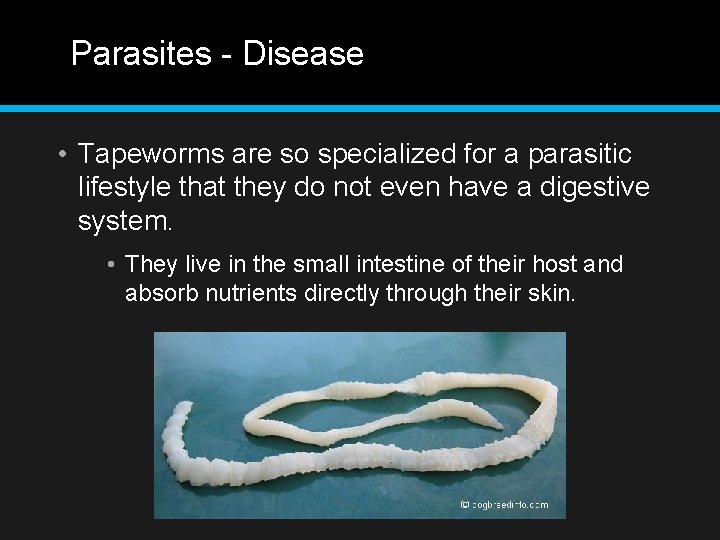
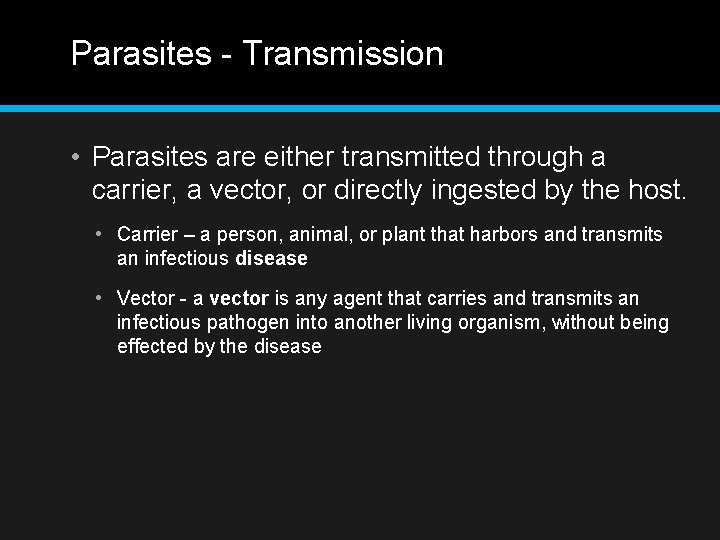
Parasites - Disease • Infectious disease may also be caused by animal parasites, which may take up residence in the intestines, bloodstream, or tissues. Male Tick Lyme Disease Malaria
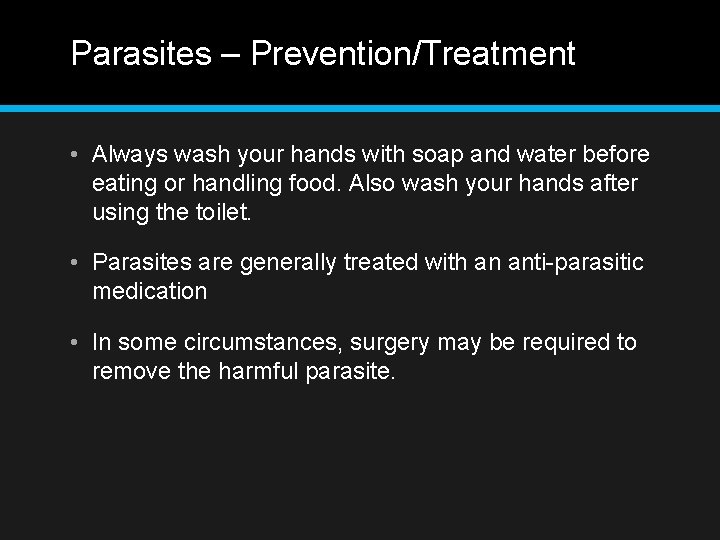
Parasites - Disease • Tapeworms are so specialized for a parasitic lifestyle that they do not even have a digestive system. • They live in the small intestine of their host and absorb nutrients directly through their skin.
Parasites - Transmission • Parasites are either transmitted through a carrier, a vector, or directly ingested by the host. • Carrier – a person, animal, or plant that harbors and transmits an infectious disease • Vector - a vector is any agent that carries and transmits an infectious pathogen into another living organism, without being effected by the disease
Parasites – Prevention/Treatment • Always wash your hands with soap and water before eating or handling food. Also wash your hands after using the toilet. • Parasites are generally treated with an anti-parasitic medication • In some circumstances, surgery may be required to remove the harmful parasite.
FUNGI
Fungi – Quick Facts • Size – 2 -10 micrometers (micro) 2 -25 centimeters (macro) • Structure – hyphae with spores attached • Food – By absorbing nutrients from the material they live on or in (heterotrophs) • Movement – spores in the air
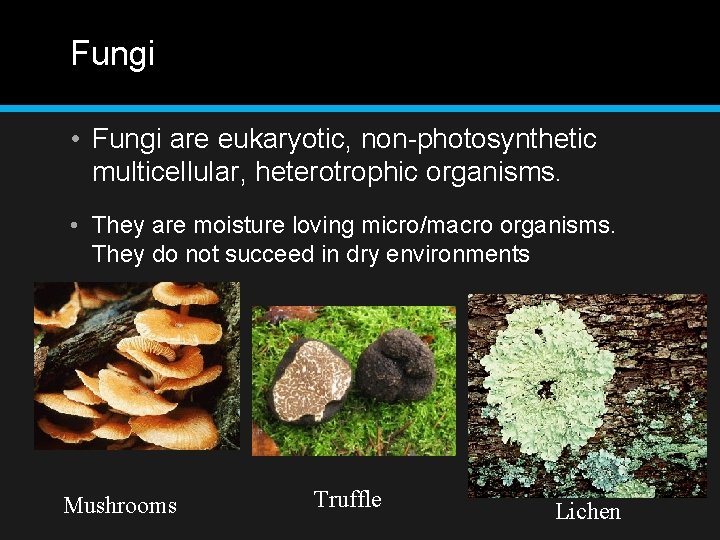
Fungi • Fungi are eukaryotic, non-photosynthetic multicellular, heterotrophic organisms. • They are moisture loving micro/macro organisms. They do not succeed in dry environments Mushrooms Truffle Lichen
Fungi - Reproduction • Sexually (similar to plants) and Asexually (producing spores). • When the environment is favorable, asexual reproduction ensures an increased spread of the species.
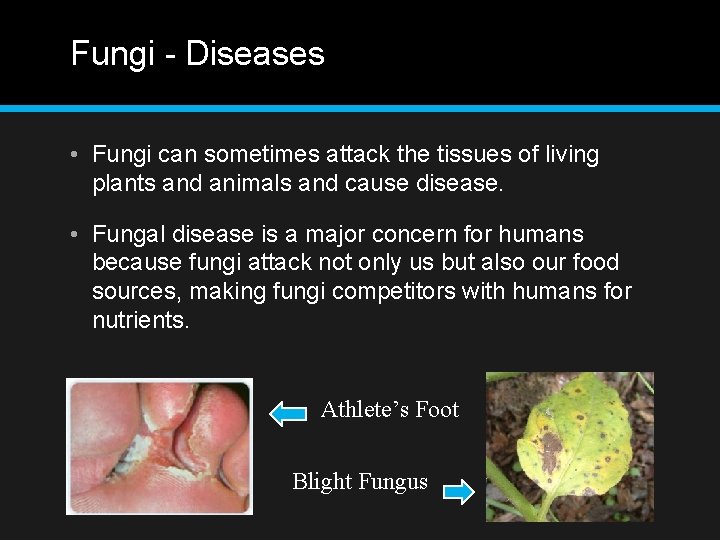
Fungi - Diseases • Fungi can sometimes attack the tissues of living plants and animals and cause disease. • Fungal disease is a major concern for humans because fungi attack not only us but also our food sources, making fungi competitors with humans for nutrients. Athlete’s Foot Blight Fungus
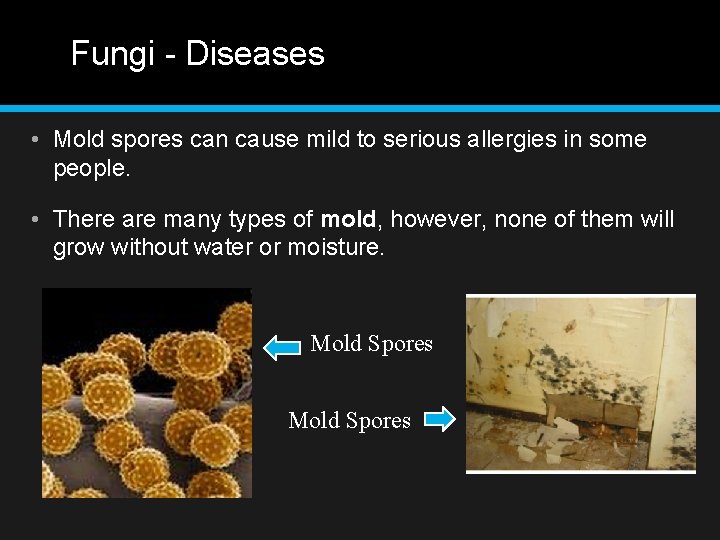
Fungi - Diseases • Mold spores can cause mild to serious allergies in some people. • There are many types of mold, however, none of them will grow without water or moisture. Mold Spores
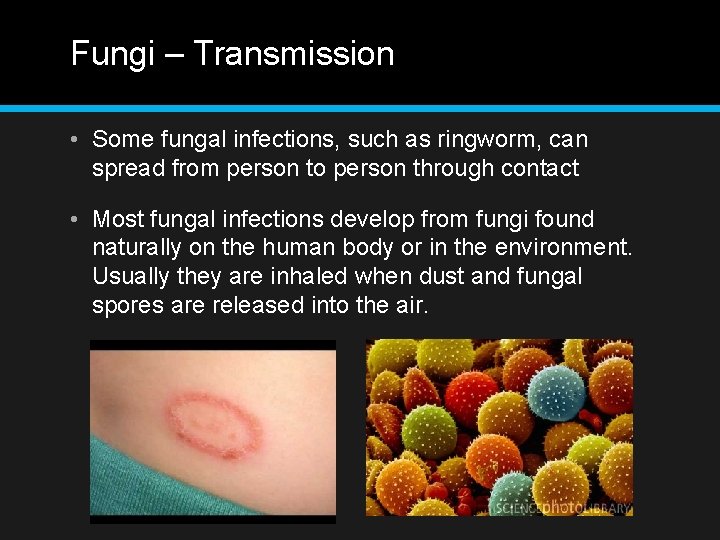
Fungi – Transmission • Some fungal infections, such as ringworm, can spread from person to person through contact • Most fungal infections develop from fungi found naturally on the human body or in the environment. Usually they are inhaled when dust and fungal spores are released into the air.
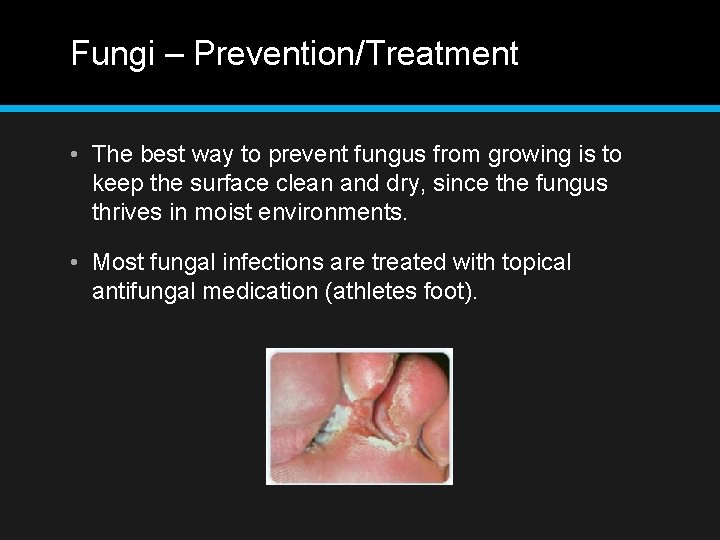
Fungi – Prevention/Treatment • The best way to prevent fungus from growing is to keep the surface clean and dry, since the fungus thrives in moist environments. • Most fungal infections are treated with topical antifungal medication (athletes foot).
Why are viruses not listed on here?