
Structure and Function of Prokaryotes Structures External to
![Random (searching) Positive Chemotaxis (“follow that smell”) Low [nutrient solute] High [nutrient solute]](https://slidetodoc.com/presentation_image_h/3586bc17c33355f87c798f85089b2375/image-13.jpg "Random (searching) Positive Chemotaxis (“follow that smell”) Low [nutrient solute] High [nutrient solute]")
- Slides: 13
Structure and Function of Prokaryotes • Structures External to the Cell Wall • Cell Walls Biochemistry (Gram +/-)
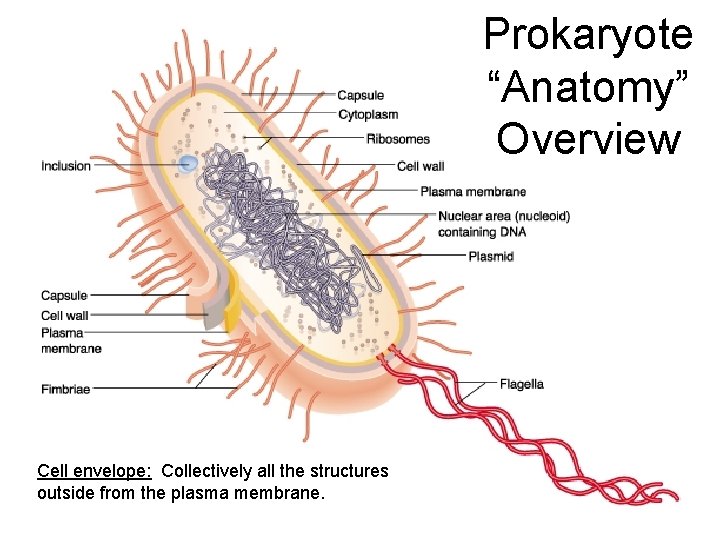
Prokaryote “Anatomy” Overview Cell envelope: Collectively all the structures outside from the plasma membrane.
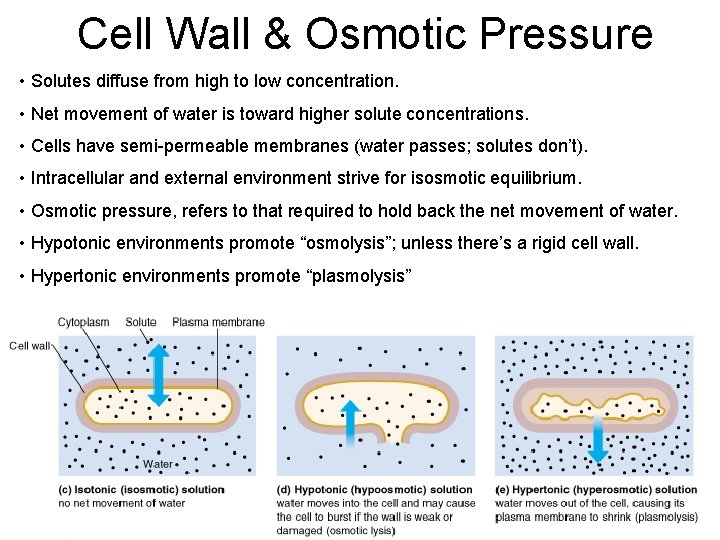
Cell Wall & Osmotic Pressure • Solutes diffuse from high to low concentration. • Net movement of water is toward higher solute concentrations. • Cells have semi-permeable membranes (water passes; solutes don’t). • Intracellular and external environment strive for isosmotic equilibrium. • Osmotic pressure, refers to that required to hold back the net movement of water. • Hypotonic environments promote “osmolysis”; unless there’s a rigid cell wall. • Hypertonic environments promote “plasmolysis”
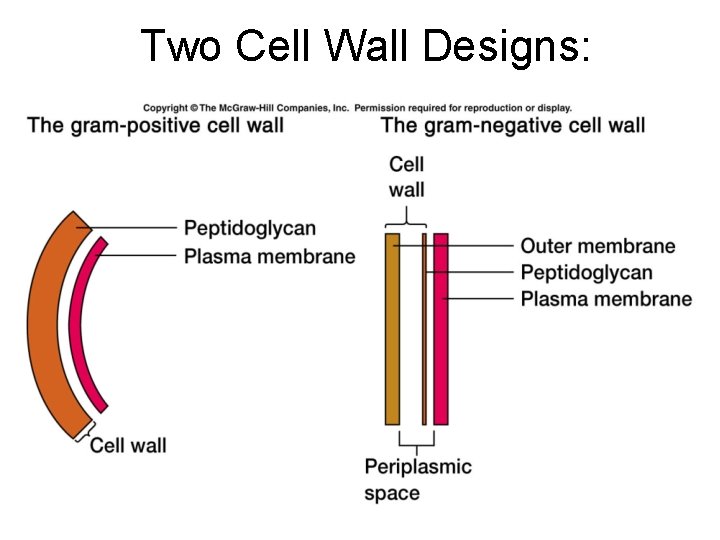
Two Cell Wall Designs:
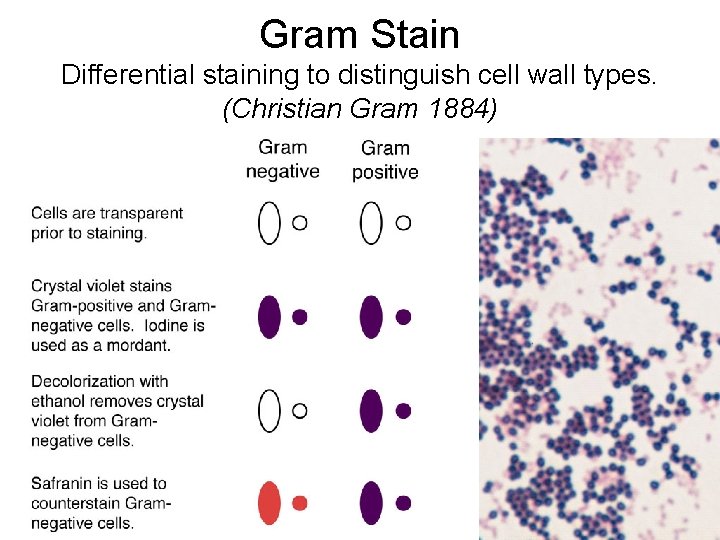
Gram Stain Differential staining to distinguish cell wall types. (Christian Gram 1884)
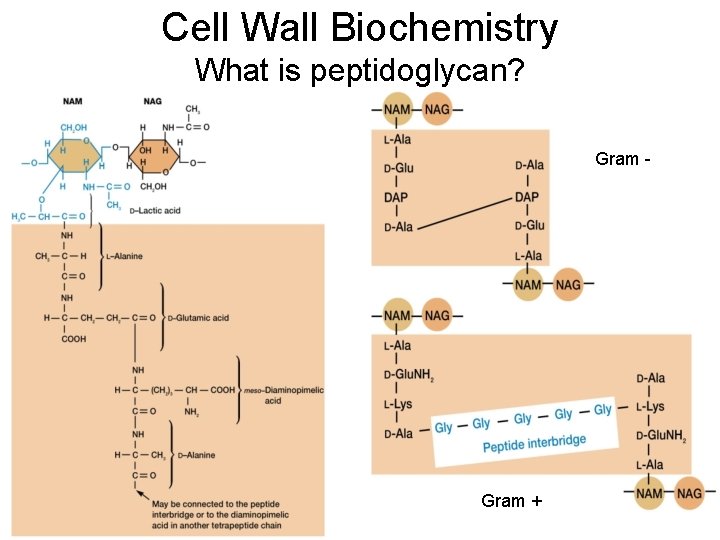
Cell Wall Biochemistry What is peptidoglycan? Gram - Gram +
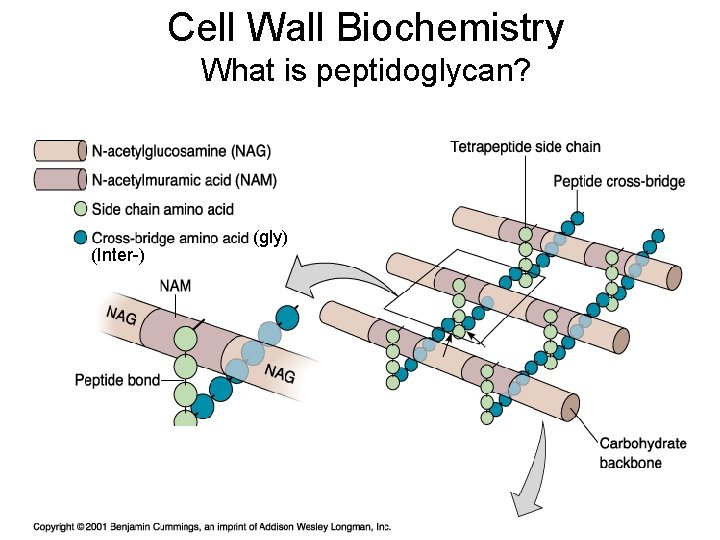
Cell Wall Biochemistry What is peptidoglycan? (Inter-) (gly)
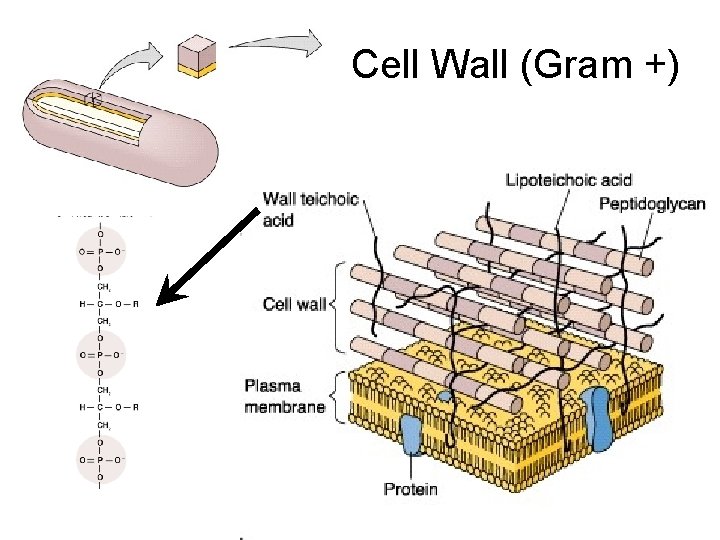
Cell Wall (Gram +)
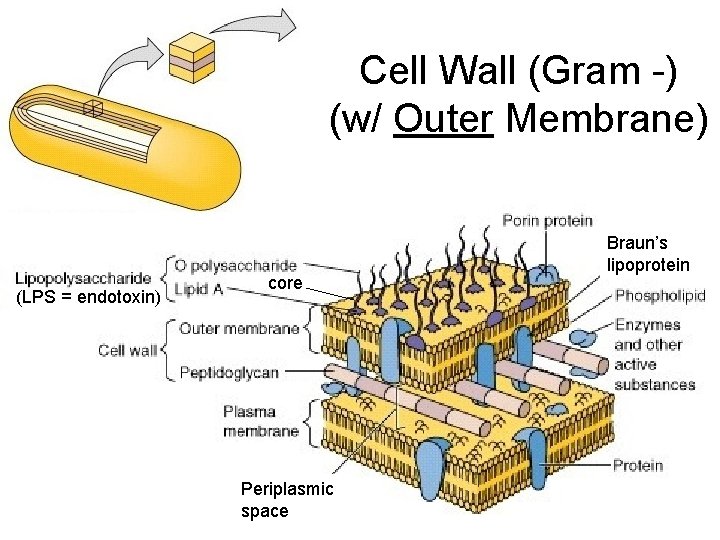
Cell Wall (Gram -) (w/ Outer Membrane) (LPS = endotoxin) core Periplasmic space Braun’s lipoprotein
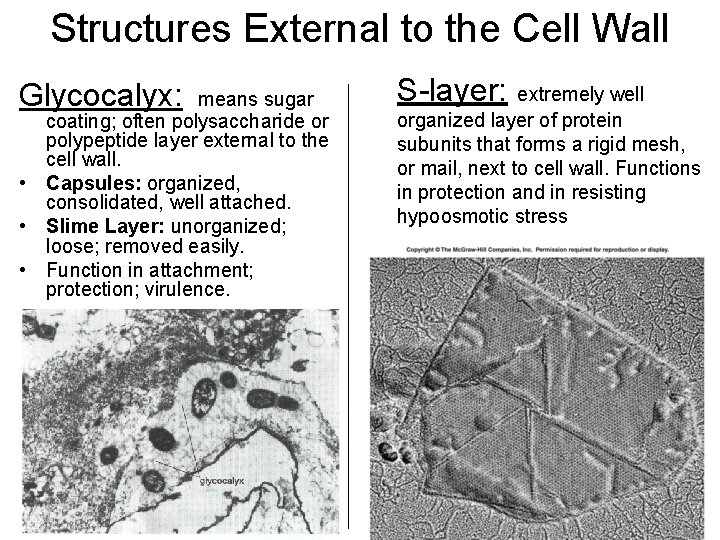
Structures External to the Cell Wall Glycocalyx: means sugar coating; often polysaccharide or polypeptide layer external to the cell wall. • Capsules: organized, consolidated, well attached. • Slime Layer: unorganized; loose; removed easily. • Function in attachment; protection; virulence. S-layer: extremely well organized layer of protein subunits that forms a rigid mesh, or mail, next to cell wall. Functions in protection and in resisting hypoosmotic stress
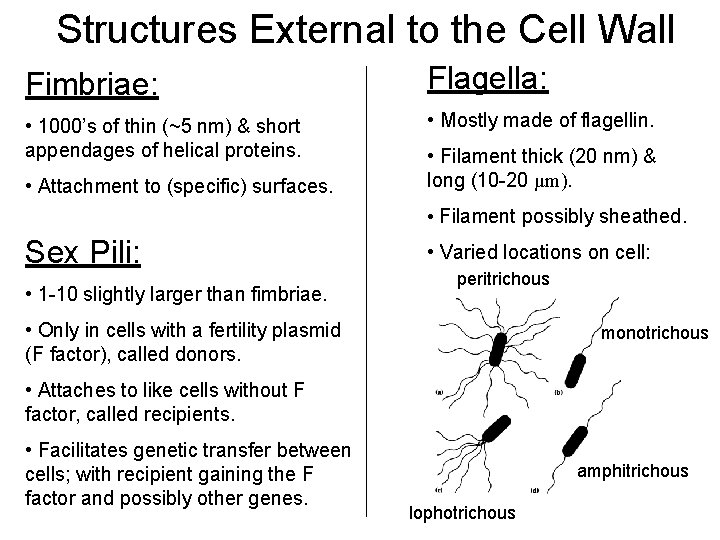
Structures External to the Cell Wall Fimbriae: Flagella: • 1000’s of thin (~5 nm) & short appendages of helical proteins. • Mostly made of flagellin. • Attachment to (specific) surfaces. • Filament thick (20 nm) & long (10 -20 µm). • Filament possibly sheathed. Sex Pili: • 1 -10 slightly larger than fimbriae. • Varied locations on cell: peritrichous • Only in cells with a fertility plasmid (F factor), called donors. monotrichous • Attaches to like cells without F factor, called recipients. • Facilitates genetic transfer between cells; with recipient gaining the F factor and possibly other genes. amphitrichous lophotrichous
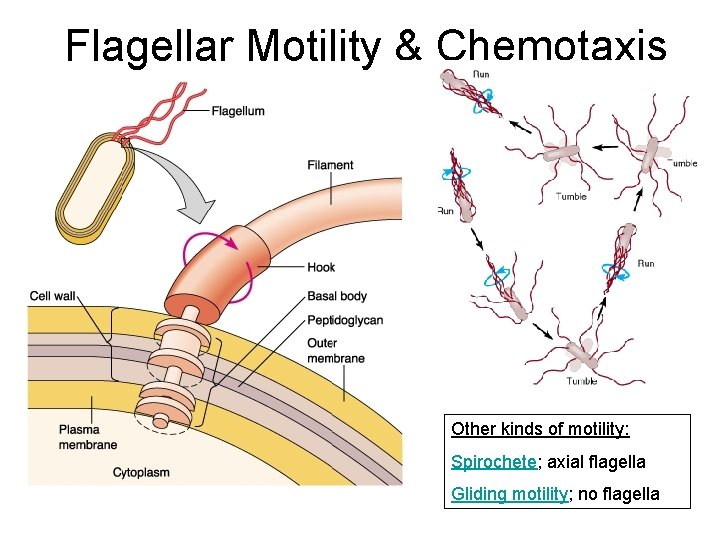
Flagellar Motility & Chemotaxis Other kinds of motility: Spirochete; axial flagella Gliding motility; no flagella
Random (searching) Positive Chemotaxis (“follow that smell”) Low [nutrient solute] High [nutrient solute]