
STRUCTURE AND FUNCTION OF PLANTS BODY The Organs
STRUCTURE AND FUNCTION OF PLANT’S BODY
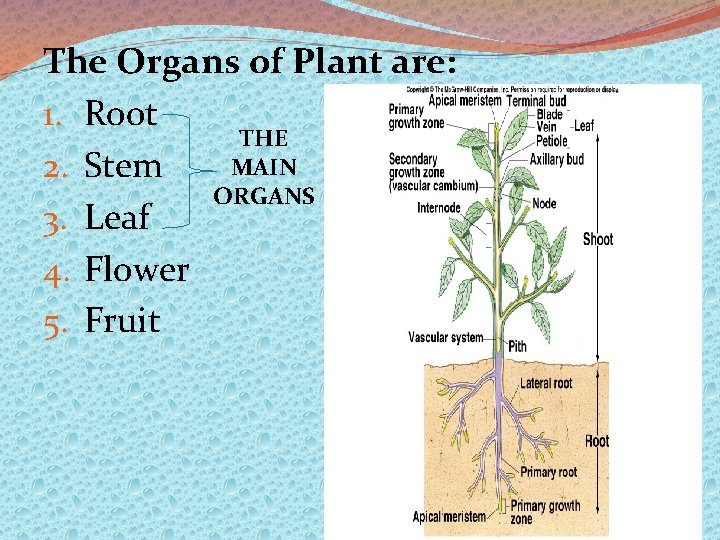
The Organs of Plant are: 1. Root THE MAIN 2. Stem ORGANS 3. Leaf 4. Flower 5. Fruit

ROOT The structure of plant that located in the ground Root have three main functions: - Absorb water and minerals from the soil - Anchor a plant in the ground - Store food
Types of Root Fibrous Root System Taproot System

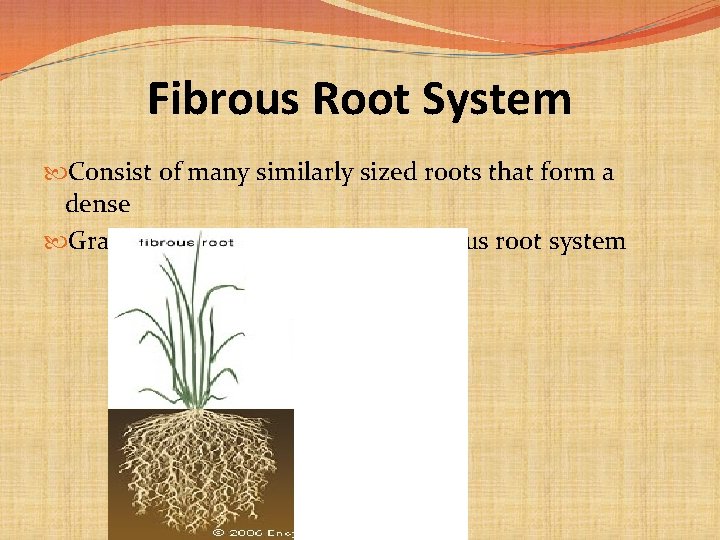
Fibrous Root System Consist of many similarly sized roots that form a dense Grass, Corn, and Onions have fibrous root system

Taproot System A taproot system has one long, thick main root. Many smaller roots branch off the main root A plant with a taproot system is hard to pull out of the ground
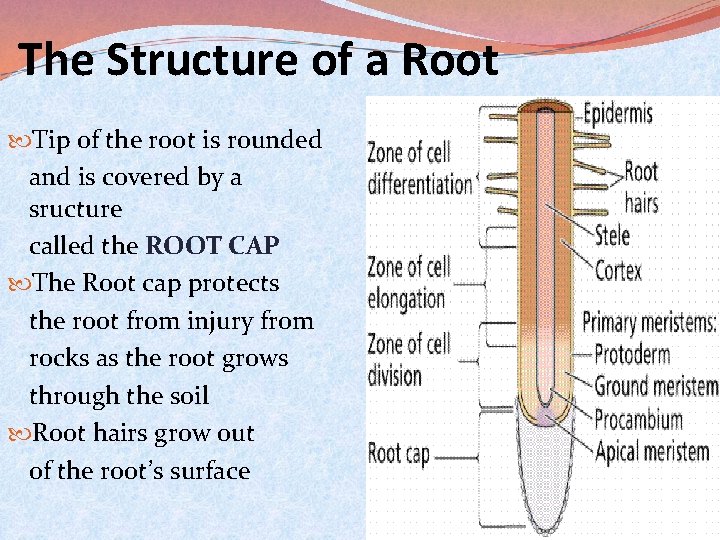
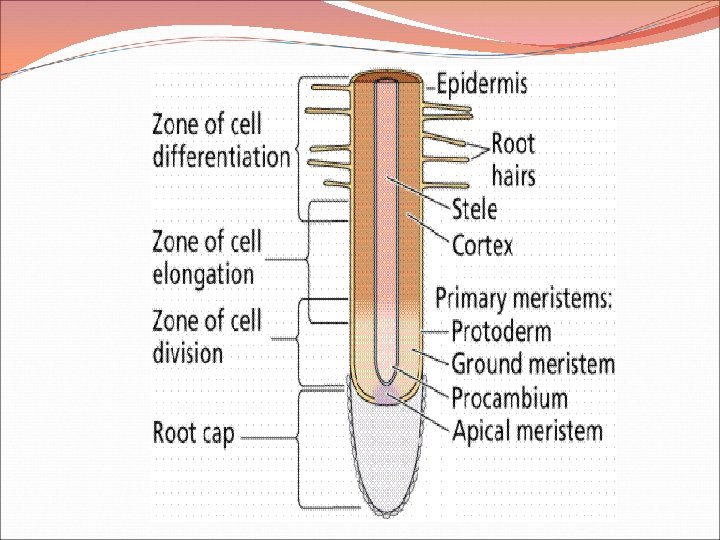
The Structure of a Root Tip of the root is rounded and is covered by a sructure called the ROOT CAP The Root cap protects the root from injury from rocks as the root grows through the soil Root hairs grow out of the root’s surface
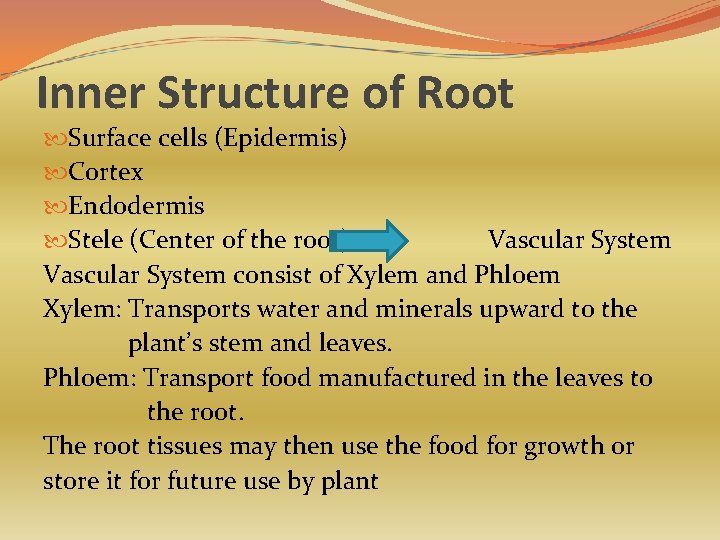
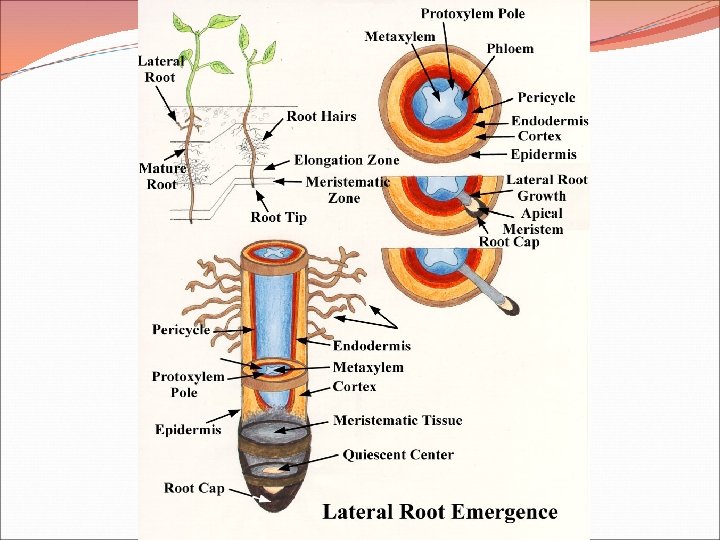
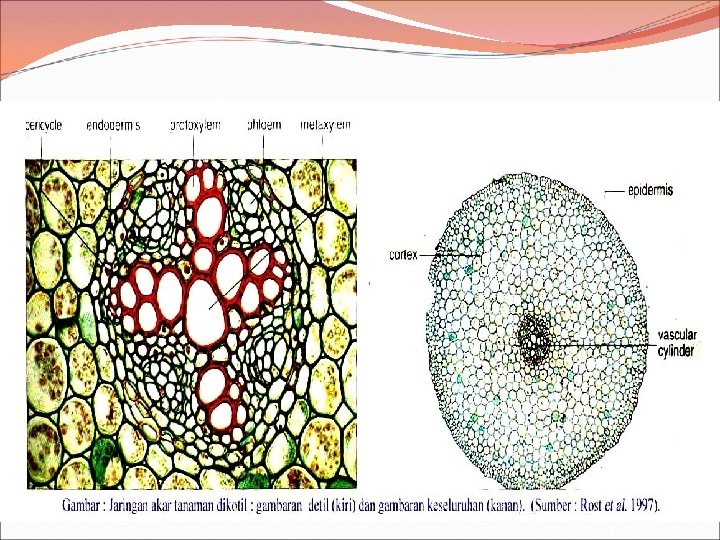
Inner Structure of Root Surface cells (Epidermis) Cortex Endodermis Stele (Center of the root) Vascular System consist of Xylem and Phloem Xylem: Transports water and minerals upward to the plant’s stem and leaves. Phloem: Transport food manufactured in the leaves to the root. The root tissues may then use the food for growth or store it for future use by plant
STEM The stem of a plant has two main functions: The stem carries substances between the plant’s root and leaves The stem also provides support for the plant Store food
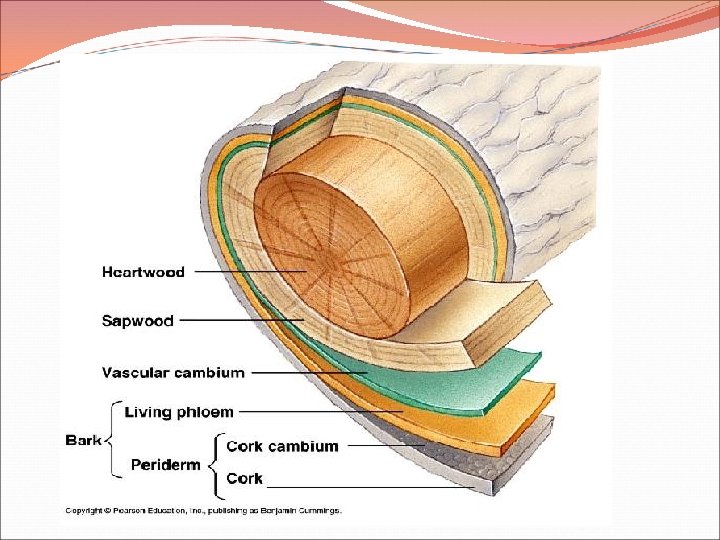

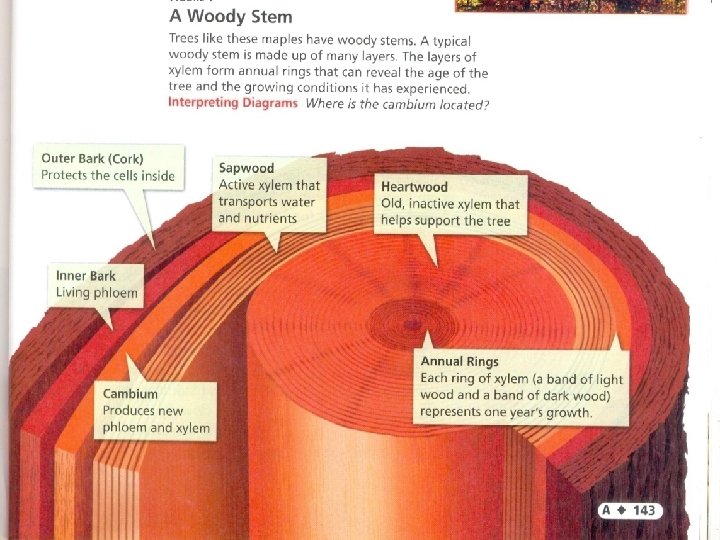
Types of Stem Herbaceous stems contain no wood and are often soft. Sunflower and pepper plant a have herbaceous stems. Woody woody stems are hard and rigid. Mango and roses have woody stems. A woody stem contains several layer of tissue.
Annual Rings These circles are called annual rings because they represent a tree’s yearly growth. Annual rings are made of xylem Xylem cells that form in the spring are large and have thin walls because they grow rapidly. They produce a wide and light brown ring. Xylem cells that form in the summer grow slowly and therefore are small and have thick walls. They produce a thin and dark
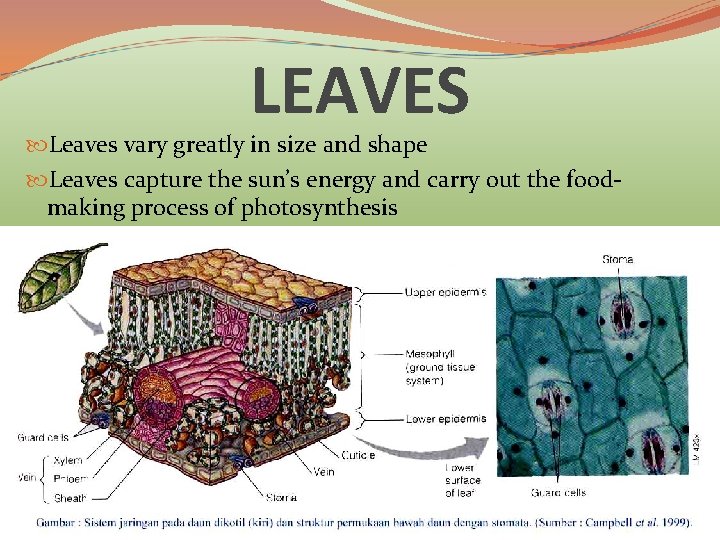
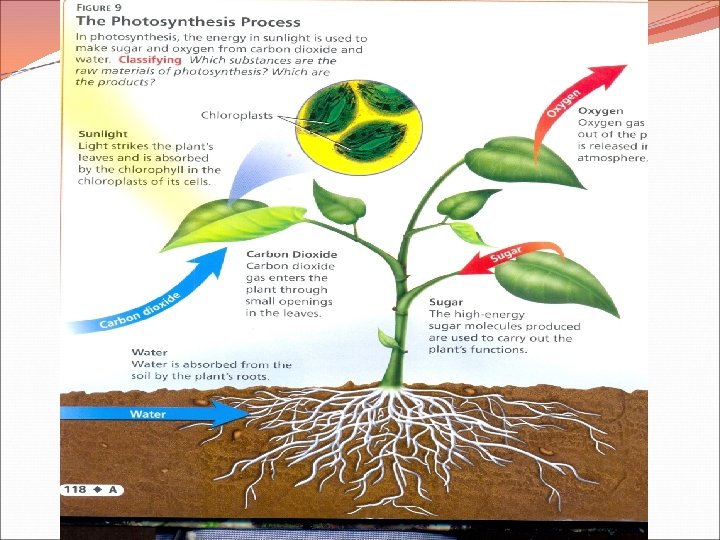
LEAVES Leaves vary greatly in size and shape Leaves capture the sun’s energy and carry out the foodmaking process of photosynthesis
The Structure of a Leaf The leaf’s top and bottom surface layers protect the cell inside. Between the layers of cells are veins that contain xylem and phloem. The surface layers of the leaf have small openings or pores called stomata. Stomata open and close to control when gases enter and leave the leaf. The cells that contain the most chloroplasts are located near the leaf’s upper surface. The chlorophyll in the chloroplasts traps the sun’s energy
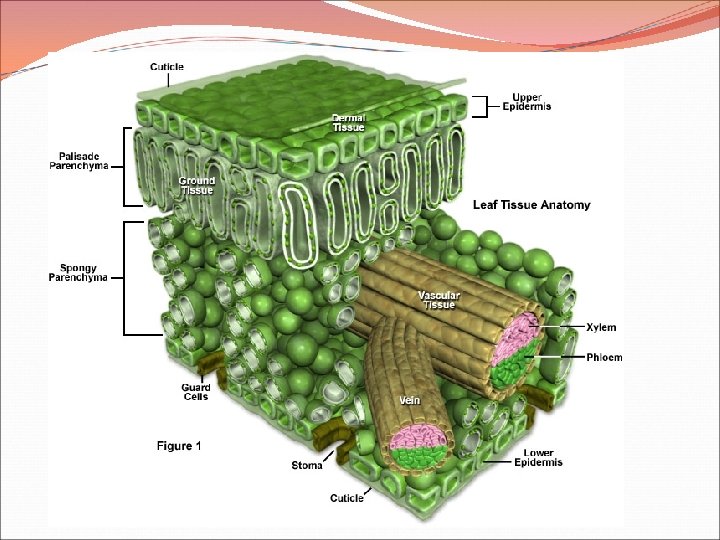
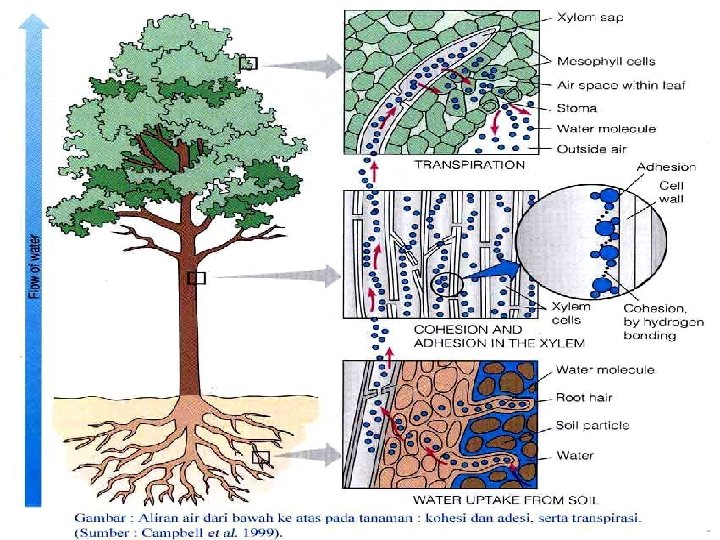
Controlling Water Loss The process by which water evaporates from a plant’s leaves in called transpiration. One way that plants retain water is by closing the stomata. The stomata often close when leaves start to dry out.
- Slides: 23