
Structure and Function of Macromolecules How hydrocarbons and
Structure and Function of Macromolecules • How hydrocarbons and functional groups combine
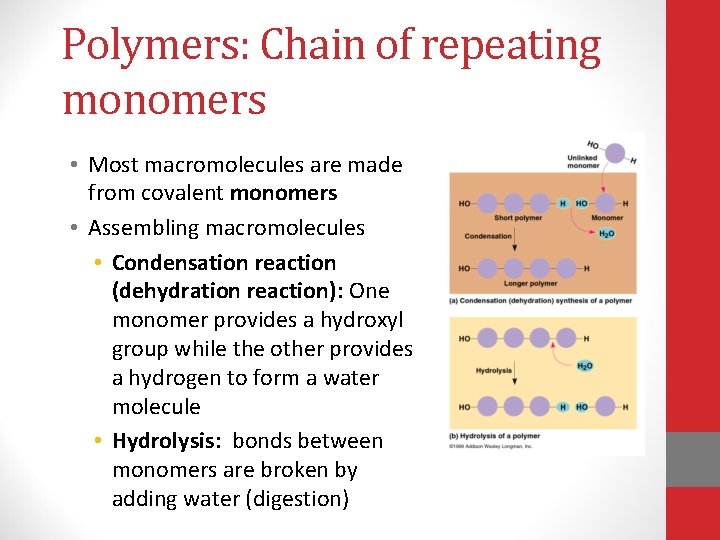
Polymers: Chain of repeating monomers • Most macromolecules are made from covalent monomers • Assembling macromolecules • Condensation reaction (dehydration reaction): One monomer provides a hydroxyl group while the other provides a hydrogen to form a water molecule • Hydrolysis: bonds between monomers are broken by adding water (digestion)
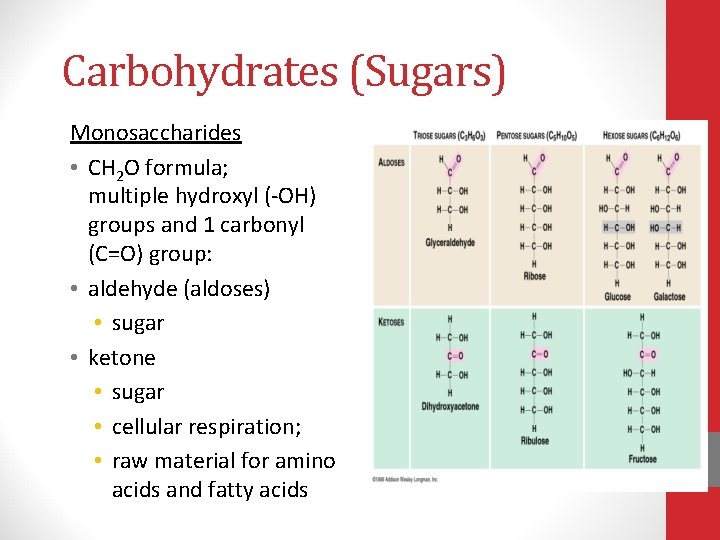
Carbohydrates (Sugars) Monosaccharides • CH 2 O formula; multiple hydroxyl (-OH) groups and 1 carbonyl (C=O) group: • aldehyde (aldoses) • sugar • ketone • sugar • cellular respiration; • raw material for amino acids and fatty acids
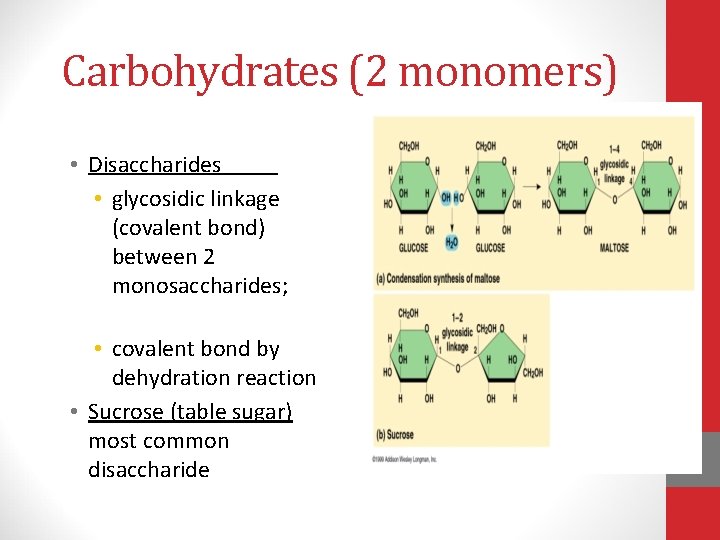
Carbohydrates (2 monomers) • Disaccharides • glycosidic linkage (covalent bond) between 2 monosaccharides; • covalent bond by dehydration reaction • Sucrose (table sugar) most common disaccharide
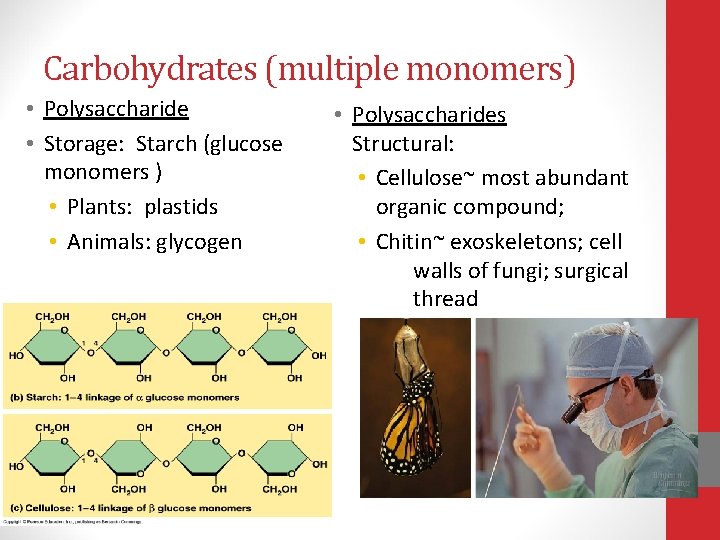
Carbohydrates (multiple monomers) • Polysaccharide • Storage: Starch (glucose monomers ) • Plants: plastids • Animals: glycogen • Polysaccharides Structural: • Cellulose~ most abundant organic compound; • Chitin~ exoskeletons; cell walls of fungi; surgical thread
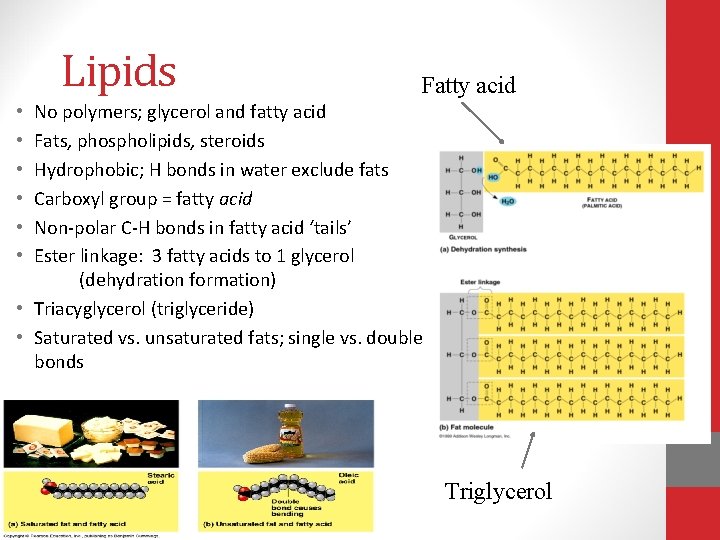
Lipids Fatty acid No polymers; glycerol and fatty acid Fats, phospholipids, steroids Hydrophobic; H bonds in water exclude fats Carboxyl group = fatty acid Non-polar C-H bonds in fatty acid ‘tails’ Ester linkage: 3 fatty acids to 1 glycerol (dehydration formation) • Triacyglycerol (triglyceride) • Saturated vs. unsaturated fats; single vs. double bonds • • • Triglycerol
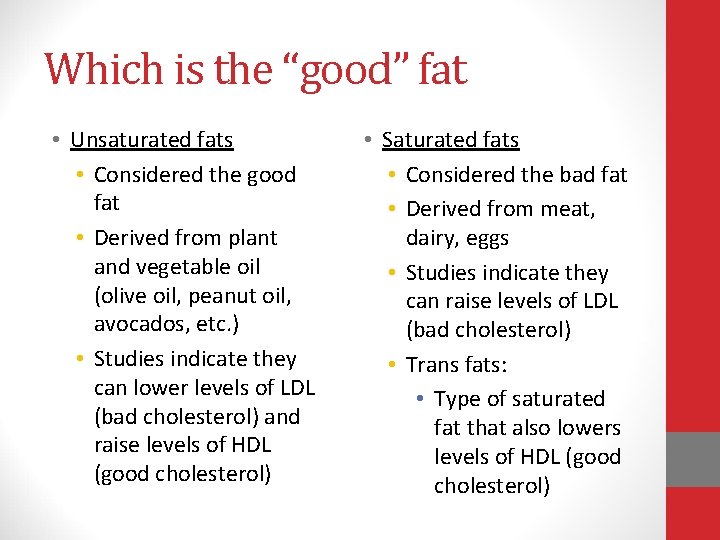
Which is the “good” fat • Unsaturated fats • Considered the good fat • Derived from plant and vegetable oil (olive oil, peanut oil, avocados, etc. ) • Studies indicate they can lower levels of LDL (bad cholesterol) and raise levels of HDL (good cholesterol) • Saturated fats • Considered the bad fat • Derived from meat, dairy, eggs • Studies indicate they can raise levels of LDL (bad cholesterol) • Trans fats: • Type of saturated fat that also lowers levels of HDL (good cholesterol)
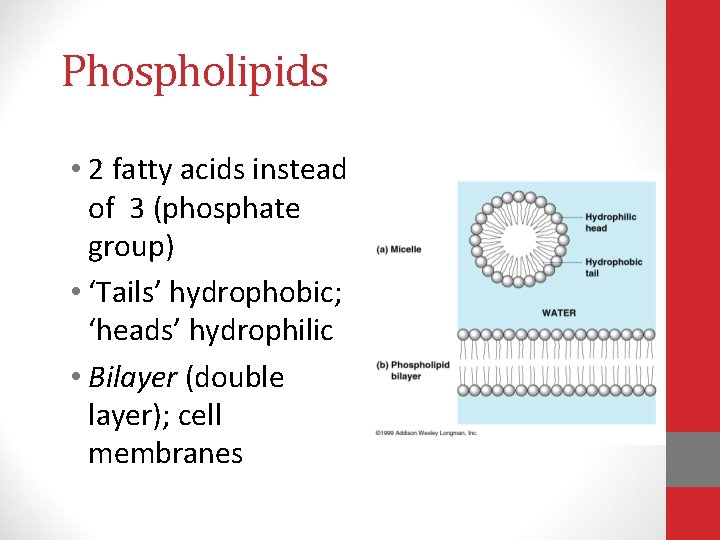
Phospholipids • 2 fatty acids instead of 3 (phosphate group) • ‘Tails’ hydrophobic; ‘heads’ hydrophilic • Bilayer (double layer); cell membranes
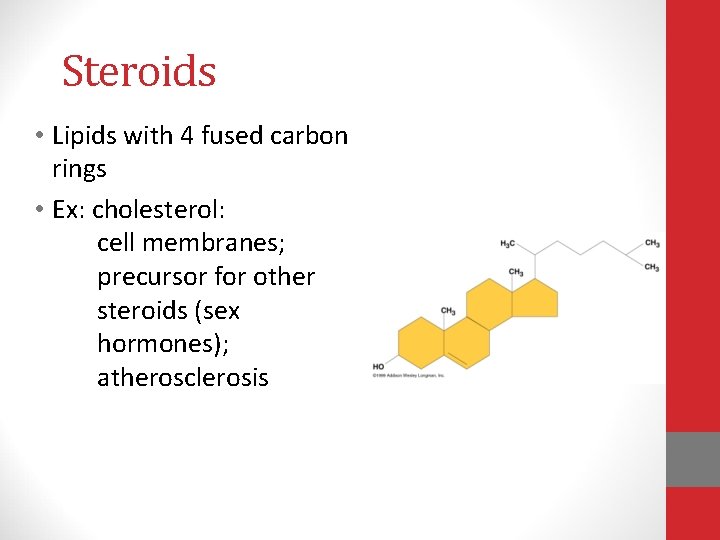
Steroids • Lipids with 4 fused carbon rings • Ex: cholesterol: cell membranes; precursor for other steroids (sex hormones); atherosclerosis
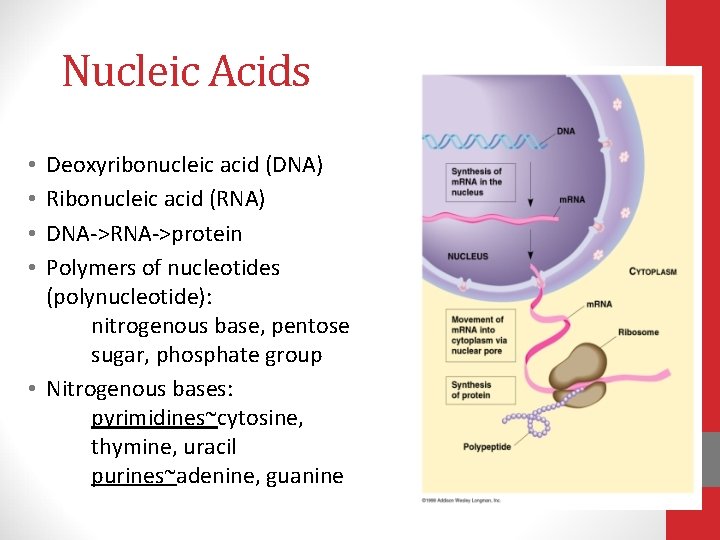
Nucleic Acids Deoxyribonucleic acid (DNA) Ribonucleic acid (RNA) DNA->RNA->protein Polymers of nucleotides (polynucleotide): nitrogenous base, pentose sugar, phosphate group • Nitrogenous bases: pyrimidines~cytosine, thymine, uracil purines~adenine, guanine • •
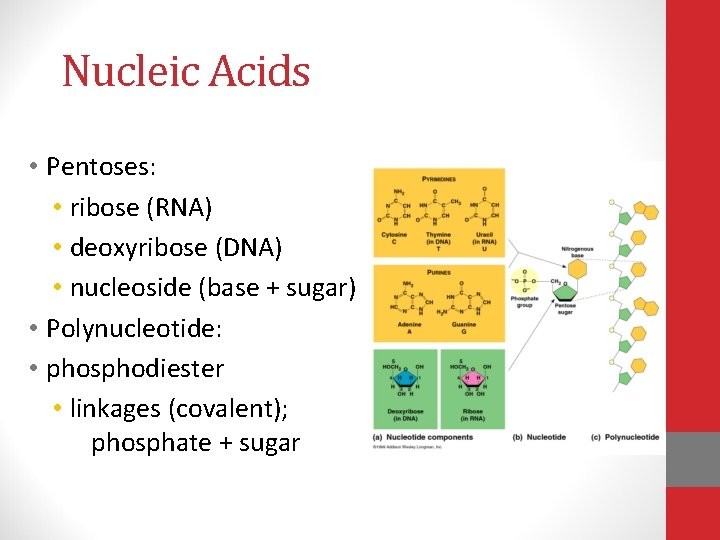
Nucleic Acids • Pentoses: • ribose (RNA) • deoxyribose (DNA) • nucleoside (base + sugar) • Polynucleotide: • phosphodiester • linkages (covalent); phosphate + sugar
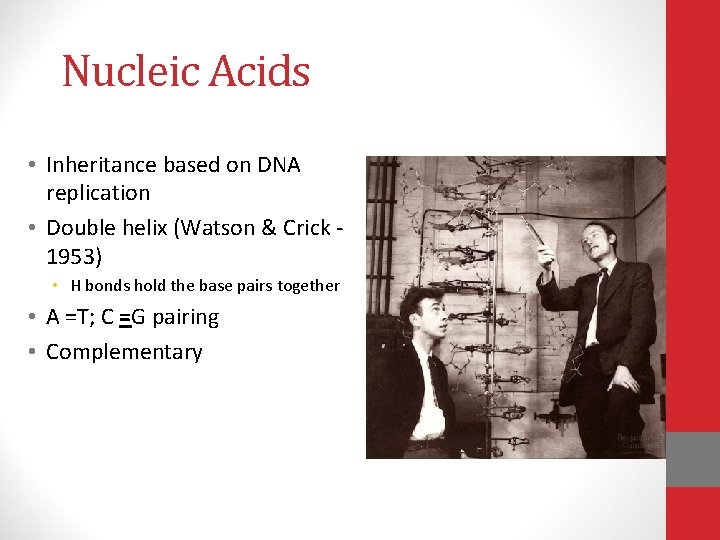
Nucleic Acids • Inheritance based on DNA replication • Double helix (Watson & Crick 1953) • H bonds hold the base pairs together • A =T; C =G pairing • Complementary
Proteins • Importance: • instrumental in nearly everything organisms do; 50% dry weight of cells; most structurally sophisticated molecules known • Monomer: amino acids (there are 20) ~carboxyl (-COOH) group, amino group (NH 2), H atom, variable group (R)…. • Variable group characteristics: polar (hydrophilic), nonpolar (hydrophobic), acid or base • Three-dimensional shape (conformation) • Polypeptides (dehydration reaction): peptide bonds~ covalent bond; carboxyl group to amino group (polar)
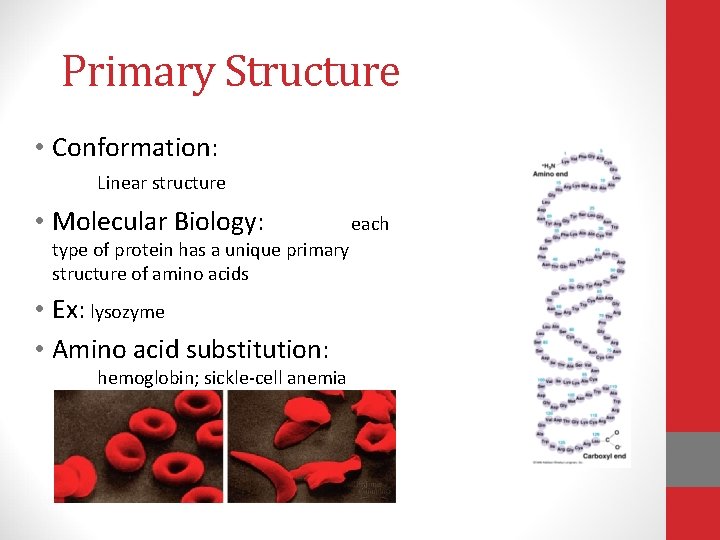
Primary Structure • Conformation: Linear structure • Molecular Biology: type of protein has a unique primary structure of amino acids • Ex: lysozyme • Amino acid substitution: hemoglobin; sickle-cell anemia each
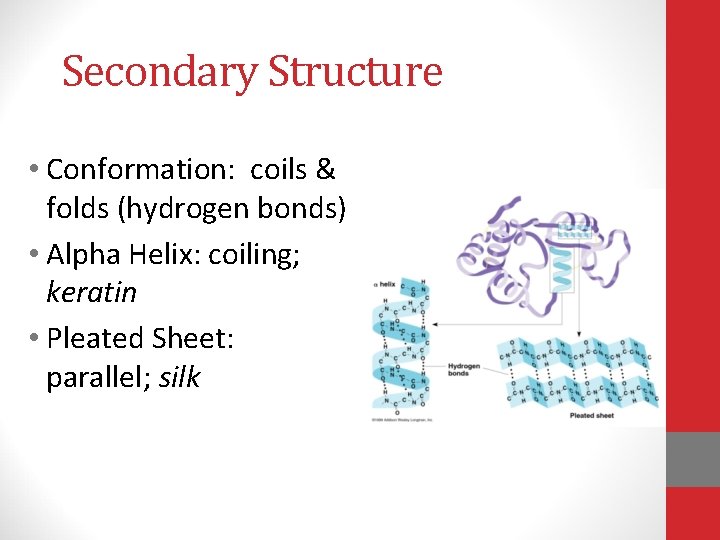
Secondary Structure • Conformation: coils & folds (hydrogen bonds) • Alpha Helix: coiling; keratin • Pleated Sheet: parallel; silk
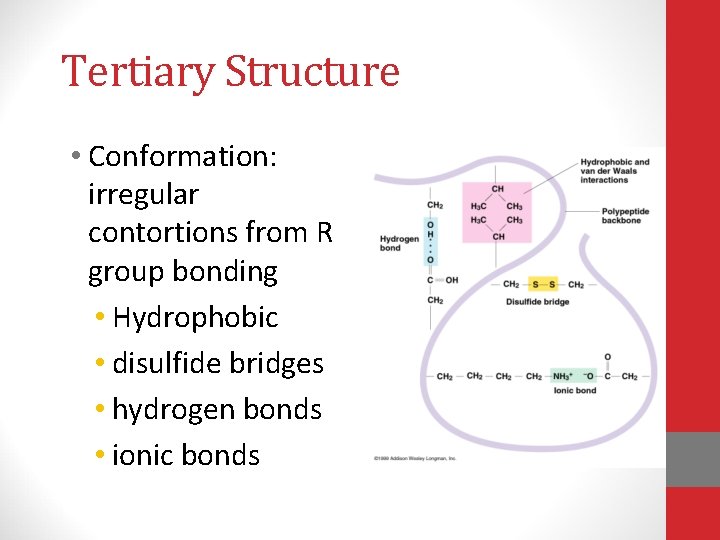
Tertiary Structure • Conformation: irregular contortions from R group bonding • Hydrophobic • disulfide bridges • hydrogen bonds • ionic bonds
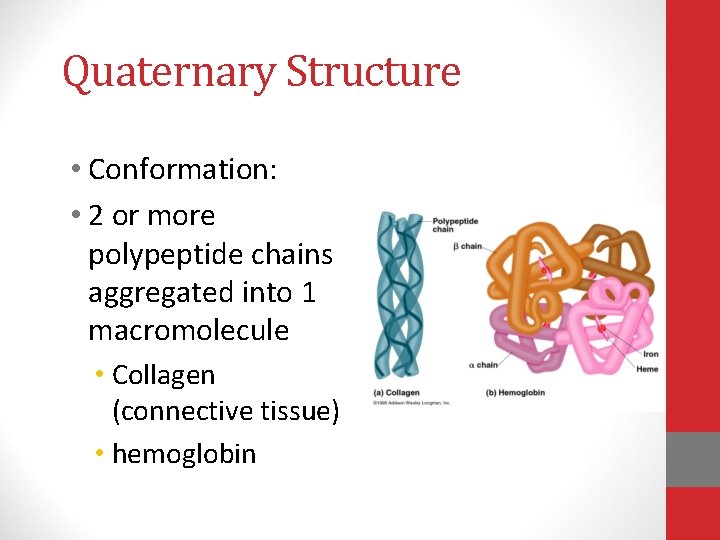
Quaternary Structure • Conformation: • 2 or more polypeptide chains aggregated into 1 macromolecule • Collagen (connective tissue) • hemoglobin
- Slides: 17