
Structure and Function of Living Organisms Plant Systems
- Slides: 52
Structure and Function of Living Organisms Plant Systems
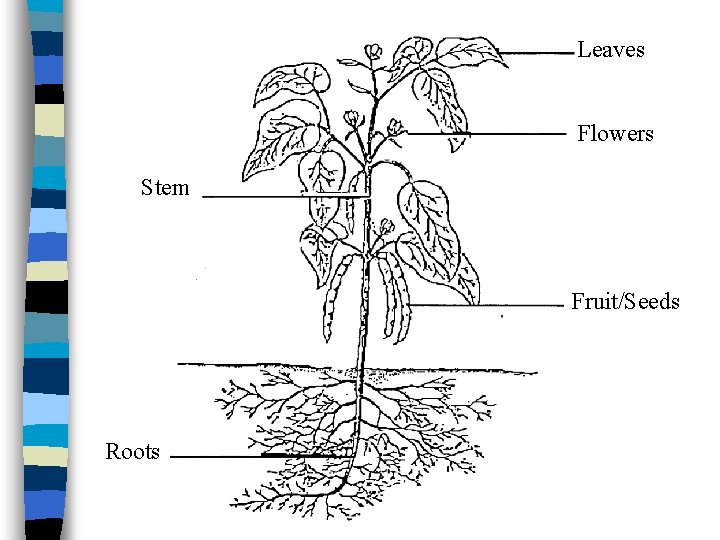
Leaves Flowers Stem Fruit/Seeds Roots
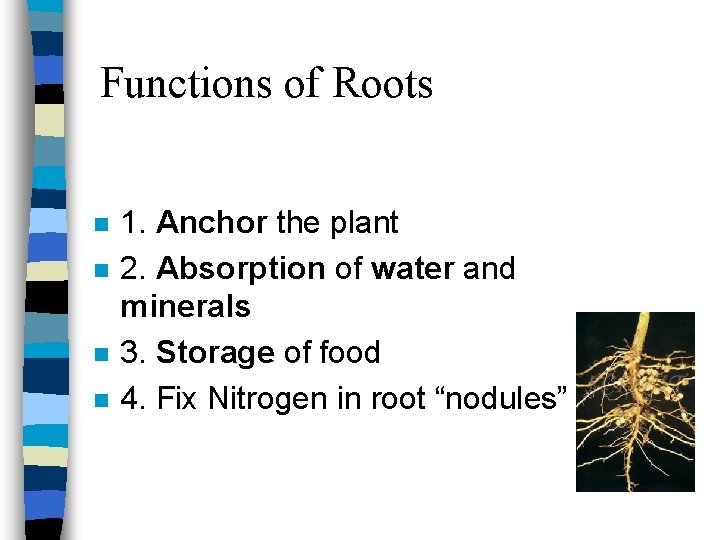
Functions of Roots n n 1. Anchor the plant 2. Absorption of water and minerals 3. Storage of food 4. Fix Nitrogen in root “nodules”
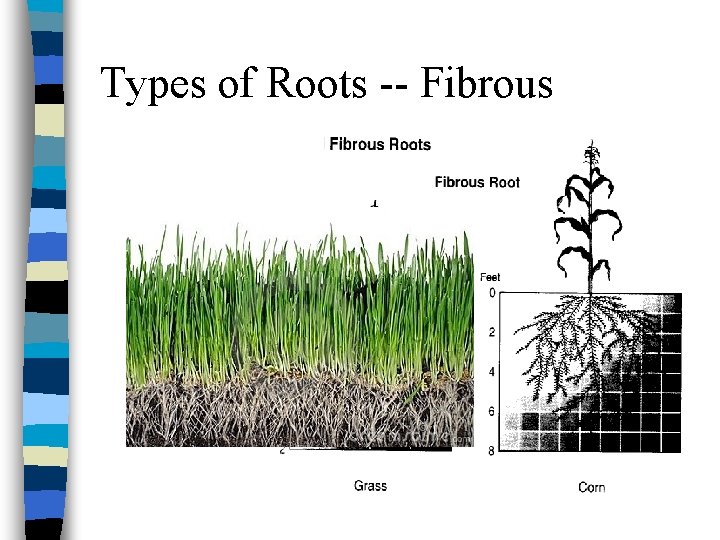
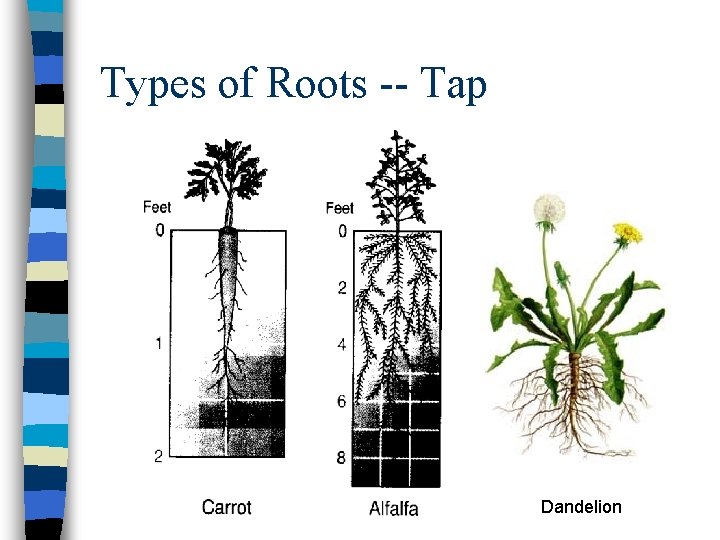
Types of Roots -- Fibrous
Types of Roots -- Tap Dandelion
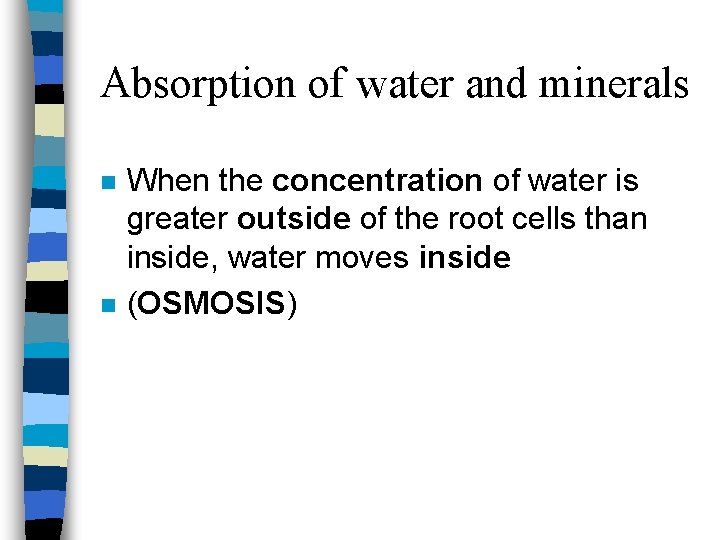
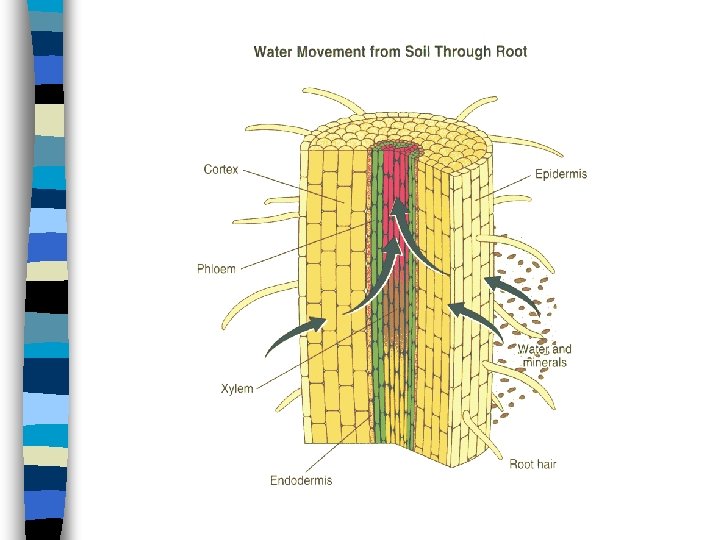
Absorption of water and minerals n n When the concentration of water is greater outside of the root cells than inside, water moves inside (OSMOSIS)
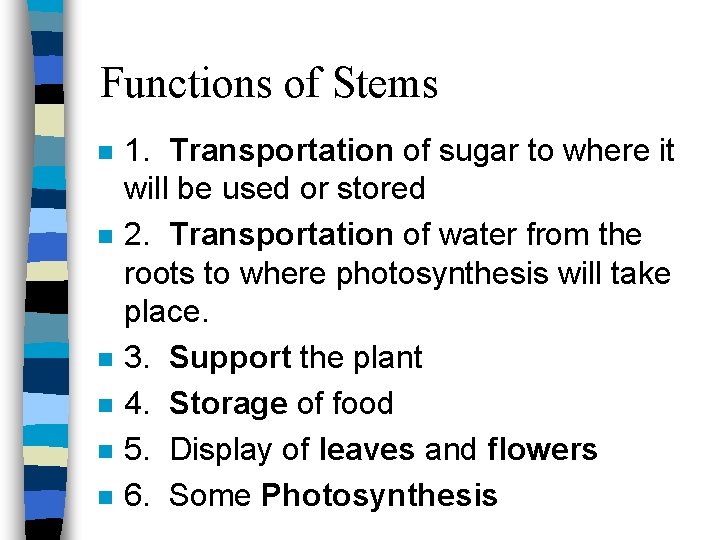
Functions of Stems n n n 1. Transportation of sugar to where it will be used or stored 2. Transportation of water from the roots to where photosynthesis will take place. 3. Support the plant 4. Storage of food 5. Display of leaves and flowers 6. Some Photosynthesis
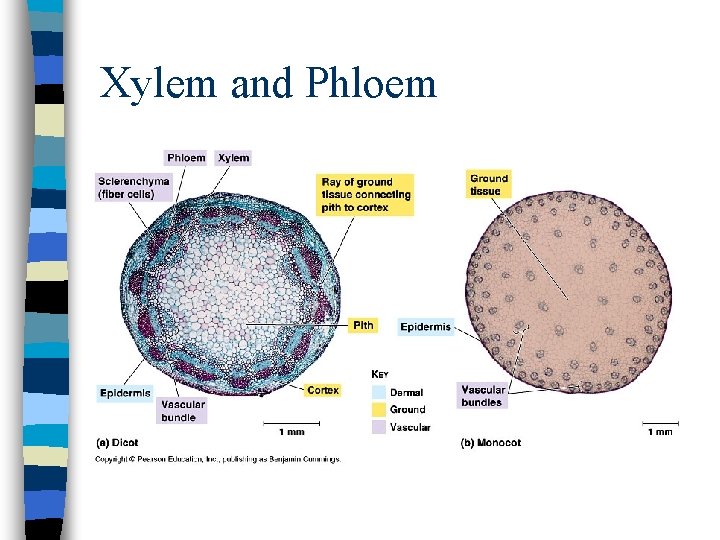
Xylem n n Tubes that carry water and minerals from the roots to where photosynthesis will occur Xylem Up!!
Phloem n n Tubes that carry sugar (from the leaves) to areas in the plant where it will be used or stored. Phloem Down!!
Xylem and Phloem
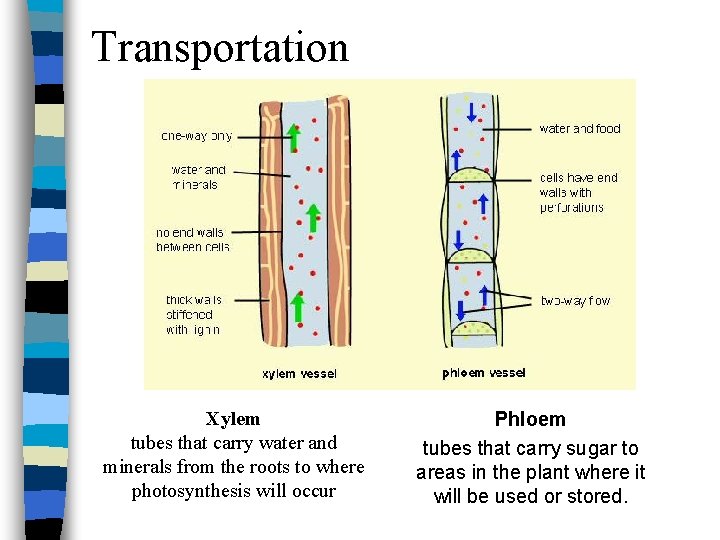
Transportation Xylem tubes that carry water and minerals from the roots to where photosynthesis will occur Phloem tubes that carry sugar to areas in the plant where it will be used or stored.
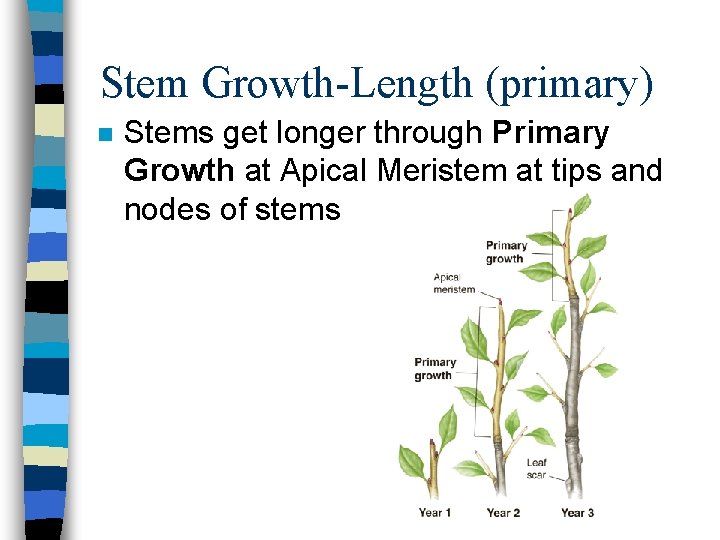
Stem Growth-Length (primary) n Stems get longer through Primary Growth at Apical Meristem at tips and nodes of stems
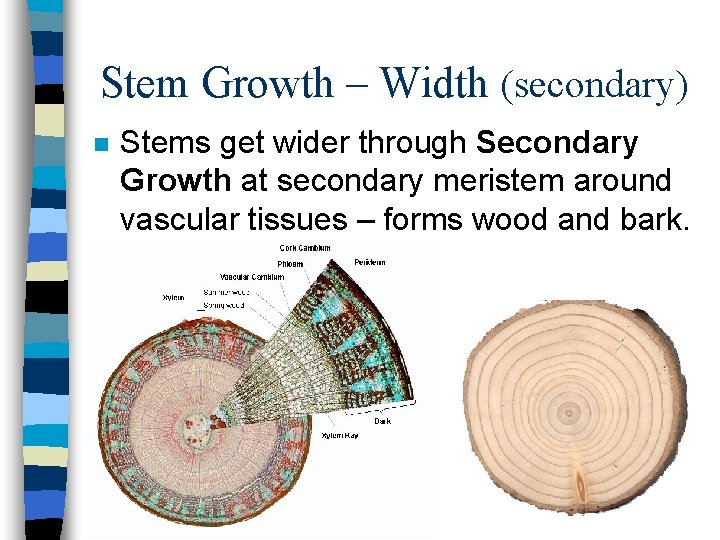
Stem Growth – Width (secondary) n Stems get wider through Secondary Growth at secondary meristem around vascular tissues – forms wood and bark.
Functions of Leaves n n 1. Capture light energy for photosynthesis 2. Exchange gases between plants and air (respiration) 3. Control the loss of water (transpiration) 4. Storage of food (used as feed for animals and humans)
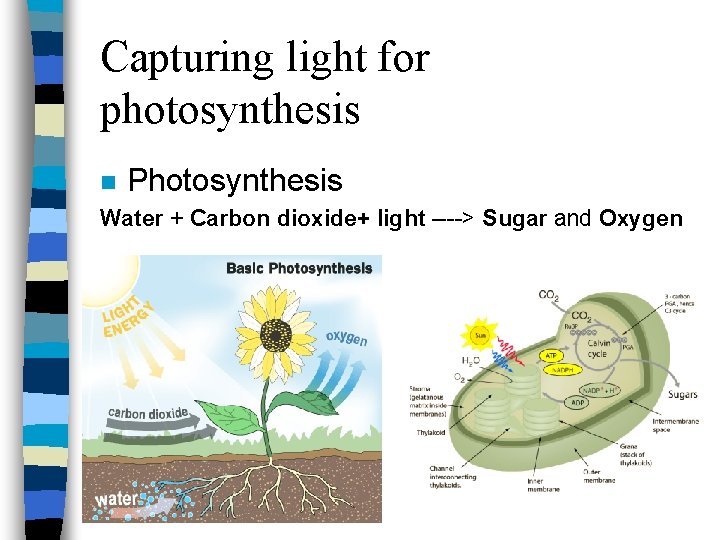
Capturing light for photosynthesis n Photosynthesis Water + Carbon dioxide+ light ----> Sugar and Oxygen
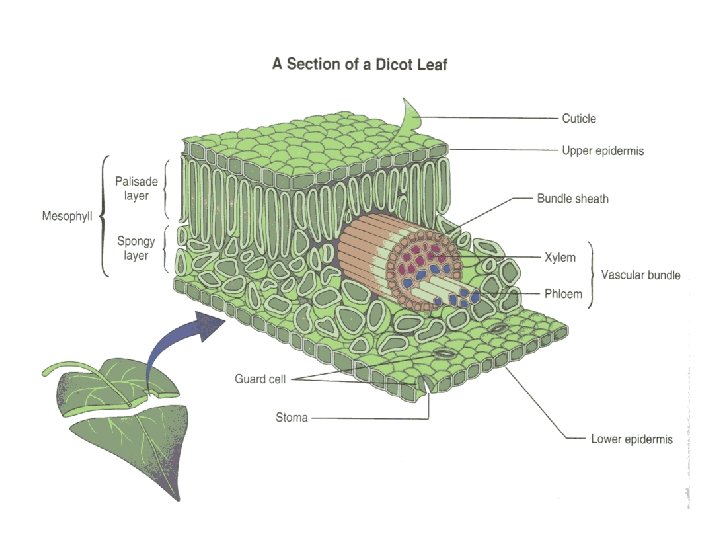
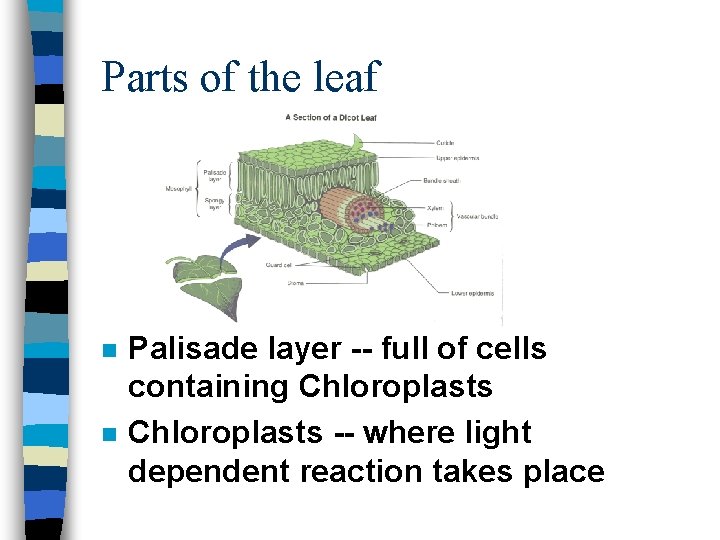
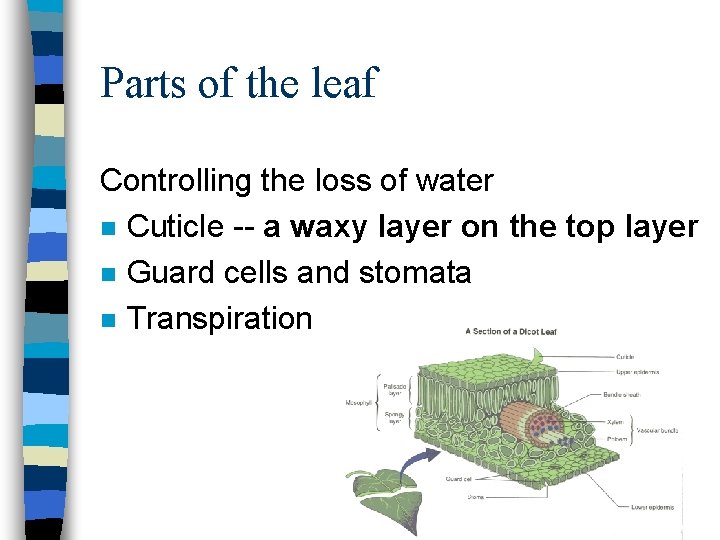
Parts of the leaf n n Palisade layer -- full of cells containing Chloroplasts -- where light dependent reaction takes place
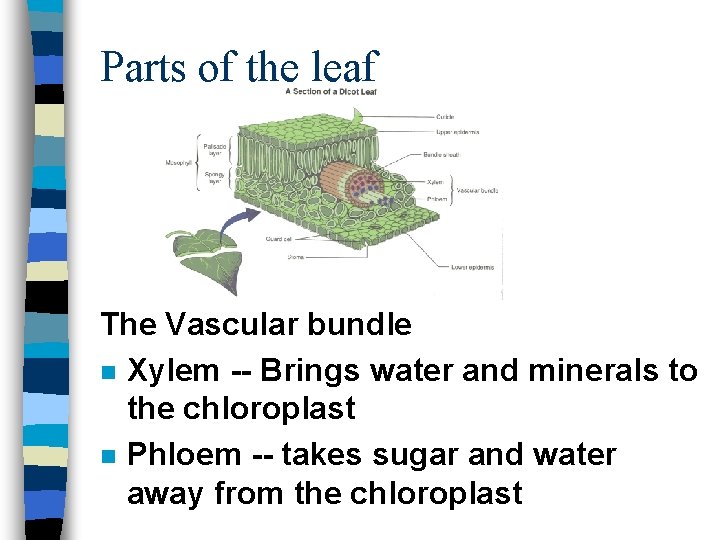
Parts of the leaf The Vascular bundle n Xylem -- Brings water and minerals to the chloroplast n Phloem -- takes sugar and water away from the chloroplast
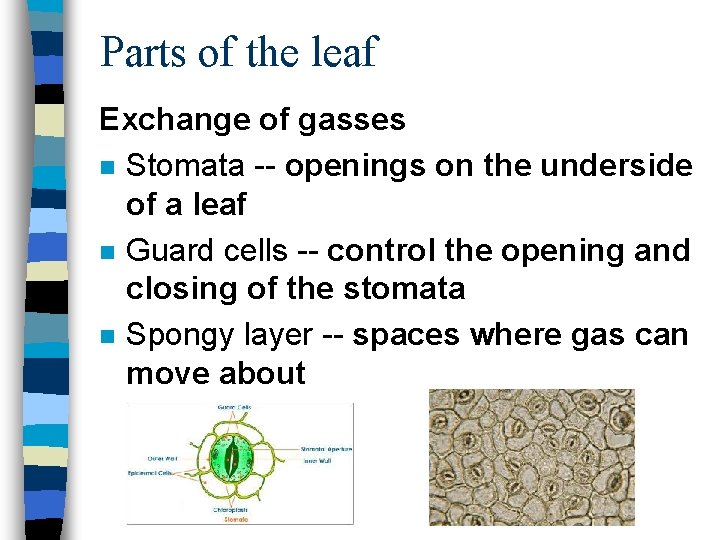
Parts of the leaf Exchange of gasses n Stomata -- openings on the underside of a leaf n Guard cells -- control the opening and closing of the stomata n Spongy layer -- spaces where gas can move about
Parts of the leaf Controlling the loss of water n Cuticle -- a waxy layer on the top layer n Guard cells and stomata n Transpiration
Flower Function n n The primary function of a flower is to produce the seeds needed to continue the species. What kind of reproduction is this? ? ? SEXUAL OR ASEXUAL? ?
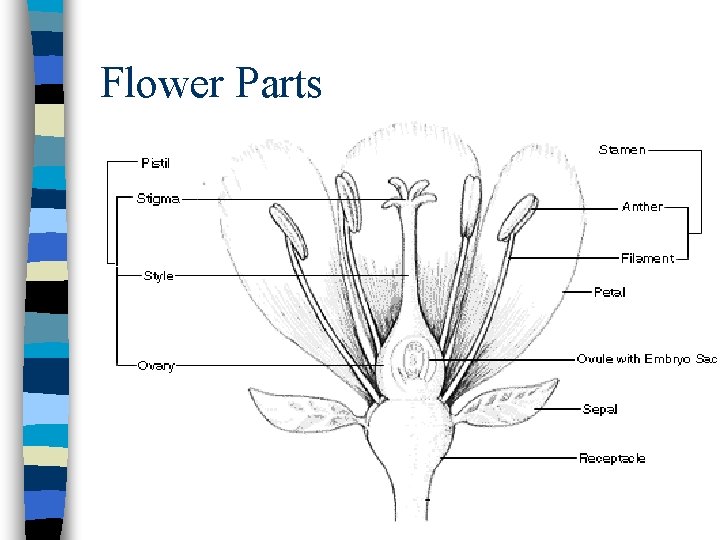
Flower Parts
Male Parts of the Flower n n Stamen which has two parts--filament and anther. Filament: supports the anther. Anther: produces pollen grains. Pollen: Male sexual reproductive cell.
Female Parts of the Flower n n n Pistil: term used to describe the combination of all the female parts. Stigma: receives the pollen grains. Pollen travels down the style and into the ovary. Style: supports the stigma. Ovary: surrounds the ovule, later becomes a fruit. Ovule: Female reproductive cell. When the ovule is fertilized with pollen, they produce seed.
Other Flower Parts n n n Receptacle: the enlarged part of the flower stalk to which all the floral parts of the flower attach. Sepals: the green leaflike parts of the flower that protect the flower bud. Calyx: the entire whorl of sepals. Petals: the colored part of the flower used to attract insects. Corolla: the entire whorl of petals.
Complete and Incomplete Flowers n n Complete flowers have both male and female parts. Incomplete flowers have either male or female parts but not both.
Pollination n n Pollination is the transfer of pollen from an anther to a stigma. Fertilization is when the pollen and ovules come together and develop a seed. Cross Pollination - When one flower fertilized using the pollen from another flower. Self Pollination - When a flower is fertilized with it’s own pollen.
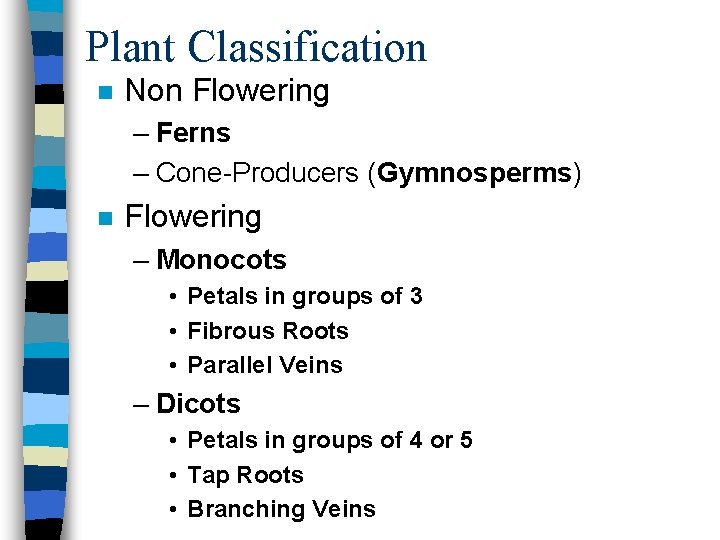
Plant Classification n Non Flowering – Ferns – Cone-Producers (Gymnosperms) n Flowering – Monocots • Petals in groups of 3 • Fibrous Roots • Parallel Veins – Dicots • Petals in groups of 4 or 5 • Tap Roots • Branching Veins
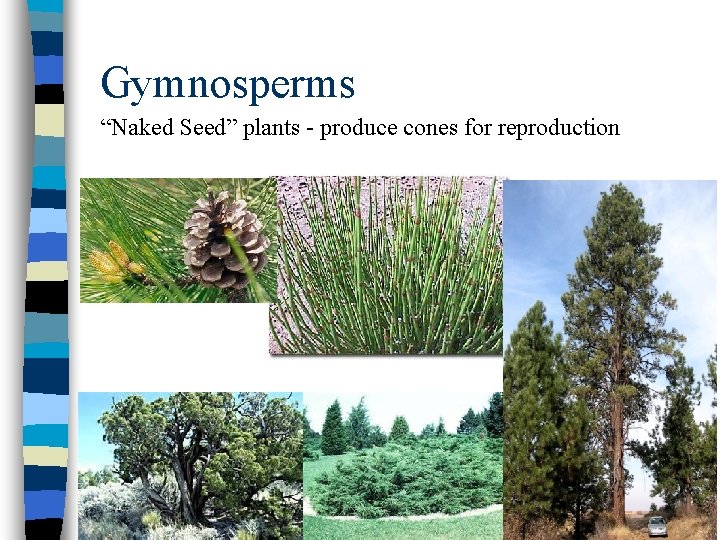
Gymnosperms “Naked Seed” plants - produce cones for reproduction
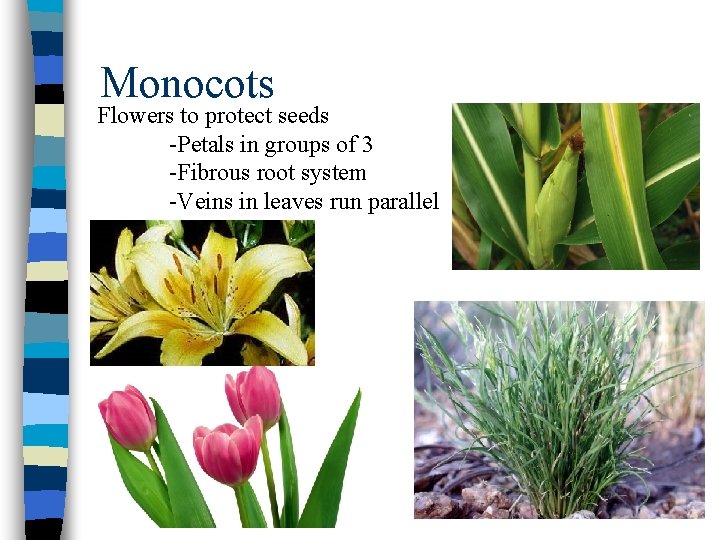
Monocots Flowers to protect seeds -Petals in groups of 3 -Fibrous root system -Veins in leaves run parallel
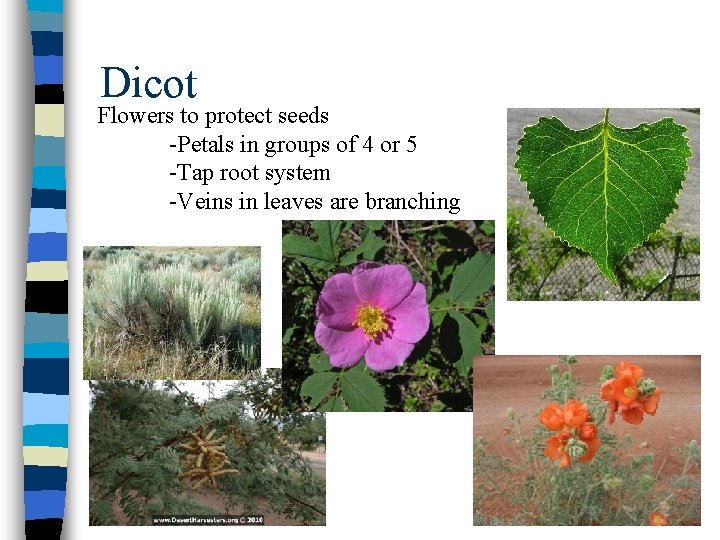
Dicot Flowers to protect seeds -Petals in groups of 4 or 5 -Tap root system -Veins in leaves are branching
The Science of Classifying Organisms Taxonomy
Taxonomy n grouping things according to their characteristics. n The science of classifying n Taxonomist – a scientist that classifies organisms
WHY CLASSIFY? ? ? n n n Scientists estimate that there are 5 -10 million kinds of different plants, animals and microorganisms on earth. They are usually known by their common names – Grey wolf – Morning Glory Common names can be confusing and their names may vary by region.
History of Taxonomy n n Aristotle – Classified organisms according to where they lived (land, air, water, etc. ) Carolus Linnaeus -- Developed the current system used for grouping organisms.
Linneaus System n Placed organisms into smaller and smaller groups based on similarities. – STRUCTURAL -- most important – BIOCHEMICAL – GENETIC – BEHAVIORAL
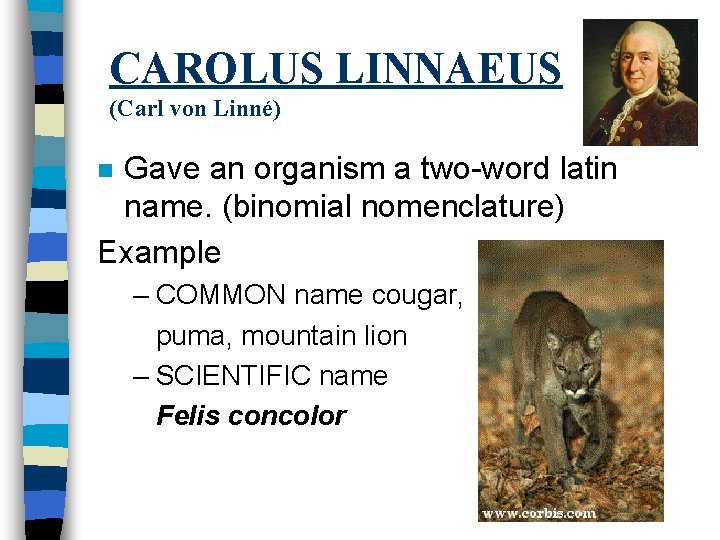
CAROLUS LINNAEUS (Carl von Linné) Gave an organism a two-word latin name. (binomial nomenclature) Example n – COMMON name cougar, puma, mountain lion – SCIENTIFIC name Felis concolor
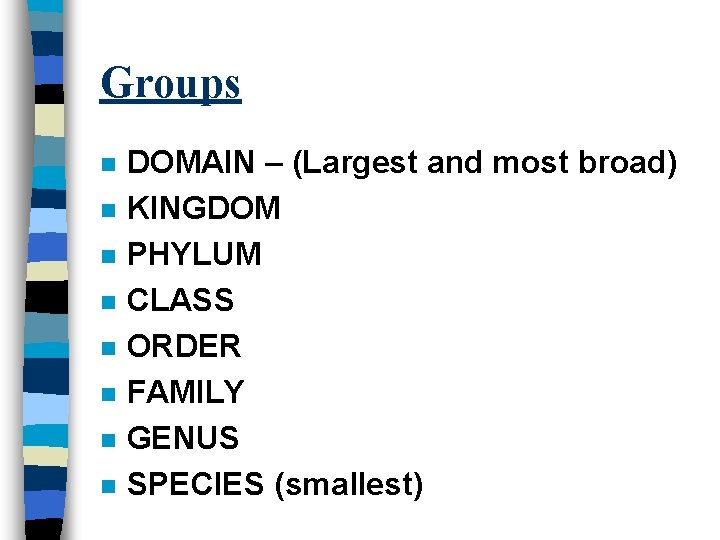
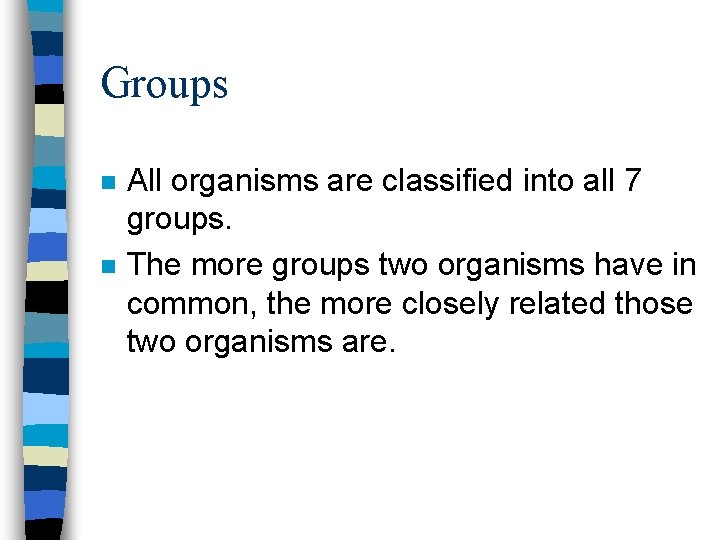
Groups n n n n DOMAIN – (Largest and most broad) KINGDOM PHYLUM CLASS ORDER FAMILY GENUS SPECIES (smallest)
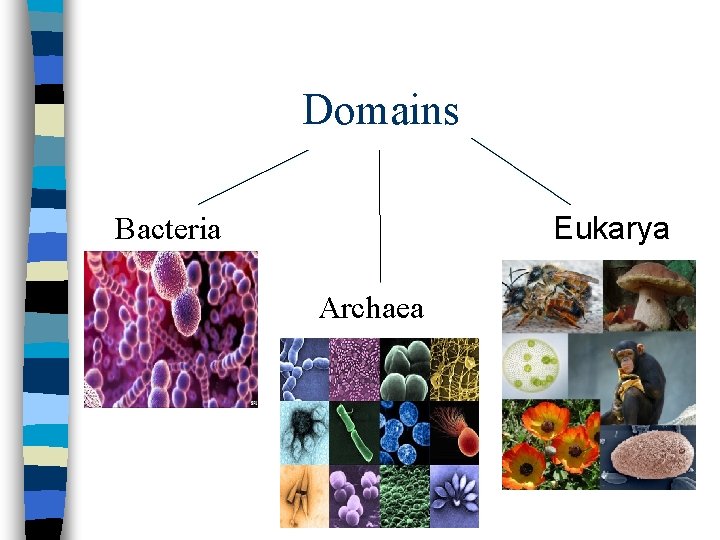
Domains Eukarya Bacteria Archaea
Groups n n All organisms are classified into all 7 groups. The more groups two organisms have in common, the more closely related those two organisms are.
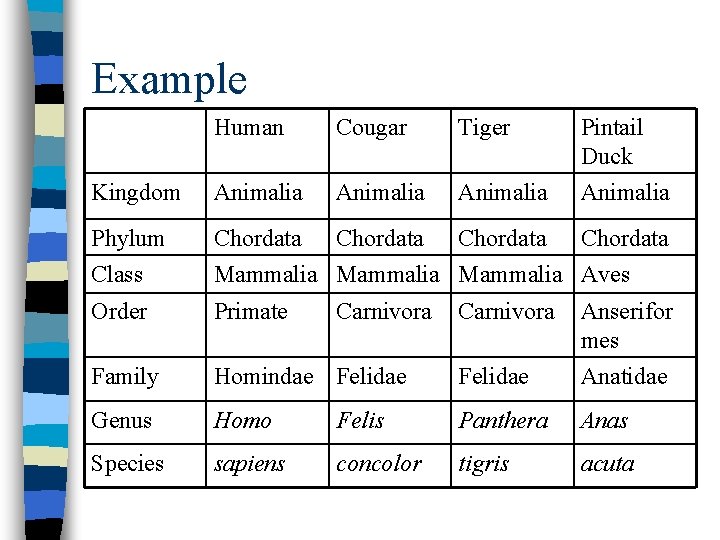
Example Human Cougar Tiger Pintail Duck Kingdom Animalia Phylum Chordata Class Mammalia Aves Order Primate Family Carnivora Anserifor mes Homindae Felidae Anatidae Genus Homo Felis Panthera Anas Species sapiens concolor tigris acuta
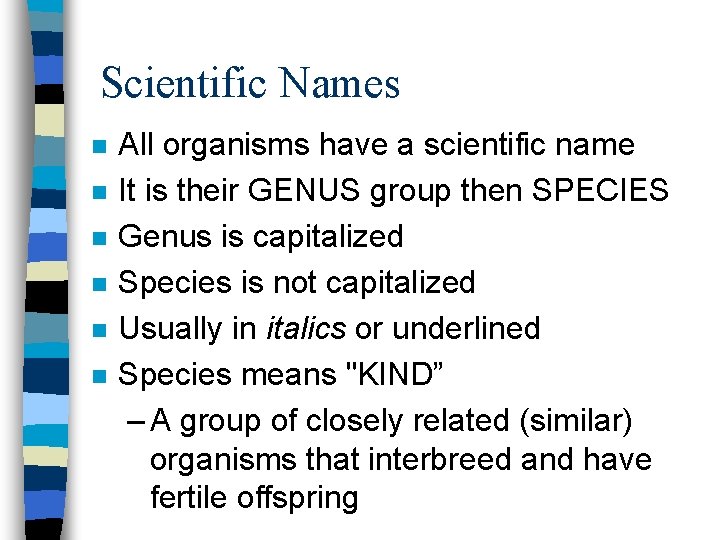
Scientific Names n n n All organisms have a scientific name It is their GENUS group then SPECIES Genus is capitalized Species is not capitalized Usually in italics or underlined Species means "KIND” – A group of closely related (similar) organisms that interbreed and have fertile offspring
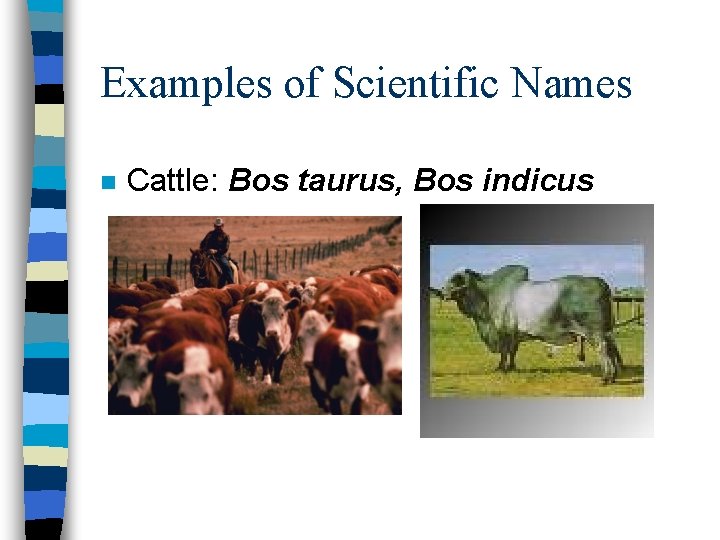
Examples of Scientific Names n Cattle: Bos taurus, Bos indicus
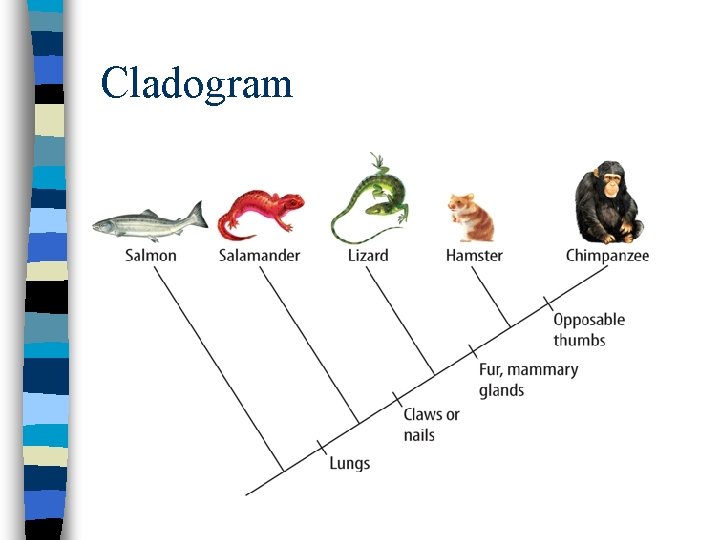
What is a Cladogram? n n It is a diagram that depicts evolutionary relationships among groups, based on similarities. Video
Cladogram
Dichotomous Keys n n n A dichotomous key is a written set of choices that lead to the correct name of an organism. Choices are based on physical descriptions Scientists use these to identify unknown organisms.
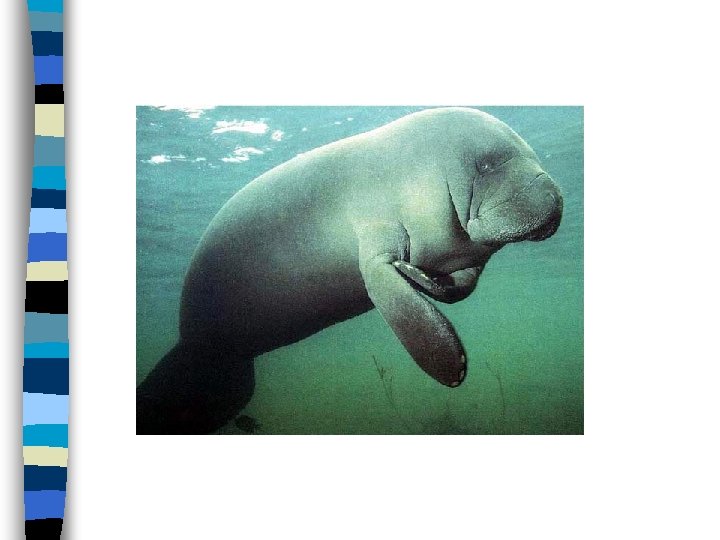
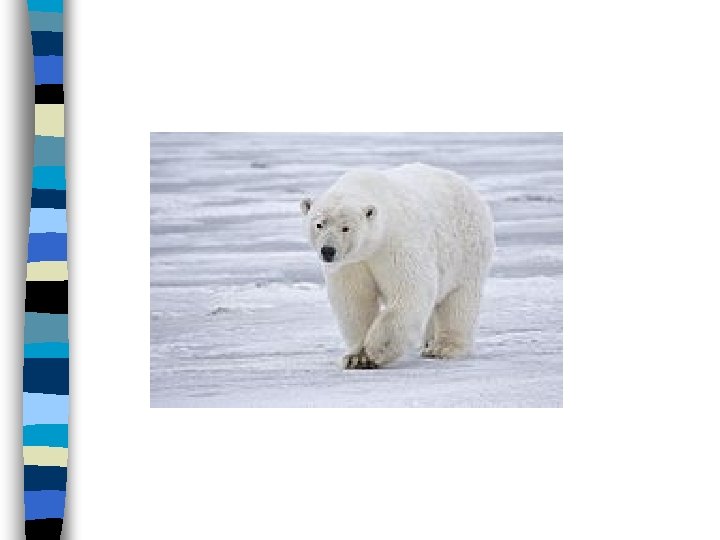
Dichotomous Key for Unknown Animals n 1. A. B. Animal is mainly water-dwelling Animal is mainly land-dwelling Go to statement 2 Go to statement 3 2. A. B. Animal has a shell Animal has no shell Great-Logger Turtle Manatee 3. A. B. Main color of the animal is gray Main color of the animal is not gray Go to statement 4 Go to statement 6 4. A. B. Animal has a long, trunk-like nose Animal has a short nose Elephant Go to statement 5 5. A. B. Animal has long ears Animal has short ears Rabbit Koala Bear 6. A. B. The main color is black The main color is white Go to statement 7 Polar Bear 7. A. B. Animal has a pointed face Animal has a flat face Black Bear Chimpanzee
Dichotomous Key for Unknown Animals n 1. A. B. Animal is mainly water-dwelling Animal is mainly land-dwelling Go to statement 2 Go to statement 3 2. A. B. Animal has a shell Animal has no shell Great-Logger Turtle Manatee 3. A. B. Main color of the animal is gray Main color of the animal is not gray Go to statement 4 Go to statement 6 4. A. B. Animal has a long, trunk-like nose Animal has a short nose Elephant Go to statement 5 5. A. B. Animal has long ears Animal has short ears Rabbit Koala Bear 6. A. B. The main color is black The main color is white Go to statement 7 Polar Bear 7. A. B. Animal has a pointed face Animal has a flat face Black Bear Chimpanzee
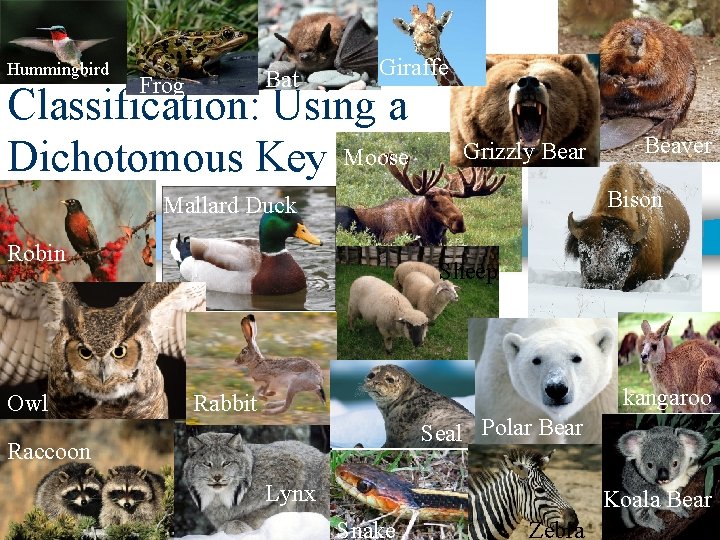
Hummingbird Bat Frog Giraffe Classification: Using a Dichotomous Key Moose Grizzly Bear Bison Mallard Duck Robin Owl Beaver Sheep kangaroo Rabbit Seal Polar Bear Raccoon Lynx Koala Bear Snake Zebra