
Structure and Conclusion GOOD ESSAY GOOD ORGANIZATION Basic
Structure and Conclusion
• GOOD ESSAY = GOOD ORGANIZATION
Basic Steps 1. 2. 3. 4. 5. 6. 7. 8. Read, read Taking notes Organize notes with readings-> come up with different arguing pts Come up with thesis Outline Detail each paragraph THEN START WRITING- body first Thesis and conclusion- write last after the body
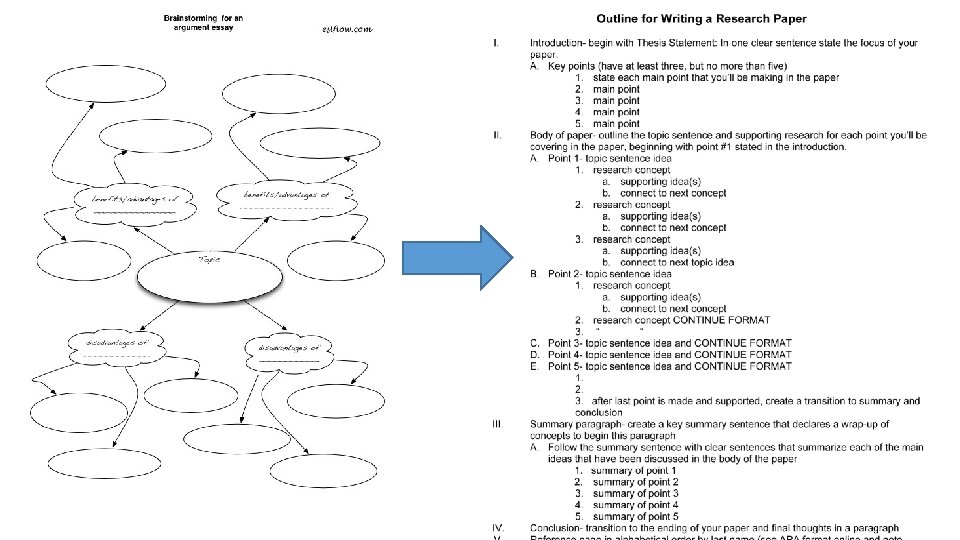
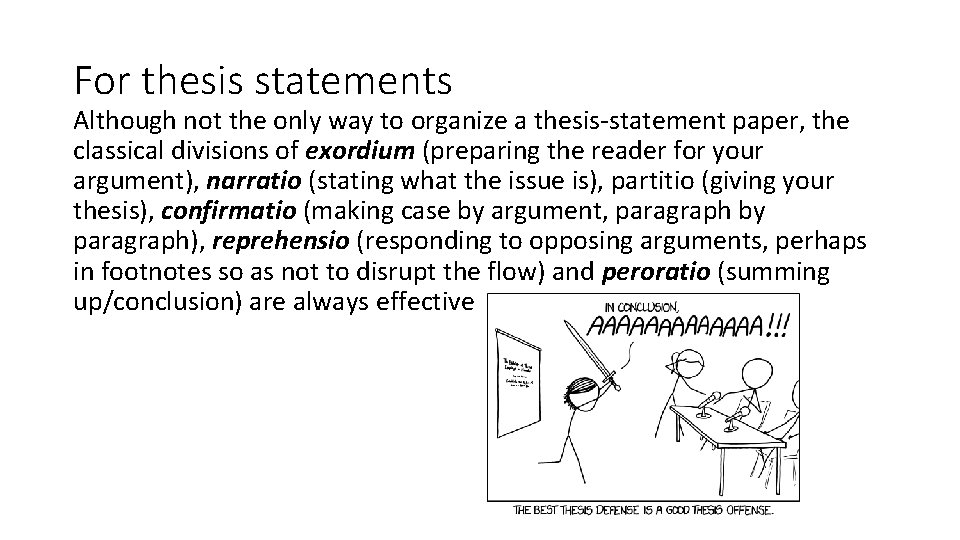
For thesis statements Although not the only way to organize a thesis-statement paper, the classical divisions of exordium (preparing the reader for your argument), narratio (stating what the issue is), partitio (giving your thesis), confirmatio (making case by argument, paragraph by paragraph), reprehensio (responding to opposing arguments, perhaps in footnotes so as not to disrupt the flow) and peroratio (summing up/conclusion) are always effective
Conclusions • Summarize what YOU HAVE LEARNED • Address limitations • Address future applications • Address overall impact in future studies
Today Reading an example paper 1. Look specifically at the (a) Intro (b) 1 -2 body paragraphs (c ) conclusion-> discuss flow, integration of quotes, arguments, effectiveness, cohesiveness, thesis etc. 2. Discuss strengths- make a list of what the essay does well 3. Discuss weaknesses – make a list of what the essay doesn’t succeed at 4. Assign the essay a grade
- Slides: 7