
Structural Simulation Toolkit Gem 5 Integration ARM Research
- Slides: 8
Structural Simulation Toolkit / Gem 5 Integration + ARM Research, Sandia National Labs Sandia is a multiprogram laboratory operated by Sandia Corporation, a Lockheed Martin Company, for the United States Department of Energy’s National Nuclear Security Administration under contract DE-AC 04 -94 AL 85000.
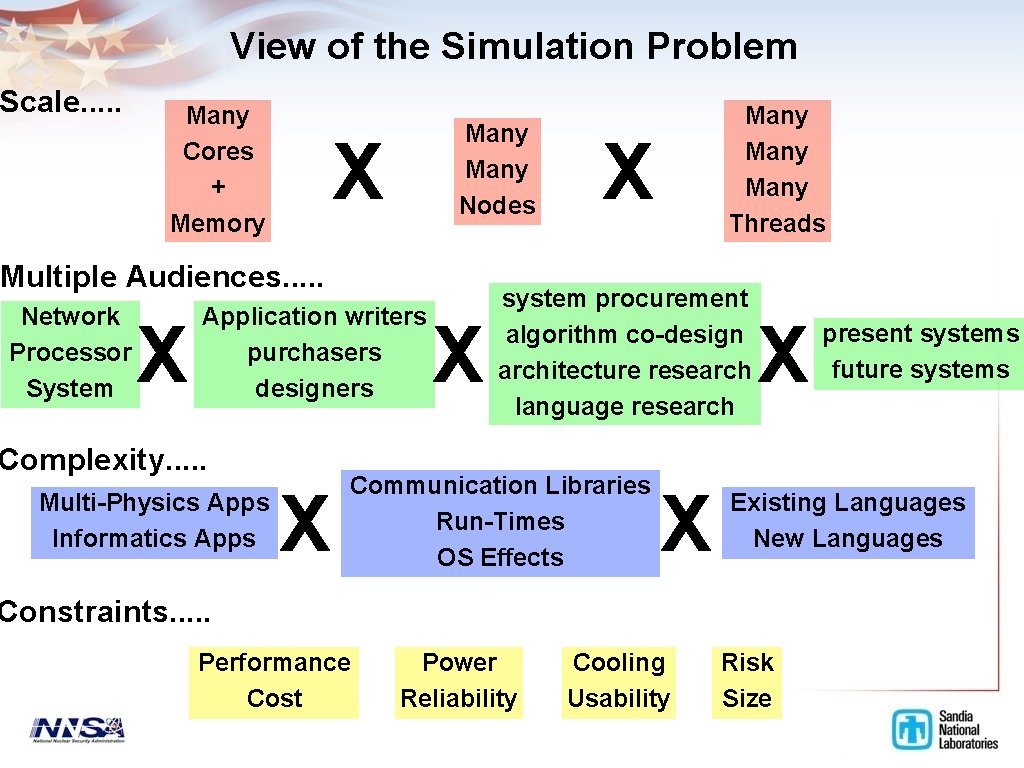
View of the Simulation Problem Scale. . . Many Cores + Memory Many Nodes X Multiple Audiences. . . Network Processor System X Application writers purchasers designers Complexity. . . Multi-Physics Apps Informatics Apps X X Many Threads X system procurement algorithm co-design architecture research language research Communication Libraries Run-Times OS Effects X X Existing Languages New Languages Constraints. . . Performance Cost Power Reliability Cooling Usability present systems future systems Risk Size
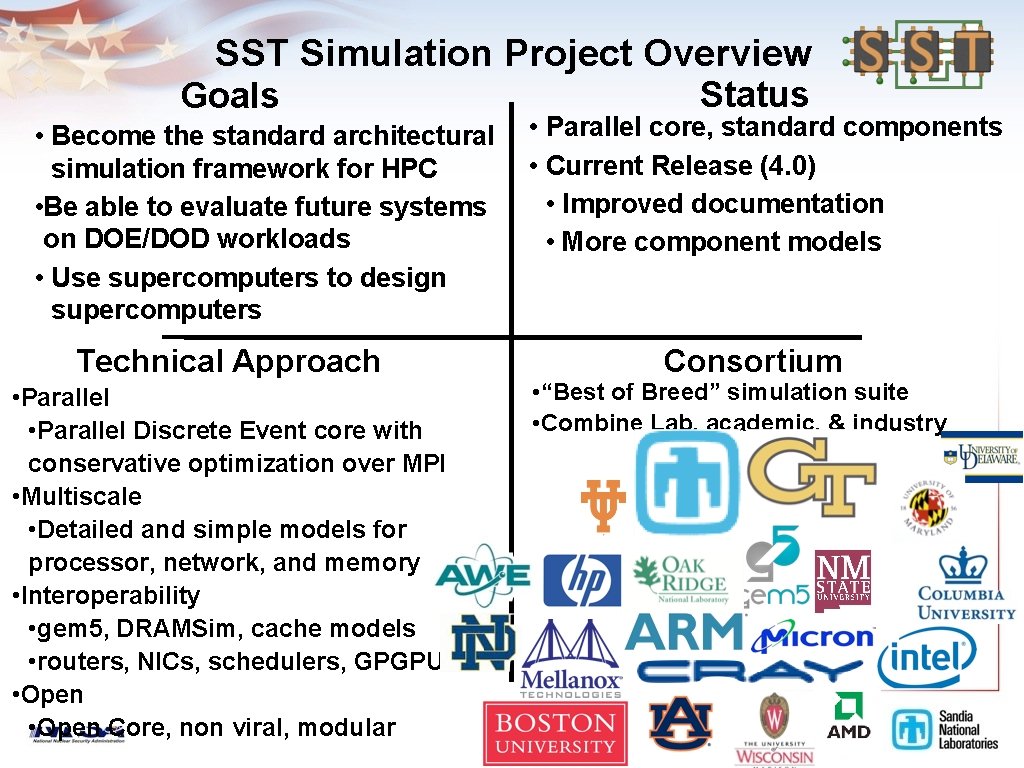
SST Simulation Project Overview Goals • Become the standard architectural simulation framework for HPC • Be able to evaluate future systems on DOE/DOD workloads • Use supercomputers to design supercomputers Technical Approach • Parallel Discrete Event core with conservative optimization over MPI • Multiscale • Detailed and simple models for processor, network, and memory • Interoperability • gem 5, DRAMSim, cache models • routers, NICs, schedulers, GPGPU • Open Core, non viral, modular Status • Parallel core, standard components • Current Release (4. 0) • Improved documentation • More component models Consortium • “Best of Breed” simulation suite • Combine Lab, academic, & industry
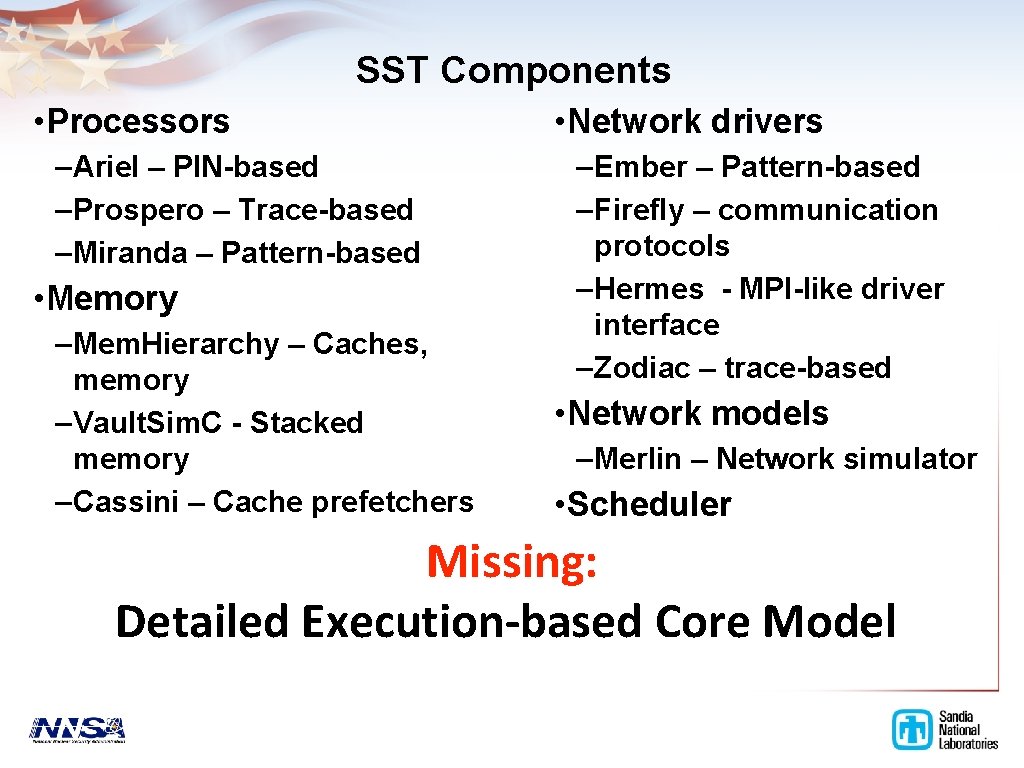
SST Components • Processors – Ariel – PIN-based – Prospero – Trace-based – Miranda – Pattern-based • Memory – Mem. Hierarchy – Caches, memory – Vault. Sim. C - Stacked memory – Cassini – Cache prefetchers • Network drivers – Ember – Pattern-based – Firefly – communication protocols – Hermes - MPI-like driver interface – Zodiac – trace-based • Network models – Merlin – Network simulator • Scheduler Missing: Detailed Execution-based Core Model
Integration Goals • Provide gem 5 functionality in the SST Framework – Interoperability w/ other components – Parallelism • Previous integration (2011) was with a branch of Gem 5 – Emulation mode only – Not sustainable • New integration is with the main Gem 5 stable release – Ability to run full-system • Testing of the new integration is underway
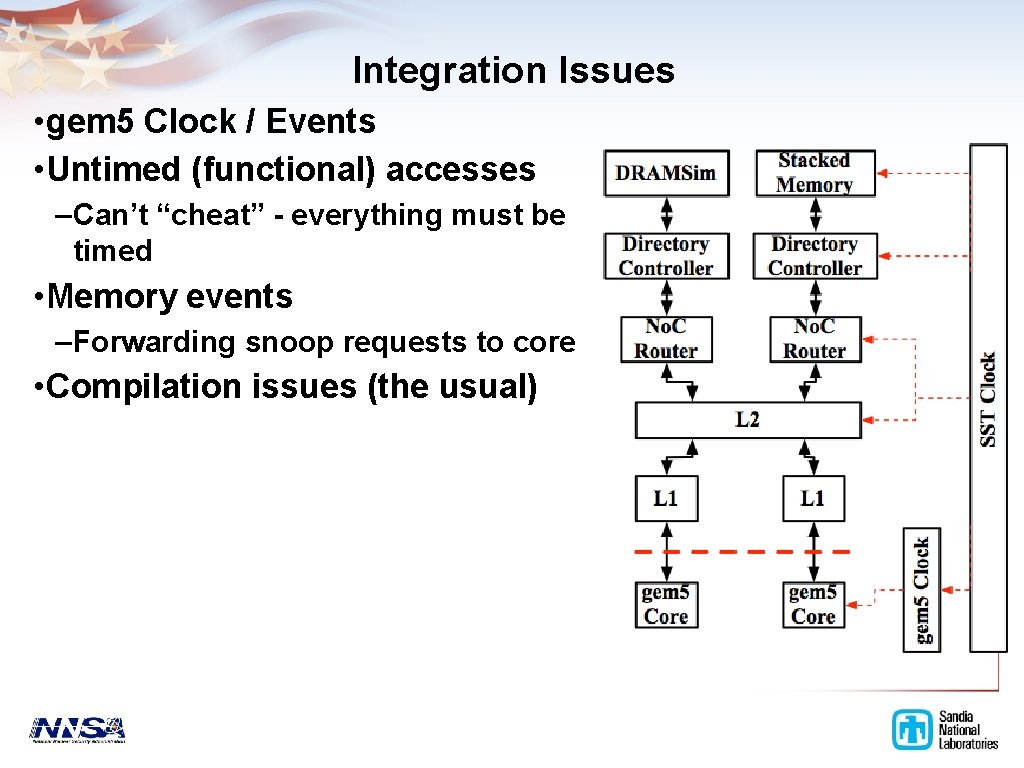
Integration Issues • gem 5 Clock / Events • Untimed (functional) accesses – Can’t “cheat” - everything must be timed • Memory events – Forwarding snoop requests to core • Compilation issues (the usual)
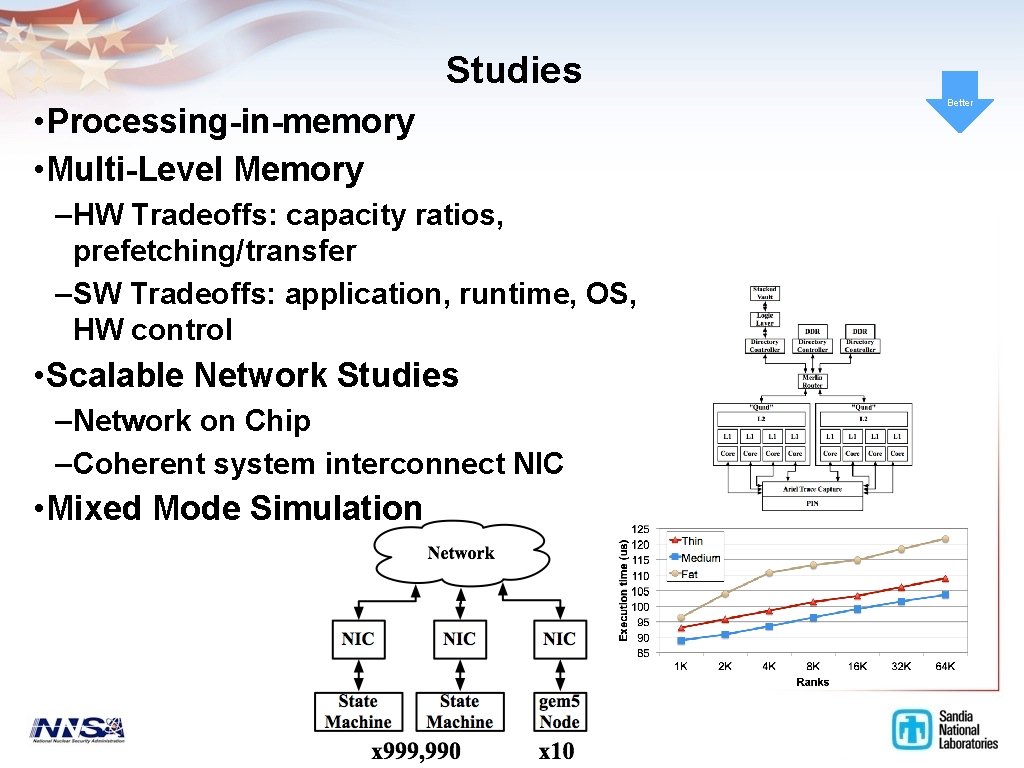
Studies • Processing-in-memory • Multi-Level Memory – HW Tradeoffs: capacity ratios, prefetching/transfer – SW Tradeoffs: application, runtime, OS, HW control • Scalable Network Studies – Network on Chip – Coherent system interconnect NIC • Mixed Mode Simulation Better
Summary • Gem 5 will be able to use SST’s infrastructure and components • Provides SST components with excellent core model • Provides gem 5 with a parallel discrete event framework • Sustainable • Current code committed • Testing underway