
Structural organization units 1 01 Remember structural organization
Structural organization units 1. 01 Remember structural organization 1
Structural organization units You Tube – Human Biology Explained “Anatomical Terms” https: //www. youtube. com/watch? v=kv. HWn. Jw. Bkmo 1. 01 Remember structural organization 2
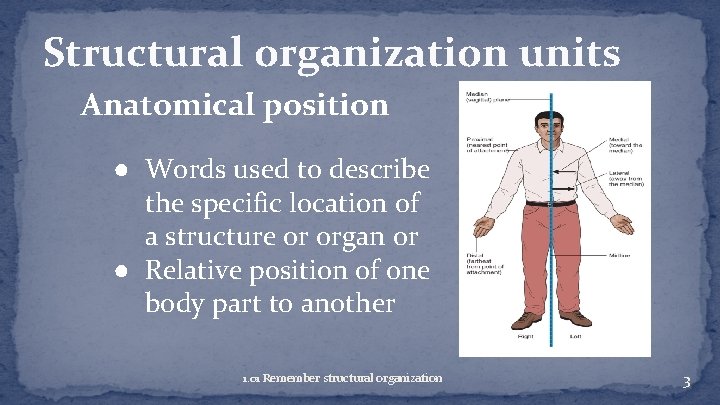
Structural organization units Anatomical position ● Words used to describe the specific location of a structure or organ or ● Relative position of one body part to another 1. 01 Remember structural organization 3
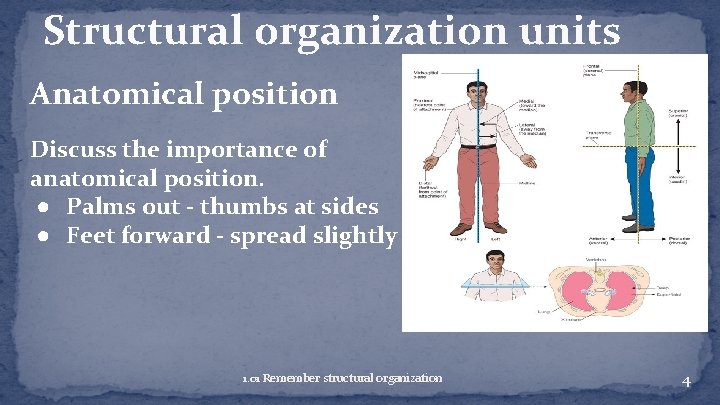
Structural organization units Anatomical position Discuss the importance of anatomical position. ● Palms out - thumbs at sides ● Feet forward - spread slightly 1. 01 Remember structural organization 4
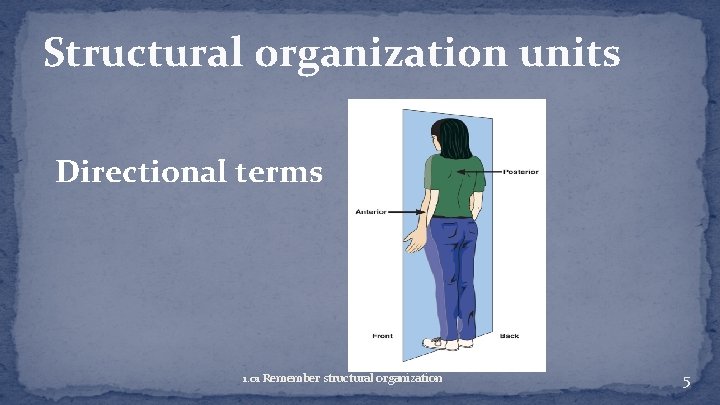
Structural organization units Directional terms 1. 01 Remember structural organization 5
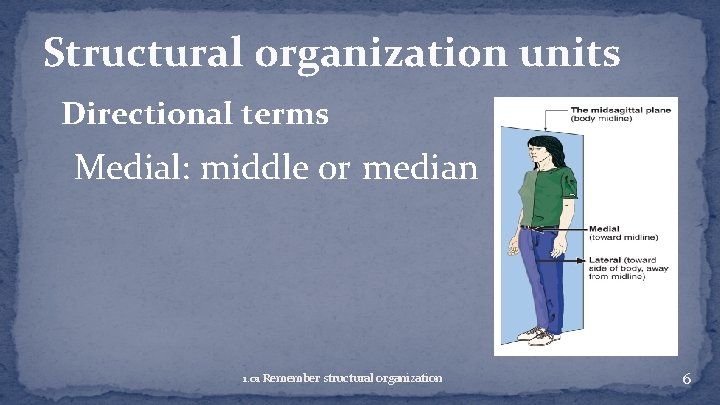
Structural organization units Directional terms Medial: middle or median 1. 01 Remember structural organization 6
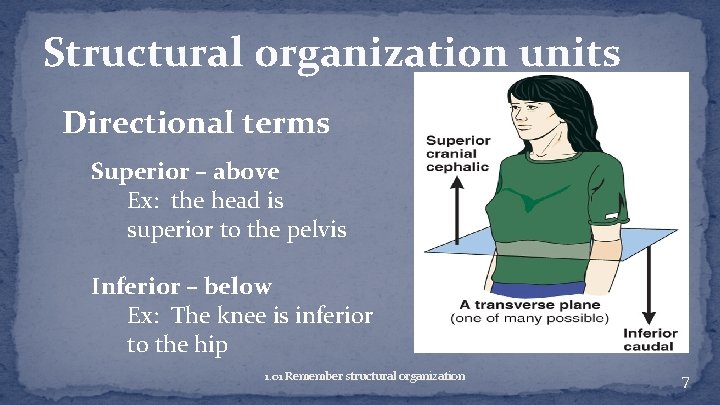
Structural organization units Directional terms Superior – above Ex: the head is superior to the pelvis Inferior – below Ex: The knee is inferior to the hip 1. 01 Remember structural organization 7
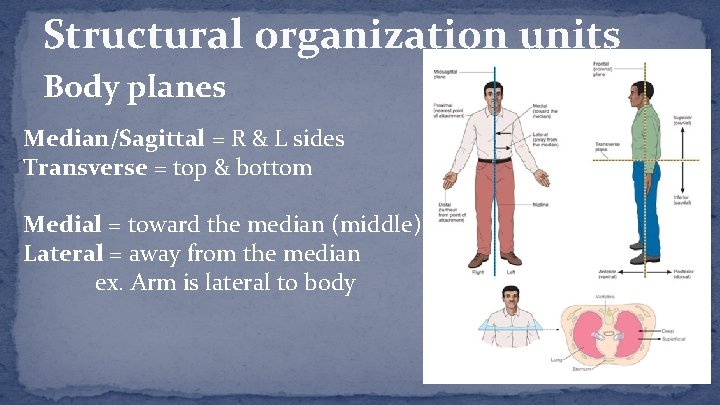
Structural organization units Body planes Median/Sagittal = R & L sides Transverse = top & bottom Medial = toward the median (middle) Lateral = away from the median ex. Arm is lateral to body 8
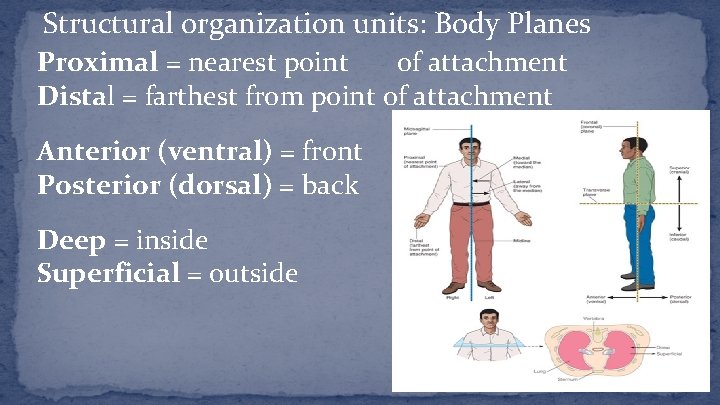
Structural organization units: Body Planes Proximal = nearest point of attachment Distal = farthest from point of attachment Anterior (ventral) = front Posterior (dorsal) = back Deep = inside Superficial = outside 9
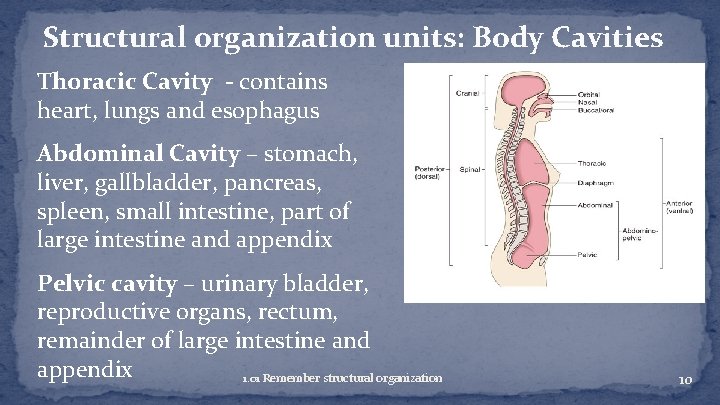
Structural organization units: Body Cavities Thoracic Cavity - contains heart, lungs and esophagus Abdominal Cavity – stomach, liver, gallbladder, pancreas, spleen, small intestine, part of large intestine and appendix Pelvic cavity – urinary bladder, reproductive organs, rectum, remainder of large intestine and appendix 1. 01 Remember structural organization 10
Structural organization units ● Body cavities ● Body Cavity You Tube Video ● https: //www. youtube. com/watch? v=8 j 19 PLW 9 Ezk 1. 01 Remember structural organization 11
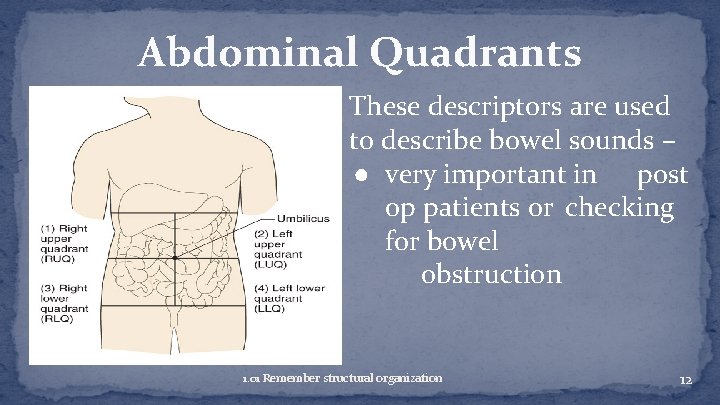
Abdominal Quadrants These descriptors are used to describe bowel sounds – ● very important in post op patients or checking for bowel obstruction 1. 01 Remember structural organization 12
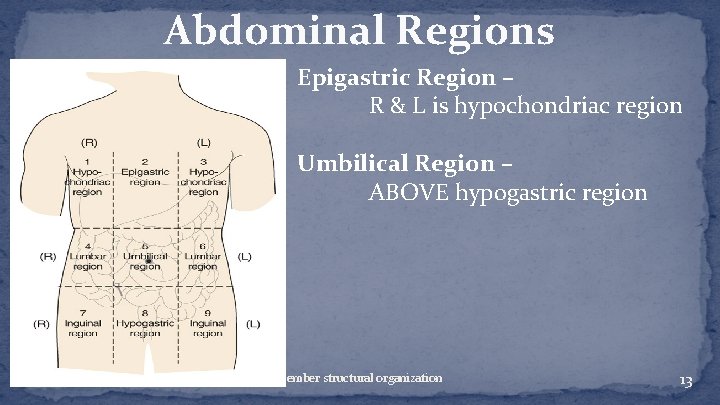
Abdominal Regions Epigastric Region – R & L is hypochondriac region Umbilical Region – ABOVE hypogastric region 1. 01 Remember structural organization 13
1. 01 Remember structural organization Essential Questions ● How does the body’s structural organization relate to its support and movement? ● Bones give support, muscles provide movement 1. 01 Remember structural organization 14
1. 01 Remember structural organization Group Project
- Slides: 15