
Structural mechanics CE312 Dr UmbreenUsSahar Assistant Professor Department
Structural mechanics (CE-312) Dr. Umbreen-Us-Sahar Assistant Professor Department of Civil Engineering University of Engineering and Technology 1
Theories of Failure (Reference: Mechanics of Material 2 nd Edition by Andrew Pytel and Jaan Kiusalaas, Chapter 12, topic 12. 4) ØTheories of Failure (also called as failure criteria) are used to predict the failure under more complex loading by using data obtained from a uniaxial tension or compression test.

a) Brittle Failure Maximum normal stress theory (By Rankine)

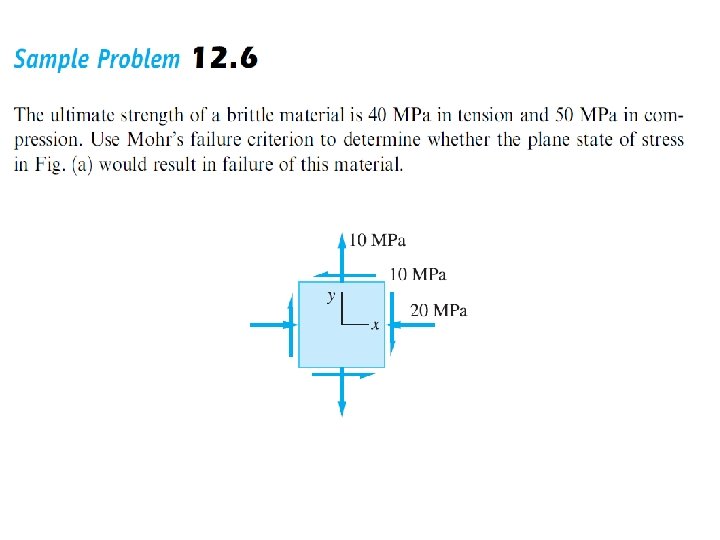
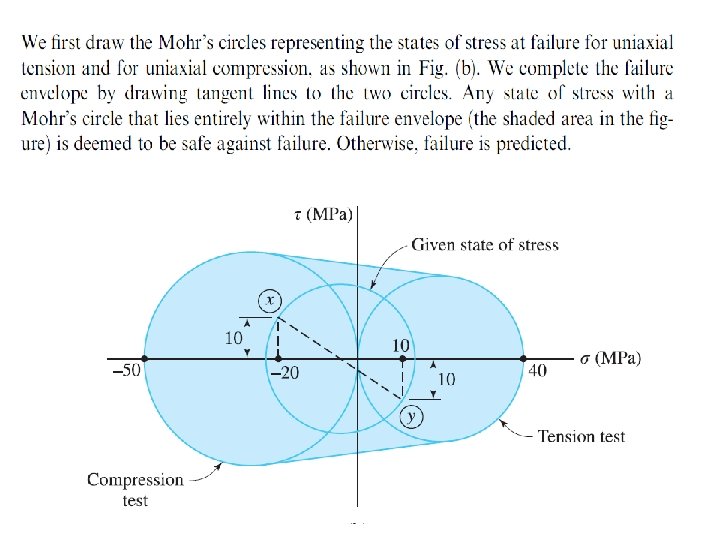
Mohr’s theory ØMohr’s theory of failure is used for materials that have different properties in tension and compression ØTo apply theory, the ultimate tensile stress must be known and the ultimate compressive stress. ( which are determined from uniaxial load test) ØThe Mohr’s circle for these two states of stress are drawn on a single diagram. ØThe failure envelope for Mohr’s theory is obtained by drawing two lines that are tangent to the circles.
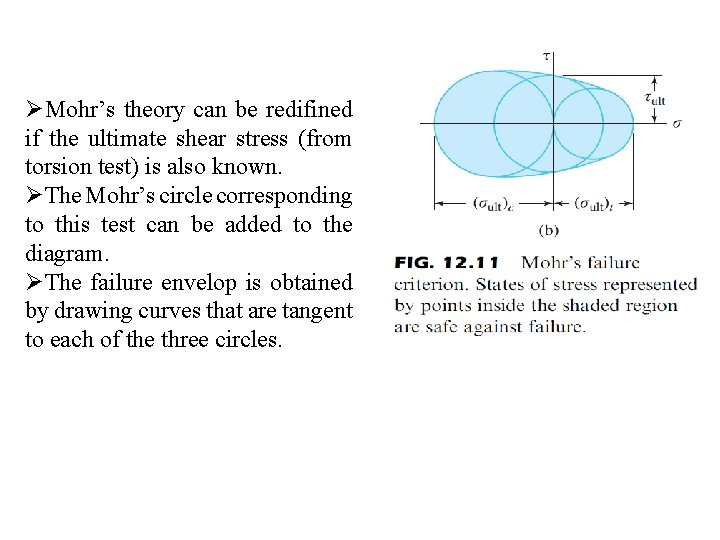
ØMohr’s theory can be redifined if the ultimate shear stress (from torsion test) is also known. ØThe Mohr’s circle corresponding to this test can be added to the diagram. ØThe failure envelop is obtained by drawing curves that are tangent to each of the three circles.
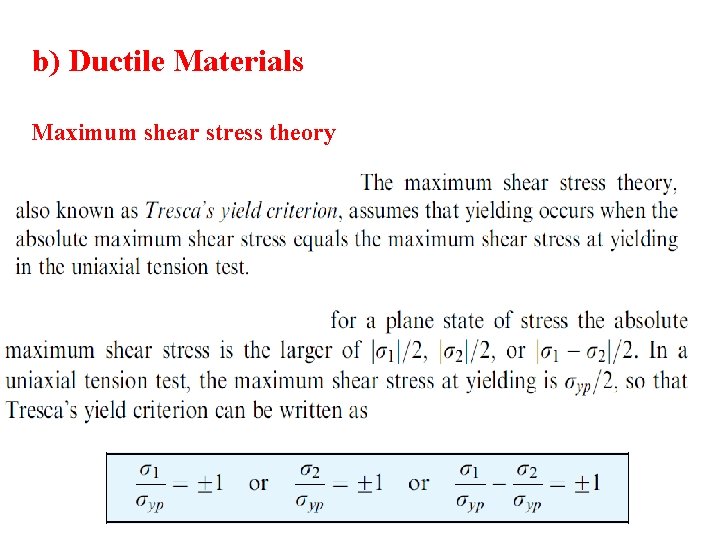
b) Ductile Materials Maximum shear stress theory
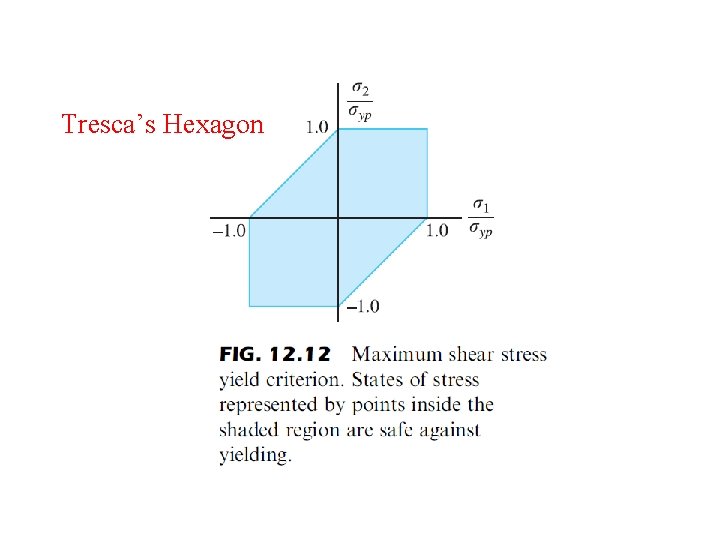
Tresca’s Hexagon
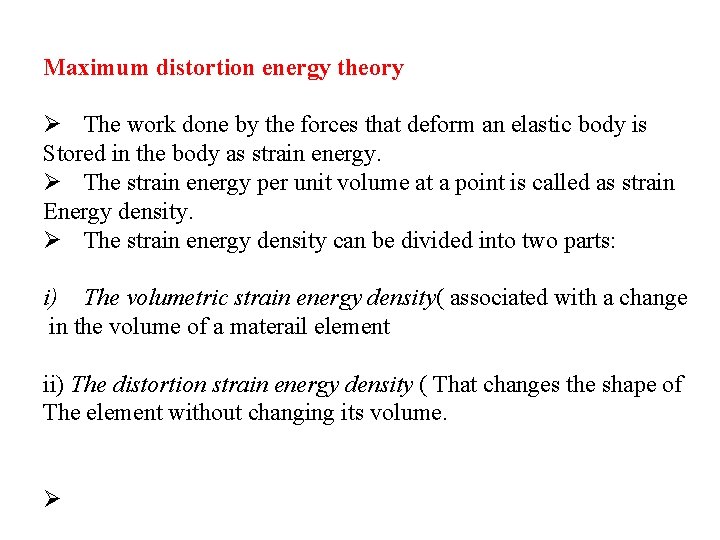
Maximum distortion energy theory Ø The work done by the forces that deform an elastic body is Stored in the body as strain energy. Ø The strain energy per unit volume at a point is called as strain Energy density. Ø The strain energy density can be divided into two parts: i) The volumetric strain energy density( associated with a change in the volume of a materail element ii) The distortion strain energy density ( That changes the shape of The element without changing its volume. Ø

Ø For an elastic body subjected to plane stress, the distortion strain energy density can be shown as:



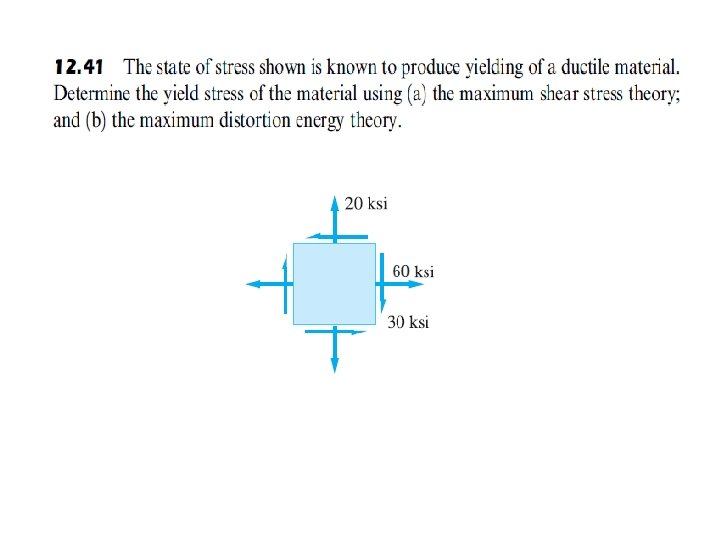
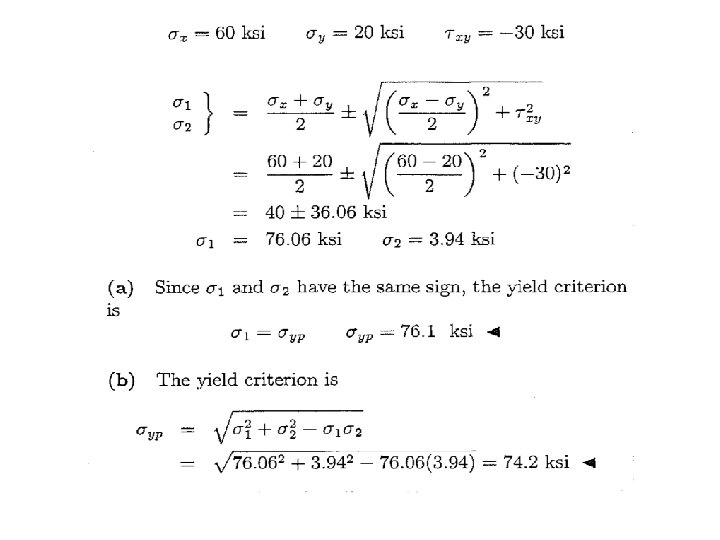
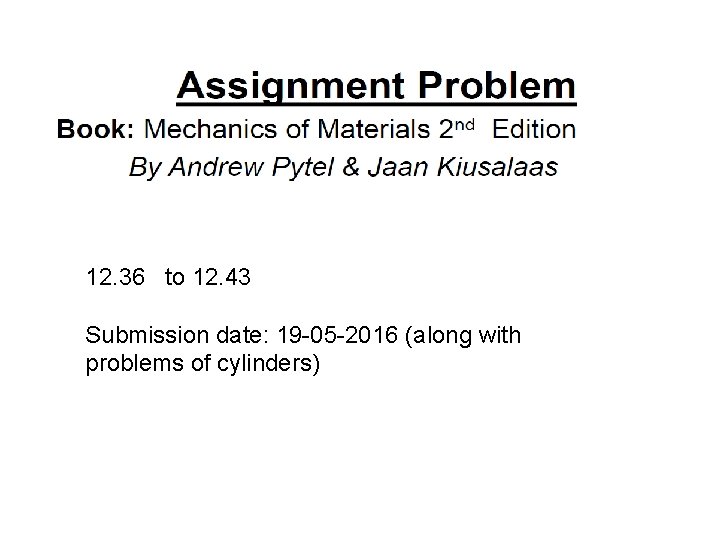
12. 36 to 12. 43 Submission date: 19 -05 -2016 (along with problems of cylinders)
- Slides: 22