
Structural Induction and Regular Expressions xkcd com208 CSE
- Slides: 29
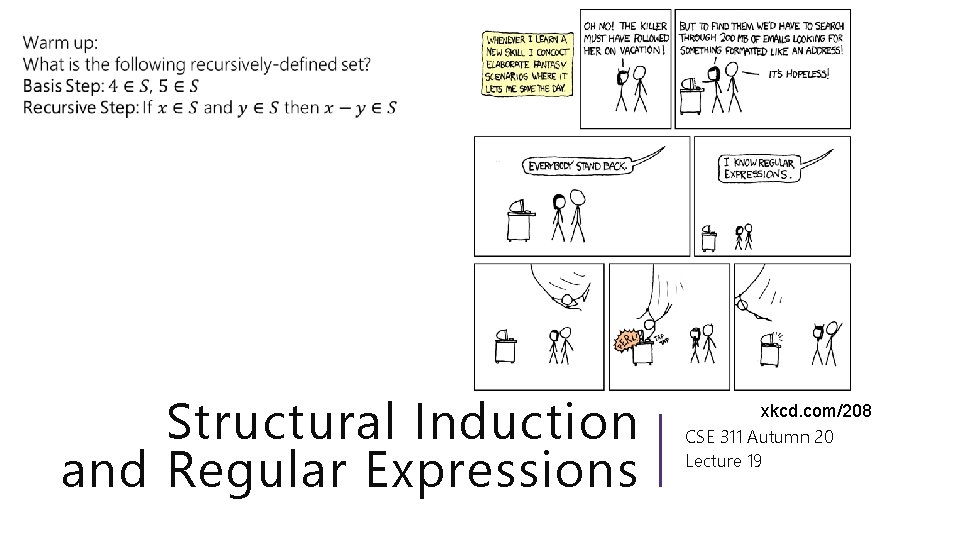
Structural Induction and Regular Expressions xkcd. com/208 CSE 311 Autumn 20 Lecture 19
Announcements We have a few students still working on the midterm (due to special circumstances or personal emergencies) Please don’t discuss the exam yet on Ed. We’ll release solutions to the midterm later this week. I’ll discuss more on Wednesday, once we have a slightly better sense of how long it took everyone from the responses to the last question. You’re welcome to talk to each other about it, just make sure whoever you’re talking to has finished. HW 6 comes out tonight. It’s due right before Thanksgiving. Designed to be done by Monday if you need to travel. Yes, I’m aware of how unconvincing that statement may sound.
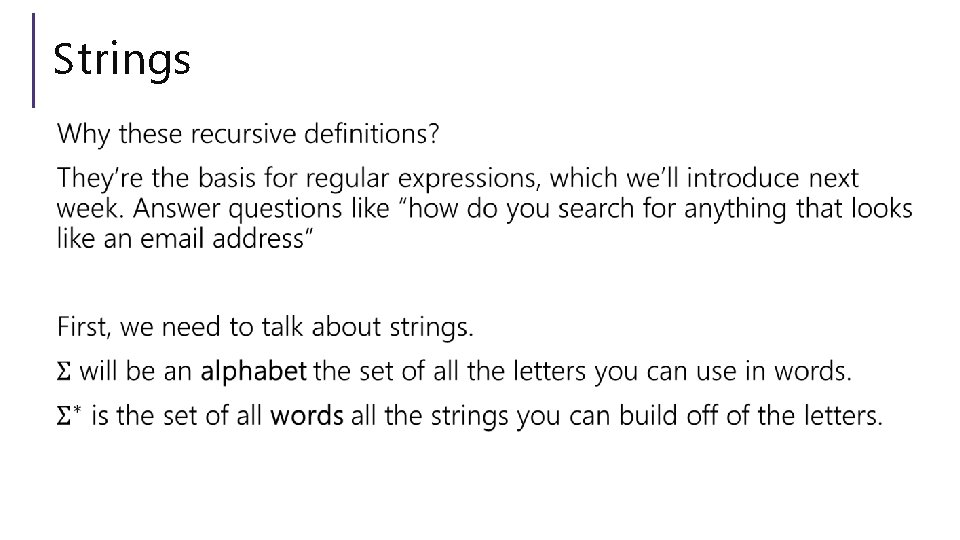
Strings
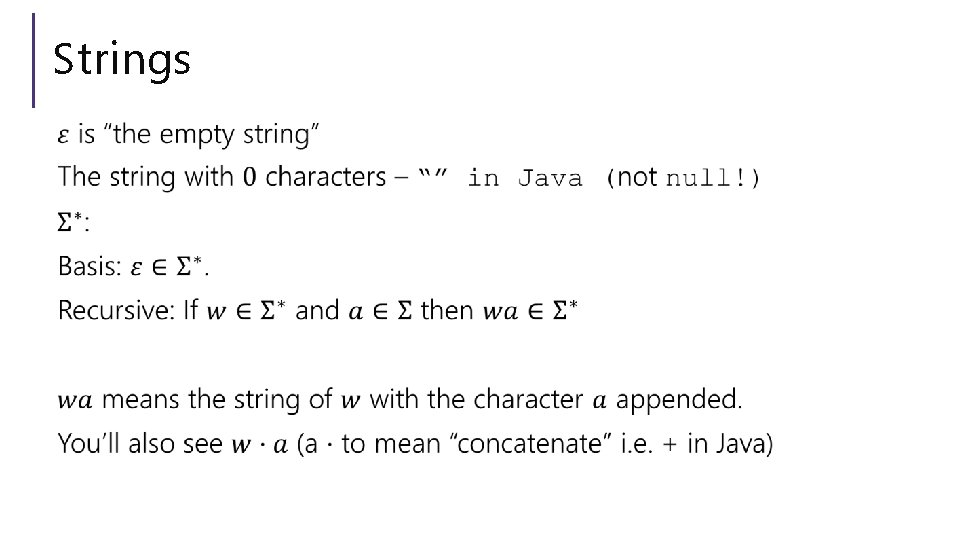
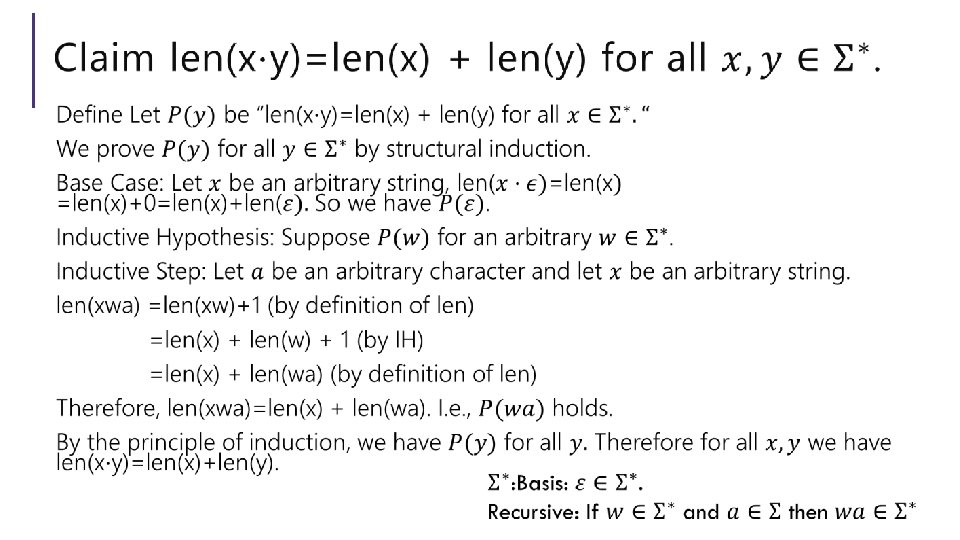
Strings
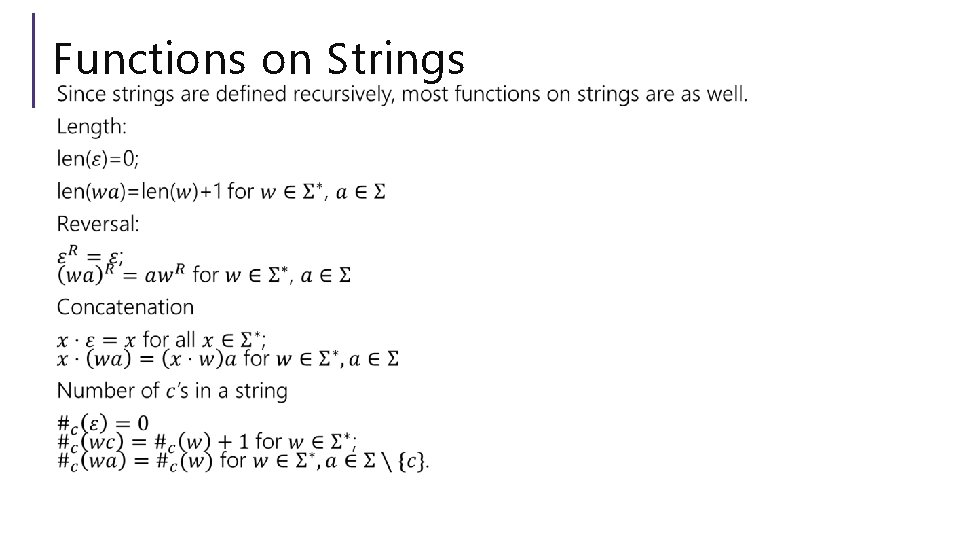
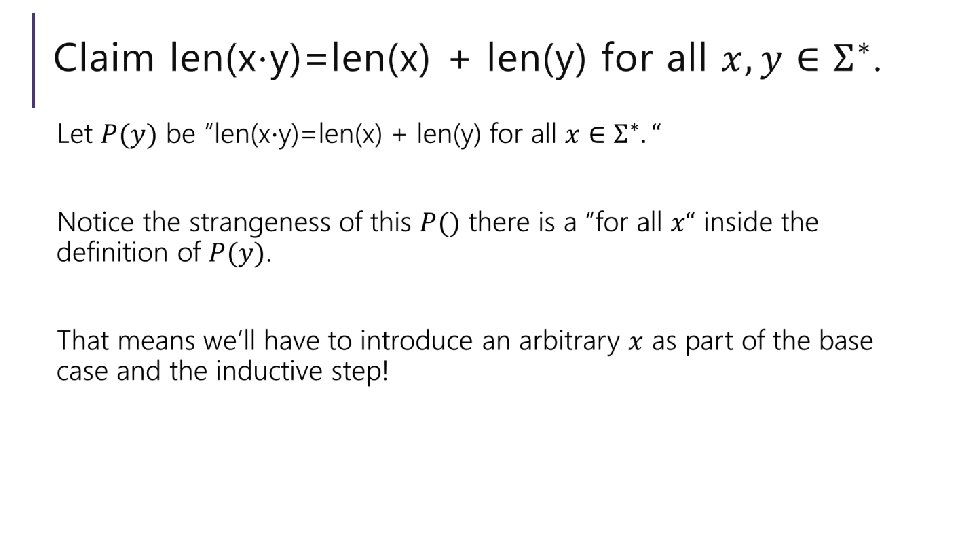
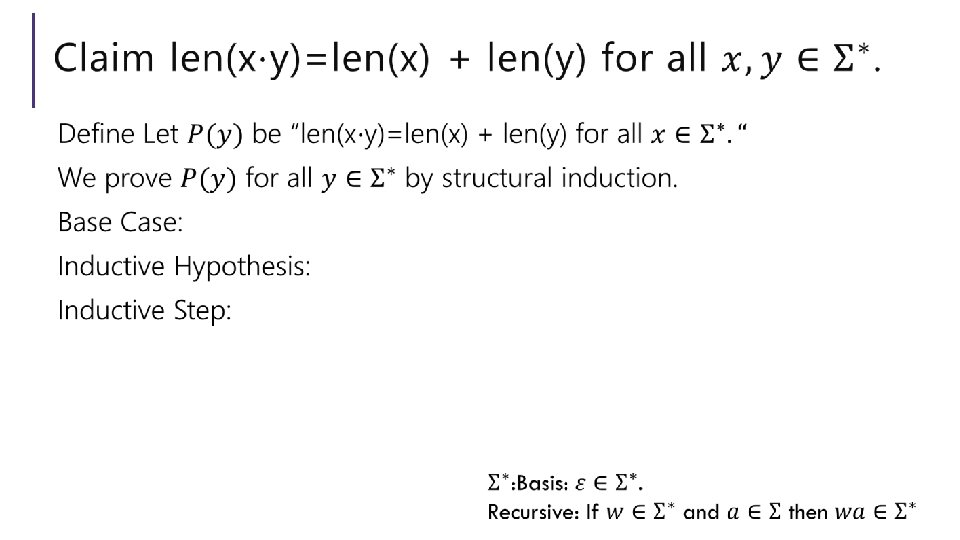
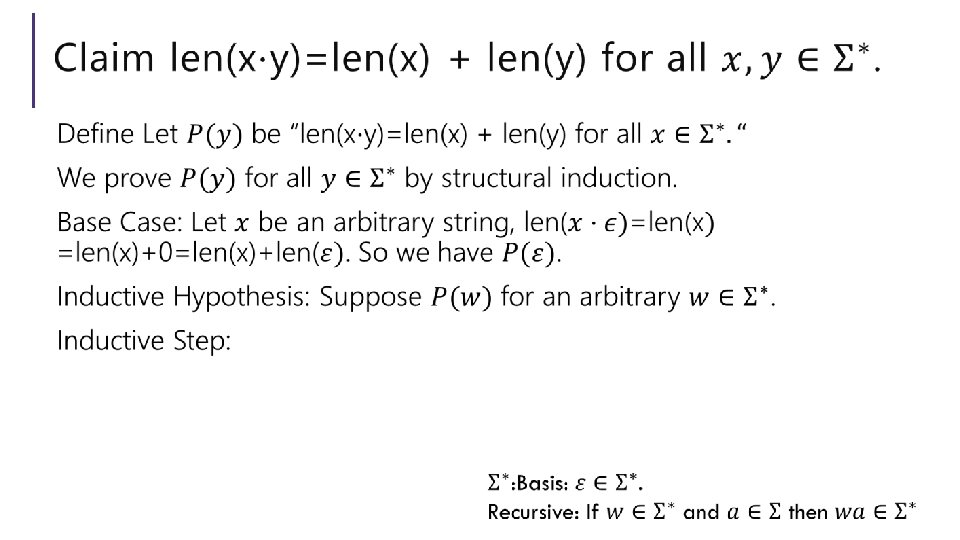
Functions on Strings
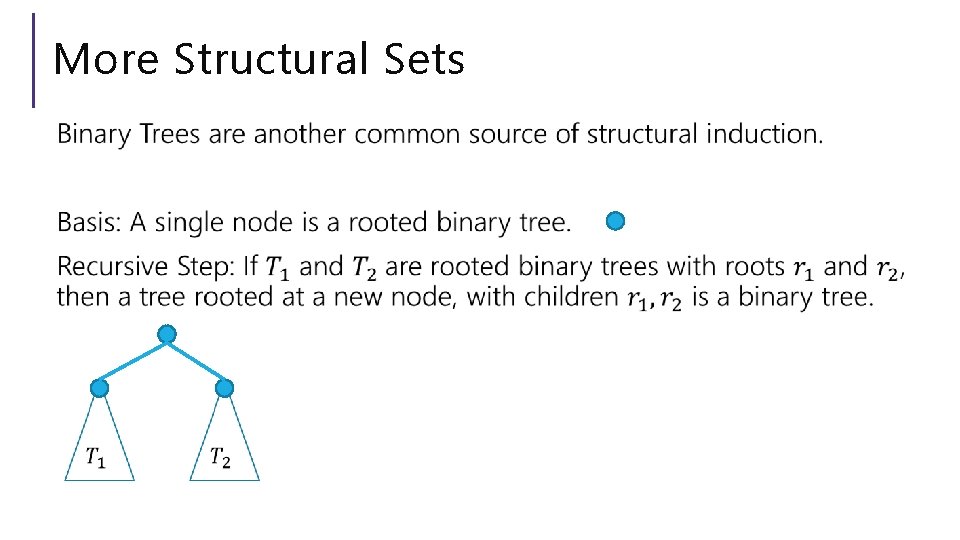
More Structural Sets
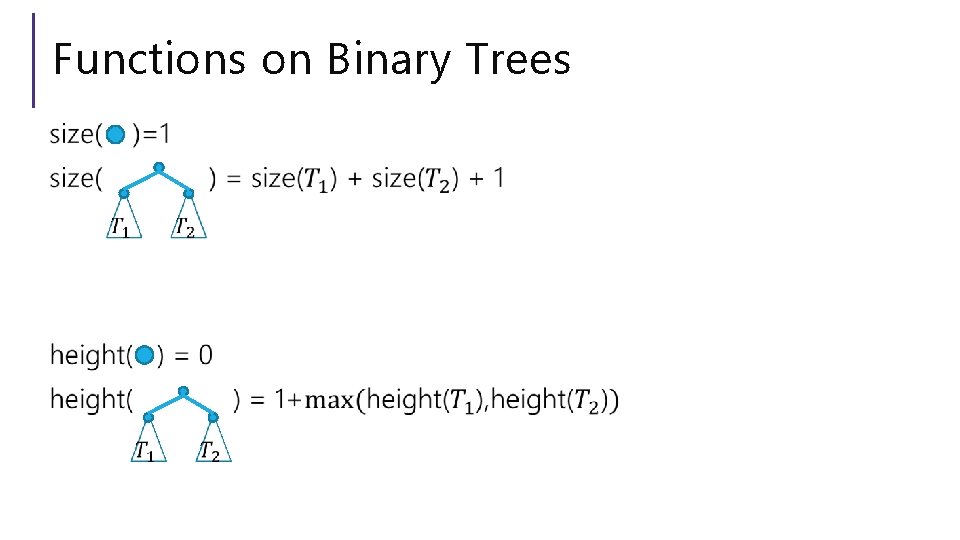
Functions on Binary Trees
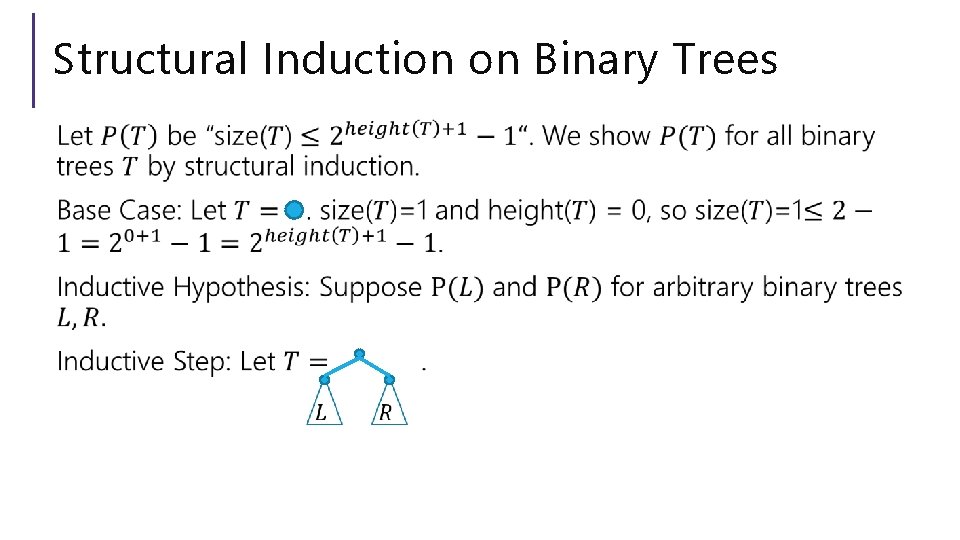
Structural Induction on Binary Trees
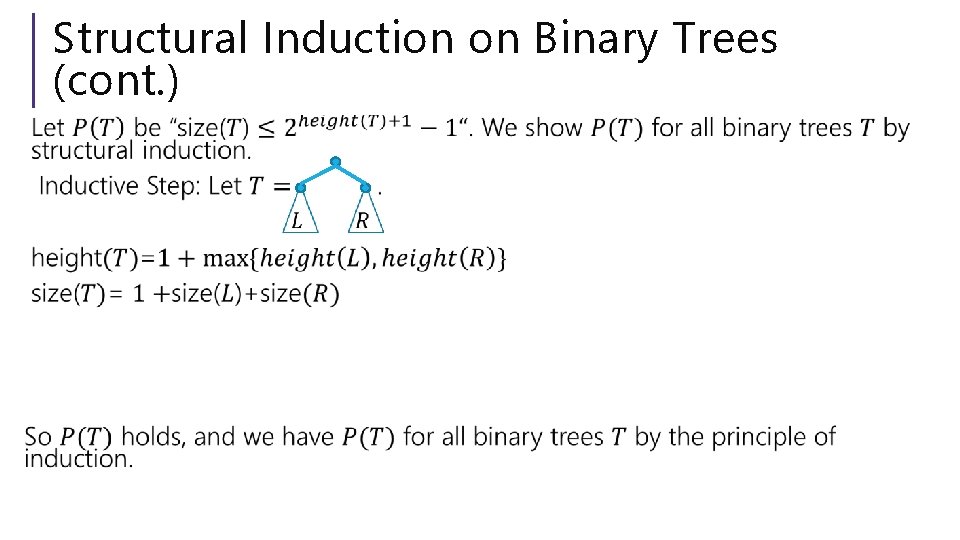
Structural Induction on Binary Trees (cont. )
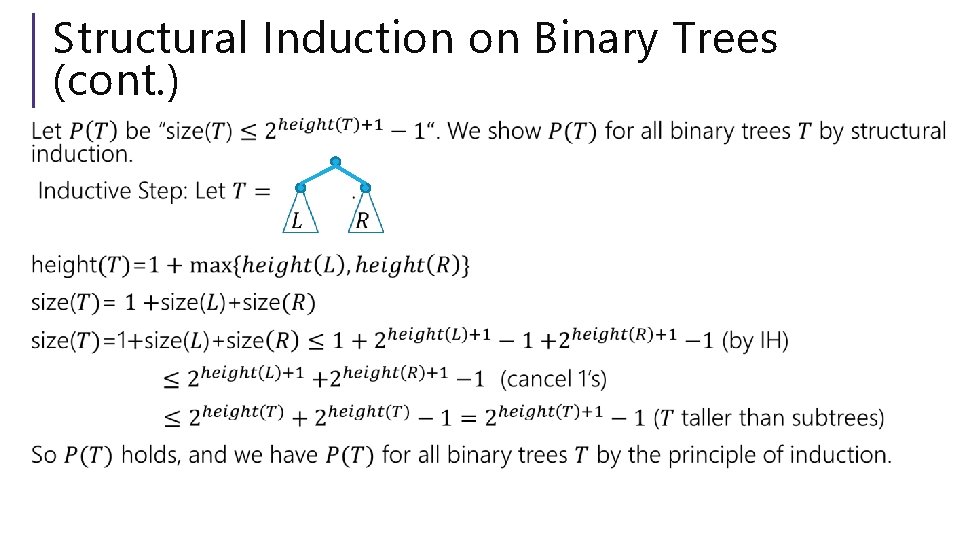
Structural Induction on Binary Trees (cont. )
Part 3 of the course!
Course Outline Symbolic Logic (training wheels; lectures 1 -8) Just make arguments in mechanical ways. Set Theory/Arithmetic (bike in your backyard; lectures 9 -19) Models of computation (biking in your neighborhood; lectures 19 -30) Still make and communicate rigorous arguments But now with objects you haven’t used before. - A first taste of how we can argue rigorously about computers. This week: regular expressions and context free grammars – understand these “simpler computers” After Thanksgiving: what these simple computers can do Last week of class: what simple computers (and normal ones) can’t do.
Regular Expressions
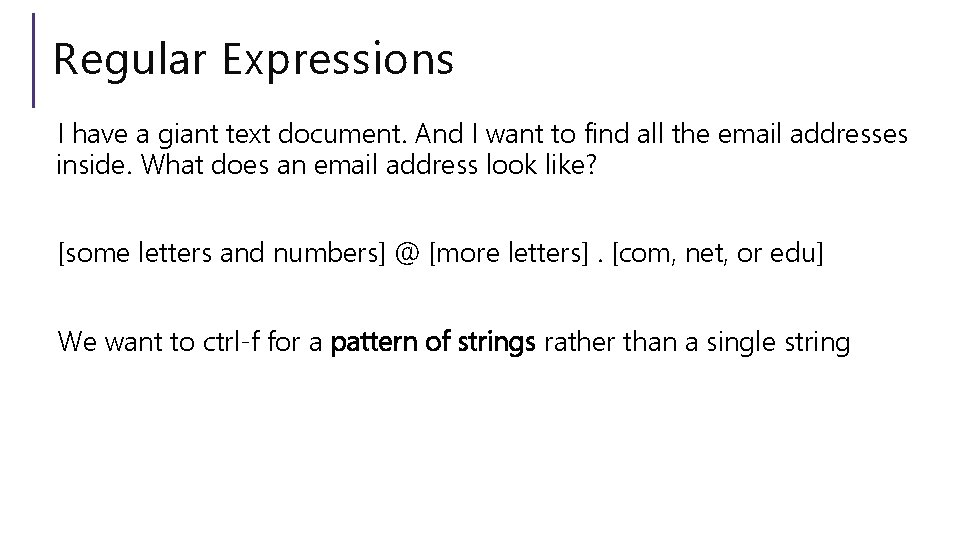
Regular Expressions I have a giant text document. And I want to find all the email addresses inside. What does an email address look like? [some letters and numbers] @ [more letters]. [com, net, or edu] We want to ctrl-f for a pattern of strings rather than a single string
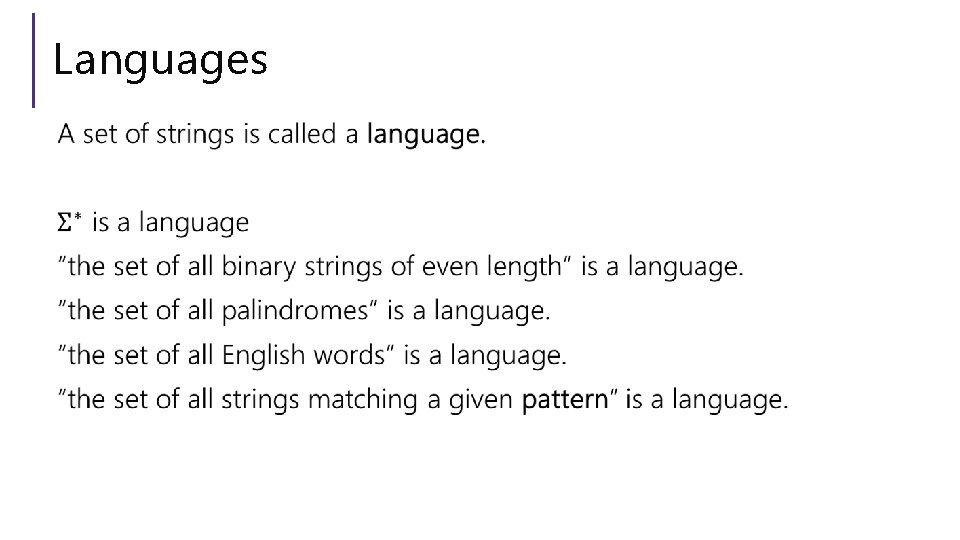
Languages
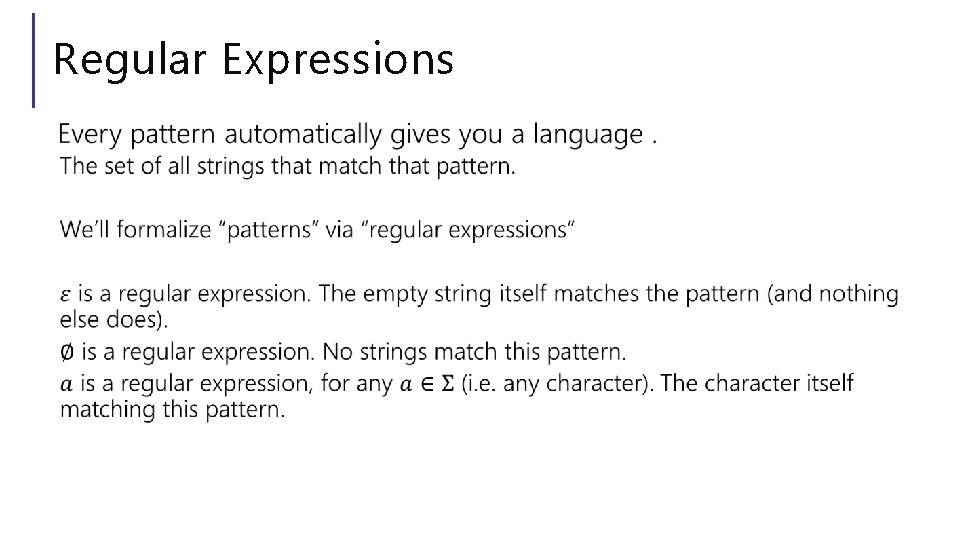
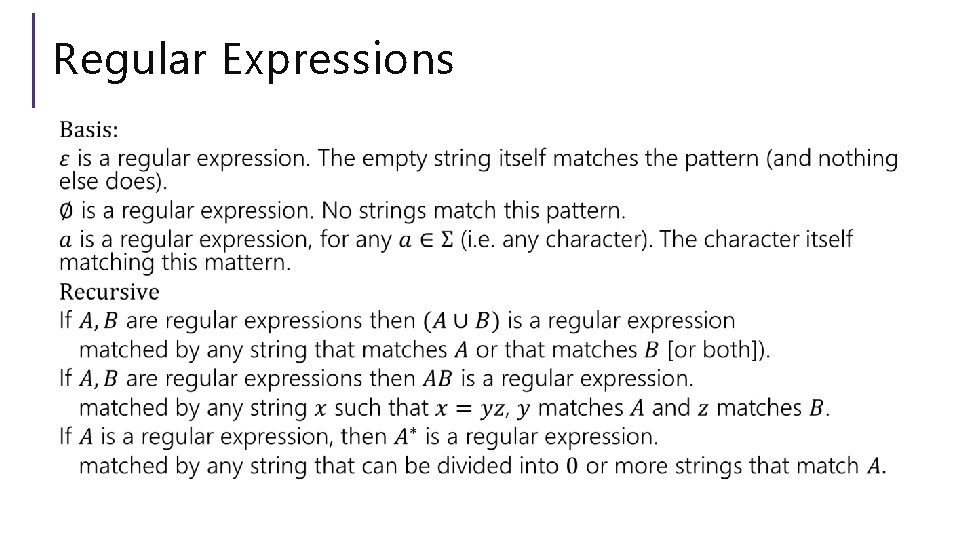
Regular Expressions
Regular Expressions
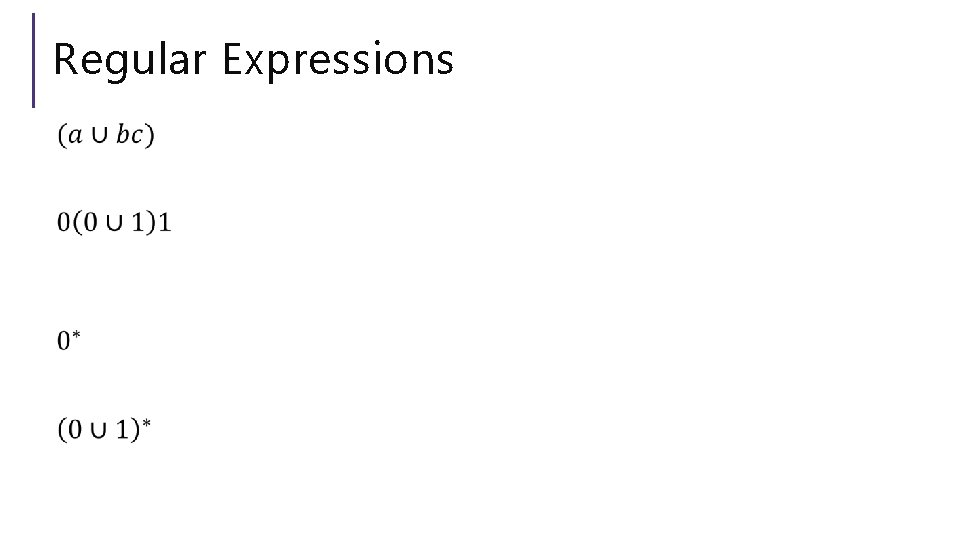
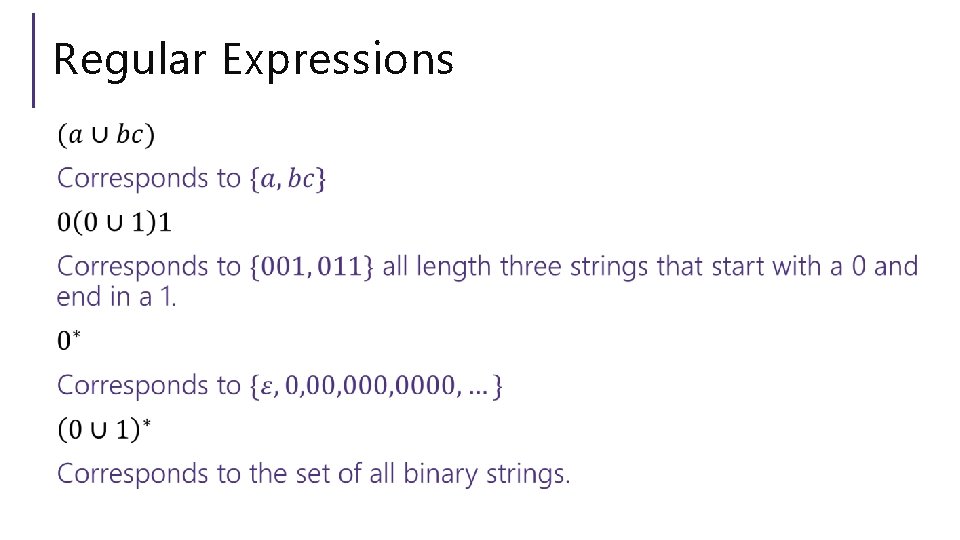
Regular Expressions
Regular Expressions
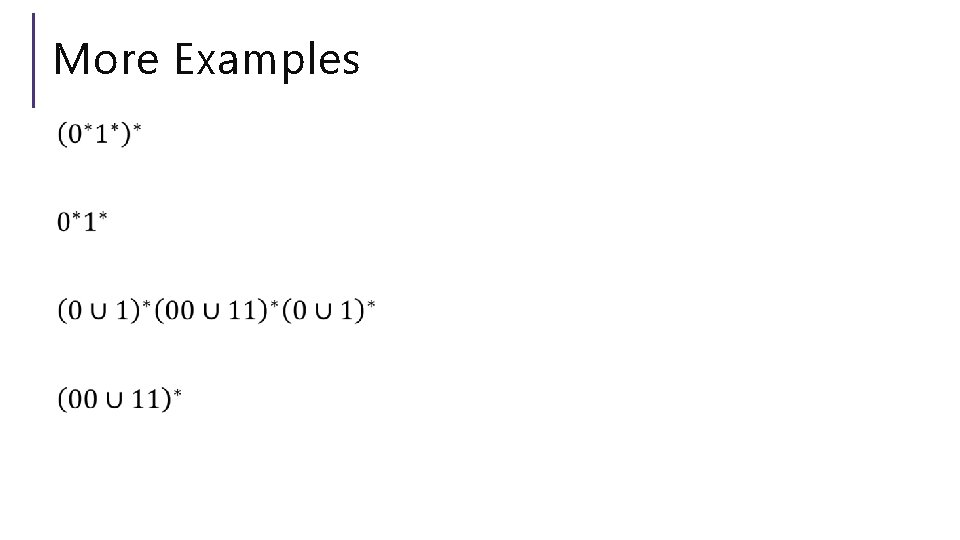
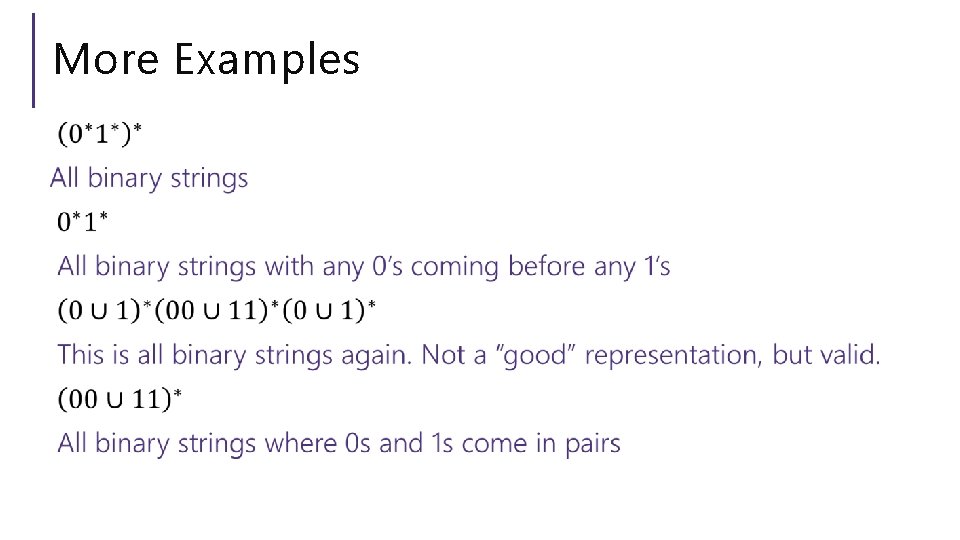
More Examples
More Examples
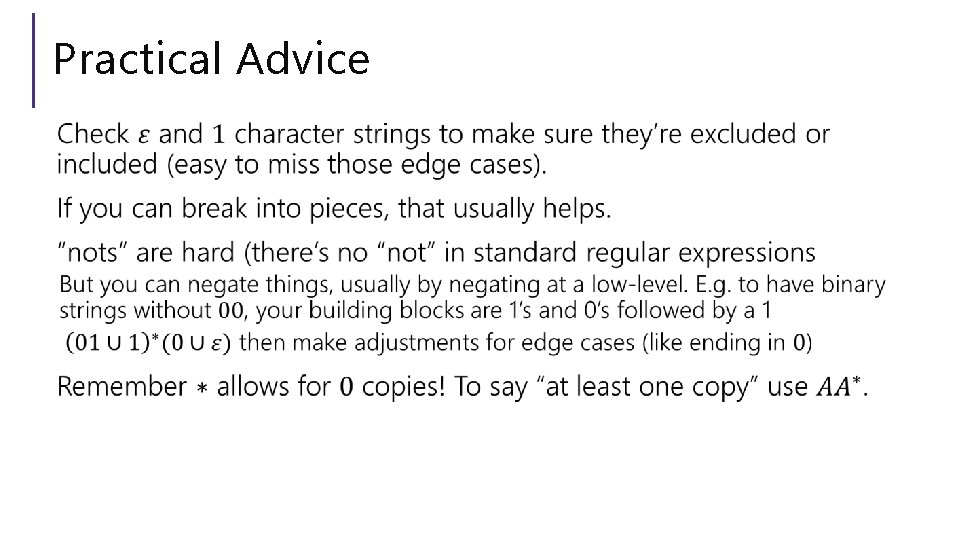
Practical Advice
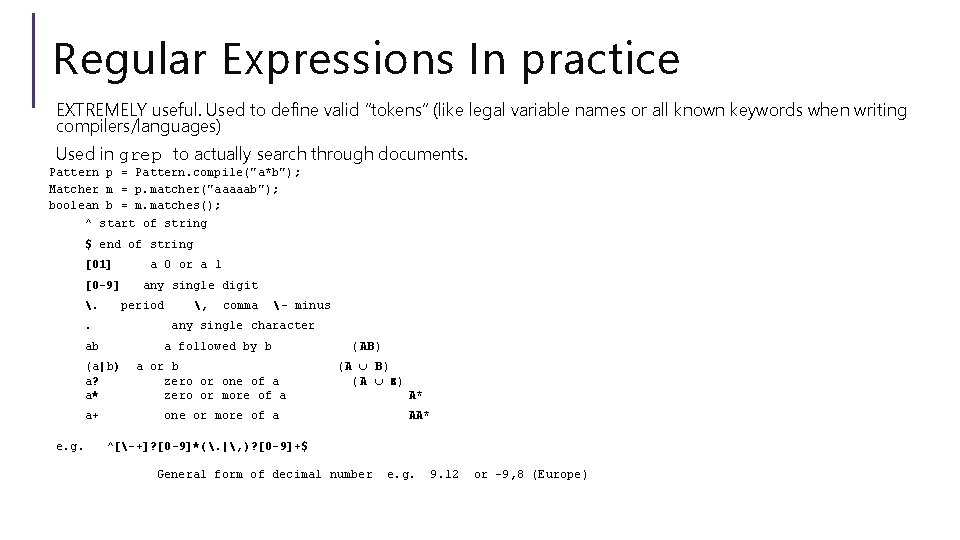
Regular Expressions In practice EXTREMELY useful. Used to define valid “tokens” (like legal variable names or all known keywords when writing compilers/languages) Used in grep to actually search through documents. Pattern p = Pattern. compile("a*b"); Matcher m = p. matcher("aaaaab"); boolean b = m. matches(); ^ start of string $ end of string [01] a 0 or a 1 [0 -9] . any single digit period . - minus a followed by b (a|b) a? a* e. g. comma any single character ab a+ , a or b zero or one of a zero or more of a ( AB) (A B) ( A ) one or more of a A* AA* ^[-+]? [0 -9]*(. |, )? [0 -9]+$ General form of decimal number e. g. 9. 12 or -9, 8 (Europe)
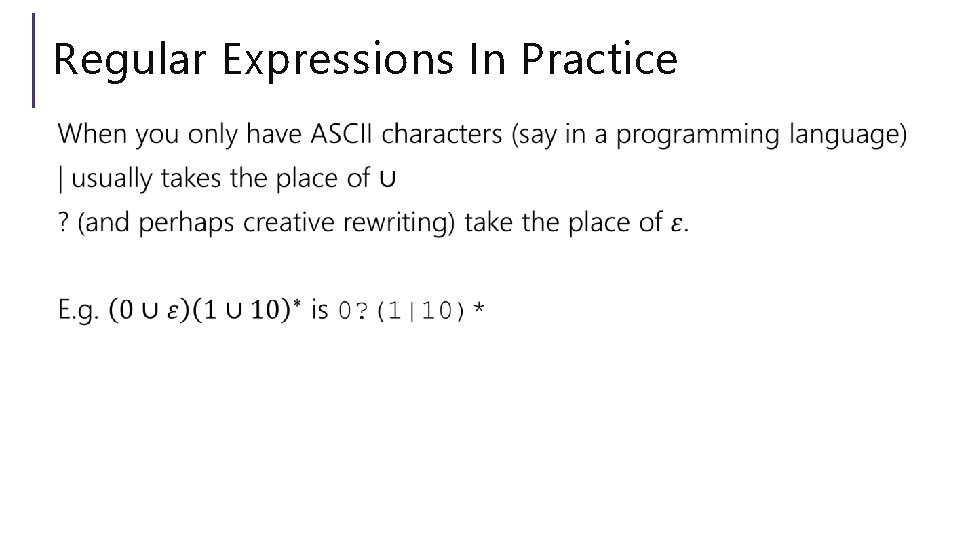
Regular Expressions In Practice
A Final Vocabulary Note Not everything can be represented as a regular expression. E. g. “the set of all palindromes” is not the language of any regular expression. Some programming languages define features in their “regexes” that can’t be represented by our definition of regular expressions. Things like “match this pattern, then have exactly that substring appear later. So before you say “ah, you can’t do that with regular expressions, I learned it in 311!” you should make sure you know whether your language is calling a more powerful object “regular expressions”. But the more “fancy features” beyond regular expressions you use, the slower the checking algorithms run, (and the harder it is to force the expressions to fit into the framework) so this is still very useful theory.