
Structural Foundations for Continuous Improvement Leaders of Learners
- Slides: 50
Structural Foundations for Continuous Improvement Leaders of Learners April 2016
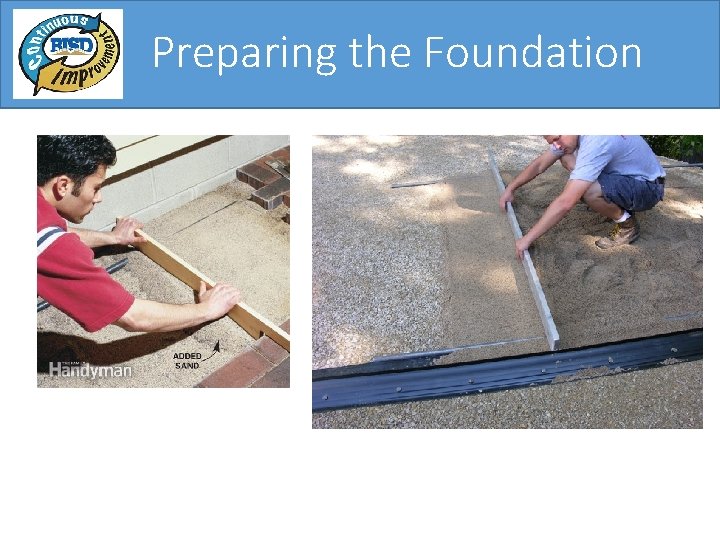
Preparing the Foundation
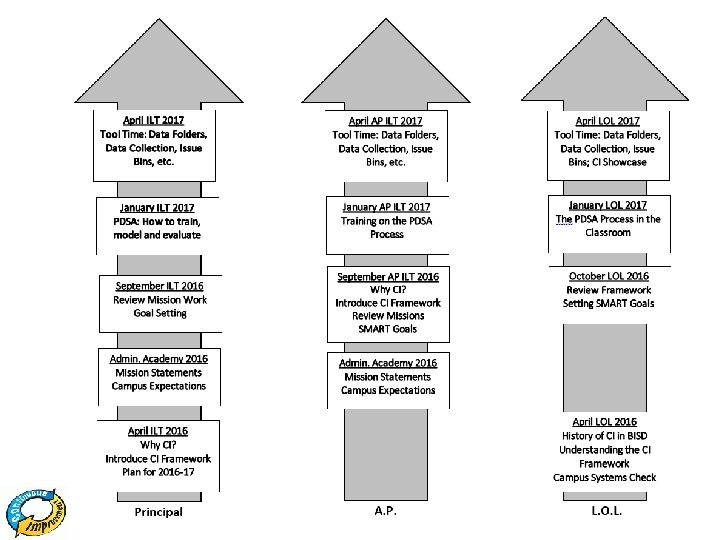
Desired outcomes • Review the historical context of continuous improvement (CI) in Birdville • Appreciate the rationale for use of CI practices • Define what CI is and identify our beliefs surrounding CI • Understand the various components of the CI framework and visualize how it relates to our work • Know the training plan for 2015 -16 and the district expectations for campus implementation
Extending our learning • Participate as both a learner and a trainer as campus teams will be expected to share this information with staff beginning in the fall • Visit Today’s Meet using the URL or QR code on the back of your handout to provide feedback and pose questions
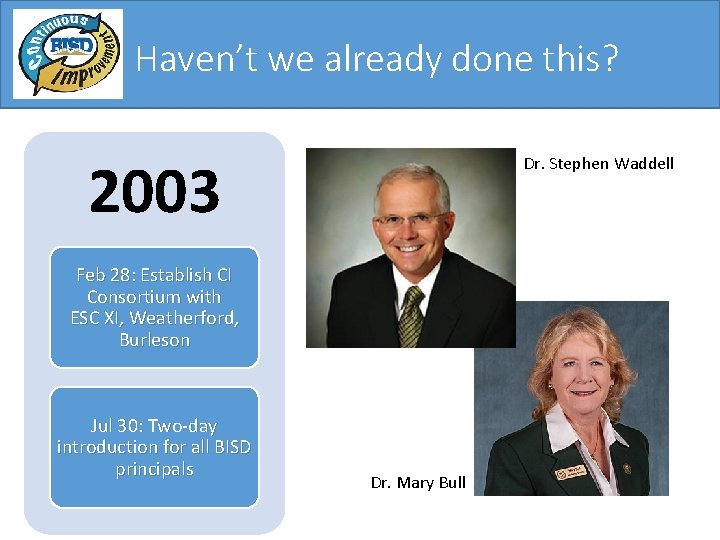
Haven’t we already done this? 2003 Dr. Stephen Waddell Feb 28: Establish CI Consortium with ESC XI, Weatherford, Burleson Jul 30: Two-day introduction for all BISD principals Dr. Mary Bull
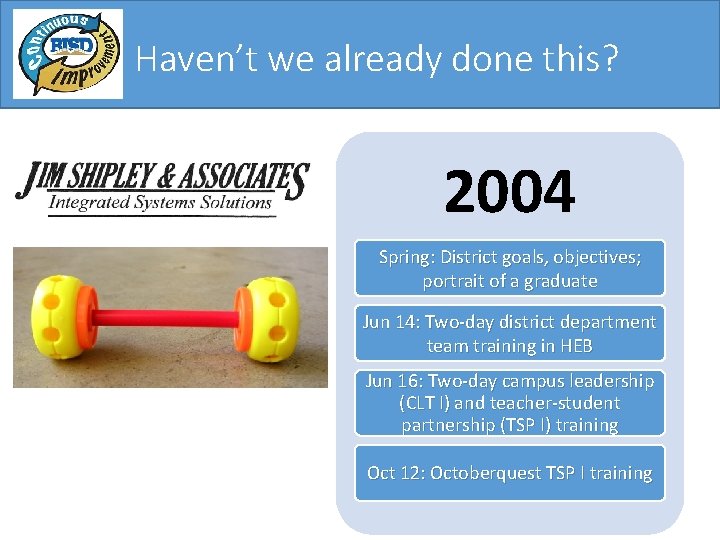
Haven’t we already done this? 2004 Spring: District goals, objectives; portrait of a graduate Jun 14: Two-day district department team training in HEB Jun 16: Two-day campus leadership (CLT I) and teacher-student partnership (TSP I) training Oct 12: Octoberquest TSP I training
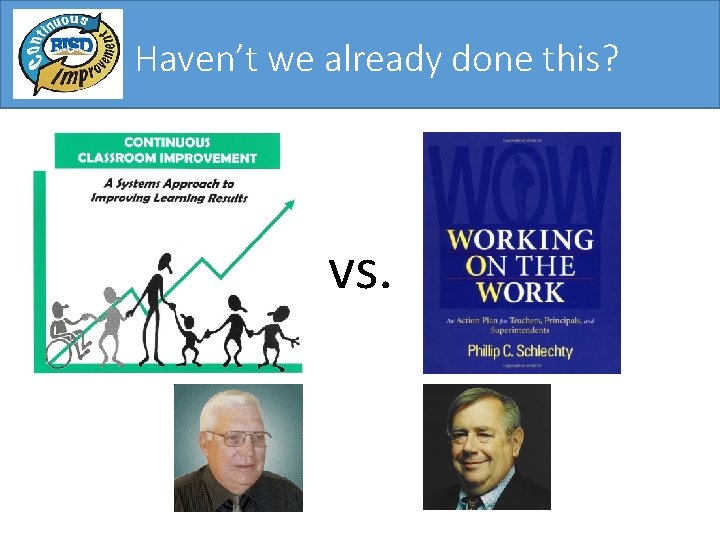
Haven’t we already done this? vs.
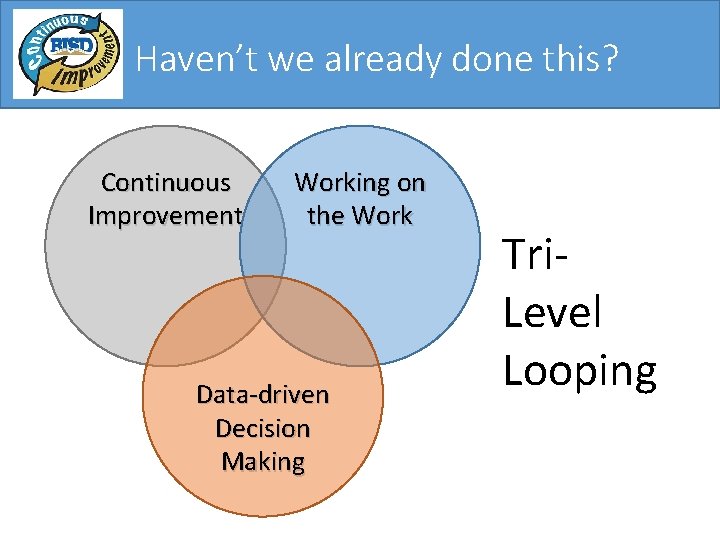
Haven’t we already done this? Continuous Improvement Working on the Work Data-driven Decision Making Tri. Level Looping
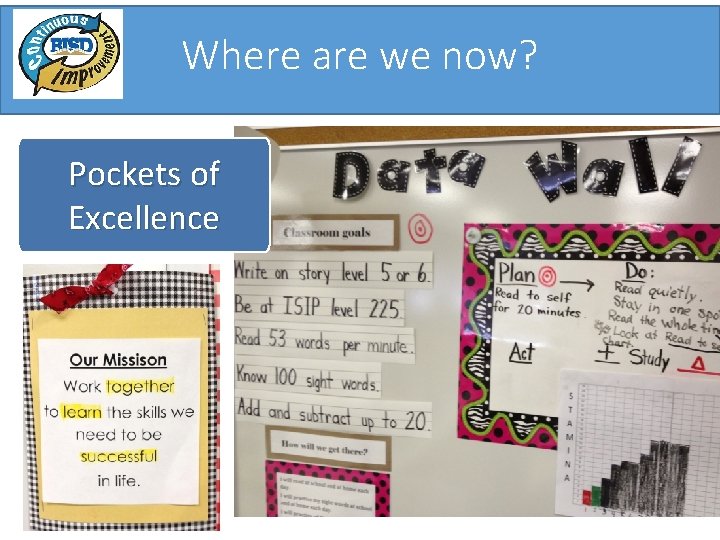
Where are we now? Pockets of Excellence
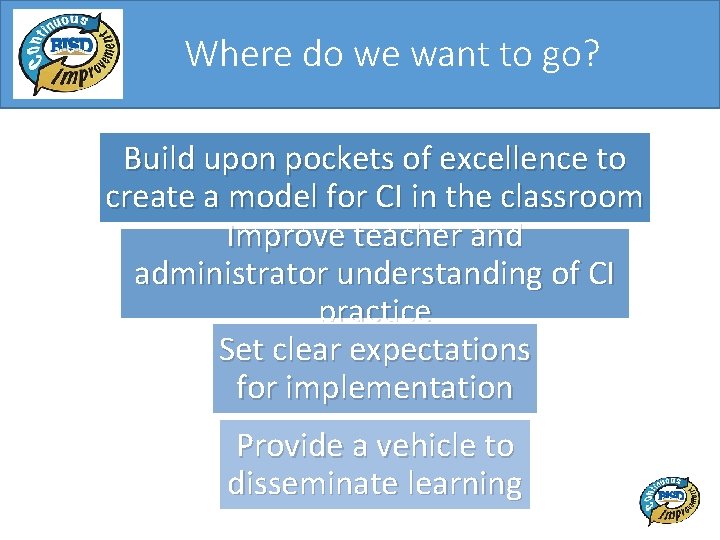
Where do we want to go? Build upon pockets of excellence to create a model for CI in the classroom Improve teacher and administrator understanding of CI practice Set clear expectations for implementation Provide a vehicle to disseminate learning
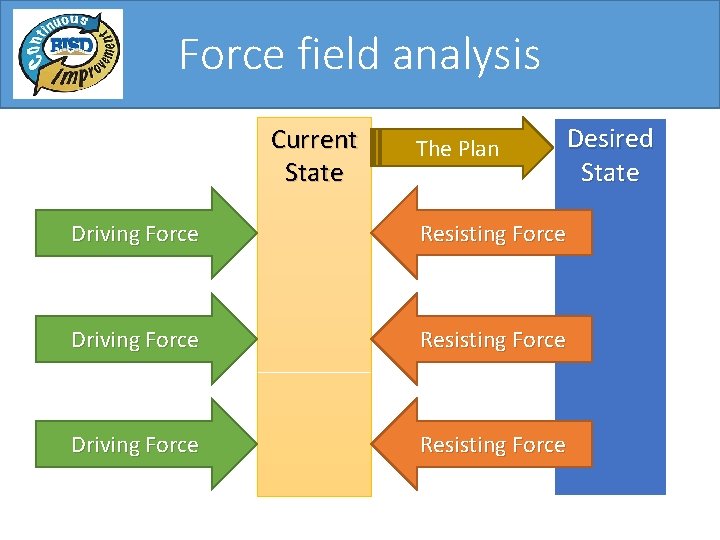
Force field analysis Current State The Plan Desired State Driving Force Resisting Force
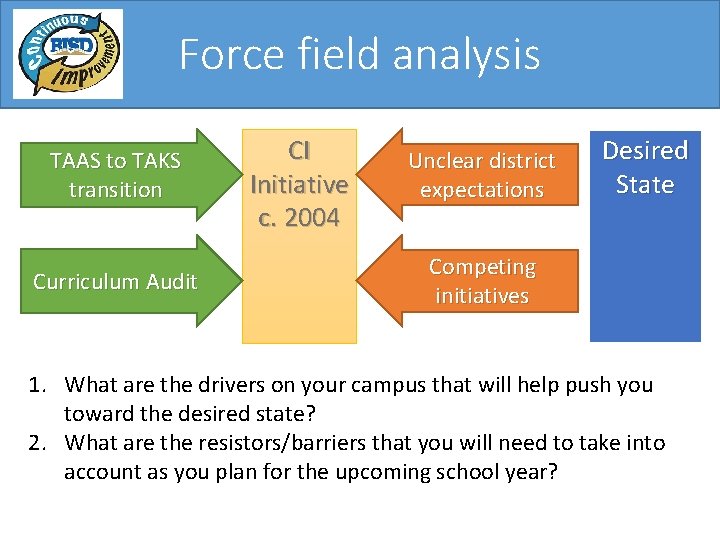
Force field analysis TAAS to TAKS transition Curriculum Audit CI Initiative c. 2004 Unclear district expectations Desired State Competing initiatives 1. What are the drivers on your campus that will help push you toward the desired state? 2. What are the resistors/barriers that you will need to take into account as you plan for the upcoming school year?
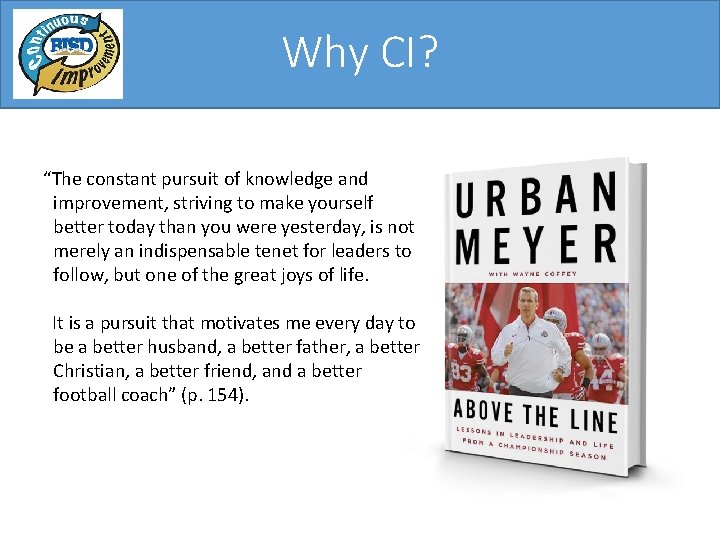
Why CI? “The constant pursuit of knowledge and improvement, striving to make yourself better today than you were yesterday, is not merely an indispensable tenet for leaders to follow, but one of the great joys of life. It is a pursuit that motivates me every day to be a better husband, a better father, a better Christian, a better friend, and a better football coach” (p. 154).
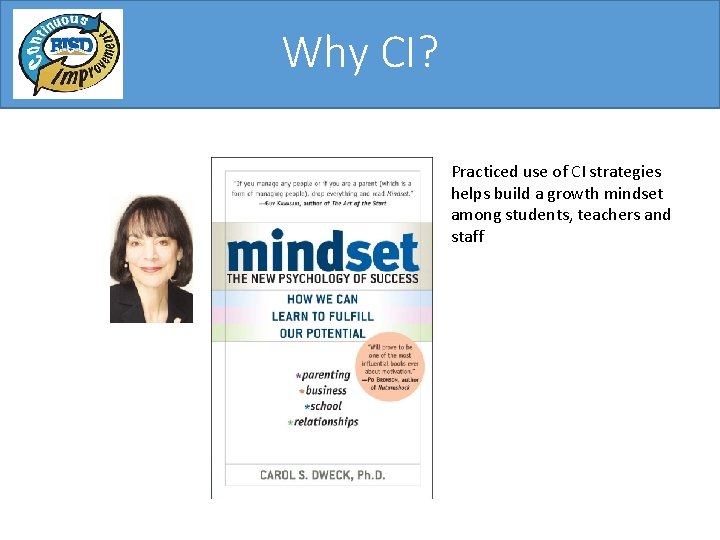
Why CI? Practiced use of CI strategies helps build a growth mindset among students, teachers and staff
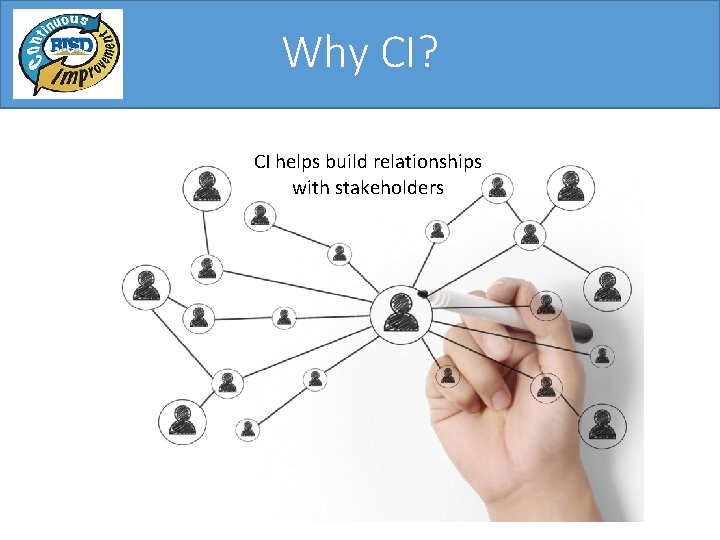
Why CI? CI helps build relationships with stakeholders
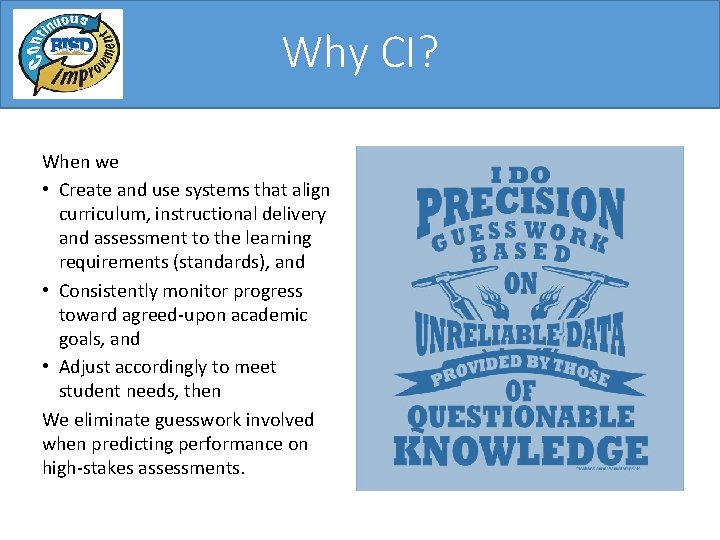
Why CI? When we • Create and use systems that align curriculum, instructional delivery and assessment to the learning requirements (standards), and • Consistently monitor progress toward agreed-upon academic goals, and • Adjust accordingly to meet student needs, then We eliminate guesswork involved when predicting performance on high-stakes assessments.
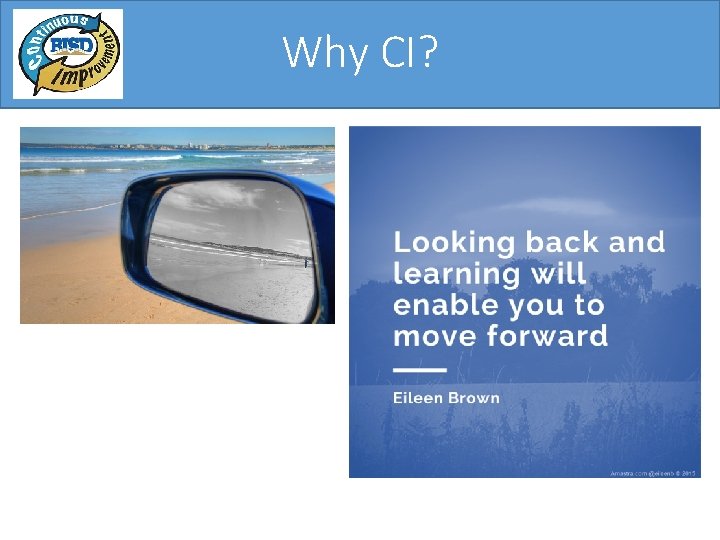
Why CI?
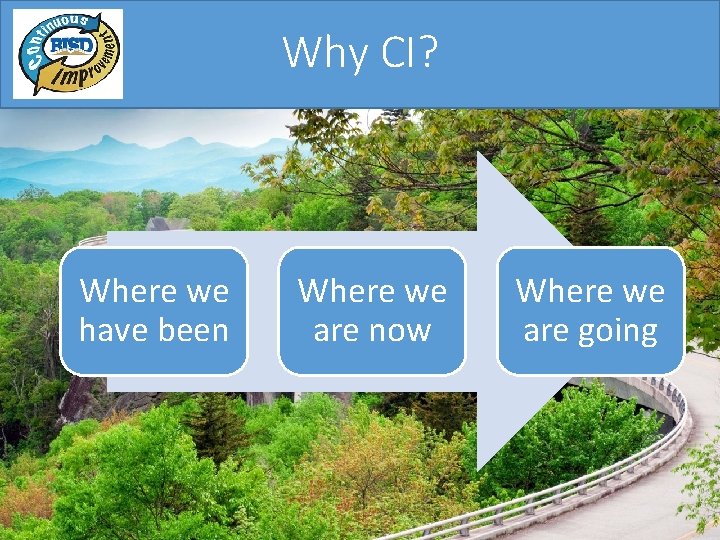
Why CI? Where we have been Where we are now Where we are going
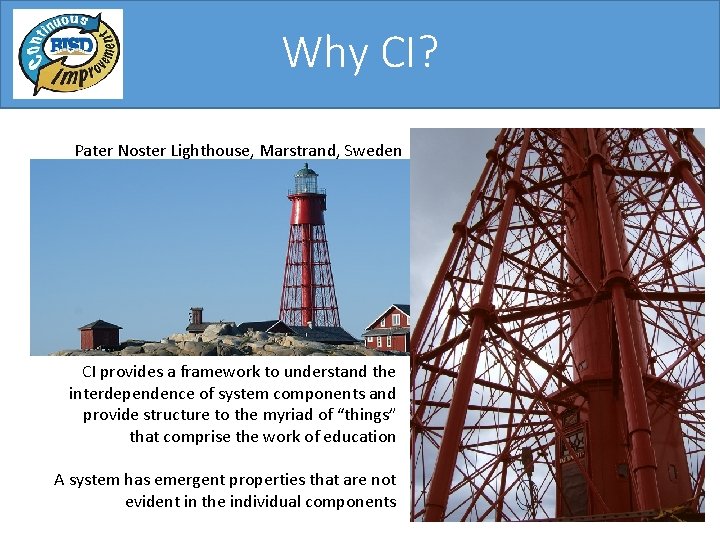
Why CI? Pater Noster Lighthouse, Marstrand, Sweden CI provides a framework to understand the interdependence of system components and provide structure to the myriad of “things” that comprise the work of education A system has emergent properties that are not evident in the individual components
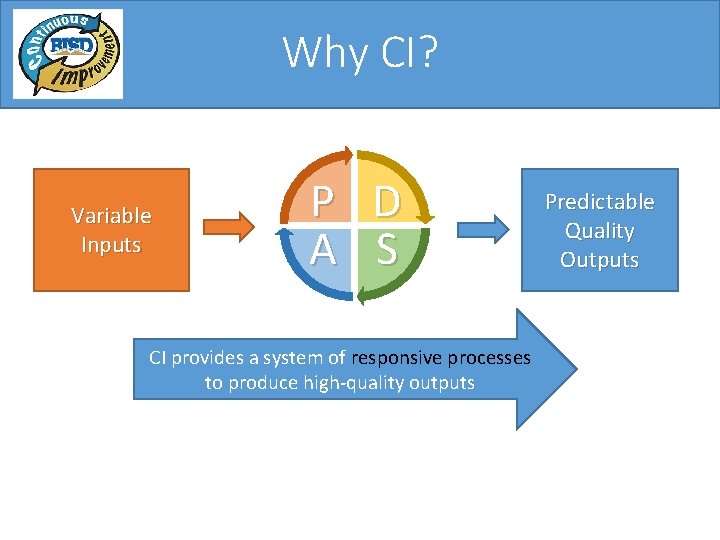
Why CI? Variable Inputs P D A S CI provides a system of responsive processes to produce high-quality outputs Predictable Quality Outputs
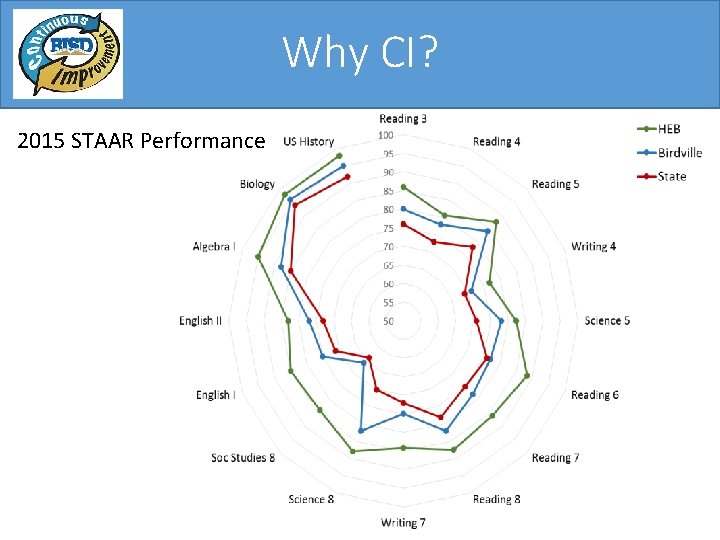
Why CI? 2015 STAAR Performance
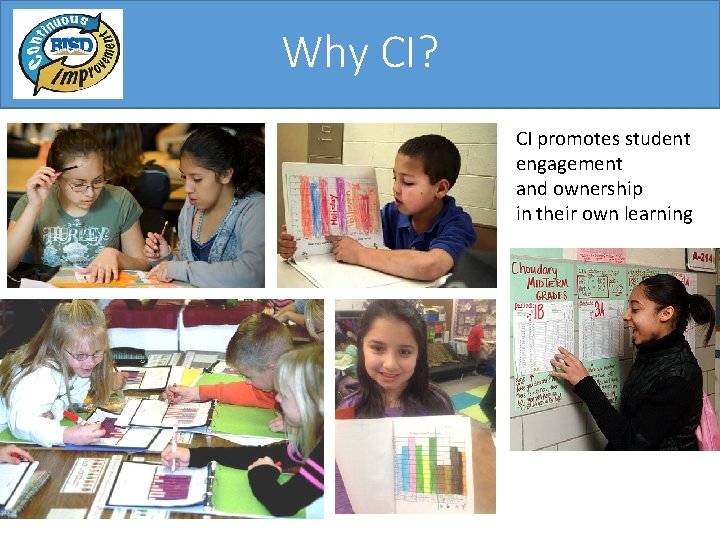
Why CI? CI promotes student engagement and ownership in their own learning
Personal testimony • How has use of CI in your classroom changed the way you teach and the way students learn? • How did use of CI evolve since you began using it? • What are your beliefs about CI?
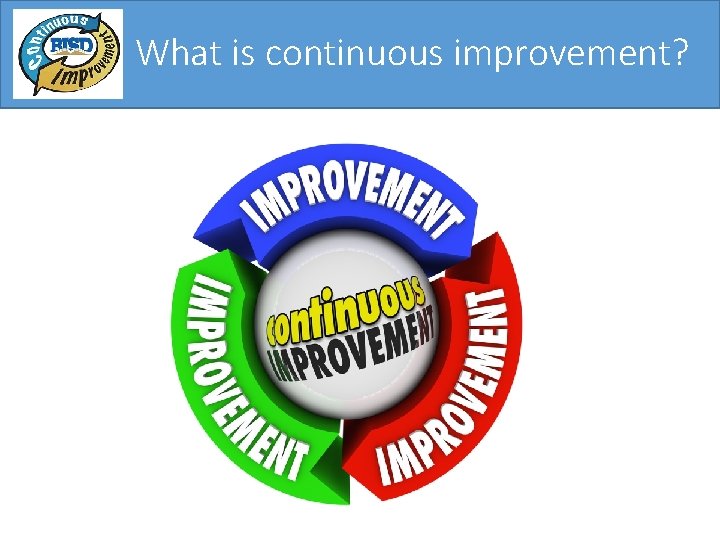
What is continuous improvement?
What are your beliefs about CI? • For 2 minutes write down your thoughts without sharing or talking about them. • Then we will share with each other what we wrote down.
What is a conceptual framework and why would we need one? Concept - an idea of something formed by mentally combining all its characteristics or particulars; a construct. Framework - a frame or structure composed of parts fitted and joined together.
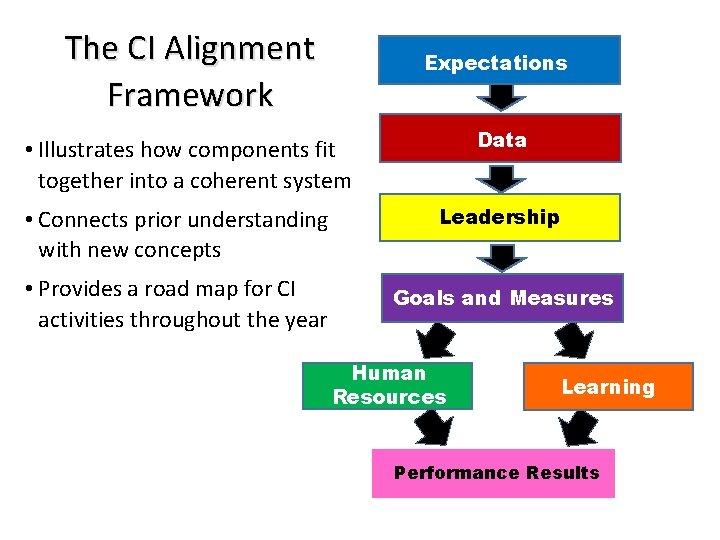
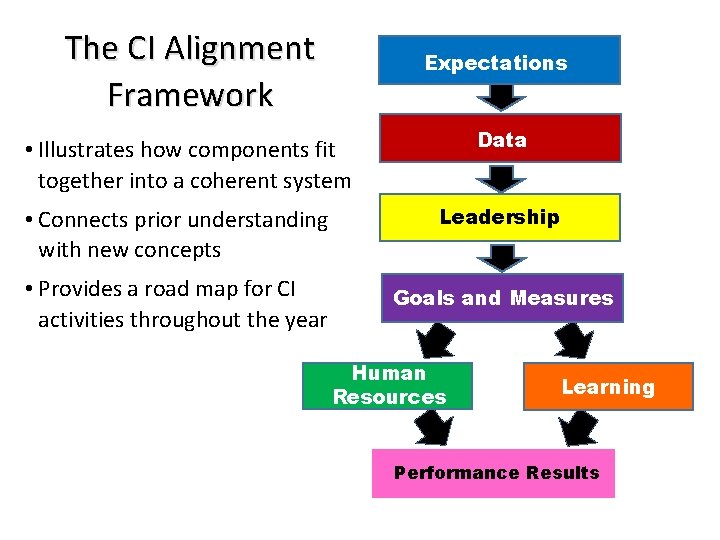
The CI Alignment Framework Expectations Data • Illustrates how components fit together into a coherent system • Connects prior understanding with new concepts Leadership • Provides a road map for CI activities throughout the year Goals and Measures Human Resources Learning Performance Results
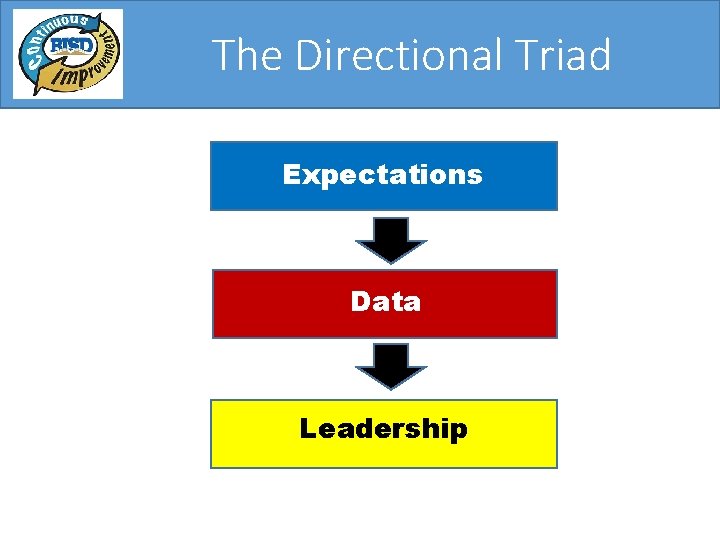
The Directional Triad Expectations Data Leadership
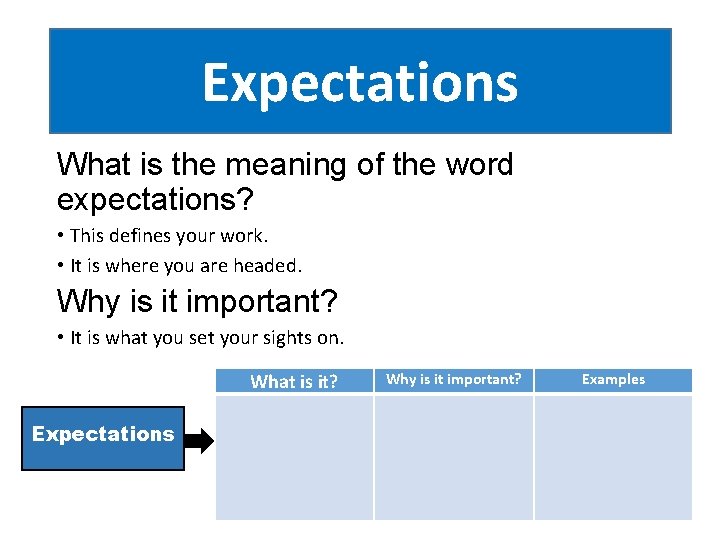
Expectations What is the meaning of the word expectations? • This defines your work. • It is where you are headed. Why is it important? • It is what you set your sights on. Why is it important? What is it? Expectations Examples
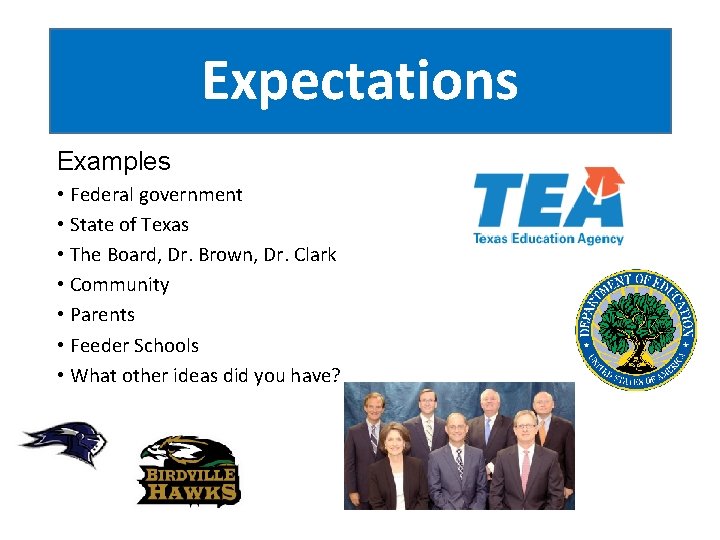
Expectations Examples • Federal government • State of Texas • The Board, Dr. Brown, Dr. Clark • Community • Parents • Feeder Schools • What other ideas did you have?
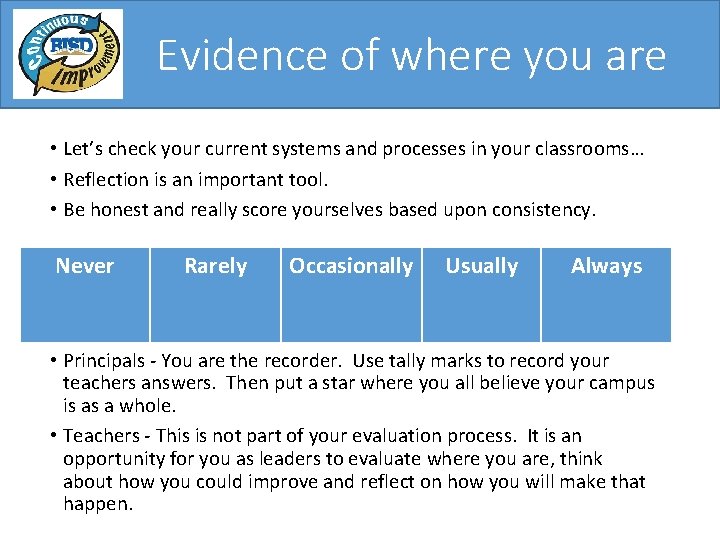
Evidence of where you are • Let’s check your current systems and processes in your classrooms… • Reflection is an important tool. • Be honest and really score yourselves based upon consistency. Never Rarely Occasionally Usually Always • Principals - You are the recorder. Use tally marks to record your teachers answers. Then put a star where you all believe your campus is as a whole. • Teachers - This is not part of your evaluation process. It is an opportunity for you as leaders to evaluate where you are, think about how you could improve and reflect on how you will make that happen.
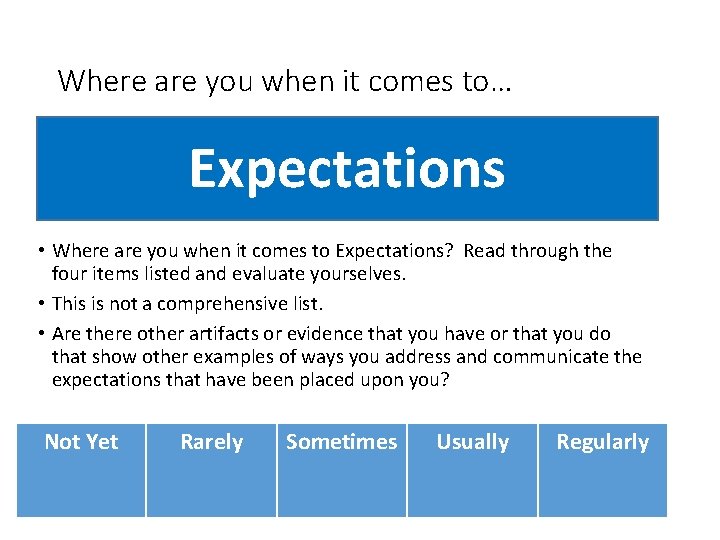
Where are you when it comes to… Expectations • Where are you when it comes to Expectations? Read through the four items listed and evaluate yourselves. • This is not a comprehensive list. • Are there other artifacts or evidence that you have or that you do that show other examples of ways you address and communicate the expectations that have been placed upon you? Not Yet Rarely Sometimes Usually Regularly
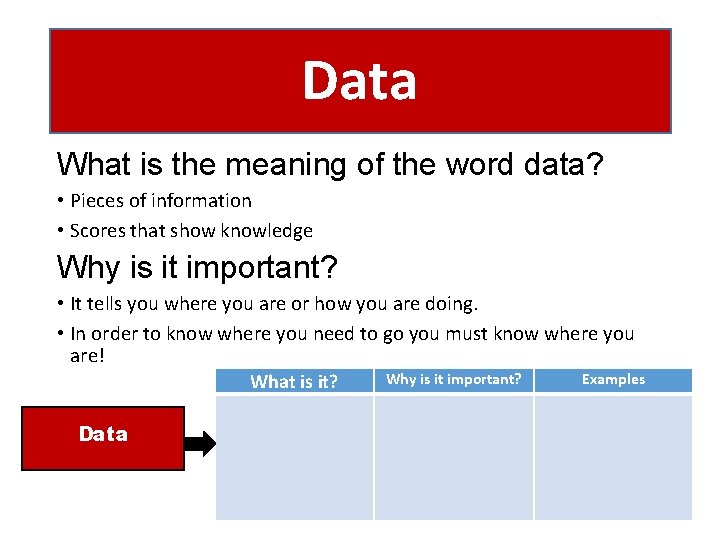
Data What is the meaning of the word data? • Pieces of information • Scores that show knowledge Why is it important? • It tells you where you are or how you are doing. • In order to know where you need to go you must know where you are! Why is it important? What is it? Data Examples
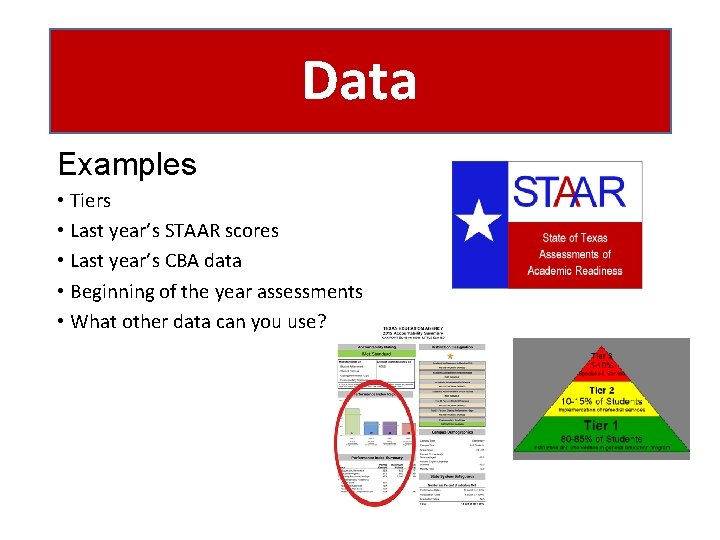
Data Examples • Tiers • Last year’s STAAR scores • Last year’s CBA data • Beginning of the year assessments • What other data can you use?
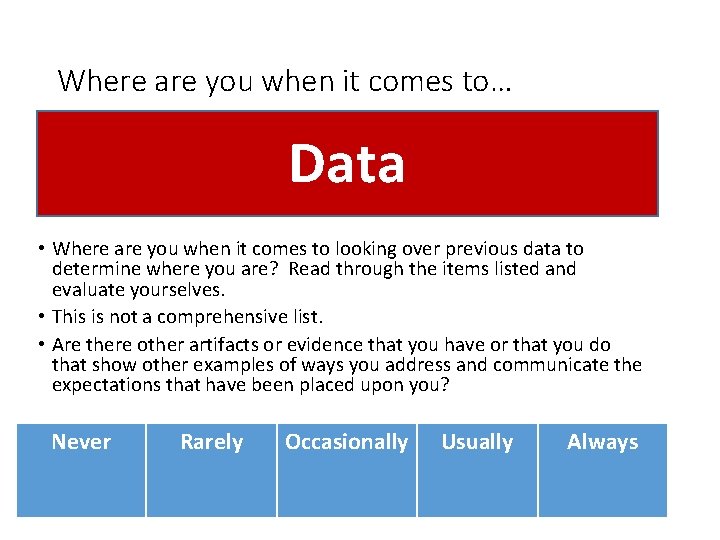
Where are you when it comes to… Data • Where are you when it comes to looking over previous data to determine where you are? Read through the items listed and evaluate yourselves. • This is not a comprehensive list. • Are there other artifacts or evidence that you have or that you do that show other examples of ways you address and communicate the expectations that have been placed upon you? Never Rarely Occasionally Usually Always
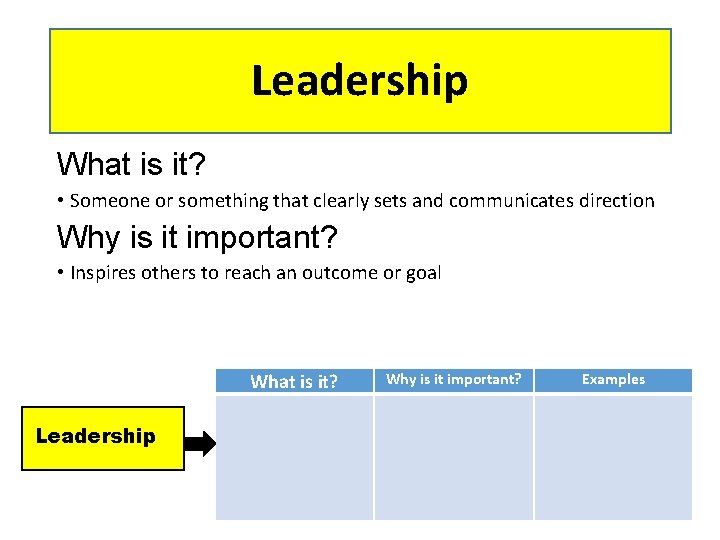
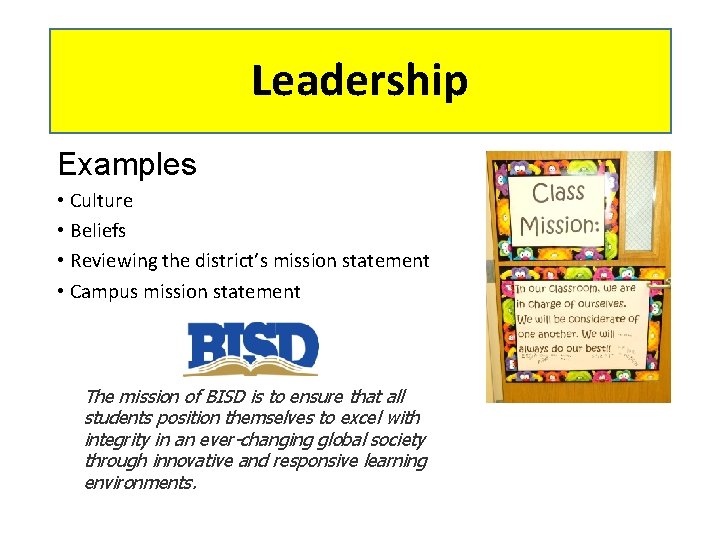
Leadership What is it? • Someone or something that clearly sets and communicates direction Why is it important? • Inspires others to reach an outcome or goal Why is it important? What is it? Leadership Examples
Leadership Examples • Culture • Beliefs • Reviewing the district’s mission statement • Campus mission statement The mission of BISD is to ensure that all students position themselves to excel with integrity in an ever-changing global society through innovative and responsive learning environments.
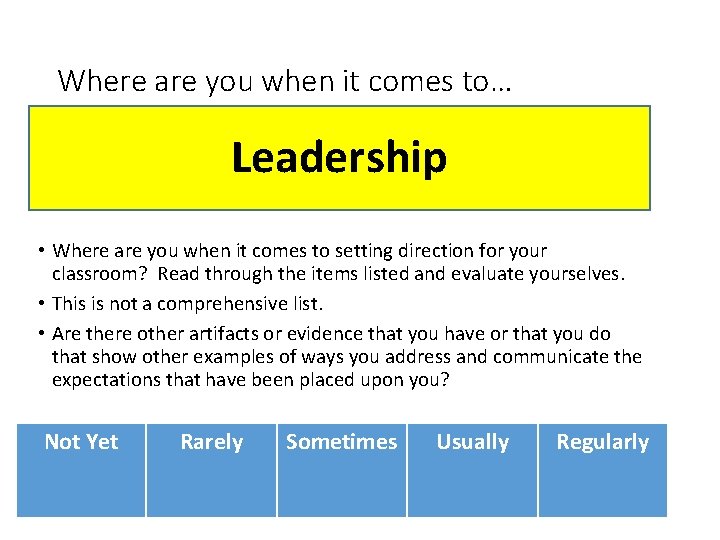
Where are you when it comes to… Leadership • Where are you when it comes to setting direction for your classroom? Read through the items listed and evaluate yourselves. • This is not a comprehensive list. • Are there other artifacts or evidence that you have or that you do that show other examples of ways you address and communicate the expectations that have been placed upon you? Not Yet Rarely Sometimes Usually Regularly
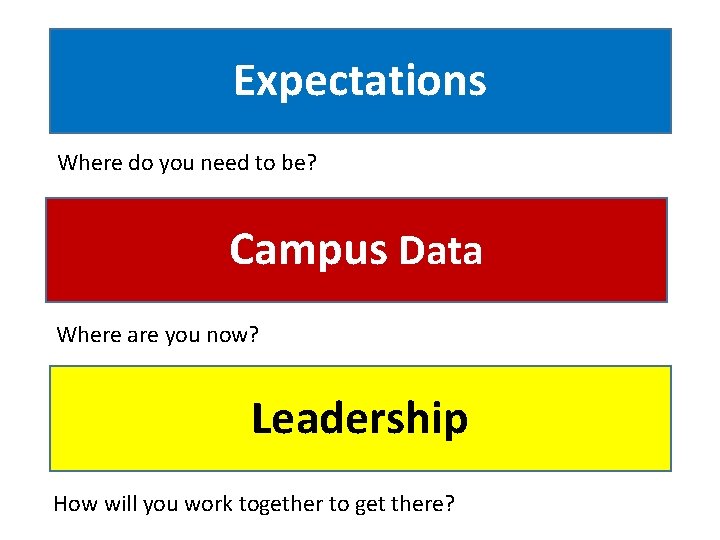
Expectations Where do you need to be? Campus Data Where are you now? Leadership How will you work together to get there?
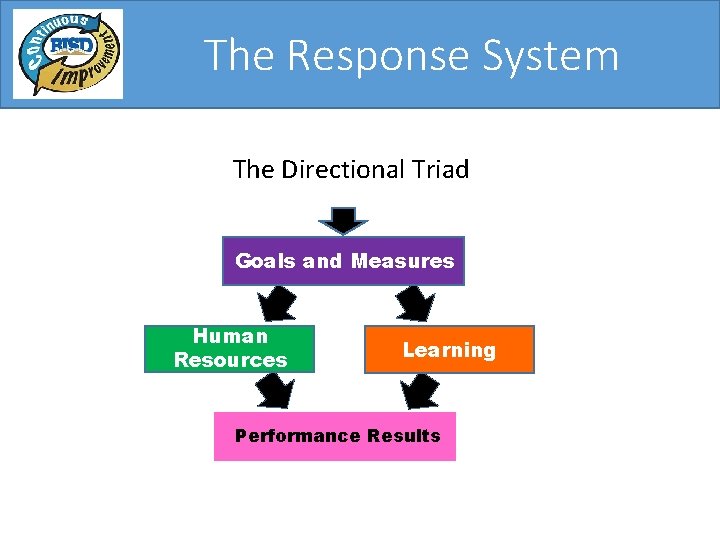
The Response System The Directional Triad Goals and Measures Human Resources Learning Performance Results
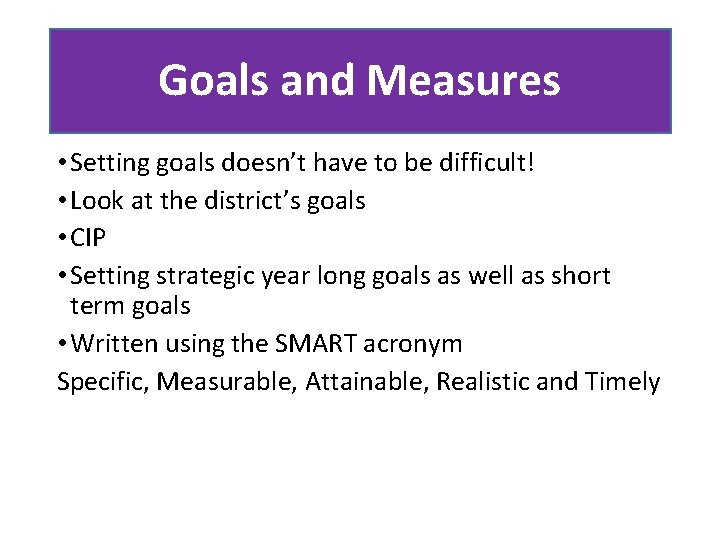
Goals and Measures • Setting goals doesn’t have to be difficult! • Look at the district’s goals • CIP • Setting strategic year long goals as well as short term goals • Written using the SMART acronym Specific, Measurable, Attainable, Realistic and Timely
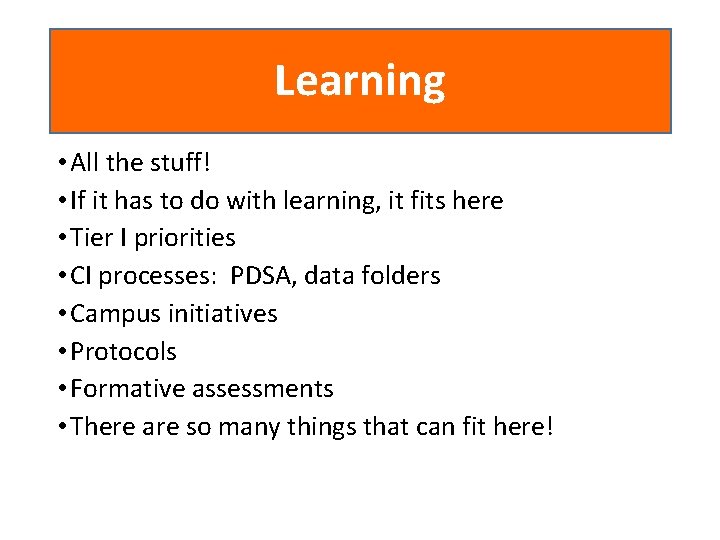
Learning • All the stuff! • If it has to do with learning, it fits here • Tier I priorities • CI processes: PDSA, data folders • Campus initiatives • Protocols • Formative assessments • There are so many things that can fit here!
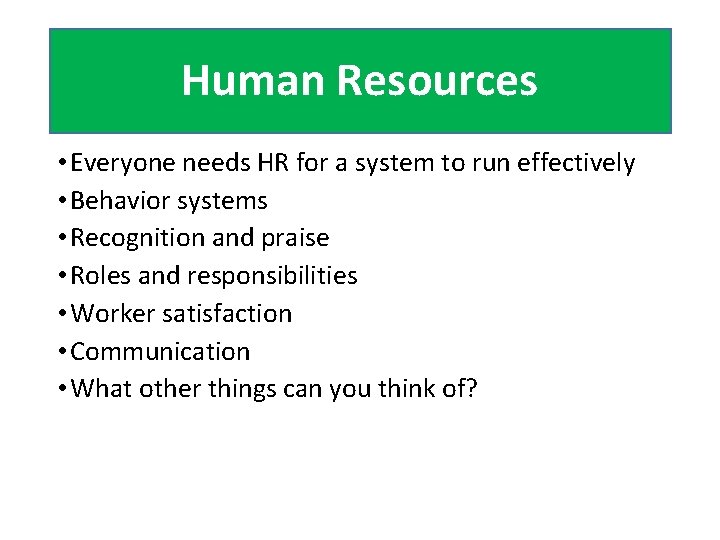
Human Resources • Everyone needs HR for a system to run effectively • Behavior systems • Recognition and praise • Roles and responsibilities • Worker satisfaction • Communication • What other things can you think of?
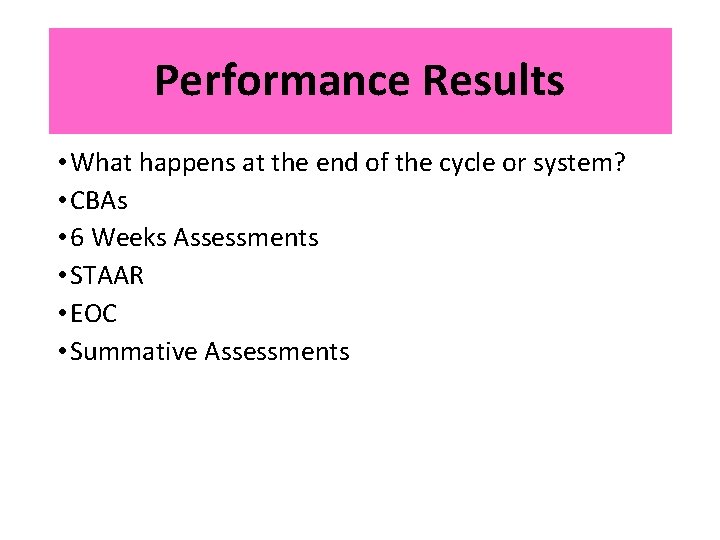
Performance Results • What happens at the end of the cycle or system? • CBAs • 6 Weeks Assessments • STAAR • EOC • Summative Assessments
The CI Alignment Framework Expectations Data • Illustrates how components fit together into a coherent system • Connects prior understanding with new concepts Leadership • Provides a road map for CI activities throughout the year Goals and Measures Human Resources Learning Performance Results
“Average leaders have quotes. Good leaders have a plan. Exceptional leaders have a system. ” -Urban Meyer
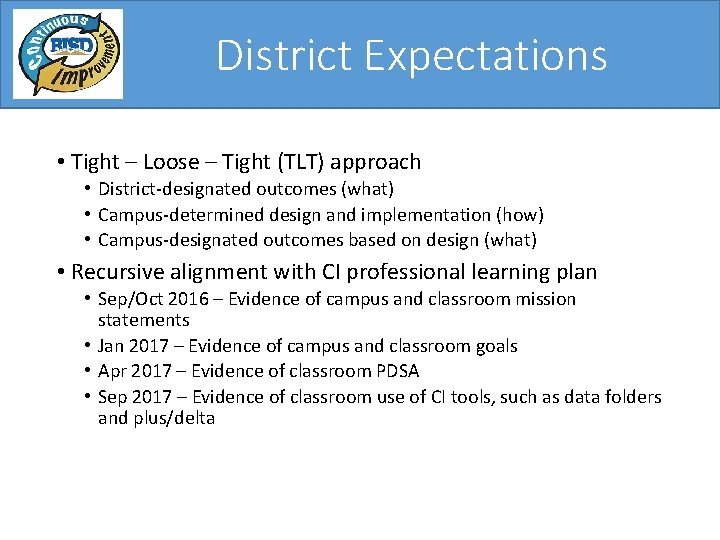
District Expectations • Tight – Loose – Tight (TLT) approach • District-designated outcomes (what) • Campus-determined design and implementation (how) • Campus-designated outcomes based on design (what) • Recursive alignment with CI professional learning plan • Sep/Oct 2016 – Evidence of campus and classroom mission statements • Jan 2017 – Evidence of campus and classroom goals • Apr 2017 – Evidence of classroom PDSA • Sep 2017 – Evidence of classroom use of CI tools, such as data folders and plus/delta
Feedback on the day Plus Rx Delta
Desired outcomes • Review the historical context of continuous improvement (CI) in Birdville • Appreciate the rationale for use of CI practices • Define what CI is and identify our beliefs surrounding CI • Understand the various components of the CI framework and visualize how it relates to our work • Know the training plan for 2015 -16 and the district expectations for campus implementation