
Structural Dynamics Laboratory Department of Engineering Science University
Structural Dynamics Laboratory Department of Engineering Science, University of Oxford Real Time Hybrid Earthquake Simulation of a Steel Column in a 20 -Storey Building Paul Bonnet, Martin S Williams, Anthony Blakeborough & Mobin Ojaghi Department of Engineering Science University of Oxford First European Conference on Earthquake Engineering and Seismology, Geneva, 3 -8 September 2006
Structural Dynamics Laboratory Department of Engineering Science, University of Oxford Structure of talk • Structural Dynamics Laboratory at Oxford • Real time substructuring – concept, technical issues • 20 -storey building – prototype, natural frequencies, physical/numerical substructuring • Implementation • Results First European Conference on Earthquake Engineering and Seismology, Geneva, 3 -8 September 2006
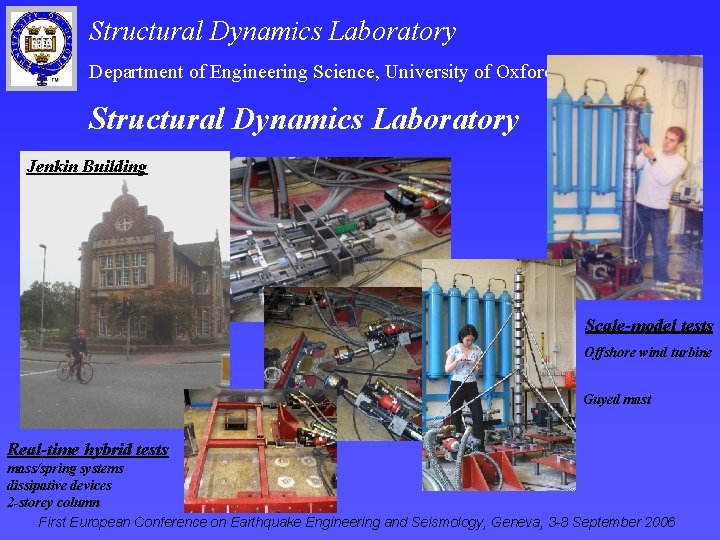
Structural Dynamics Laboratory Department of Engineering Science, University of Oxford Structural Dynamics Laboratory Jenkin Building Scale-model tests Offshore wind turbine Guyed mast Real-time hybrid tests mass/spring systems dissipative devices 2 -storey column First European Conference on Earthquake Engineering and Seismology, Geneva, 3 -8 September 2006
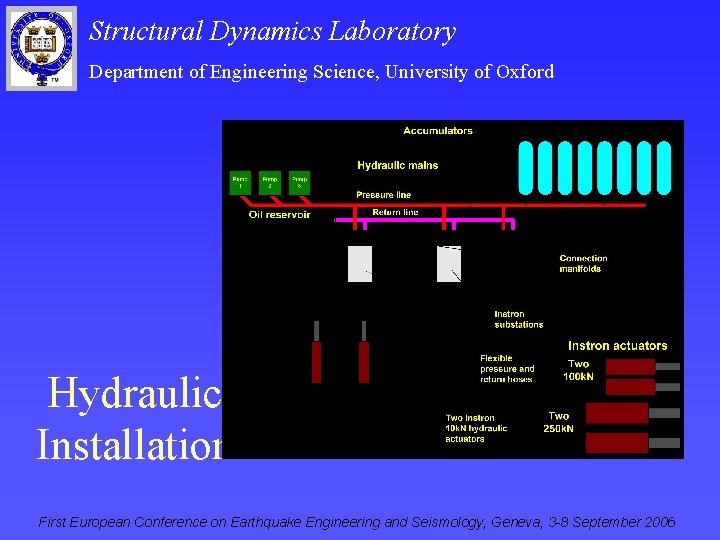
Structural Dynamics Laboratory Department of Engineering Science, University of Oxford Hydraulic Installation First European Conference on Earthquake Engineering and Seismology, Geneva, 3 -8 September 2006

Structural Dynamics Laboratory Department of Engineering Science, University of Oxford Structural Dynamics Lab First European Conference on Earthquake Engineering and Seismology, Geneva, 3 -8 September 2006
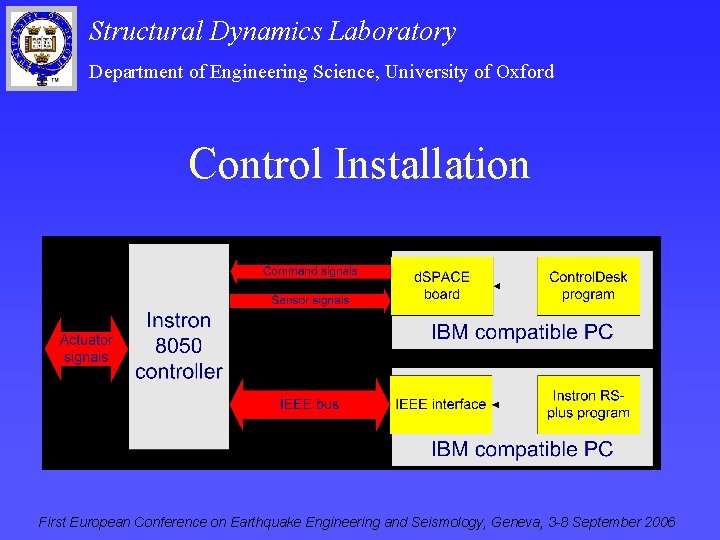
Structural Dynamics Laboratory Department of Engineering Science, University of Oxford Control Installation First European Conference on Earthquake Engineering and Seismology, Geneva, 3 -8 September 2006
Structural Dynamics Laboratory Department of Engineering Science, University of Oxford Substructure testing • Split the structure under test into two or more components – Full (or nearly full) scale physical model for ‘difficult’ bits – Computational model of remainder First European Conference on Earthquake Engineering and Seismology, Geneva, 3 -8 September 2006
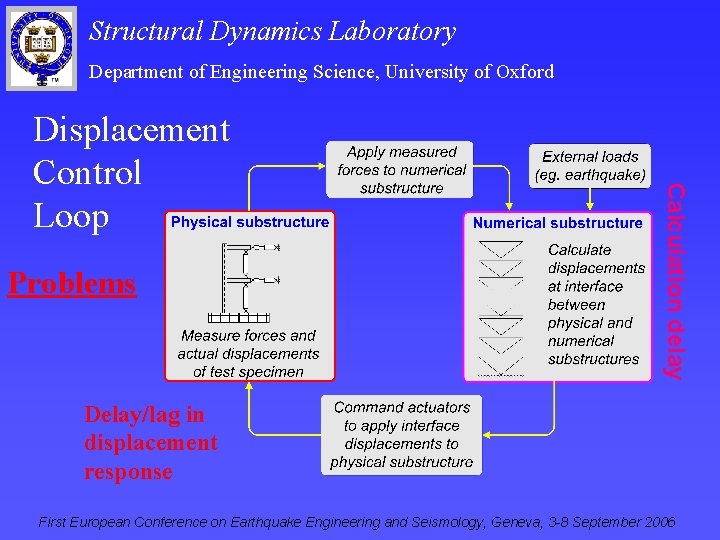
Structural Dynamics Laboratory Department of Engineering Science, University of Oxford Problems Calculation delay Displacement Control Loop Delay/lag in displacement response First European Conference on Earthquake Engineering and Seismology, Geneva, 3 -8 September 2006
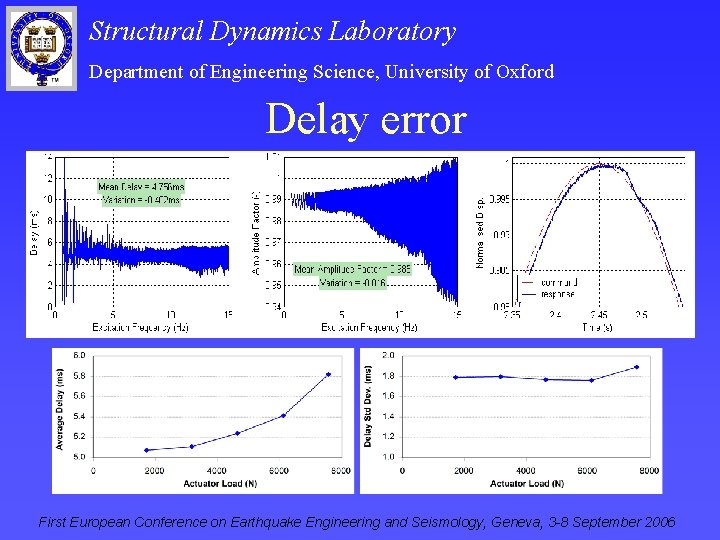
Structural Dynamics Laboratory Department of Engineering Science, University of Oxford Delay error First European Conference on Earthquake Engineering and Seismology, Geneva, 3 -8 September 2006
Structural Dynamics Laboratory Department of Engineering Science, University of Oxford Chang explicit integration First European Conference on Earthquake Engineering and Seismology, Geneva, 3 -8 September 2006
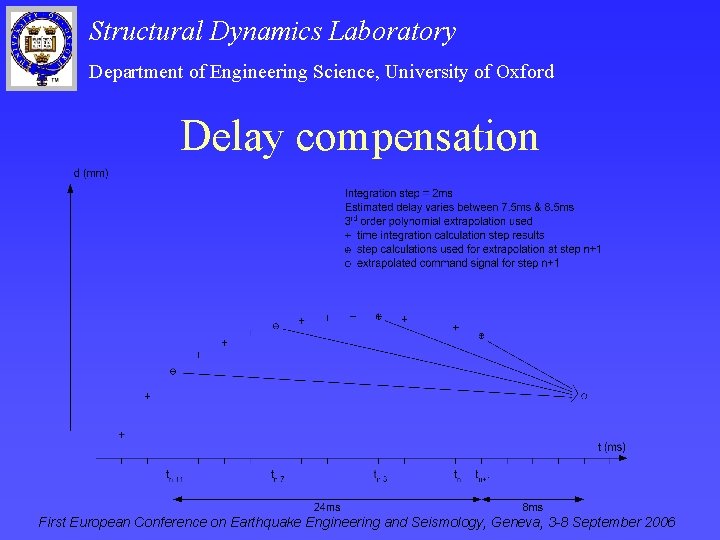
Structural Dynamics Laboratory Department of Engineering Science, University of Oxford Delay compensation First European Conference on Earthquake Engineering and Seismology, Geneva, 3 -8 September 2006
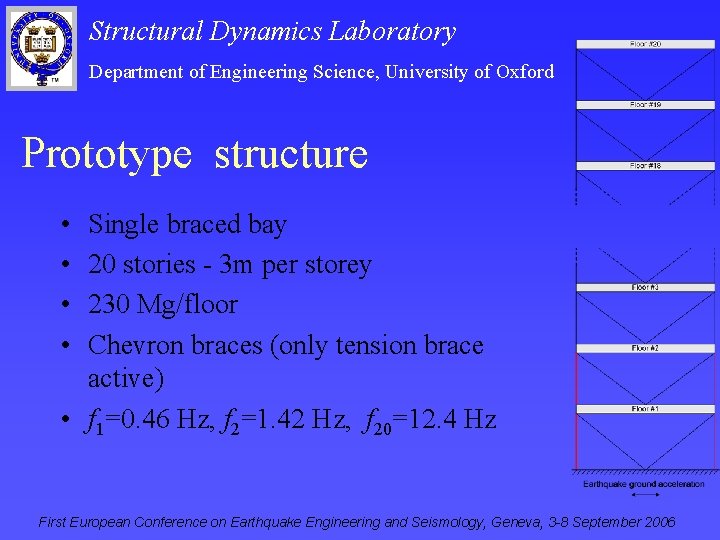
Structural Dynamics Laboratory Department of Engineering Science, University of Oxford Prototype structure • • Single braced bay 20 stories - 3 m per storey 230 Mg/floor Chevron braces (only tension brace active) • f 1=0. 46 Hz, f 2=1. 42 Hz, f 20=12. 4 Hz First European Conference on Earthquake Engineering and Seismology, Geneva, 3 -8 September 2006
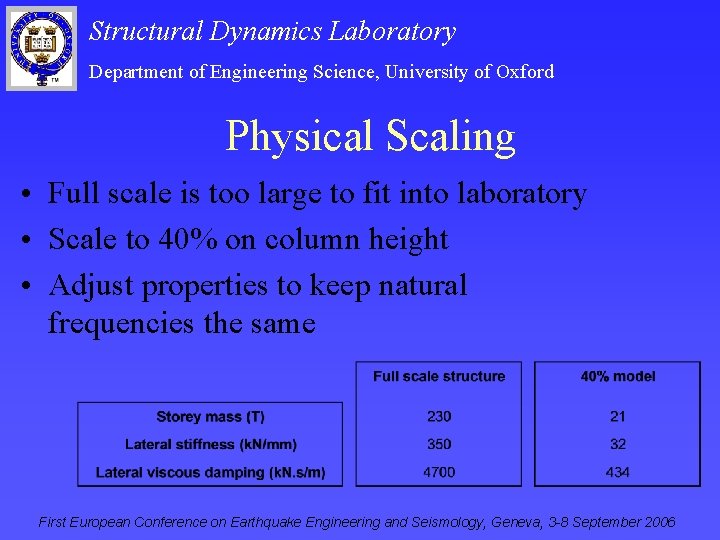
Structural Dynamics Laboratory Department of Engineering Science, University of Oxford Physical Scaling • Full scale is too large to fit into laboratory • Scale to 40% on column height • Adjust properties to keep natural frequencies the same First European Conference on Earthquake Engineering and Seismology, Geneva, 3 -8 September 2006
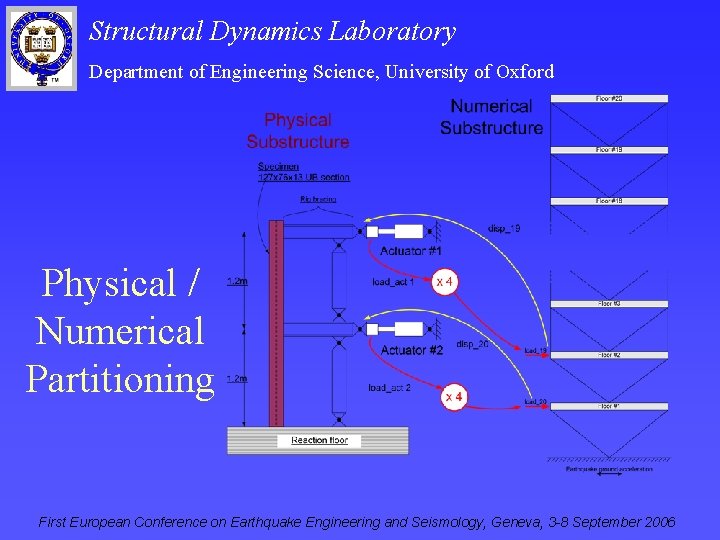
Structural Dynamics Laboratory Department of Engineering Science, University of Oxford Physical / Numerical Partitioning First European Conference on Earthquake Engineering and Seismology, Geneva, 3 -8 September 2006
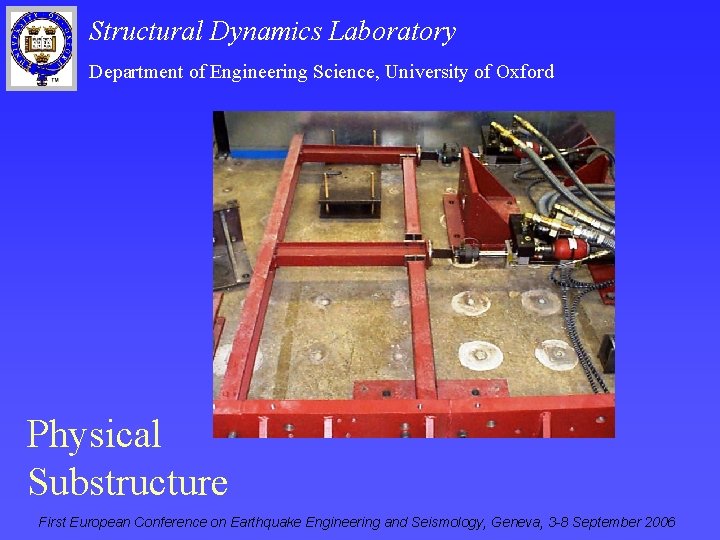
Structural Dynamics Laboratory Department of Engineering Science, University of Oxford Physical Substructure First European Conference on Earthquake Engineering and Seismology, Geneva, 3 -8 September 2006
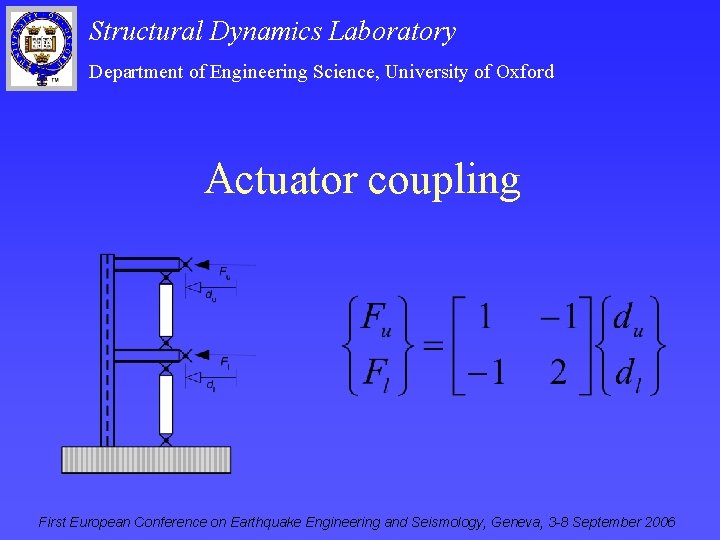
Structural Dynamics Laboratory Department of Engineering Science, University of Oxford Actuator coupling First European Conference on Earthquake Engineering and Seismology, Geneva, 3 -8 September 2006
Structural Dynamics Laboratory Department of Engineering Science, University of Oxford Numerical substructure • Chang integrator • Stiffness proportional damping – 2% for 1 st mode • Integrator time steps – 10 ms, 20 ms & 30 ms • Measured actuator time delay • Horiuchi or Laguerre extrapolator First European Conference on Earthquake Engineering and Seismology, Geneva, 3 -8 September 2006
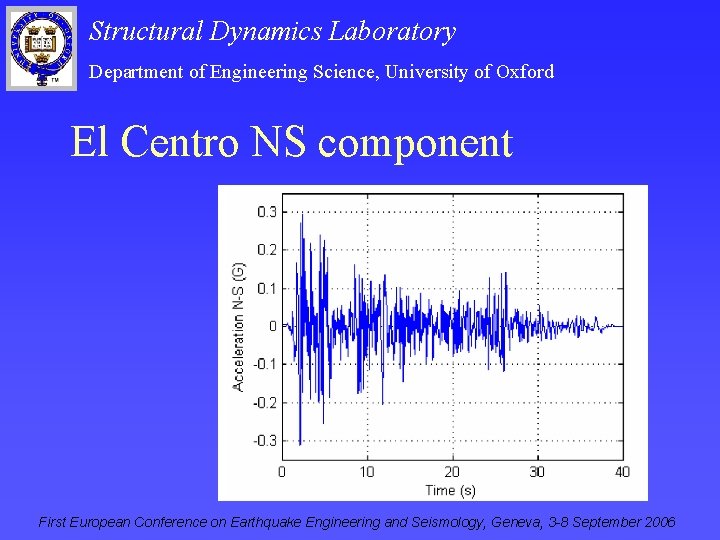
Structural Dynamics Laboratory Department of Engineering Science, University of Oxford El Centro NS component First European Conference on Earthquake Engineering and Seismology, Geneva, 3 -8 September 2006
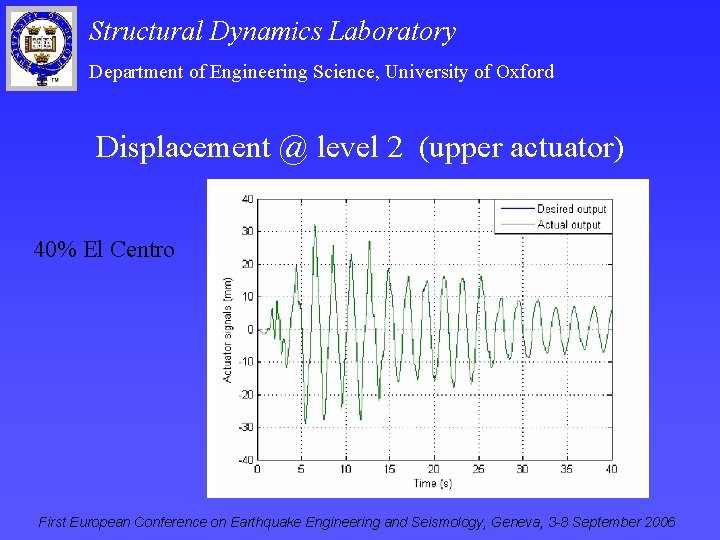
Structural Dynamics Laboratory Department of Engineering Science, University of Oxford Displacement @ level 2 (upper actuator) 40% El Centro First European Conference on Earthquake Engineering and Seismology, Geneva, 3 -8 September 2006
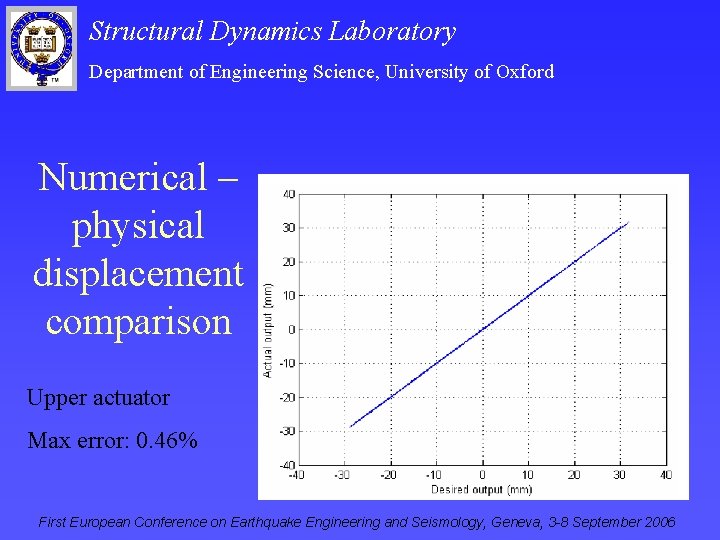
Structural Dynamics Laboratory Department of Engineering Science, University of Oxford Numerical – physical displacement comparison Upper actuator Max error: 0. 46% First European Conference on Earthquake Engineering and Seismology, Geneva, 3 -8 September 2006
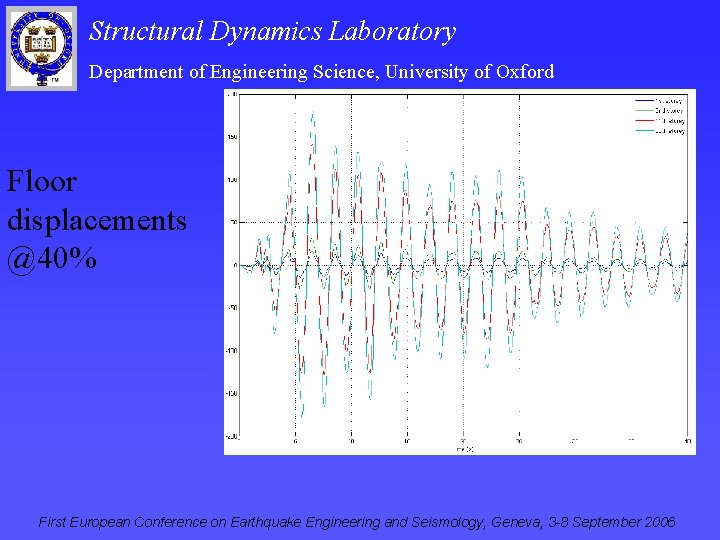
Structural Dynamics Laboratory Department of Engineering Science, University of Oxford Floor displacements @40% First European Conference on Earthquake Engineering and Seismology, Geneva, 3 -8 September 2006
Structural Dynamics Laboratory Department of Engineering Science, University of Oxford Lower storey shear hysteresis First European Conference on Earthquake Engineering and Seismology, Geneva, 3 -8 September 2006
Structural Dynamics Laboratory Department of Engineering Science, University of Oxford First European Conference on Earthquake Engineering and Seismology, Geneva, 3 -8 September 2006
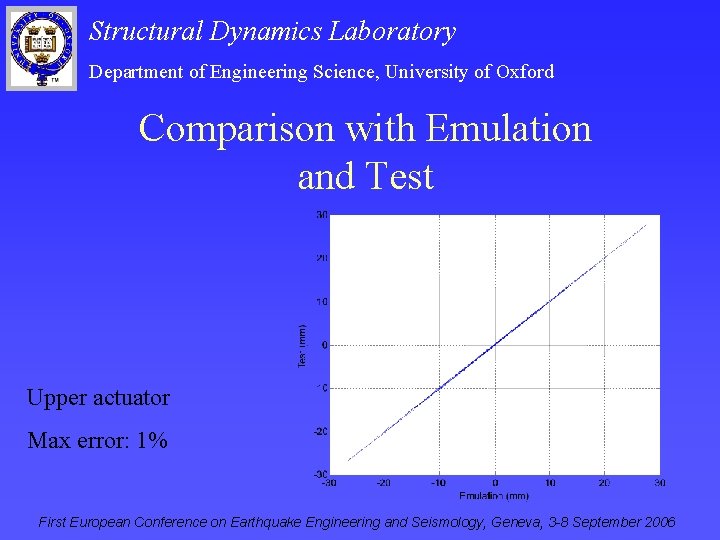
Structural Dynamics Laboratory Department of Engineering Science, University of Oxford Comparison with Emulation and Test Upper actuator Max error: 1% First European Conference on Earthquake Engineering and Seismology, Geneva, 3 -8 September 2006
Structural Dynamics Laboratory Department of Engineering Science, University of Oxford Main findings • Small local processor perfectly adequate to perform simple numerical simulation and control of 20 dof model • Errors increased with length of computational time step • Chang’s algorithm was best in terms of accuracy and speed of execution • At larger time steps Horiuchi extrapolation was less good the Laguerre method First European Conference on Earthquake Engineering and Seismology, Geneva, 3 -8 September 2006
Structural Dynamics Laboratory Department of Engineering Science, University of Oxford Further work • Extend tests to higher frequencies • More plasticity in the physical specimen • Non-linear numerical model First European Conference on Earthquake Engineering and Seismology, Geneva, 3 -8 September 2006
- Slides: 26