
Structural Considerations for Trusses Bridge Engineering Section Technical
Structural Considerations for Trusses Bridge Engineering Section Technical Standards Branch
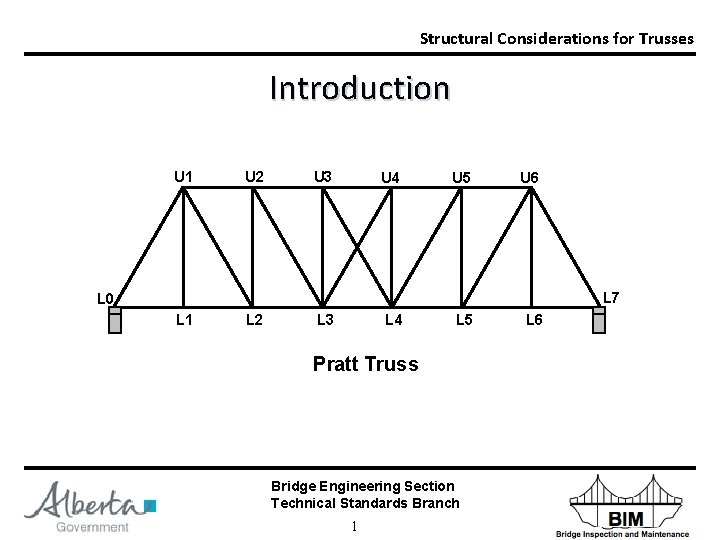
Structural Considerations for Trusses Introduction U 1 U 2 U 3 U 4 U 5 U 6 L 7 L 0 L 1 L 2 L 4 L 3 L 5 Pratt Truss Bridge Engineering Section Technical Standards Branch 1 L 6
Structural Considerations for Trusses Truss Types • Three types of trusses in Alberta: Ø Pony trusses Ø Through trusses Ø Deck trusses • Traffic loads are transferred to the trusses by a floor system. Bridge Engineering Section Technical Standards Branch 2
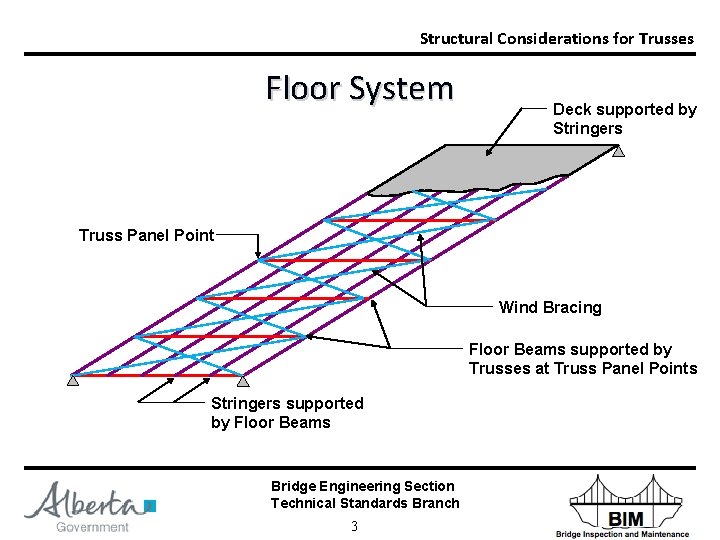
Structural Considerations for Trusses Floor System Deck supported by Stringers Truss Panel Point Wind Bracing Floor Beams supported by Trusses at Truss Panel Points Stringers supported by Floor Beams Bridge Engineering Section Technical Standards Branch 3
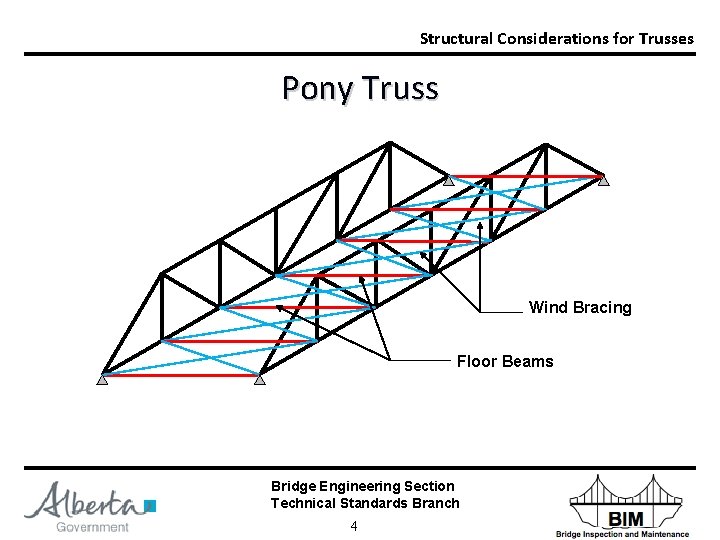
Structural Considerations for Trusses Pony Truss Wind Bracing Floor Beams Bridge Engineering Section Technical Standards Branch 4
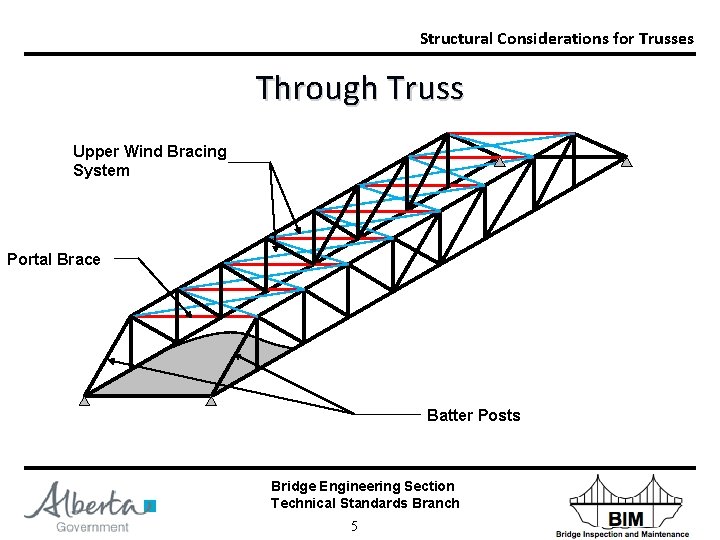
Structural Considerations for Trusses Through Truss Upper Wind Bracing System Portal Brace Batter Posts Bridge Engineering Section Technical Standards Branch 5
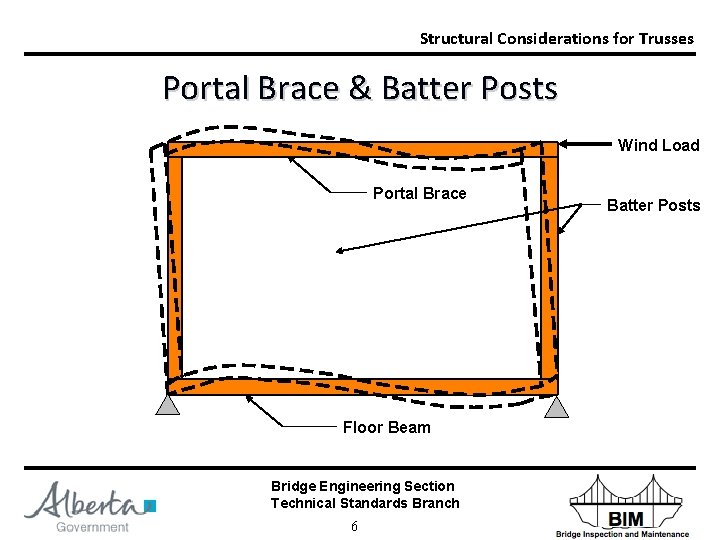
Structural Considerations for Trusses Portal Brace & Batter Posts Wind Load Portal Brace Floor Beam Bridge Engineering Section Technical Standards Branch 6 Batter Posts
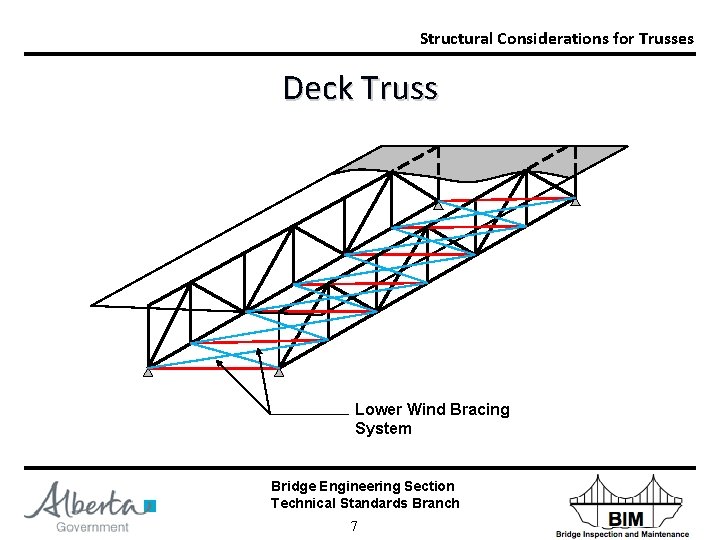
Structural Considerations for Trusses Deck Truss Lower Wind Bracing System Bridge Engineering Section Technical Standards Branch 7
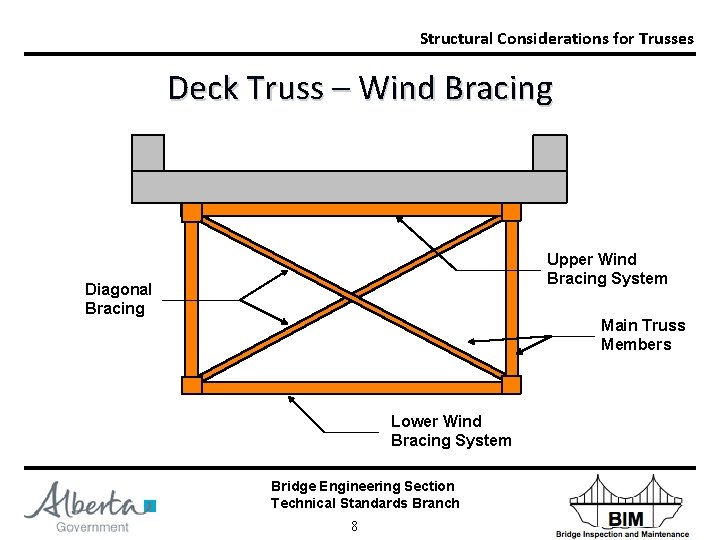
Structural Considerations for Trusses Deck Truss – Wind Bracing Upper Wind Bracing System Diagonal Bracing Main Truss Members Lower Wind Bracing System Bridge Engineering Section Technical Standards Branch 8
Structural Considerations for Trusses Truss Configurations • The way truss members carry loads depends on the configuration of the truss. • Most trusses are either Pratt or Warren trusses. Bridge Engineering Section Technical Standards Branch 9
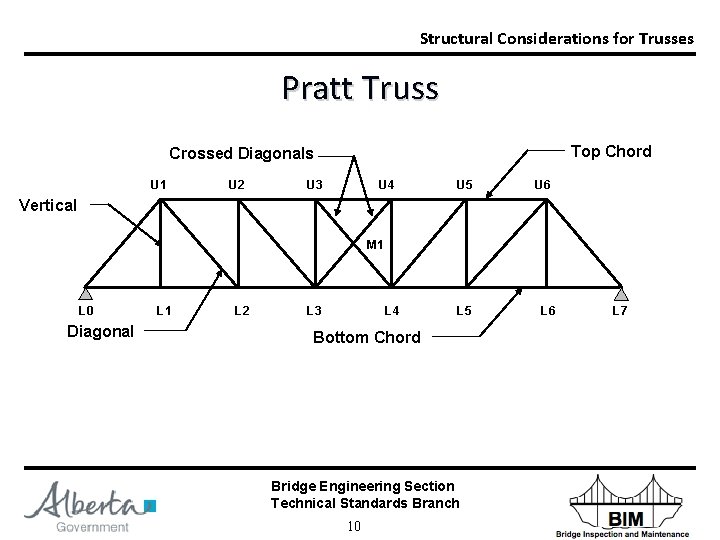
Structural Considerations for Trusses Pratt Truss Top Chord Crossed Diagonals U 1 U 2 U 3 U 4 U 5 U 6 Vertical M 1 L 0 Diagonal L 1 L 2 L 3 L 4 L 5 Bottom Chord Bridge Engineering Section Technical Standards Branch 10 L 6 L 7
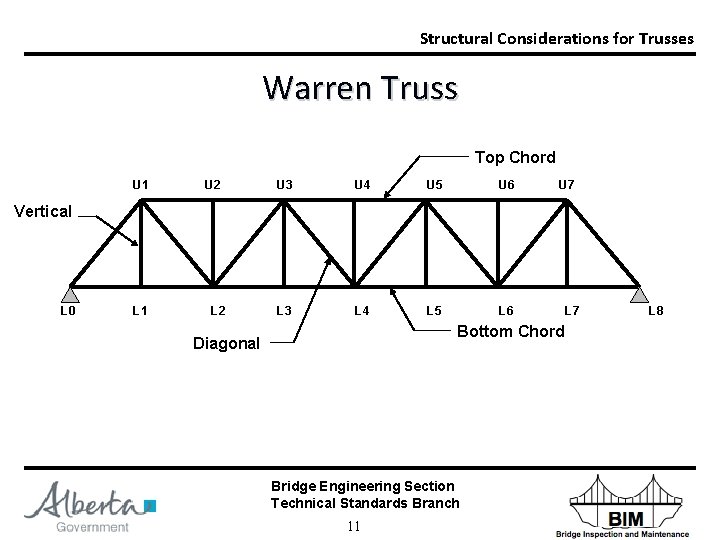
Structural Considerations for Trusses Warren Truss Top Chord U 1 U 2 U 3 U 4 U 5 U 6 L 3 L 4 L 5 L 6 U 7 Vertical L 0 L 1 L 2 Bottom Chord Diagonal Bridge Engineering Section Technical Standards Branch 11 L 7 L 8

Structural Considerations for Trusses Truss Curvature Top Chord Bottom Chord Tension Bridge Engineering Section Technical Standards Branch 12
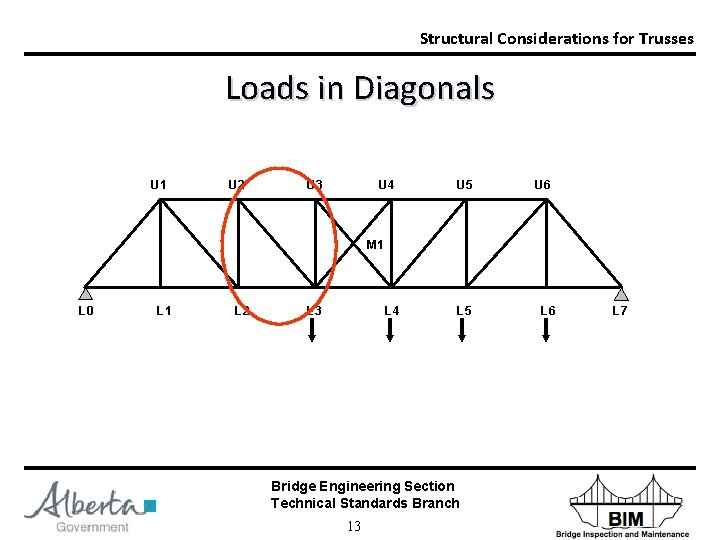
Structural Considerations for Trusses Loads in Diagonals U 1 U 2 U 3 U 4 U 5 U 6 M 1 L 0 L 1 L 2 L 3 L 4 L 5 Bridge Engineering Section Technical Standards Branch 13 L 6 L 7
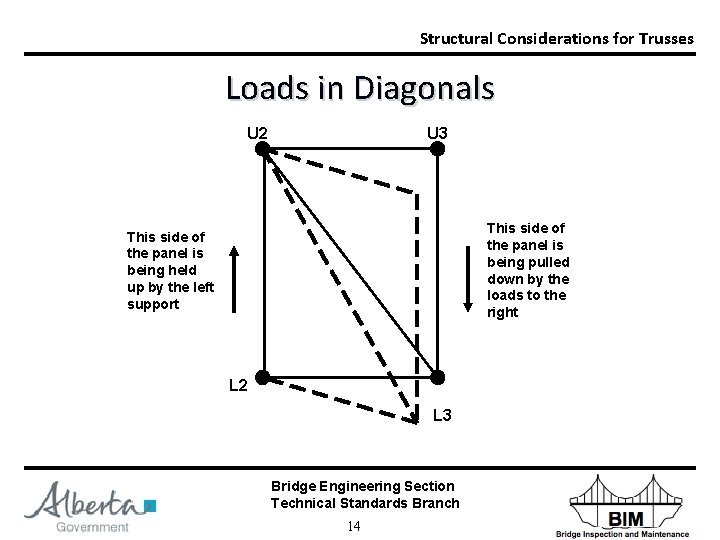
Structural Considerations for Trusses Loads in Diagonals U 2 U 3 This side of the panel is being pulled down by the loads to the right This side of the panel is being held up by the left support L 2 L 3 Bridge Engineering Section Technical Standards Branch 14
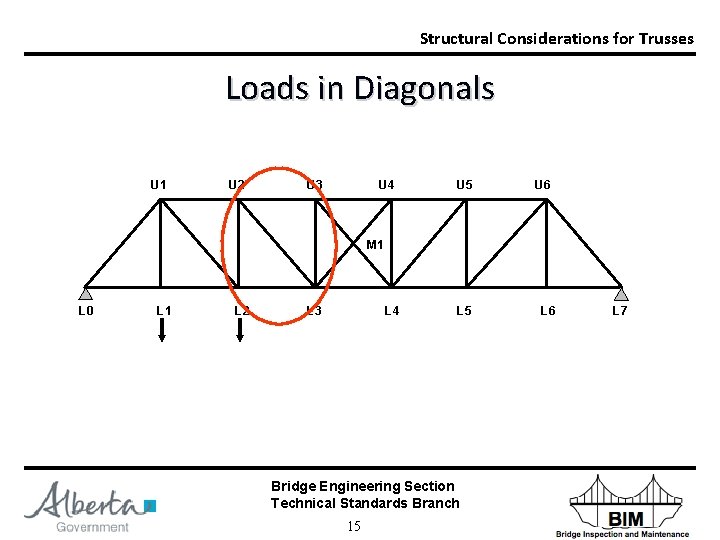
Structural Considerations for Trusses Loads in Diagonals U 1 U 2 U 3 U 4 U 5 U 6 M 1 L 0 L 1 L 2 L 3 L 4 L 5 Bridge Engineering Section Technical Standards Branch 15 L 6 L 7
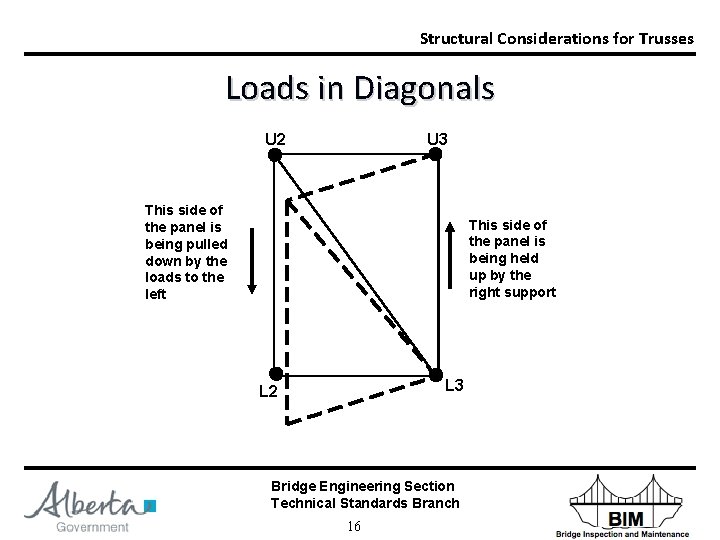
Structural Considerations for Trusses Loads in Diagonals U 2 U 3 This side of the panel is being pulled down by the loads to the left This side of the panel is being held up by the right support L 3 L 2 Bridge Engineering Section Technical Standards Branch 16
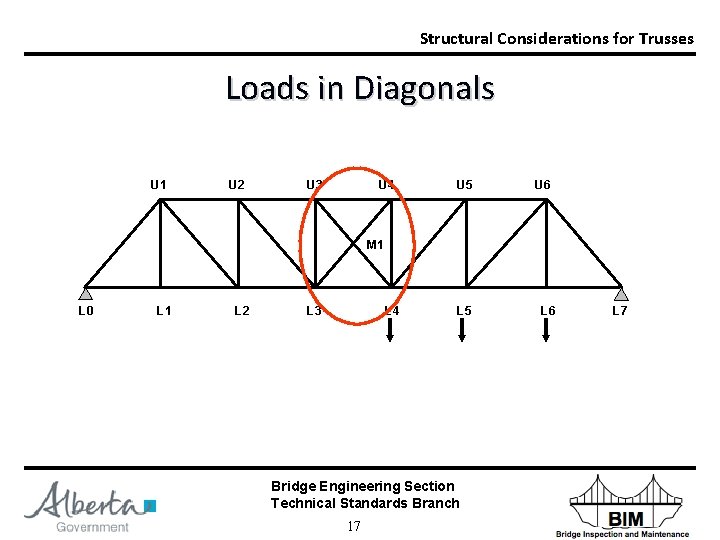
Structural Considerations for Trusses Loads in Diagonals U 1 U 2 U 3 U 4 U 5 U 6 M 1 L 0 L 1 L 2 L 3 L 4 L 5 Bridge Engineering Section Technical Standards Branch 17 L 6 L 7
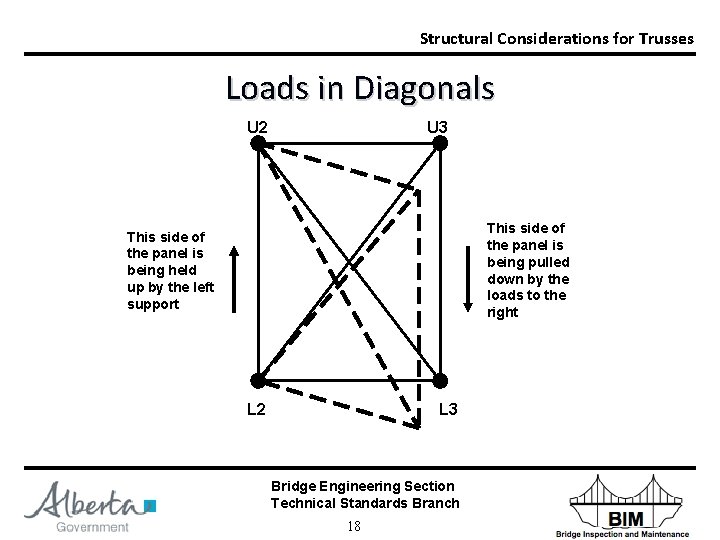
Structural Considerations for Trusses Loads in Diagonals U 2 U 3 This side of the panel is being pulled down by the loads to the right This side of the panel is being held up by the left support L 2 L 3 Bridge Engineering Section Technical Standards Branch 18
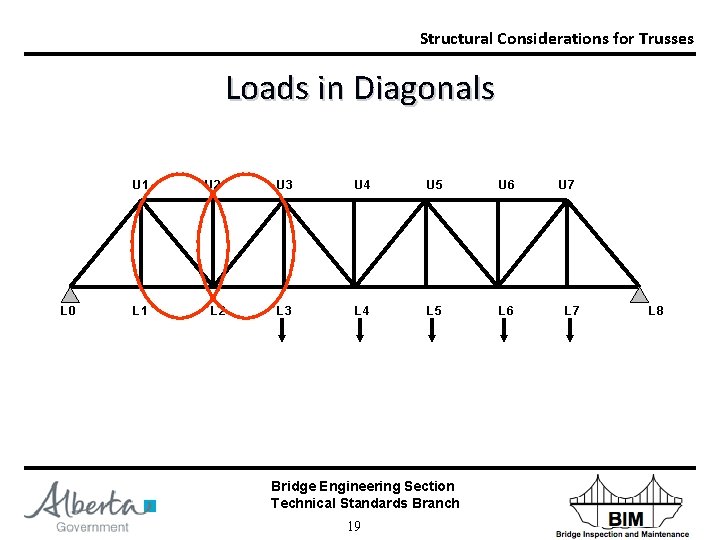
Structural Considerations for Trusses Loads in Diagonals U 1 L 0 L 1 U 2 L 2 U 3 U 4 U 5 U 6 L 3 L 4 L 5 L 6 Bridge Engineering Section Technical Standards Branch 19 U 7 L 8
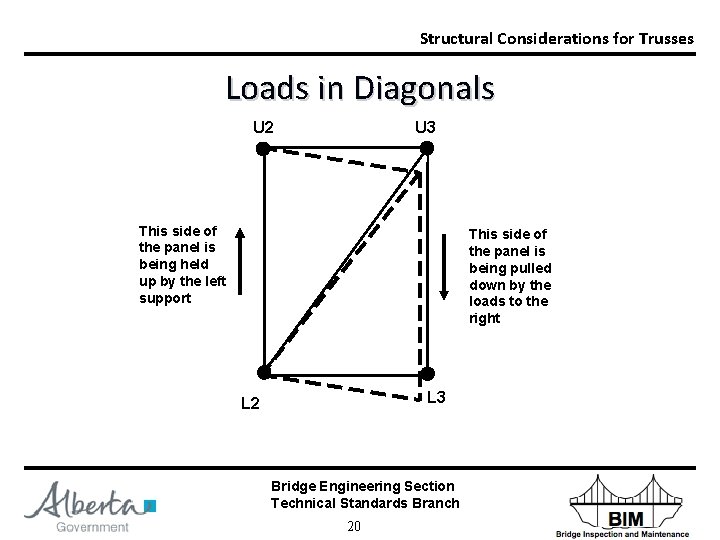
Structural Considerations for Trusses Loads in Diagonals U 2 U 3 This side of the panel is being held up by the left support This side of the panel is being pulled down by the loads to the right L 3 L 2 Bridge Engineering Section Technical Standards Branch 20
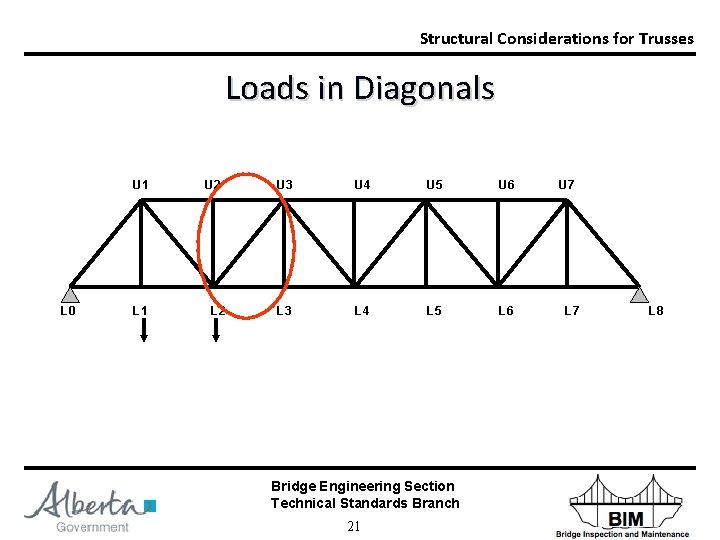
Structural Considerations for Trusses Loads in Diagonals U 1 L 0 L 1 U 2 L 2 U 3 U 4 U 5 U 6 L 3 L 4 L 5 L 6 Bridge Engineering Section Technical Standards Branch 21 U 7 L 8
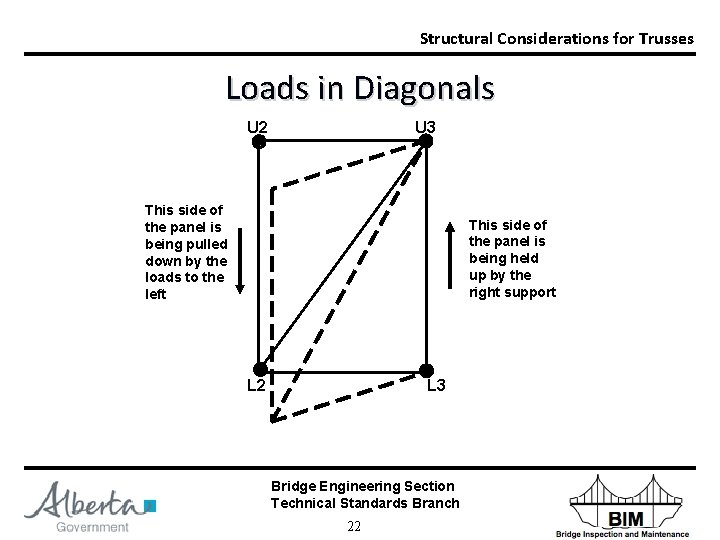
Structural Considerations for Trusses Loads in Diagonals U 2 U 3 This side of the panel is being pulled down by the loads to the left This side of the panel is being held up by the right support L 2 L 3 Bridge Engineering Section Technical Standards Branch 22
Structural Considerations for Trusses Summary – Loads in Diagonals • Diagonals that slope away from the nearest support as they approach the bottom chord are primarily tension members. • Some diagonals near the center of the truss may go into compression. • Diagonals that slope towards the nearest support as they approach the bottom chord are primarily compression members. • Crossed diagonals are tension members. Bridge Engineering Section Technical Standards Branch 23

Structural Considerations for Trusses Summary – Loads in Diagonals Slope away from nearest support approaching BC Slope towards nearest support approaching BC Crossed Tension Compression Tension Bridge Engineering Section Technical Standards Branch 24
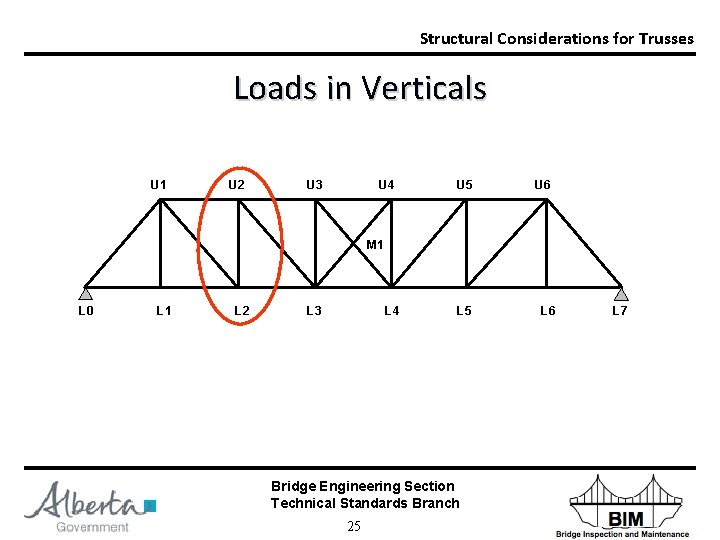
Structural Considerations for Trusses Loads in Verticals U 1 U 2 U 3 U 4 U 5 U 6 M 1 L 0 L 1 L 2 L 3 L 4 L 5 Bridge Engineering Section Technical Standards Branch 25 L 6 L 7
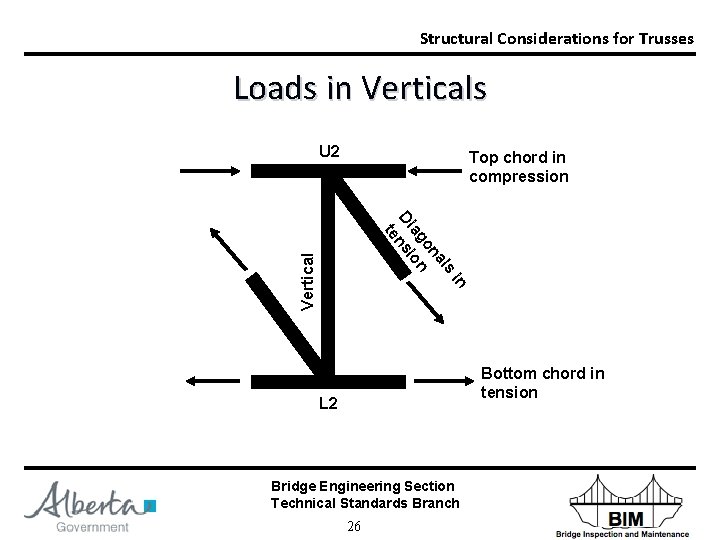
Structural Considerations for Trusses Loads in Verticals U 2 Top chord in compression s al on ag on Di nsi in Vertical te Bottom chord in tension L 2 Bridge Engineering Section Technical Standards Branch 26
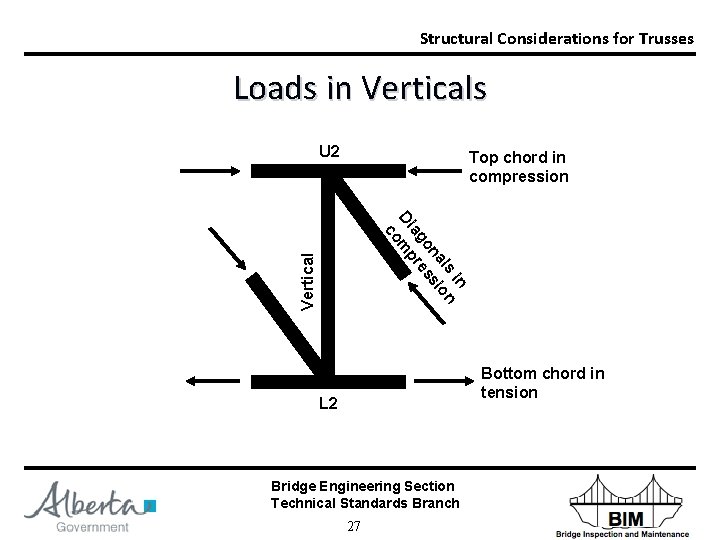
Structural Considerations for Trusses Loads in Verticals U 2 Top chord in compression in s n al io on ss ag re Di mp Vertical co Bottom chord in tension L 2 Bridge Engineering Section Technical Standards Branch 27
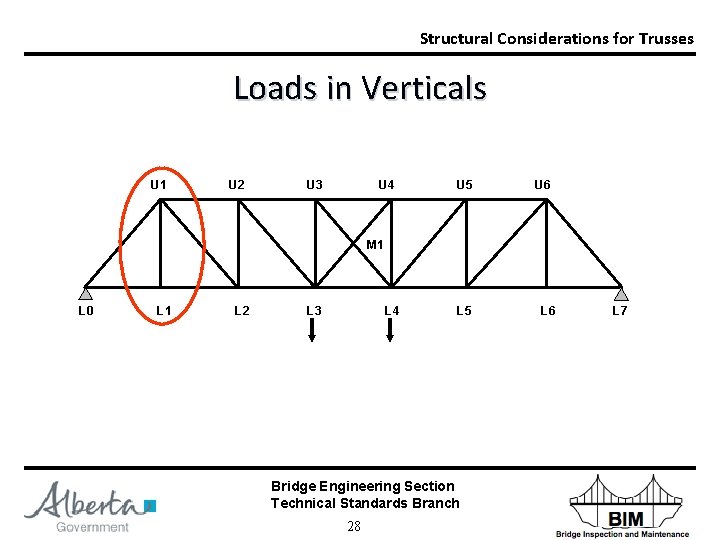
Structural Considerations for Trusses Loads in Verticals U 1 U 2 U 3 U 4 U 5 U 6 M 1 L 0 L 1 L 2 L 3 L 4 L 5 Bridge Engineering Section Technical Standards Branch 28 L 6 L 7
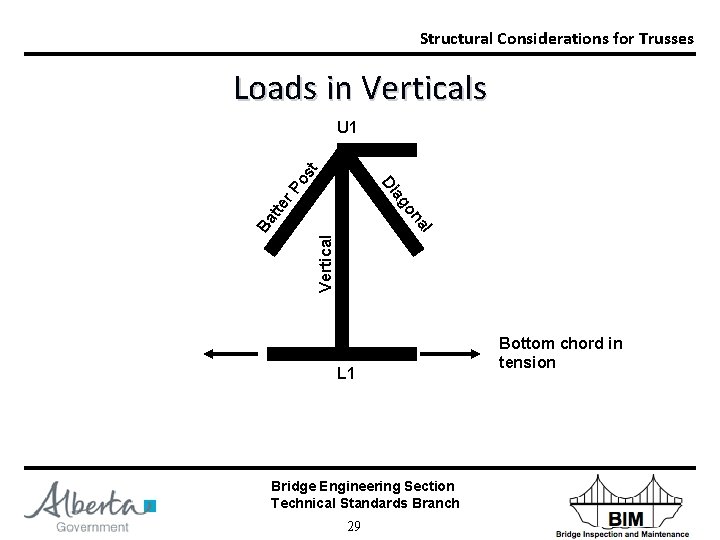
Structural Considerations for Trusses Loads in Verticals Vertical l Ba a on tte ag r. P Di os t U 1 L 1 Bridge Engineering Section Technical Standards Branch 29 Bottom chord in tension
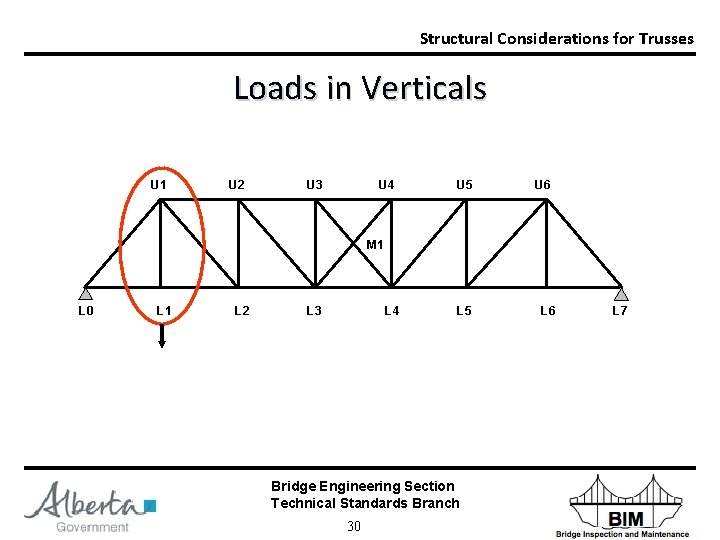
Structural Considerations for Trusses Loads in Verticals U 1 U 2 U 3 U 4 U 5 U 6 M 1 L 0 L 1 L 2 L 3 L 4 L 5 Bridge Engineering Section Technical Standards Branch 30 L 6 L 7
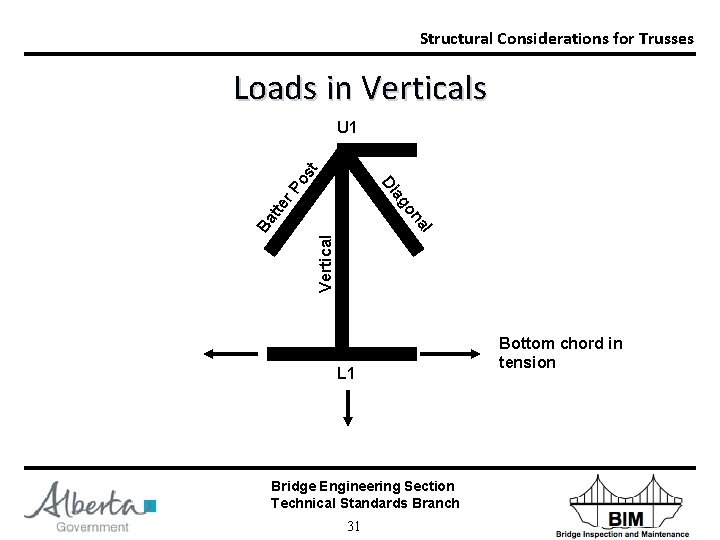
Structural Considerations for Trusses Loads in Verticals Vertical l Ba a on tte ag r. P Di os t U 1 L 1 Bridge Engineering Section Technical Standards Branch 31 Bottom chord in tension
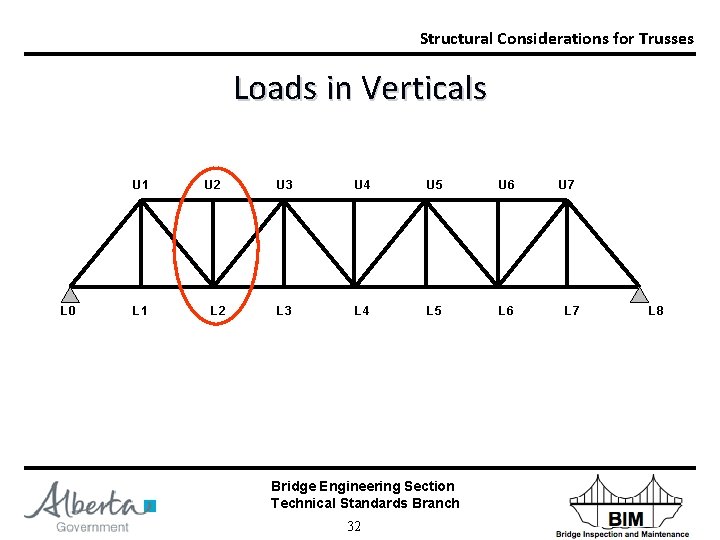
Structural Considerations for Trusses Loads in Verticals U 1 L 0 L 1 U 2 L 2 U 3 U 4 U 5 U 6 L 3 L 4 L 5 L 6 Bridge Engineering Section Technical Standards Branch 32 U 7 L 8
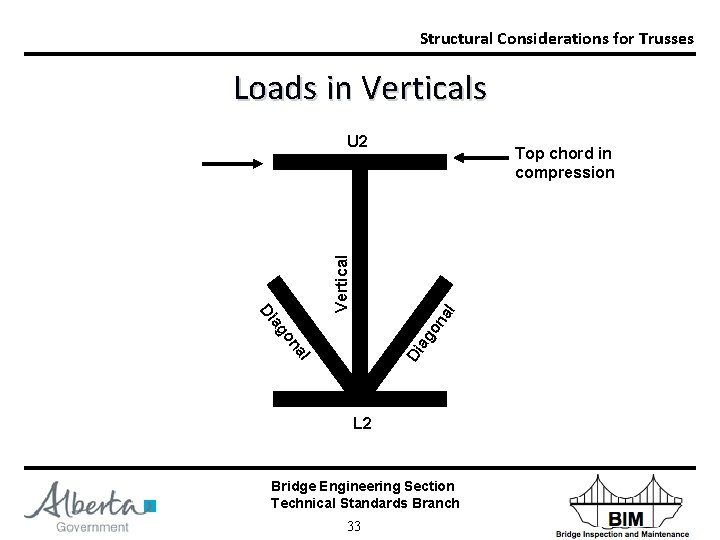
Structural Considerations for Trusses Loads in Verticals na l Top chord in compression l na Di a go o ag Di Vertical U 2 L 2 Bridge Engineering Section Technical Standards Branch 33
Structural Considerations for Trusses Summary – Loads in Verticals • Verticals connected to diagonals at both ends will be in compression if the diagonals are in tension and in tension if the diagonals are in compression. • Verticals connected to diagonals at the top chord only will be in tension for pony and through trusses and will be unloaded for deck trusses. • Verticals connected to diagonals at the bottom chord only will be in compression for deck trusses and will be unloaded for pony and through trusses. Bridge Engineering Section Technical Standards Branch 34
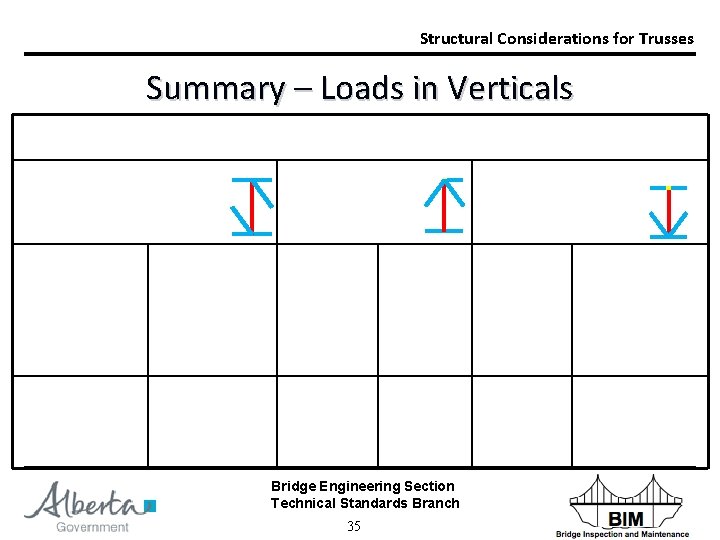
Structural Considerations for Trusses Summary – Loads in Verticals Vertical Connected to Diagonals at both ends Diagonals in tension Diagonals at top chord Diagonals at bottom chord Diagonals in For pony For deck compression & through trusses Compression Tension Zero Bridge Engineering Section Technical Standards Branch 35 Zero Compression
Structural Considerations for Trusses Summary – Loads in TC, BC & BP • Top chords are in compression. • Bottom chords are in tension. • Batter posts are in compression. Bridge Engineering Section Technical Standards Branch 36
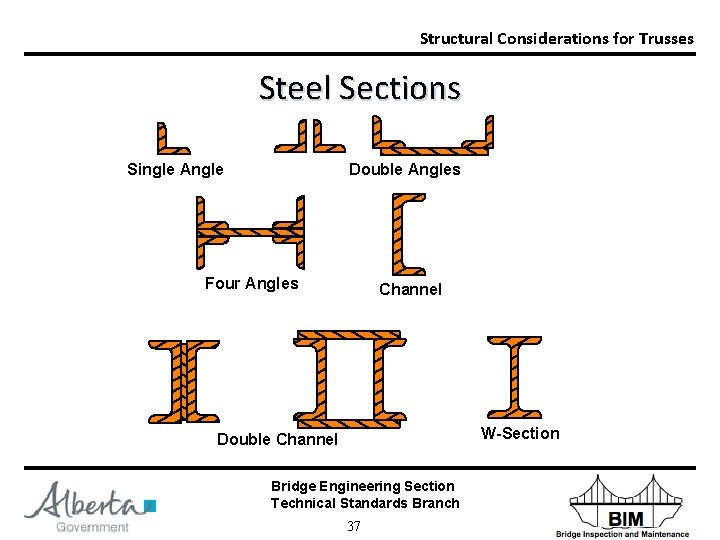
Structural Considerations for Trusses Steel Sections Single Angle Double Angles Four Angles Channel W-Section Double Channel Bridge Engineering Section Technical Standards Branch 37
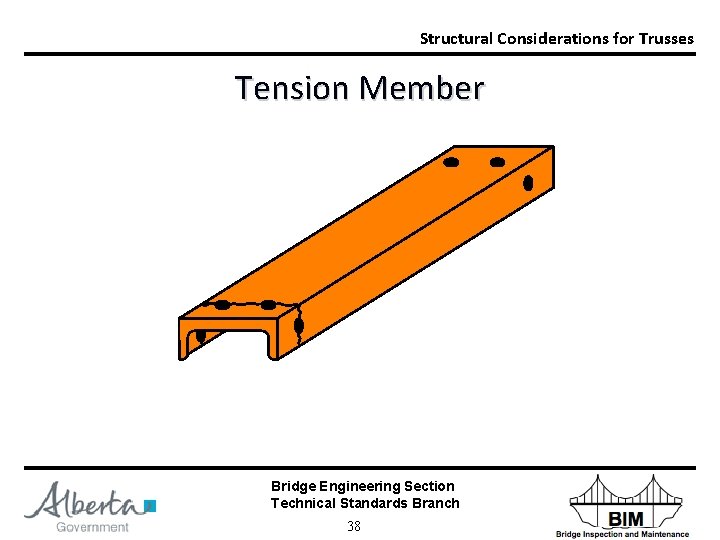
Structural Considerations for Trusses Tension Member Bridge Engineering Section Technical Standards Branch 38
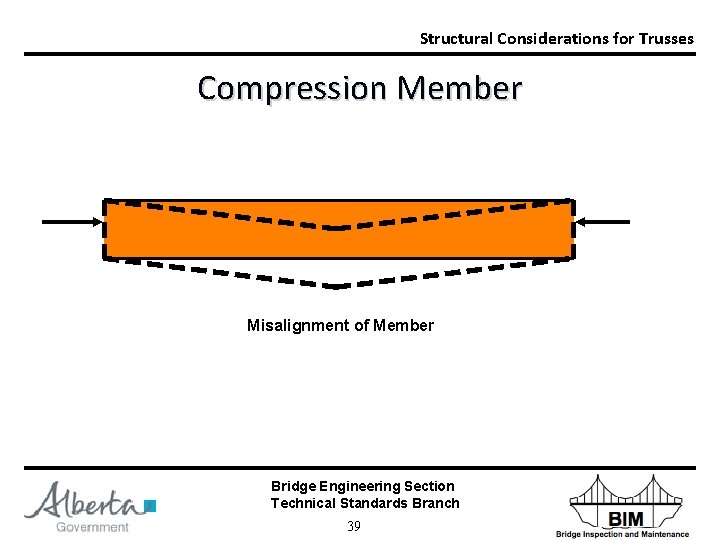
Structural Considerations for Trusses Compression Member Misalignment of Member Bridge Engineering Section Technical Standards Branch 39
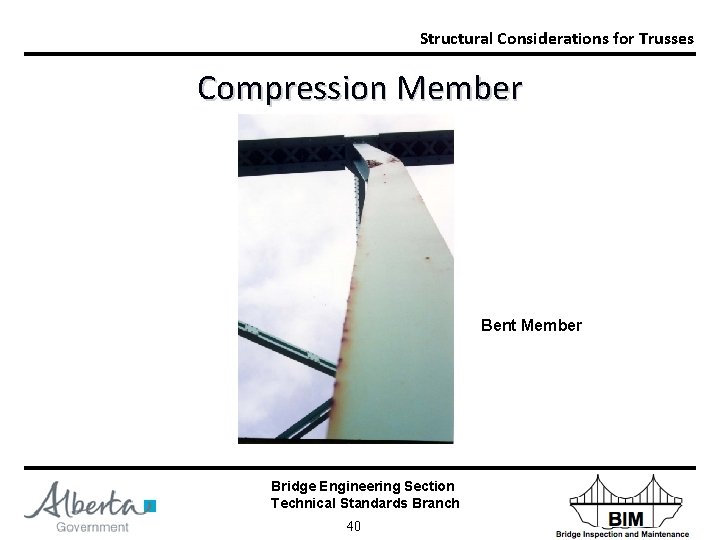
Structural Considerations for Trusses Compression Member Bent Member Bridge Engineering Section Technical Standards Branch 40
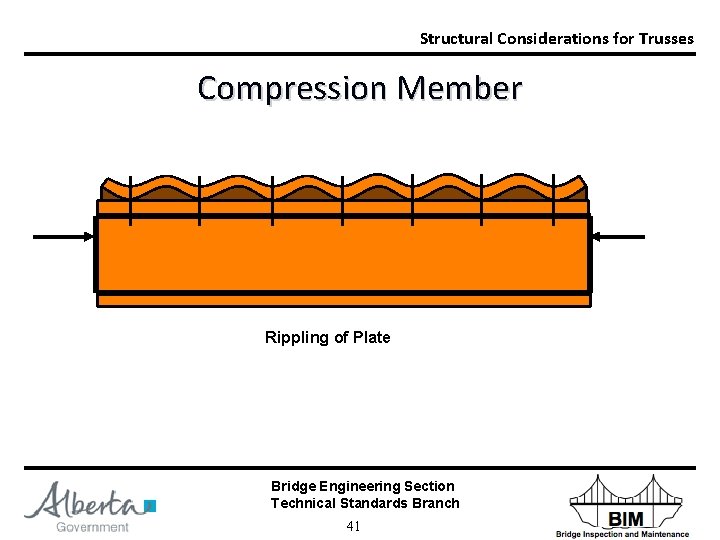
Structural Considerations for Trusses Compression Member Rippling of Plate Bridge Engineering Section Technical Standards Branch 41
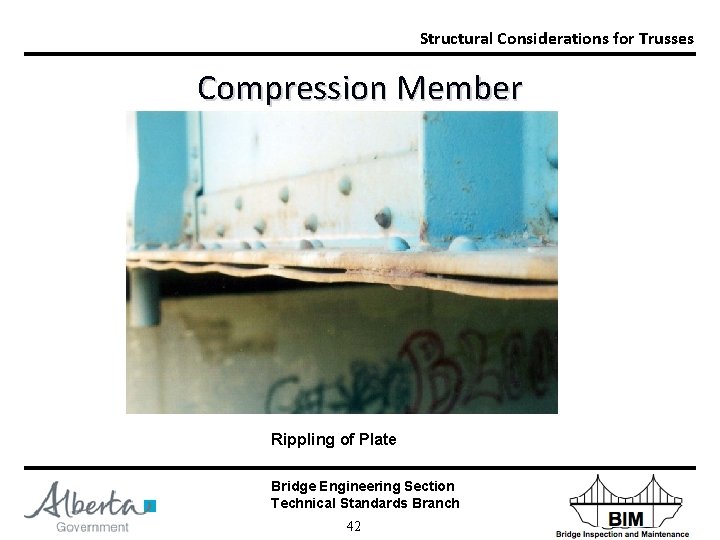
Structural Considerations for Trusses Compression Member Rippling of Plate Bridge Engineering Section Technical Standards Branch 42
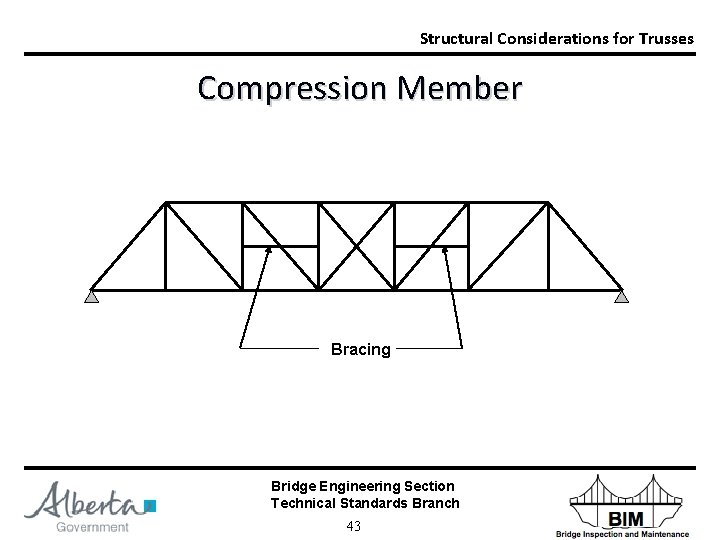
Structural Considerations for Trusses Compression Member Bracing Bridge Engineering Section Technical Standards Branch 43
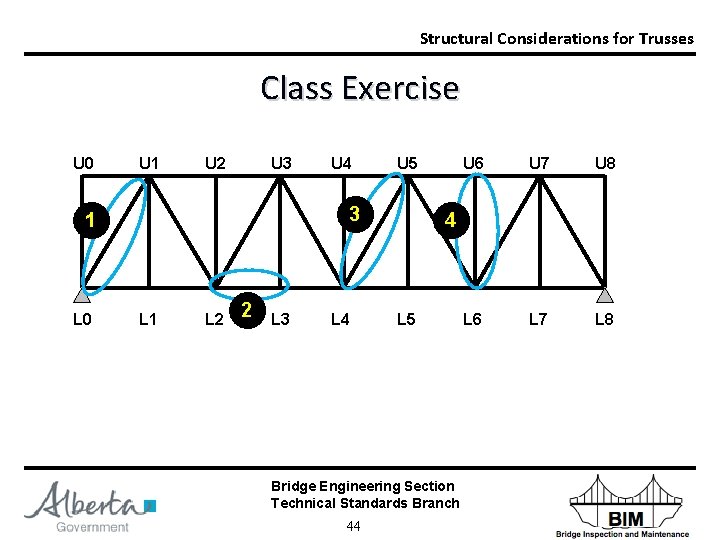
Structural Considerations for Trusses Class Exercise U 0 U 1 U 2 U 3 U 5 3 1 L 0 U 4 L 1 L 2 2 L 3 L 4 U 7 U 8 L 6 L 7 L 8 4 L 5 Bridge Engineering Section Technical Standards Branch 44 U 6
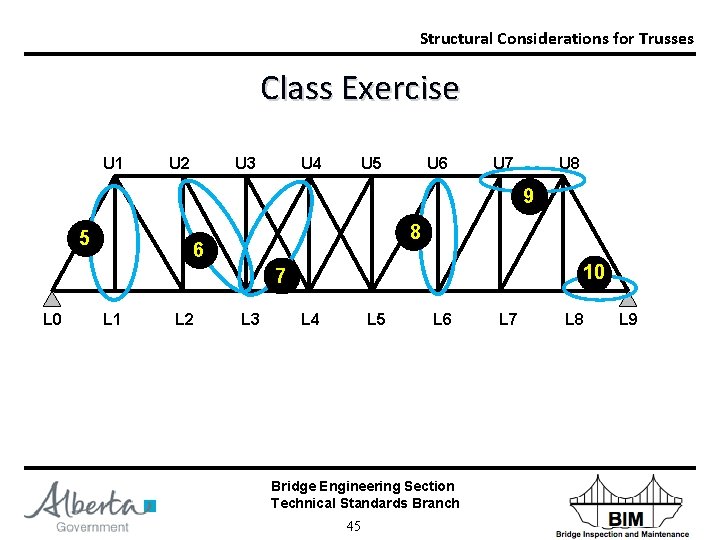
Structural Considerations for Trusses Class Exercise U 1 U 2 U 3 U 4 U 5 U 6 U 7 U 8 9 5 8 6 10 7 L 0 L 1 L 2 L 3 L 4 L 5 L 6 Bridge Engineering Section Technical Standards Branch 45 L 7 L 8 L 9
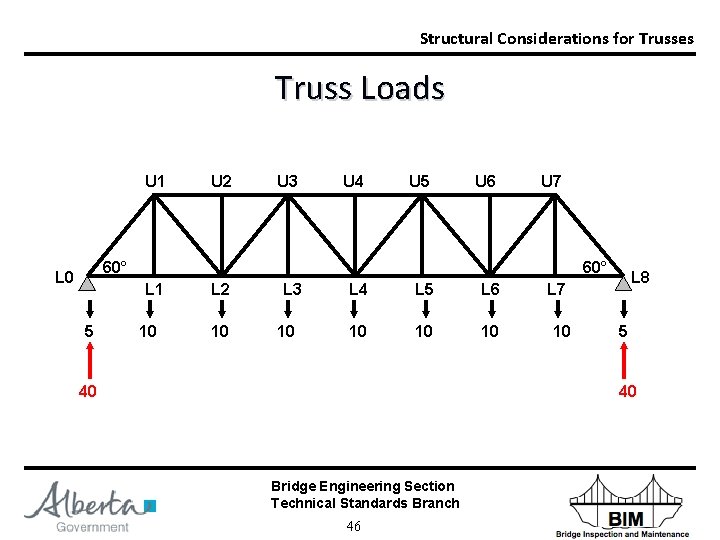
Structural Considerations for Trusses Truss Loads U 1 U 2 U 3 U 4 U 5 U 6 U 7 60° L 0 60° L 1 5 10 L 2 10 L 3 10 L 4 L 5 L 6 10 10 10 40 L 8 L 7 10 5 40 Bridge Engineering Section Technical Standards Branch 46
Structural Considerations for Trusses Questions? ? Bridge Engineering Section Technical Standards Branch 47
- Slides: 48