
Structural Classification of the Nervous System 1 Central
- Slides: 55
Structural Classification of the Nervous System § 1. Central nervous system (CNS) § § § 2. Peripheral nervous system (PNS) § § Cranial and spinal nerves 1 Copyright © 2006 Pearson Education, Inc. , publishing as Benjamin Cummings
Functions of the Nervous System 1. Sensory input – (PNS) § 2. Integration (CNS) § 3. Motor output (PNS) § 2 Copyright © 2006 Pearson Education, Inc. , publishing as Benjamin Cummings
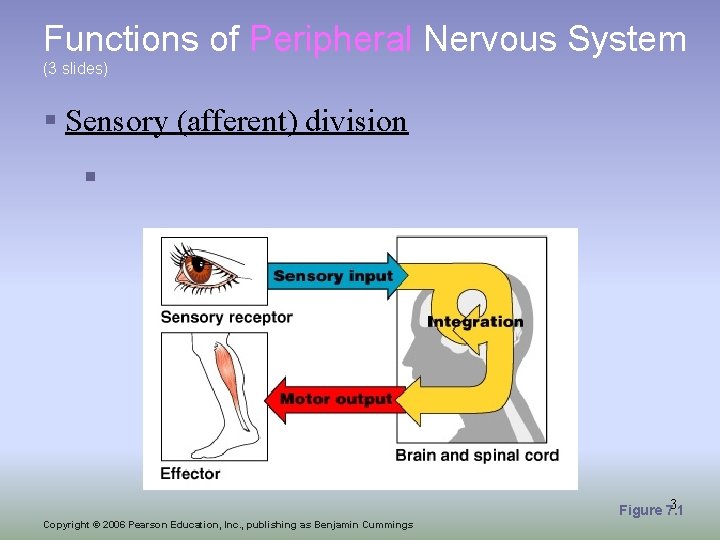
Functions of Peripheral Nervous System (3 slides) § Sensory (afferent) division § 3 Figure 7. 1 Copyright © 2006 Pearson Education, Inc. , publishing as Benjamin Cummings
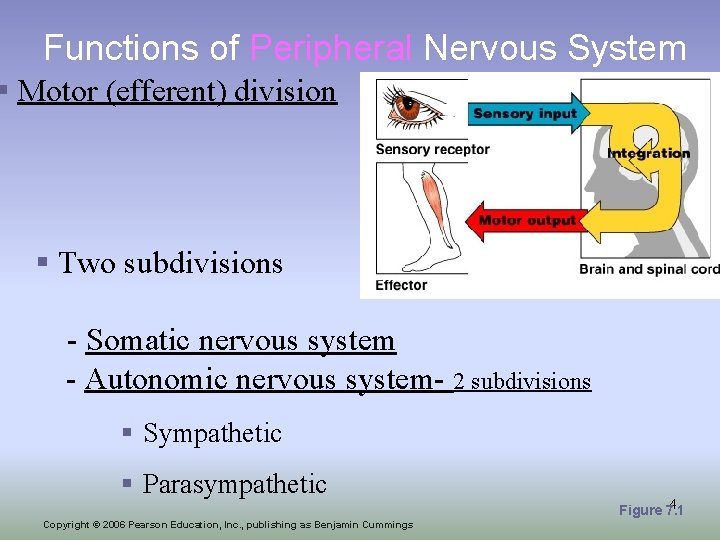
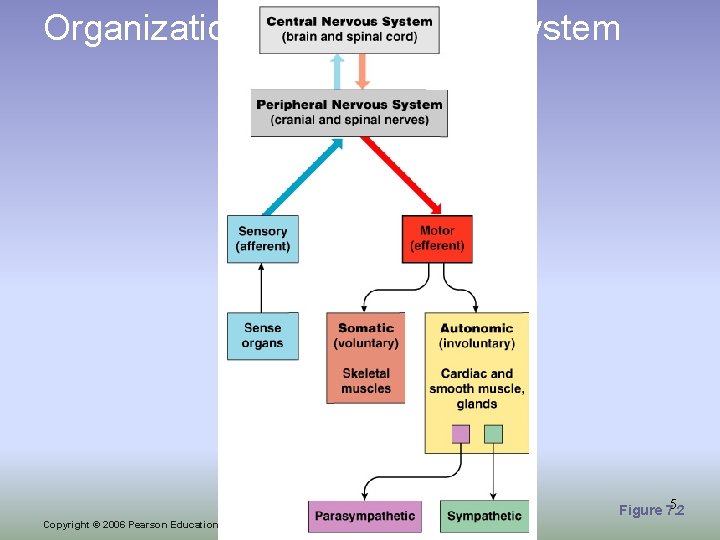
Functions of Peripheral Nervous System § Motor (efferent) division § Two subdivisions - Somatic nervous system - Autonomic nervous system- 2 subdivisions § Sympathetic § Parasympathetic Copyright © 2006 Pearson Education, Inc. , publishing as Benjamin Cummings 4 Figure 7. 1
Organization of the Nervous System 5 Figure 7. 2 Copyright © 2006 Pearson Education, Inc. , publishing as Benjamin Cummings
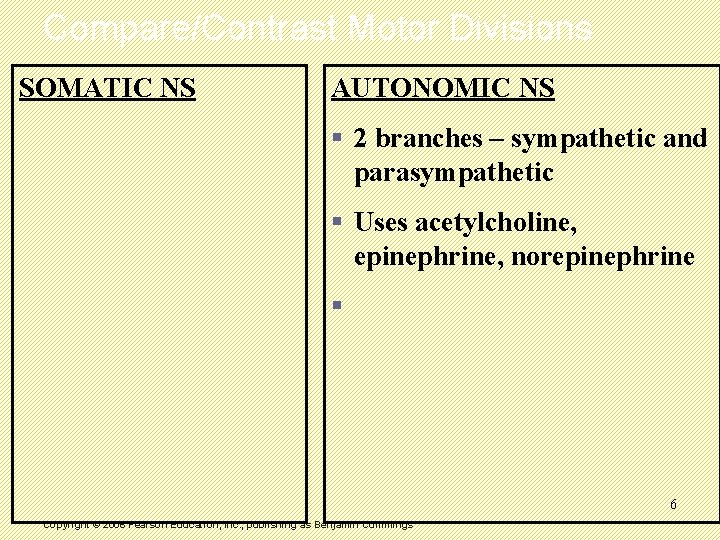
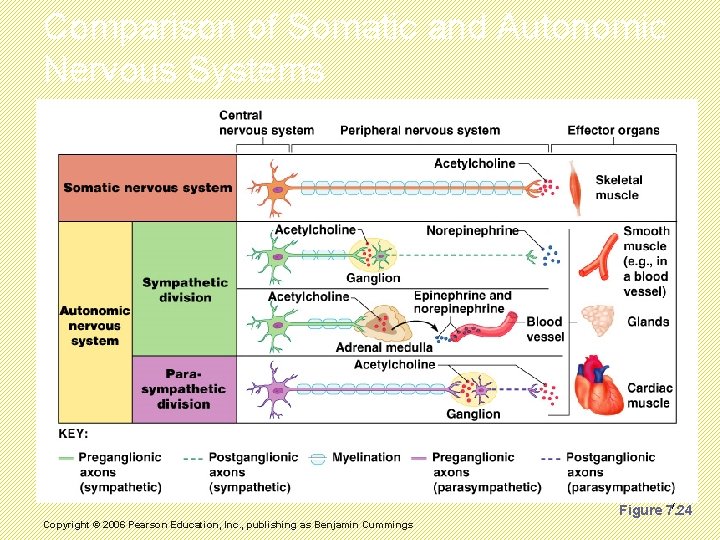
Compare/Contrast Motor Divisions SOMATIC NS AUTONOMIC NS § 2 branches – sympathetic and parasympathetic § Uses acetylcholine, epinephrine, norepinephrine § 6 Copyright © 2006 Pearson Education, Inc. , publishing as Benjamin Cummings
Comparison of Somatic and Autonomic Nervous Systems 7 Figure 7. 24 Copyright © 2006 Pearson Education, Inc. , publishing as Benjamin Cummings
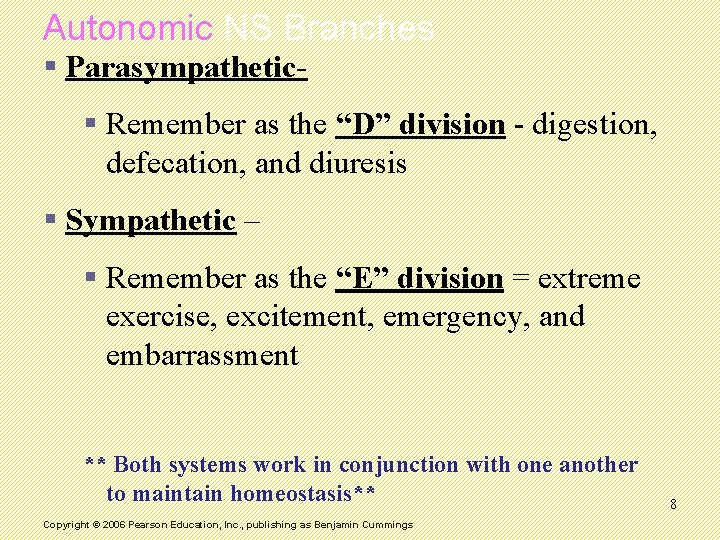
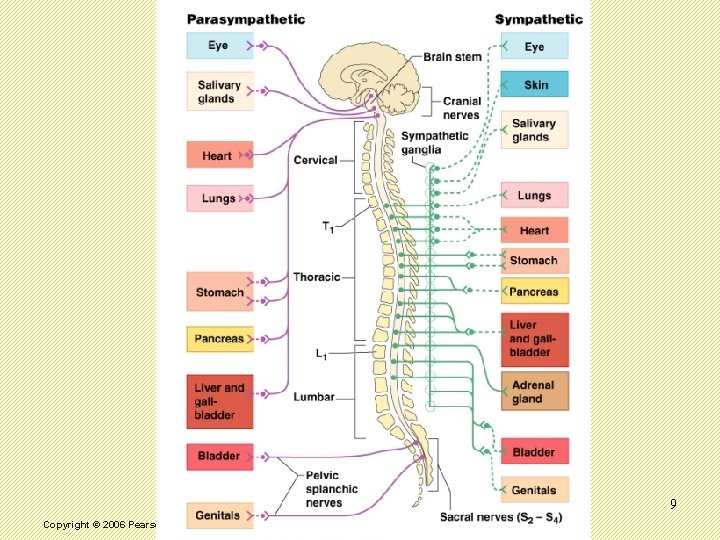
Autonomic NS Branches § Parasympathetic- § Remember as the “D” division - digestion, defecation, and diuresis § Sympathetic – § Remember as the “E” division = extreme exercise, excitement, emergency, and embarrassment ** Both systems work in conjunction with one another to maintain homeostasis** Copyright © 2006 Pearson Education, Inc. , publishing as Benjamin Cummings 8
9 Copyright © 2006 Pearson Education, Inc. , publishing as Benjamin Cummings
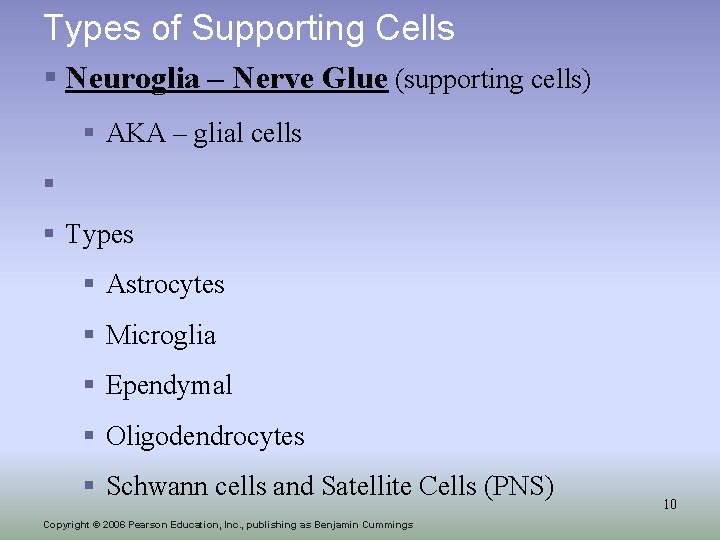
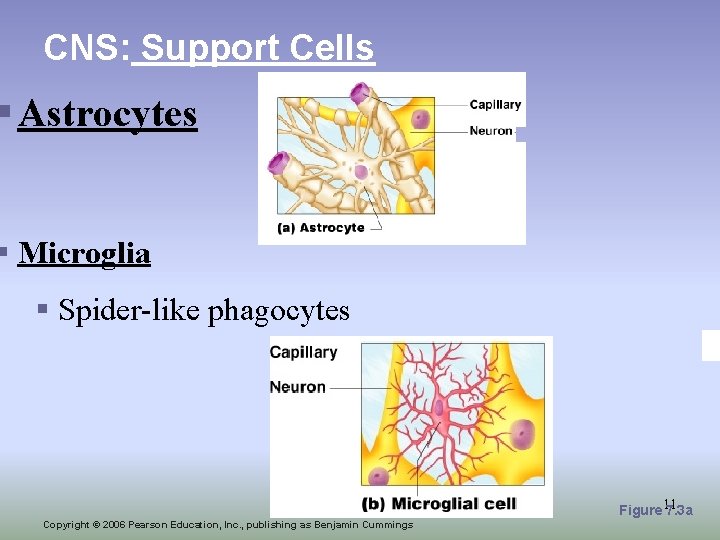
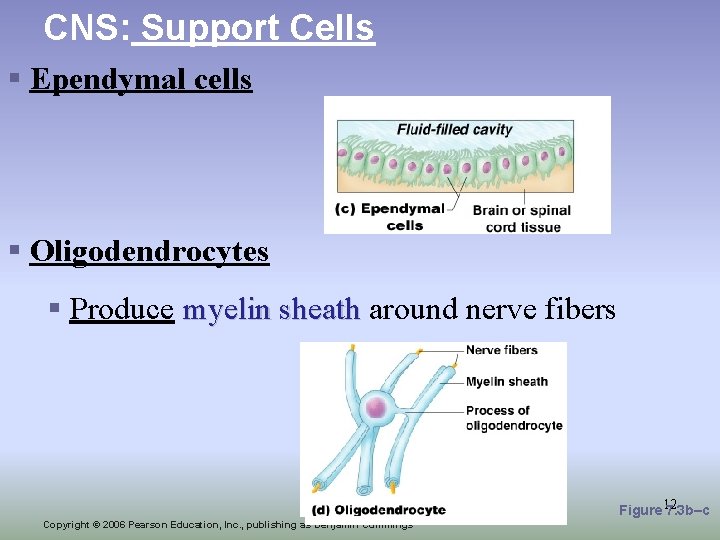
Types of Supporting Cells § Neuroglia – Nerve Glue (supporting cells) § AKA – glial cells § § Types § Astrocytes § Microglia § Ependymal § Oligodendrocytes § Schwann cells and Satellite Cells (PNS) Copyright © 2006 Pearson Education, Inc. , publishing as Benjamin Cummings 10
CNS: Support Cells § Astrocytes § Microglia § Spider-like phagocytes Figure 11 7. 3 a Copyright © 2006 Pearson Education, Inc. , publishing as Benjamin Cummings
CNS: Support Cells § Ependymal cells § Oligodendrocytes § Produce myelin sheath around nerve fibers Figure 12 7. 3 b–c Copyright © 2006 Pearson Education, Inc. , publishing as Benjamin Cummings
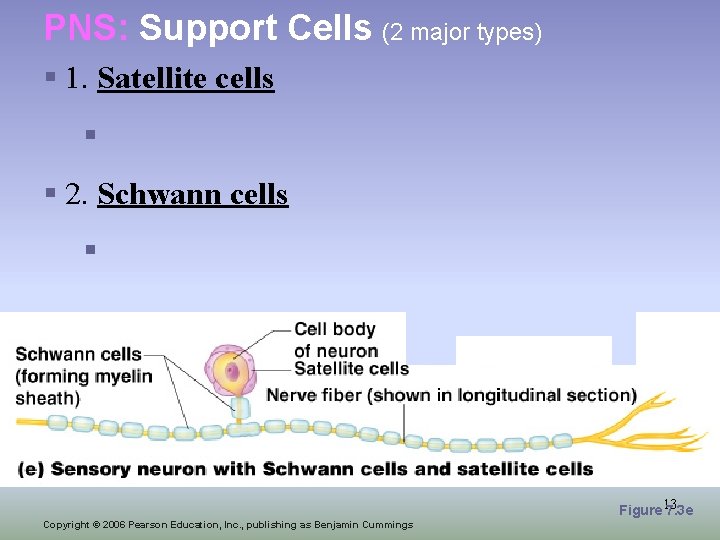
PNS: Support Cells (2 major types) § 1. Satellite cells § § 2. Schwann cells § Figure 13 7. 3 e Copyright © 2006 Pearson Education, Inc. , publishing as Benjamin Cummings
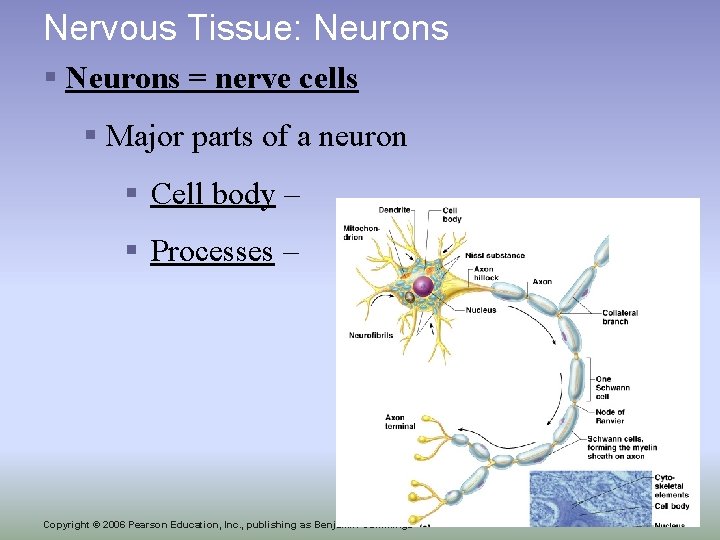
Nervous Tissue: Neurons § Neurons = nerve cells § Major parts of a neuron § Cell body – § Processes – 14 Copyright © 2006 Pearson Education, Inc. , publishing as Benjamin Cummings
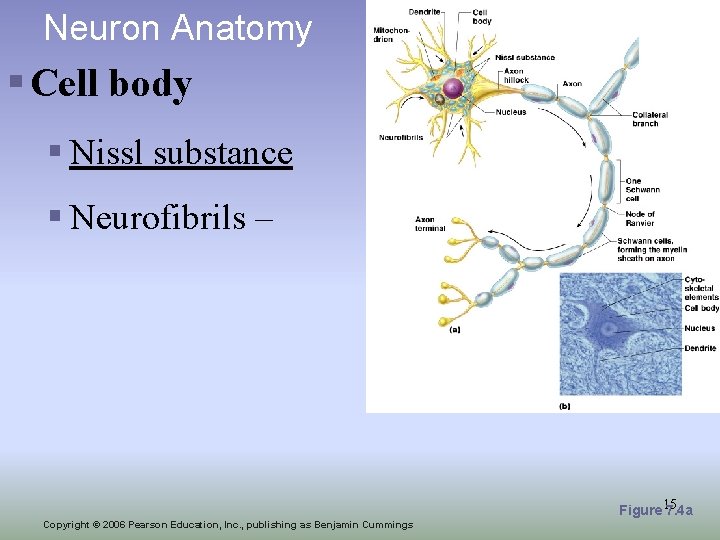
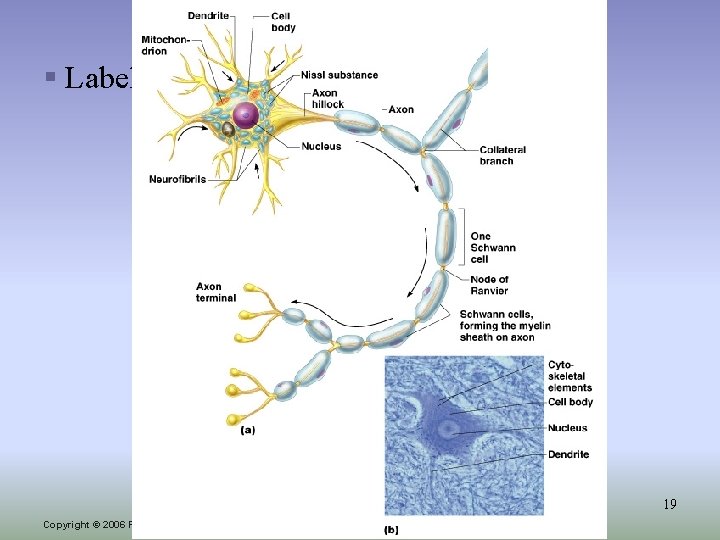
Neuron Anatomy § Cell body § Nissl substance § Neurofibrils – Figure 15 7. 4 a Copyright © 2006 Pearson Education, Inc. , publishing as Benjamin Cummings
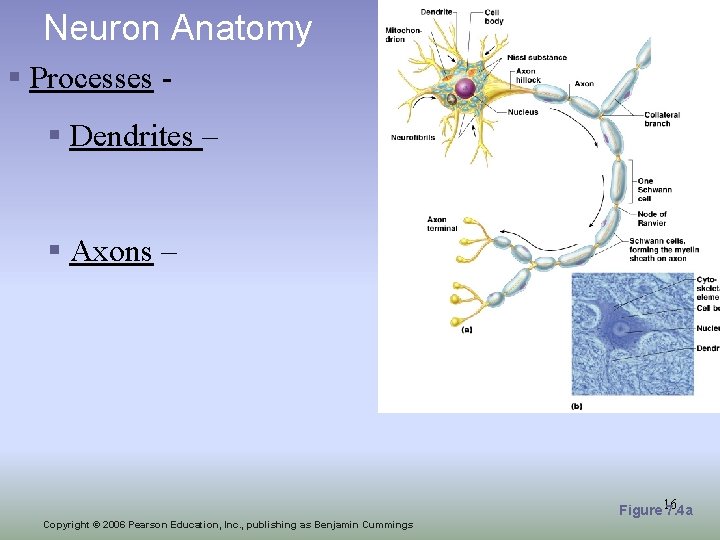
Neuron Anatomy § Processes § Dendrites – § Axons – Figure 16 7. 4 a Copyright © 2006 Pearson Education, Inc. , publishing as Benjamin Cummings
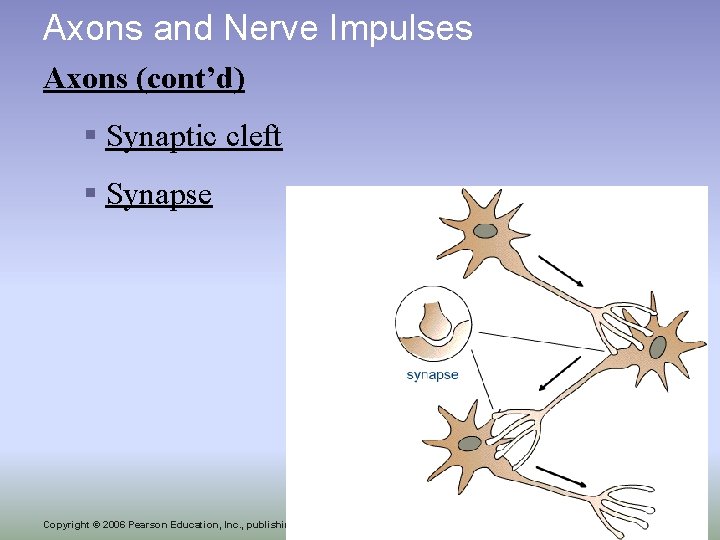
Axons and Nerve Impulses Axons (cont’d) § Synaptic cleft § Synapse 17 Copyright © 2006 Pearson Education, Inc. , publishing as Benjamin Cummings
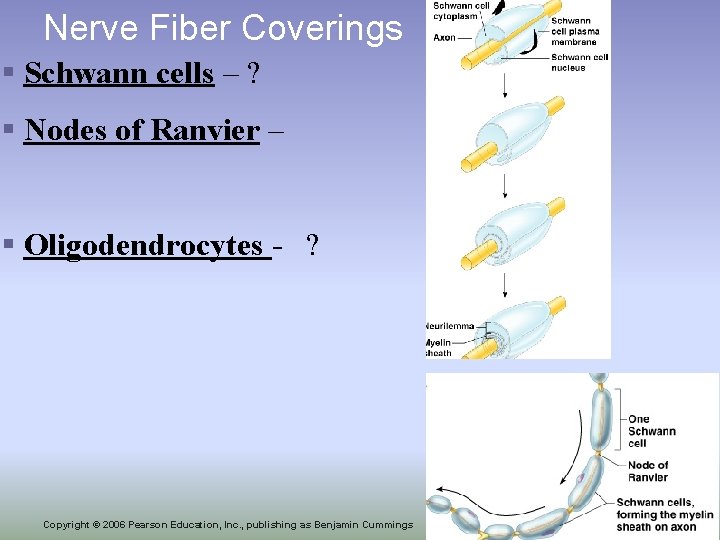
Nerve Fiber Coverings § Schwann cells – ? § Nodes of Ranvier – § Oligodendrocytes - ? Figure 18 7. 5 Copyright © 2006 Pearson Education, Inc. , publishing as Benjamin Cummings
§ Label a neuron 19 Copyright © 2006 Pearson Education, Inc. , publishing as Benjamin Cummings
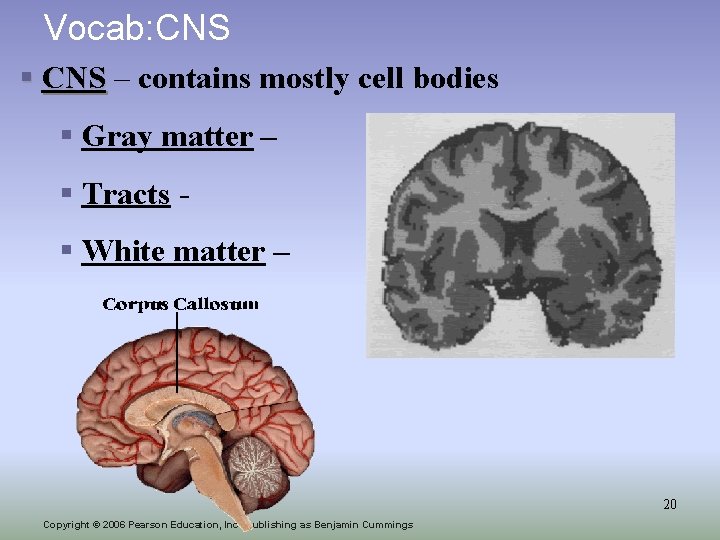
Vocab: CNS § CNS – contains mostly cell bodies § Gray matter – § Tracts § White matter – 20 Copyright © 2006 Pearson Education, Inc. , publishing as Benjamin Cummings
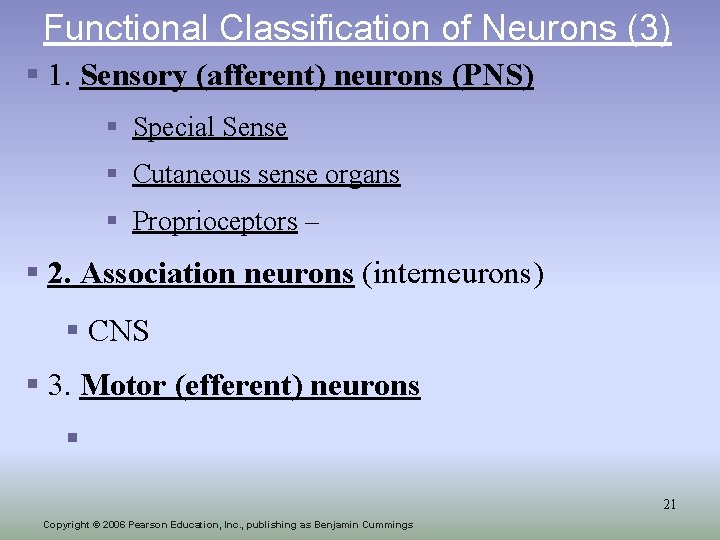
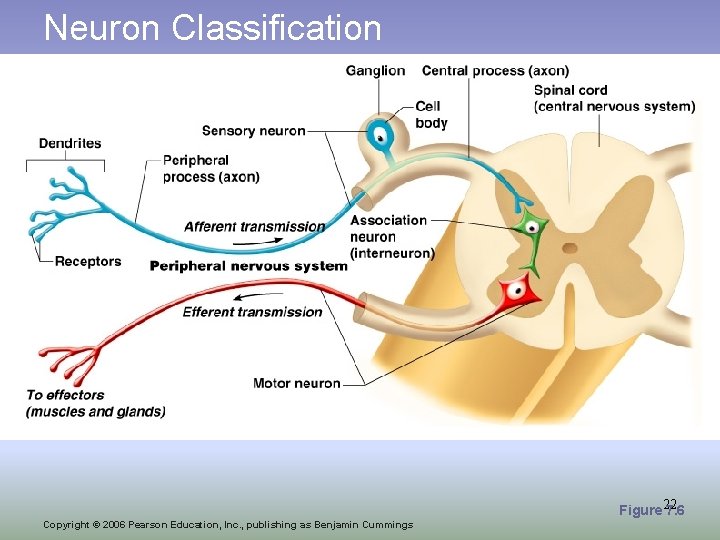
Functional Classification of Neurons (3) § 1. Sensory (afferent) neurons (PNS) § Special Sense § Cutaneous sense organs § Proprioceptors – § 2. Association neurons (interneurons) § CNS § 3. Motor (efferent) neurons § 21 Copyright © 2006 Pearson Education, Inc. , publishing as Benjamin Cummings
Neuron Classification Figure 22 7. 6 Copyright © 2006 Pearson Education, Inc. , publishing as Benjamin Cummings
§ Video : Review “Creation of a Nerve Impulse” § Video: Review “Nerve impulse propagation” 23 Copyright © 2006 Pearson Education, Inc. , publishing as Benjamin Cummings
§ B NOTES 24 Copyright © 2006 Pearson Education, Inc. , publishing as Benjamin Cummings
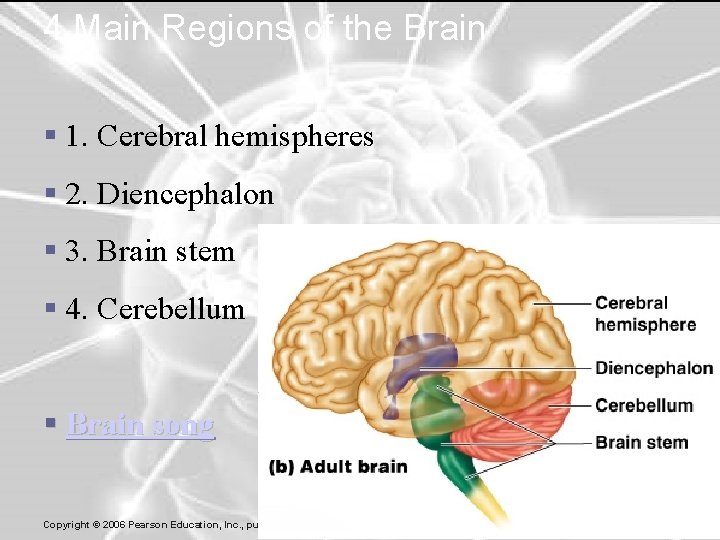
4 Main Regions of the Brain § 1. Cerebral hemispheres § 2. Diencephalon § 3. Brain stem § 4. Cerebellum § Brain song Figure 25 7. 12 b Copyright © 2006 Pearson Education, Inc. , publishing as Benjamin Cummings
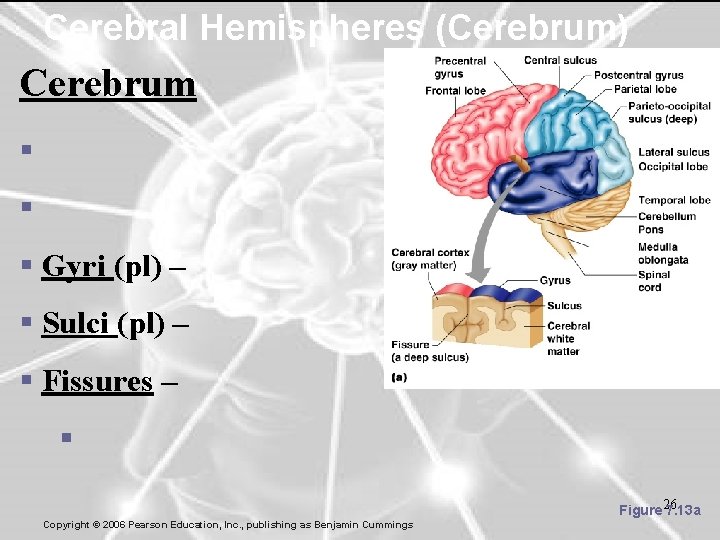
Cerebral Hemispheres (Cerebrum) Cerebrum § § § Gyri (pl) – § Sulci (pl) – § Fissures – § Figure 26 7. 13 a Copyright © 2006 Pearson Education, Inc. , publishing as Benjamin Cummings
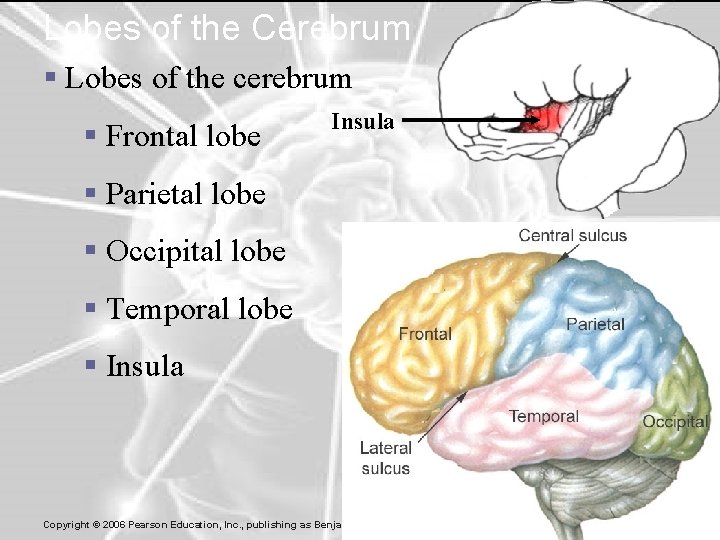
Lobes of the Cerebrum § Lobes of the cerebrum § Frontal lobe Insula § Parietal lobe § Occipital lobe § Temporal lobe § Insula 27 Copyright © 2006 Pearson Education, Inc. , publishing as Benjamin Cummings
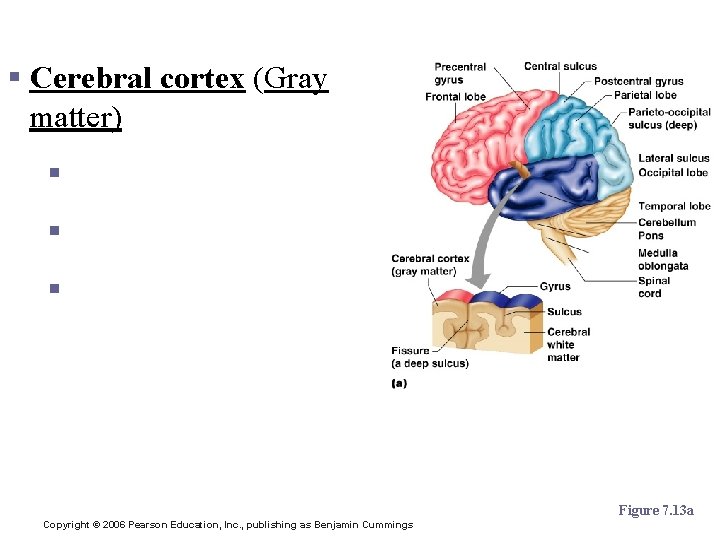
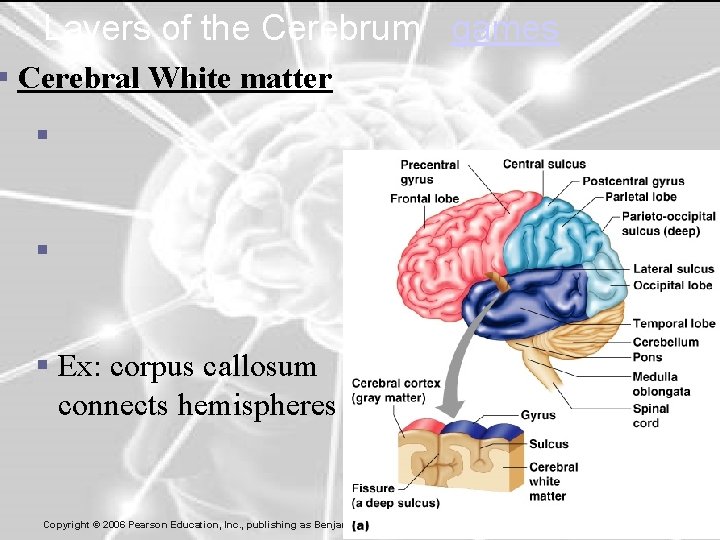
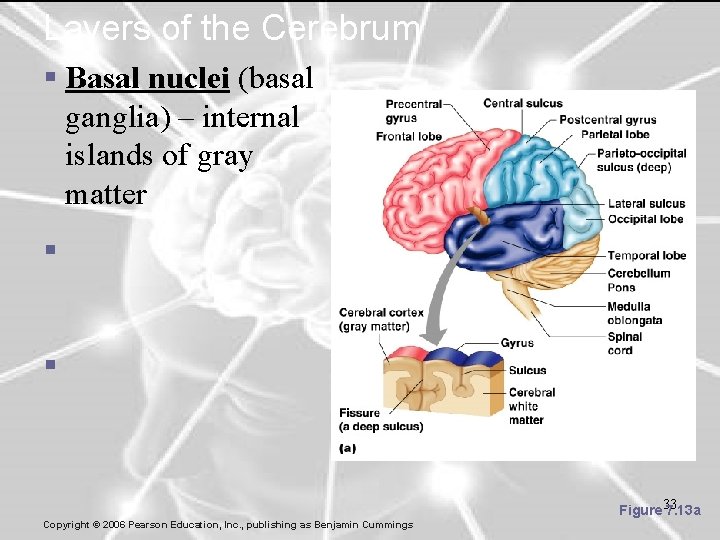
Layers of the Cerebrum 3 slides § Cerebral cortex (Gray matter) § § § Figure 7. 13 a Copyright © 2006 Pearson Education, Inc. , publishing as Benjamin Cummings
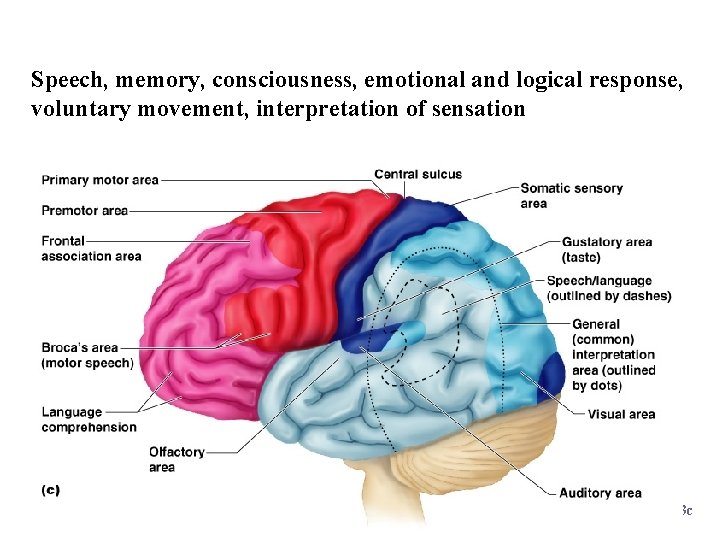
Specialized Areas of the Cerebrum Speech, memory, consciousness, emotional and logical response, voluntary movement, interpretation of sensation Figure 7. 13 c Copyright © 2006 Pearson Education, Inc. , publishing as Benjamin Cummings
§ Cerebral Cortices Notes 30 Copyright © 2006 Pearson Education, Inc. , publishing as Benjamin Cummings
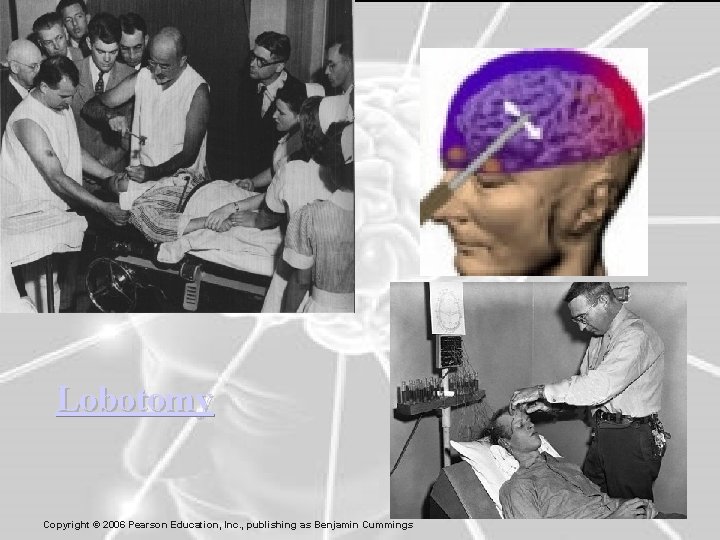
Lobotomy 31 Copyright © 2006 Pearson Education, Inc. , publishing as Benjamin Cummings
Layers of the Cerebrum games § Cerebral White matter § § § Ex: corpus callosum connects hemispheres Figure 32 7. 13 a Copyright © 2006 Pearson Education, Inc. , publishing as Benjamin Cummings
Layers of the Cerebrum § Basal nuclei (basal ganglia) – internal islands of gray matter § § Figure 33 7. 13 a Copyright © 2006 Pearson Education, Inc. , publishing as Benjamin Cummings
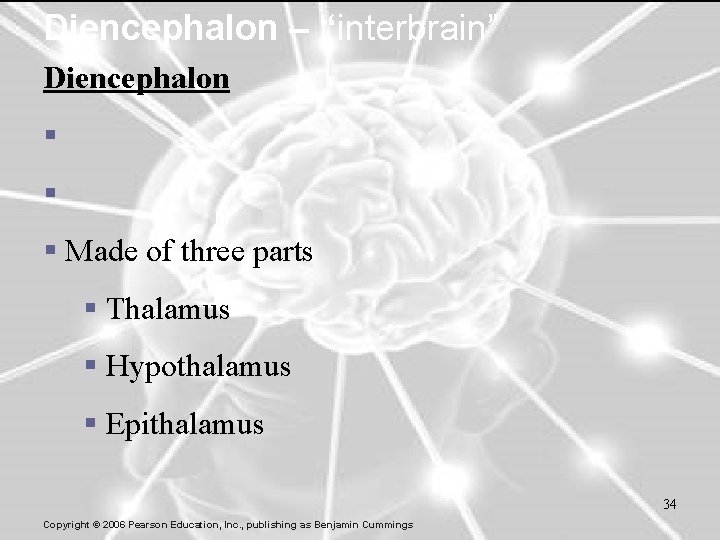
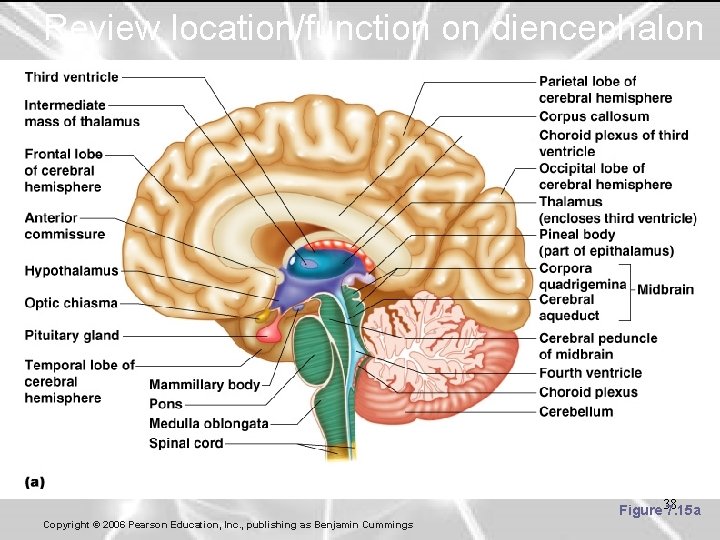
Diencephalon – “interbrain” Diencephalon § § § Made of three parts § Thalamus § Hypothalamus § Epithalamus 34 Copyright © 2006 Pearson Education, Inc. , publishing as Benjamin Cummings
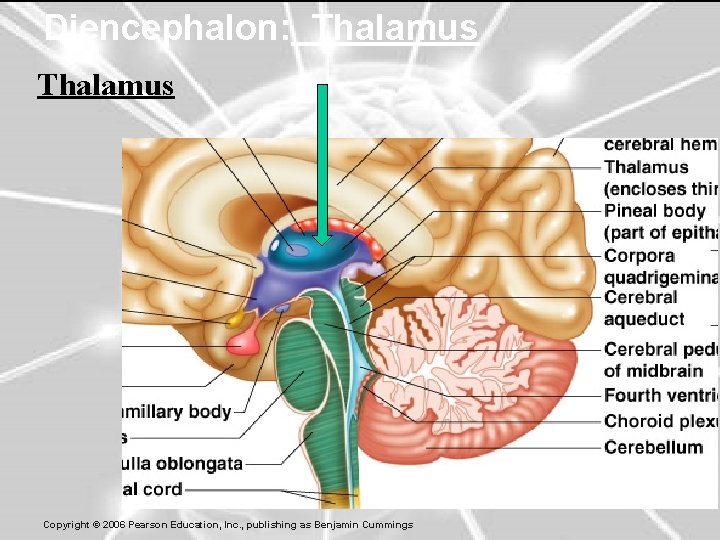
Diencephalon: Thalamus 35 Copyright © 2006 Pearson Education, Inc. , publishing as Benjamin Cummings
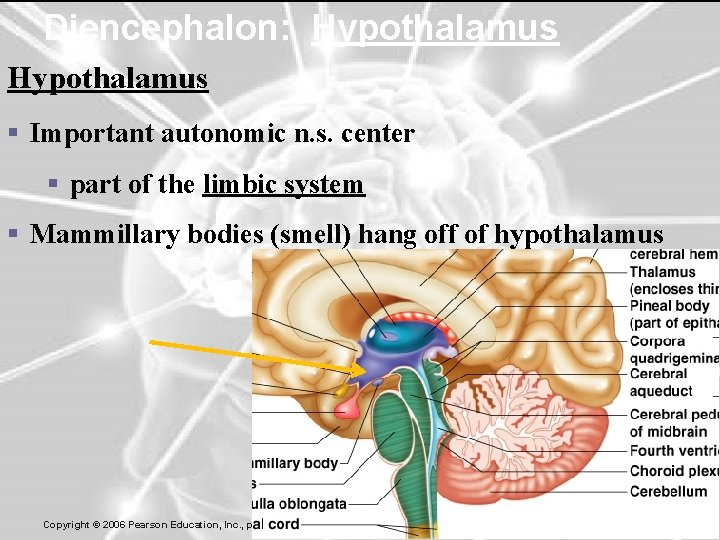
Diencephalon: Hypothalamus § Important autonomic n. s. center § part of the limbic system § Mammillary bodies (smell) hang off of hypothalamus 36 Copyright © 2006 Pearson Education, Inc. , publishing as Benjamin Cummings
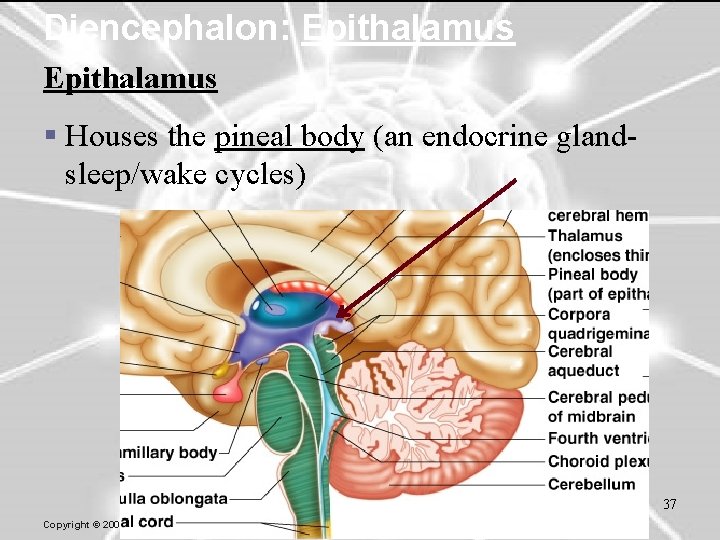
Diencephalon: Epithalamus § Houses the pineal body (an endocrine glandsleep/wake cycles) 37 Copyright © 2006 Pearson Education, Inc. , publishing as Benjamin Cummings
Review location/function on diencephalon Figure 38 7. 15 a Copyright © 2006 Pearson Education, Inc. , publishing as Benjamin Cummings
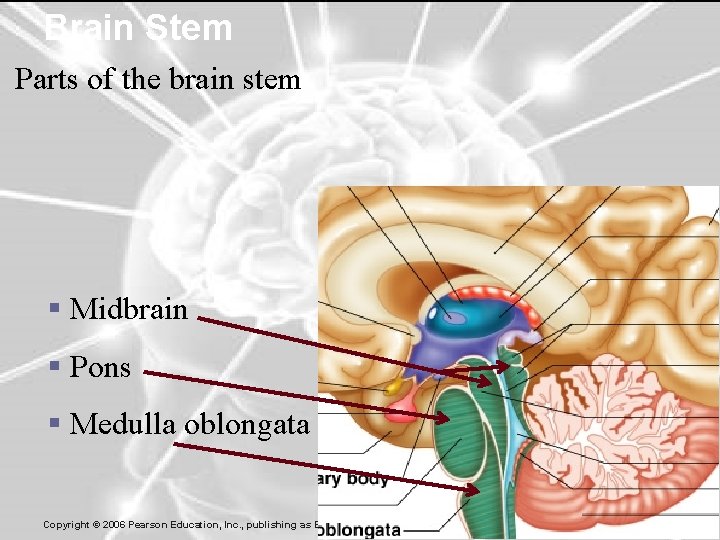
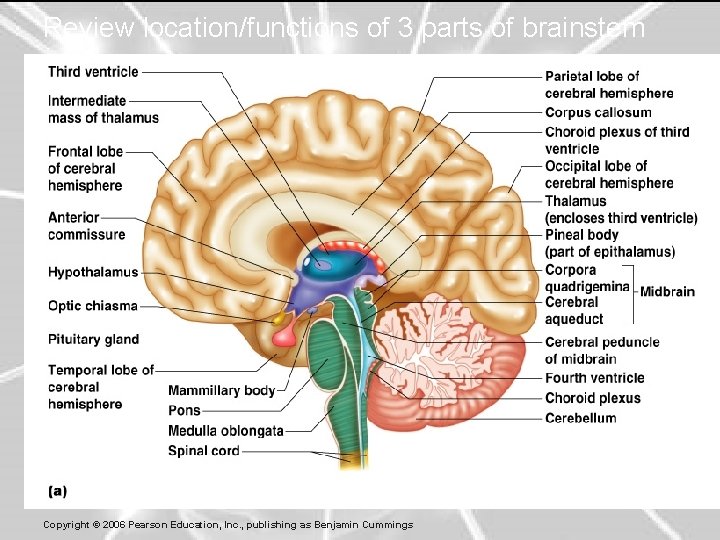
Brain Stem Parts of the brain stem § Midbrain § Pons § Medulla oblongata 39 Copyright © 2006 Pearson Education, Inc. , publishing as Benjamin Cummings
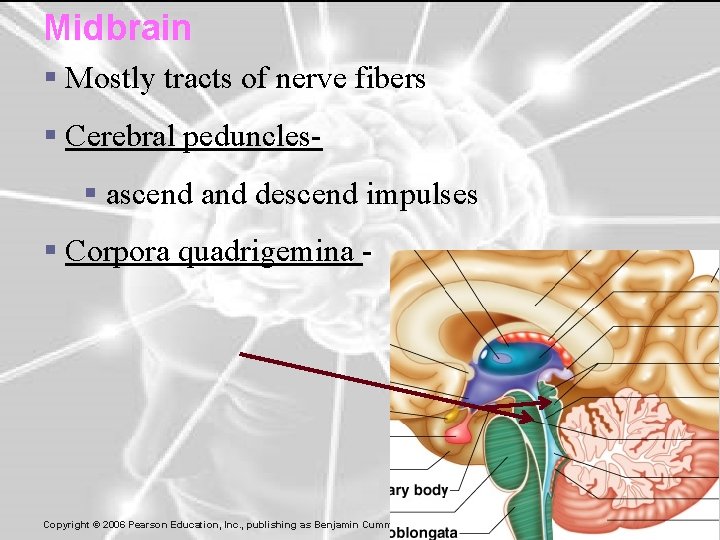
Midbrain § Mostly tracts of nerve fibers § Cerebral peduncles§ ascend and descend impulses § Corpora quadrigemina - 40 Copyright © 2006 Pearson Education, Inc. , publishing as Benjamin Cummings
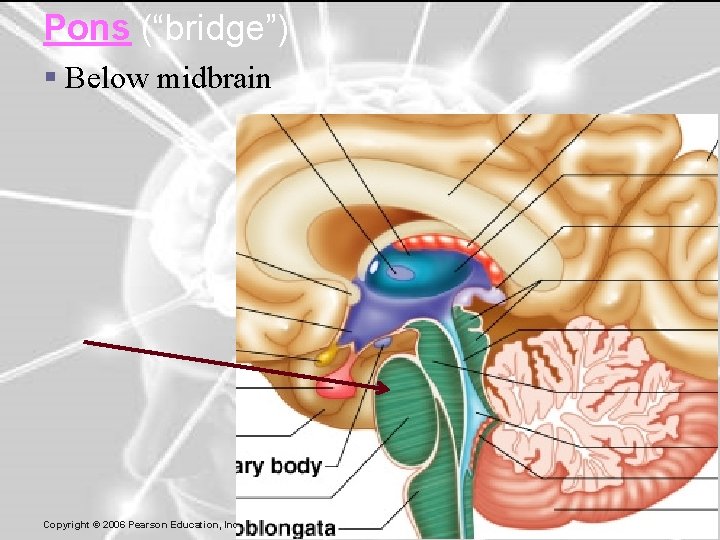
Pons (“bridge”) § Below midbrain 41 Copyright © 2006 Pearson Education, Inc. , publishing as Benjamin Cummings
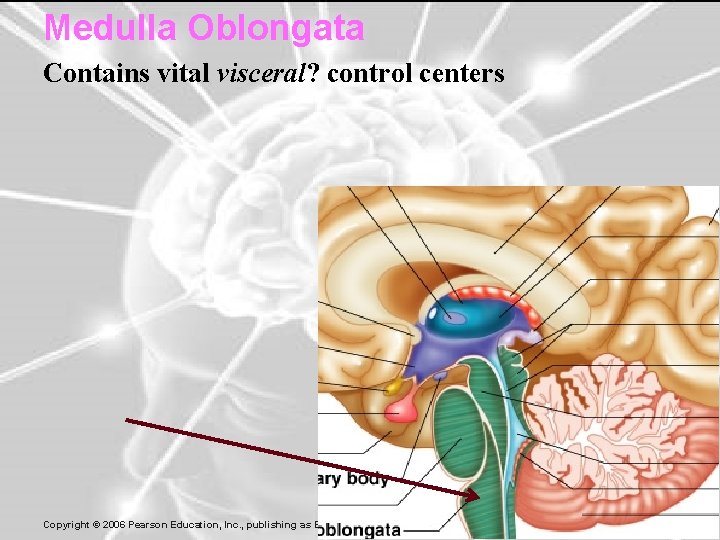
Medulla Oblongata Contains vital visceral? control centers 42 Copyright © 2006 Pearson Education, Inc. , publishing as Benjamin Cummings
Review location/functions of 3 parts of brainstem 43 Copyright © 2006 Pearson Education, Inc. , publishing as Benjamin Cummings
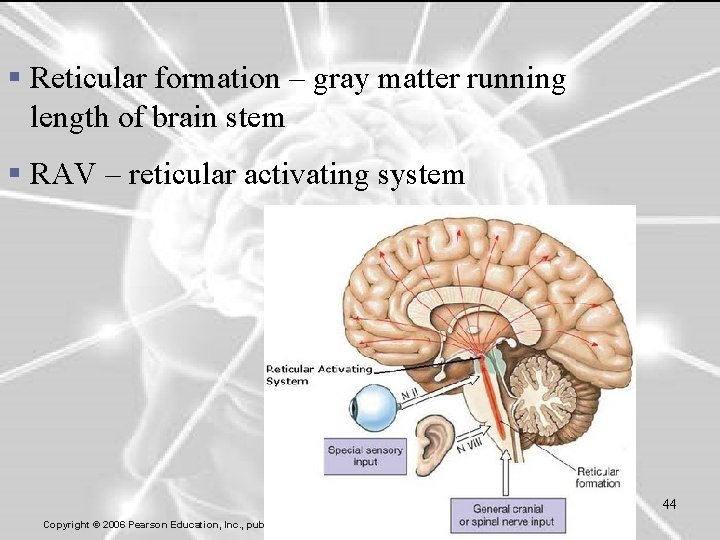
§ Reticular formation – gray matter running length of brain stem § RAV – reticular activating system 44 Copyright © 2006 Pearson Education, Inc. , publishing as Benjamin Cummings
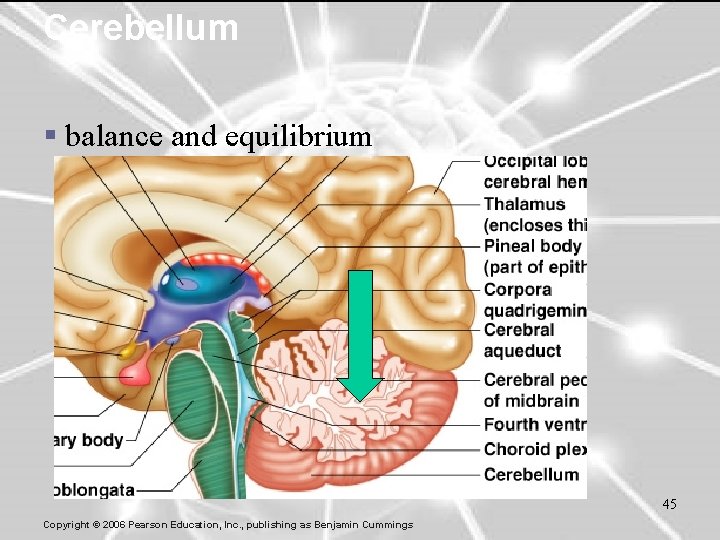
Cerebellum § balance and equilibrium 45 Copyright © 2006 Pearson Education, Inc. , publishing as Benjamin Cummings
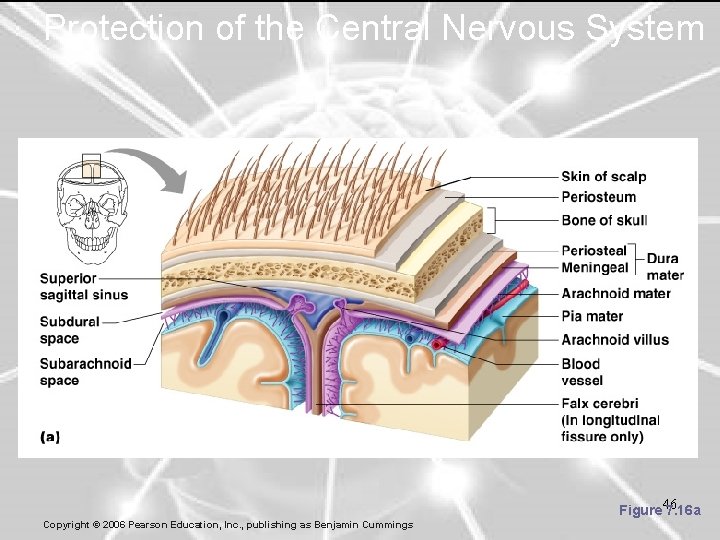
Protection of the Central Nervous System Figure 46 7. 16 a Copyright © 2006 Pearson Education, Inc. , publishing as Benjamin Cummings
Meninges – 3 layers § Dura mater – “tough or hard mother” § § Periosteum – § Meningeal layer – § Arachnoid layer § § Arachnoid villi – § Pia mater (deepest) § § 47 Copyright © 2006 Pearson Education, Inc. , publishing as Benjamin Cummings
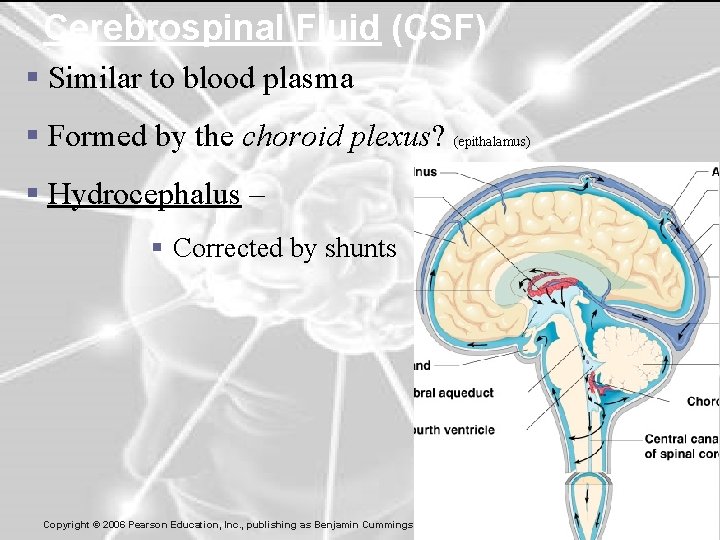
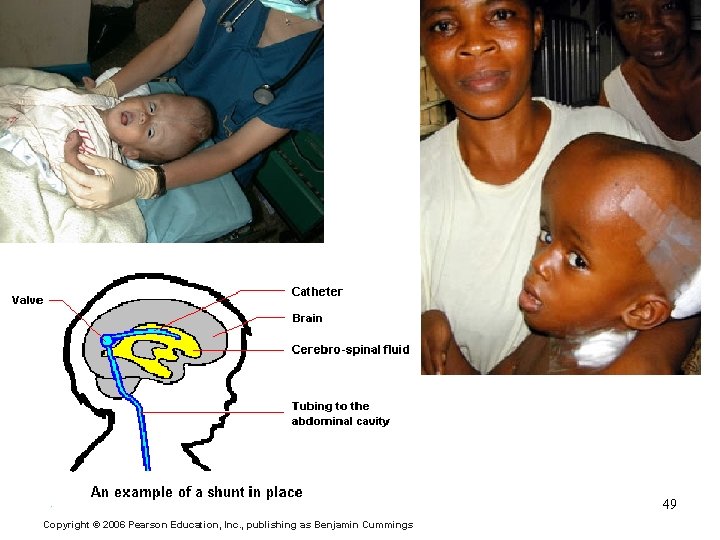
Cerebrospinal Fluid (CSF) § Similar to blood plasma § Formed by the choroid plexus? (epithalamus) § Hydrocephalus – § Corrected by shunts 48 Copyright © 2006 Pearson Education, Inc. , publishing as Benjamin Cummings
49 Copyright © 2006 Pearson Education, Inc. , publishing as Benjamin Cummings
Blood Brain Barrier § Composed of the least permeable capillaries of the body § Useless against some substances § Glucose and water § Fats and fat soluble molecules § Respiratory gases § Alcohol § Nicotine § Anesthesia Copyright © 2006 Pearson Education, Inc. , publishing as Benjamin Cummings 50
Traumatic Brain Injuries § Concussion § § § Contusion § Nervous tissue destruction occurs § (stem cells? ) § Cerebral edema § § 51 Copyright © 2006 Pearson Education, Inc. , publishing as Benjamin Cummings
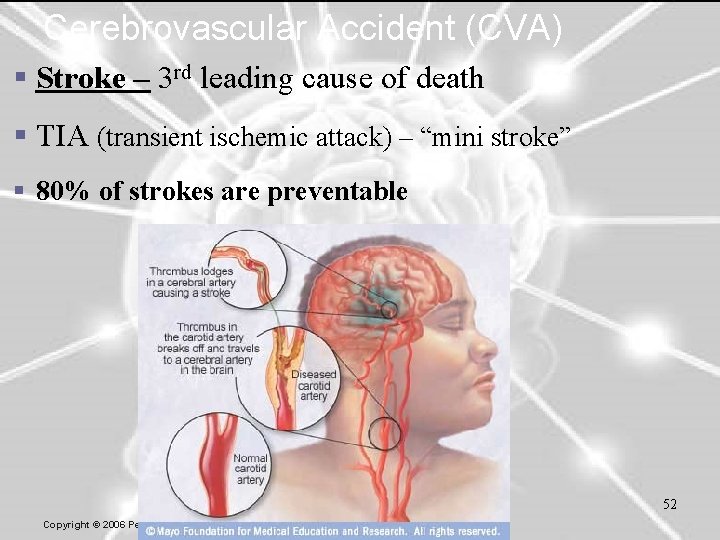
Cerebrovascular Accident (CVA) § Stroke – 3 rd leading cause of death § TIA (transient ischemic attack) – “mini stroke” § 80% of strokes are preventable 52 Copyright © 2006 Pearson Education, Inc. , publishing as Benjamin Cummings
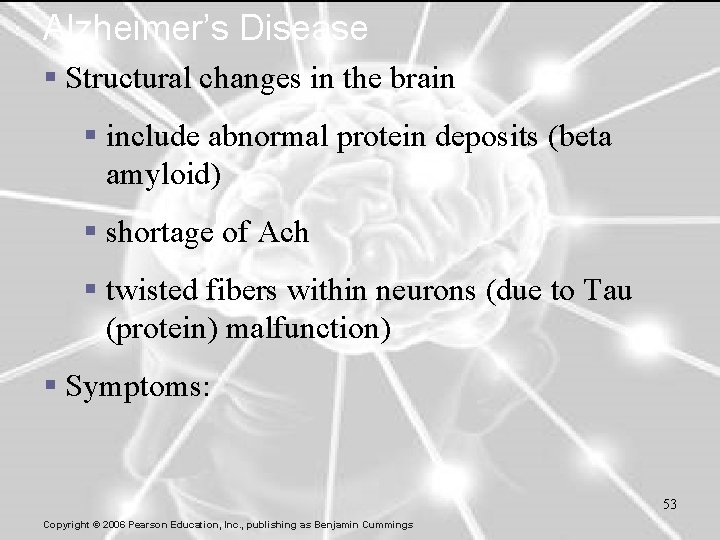
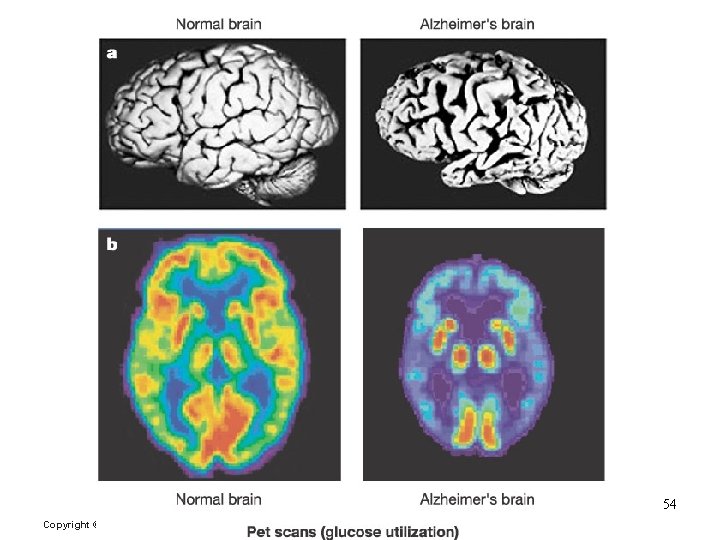
Alzheimer’s Disease § Structural changes in the brain § include abnormal protein deposits (beta amyloid) § shortage of Ach § twisted fibers within neurons (due to Tau (protein) malfunction) § Symptoms: 53 Copyright © 2006 Pearson Education, Inc. , publishing as Benjamin Cummings
54 Copyright © 2006 Pearson Education, Inc. , publishing as Benjamin Cummings
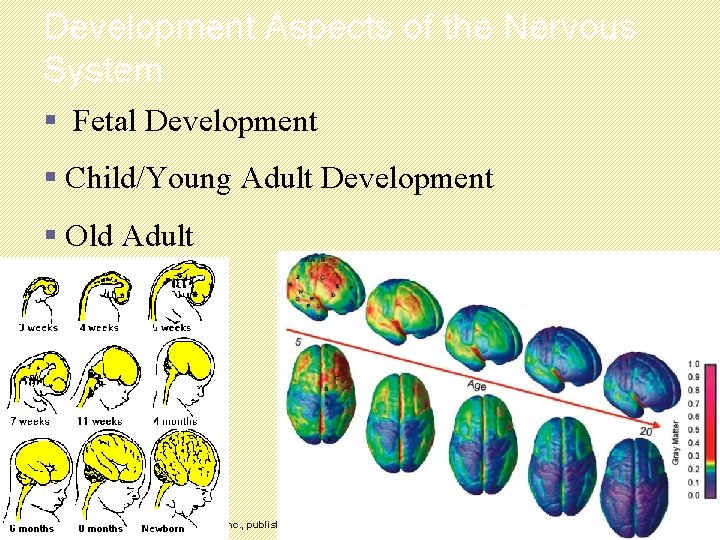
Development Aspects of the Nervous System § Fetal Development § Child/Young Adult Development § Old Adult 55 Copyright © 2006 Pearson Education, Inc. , publishing as Benjamin Cummings