
Structural Analysis of the Mount Polley Porphyry CuAu
- Slides: 17
Structural Analysis of the Mount Polley Porphyry Cu-Au Deposit: Restoration of Post-Mineral Deformation using Ore Body Geometry Stephanie Wafforn October 21, 2014
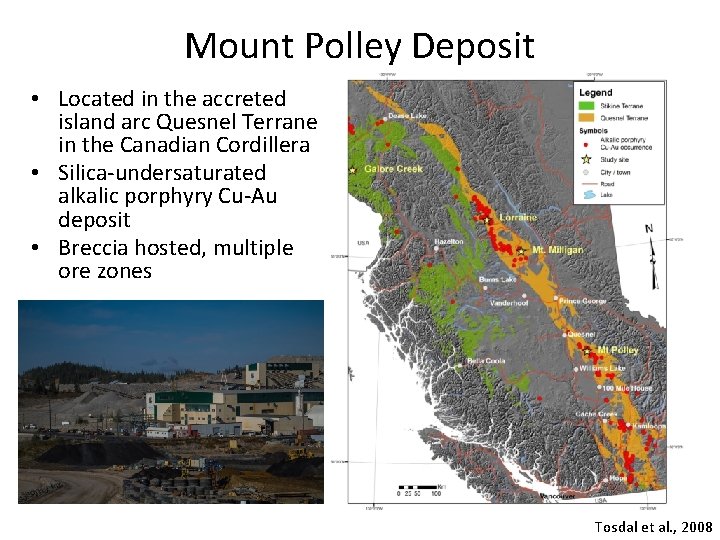
Mount Polley Deposit • Located in the accreted island arc Quesnel Terrane in the Canadian Cordillera • Silica-undersaturated alkalic porphyry Cu-Au deposit • Breccia hosted, multiple ore zones Tosdal et al. , 2008
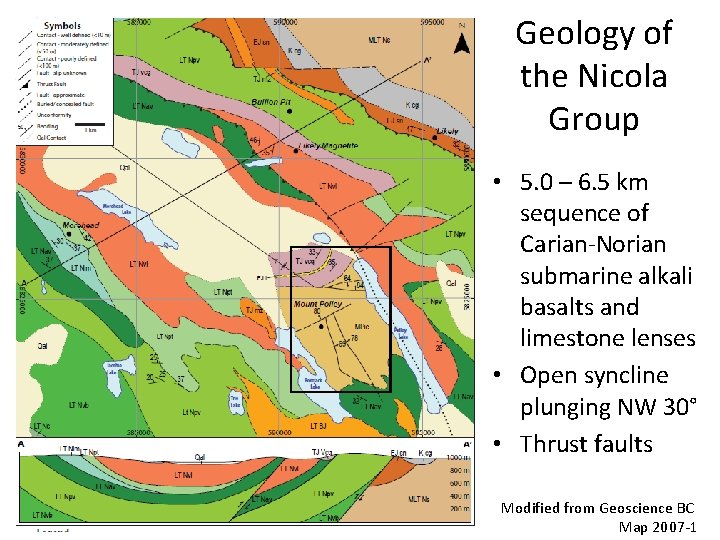
Geology of the Nicola Group • 5. 0 – 6. 5 km sequence of Carian-Norian submarine alkali basalts and limestone lenses • Open syncline plunging NW 30° • Thrust faults Modified from Geoscience BC Map 2007 -1
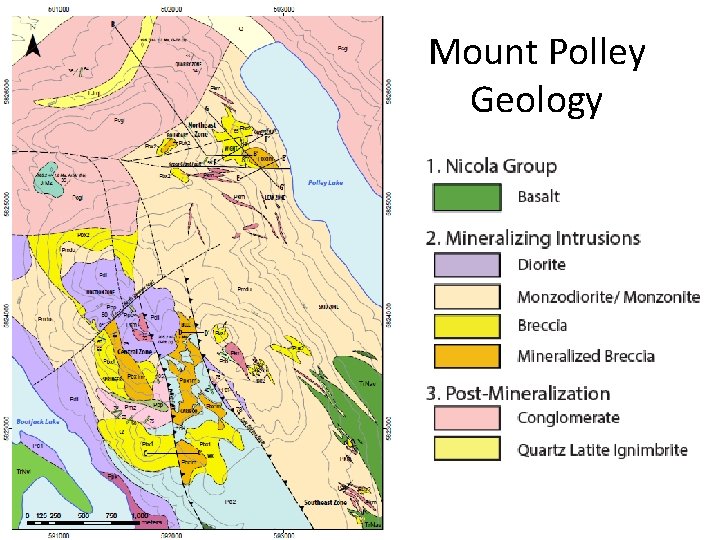
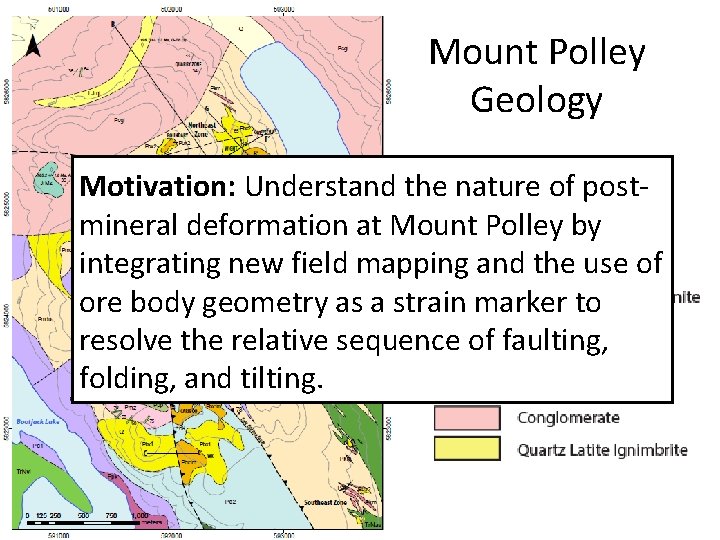
Mount Polley Geology
Mount Polley Geology Motivation: Understand the nature of postmineral deformation at Mount Polley by integrating new field mapping and the use of ore body geometry as a strain marker to resolve the relative sequence of faulting, folding, and tilting.
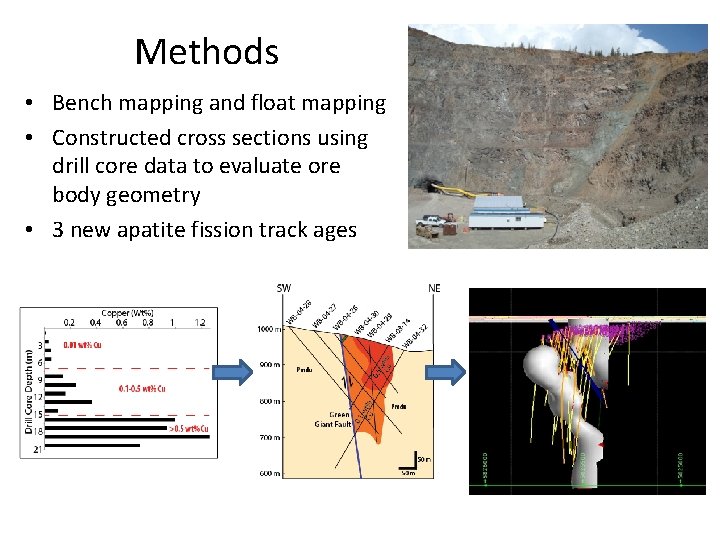
Methods • Bench mapping and float mapping • Constructed cross sections using drill core data to evaluate ore body geometry • 3 new apatite fission track ages
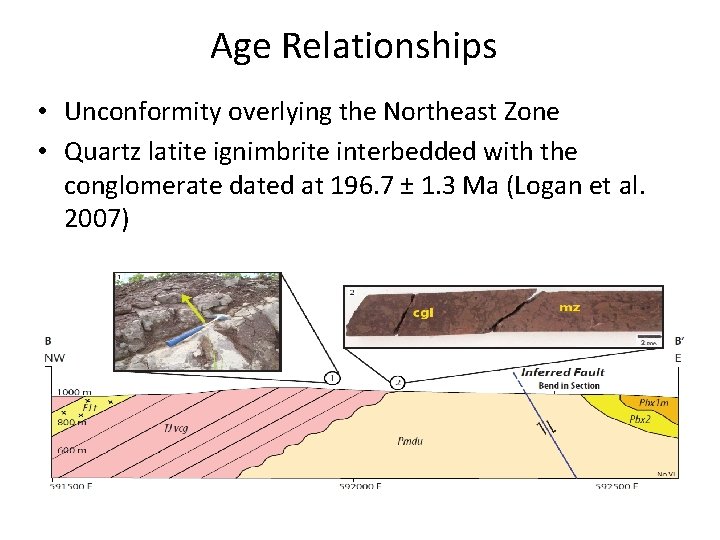
Age Relationships • Unconformity overlying the Northeast Zone • Quartz latite ignimbrite interbedded with the conglomerate dated at 196. 7 ± 1. 3 Ma (Logan et al. 2007)
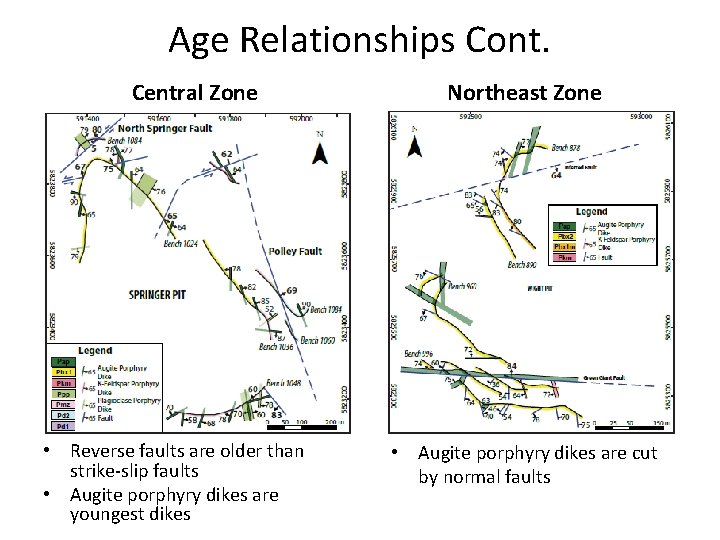
Age Relationships Cont. Central Zone • Reverse faults are older than strike-slip faults • Augite porphyry dikes are youngest dikes Northeast Zone • Augite porphyry dikes are cut by normal faults
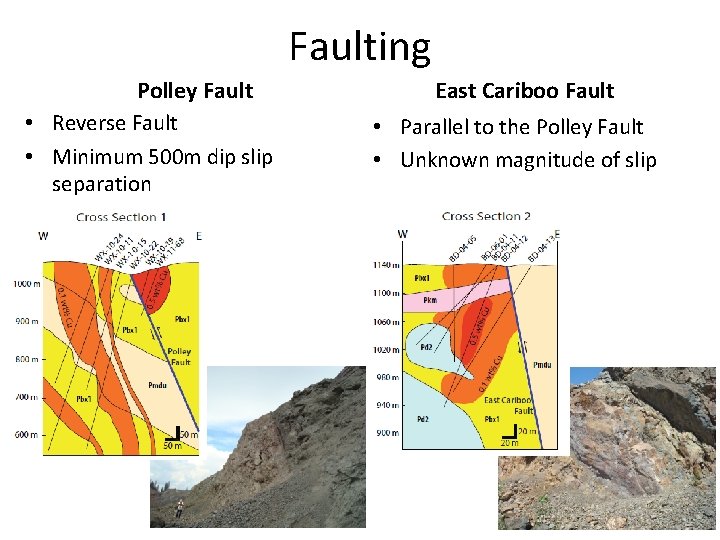
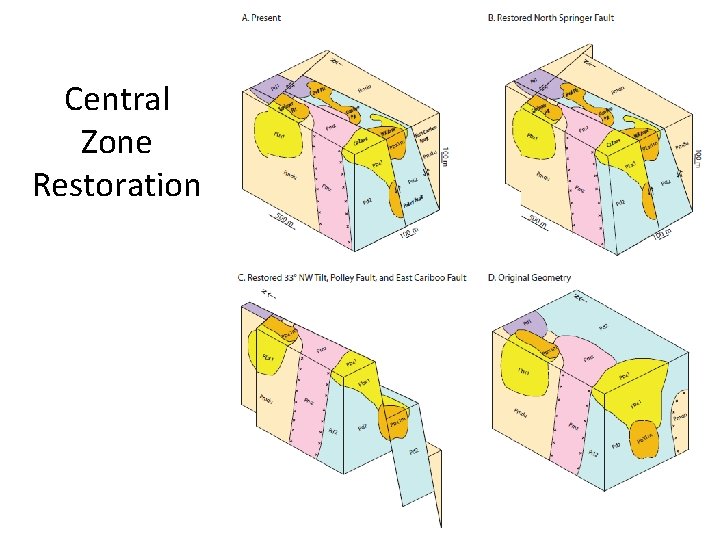
Faulting Polley Fault • Reverse Fault • Minimum 500 m dip slip separation East Cariboo Fault • Parallel to the Polley Fault • Unknown magnitude of slip
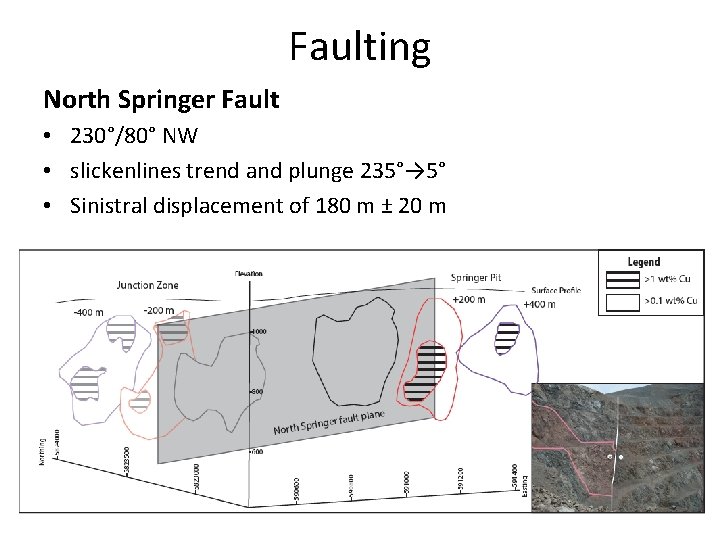
Faulting North Springer Fault • 230°/80° NW • slickenlines trend and plunge 235°→ 5° • Sinistral displacement of 180 m ± 20 m
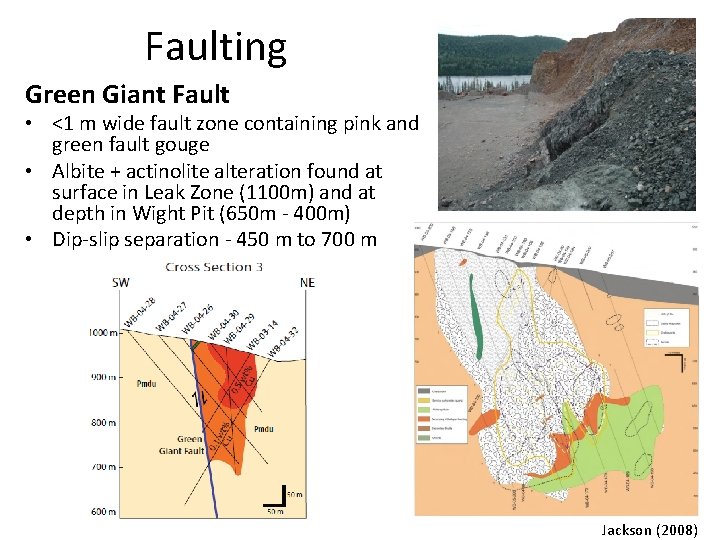
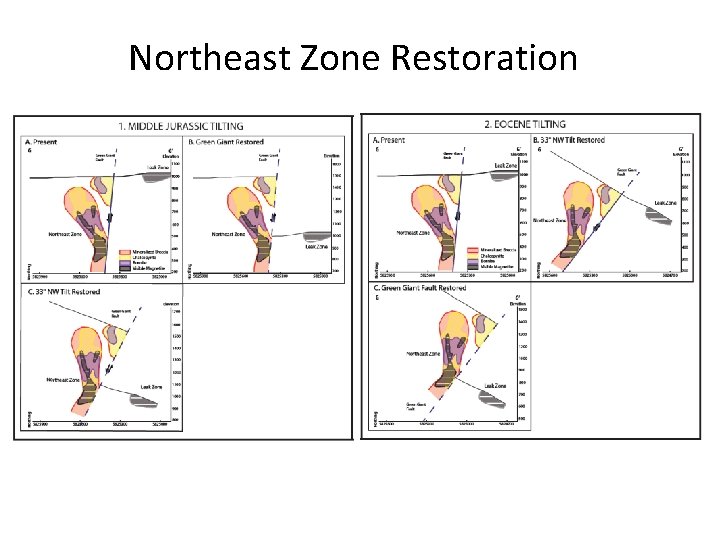
Faulting Green Giant Fault • <1 m wide fault zone containing pink and green fault gouge • Albite + actinolite alteration found at surface in Leak Zone (1100 m) and at depth in Wight Pit (650 m - 400 m) • Dip-slip separation - 450 m to 700 m Jackson (2008)
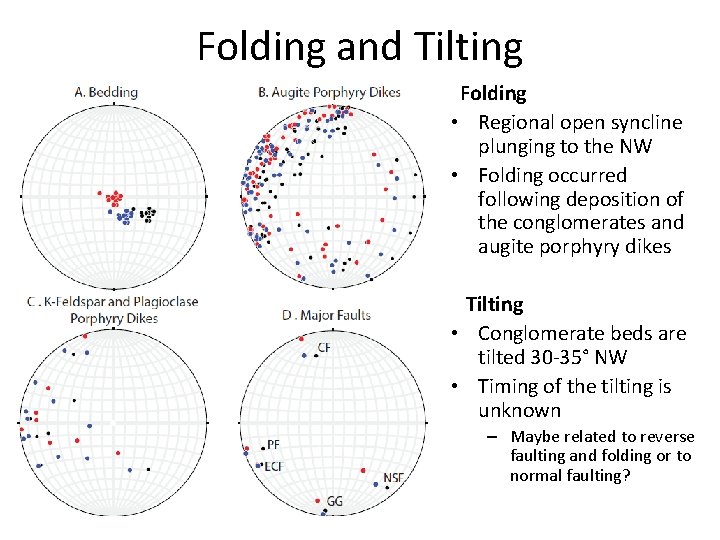
Folding and Tilting Folding • Regional open syncline plunging to the NW • Folding occurred following deposition of the conglomerates and augite porphyry dikes Tilting • Conglomerate beds are tilted 30 -35° NW • Timing of the tilting is unknown – Maybe related to reverse faulting and folding or to normal faulting?
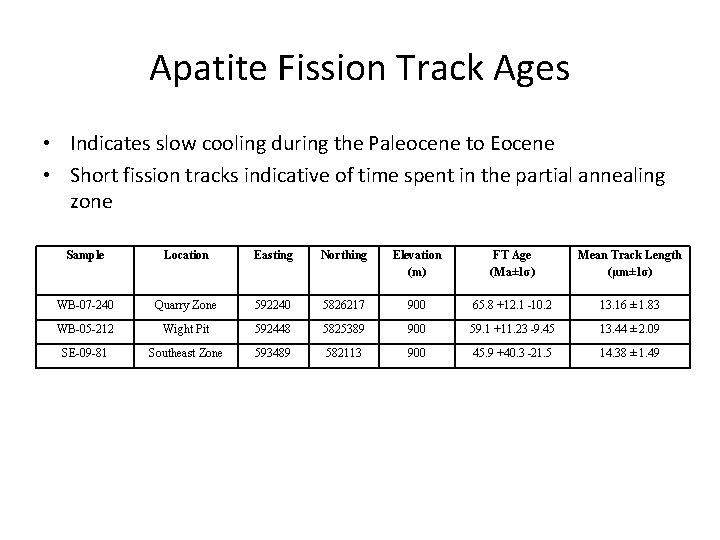
Apatite Fission Track Ages • Indicates slow cooling during the Paleocene to Eocene • Short fission tracks indicative of time spent in the partial annealing zone Sample Location Easting Northing Elevation (m) FT Age (Ma± 1σ) Mean Track Length (µm± 1σ) WB-07 -240 Quarry Zone 592240 5826217 900 65. 8 +12. 1 -10. 2 13. 16 ± 1. 83 WB-05 -212 Wight Pit 592448 5825389 900 59. 1 +11. 23 -9. 45 13. 44 ± 2. 09 SE-09 -81 Southeast Zone 593489 582113 900 45. 9 +40. 3 -21. 5 14. 38 ± 1. 49
Central Zone Restoration
Northeast Zone Restoration
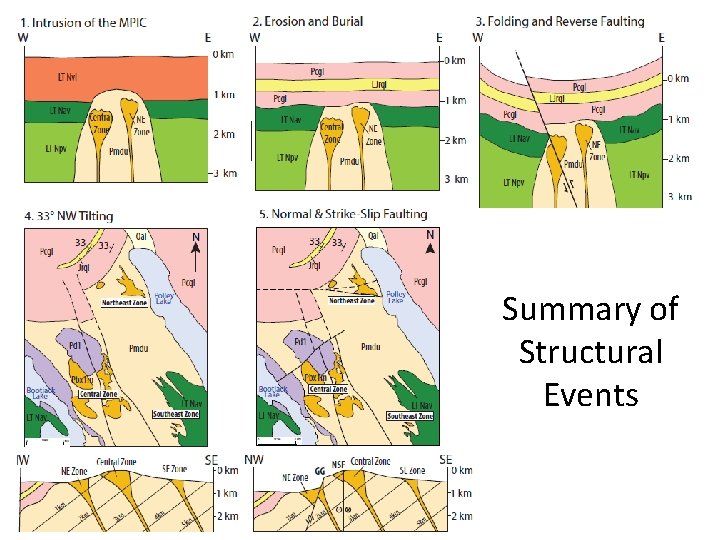
Summary of Structural Events
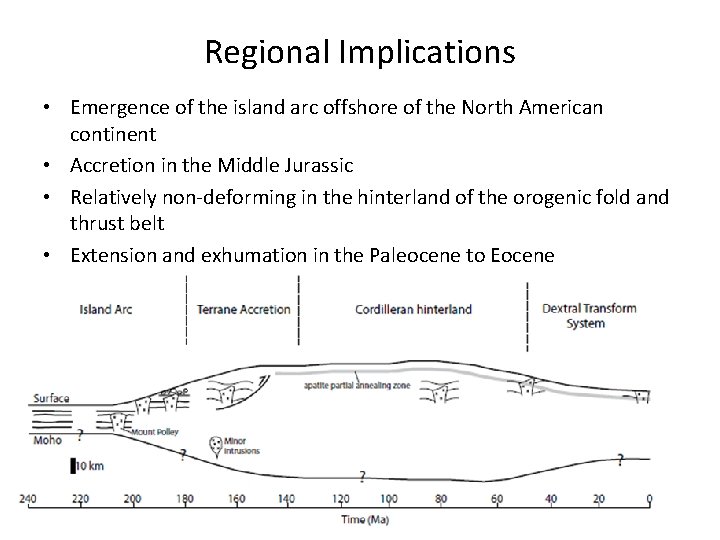
Regional Implications • Emergence of the island arc offshore of the North American continent • Accretion in the Middle Jurassic • Relatively non-deforming in the hinterland of the orogenic fold and thrust belt • Extension and exhumation in the Paleocene to Eocene