
Structural adaptations to the environment Structural adaptations to

- Slides: 13
Structural adaptations to the environment
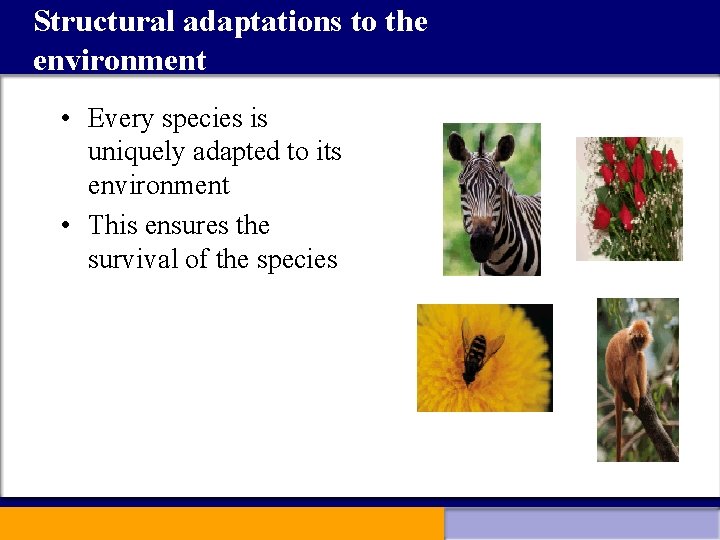
Structural adaptations to the environment • Every species is uniquely adapted to its environment • This ensures the survival of the species
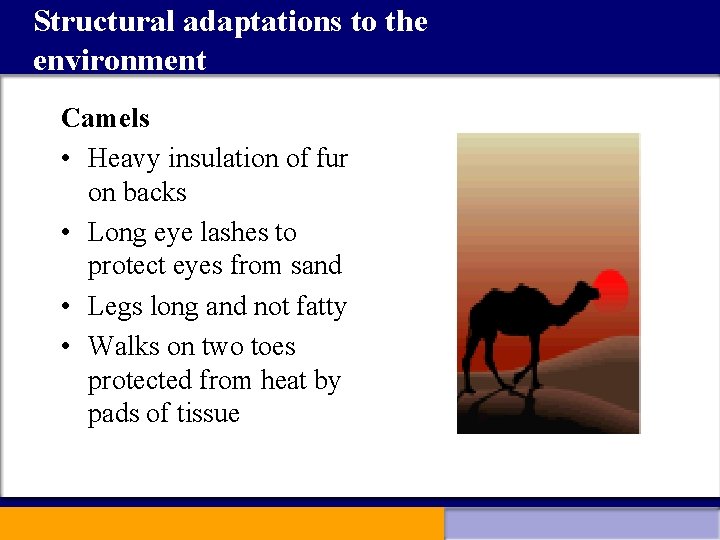
Structural adaptations to the environment Camels • Heavy insulation of fur on backs • Long eye lashes to protect eyes from sand • Legs long and not fatty • Walks on two toes protected from heat by pads of tissue
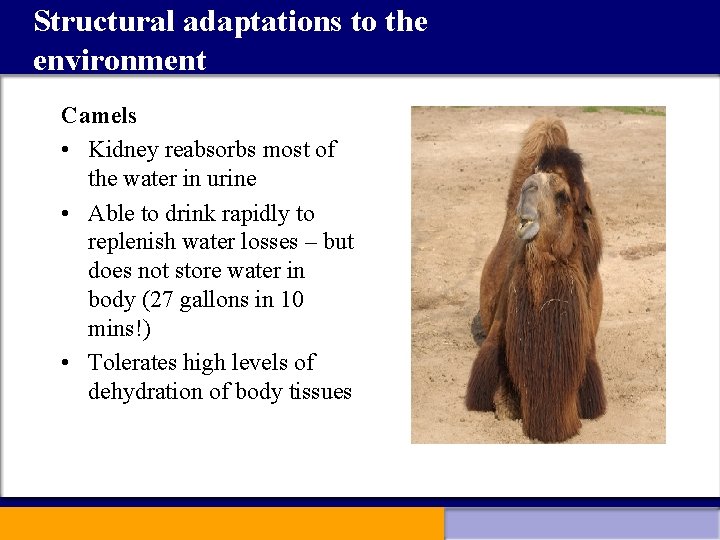
Structural adaptations to the environment Camels • Kidney reabsorbs most of the water in urine • Able to drink rapidly to replenish water losses – but does not store water in body (27 gallons in 10 mins!) • Tolerates high levels of dehydration of body tissues
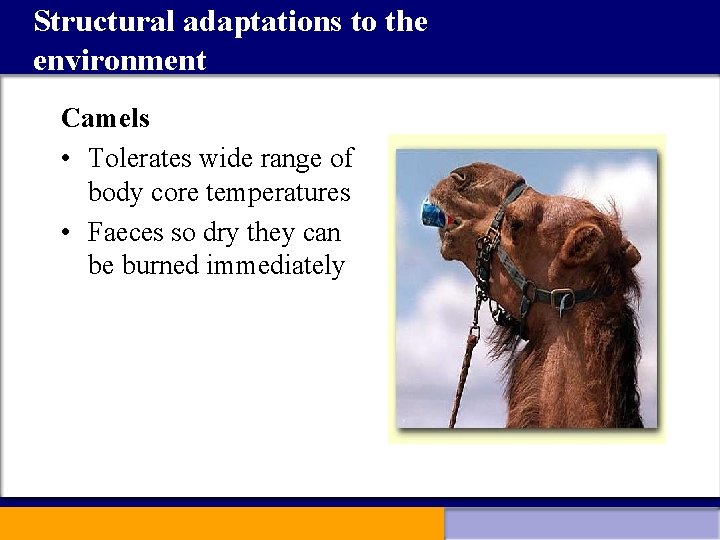
Structural adaptations to the environment Camels • Tolerates wide range of body core temperatures • Faeces so dry they can be burned immediately
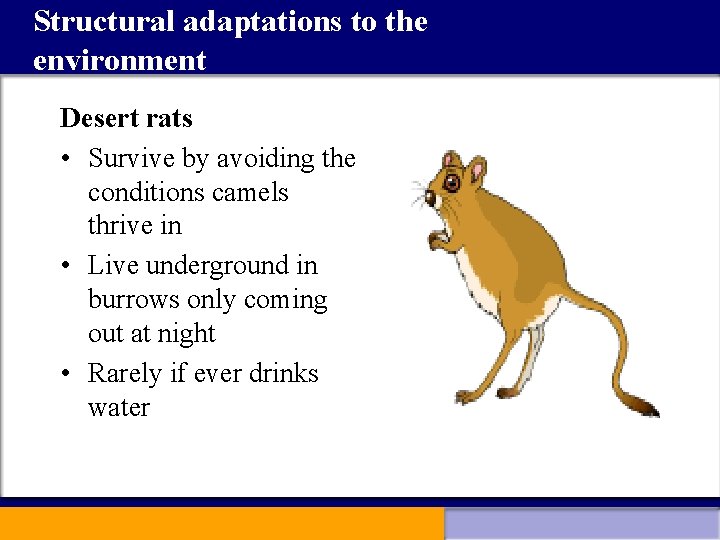
Structural adaptations to the environment Desert rats • Survive by avoiding the conditions camels thrive in • Live underground in burrows only coming out at night • Rarely if ever drinks water
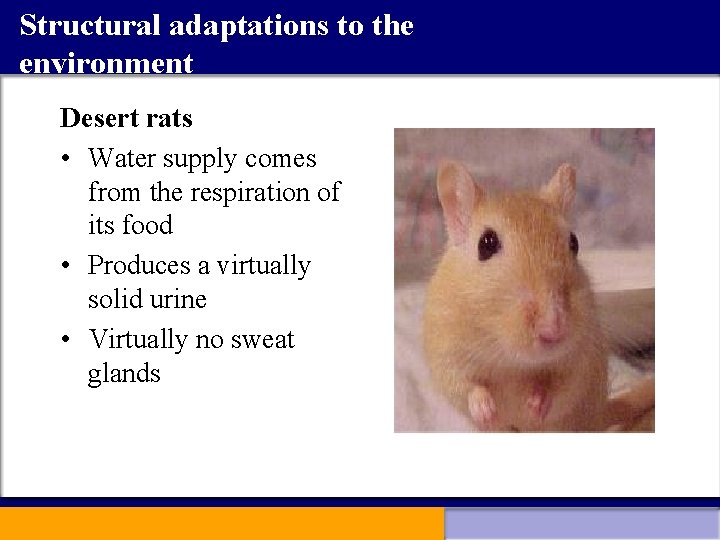
Structural adaptations to the environment Desert rats • Water supply comes from the respiration of its food • Produces a virtually solid urine • Virtually no sweat glands
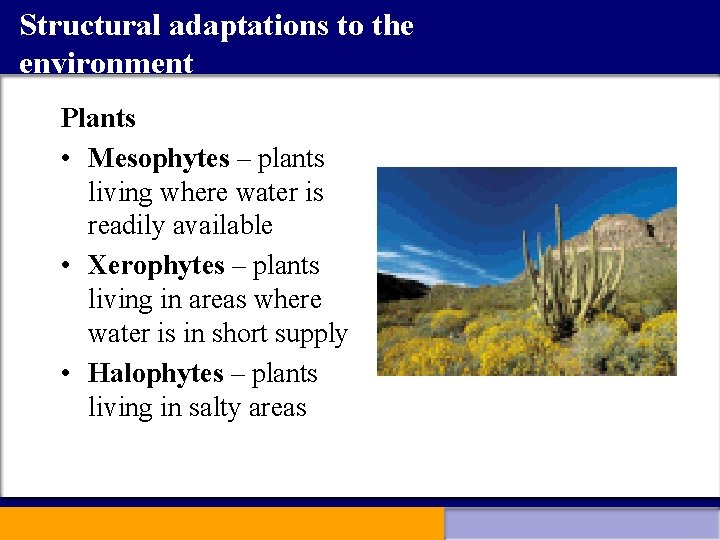
Structural adaptations to the environment Plants • Mesophytes – plants living where water is readily available • Xerophytes – plants living in areas where water is in short supply • Halophytes – plants living in salty areas
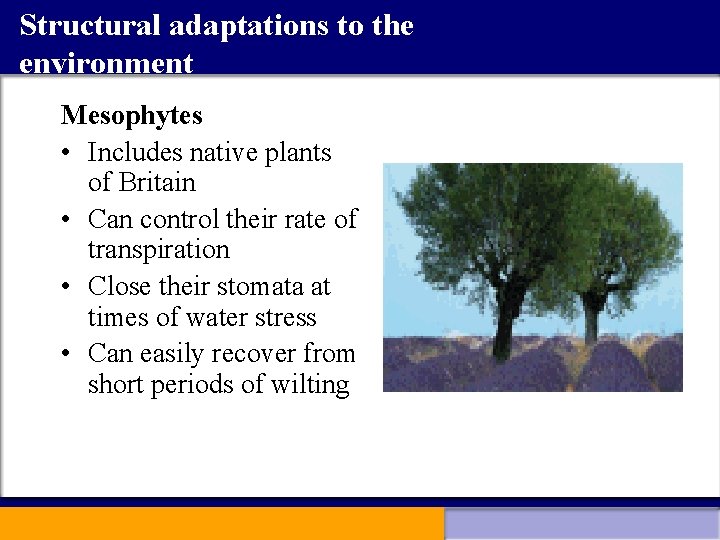
Structural adaptations to the environment Mesophytes • Includes native plants of Britain • Can control their rate of transpiration • Close their stomata at times of water stress • Can easily recover from short periods of wilting
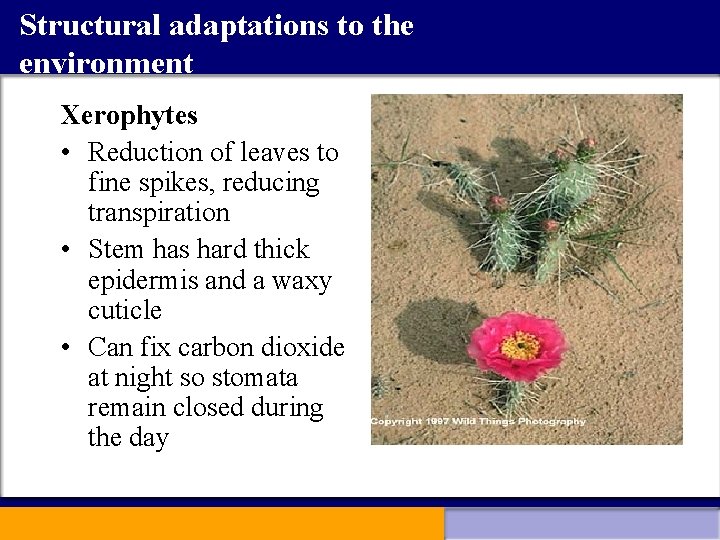
Structural adaptations to the environment Xerophytes • Reduction of leaves to fine spikes, reducing transpiration • Stem has hard thick epidermis and a waxy cuticle • Can fix carbon dioxide at night so stomata remain closed during the day
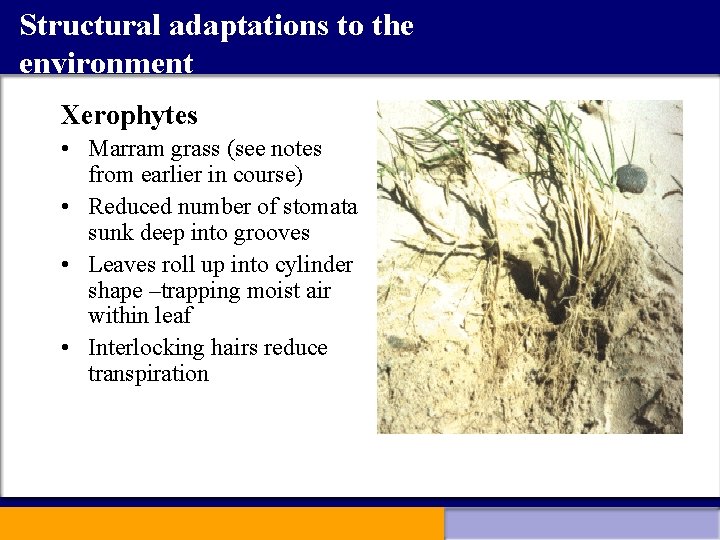
Structural adaptations to the environment Xerophytes • Marram grass (see notes from earlier in course) • Reduced number of stomata sunk deep into grooves • Leaves roll up into cylinder shape –trapping moist air within leaf • Interlocking hairs reduce transpiration
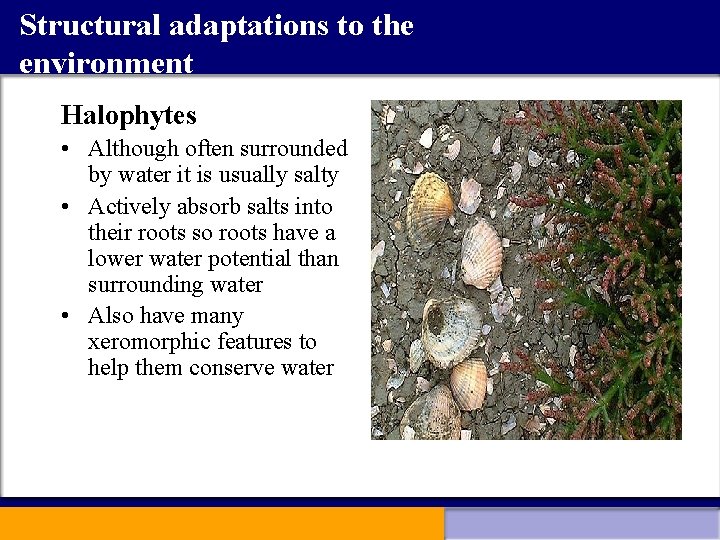
Structural adaptations to the environment Halophytes • Although often surrounded by water it is usually salty • Actively absorb salts into their roots so roots have a lower water potential than surrounding water • Also have many xeromorphic features to help them conserve water
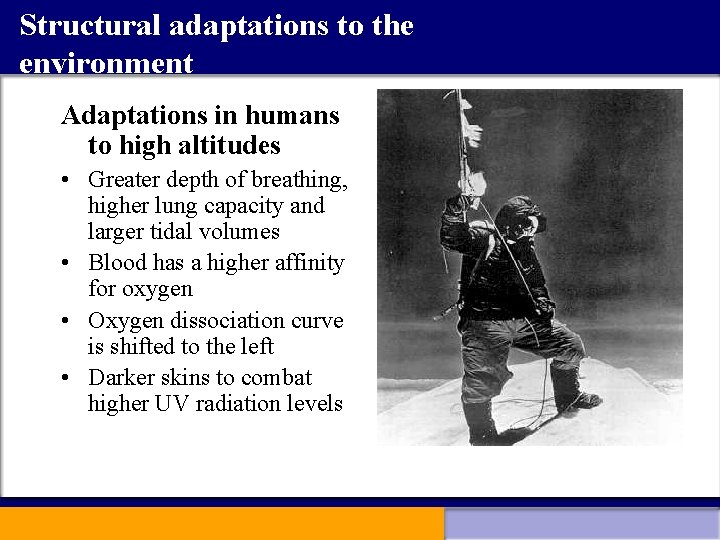
Structural adaptations to the environment Adaptations in humans to high altitudes • Greater depth of breathing, higher lung capacity and larger tidal volumes • Blood has a higher affinity for oxygen • Oxygen dissociation curve is shifted to the left • Darker skins to combat higher UV radiation levels