
Structural Adaptations Recall Homeostasis Remember that homeostasis is
Structural Adaptations
Recall Homeostasis… • Remember that homeostasis is about maintaining a balance between the environment INSIDE your body and the environment OUTSIDE your body • Structural adaptations have evolved to help animals thrive and assume specialized roles (niches) in even the most extreme of environments
Different types of adaptations… • • (1) Transport and excretion (p. H, water, salts) (2) Respiration (3) Nutrition (4) Reproduction, Growth, and Development
Transport and Excretion • Organisms must constantly focus on maintaining a balance in p. H, water, and salt • Examples: • Salt water animals • Desert animals • Plants – Vascular VS Non Vascular
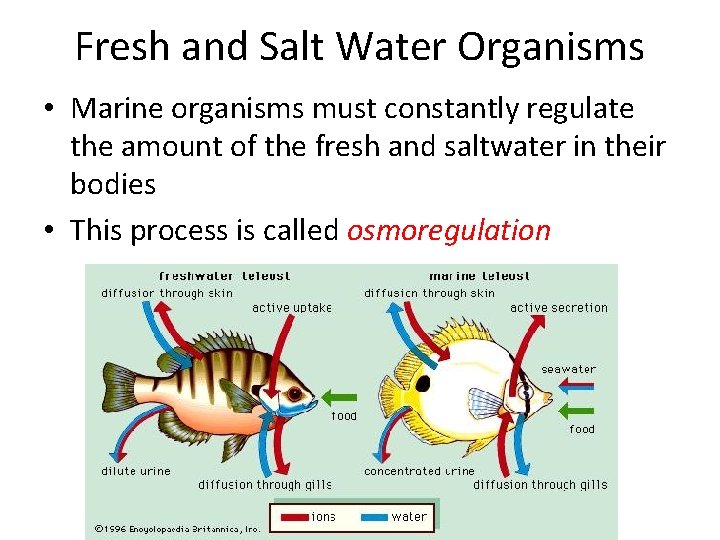
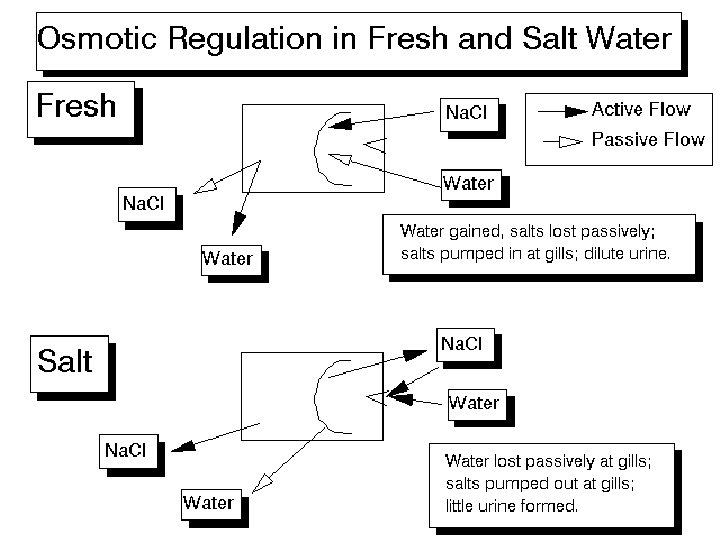
Fresh and Salt Water Organisms • Marine organisms must constantly regulate the amount of the fresh and saltwater in their bodies • This process is called osmoregulation
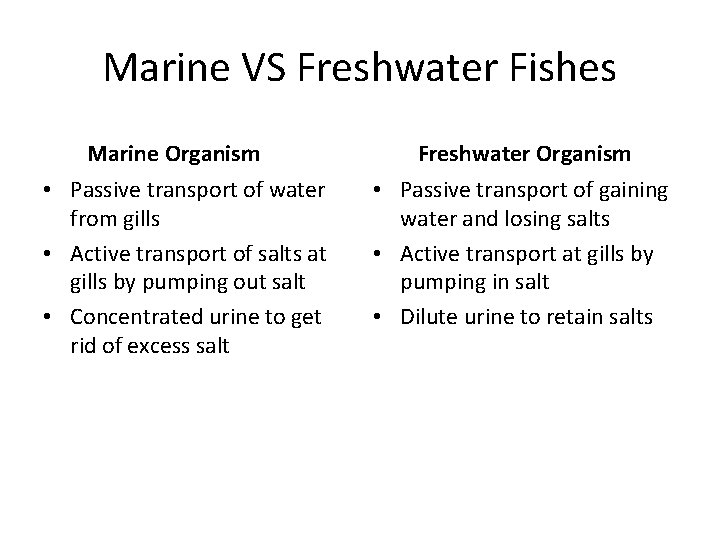
Marine VS Freshwater Fishes Marine Organism • Passive transport of water from gills • Active transport of salts at gills by pumping out salt • Concentrated urine to get rid of excess salt Freshwater Organism • Passive transport of gaining water and losing salts • Active transport at gills by pumping in salt • Dilute urine to retain salts
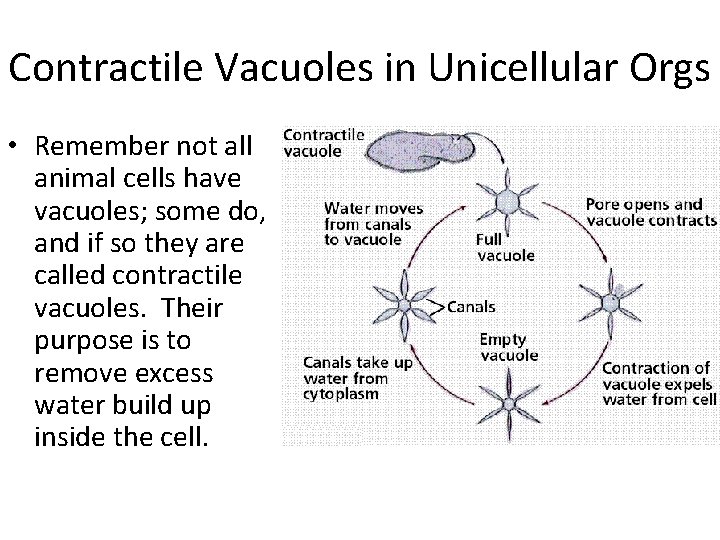
Contractile Vacuoles in Unicellular Orgs • Remember not all animal cells have vacuoles; some do, and if so they are called contractile vacuoles. Their purpose is to remove excess water build up inside the cell.
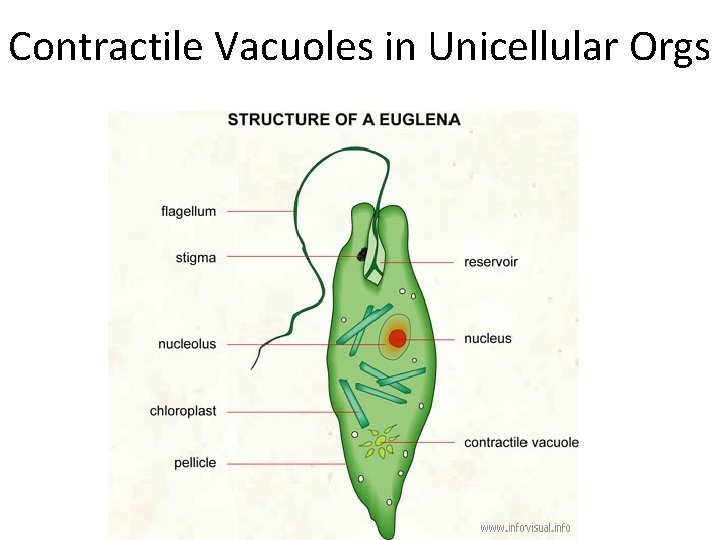
Contractile Vacuoles in Unicellular Orgs
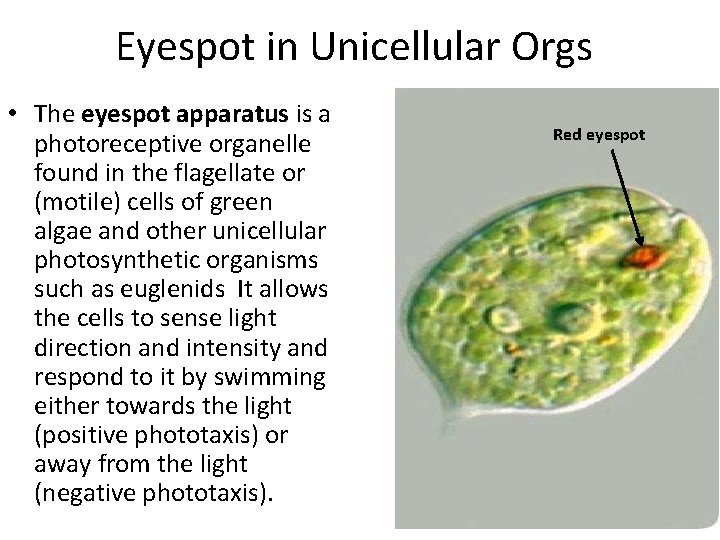
Eyespot in Unicellular Orgs • The eyespot apparatus is a photoreceptive organelle found in the flagellate or (motile) cells of green algae and other unicellular photosynthetic organisms such as euglenids It allows the cells to sense light direction and intensity and respond to it by swimming either towards the light (positive phototaxis) or away from the light (negative phototaxis). Red eyespot
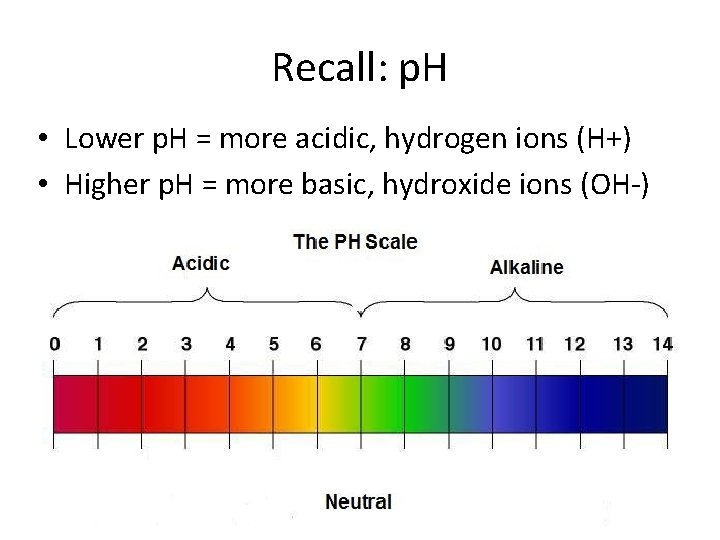
Recall: p. H • Lower p. H = more acidic, hydrogen ions (H+) • Higher p. H = more basic, hydroxide ions (OH-)
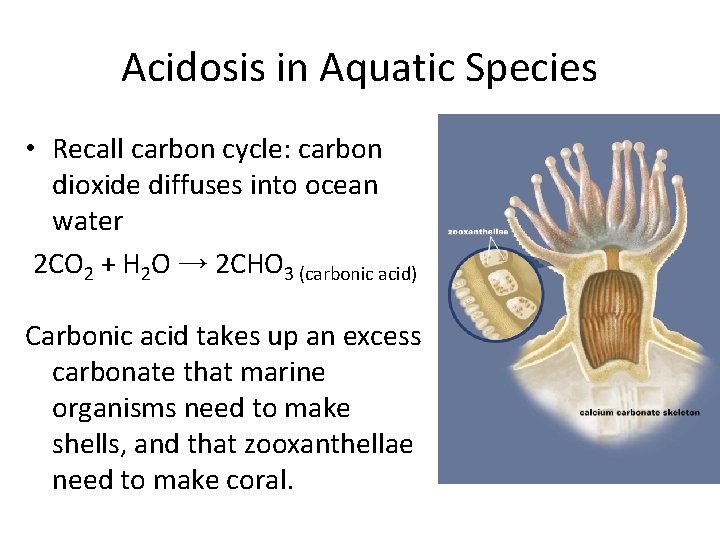
Acidosis in Aquatic Species • Recall carbon cycle: carbon dioxide diffuses into ocean water 2 CO 2 + H 2 O → 2 CHO 3 (carbonic acid) Carbonic acid takes up an excess carbonate that marine organisms need to make shells, and that zooxanthellae need to make coral.
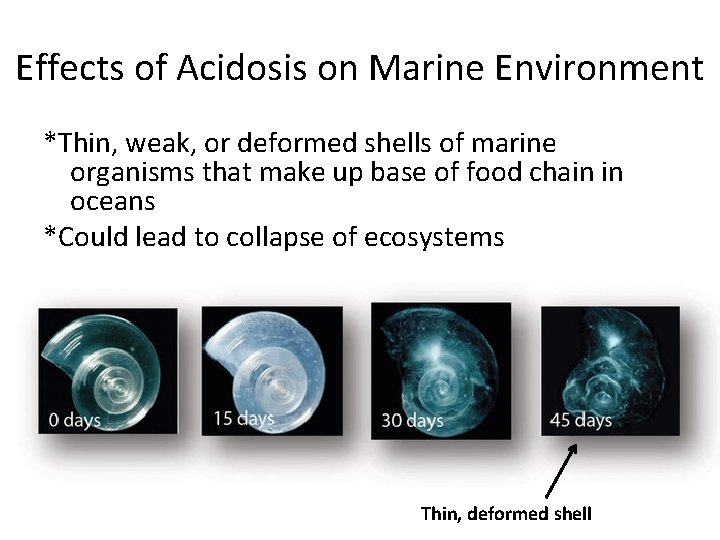
Effects of Acidosis on Marine Environment *Thin, weak, or deformed shells of marine organisms that make up base of food chain in oceans *Could lead to collapse of ecosystems Thin, deformed shell
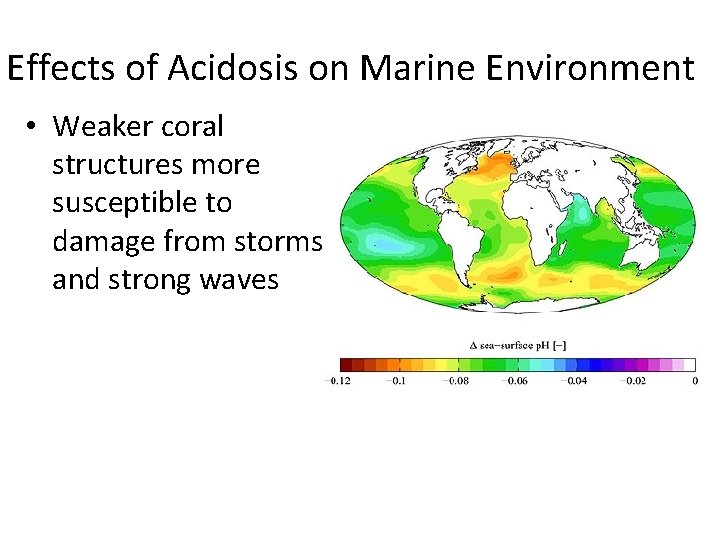
Effects of Acidosis on Marine Environment • Weaker coral structures more susceptible to damage from storms and strong waves
Transport and Excretion: Desert Animals • Due to the hot temperatures and low precipitation, animals that live in the desert must have many adaptations to adjust to the environment. Examples of adaptations to adjust to hot dry climate include: • (1) Concentrated urine • (2) Absence of sweat glands in some animals • (3) Nocturnal behavior to limit loss of water during the day • (4) Plants have an extensive network of surface roots to catch any precipitation • (5)Plants have small/no leaves to prevent water loss
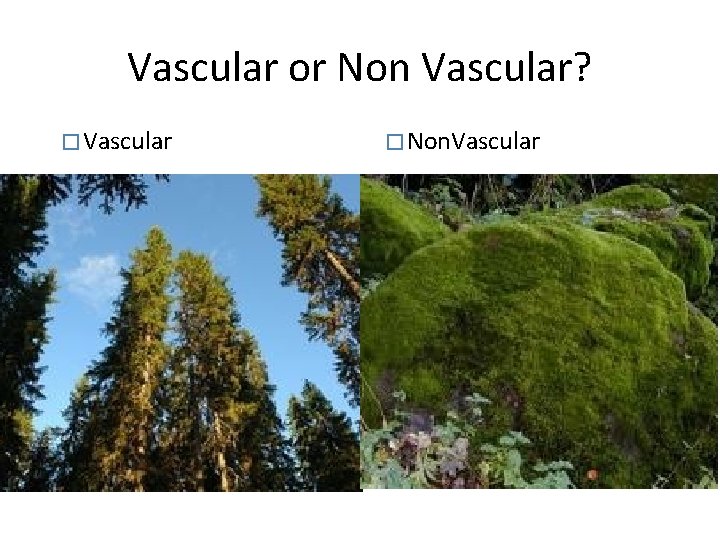
Vascular or Non Vascular? � Vascular � Non. Vascular
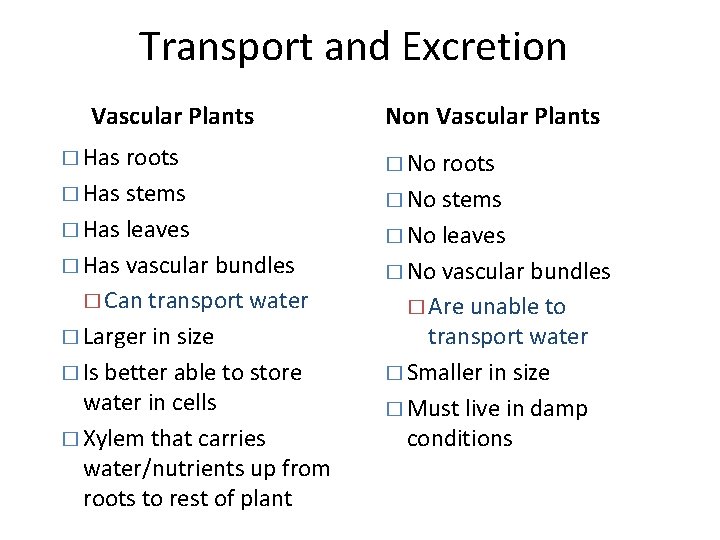
Transport and Excretion Vascular Plants � Has roots � Has stems � Has leaves � Has vascular bundles � Can transport water � Larger in size � Is better able to store water in cells � Xylem that carries water/nutrients up from roots to rest of plant Non Vascular Plants � No roots � No stems � No leaves � No vascular bundles � Are unable to transport water � Smaller in size � Must live in damp conditions
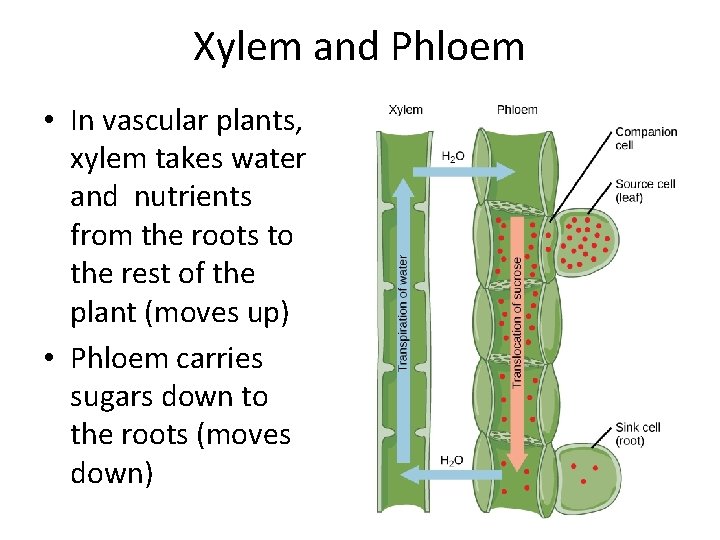
Xylem and Phloem • In vascular plants, xylem takes water and nutrients from the roots to the rest of the plant (moves up) • Phloem carries sugars down to the roots (moves down)
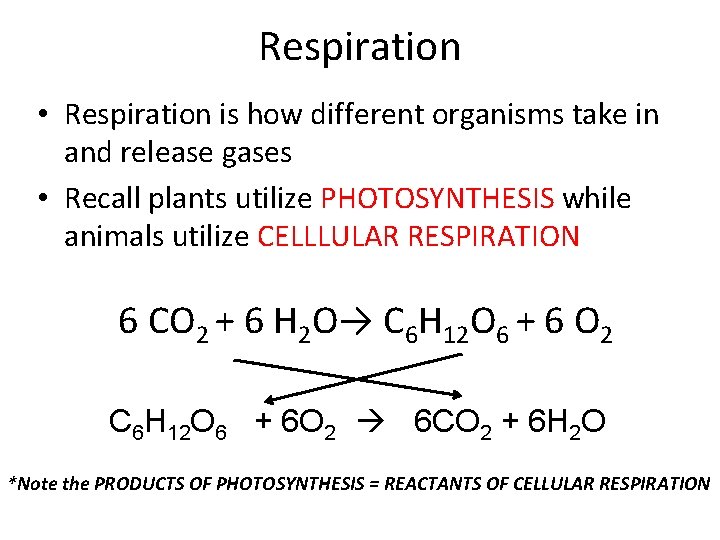
Respiration • Respiration is how different organisms take in and release gases • Recall plants utilize PHOTOSYNTHESIS while animals utilize CELLLULAR RESPIRATION 6 CO 2 + 6 H 2 O→ C 6 H 12 O 6 + 6 O 2 C 6 H 12 O 6 + 6 O 2 6 CO 2 + 6 H 2 O *Note the PRODUCTS OF PHOTOSYNTHESIS = REACTANTS OF CELLULAR RESPIRATION
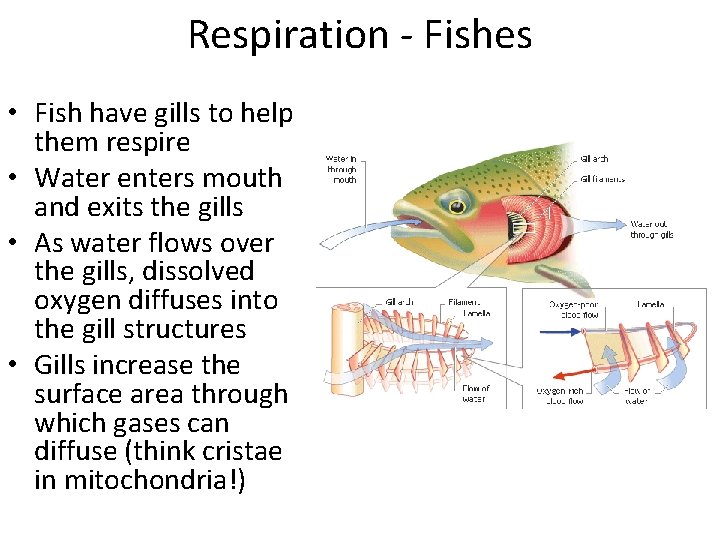
Respiration - Fishes • Fish have gills to help them respire • Water enters mouth and exits the gills • As water flows over the gills, dissolved oxygen diffuses into the gill structures • Gills increase the surface area through which gases can diffuse (think cristae in mitochondria!)
Respiration - Arthropods • Evolved three types of structures to aid in respiration (only one present in each arthropod): • (1) Gills – same function and purpose as fish, found in arthropods like crabs • (2) Tracheal tubes • (3) Book lungs
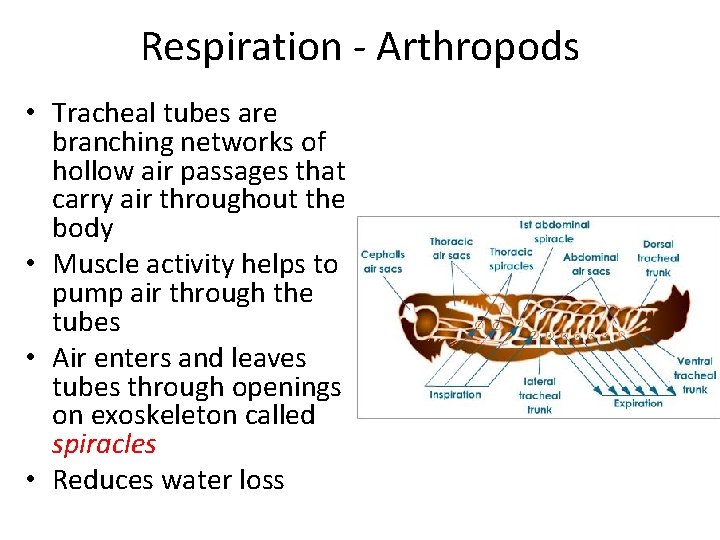
Respiration - Arthropods • Tracheal tubes are branching networks of hollow air passages that carry air throughout the body • Muscle activity helps to pump air through the tubes • Air enters and leaves tubes through openings on exoskeleton called spiracles • Reduces water loss
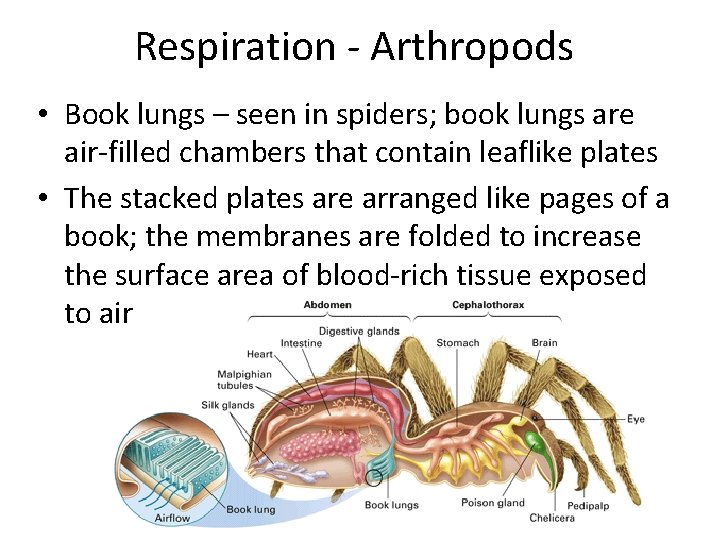
Respiration - Arthropods • Book lungs – seen in spiders; book lungs are air-filled chambers that contain leaflike plates • The stacked plates are arranged like pages of a book; the membranes are folded to increase the surface area of blood-rich tissue exposed to air
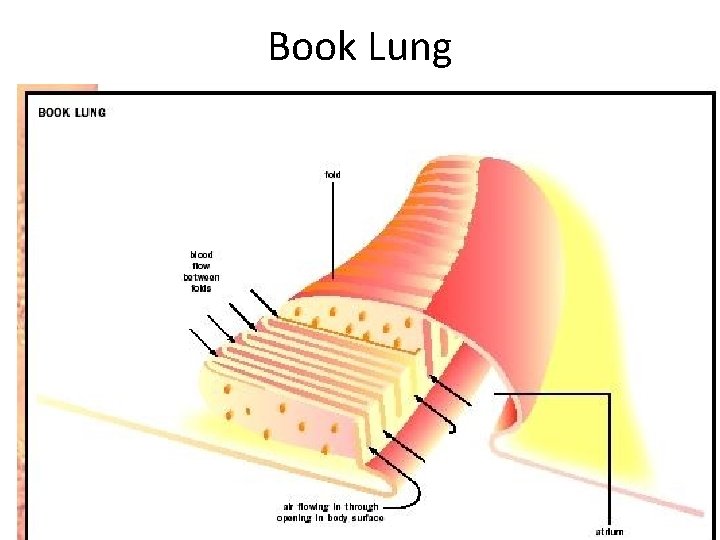
Book Lung
Nutrition • Autotrophs get their food from the Sun; use the radiant energy from the Sun to make chemical energy (food) • Heterotrophs get their food from consuming other organisms
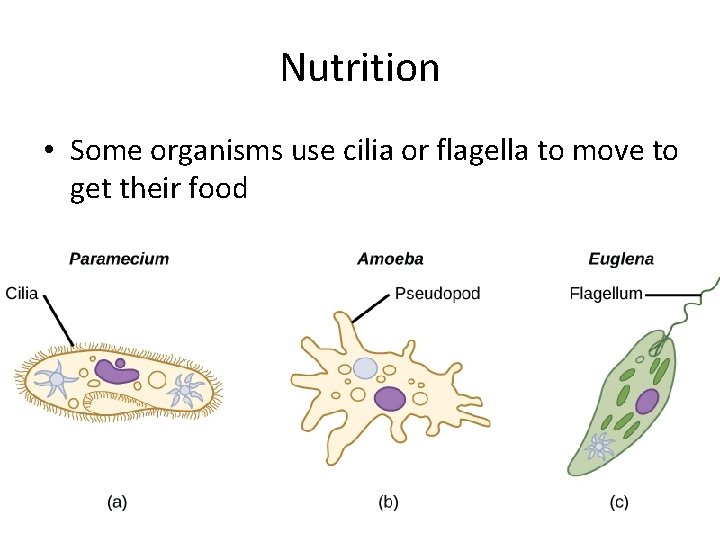
Nutrition • Some organisms use cilia or flagella to move to get their food
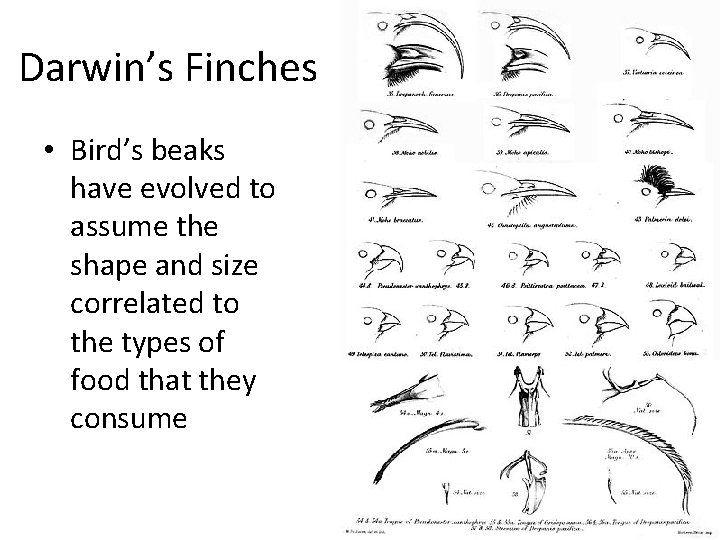
Darwin’s Finches • Bird’s beaks have evolved to assume the shape and size correlated to the types of food that they consume
Reproduction, Growth, and Development • • Sexual versus asexual Eggs Seeds Spores Placental Marsupial Amniotic Egg VS Shelled Egg
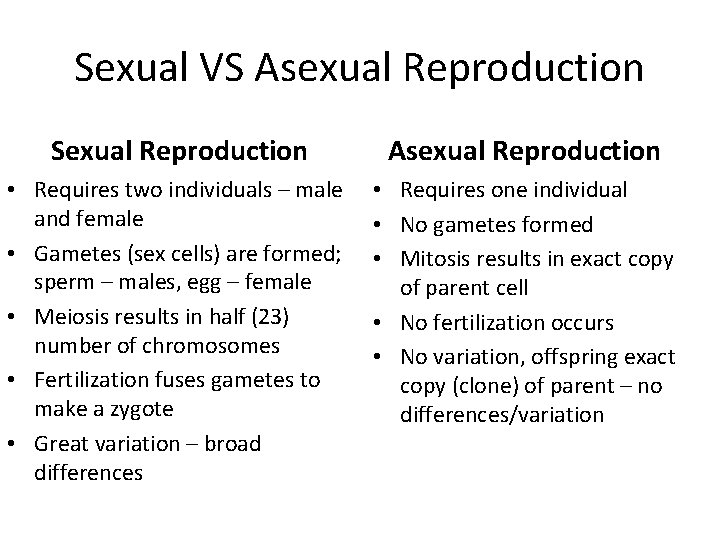
Sexual VS Asexual Reproduction Sexual Reproduction Asexual Reproduction • Requires two individuals – male and female • Gametes (sex cells) are formed; sperm – males, egg – female • Meiosis results in half (23) number of chromosomes • Fertilization fuses gametes to make a zygote • Great variation – broad differences • Requires one individual • No gametes formed • Mitosis results in exact copy of parent cell • No fertilization occurs • No variation, offspring exact copy (clone) of parent – no differences/variation
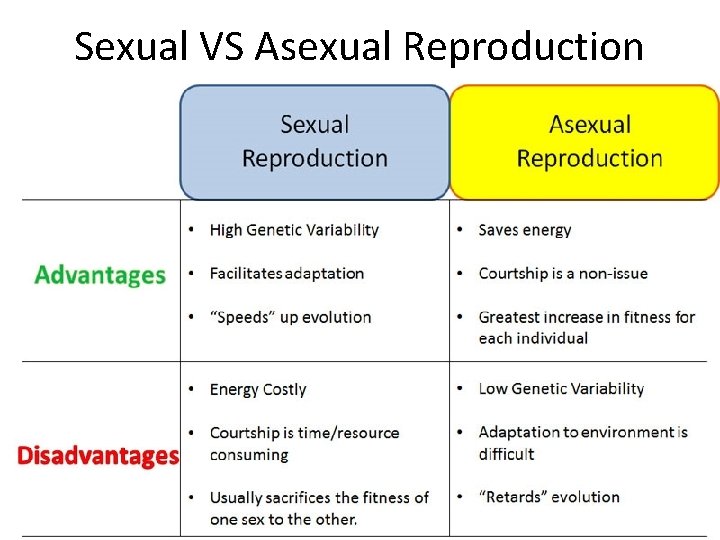
Sexual VS Asexual Reproduction
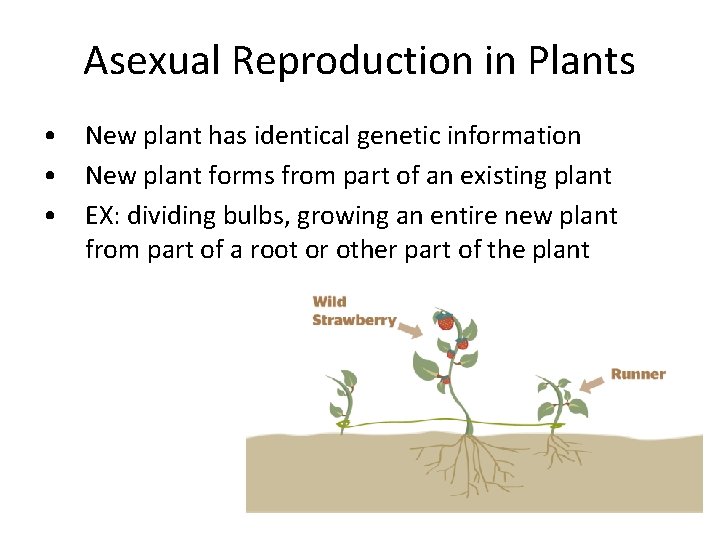
Asexual Reproduction in Plants • New plant has identical genetic information • New plant forms from part of an existing plant • EX: dividing bulbs, growing an entire new plant from part of a root or other part of the plant
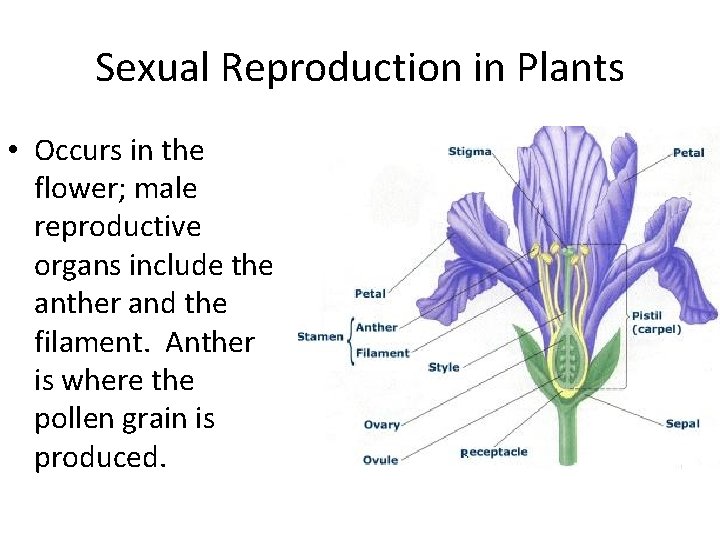
Sexual Reproduction in Plants • Occurs in the flower; male reproductive organs include the anther and the filament. Anther is where the pollen grain is produced.
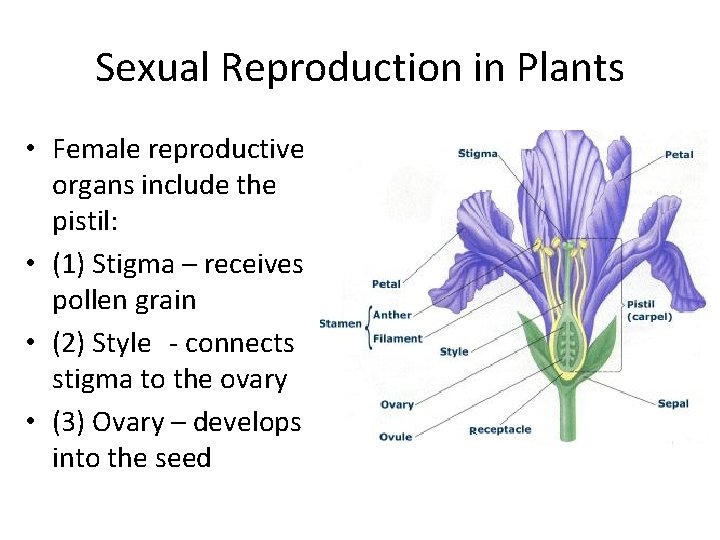
Sexual Reproduction in Plants • Female reproductive organs include the pistil: • (1) Stigma – receives pollen grain • (2) Style - connects stigma to the ovary • (3) Ovary – develops into the seed
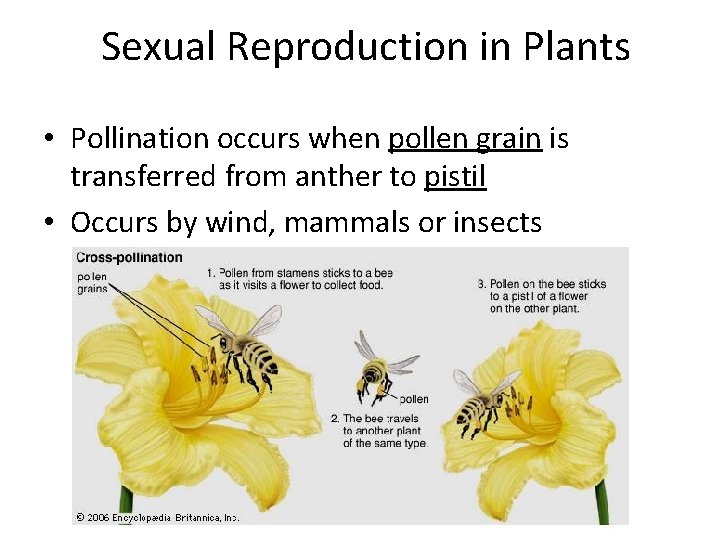
Sexual Reproduction in Plants • Pollination occurs when pollen grain is transferred from anther to pistil • Occurs by wind, mammals or insects
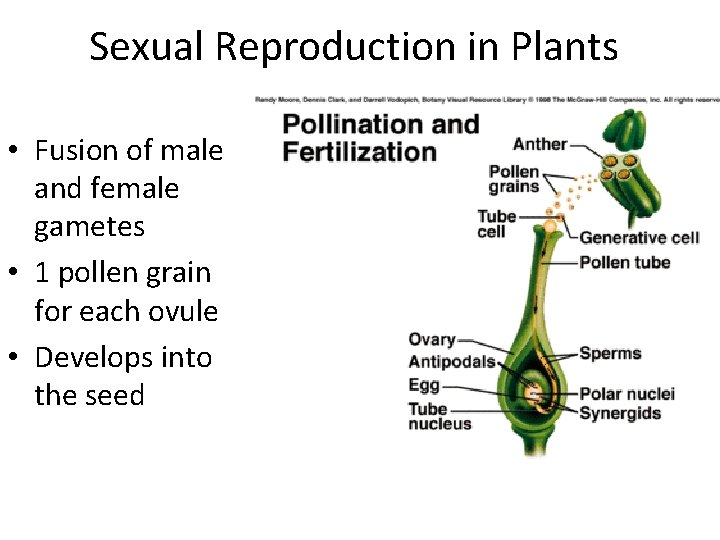
Sexual Reproduction in Plants • Fusion of male and female gametes • 1 pollen grain for each ovule • Develops into the seed
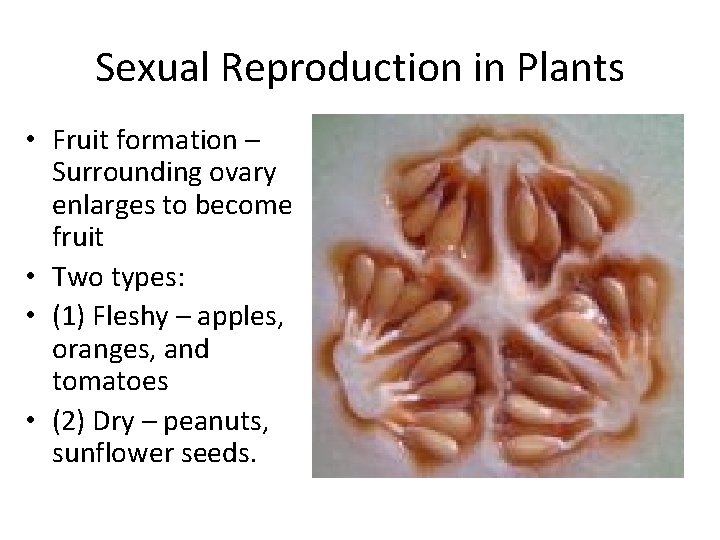
Sexual Reproduction in Plants • Fruit formation – Surrounding ovary enlarges to become fruit • Two types: • (1) Fleshy – apples, oranges, and tomatoes • (2) Dry – peanuts, sunflower seeds.
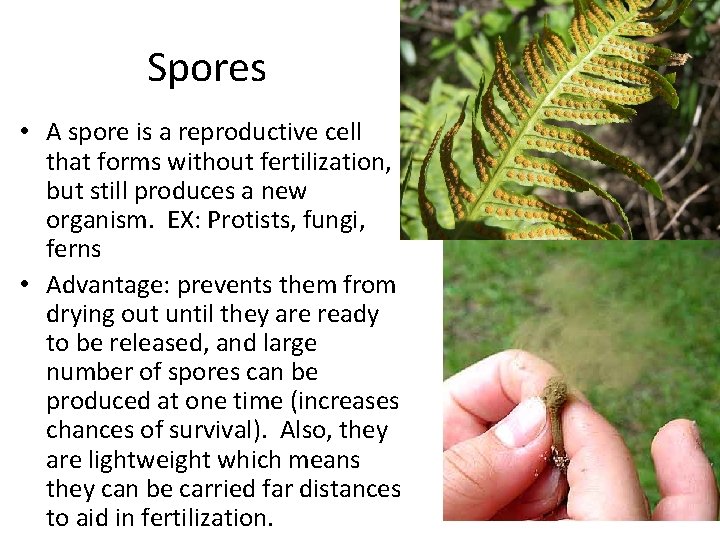
Spores • A spore is a reproductive cell that forms without fertilization, but still produces a new organism. EX: Protists, fungi, ferns • Advantage: prevents them from drying out until they are ready to be released, and large number of spores can be produced at one time (increases chances of survival). Also, they are lightweight which means they can be carried far distances to aid in fertilization.
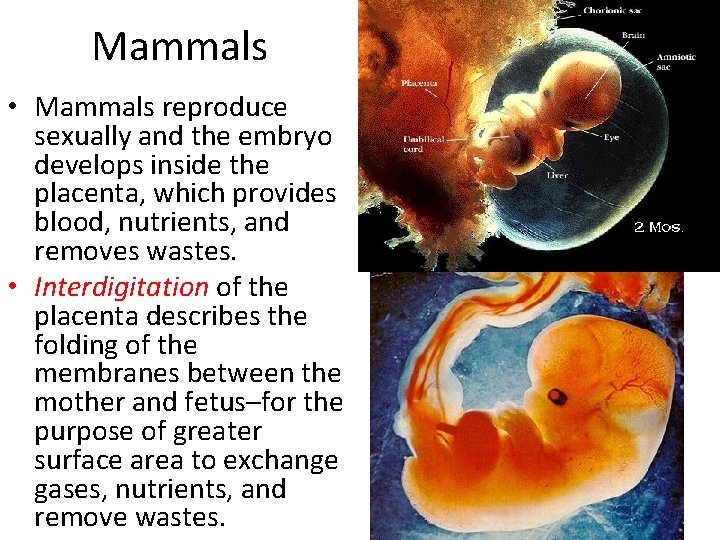
Mammals • Mammals reproduce sexually and the embryo develops inside the placenta, which provides blood, nutrients, and removes wastes. • Interdigitation of the placenta describes the folding of the membranes between the mother and fetus–for the purpose of greater surface area to exchange gases, nutrients, and remove wastes.
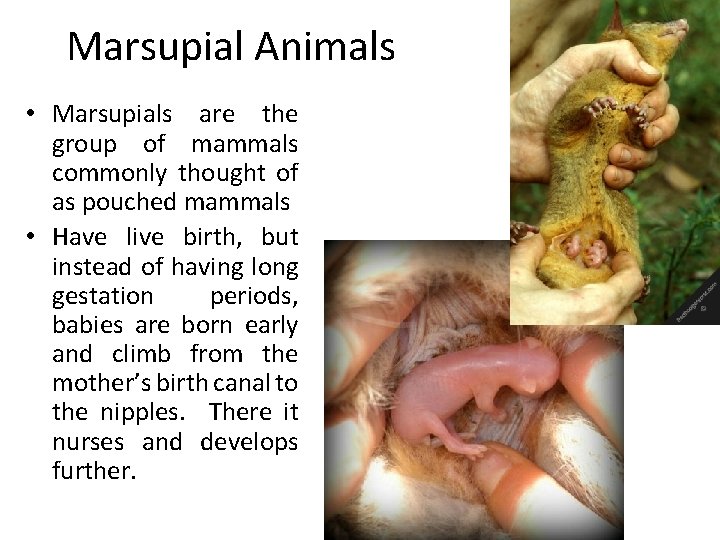
Marsupial Animals • Marsupials are the group of mammals commonly thought of as pouched mammals • Have live birth, but instead of having long gestation periods, babies are born early and climb from the mother’s birth canal to the nipples. There it nurses and develops further.
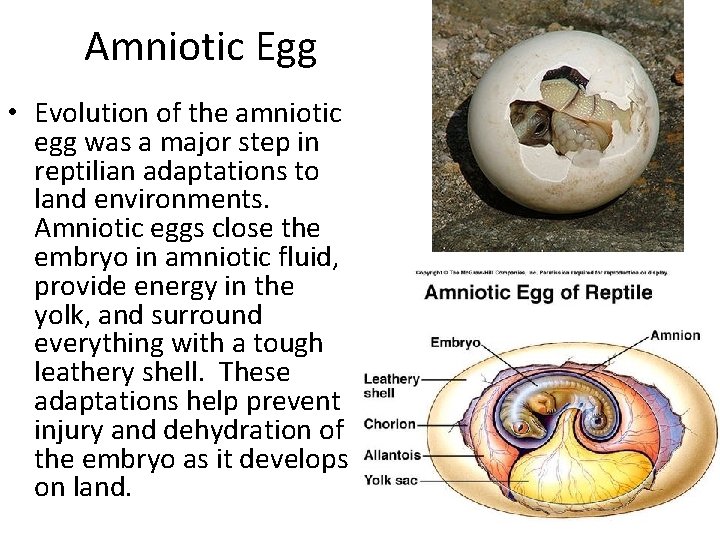
Amniotic Egg • Evolution of the amniotic egg was a major step in reptilian adaptations to land environments. Amniotic eggs close the embryo in amniotic fluid, provide energy in the yolk, and surround everything with a tough leathery shell. These adaptations help prevent injury and dehydration of the embryo as it develops on land.
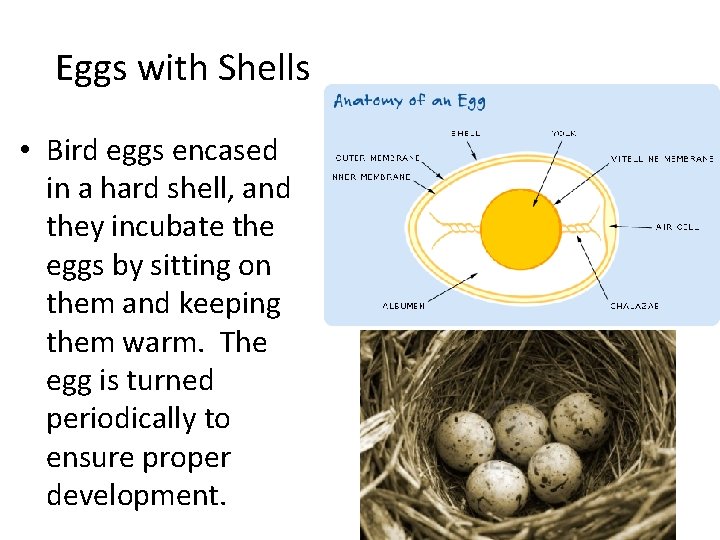
Eggs with Shells • Bird eggs encased in a hard shell, and they incubate the eggs by sitting on them and keeping them warm. The egg is turned periodically to ensure proper development.
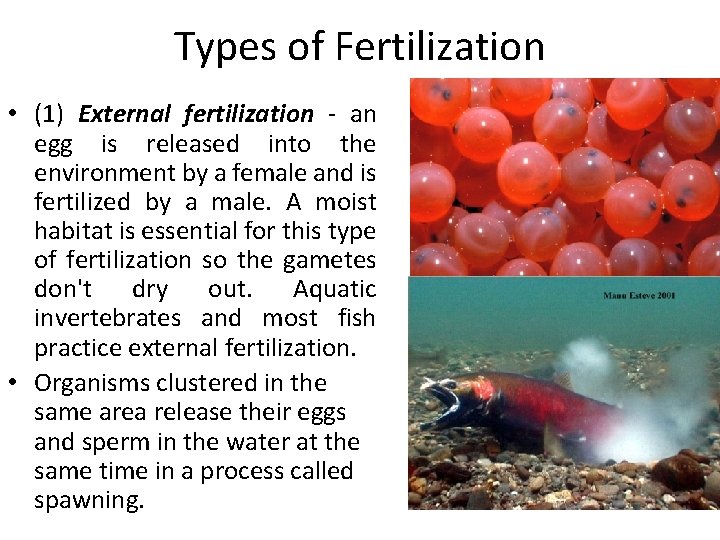
Types of Fertilization • (1) External fertilization - an egg is released into the environment by a female and is fertilized by a male. A moist habitat is essential for this type of fertilization so the gametes don't dry out. Aquatic invertebrates and most fish practice external fertilization. • Organisms clustered in the same area release their eggs and sperm in the water at the same time in a process called spawning.
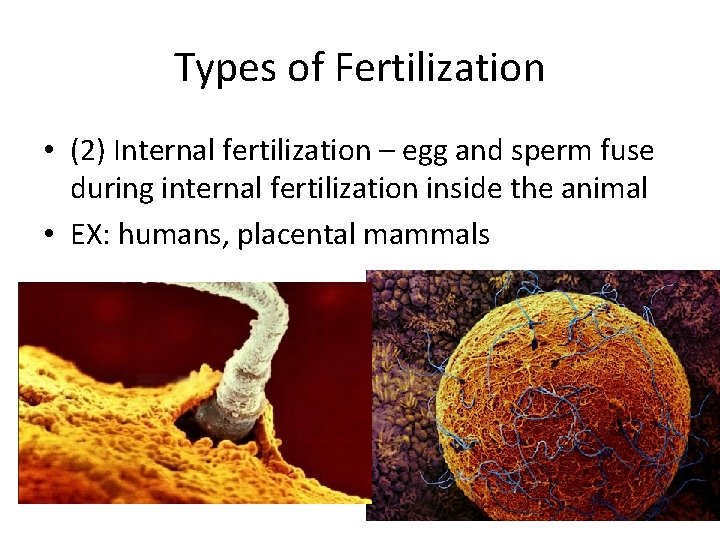
Types of Fertilization • (2) Internal fertilization – egg and sperm fuse during internal fertilization inside the animal • EX: humans, placental mammals
- Slides: 43