
Strong Acids Ch 16 4 16 1 AcidBase
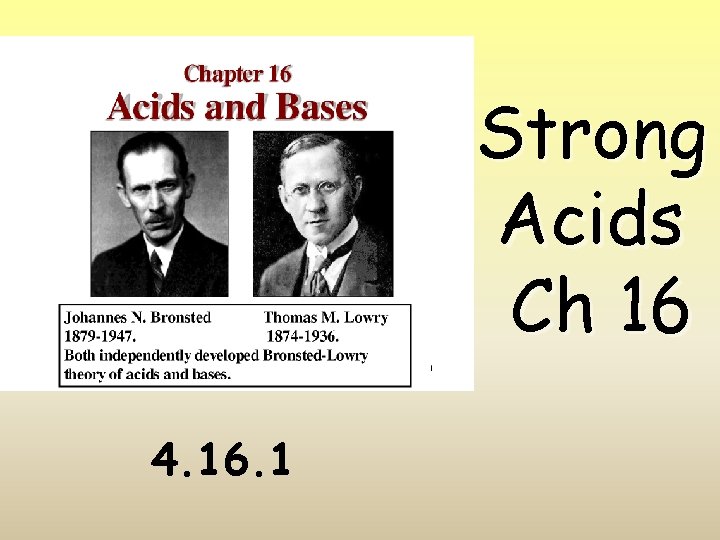
Strong Acids Ch 16 4. 16. 1
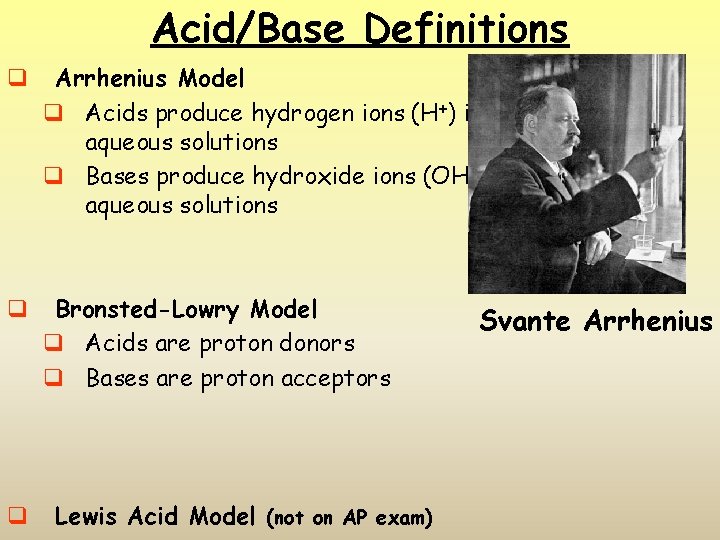
Acid/Base Definitions q Arrhenius Model q Acids produce hydrogen ions (H+) in aqueous solutions q Bases produce hydroxide ions (OH-) in aqueous solutions q Bronsted-Lowry Model q Acids are proton donors q Bases are proton acceptors q Lewis Acid Model (not on AP exam) Svante Arrhenius

Conjugate Pairs • Conjugate base: everything that remains of the acid molecule after the proton is lost • Conjugate acid: formed when the proton is transferred to the base • A generic example:
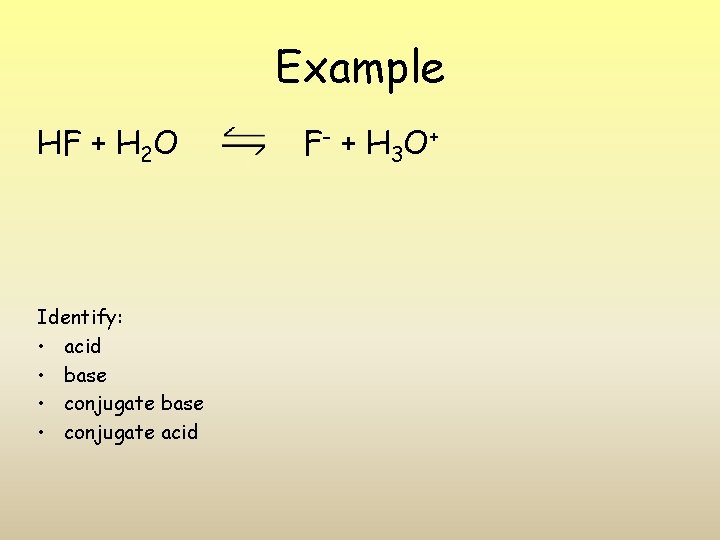
Example HF + H 2 O Identify: • acid • base • conjugate acid F - + H 3 O +
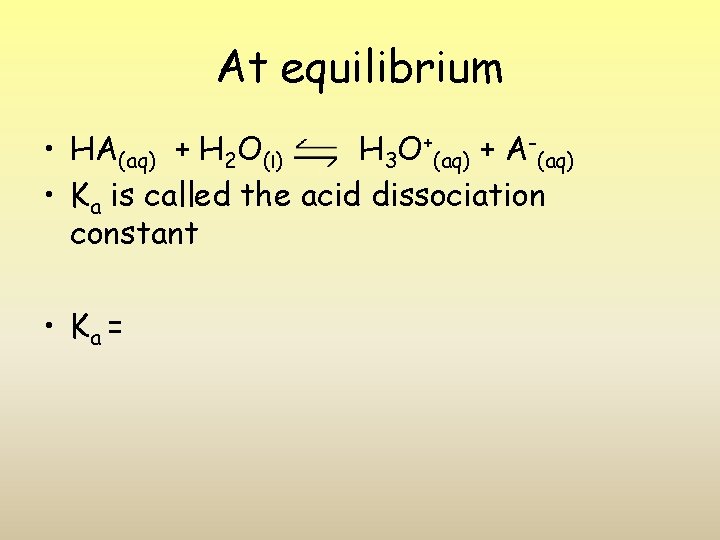
At equilibrium • HA(aq) + H 2 O(l) H 3 O+(aq) + A-(aq) • Ka is called the acid dissociation constant • Ka =
Example • Write the simple dissociate reaction (omitting water) for: • HCl • Write the equilibrium expression for the dissociation of the acid above
Strong acid • Completely dissociates in water (not equilibrium) • Review: What are the 7 strong acids?
Acid strength and Ka • The strength of an acid is defined by the equilibrium position of its dissociation reaction (its Ka!!!) • A strong acid is one where the equilibrium lies far to the right. • Ex. HCl in water • A strong acid will have a large Ka • A strong acid yields a very, very weak conjugate base • The reaction does not want to reverse
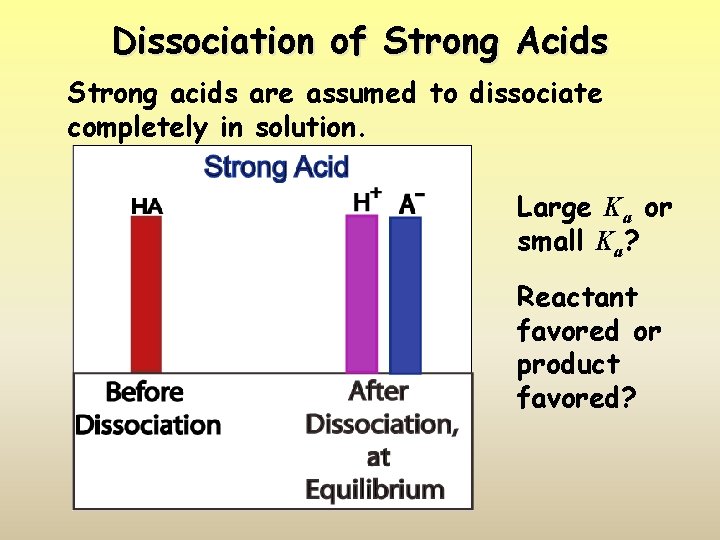
Dissociation of Strong Acids Strong acids are assumed to dissociate completely in solution. Large Ka or small Ka? Reactant favored or product favored?

Dissociation Constants: Strong Acids Perchloric Hydriodic HCl. O 4 HI Conjugate Base Cl. O 4 I- Hydrobromic Hydrochloric Nitric Sulfuric HBr HCl HNO 3 H 2 SO 4 Br. Cl. NO 3 HSO 4 - Very large Hydronium ion H 3 O + H 2 O 1. 0 Acid Formula Ka Very large
- Slides: 10