
STROKE What should we know Dr Gourav Goyal
- Slides: 32
STROKE What should we know? Dr. Gourav Goyal MD, DM (Neurology) Fellowship in stroke & Neuro-intervention Assistant Professor, Department of Neurology, MGMCH
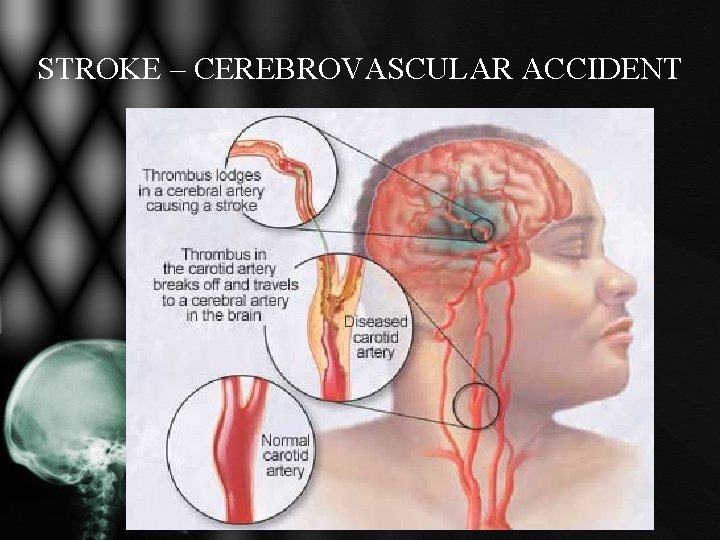
STROKE - INTRODUCTION • Stroke remains one of the major public health problems in India and worldwide accounting for 3 rd highest mortality rates • Also previously called cerebrovascular accident (CVA) or stroke syndrome, causes include thrombosis, embolism, and hemorrhage. • WHO explains stroke, a cerebro-vascular event as “the interruption of the blood supply to the brain, usually because a blood vessel bursts or is blocked by a clot. • This cuts off the supply of oxygen and nutrients, causing damage to the brain tissue”
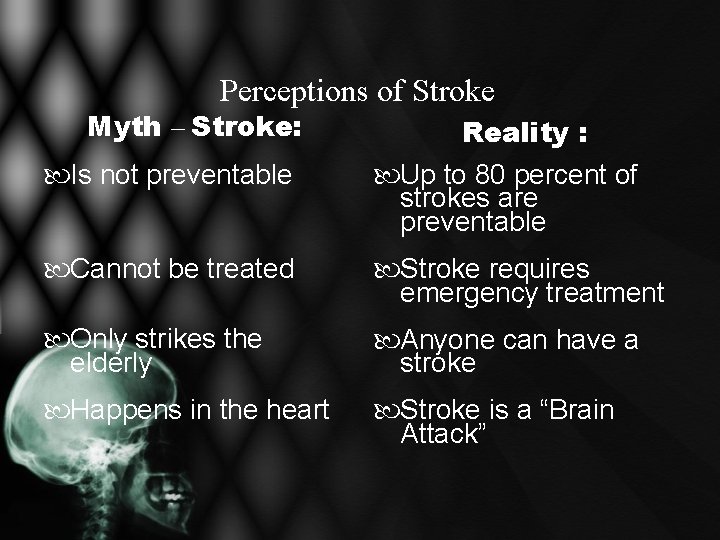
Perceptions of Stroke Myth – Stroke: Is not preventable Reality : Up to 80 percent of strokes are preventable Cannot be treated Stroke requires emergency treatment Only strikes the elderly Anyone can have a stroke Happens in the heart Stroke is a “Brain Attack”
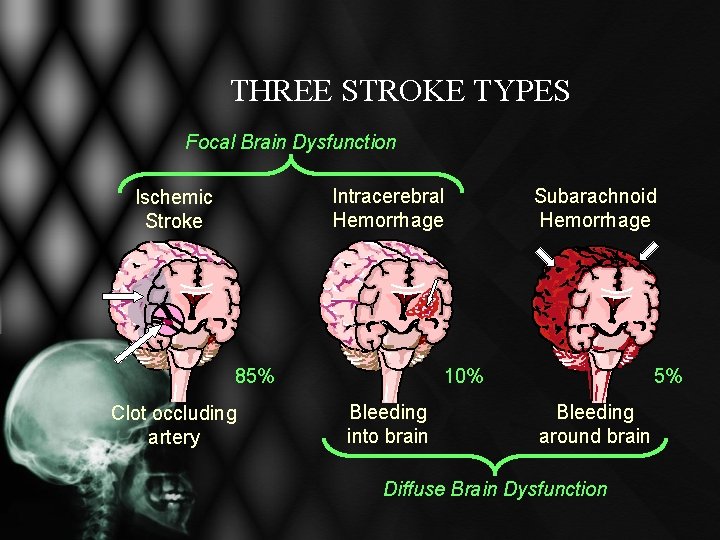
THREE STROKE TYPES Focal Brain Dysfunction Intracerebral Hemorrhage Ischemic Stroke 85% Clot occluding artery Subarachnoid Hemorrhage 10% Bleeding into brain 5% Bleeding around brain Diffuse Brain Dysfunction
STROKE – CEREBROVASCULAR ACCIDENT
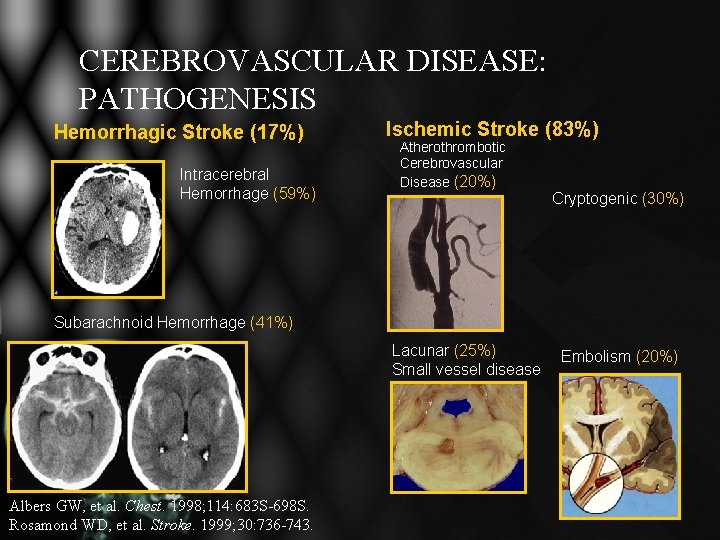
CEREBROVASCULAR DISEASE: PATHOGENESIS Hemorrhagic Stroke (17%) Intracerebral Hemorrhage (59%) Ischemic Stroke (83%) Atherothrombotic Cerebrovascular Disease (20%) Cryptogenic (30%) Subarachnoid Hemorrhage (41%) Lacunar (25%) Small vessel disease Albers GW, et al. Chest. 1998; 114: 683 S-698 S. Rosamond WD, et al. Stroke. 1999; 30: 736 -743. Embolism (20%)
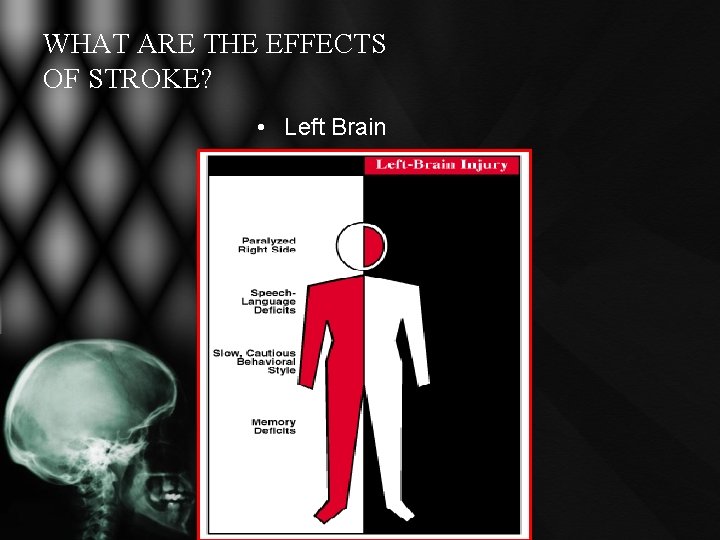
WHAT ARE THE EFFECTS OF STROKE? • Left Brain
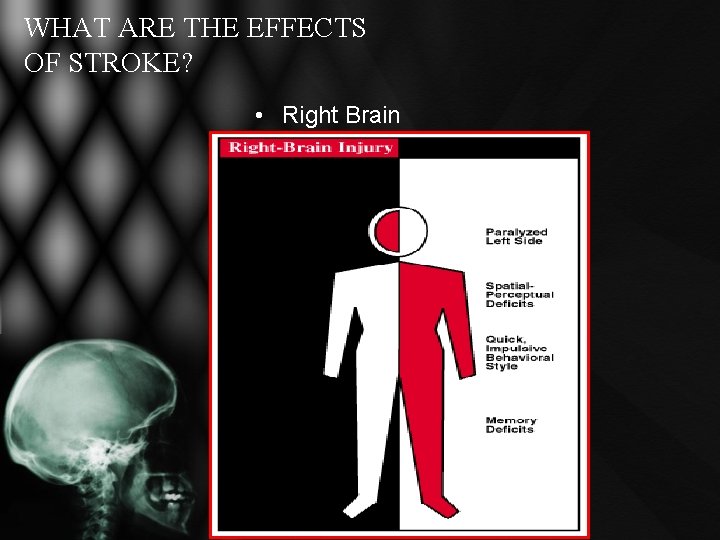
WHAT ARE THE EFFECTS OF STROKE? • Right Brain
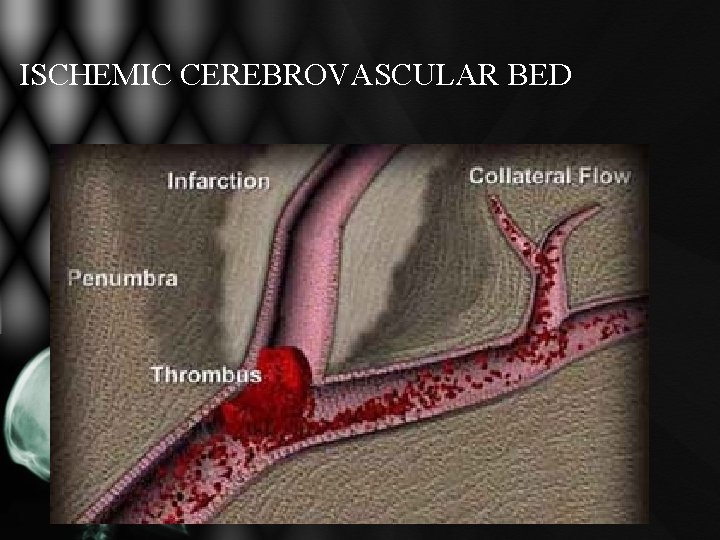
ISCHEMIC CEREBROVASCULAR BED
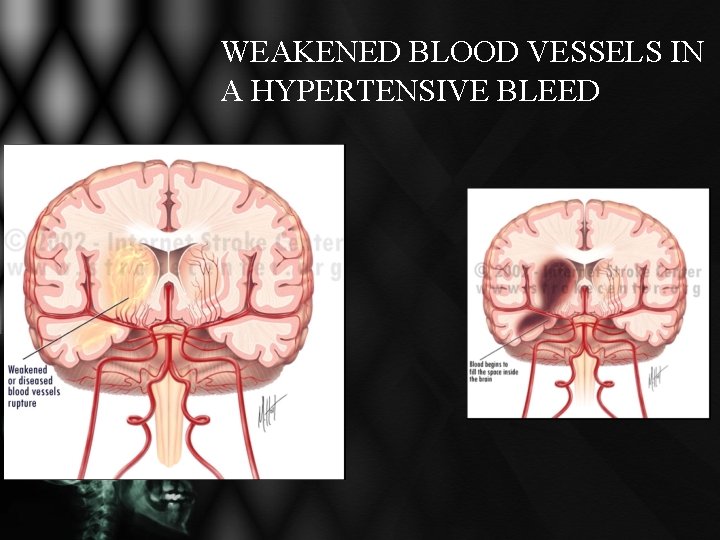
WEAKENED BLOOD VESSELS IN A HYPERTENSIVE BLEED
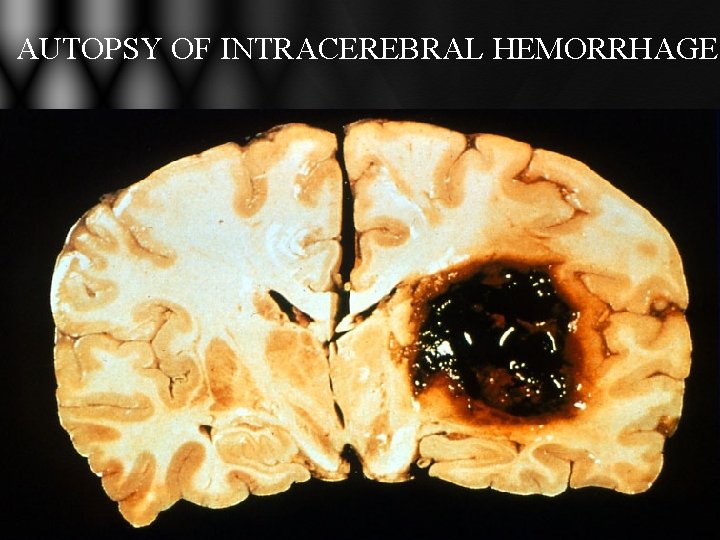
AUTOPSY OF INTRACEREBRAL HEMORRHAGE
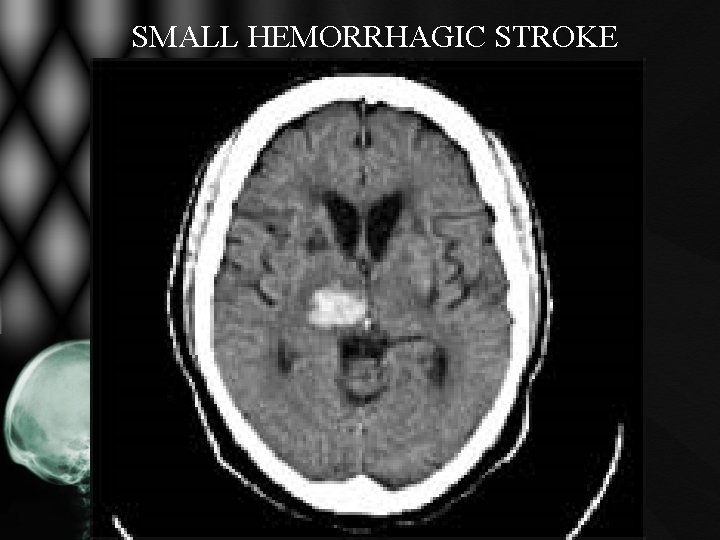
SMALL HEMORRHAGIC STROKE
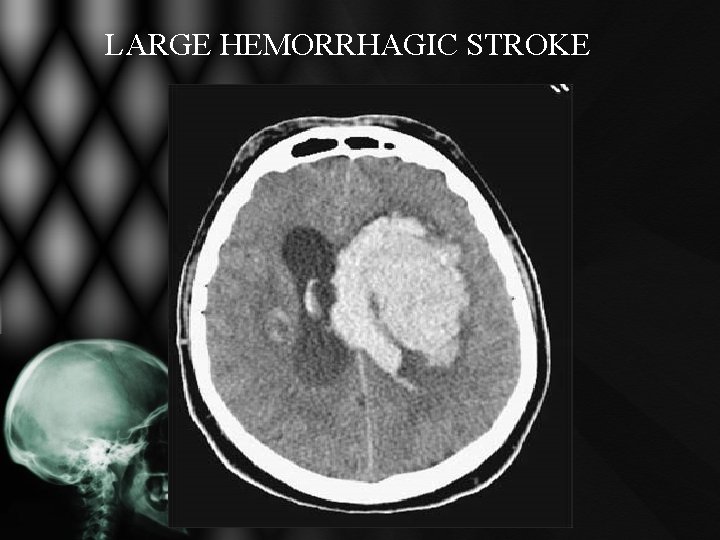
LARGE HEMORRHAGIC STROKE
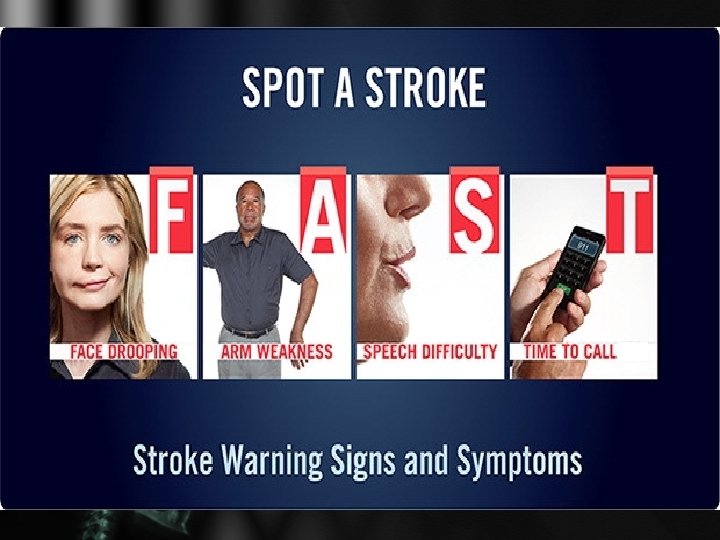
HOW DO WE RECOGNIZE A STROKE? Stroke Strikes FAST • F = FACE: Ask the person to smile. • A = ARM: Ask the person to raise both arms. • S = SPEECH: Ask the person to speak a simple sentence. • T = TIME “If you observe any of these signs, call emergency immediately”
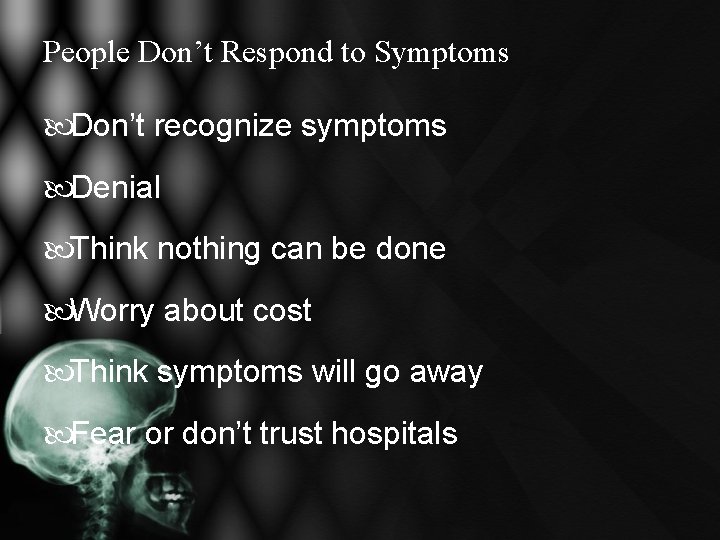
People Don’t Respond to Symptoms Don’t recognize symptoms Denial Think nothing can be done Worry about cost Think symptoms will go away Fear or don’t trust hospitals
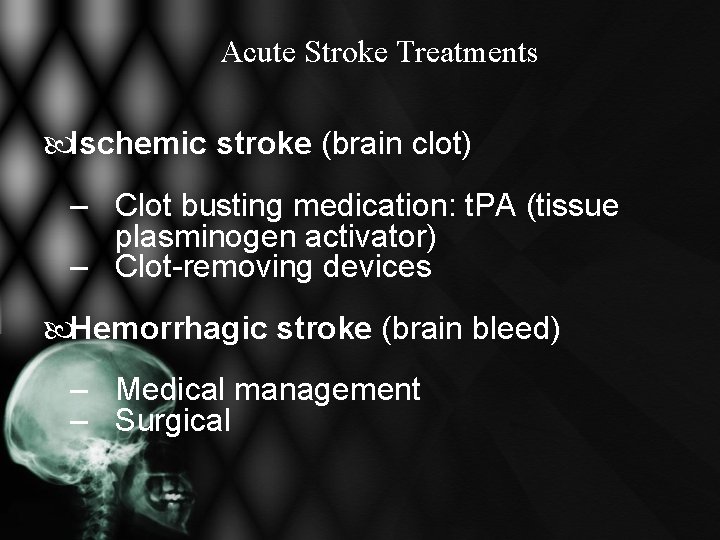
Acute Stroke Treatments Ischemic stroke (brain clot) – Clot busting medication: t. PA (tissue plasminogen activator) – Clot-removing devices Hemorrhagic stroke (brain bleed) – Medical management – Surgical
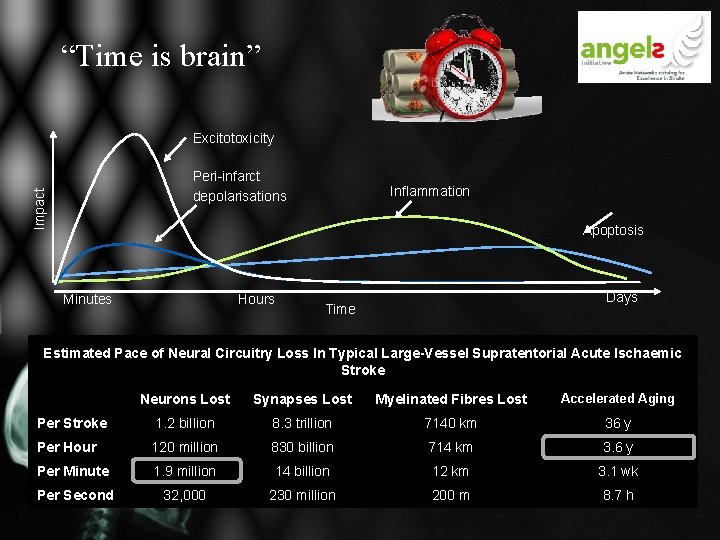
“Time is brain” Excitotoxicity Impact Peri-infarct depolarisations Inflammation Apoptosis Hours Minutes Days Time Estimated Pace of Neural Circuitry Loss In Typical Large-Vessel Supratentorial Acute Ischaemic Stroke Neurons Lost Synapses Lost Myelinated Fibres Lost Accelerated Aging Per Stroke 1. 2 billion 8. 3 trillion 7140 km 36 y Per Hour 120 million 830 billion 714 km 3. 6 y Per Minute 1. 9 million 14 billion 12 km 3. 1 wk Per Second 32, 000 230 million 200 m 8. 7 h
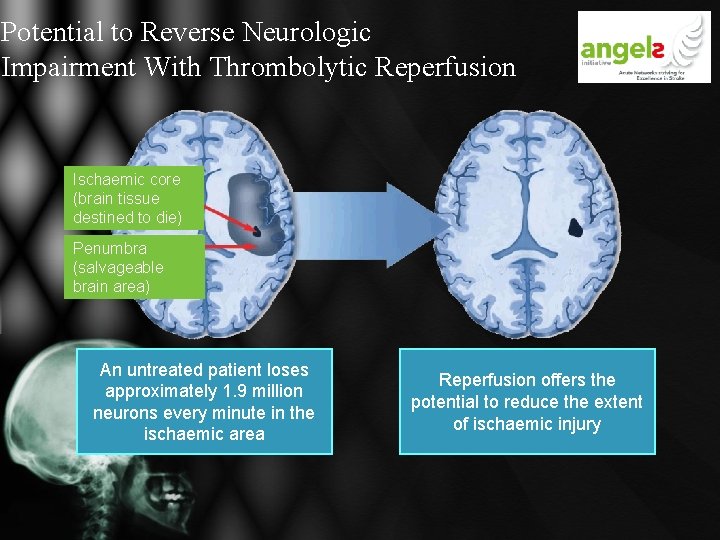
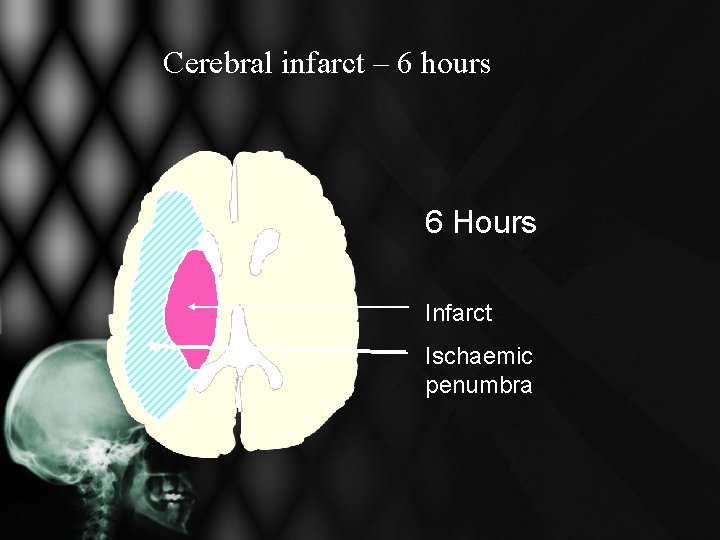
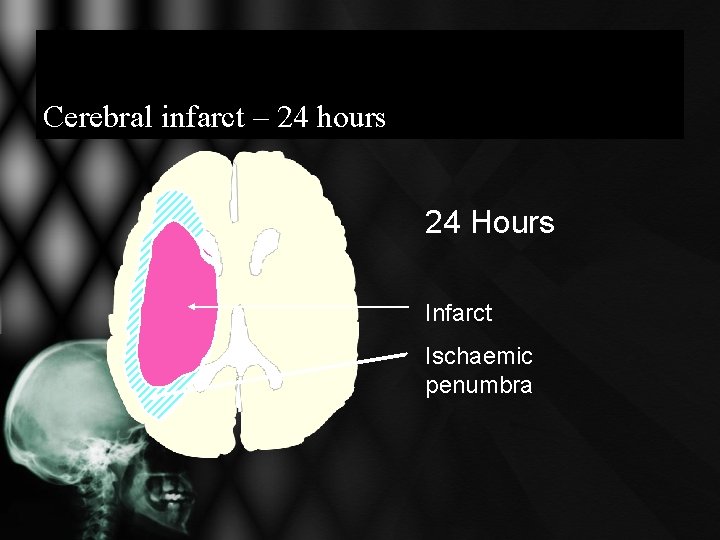
Potential to Reverse Neurologic Impairment With Thrombolytic Reperfusion Ischaemic core (brain tissue destined to die) Penumbra (salvageable brain area) An untreated patient loses approximately 1. 9 million neurons every minute in the ischaemic area Reperfusion offers the potential to reduce the extent of ischaemic injury
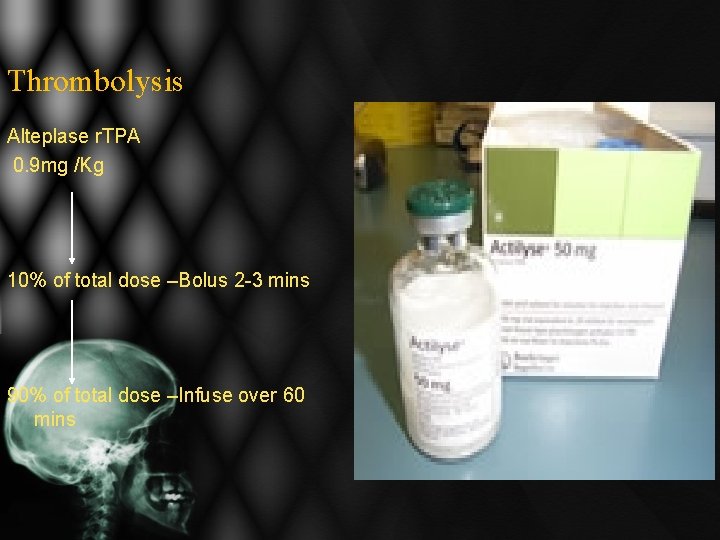
Thrombolysis Alteplase r. TPA 0. 9 mg /Kg 10% of total dose –Bolus 2 -3 mins 90% of total dose –Infuse over 60 mins
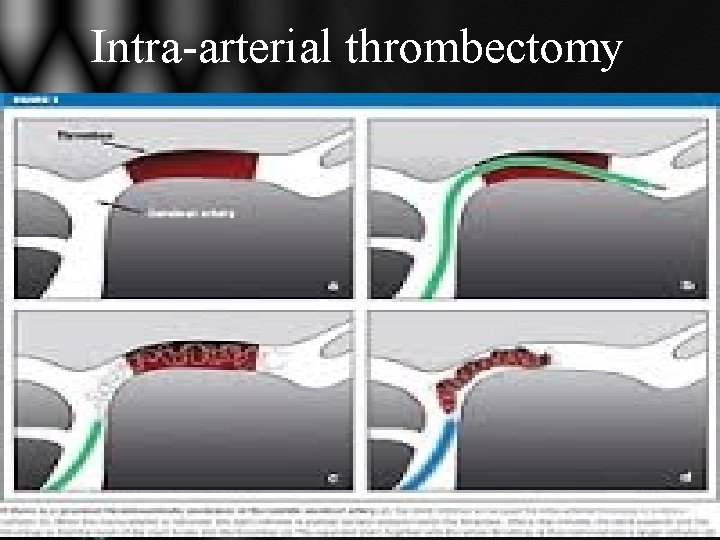
Intra-arterial thrombectomy
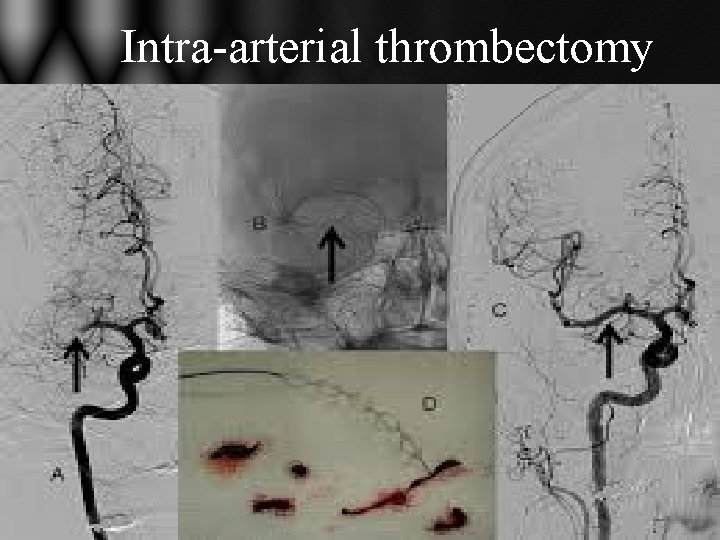
Intra-arterial thrombectomy
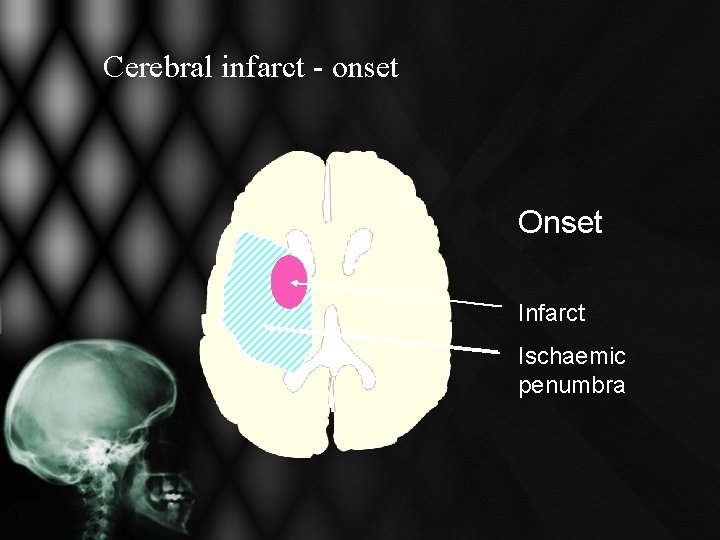
Cerebral infarct - onset Onset Infarct Ischaemic penumbra
Cerebral infarct – 6 hours 6 Hours Infarct Ischaemic penumbra
Cerebral infarct – 24 hours 24 Hours Infarct Ischaemic penumbra
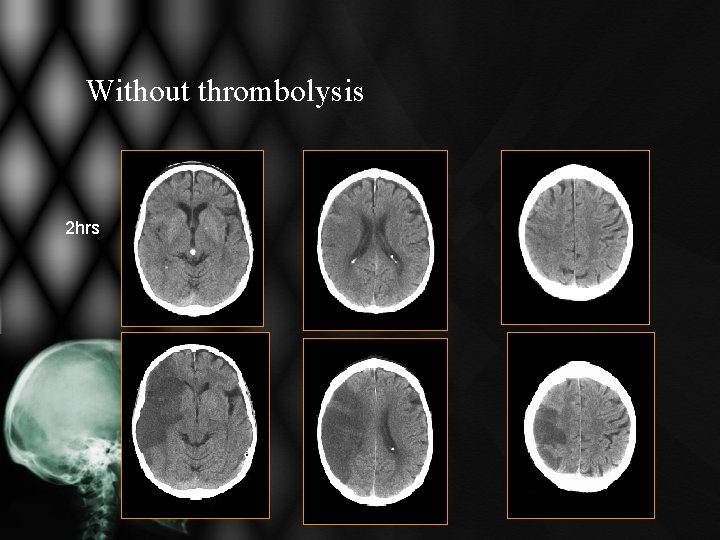
Without thrombolysis 2 hrs
Stroke Prevention • Know your blood pressure. Have it checked at least annually. If it is elevated, work with your healthcare professional to control it. • Find out if you have atrial fibrillation (Afib) – a type of irregular heartbeat. If you have it, work with your doctor to manage it. • If you smoke, stop
Stroke Prevention • If you drink alcohol, do so in moderation. • Know your cholesterol number. If it is high, work with your doctor to control it. • If you are diabetic, follow your doctor’s recommendations carefully to control your diabetes.
Stroke Prevention • Include exercise in your daily routine • Enjoy a lower sodium (salt) and lower fat diet • If you have circulation problems, work with your doctor to improve your circulation. • If you experience any stroke symptoms, call emergency immediately. Every minute matters!
Why prevention is important? Stroke Recovery 10 percent of stroke survivors recover almost completely 25 percent recover with minor impairments 40 percent experience moderate to severe impairments requiring special care 10 percent require care within either a skilled-care or other long-term care facility 15 percent die shortly after the stroke
‘Time is Brain’ Thank you….