
STROKE Chapter 58 Copyright 2014 by Mosby an
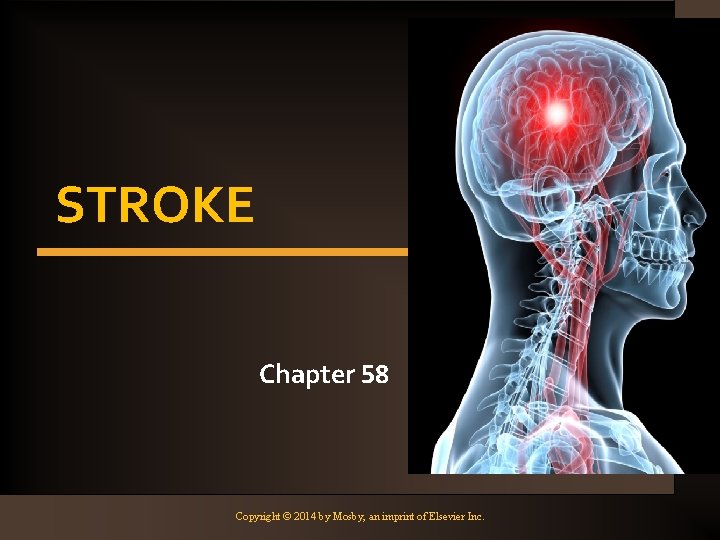
STROKE Chapter 58 Copyright © 2014 by Mosby, an imprint of Elsevier Inc.
Stroke • Stroke occurs when there is ischemia or hemorrhage into the brain that results in death of brain cells. • Also known as • Brain attack • Cerebrovascular accident Copyright © 2014 by Mosby, an imprint of Elsevier Inc.
Stroke • Loss of function varies according to the location and extent of brain tissue involved. • Physical, cognitive, and emotional impact on patient and family Copyright © 2014 by Mosby, an imprint of Elsevier Inc.
Stroke • Fourth most common cause of death in the United States and Canada • Leading cause of serious, long-term disability • 15 -30% of survivors will live with permanent disability. • 26% will require long-term care after 3 months. • Lifelong change for survivor and family Copyright © 2014 by Mosby, an imprint of Elsevier Inc.
Stroke: 911 ->access->CPR->defib->ACLS->post resusc care • USED TO BE Fourth most common cause of death in the United States and Canada • • Now 5 th leading cause thanks to the STROKE chain of survival Includes: • 1. detection-patient or bystander recognizes the s/s of CVA • 2. dispatch-911/EMS • 3. delivery-triage and treatment to primary stroke center • 4. door-immediate triage to acute area • 5. data-prompt ED eval, stroke team eval, lab and brain imaging • 6. decision-dx and determination of treatment • 7. drug-administration of drugs as indicated (like t. Pa) • 8. disposition-timely admission to stroke unit, or ICU or transfer to stroke center Copyright © 2014 by Mosby, an imprint of Elsevier Inc.
Pathophysiology of Stroke Copyright © 2014 by Mosby, an imprint of Elsevier Inc.
Risk Factors • Most effective way to decrease the burden of stroke is prevention and teaching. • Risk factors can be divided into nonmodifiable and modifiable risks. • Stroke risk increases with multiple risk factors. Copyright © 2014 by Mosby, an imprint of Elsevier Inc.
Risk Factors Non-Modifiable • Age • Stroke risk doubles each decade after 55. • Gender • More common in men; more women die • Ethnicity/race • Higher incidence in African Americans • Heredity/family history Copyright © 2014 by Mosby, an imprint of Elsevier Inc.
Risk Factors Modifiable • • • Hypertension Heart disease Serum cholesterol Smoking Excess alcohol consumption • Obesity • Sleep apnea • Metabolic syndrome • Lack of physical exercise • Poor diet • Drug abuse Copyright © 2014 by Mosby, an imprint of Elsevier Inc.
Audience Response Question As one of your clinical assignments, you are assisting an RN with health screening at a health fair. Which individual is at greatest risk for experiencing a stroke? a. A 46 -year-old white female with hypertension and oral contraceptive use for 10 years b. A 58 -year-old white male salesman who has a total cholesterol level of 285 mg/dl c. A 42 -year-old African American female with diabetes mellitus who has smoked for 30 years d. A 62 -year-old African American male with hypertension who is 35 pounds overweight Copyright © 2014 by Mosby, an imprint of Elsevier Inc.
Stroke • Several conditions are associated with stroke risk: • Atrial fibrillation • Cardiac valve abnormalities • Diabetes mellitus Copyright © 2014 by Mosby, an imprint of Elsevier Inc.
Transient Ischemic Attack • TIA is associated with an increased risk of stroke. • TIA is a transient episode of neurologic dysfunction caused by focal brain, spinal cord, or retinal ischemia, but without acute infarction of the brain. Copyright © 2014 by Mosby, an imprint of Elsevier Inc.
Transient Ischemic Attack • Symptoms typically last < 1 hour. • 1/3 will progress to an ischemic stroke. Copyright © 2014 by Mosby, an imprint of Elsevier Inc.
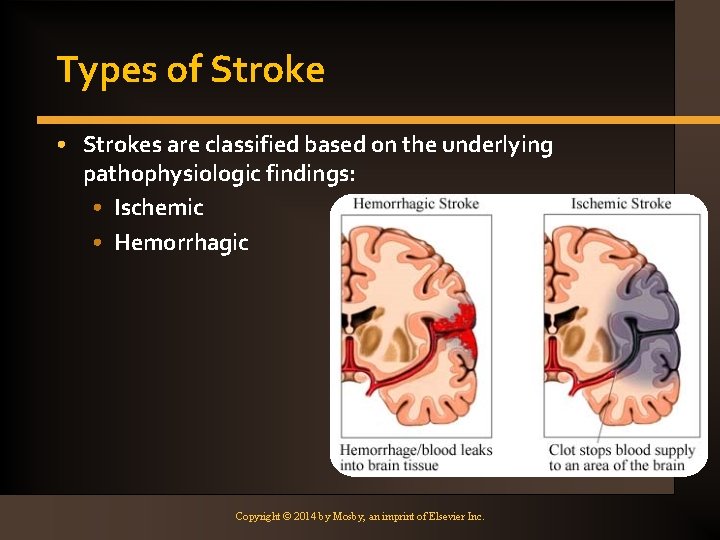
Types of Stroke • Strokes are classified based on the underlying pathophysiologic findings: • Ischemic • Hemorrhagic Copyright © 2014 by Mosby, an imprint of Elsevier Inc.
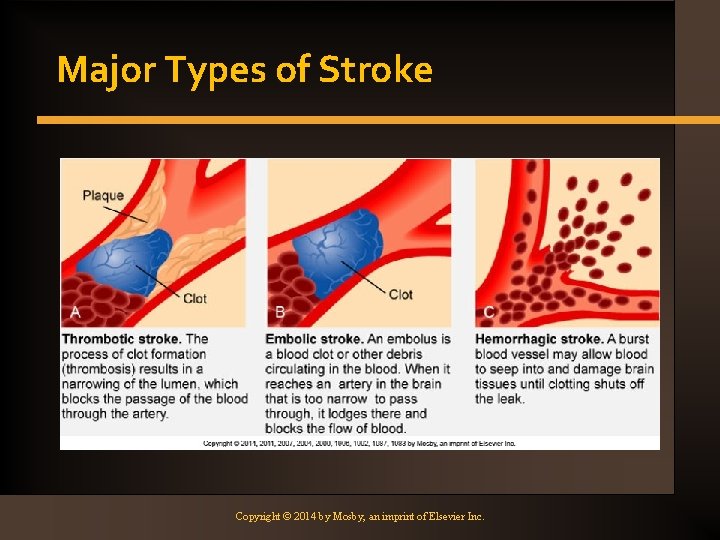
Major Types of Stroke Copyright © 2014 by Mosby, an imprint of Elsevier Inc.
Ischemic Stroke • Ischemic strokes result from • Inadequate blood flow to the brain from partial or complete occlusion of an artery • 80% of all strokes are ischemic strokes. • A TIA attack is usually a precursor. • Ischemic strokes can be • Thrombotic • Embolic Copyright © 2014 by Mosby, an imprint of Elsevier Inc.
Ischemic Stroke • Thrombotic stroke • Occurs from injury to a blood vessel wall and formation of a blood clot • Result of thrombosis or narrowing of the blood vessel • Most common cause of stroke (60%) • 2/3 are associated with HTN and DM. • 30 -50% of cases have been preceded by TIA. Copyright © 2014 by Mosby, an imprint of Elsevier Inc.
Ischemic Stroke • Thrombotic stroke • Extent of the stroke depends on • Rapidity of onset • Size of the lesions • Presence of collateral circulation Copyright © 2014 by Mosby, an imprint of Elsevier Inc.
Ischemic Stroke • Embolic stroke • Occurs when an embolus lodges in and occludes a cerebral artery • Results in infarction and edema of the area supplied by the involved vessel • 2 nd most common cause of stroke (24%) Copyright © 2014 by Mosby, an imprint of Elsevier Inc.
Embolic Stroke Copyright © 2014 by Mosby, an imprint of Elsevier Inc.
Ischemic Stroke • Embolic stroke • Patient with an embolic stroke commonly has a rapid occurrence of severe clinical manifestations. • Onset of embolic stroke is usually sudden and may or may not be related to activity. • Prognosis is related to amount of brain tissue deprived of blood supply. • Recurrence is common. Copyright © 2014 by Mosby, an imprint of Elsevier Inc.
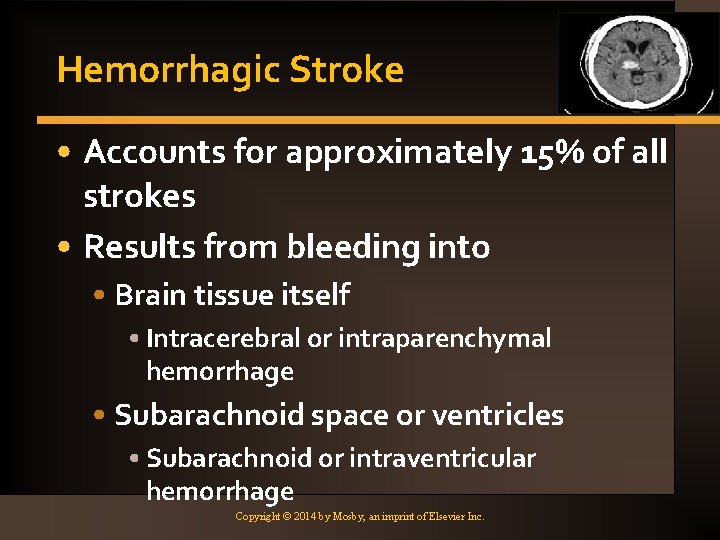
Hemorrhagic Stroke • Accounts for approximately 15% of all strokes • Results from bleeding into • Brain tissue itself • Intracerebral or intraparenchymal hemorrhage • Subarachnoid space or ventricles • Subarachnoid or intraventricular hemorrhage Copyright © 2014 by Mosby, an imprint of Elsevier Inc.
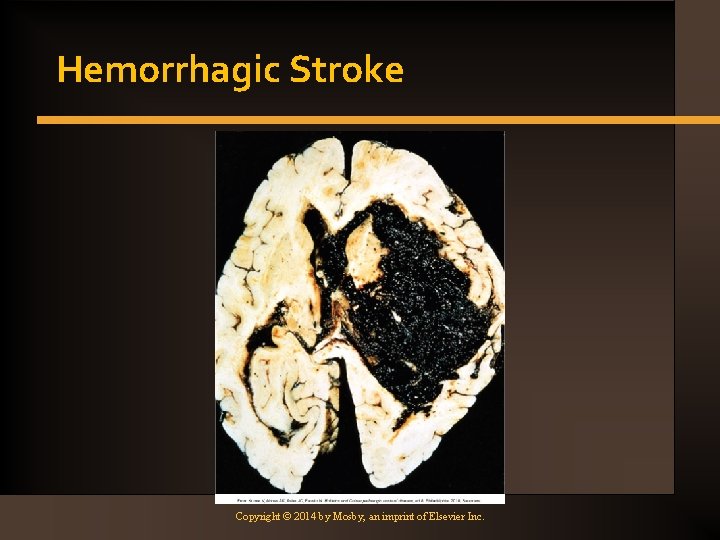
Hemorrhagic Stroke • Intracerebral hemorrhage • Bleeding within brain caused by rupture of a vessel • Sudden onset of symptoms • Progression over minutes to hours because of ongoing bleeding • Prognosis is poor with a 30 -day mortality rate of 40 -80%. Copyright © 2014 by Mosby, an imprint of Elsevier Inc.
Hemorrhagic Stroke Copyright © 2014 by Mosby, an imprint of Elsevier Inc.
Hemorrhagic Stroke • Intracerebral hemorrhage • Hypertension is most common cause. • Hemorrhage occurs during activity. • Extent of symptoms varies and depends on amount, location, and duration of bleeding. Copyright © 2014 by Mosby, an imprint of Elsevier Inc.
Hemorrhagic Stroke • Intracerebral hemorrhage • Manifestations • Neurologic deficits • Headache • Nausea and/or vomiting • Decreased levels of consciousness • Hypertension Copyright © 2014 by Mosby, an imprint of Elsevier Inc.
Hemorrhagic Stroke • Subarachnoid hemorrhage (SAH) • Intracranial bleeding into cerebrospinal fluid–filled space between the arachnoid and pia mater • Commonly caused by rupture of a cerebral aneurysm, trauma, or drug abuse Copyright © 2014 by Mosby, an imprint of Elsevier Inc.
Hemorrhagic Stroke • Cerebral aneurysm • Majority of aneurysms are in the Circle of Willis. • Silent killer • Loss of consciousness may or may not occur. • Survivors often suffer significant complications and deficits. Copyright © 2014 by Mosby, an imprint of Elsevier Inc.
Headache vs. Ruptured Aneurysm [INSERT Archie animation #399] Copyright © 2014 by Mosby, an imprint of Elsevier Inc.
Case Study i. Stockphoto/Thinkstock • P. D. is a 73 -year-old man who was admitted to the hospital with right sided paresis and expressive aphasia. • He had been experiencing periods of confusion, right-sided weakness, and slurred speech for the past several weeks. . Copyright © 2014 by Mosby, an imprint of Elsevier Inc.
Case Study i. Stockphoto/Thinkstock • These episodes were brief and resolved completely within an hour. • No treatment was sought. Copyright © 2014 by Mosby, an imprint of Elsevier Inc.
Case Study i. Stockphoto/Thinkstock • P. D. has a history of COPD, MI 15 years prior, and atrial fibrillation. • Over the first 24 hours of admission, P. D. ’s neurologic deficits gradually progressed. Copyright © 2014 by Mosby, an imprint of Elsevier Inc.

Case Study i. Stockphoto/Thinkstock • By day 2, he has right-sided paresthesias, hemiparesis, and global aphasia. • What is probably the cause of his stroke? Copyright © 2014 by Mosby, an imprint of Elsevier Inc.
Case Study • Could P. D. ’s stroke have been prevented? Copyright © 2014 by Mosby, an imprint of Elsevier Inc. i. Stockphoto/Thinkstock
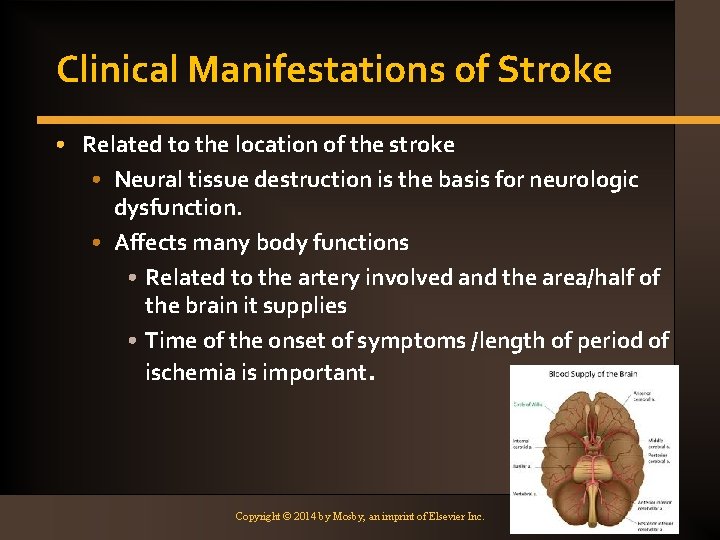
Clinical Manifestations of Stroke • Related to the location of the stroke • Neural tissue destruction is the basis for neurologic dysfunction. • Affects many body functions • Related to the artery involved and the area/half of the brain it supplies • Time of the onset of symptoms /length of period of ischemia is important. Copyright © 2014 by Mosby, an imprint of Elsevier Inc.
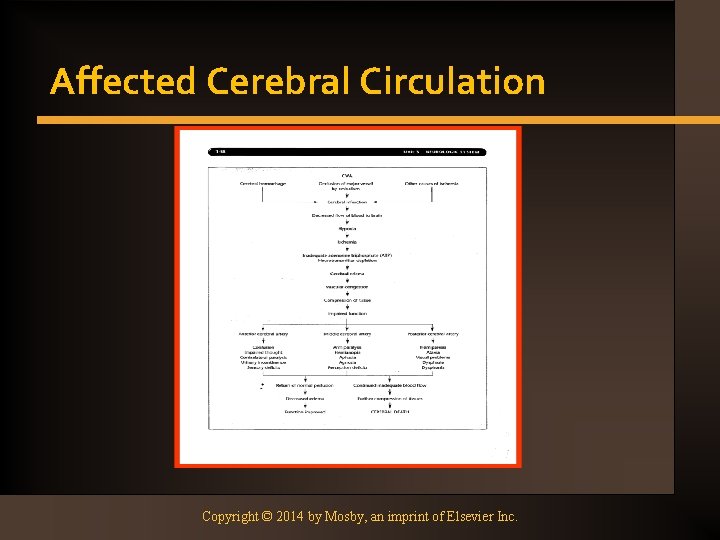
Affected Cerebral Circulation Copyright © 2014 by Mosby, an imprint of Elsevier Inc.
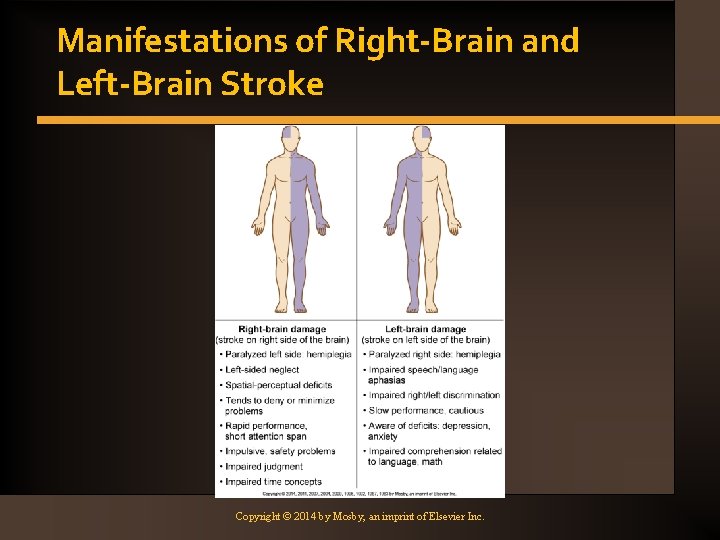
Manifestations of Right-Brain and Left-Brain Stroke Copyright © 2014 by Mosby, an imprint of Elsevier Inc.
Clinical Manifestations Motor Function • Most obvious effect of stroke • Include impairment of • Mobility • Respiratory function • Swallowing and speech • Gag reflex • Self-care abilities Copyright © 2014 by Mosby, an imprint of Elsevier Inc.
Clinical Manifestations Motor Function • Characteristic motor deficits • Loss of skilled voluntary movement • Akinesia • Impairment of integration of movements • Alterations in muscle tone • Alterations in reflexes • Changes from hyporeflexia to hyperreflexia Copyright © 2014 by Mosby, an imprint of Elsevier Inc.
Clinical Manifestations Motor Function • An initial period of flaccidity • May last from days to several weeks • Related to nerve damage • Spasticity of the muscles follows the flaccid stage. • Related to interruptions of upper motor neuron influence Copyright © 2014 by Mosby, an imprint of Elsevier Inc.
Clinical Manifestations Communication • Aphasia occurs when stroke damages dominant hemisphere of the brain and affects language. • Receptive – loss of comprehension • Expressive – loss of production of language • Global – total inability to communicate Copyright © 2014 by Mosby, an imprint of Elsevier Inc.
Clinical Manifestations Communication • Dysphasia refers to impaired ability to communicate. • Used interchangeably with aphasia • Nonfluent • Minimal speech activity with slow speech • Fluent • Speech is present but contains little meaningful communication. Copyright © 2014 by Mosby, an imprint of Elsevier Inc.
Clinical Manifestations Communication • Many patients experience dysarthria. • Disturbance in the muscular control of speech • Impairments may involve • Pronunciation • Articulation • Phonation Copyright © 2014 by Mosby, an imprint of Elsevier Inc.
Clinical Manifestations Affect • Patients who suffer a stroke may have difficulty controlling their emotions. • Emotional responses may be exaggerated or unpredictable. • May be magnified by depression, changes in body image, and loss of function Copyright © 2014 by Mosby, an imprint of Elsevier Inc.
Clinical Manifestations Intellectual Function • Both memory and judgment may be impaired as a result of stroke. • Although impairments can occur with strokes affecting either side of the brain, some deficits are related to the hemisphere in which the stroke occurred. Copyright © 2014 by Mosby, an imprint of Elsevier Inc.
Clinical Manifestations Spatial-Perceptual Alterations • Stroke on the right side of the brain is more likely to cause problems in spatial-perceptual orientation. • Incorrect perception of self and illness • Unilateral neglect • Agnosia • Apraxia Copyright © 2014 by Mosby, an imprint of Elsevier Inc.
Clinical Manifestations Elimination • Most problems with urinary and bowel elimination occur initially and are temporary. • When a stroke affects one hemisphere of the brain, the prognosis for normal bladder function is excellent. Copyright © 2014 by Mosby, an imprint of Elsevier Inc.
Diagnostic Studies • Diagnostic studies are done to • Confirm that it is a stroke • Identify the likely cause of the stroke • Noncontrast CT scan or MRI • Indicate the size and location of the lesion • Differentiate between ischemic and hemorrhagic stroke Copyright © 2014 by Mosby, an imprint of Elsevier Inc.
Diagnostic Studies • Other studies • CTA or MRA • Cerebral angiography • Digital subtraction angiography • Transcranial Doppler ultrasonography • Lumbar puncture • LICOX system • Cardiac imaging Copyright © 2014 by Mosby, an imprint of Elsevier Inc.
Reflection Question • You find yourself very fond of P. D. • His wife calls you their “adopted granddaughter” and brings you cookies and treats. • How involved should you get with your patients? Copyright © 2014 by Mosby, an imprint of Elsevier Inc.
Reflection Question • Should we refer to our older patients as family members or with terms of endearment such as “grandma, grandpa, ” etc. ? • Why or why not? Copyright © 2014 by Mosby, an imprint of Elsevier Inc.
Collaborative Care for Stroke Prevention • Goals include management of modifiable risk factors • Healthy diet • Weight control • Regular exercise • No smoking • Limited alcohol consumption • Routine health assessments Copyright © 2014 by Mosby, an imprint of Elsevier Inc.
Collaborative Care Preventive Drug Therapy • Measures to prevent development of a thrombus or embolus are used in patients at risk for stroke. • Antiplatelet drugs are used in patients who have had a TIA related to atherosclerosis. • Aspirin is the most frequently used antiplatelet agent. Copyright © 2014 by Mosby, an imprint of Elsevier Inc.
Collaborative Care Surgical Therapy for TIA/Stroke Prevention • Surgical interventions for the patient with TIAs from carotid disease include • Carotid endarterectomy • Stenting • Transluminal angioplasty • Extracranial-intracranial bypass Copyright © 2014 by Mosby, an imprint of Elsevier Inc.
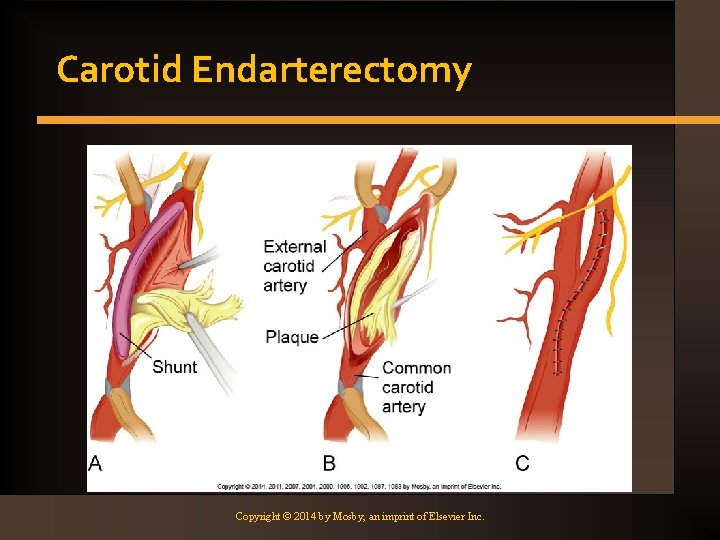
Carotid Endarterectomy Copyright © 2014 by Mosby, an imprint of Elsevier Inc.
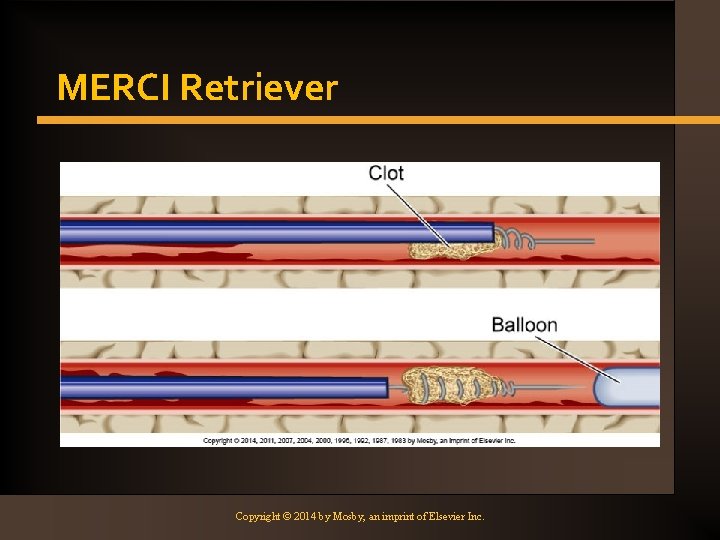
MERCI Retriever Copyright © 2014 by Mosby, an imprint of Elsevier Inc.

MERCI AND PENUMBRA • How does the Merci wire work? • Why is the Penumbra better? Copyright © 2014 by Mosby, an imprint of Elsevier Inc.
Collaborative Care Surgical Therapy for TIA/Stroke Prevention • Postoperative care is important. • Neurovascular assessment • BP management • Assessment of stent occlusion or retroperitoneal hemorrhage as complications • Minimize complications at insertion site. Copyright © 2014 by Mosby, an imprint of Elsevier Inc.
Collaborative Care Acute Care for Ischemic Stroke • Goals for collaborative care during the acute phase are • Preserving life • Preventing further brain damage • Reducing disability • The time of onset of symptoms is critical information. Copyright © 2014 by Mosby, an imprint of Elsevier Inc.
Collaborative Care Acute Care for Ischemic Stroke • Begins with managing • Airway • Breathing • Circulation Copyright © 2014 by Mosby, an imprint of Elsevier Inc.
Collaborative Care Acute Care for Ischemic Stroke • Baseline neurologic assessment • Monitor closely for • Signs of increasing neurologic deficit • Increased ICP • Elevated BP is common immediately after a stroke. • May reflect body’s attempt to maintain cerebral perfusion Copyright © 2014 by Mosby, an imprint of Elsevier Inc.
Collaborative Care Acute Care for Ischemic Stroke • Carefully work to control fluid and electrolyte balance • Goal is to keep patient adequately hydrated to promote perfusion and decrease further brain injury. • Manage ICP • Use interventions that improve venous drainage Copyright © 2014 by Mosby, an imprint of Elsevier Inc.
Collaborative Care Drug Therapy for Ischemic Stroke • Recombinant tissue plasminogen activator (t. PA) • Used to reestablish blood flow through a blocked artery to prevent cell death • Must be administered within 3 to 4. 5 hours of onset of clinical signs of ischemic stroke • Intraarterial t. PA can be given within 6 hours. Copyright © 2014 by Mosby, an imprint of Elsevier Inc.
Collaborative Care Acute Care • After the patient has stabilized and to prevent further clot formation, patients with strokes caused by thrombi and emboli may be treated with anticoagulants and platelet inhibitors. • ASA, Ticlid, Plavix, Persantine • What are the contraindications to thrombolytic therapy? Copyright © 2014 by Mosby, an imprint of Elsevier Inc.
Collaborative Care Acute Care for Hemorrhagic Stroke • Goals are the same as for the patient with ischemic stroke. • Manage airway, breathing, circulation, intracranial pressure. Copyright © 2014 by Mosby, an imprint of Elsevier Inc.
Collaborative Care Drug Therapy for Hemorrhagic Stroke • Anticoagulants and platelet inhibitors are contraindicated. • Management of hypertension is the main focus. • Oral and IV agents are used to maintain BP within a normal to high-normal range. • Seizure prophylaxis is situation-specific. Copyright © 2014 by Mosby, an imprint of Elsevier Inc.
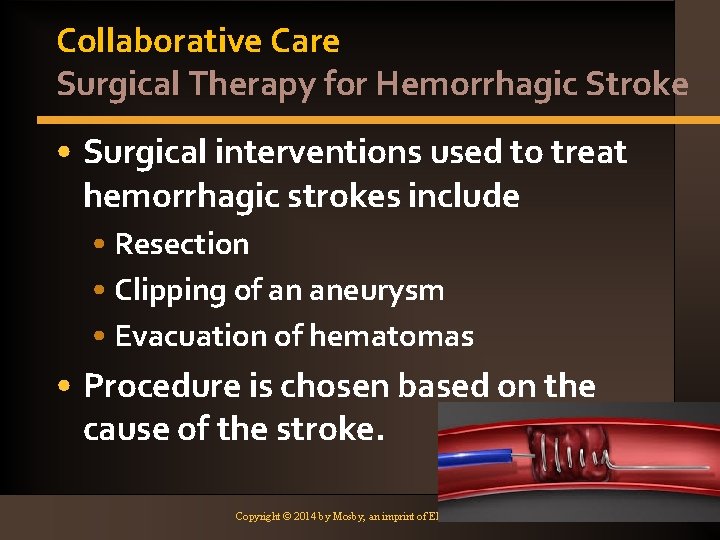
Collaborative Care Surgical Therapy for Hemorrhagic Stroke • Surgical interventions used to treat hemorrhagic strokes include • Resection • Clipping of an aneurysm • Evacuation of hematomas • Procedure is chosen based on the cause of the stroke. Copyright © 2014 by Mosby, an imprint of Elsevier Inc.
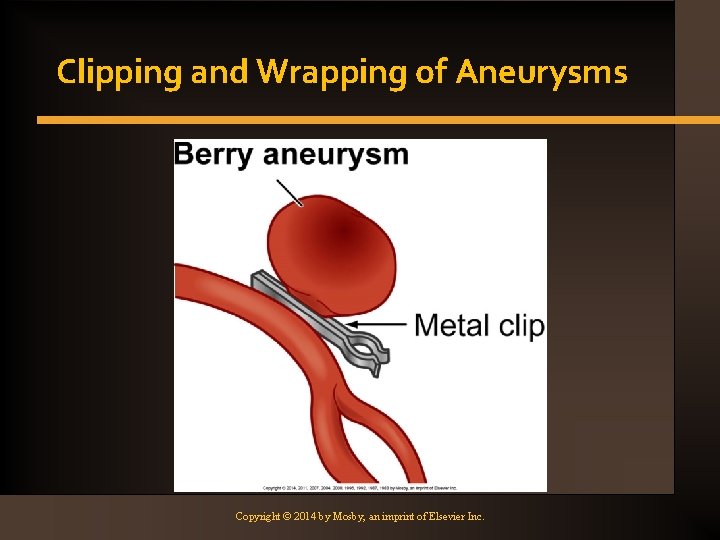
Clipping and Wrapping of Aneurysms Copyright © 2014 by Mosby, an imprint of Elsevier Inc.
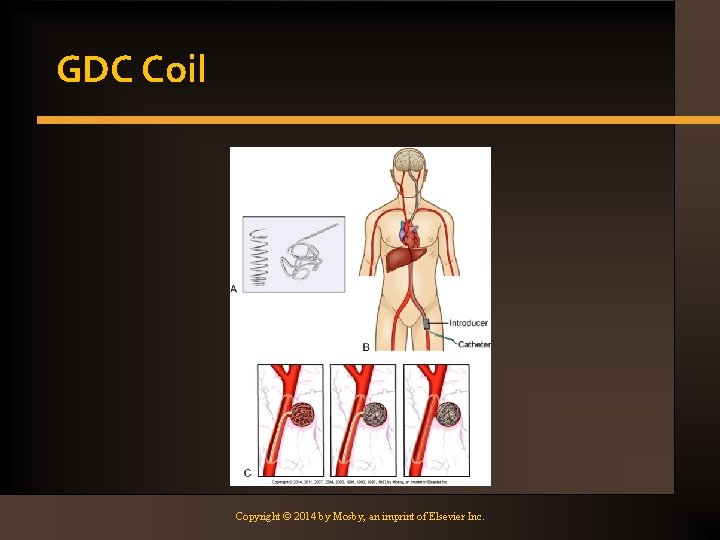
GDC Coil Copyright © 2014 by Mosby, an imprint of Elsevier Inc.
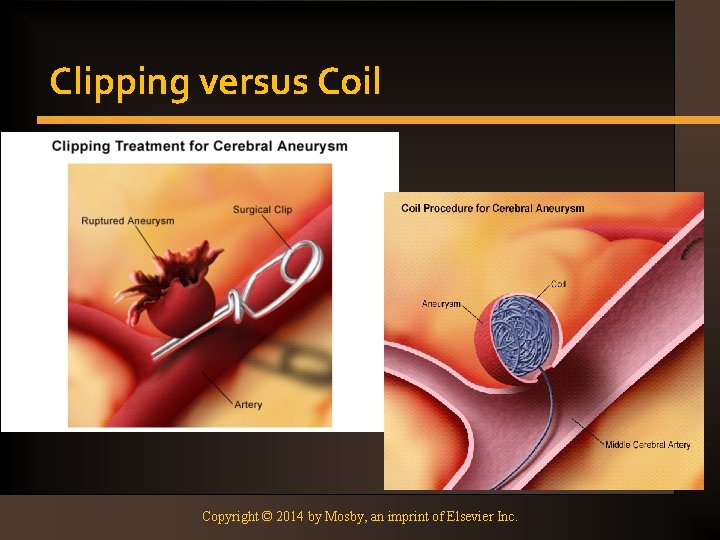
Clipping versus Coil Copyright © 2014 by Mosby, an imprint of Elsevier Inc.
Collaborative Care Acute Care for Hemorrhagic Stroke • Goals for managing ICP are the same for patients with SAH as they are for patients dealing with acute stroke. • Vasospasms can be treated with the calcium channel blocker nimodipine (Nimotop). Copyright © 2014 by Mosby, an imprint of Elsevier Inc.
Collaborative Care Acute Care for Hemorrhagic Stroke • Hydrocephalus is a complication requiring drainage of CSF in those situations it occurs. Copyright © 2014 by Mosby, an imprint of Elsevier Inc.
Case Study Audience Response Question i. Stockphoto/Thinkstock P. D. is diagnosed with a thrombotic stroke. Over the next 72 hours, you plan care with the knowledge that he a. is ready for aggressive rehabilitation. b. will show gradual improvement of the initial neurologic deficits. c. may show signs of deteriorating neurologic function as cerebral edema increases. d. should not be turned or exercised to prevent extension of the thrombus and increased neurologic deficits. Copyright © 2014 by Mosby, an imprint of Elsevier Inc.
Collaborative Care Rehabilitation • After stroke has stabilized for 12 to 24 hours, collaborative care shifts from preserving life to lessening disability and attaining optimal functioning. • Patient may be transferred to a rehabilitation unit, outpatient therapy, or home care–based rehabilitation. Copyright © 2014 by Mosby, an imprint of Elsevier Inc.
Nursing Management: Stroke Nursing Assessment • Primary assessment is focused on • Cardiac status • Respiratory status • Neurologic assessment • If the patient is stable, obtain • Description of the current illness • Pay special attention to symptom onset and duration, nature, and changes. Copyright © 2014 by Mosby, an imprint of Elsevier Inc.
TIME IS BRAIN • During assessment (or prehospitalization) this must be kept in mind: • 911 • Door to ED 10 minutes • Door to stroke expertise 15 minutes • Door to CT 25 minutes • Door to CT interpretation 45 minutes • Door to drug (TPA) 60 minutes • Joint commission will be decreasing time to 45 minutes total Copyright © 2014 by Mosby, an imprint of Elsevier Inc.
Nursing Management: Stroke Nursing Assessment • If the patient is stable, obtain • History of similar symptoms previously experienced • Current medications • History of risk factors and other illnesses • Hypertension, etc. • Family history of stroke or cardiovascular disease Copyright © 2014 by Mosby, an imprint of Elsevier Inc.
Nursing Management: Stroke Nursing Assessment • Secondary assessment includes a comprehensive neurologic examination. • Level of consciousness • Include NIH Stroke Scale • Cognition • Motor abilities Copyright © 2014 by Mosby, an imprint of Elsevier Inc.
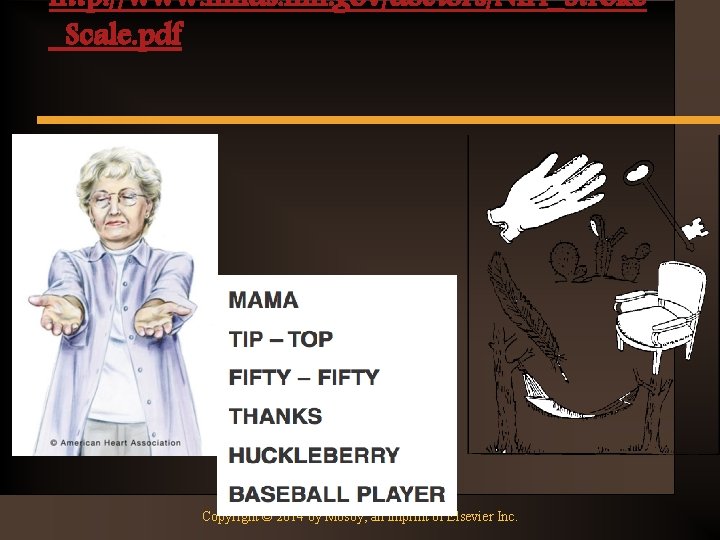
http: //www. ninds. nih. gov/doctors/NIH_Stroke _Scale. pdf Copyright © 2014 by Mosby, an imprint of Elsevier Inc.
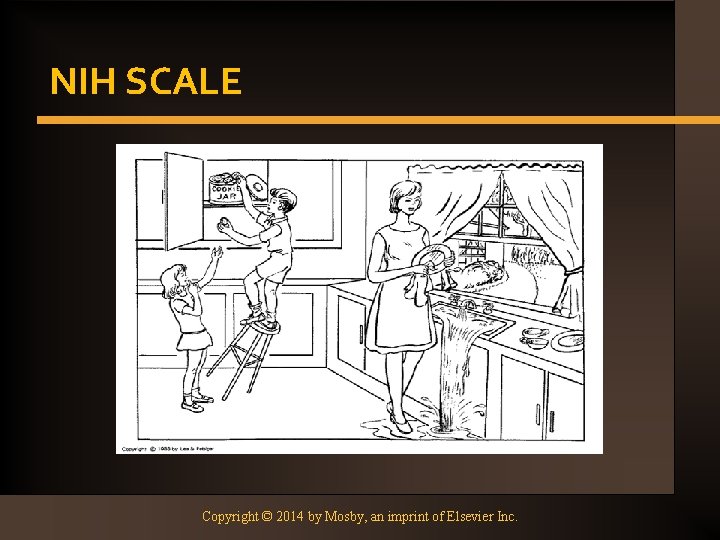
NIH SCALE Copyright © 2014 by Mosby, an imprint of Elsevier Inc.
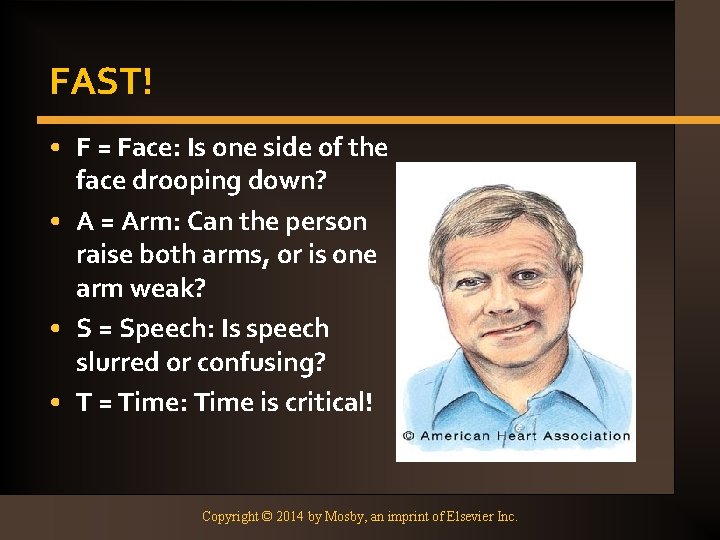
FAST! • F = Face: Is one side of the face drooping down? • A = Arm: Can the person raise both arms, or is one arm weak? • S = Speech: Is speech slurred or confusing? • T = Time: Time is critical! Copyright © 2014 by Mosby, an imprint of Elsevier Inc.
QUESTION…. . • A patient presents to the ED with CVA symptoms. Should you administer Aspirin if the MD orders it to be given STAT (prior to any other interventions)? Copyright © 2014 by Mosby, an imprint of Elsevier Inc.
Nursing Management: Stroke Nursing Assessment • Comprehensive neurologic examination • Cranial nerve function • Sensation • Proprioception • Cerebellar function • Deep tendon reflexes Copyright © 2014 by Mosby, an imprint of Elsevier Inc.
Nursing Management: Stroke Nursing Diagnoses • Risk for ineffective cerebral tissue perfusion • Ineffective airway clearance • Impaired physical mobility • Impaired verbal communication Copyright © 2014 by Mosby, an imprint of Elsevier Inc.
Nursing Management: Stroke Nursing Diagnoses • Diagnoses include but are not limited to • Unilateral neglect • Impaired urinary elimination • Impaired swallowing • Situational low self-esteem Copyright © 2014 by Mosby, an imprint of Elsevier Inc.
Nursing Management: Stroke Planning • Goals are developed collaboratively with patient, caregiver, and family. • Goals include that the patient will • Maintain stable or improved level of consciousness. • Attain maximum physical functioning. • Maximize self-care abilities and skills. Copyright © 2014 by Mosby, an imprint of Elsevier Inc.
Nursing Management: Stroke Planning • Goals include that the patient will • Maintain stable body functions. • Maximize communication abilities. • Maintain adequate nutrition. • Avoid complications of stroke. • Maintain effective personal and family coping. Copyright © 2014 by Mosby, an imprint of Elsevier Inc.
Nursing Management: Stroke Nursing Implementation • Health Promotion • You have an important role in the promotion of a healthy lifestyle. • To help reduce the incidence of stroke • Focus on stroke prevention. • Teach how to reduce modifiable risk factors. Copyright © 2014 by Mosby, an imprint of Elsevier Inc.
Nursing Management: Stroke Acute Intervention • Respiratory system • Management of the respiratory system is a nursing priority. • Risk for atelectasis • Risk for aspiration pneumonia • Risks for airway obstruction • May require endotracheal intubation and mechanical ventilation Copyright © 2014 by Mosby, an imprint of Elsevier Inc.
Nursing Management: Stroke Acute Intervention • Neurologic system • Monitor closely to detect changes suggesting • Extension of the stroke • ↑ ICP • Vasospasm • Recovery from stroke symptoms Copyright © 2014 by Mosby, an imprint of Elsevier Inc.
Nursing Management: Stroke Acute Intervention • Cardiovascular system • Goals aimed at maintaining homeostasis • Many patients with stroke have decreased cardiac reserves from the secondary diagnoses of cardiac disease. • Cardiac efficiency may be compromised. Copyright © 2014 by Mosby, an imprint of Elsevier Inc.
Nursing Management: Stroke Acute Intervention • Cardiovascular system • Nursing interventions • Monitoring vital signs frequently • Monitoring cardiac rhythms • Calculating intake and output, noting imbalances • Regulating IV infusions Copyright © 2014 by Mosby, an imprint of Elsevier Inc.
Nursing Management: Stroke Acute Intervention • Cardiovascular system • Adjusting fluid intake to the individual needs of the patient • Monitoring lung sounds for crackles and rhonchi (pulmonary congestion) • Monitoring heart sounds for murmurs or for S 3 or S 4 heart sounds • Watch for orthostatic hypotension before ambulating patient for 1 st time Copyright © 2014 by Mosby, an imprint of Elsevier Inc.
Nursing Management: Stroke Acute Intervention • Cardiovascular system • After stroke, patient is at risk for venous thromboembolism (VTE). • Weak or paralyzed lower extremities are particularly vulnerable. • Related to immobility, loss of venous tone, and ↓ muscle pumping in leg • Most effective prevention is keeping the patient moving. Copyright © 2014 by Mosby, an imprint of Elsevier Inc.
Case Study • When you go to get P. D. out of bed and ready for therapy, he refuses to participate in transferring out of bed. • Although he has seemed “down” throughout his hospital stay, he never refused to participate in the plan of care. • What should you do? i. Stockphoto/Thinkstock Copyright © 2014 by Mosby, an imprint of Elsevier Inc.
Nursing Management: Stroke Acute Intervention • Musculoskeletal system • Goal is to maintain optimal function. • Accomplished by the prevention of joint contractures and muscular atrophy • In the acute phase, range-of-motion exercises and positioning are important. • Paralyzed or weak side needs special attention when positioned. Copyright © 2014 by Mosby, an imprint of Elsevier Inc.
Nursing Management: Stroke Acute Intervention • Optimize musculoskeletal function. • Trochanter roll at hip to prevent external rotation • Hand cones to prevent hand contractures • Arm supports with slings and lap boards to prevent shoulder displacement Copyright © 2014 by Mosby, an imprint of Elsevier Inc.
Nursing Management: Stroke Acute Intervention • Optimize musculoskeletal function. • Avoidance of pulling the patient by the arm to avoid shoulder displacement • Posterior leg splints, footboards, or high-topped tennis shoes to prevent foot drop • Hand splints to reduce spasticity Copyright © 2014 by Mosby, an imprint of Elsevier Inc.
Nursing Management: Stroke Acute Intervention • Integumentary system • Susceptible to skin breakdown related to • Loss of sensation • Decreased circulation • Immobility • Compounded by patient age, poor nutrition, dehydration, edema, and incontinence Copyright © 2014 by Mosby, an imprint of Elsevier Inc.
Nursing Management: Stroke Acute Intervention • Prevention of skin breakdown • Pressure relief by position changes, special mattresses, wheelchair cushions • Position patient on the weak or paralyzed side for only 30 minutes. • Good skin hygiene • Emollients applied to dry skin • Early mobility Copyright © 2014 by Mosby, an imprint of Elsevier Inc.
Nursing Management: Stroke Acute Intervention • Gastrointestinal system • Stress of illness contributes to a catabolic state that can interfere with recovery. • Constipation is the most common bowel problem. • Prophylactic stool softeners or fiber • Physical activity promotes bowel function. Copyright © 2014 by Mosby, an imprint of Elsevier Inc.
Nursing Management: Stroke Acute Intervention • Urinary system • In the acute stage, poor bladder control results in incontinence. • Efforts should be made to promote normal bladder function. • Avoid the use of indwelling catheters. Copyright © 2014 by Mosby, an imprint of Elsevier Inc.
Nursing Management: Stroke Acute Intervention • Nutritional needs require quick assessment and treatment. • May initially receive IV infusions to maintain fluid and electrolyte balance • May require nutrition support Copyright © 2014 by Mosby, an imprint of Elsevier Inc.
Nursing Management: Stroke Acute Intervention • Nutrition • First feeding should be approached carefully. • Test the swallowing, chewing, gag reflex, and pocketing before beginning oral feeding. • Feedings must be followed by scrupulous oral hygiene. Copyright © 2014 by Mosby, an imprint of Elsevier Inc.
Nursing Management: Stroke Acute Intervention • Communication • Your role in meeting psychologic needs of the patient is primarily supportive. • Assess the patient for both the ability to speak and the ability to understand. • Speak slowly and calmly, using simple words or sentences. • Gestures may be used to support verbal cues. Copyright © 2014 by Mosby, an imprint of Elsevier Inc.
Nursing Management: Stroke Acute Intervention • Speech, comprehension, and language deficits are the most difficult problem for the patient and family. • Speech therapists can assess and formulate a plan to support communication. Copyright © 2014 by Mosby, an imprint of Elsevier Inc.
Nursing Management: Stroke Acute Intervention • Sensory-perceptual alterations • Related to the hemisphere of the brain in which the stroke occurred • Visual problems may include • Diplopia (double vision) • Loss of the corneal reflex • Ptosis (drooping eyelid) • Homonymous hemianopsia Copyright © 2014 by Mosby, an imprint of Elsevier Inc.
Nursing Management: Stroke Acute Intervention • Sensory-perceptual alterations • Patients with stroke on right side of brain • Difficulty in judging position, distance, and movement • Impulsive, impatient, and deny problems related to stroke • Respond best to directions given verbally Copyright © 2014 by Mosby, an imprint of Elsevier Inc.
Nursing Management: Stroke Acute Intervention • Sensory-perceptual alterations • Patients with stroke on left side of brain • Slower in organization and performance of tasks • Impaired spatial discrimination • Have fearful, anxious response to stroke • Respond well to nonverbal cues Copyright © 2014 by Mosby, an imprint of Elsevier Inc.
EVALUATION DURING ACUTE PHASE • • • NIHSS CRANIAL NERVE TESTING DETERMINATION OF MOTOR STRENGTH SENSORY TESTING SPEEACH AND LANGUAGE CELLEBELLAR-WATCH PATIENT WALK Copyright © 2014 by Mosby, an imprint of Elsevier Inc.
Case Study Audience Response Question i. Stockphoto/Thinkstock P. D. also has dysphagia. Before allowing him to eat, which action should you take first? a. Check the patient’s gag reflex. b. Request a soft diet with no liquids. c. Place the patient in high-Fowler’s position. d. Test the patient’s ability to swallow with a small amount of water. Copyright © 2014 by Mosby, an imprint of Elsevier Inc.
Nursing Management: Stroke Acute Intervention • Coping • Often a family disease • Affects family • Emotionally • Socially • Financially • Changing roles and responsibilities Copyright © 2014 by Mosby, an imprint of Elsevier Inc.
Nursing Management: Stroke Acute Intervention • Coping • Explain • What has happened • Diagnosis • Therapeutic procedures • Should be clear and understood by patient Copyright © 2014 by Mosby, an imprint of Elsevier Inc.
Nursing Management: Stroke Acute Intervention • Coping • Patient’s family should be given a careful, detailed explanation of what has happened to the patient. • Family members usually have not had time to prepare for the illness. • Social services referral is often helpful. Copyright © 2014 by Mosby, an imprint of Elsevier Inc.
Case Study • What are the priority nursing interventions for P. D. ? i. Stockphoto/Thinkstock • What teaching will you need to do for him and his family? Copyright © 2014 by Mosby, an imprint of Elsevier Inc.
Nursing Management: Stroke Ambulatory and Home Care • Patient is usually discharged from the acute care setting to • Home • Intermediate or long-term care facility • Rehabilitation facility • Critical factor: independence in ADLs • Ongoing rehabilitation is essential to maximize patient’s abilities. Copyright © 2014 by Mosby, an imprint of Elsevier Inc.
Nursing Management: Stroke Ambulatory and Home Care • Ambulatory and Home Care • Nurses have an excellent opportunity to prepare the patient and family for discharge through • Teaching • Demonstration/return demonstration • Practice • Evaluation of self-care skills Copyright © 2014 by Mosby, an imprint of Elsevier Inc.
Nursing Management: Stroke Ambulatory and Home Care • Rehabilitation is the process of maximizing the patient’s capabilities and resources to promote optimal functioning. • Physical, mental, and social well-being • Goals are set mutually by patient, family, nurse, stroke/rehab team. Copyright © 2014 by Mosby, an imprint of Elsevier Inc.
Nursing Management: Stroke Ambulatory and Home Care • The rehabilitation nurse assesses the patient and family with • Rehabilitation potential of the patient • Physical status of all body systems • Presence of complications caused by the stroke or other chronic conditions • Cognitive status of the patient Copyright © 2014 by Mosby, an imprint of Elsevier Inc.
Nursing Management: Stroke Ambulatory and Home Care • The rehabilitation nurse assesses the patient and family. • Family resources and support • Expectations of patient and family related to the rehabilitation program Copyright © 2014 by Mosby, an imprint of Elsevier Inc.
Nursing Management: Stroke Ambulatory and Home Care • Musculoskeletal Function • Initially emphasize musculoskeletal functions of • Walking • Eating • Toileting • Interventions advance in a manner of progressive activity. Copyright © 2014 by Mosby, an imprint of Elsevier Inc.
Nursing Management: Stroke Ambulatory and Home Care • Musculoskeletal Function • If muscles are still flaccid several weeks after the stroke, prognosis for regaining function is poor. • Focus of care is on preventing additional loss. • Most patients begin to show signs of spasticity with exaggerated reflexes within 48 hours following the stroke. Copyright © 2014 by Mosby, an imprint of Elsevier Inc.
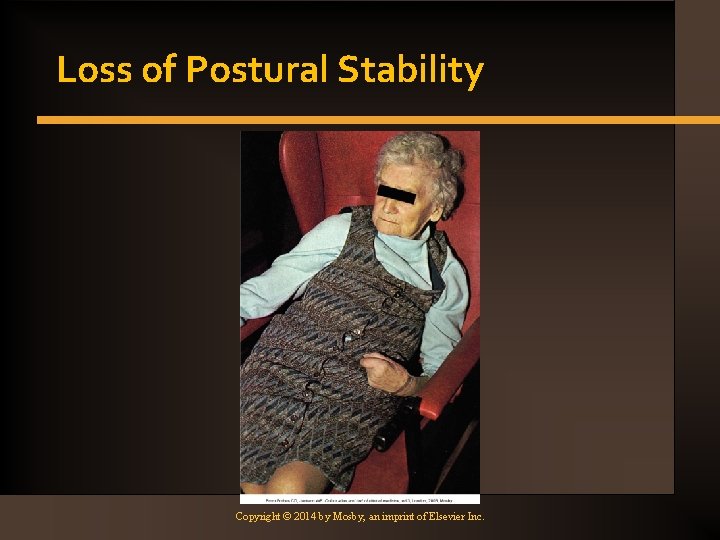
Loss of Postural Stability Copyright © 2014 by Mosby, an imprint of Elsevier Inc.
Nursing Management: Stroke Ambulatory and Home Care • Musculoskeletal interventions • Balance training • Transferring from bed to chair • Bobath method or constraint-induced movement therapy may be used in musculoskeletal rehabilitation. • CIMT is a more recent approach. Copyright © 2014 by Mosby, an imprint of Elsevier Inc.
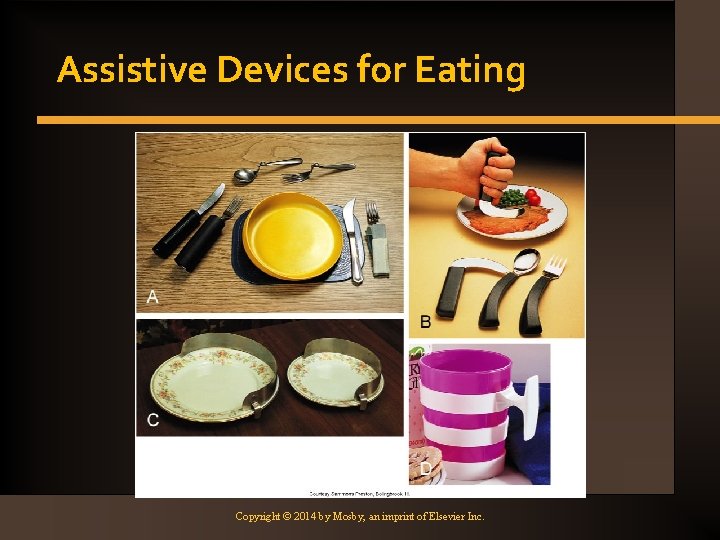
Assistive Devices for Eating Copyright © 2014 by Mosby, an imprint of Elsevier Inc.
Nursing Management: Stroke Ambulatory and Home Care • Toileting interventions • Implement a bowel management program for problems with • Bowel control • Constipation • Incontinence • High-fiber diet and adequate fluid intake Copyright © 2014 by Mosby, an imprint of Elsevier Inc.
Nursing Management: Stroke Survivorship and Coping • Interventions for atypical emotional response • Distract the patient. • Explain to patient and family that emotional outbursts may occur. • Maintain a calm environment. • Avoid shaming or scolding patient. Copyright © 2014 by Mosby, an imprint of Elsevier Inc.
Nursing Management: Stroke Survivorship and Coping • Patients with a stroke may be coping with many losses. • Often go through the process of grief • Some patients experience long-term depression. • You have a role in supporting coping. Copyright © 2014 by Mosby, an imprint of Elsevier Inc.
Nursing Management: Stroke Survivorship and Coping • Assist coping process. • Support communication between the patient and family. • Discuss lifestyle changes from deficits. • Discuss changing roles and responsibilities within the family. Copyright © 2014 by Mosby, an imprint of Elsevier Inc.
Nursing Management: Stroke Survivorship and Coping • Assist coping process. • Being an active listener to allow expression of fear, frustration, and anxiety • Include family in goal planning and patient care. • Support family conferences. Copyright © 2014 by Mosby, an imprint of Elsevier Inc.
Nursing Management: Stroke Survivorship and Coping • Family members must cope with three aspects of patient’s behavior: 1. Recognition of behavioral changes resulting from neurologic deficits that are not changeable 2. Responses to multiple losses both by the patient and the family Copyright © 2014 by Mosby, an imprint of Elsevier Inc.
Nursing Management: Stroke Survivorship and Coping • Three aspects of the patient’s behavior: 3. Behaviors that may have been reinforced during the early stages of stroke as continued dependency Copyright © 2014 by Mosby, an imprint of Elsevier Inc.
Nursing Management: Stroke Survivorship and Coping • Stroke support groups within rehab facilities and community are helpful. • Mutual sharing • Teaching • Coping • Understanding Copyright © 2014 by Mosby, an imprint of Elsevier Inc.
Nursing Management: Stroke Survivorship and Coping • Sexual function • Person who has had a stroke may be concerned about the loss of sexual function. • Common concerns about sexual activity are impotence and the occurrence of another stroke during sex. Copyright © 2014 by Mosby, an imprint of Elsevier Inc.
Nursing Management: Stroke Survivorship and Coping • Sexual function • Many patients are comfortable talking about their anxieties and fears regarding sexual function if the nurse is comfortable and open to the topic. Copyright © 2014 by Mosby, an imprint of Elsevier Inc.
Nursing Management: Stroke Survivorship and Coping • Community Integration • Resources can be a valuable asset to patients and families after stroke. • Nurse case managers, home health nurses, discharge planners, clinical nurse specialists can all identify resources. • National and local help is available. Copyright © 2014 by Mosby, an imprint of Elsevier Inc.
Nursing Management: Stroke Gerontologic Considerations • Stroke is a significant cause of death and disability among older adults. • You have the opportunity to assist through acute hospitalization, rehab, long-term care, home care. • Patient, caregiver, and family require ongoing assessment and adaptation to changing needs. Copyright © 2014 by Mosby, an imprint of Elsevier Inc.
Reflection Question • Significant costs are generated in the last 2 years of an older adult’s life. • How does your position about health care resource allocation for care of the older old adult influence how you approach their care? Copyright © 2014 by Mosby, an imprint of Elsevier Inc.
- Slides: 138