
Stroke bleeding and risk scores in atrial fibrillation
Stroke, bleeding and risk scores in atrial fibrillation Stefan Bertog, Laura Vaskelyte, Markus Reinartz, Ilona Hofmann, Sameer Gafoor, Predrag Matic, Horst Sievert Cardio. Vascular Center Frankfurt
Disclosure Statement of Financial Interest Within the past 12 months, I or my spouse/partner have had a financial interest/arrangement or affiliation with the organization(s) listed below. Affiliation/Financial Relationship • Grant/Research Support • Consulting Fees/Honoraria • Major Stock Shareholder/Equity • Royalty Income • Ownership/Founder • Intellectual Property Rights • Other Financial Benefit Company • Cardio. Renal LLC
Stroke and atrial fibrillation • Does atrial fibrillation “cause” strokes? ?
Stroke and atrial fibrillation • Is atrial fibrillation associated with an increased stroke risk? • Is the increased stroke risk in atrial fibrillation the result of LAA thrombi?
Stroke and atrial fibrillation • Framingham Study ¡ ~5 K healthy individuals enrolled in 1948 ¡ Followed biennially ¡ Cardiovascular events recorded
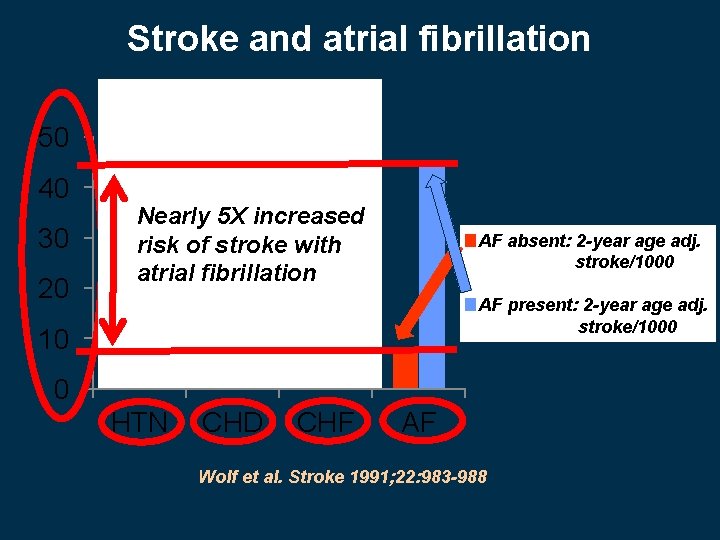
Stroke and atrial fibrillation 50 40 30 20 Nearly 5 X increased risk of stroke with atrial fibrillation age-adj AFTwo-year absent: 2 -year age adj. stroke/1000 incidence of stroke/1000 pts AF present: 2 -year age adj. present stroke/1000 10 0 HTN CHD CHF AF Wolf et al. Stroke 1991; 22: 983 -988
Stroke and atrial fibrillation Well, this could just be a reflection of the patients’ ages and co-morbidities…. .
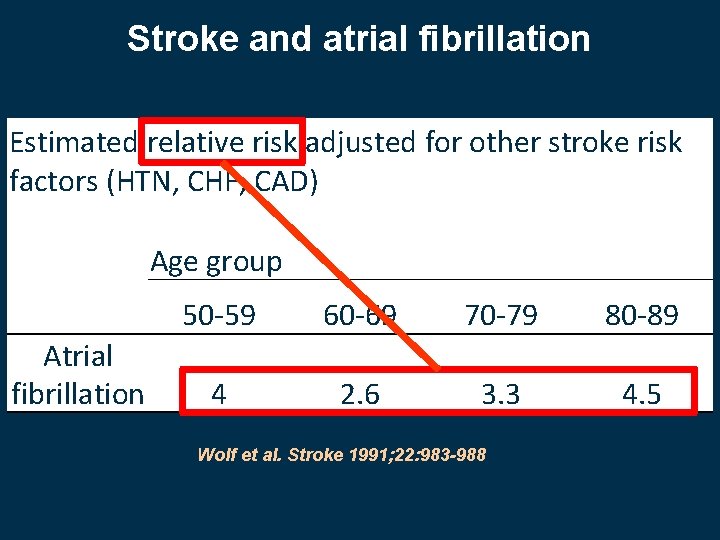
Stroke and atrial fibrillation Estimated relative risk adjusted for other stroke risk factors (HTN, CHF, CAD) Age group Atrial fibrillation 50 -59 60 -69 70 -79 80 -89 4 2. 6 3. 3 4. 5 Wolf et al. Stroke 1991; 22: 983 -988

Stroke and atrial fibrillation • … atrial fibrillation is not only associated with an increased stroke risk • …It is also an independent risk factor for stroke
Stroke and atrial fibrillation • Is this risk relationship due to thrombi in the LAA? ¡ Anatomical and physiological plausibility ¡ Echocardiography specimens and pathological
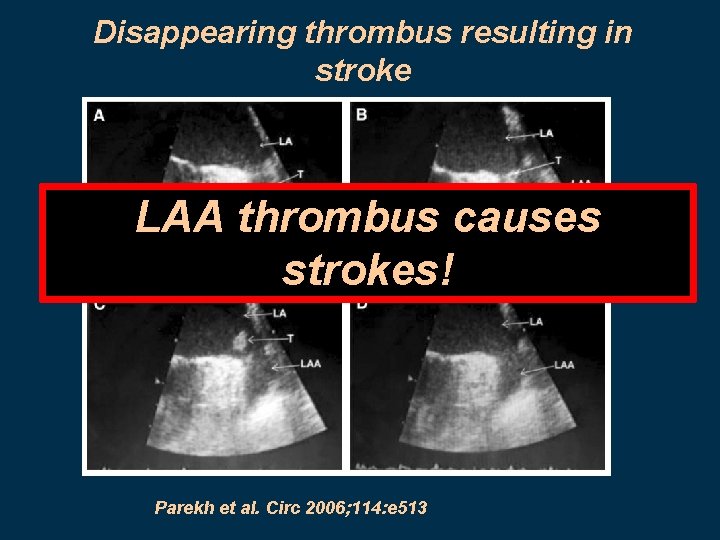
Disappearing thrombus resulting in stroke LAA thrombus causes strokes! Parekh et al. Circ 2006; 114: e 513
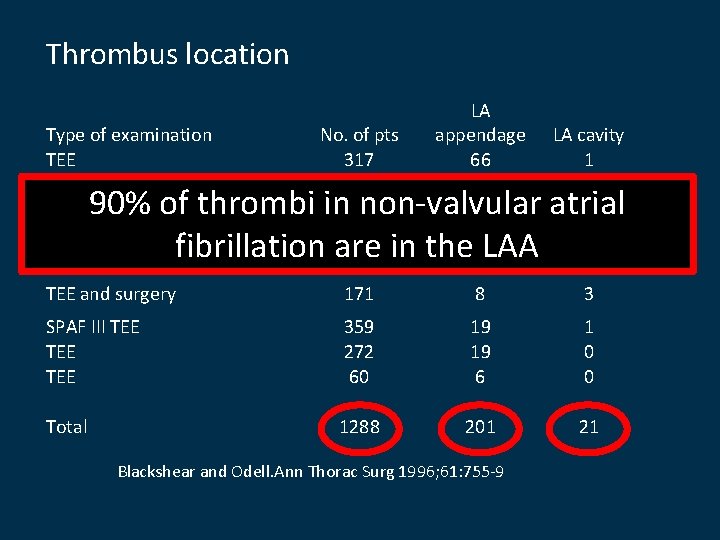
Thrombus location No. of pts 317 233 506 52 48 LA appendage 66 34 35 2 12 LA cavity 1 1 12 2 1 TEE and surgery 171 8 3 SPAF III TEE TEE 359 272 60 19 19 6 1 0 0 Total 1288 201 21 Type of examination TEE Autopsy TEE 90% of thrombi in non-valvular atrial fibrillation are in the LAA Blackshear and Odell. Ann Thorac Surg 1996; 61: 755 -9

Stroke size and recurrence in atrial fibrillation Survival Recurrence 100% Non-AF AF AF Non-AF 180 Days after stroke Lin et al. Stroke 1996; 27(10: 1760 -4 360
Stroke risk • What is the stroke risk without anticoagulation? • What is the stroke risk with anticoagulation?
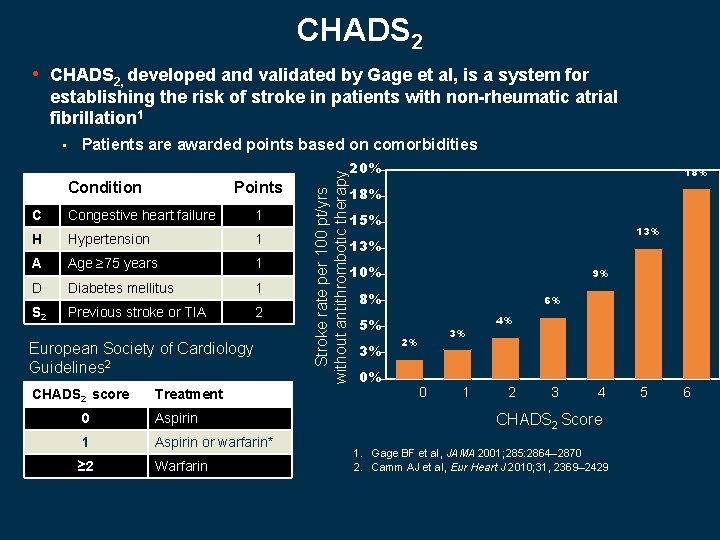
CHADS 2 • CHADS 2, developed and validated by Gage et al, is a system for establishing the risk of stroke in patients with non-rheumatic atrial fibrillation 1 • Patients are awarded points based on comorbidities Condition Points C Congestive heart failure 1 H Hypertension 1 A Age ≥ 75 years 1 D Diabetes mellitus 1 S 2 Previous stroke or TIA 2 European Society of Cardiology Guidelines 2 CHADS 2 score Treatment 0 Aspirin 1 Aspirin or warfarin* ≥ 2 Warfarin Stroke rate per 100 pt/yrs without antithrombotic therapy 20% 18% 15% 13% 10% 9% 8% 5% 3% 0% 6% 3% 2% 0 1 4% 2 3 4 CHADS 2 Score 1. Gage BF et al, JAMA 2001; 285: 2864– 2870 2. Camm AJ et al, Eur Heart J 2010; 31, 2369– 2429 5 6
CHADS 2 • Problem: ¡ It does not perform well in patients with low scores (0 -1) ¡ There are other risk factors that determine stroke risk not accounted for
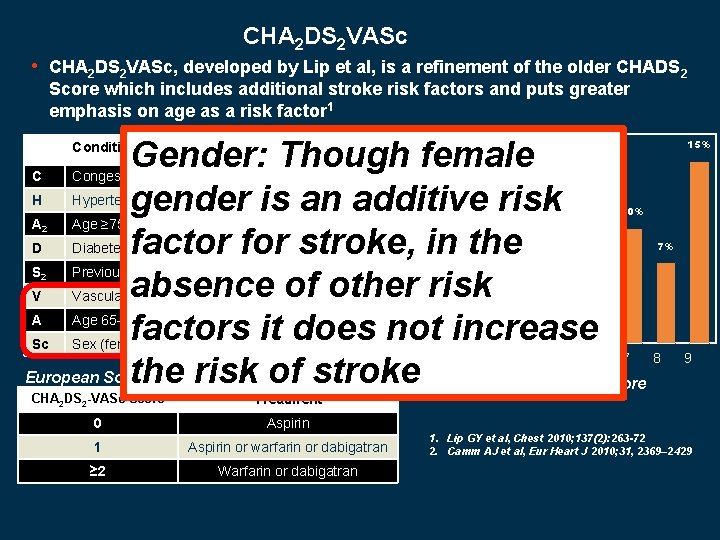
CHA 2 DS 2 VASc • CHA 2 DS 2 VASc, developed by Lip et al, is a refinement of the older CHADS 2 Score which includes additional stroke risk factors and puts greater emphasis on age as a risk factor 1 18% Gender: Though female gender is an additive risk factor for stroke, in the absence of other risk factors it does not increase European Society of Cardiology Guidelines the risk of stroke CHA DS VASc Score Points C Congestive heart failure 1 H Hypertension 1 A 2 Age ≥ 75 years 2 D Diabetes Mellitus 1 S 2 Previous stroke or TIA 2 V Vascular disease 1 A Age 65 -74 years 1 Sc Sex (female gender) 1 13% 10% 10% 7% 8% 5% 3% 0% 15% Annual Risk of Stroke 15% Risk of Stroke Condition/Risk Factor 1% 2% 3% 7% 4% 0% 0 1 2 3 4 5 6 7 8 9 2 CHA 2 DS 2 -VASc Score Treatment 0 Aspirin 1 Aspirin or warfarin or dabigatran ≥ 2 Warfarin or dabigatran 2 2 1. Lip GY et al, Chest 2010; 137(2): 263 -72 2. Camm AJ et al, Eur Heart J 2010; 31, 2369– 2429
Added value of CHADSvasc • Danish registry of “low risks” patients (CHADS-2 score 0 -1) with atrial fibrillation not treated with anticoagulation • ~47 K patients included

Added value of CHADSvasc Annual stroke risk CHADS 0 1. 28% CHADSvasc 0 CHADSvasc 1 CHADSvasc 2 CHADSvasc 3 0. 76% 1. 44% 2. 11% 2. 10% CHADS 1 3. 61% CHADSvasc 1 CHADSvasc 2 CHADSvasc 3 CHADSvasc 4 1. 46% 3. 26% 4. 28% 4. 93% Olesen et al. Thromb Heamost 2012; 107: 1172 -1179
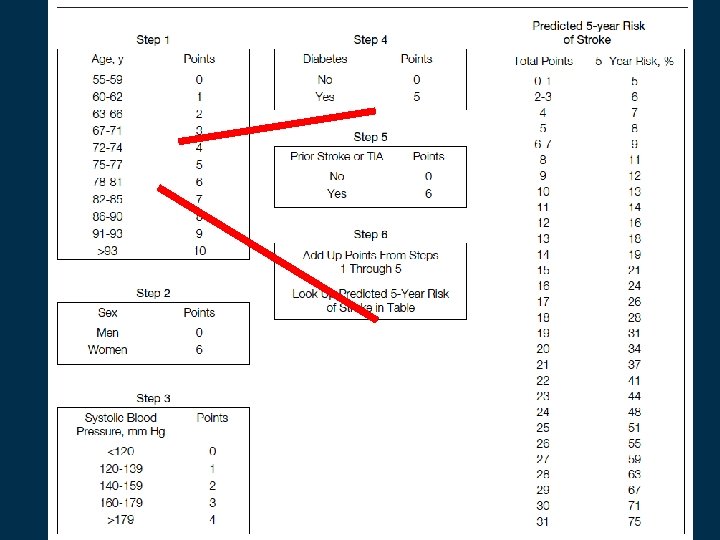
SPAF Considered “at risk” if : - recent CHF or FS<25% - previous thromboembolism - HTN - or female >75 yrs Other prediction models • SPAF • AFI • Community-based risk AFI model based on Framingham • R 2 CHADS 2 • ATRIA Considered “at risk” if : - ≥ 65 - Previous stroke or TIA - DM - HTN
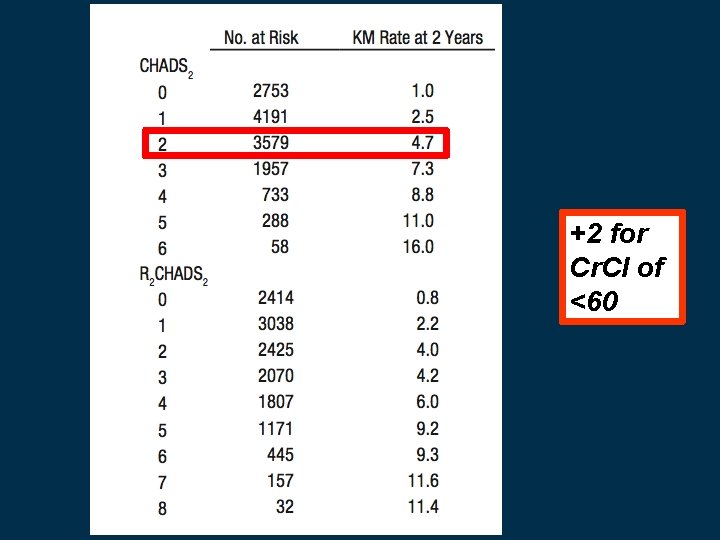
+2 for Cr. Cl of <60
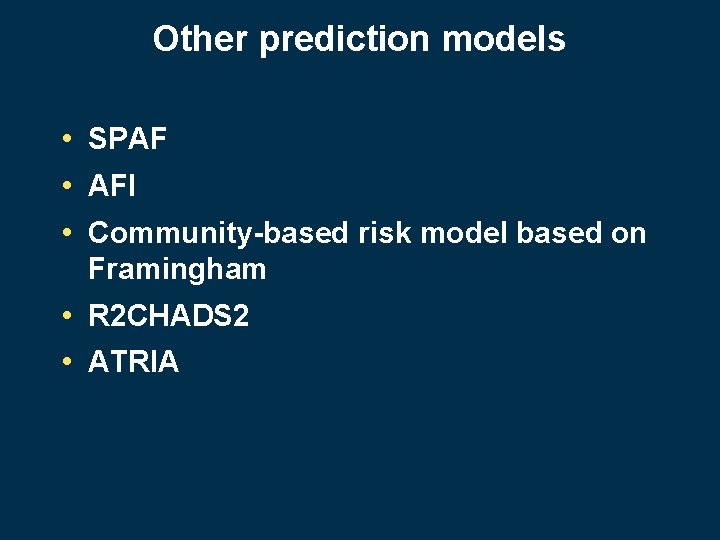
Other prediction models • SPAF • AFI • Community-based risk model based on Framingham • R 2 CHADS 2 • ATRIA
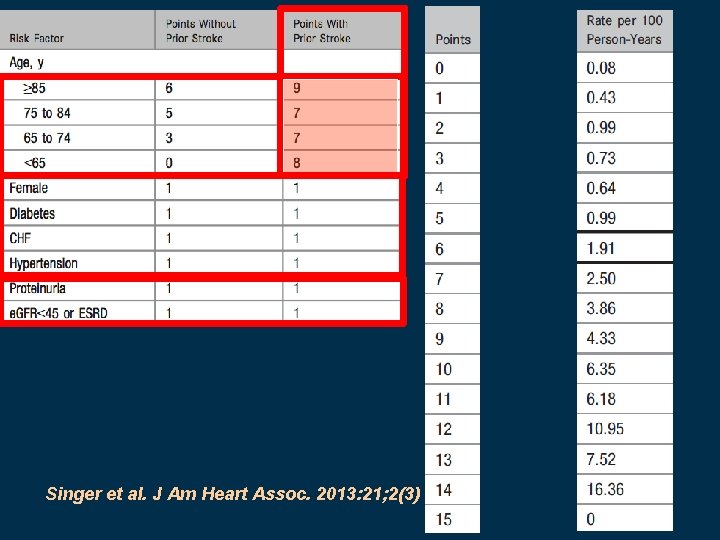
Singer et al. J Am Heart Assoc. 2013: 21; 2(3)
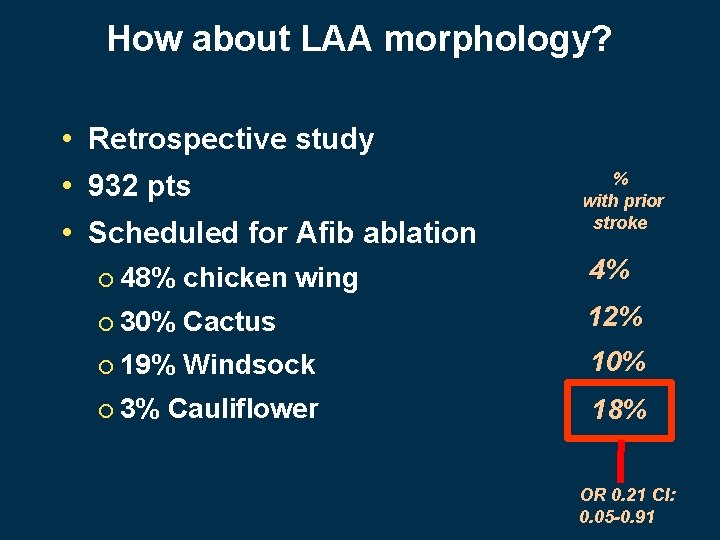
How about LAA morphology? • Retrospective study • 932 pts • Scheduled for Afib ablation % with prior stroke ¡ 48% chicken wing 4% ¡ 30% Cactus 12% ¡ 19% Windsock 10% Cauliflower 18% ¡ 3% OR 0. 21 CI: 0. 05 -0. 91
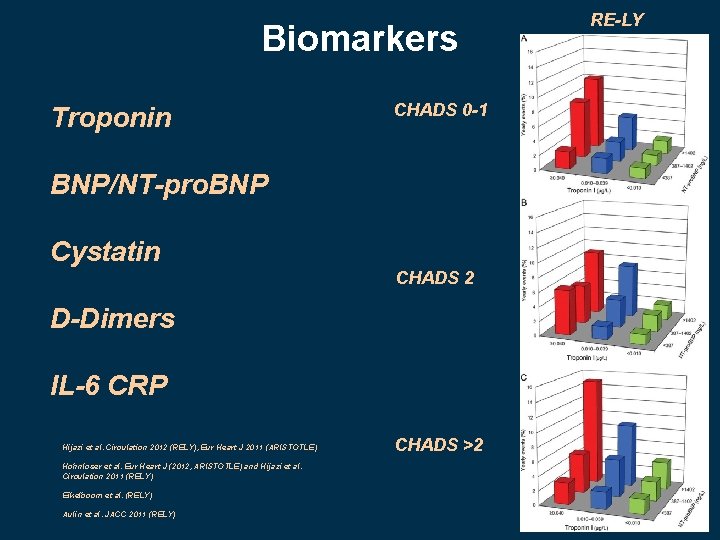
Biomarkers Troponin CHADS 0 -1 BNP/NT-pro. BNP Cystatin CHADS 2 D-Dimers IL-6 CRP Hijazi et al. Circulation 2012 (RELY), Eur Heart J 2011 (ARISTOTLE ) Hohnloser et al. Eur Heart J (2012, ARISTOTLE) and Hijazi et al. Circulation 2011 (RELY) Eikelboom et al. (RELY) Aulin et al. JACC 2011 (RELY) CHADS >2 RE-LY
Stroke risk • What is the stroke risk without anticoagulation? • What is the stroke risk with anticoagulation?
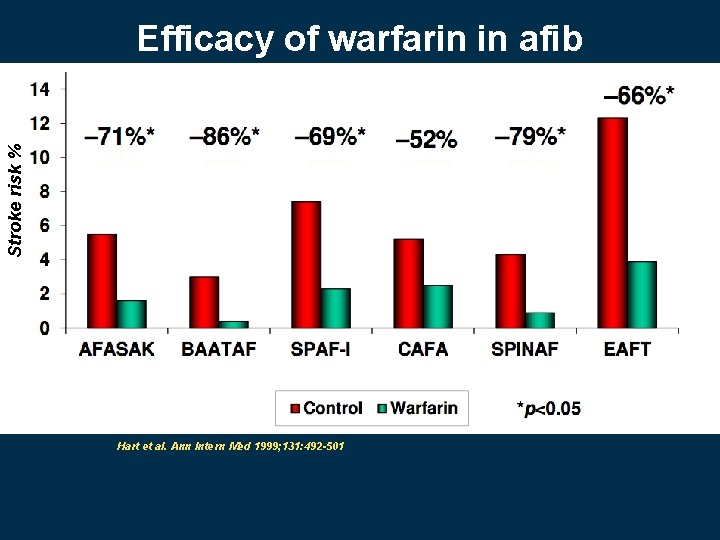
Stroke risk % Efficacy of warfarin in afib • Anticoagulation with warfarin decreases the stroke rate by ~ 60% Hart et al. Ann Intern Med 1999; 131: 492 -501
Bleeding risk • How about bleeding risk?
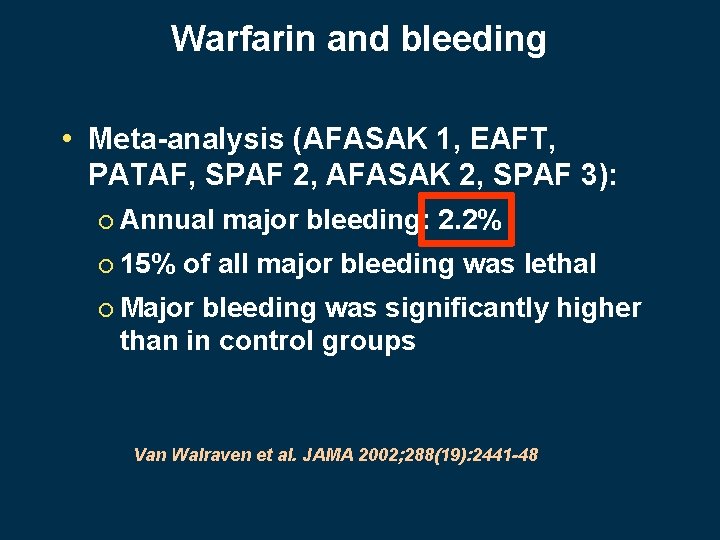
Warfarin and bleeding • Meta-analysis (AFASAK 1, EAFT, PATAF, SPAF 2, AFASAK 2, SPAF 3): ¡ Annual ¡ 15% major bleeding: 2. 2% of all major bleeding was lethal ¡ Major bleeding was significantly higher than in control groups Van Walraven et al. JAMA 2002; 288(19): 2441 -48
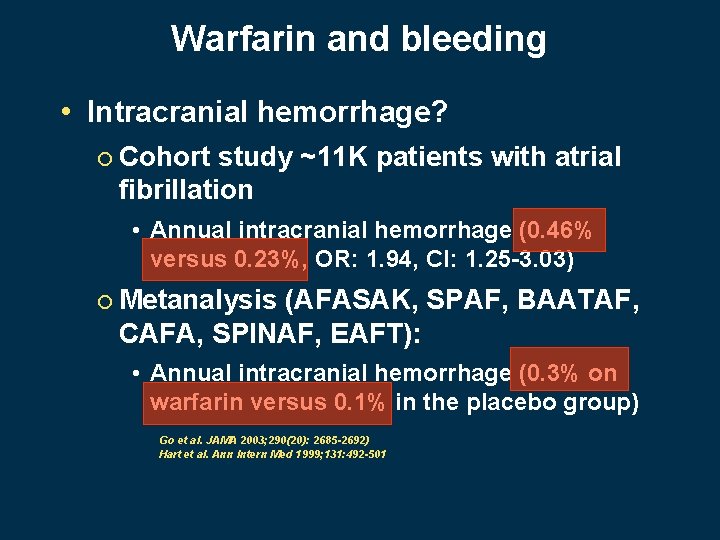
Warfarin and bleeding • Intracranial hemorrhage? ¡ Cohort study ~11 K patients with atrial fibrillation • Annual intracranial hemorrhage (0. 46% versus 0. 23%, OR: 1. 94, CI: 1. 25 -3. 03) ¡ Metanalysis (AFASAK, SPAF, BAATAF, CAFA, SPINAF, EAFT): • Annual intracranial hemorrhage (0. 3% on warfarin versus 0. 1% in the placebo group) Go et al. JAMA 2003; 290(20): 2685 -2692) Hart et al. Ann Intern Med 1999; 131: 492 -501
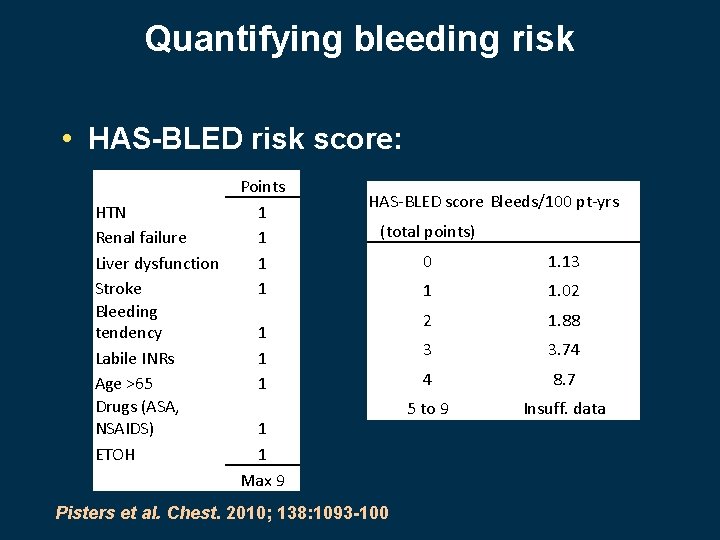
Quantifying bleeding risk • HAS-BLED risk score: HTN Renal failure Liver dysfunction Stroke Bleeding tendency Labile INRs Age >65 Drugs (ASA, NSAIDS) ETOH Points 1 1 HAS-BLED score Bleeds/100 pt-yrs (total points) 0 1. 13 1 1. 02 2 1. 88 3 3. 74 4 8. 7 5 to 9 Insuff. data 1 1 1 Max 9 Pisters et al. Chest. 2010; 138: 1093 -100
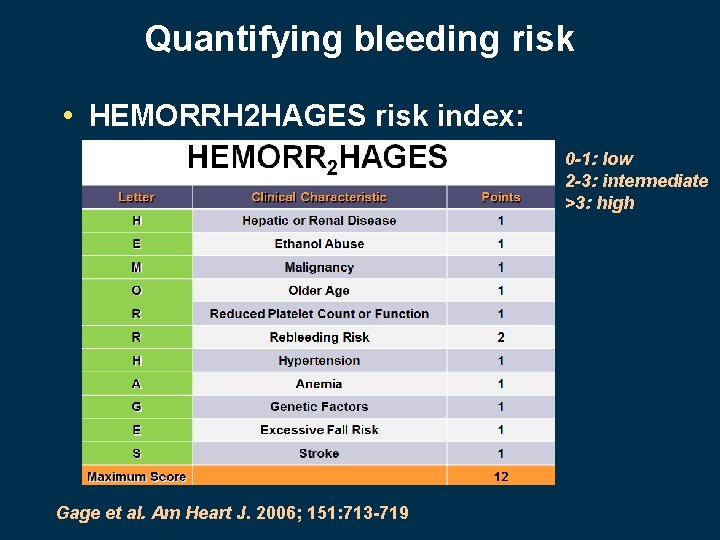
Quantifying bleeding risk • HEMORRH 2 HAGES risk index: 0 -1: low 2 -3: intermediate >3: high Gage et al. Am Heart J. 2006; 151: 713 -719
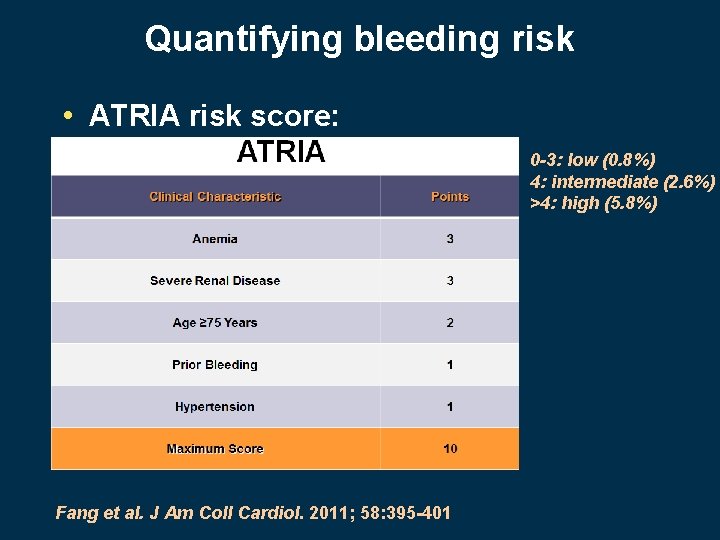
Quantifying bleeding risk • ATRIA risk score: 0 -3: low (0. 8%) 4: intermediate (2. 6%) >4: high (5. 8%) Fang et al. J Am Coll Cardiol. 2011; 58: 395 -401
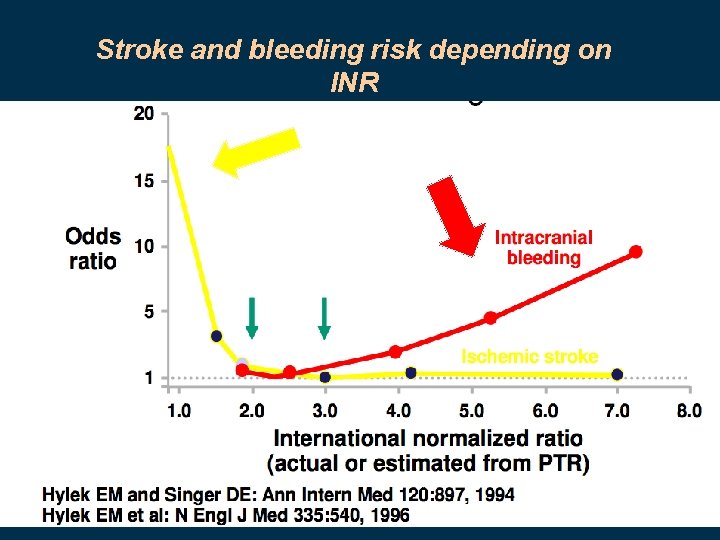
Stroke and bleeding risk depending on INR • Only ~50% of INR levels are in therapeutic range: ¡ too high INR is associated with bleeding risk (including intracranial) ¡ too low INR with a higher stroke rate
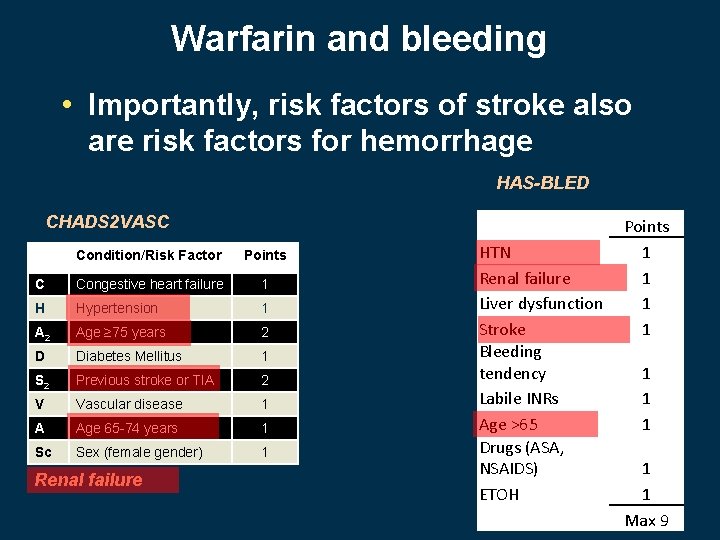
Warfarin and bleeding • Importantly, risk factors of stroke also are risk factors for hemorrhage HAS-BLED CHADS 2 VASC Condition/Risk Factor Points C Congestive heart failure 1 H Hypertension 1 A 2 Age ≥ 75 years 2 D Diabetes Mellitus 1 S 2 Previous stroke or TIA 2 V Vascular disease 1 A Age 65 -74 years 1 Sc Sex (female gender) 1 Renal failure HTN Renal failure Liver dysfunction Stroke Bleeding tendency Labile INRs Age >65 Drugs (ASA, NSAIDS) ETOH Points 1 1 1 1 1 Max 9
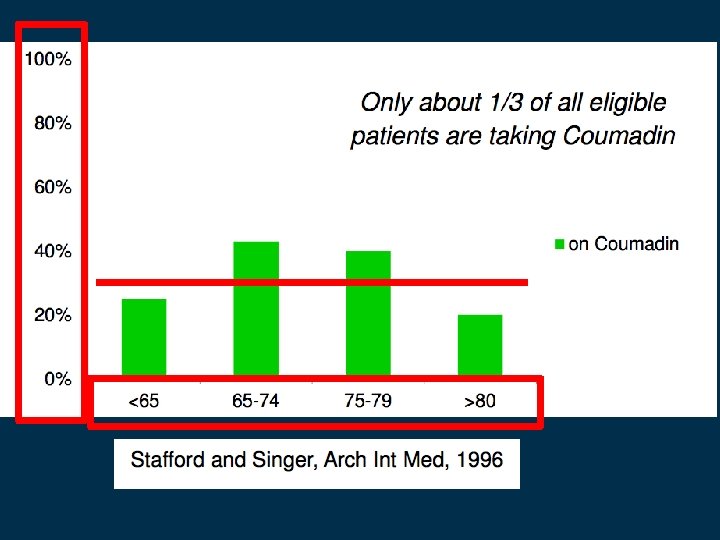
• Hence, not surprisingly ~50 -70% of all patients with atrial fibrillation at risk for stroke are not treated with oral anticoagulants
Stroke risk reduction • Novel anticoagulants and stroke risk reduction
How about: stroke risk reduction: newer anticoagulants vs. warfarin • Dabigatran At 150 mg bid: lower stroke rate ¡ At 110 mg bid: equivalent stroke rate ¡ • Rivaroxaban ¡ Equivalent stroke rate • 1. 7% versus 2. 2% (stroke or systemic embolism) • Apixaban ¡ Lower stroke rate (driven by hemorrhagic strokes) • 1. 2% versus 1. 5% annually (p=0. 01)
Risk of major hemorrhage: Newer anticoagulants vs. warfarin • Rivaroxaban: ¡ No difference in major bleeding (3. 6% versus 3. 4% annually) ¡ Lower rate of intracranial hemorrhage with rivaroxaban (0. 8% versus 1. 2%, p=0. 02)
Risk of major hemorrhage Newer anticoagulants vs. warfarin • Dabigatran: ¡ At 150 mg bid: no difference in major bleeding (3. 32% versus 3. 57% annually)however, higher major hemorrhage with dabigatran in pts >75 yrs ¡ At 110 mg bid: lower rate of major bleeding (2. 87% versus 3. 57%, p=0. 003) ¡ Overall lower rate of intracranial hemorrhage (0. 10% [0. 12%] versus 0. 38%, p<0. 001)
Risk of major hemorrhage Newer anticoagulants vs. warfarin • Apixaban: ¡ Less major bleeding (2. 1% vs. 3. 1% annually) ¡ Lower rate of intracranial hemorrhage (0. 33% versus 0. 80%)
Conclusions • • Atrial fibrillation is associated with a substantial stroke risk The risk is largely related to LAA thrombi Anticoagulation reduces the stroke risk substantially Anticoagulation also increases the major bleeding risk substantially • Due to the risks of anticoagulants only a minority eligible for anticoagulation are actually taking it • NOACs have a lower intracranial hemorrhage risk • The stroke risk with dabigatran was lower than with warfarin • NOACs are also associated with a significant bleeding risk particularly in elderly patients • Alternatives that offer stroke reduction while avoiding bleeding risks are needed
- Slides: 42