
Striped bass scales and life history tales fish
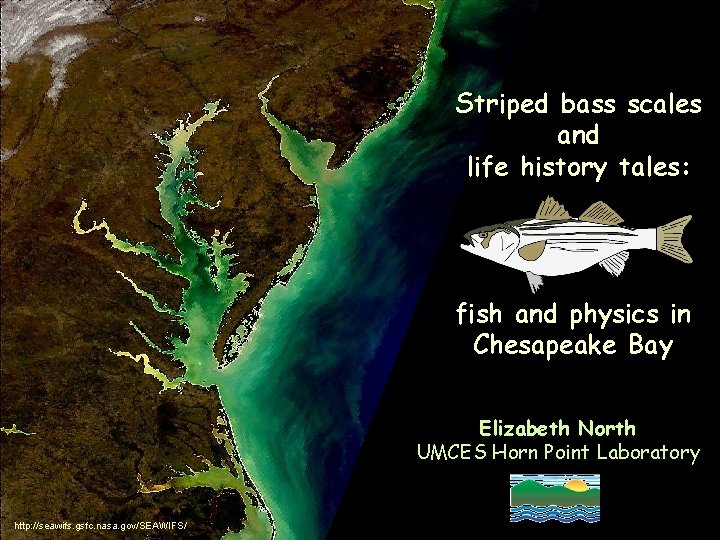
Striped bass scales and life history tales: fish and physics in Chesapeake Bay Elizabeth North UMCES Horn Point Laboratory http: //seawifs. gsfc. nasa. gov/SEAWIFS/
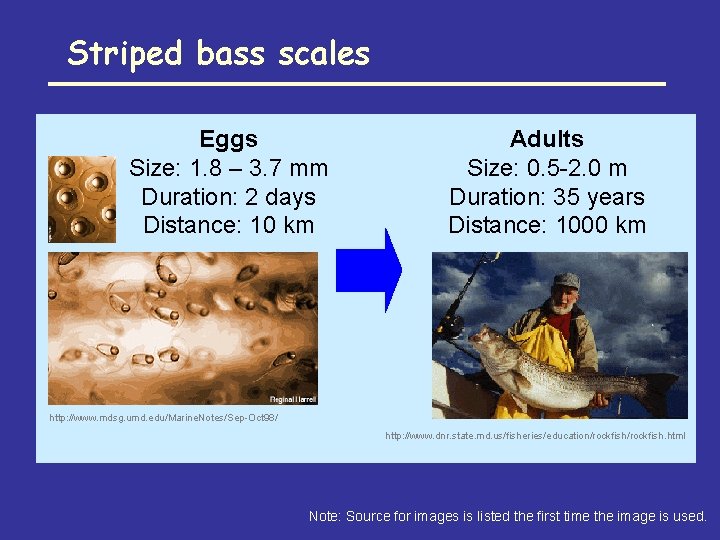
Striped bass scales Eggs Size: 1. 8 – 3. 7 mm Duration: 2 days Distance: 10 km Adults Size: 0. 5 -2. 0 m Duration: 35 years Distance: 1000 km http: //www. mdsg. umd. edu/Marine. Notes/Sep-Oct 98/ http: //www. dnr. state. md. us/fisheries/education/rockfish. html Note: Source for images is listed the first time the image is used.
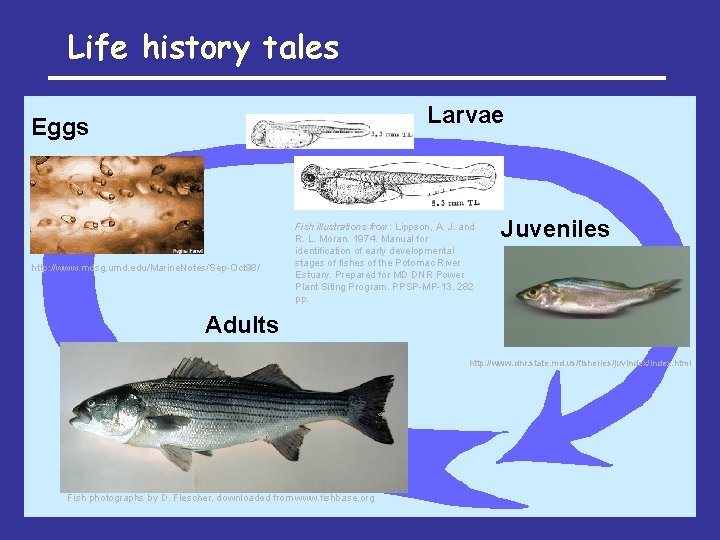
Life history tales Larvae Eggs http: //www. mdsg. umd. edu/Marine. Notes/Sep-Oct 98/ Fish illustrations from: Lippson, A. J. and R. L. Moran. 1974. Manual for identification of early developmental stages of fishes of the Potomac River Estuary. Prepared for MD DNR Power Plant Siting Program. PPSP-MP-13. 282 pp. Juveniles Adults http: //www. dnr. state. md. us/fisheries/juvindex/index. html Fish photographs by D. Flescher, downloaded from www. fishbase. org

Physical conditions affect all life stages Water temperature, salinity, dissolved oxygen concentrations, and currents influence: survival (heat shock, winter mortality) growth rates location, movement, migration

Striped bass distribution http: //seawifs. gsfc. nasa. gov/SEAWIFS/
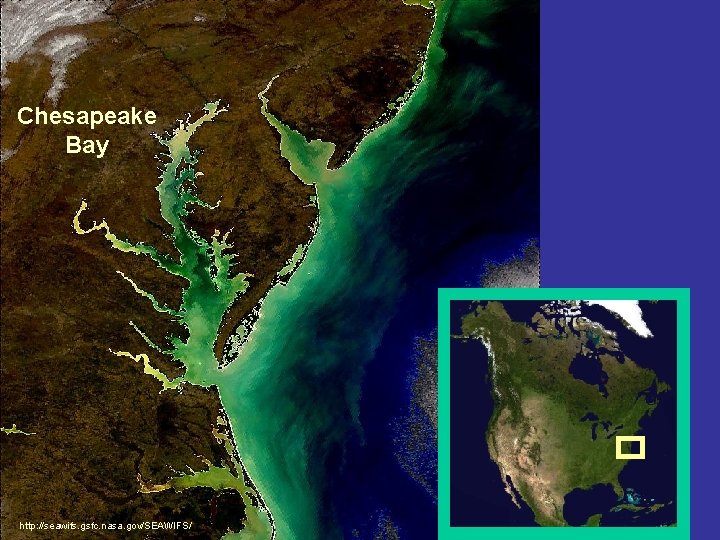
Chesapeake Bay http: //seawifs. gsfc. nasa. gov/SEAWIFS/
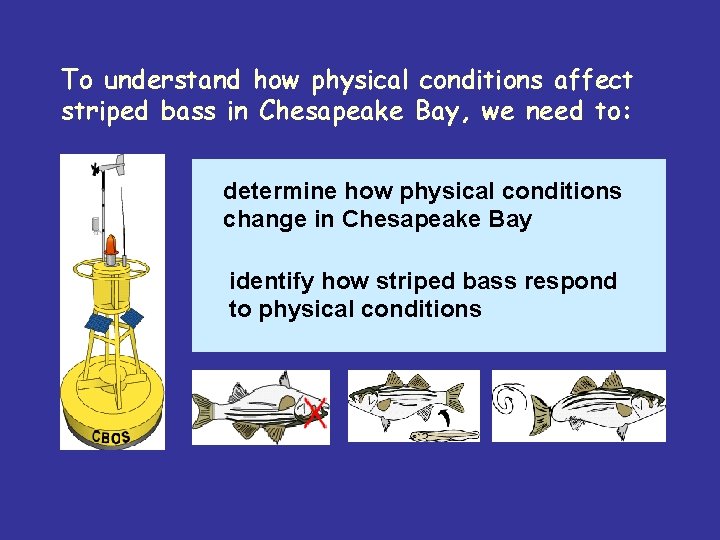
To understand how physical conditions affect striped bass in Chesapeake Bay, we need to: determine how physical conditions change in Chesapeake Bay identify how striped bass respond to physical conditions
Outline 1. Water temperature 2. Dissolved oxygen
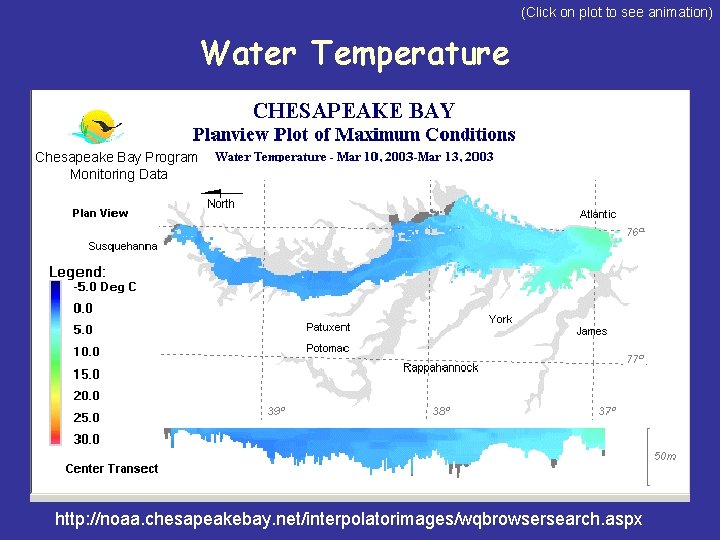
(Click on plot to see animation) Water Temperature Chesapeake Bay Program Monitoring Data http: //noaa. chesapeakebay. net/interpolatorimages/wqbrowsersearch. aspx
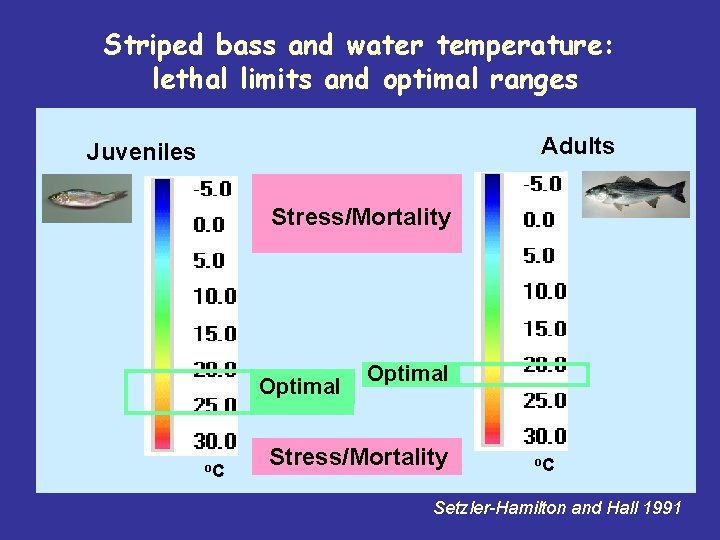
Striped bass and water temperature: lethal limits and optimal ranges Adults Juveniles Stress/Mortality Optimal o. C Optimal Stress/Mortality o. C Setzler-Hamilton and Hall 1991
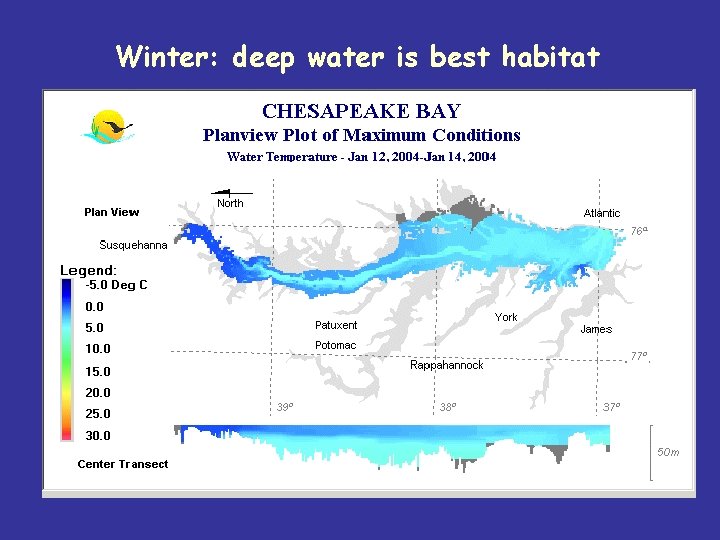
Winter: deep water is best habitat
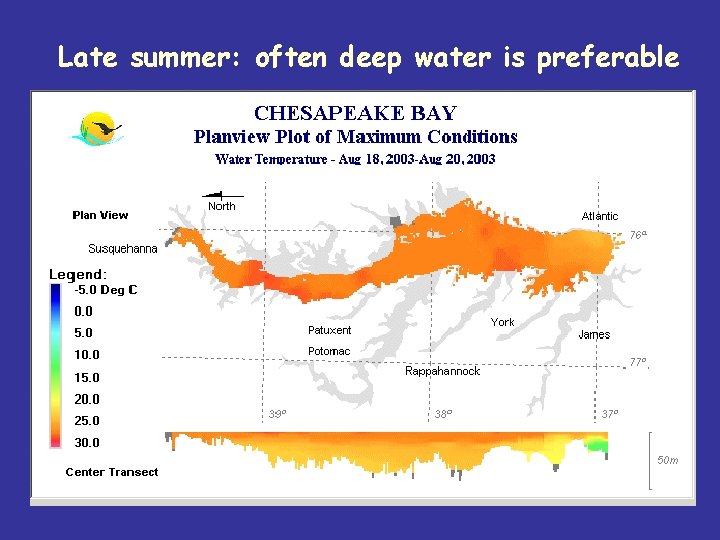
Late summer: often deep water is preferable
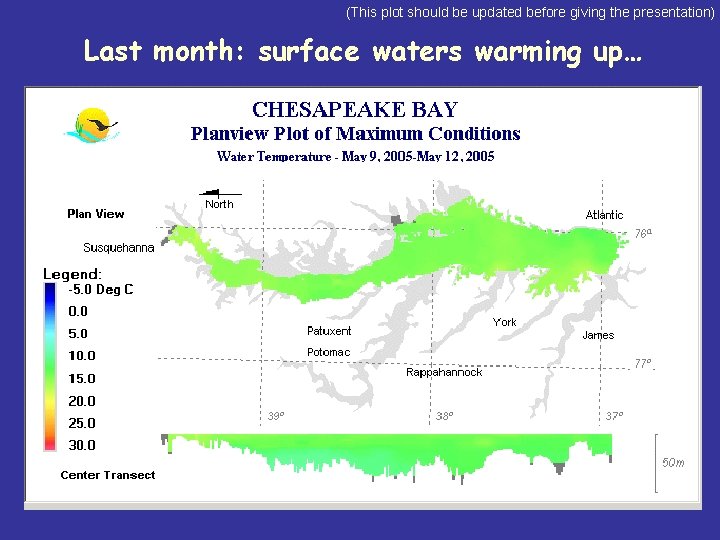
(This plot should be updated before giving the presentation) Last month: surface waters warming up…
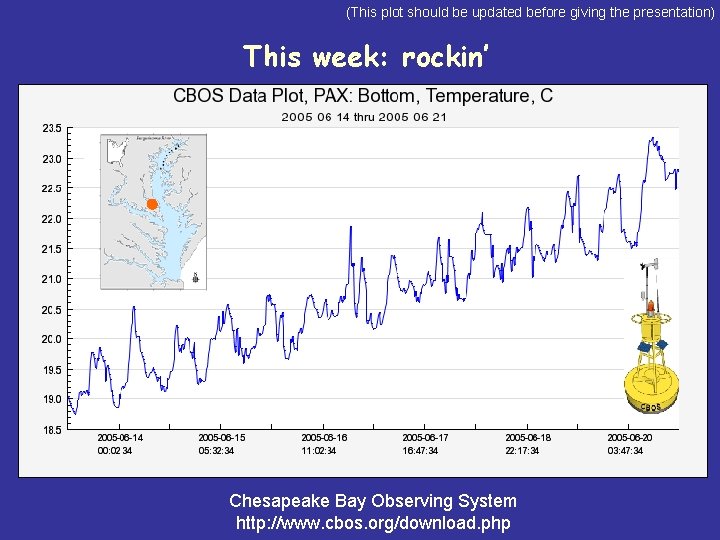
(This plot should be updated before giving the presentation) This week: rockin’ Chesapeake Bay Observing System http: //www. cbos. org/download. php
Outline 1. Water temperature 2. Dissolved oxygen

(Click on plot to see animation) Dissolved Oxygen Chesapeake Bay Program Monitoring Data
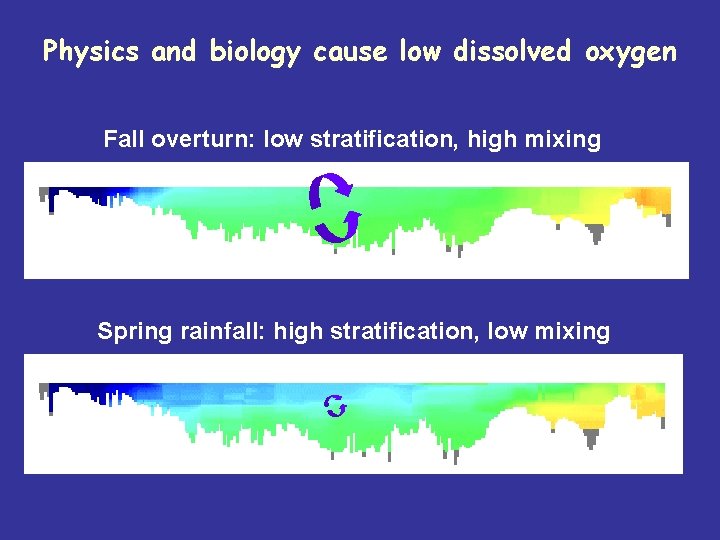
Physics and biology cause low dissolved oxygen Fall overturn: low stratification, high mixing Spring rainfall: high stratification, low mixing
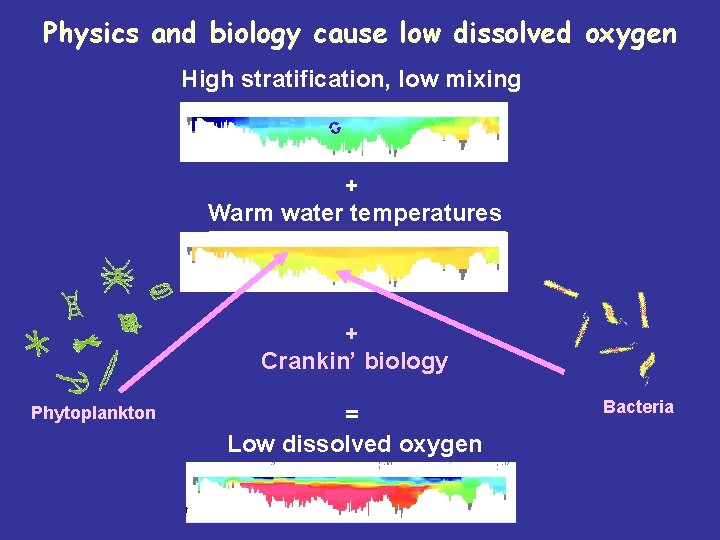
Physics and biology cause low dissolved oxygen High stratification, low mixing + Warm water temperatures + Crankin’ biology Phytoplankton = Low dissolved oxygen Bacteria
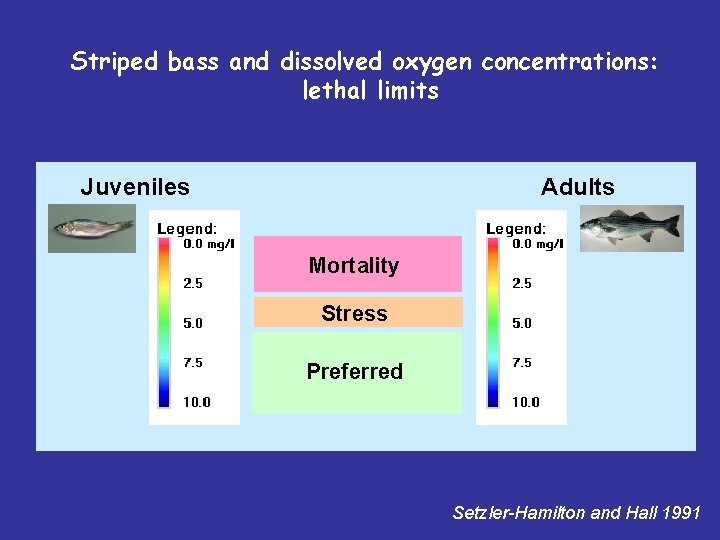
Striped bass and dissolved oxygen concentrations: lethal limits Juveniles Adults Mortality Stress Preferred Setzler-Hamilton and Hall 1991
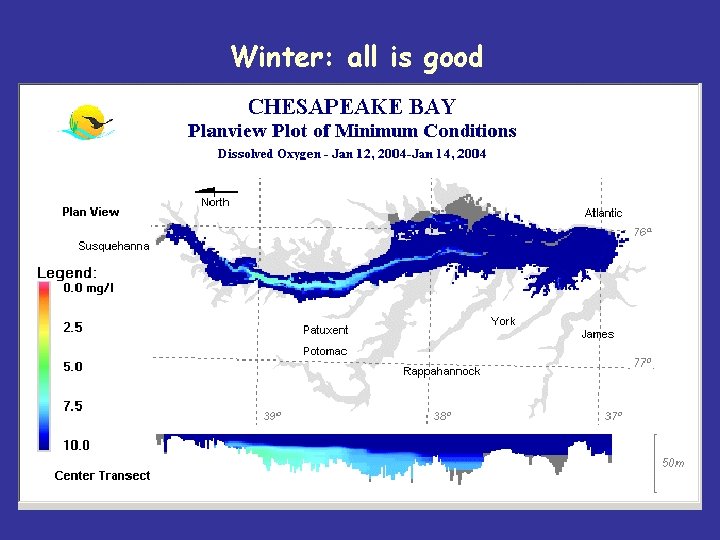
Winter: all is good
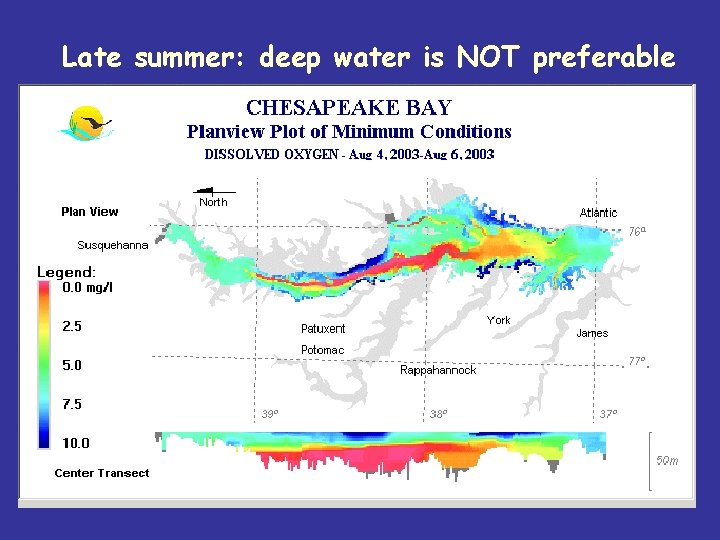
Late summer: deep water is NOT preferable
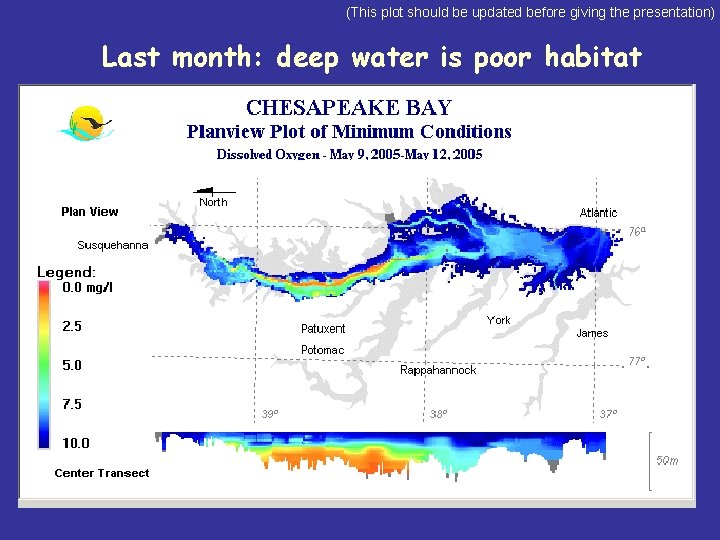
(This plot should be updated before giving the presentation) Last month: deep water is poor habitat
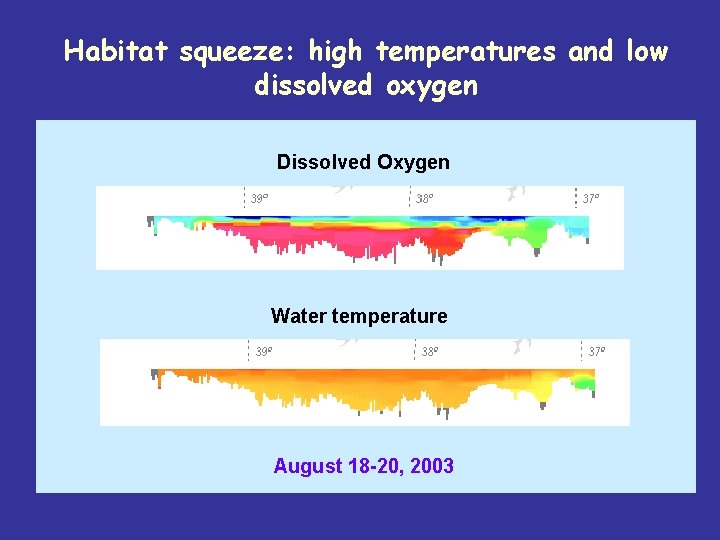
Habitat squeeze: high temperatures and low dissolved oxygen Dissolved Oxygen Water temperature August 18 -20, 2003
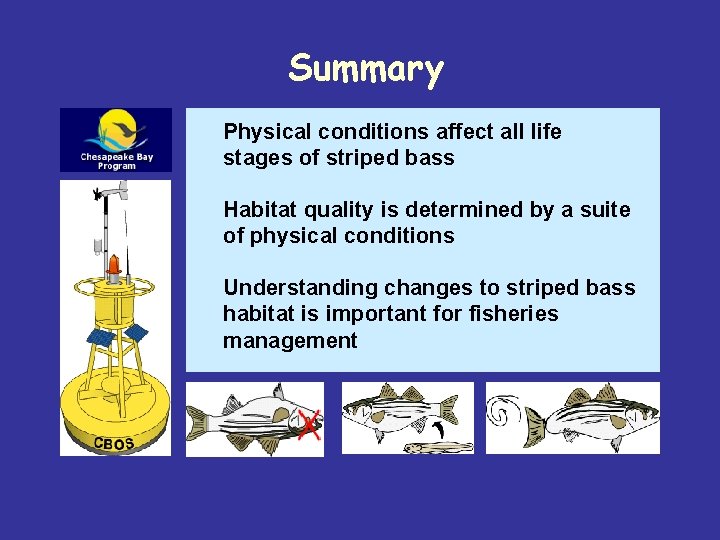
Summary Physical conditions affect all life stages of striped bass Habitat quality is determined by a suite of physical conditions Understanding changes to striped bass habitat is important for fisheries management
Acknowledgements Edward Houde, William Boicourt University of Maryland Center for Environmental Science National Science Foundation UMCES Literature Cited Setzler-Hamilton, E. M. , and L. Hall Jr (1991) Striped bass, Morone saxatilis. In: Funderburk SL, Jordan SJ, Mihursky JA, Riley D (eds) Habitat Requirements for Chesapeake Bay Living Resources. Chesapeake Bay Program, Annapolis, Maryland, p. 13. 1 -13. 31
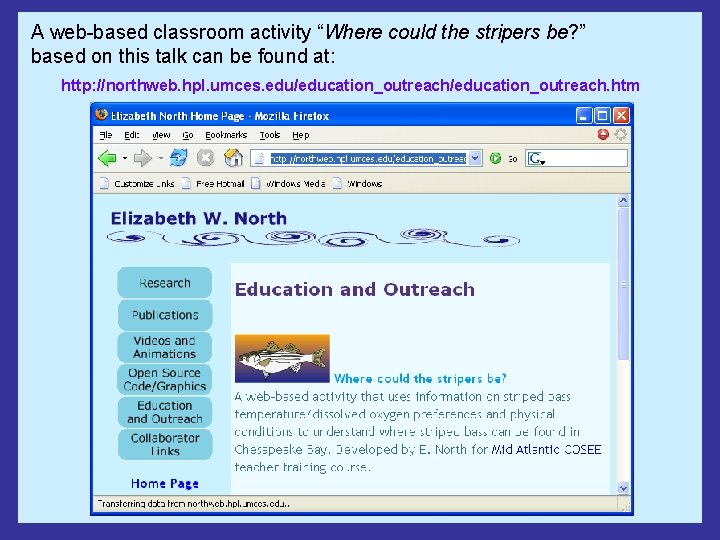
A web-based classroom activity “Where could the stripers be? ” based on this talk can be found at: http: //northweb. hpl. umces. edu/education_outreach. htm

Note to Teachers: If you use this presentation or web-based activity in your classroom, would you please send me an e-mail? I’d like to know if my efforts are applied in the classroom. Also, I would certainly appreciate your comments and suggestions on making the presentation or web-based activity more useful to you. Regards, Elizabeth W. North Assistant Professor University of Maryland Center for Environmental Science Horn Point Laboratory, P. O. Box 775 Cambridge, MD 21613 USA enorth@hpl. umces. edu
- Slides: 27