STRING THEORY AND MTHEORY A Modern Introduction KATRIN

- Slides: 9
STRING THEORY AND M-THEORY: A Modern Introduction KATRIN BECKER, MELANIE BECKER and JOHN H. SCHWARZ
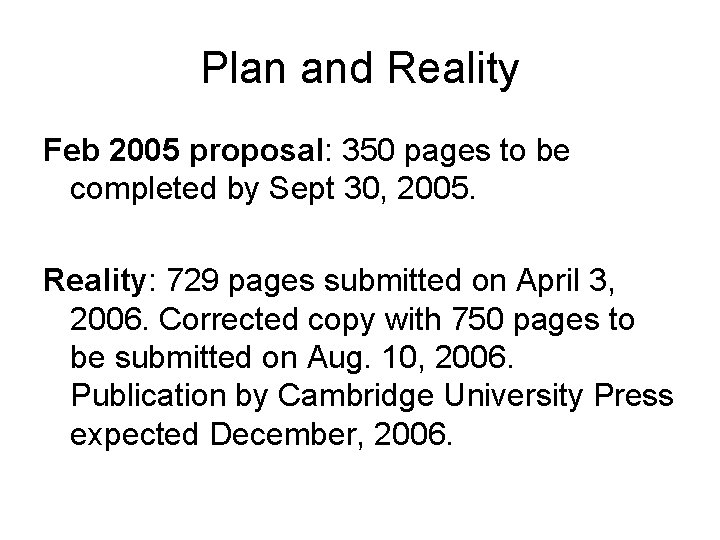
Plan and Reality Feb 2005 proposal: 350 pages to be completed by Sept 30, 2005. Reality: 729 pages submitted on April 3, 2006. Corrected copy with 750 pages to be submitted on Aug. 10, 2006. Publication by Cambridge University Press expected December, 2006.
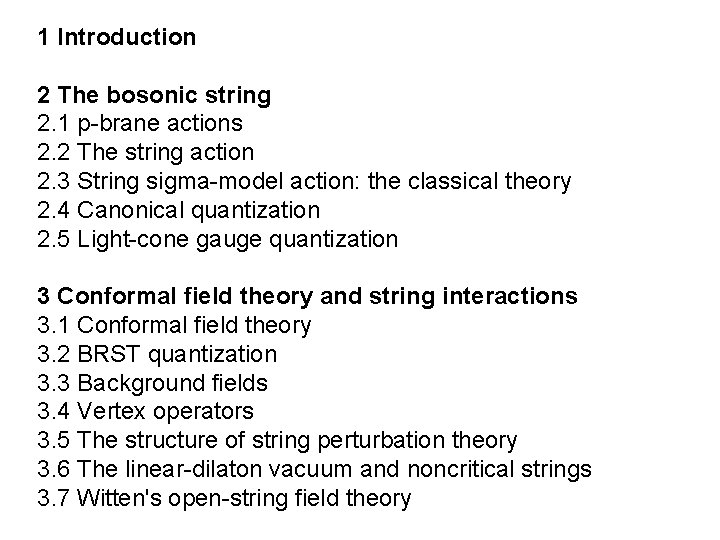
1 Introduction 2 The bosonic string 2. 1 p-brane actions 2. 2 The string action 2. 3 String sigma-model action: the classical theory 2. 4 Canonical quantization 2. 5 Light-cone gauge quantization 3 Conformal field theory and string interactions 3. 1 Conformal field theory 3. 2 BRST quantization 3. 3 Background fields 3. 4 Vertex operators 3. 5 The structure of string perturbation theory 3. 6 The linear-dilaton vacuum and noncritical strings 3. 7 Witten's open-string field theory
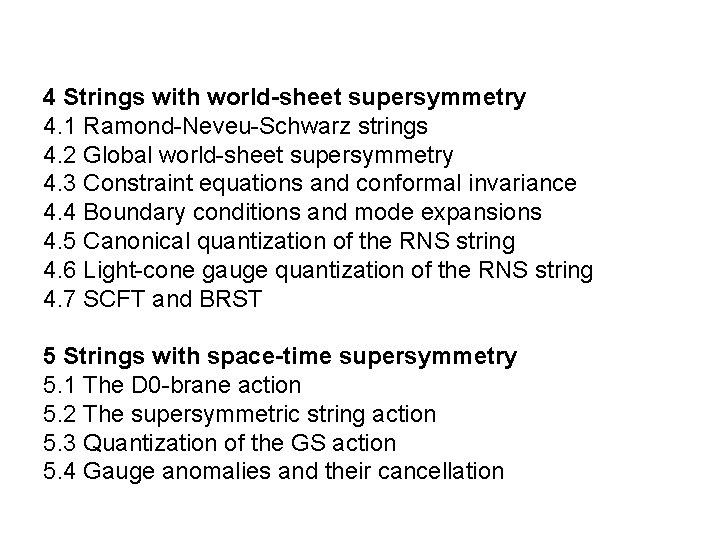
4 Strings with world-sheet supersymmetry 4. 1 Ramond-Neveu-Schwarz strings 4. 2 Global world-sheet supersymmetry 4. 3 Constraint equations and conformal invariance 4. 4 Boundary conditions and mode expansions 4. 5 Canonical quantization of the RNS string 4. 6 Light-cone gauge quantization of the RNS string 4. 7 SCFT and BRST 5 Strings with space-time supersymmetry 5. 1 The D 0 -brane action 5. 2 The supersymmetric string action 5. 3 Quantization of the GS action 5. 4 Gauge anomalies and their cancellation
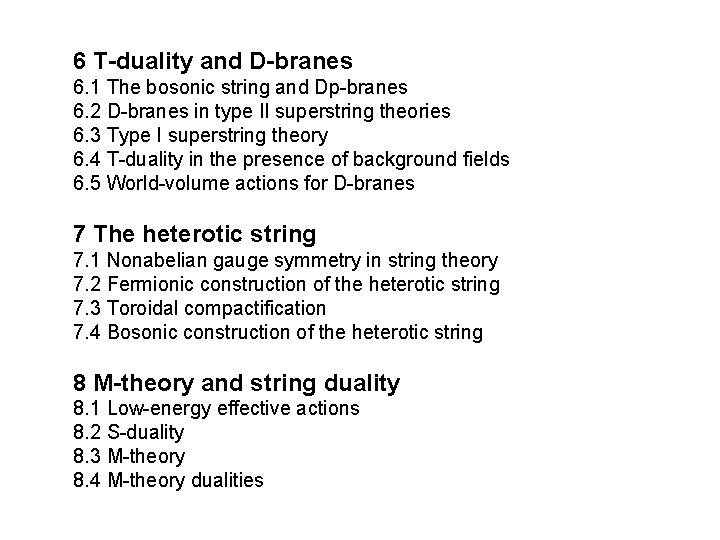
6 T-duality and D-branes 6. 1 The bosonic string and Dp-branes 6. 2 D-branes in type II superstring theories 6. 3 Type I superstring theory 6. 4 T-duality in the presence of background fields 6. 5 World-volume actions for D-branes 7 The heterotic string 7. 1 Nonabelian gauge symmetry in string theory 7. 2 Fermionic construction of the heterotic string 7. 3 Toroidal compactification 7. 4 Bosonic construction of the heterotic string 8 M-theory and string duality 8. 1 Low-energy effective actions 8. 2 S-duality 8. 3 M-theory 8. 4 M-theory dualities
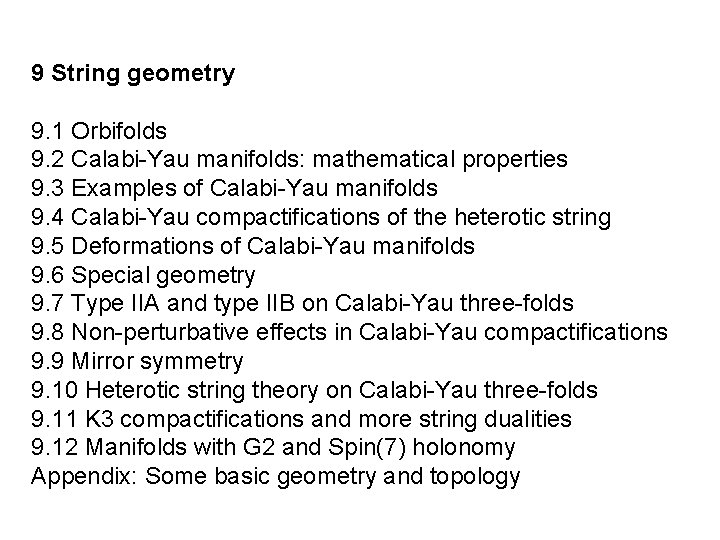
9 String geometry 9. 1 Orbifolds 9. 2 Calabi-Yau manifolds: mathematical properties 9. 3 Examples of Calabi-Yau manifolds 9. 4 Calabi-Yau compactifications of the heterotic string 9. 5 Deformations of Calabi-Yau manifolds 9. 6 Special geometry 9. 7 Type IIA and type IIB on Calabi-Yau three-folds 9. 8 Non-perturbative effects in Calabi-Yau compactifications 9. 9 Mirror symmetry 9. 10 Heterotic string theory on Calabi-Yau three-folds 9. 11 K 3 compactifications and more string dualities 9. 12 Manifolds with G 2 and Spin(7) holonomy Appendix: Some basic geometry and topology
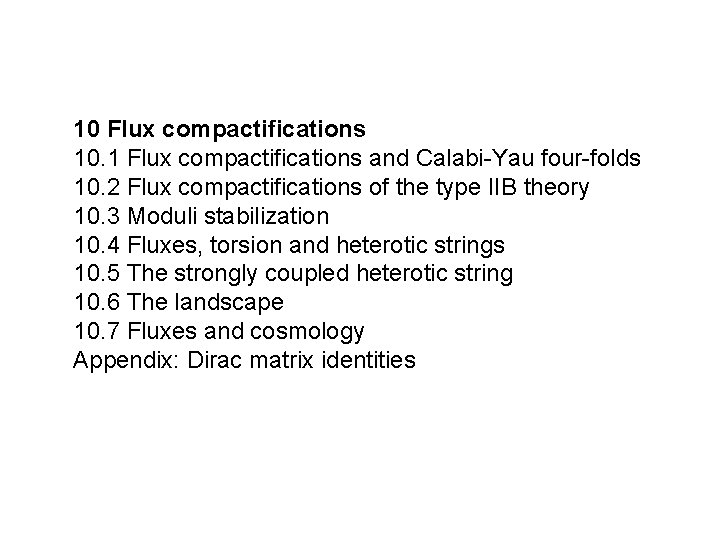
10 Flux compactifications 10. 1 Flux compactifications and Calabi-Yau four-folds 10. 2 Flux compactifications of the type IIB theory 10. 3 Moduli stabilization 10. 4 Fluxes, torsion and heterotic strings 10. 5 The strongly coupled heterotic string 10. 6 The landscape 10. 7 Fluxes and cosmology Appendix: Dirac matrix identities
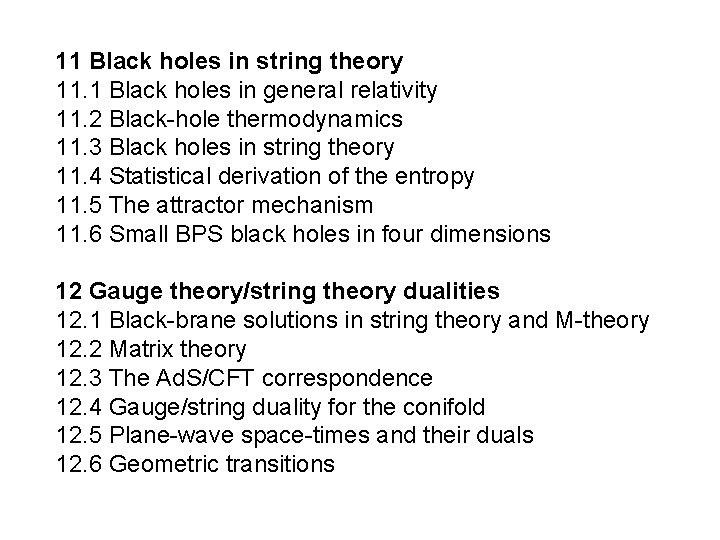
11 Black holes in string theory 11. 1 Black holes in general relativity 11. 2 Black-hole thermodynamics 11. 3 Black holes in string theory 11. 4 Statistical derivation of the entropy 11. 5 The attractor mechanism 11. 6 Small BPS black holes in four dimensions 12 Gauge theory/string theory dualities 12. 1 Black-brane solutions in string theory and M-theory 12. 2 Matrix theory 12. 3 The Ad. S/CFT correspondence 12. 4 Gauge/string duality for the conifold 12. 5 Plane-wave space-times and their duals 12. 6 Geometric transitions
Current Research Interests • More detailed understanding of gauge theory – string theory duality. • Construction of semi-realistic models using intersecting D-branes.