
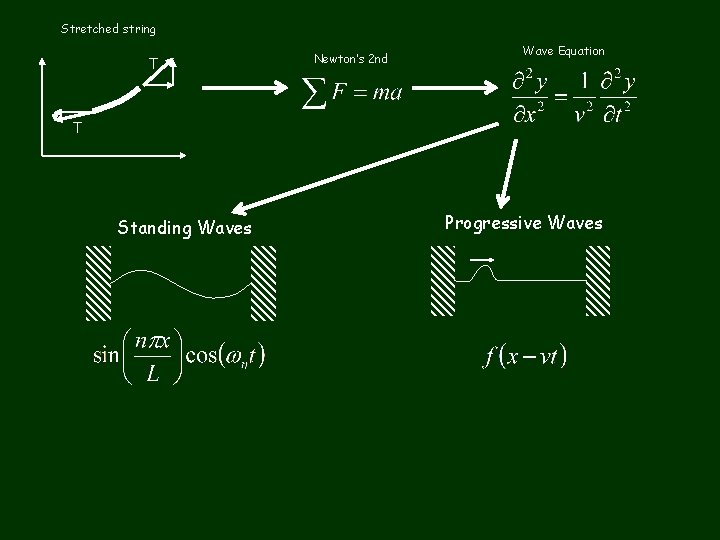
Stretched string T Newtons 2 nd Wave Equation

- Slides: 27
Stretched string T Newton’s 2 nd Wave Equation T Standing Waves Progressive Waves
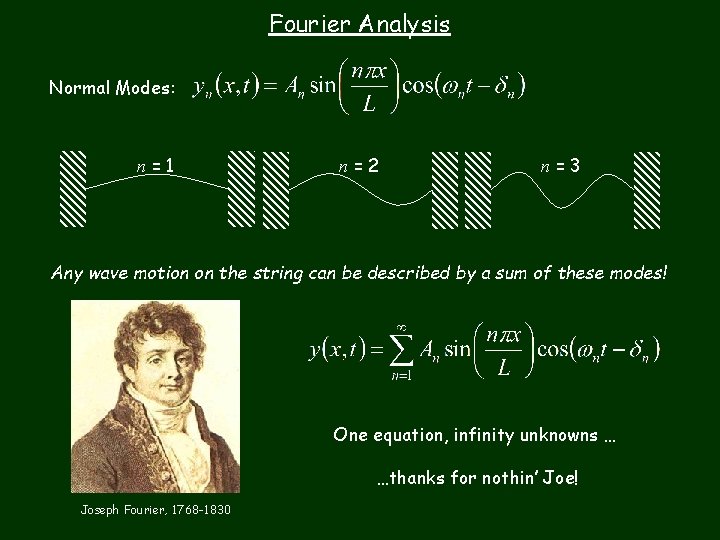
Fourier Analysis Normal Modes: n=1 n=2 n=3 Any wave motion on the string can be described by a sum of these modes! One equation, infinity unknowns … …thanks for nothin’ Joe! Joseph Fourier, 1768 -1830
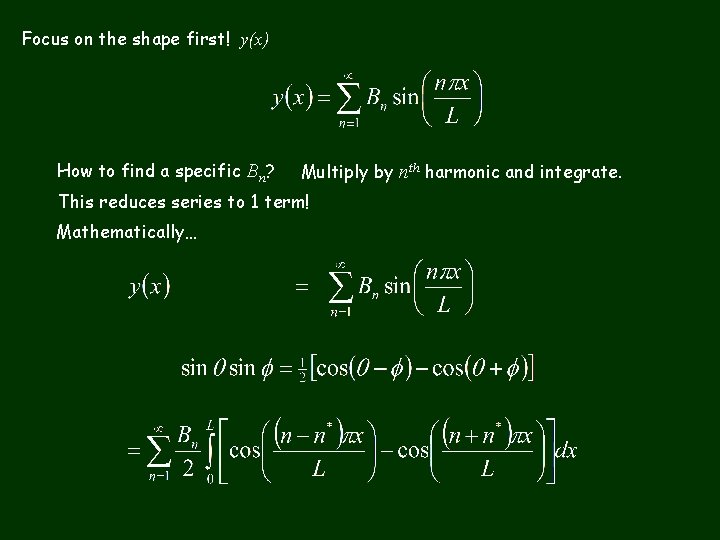
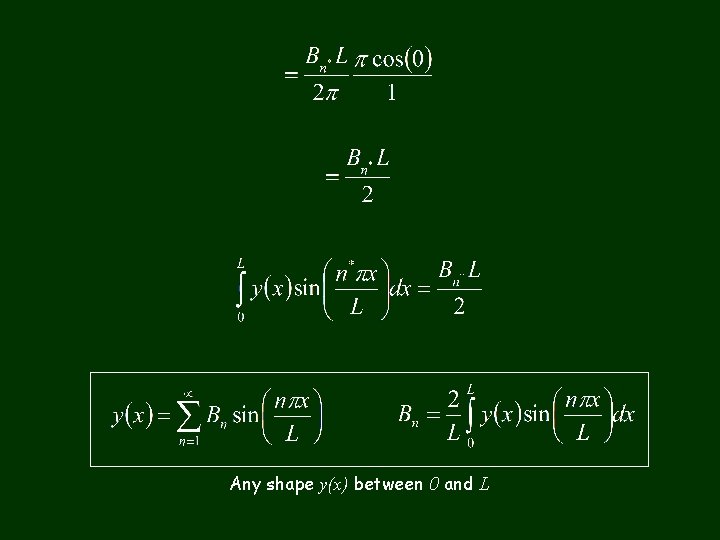
Focus on the shape first! y(x) How to find a specific Bn? Multiply by nth harmonic and integrate. This reduces series to 1 term! Mathematically…
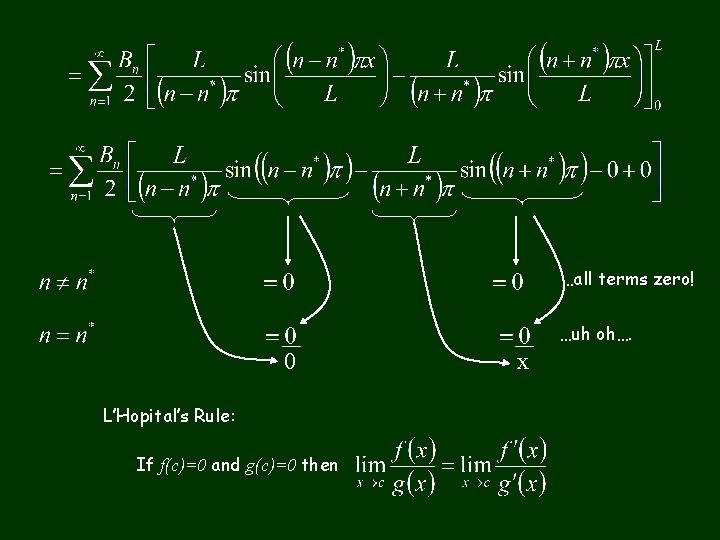
…all terms zero! …uh oh…. 0 L’Hopital’s Rule: If f(c)=0 and g(c)=0 then x
Any shape y(x) between 0 and L
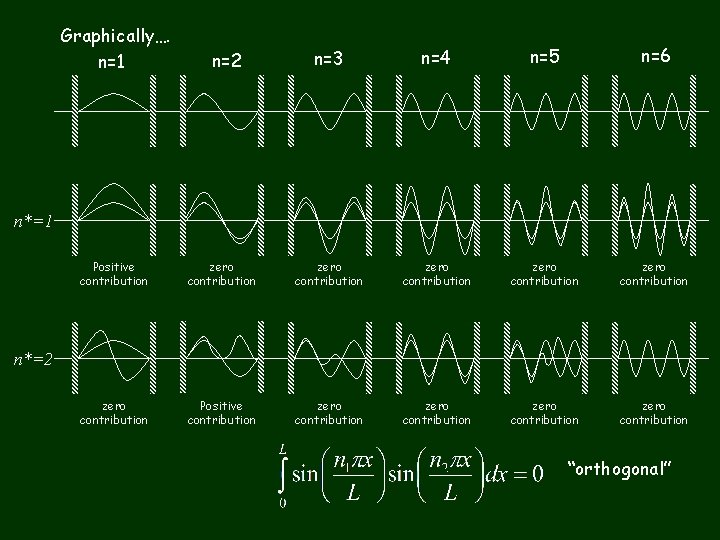
Graphically…. n=1 n=2 n=3 n=4 n=5 n=6 n*=1 Positive contribution zero contribution zero contribution Positive contribution zero contribution n*=2 “orthogonal”
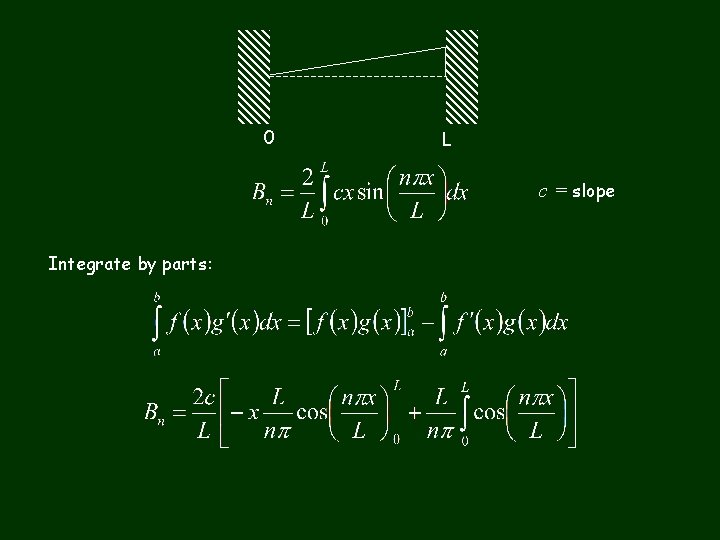
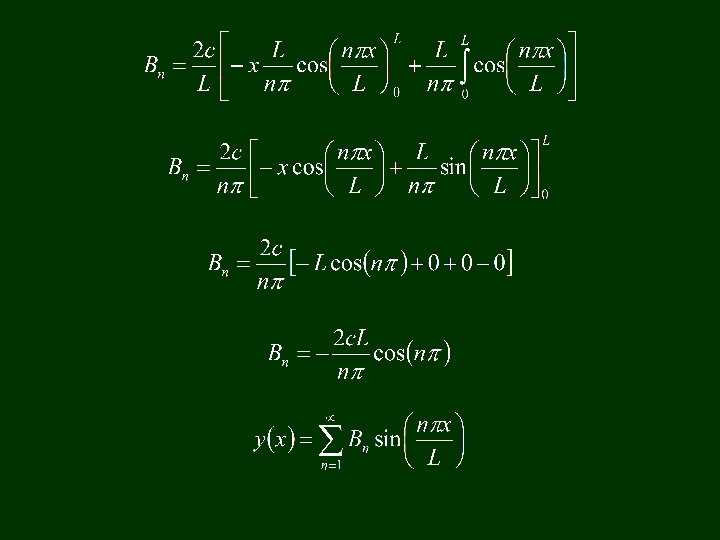
0 L c = slope Integrate by parts:
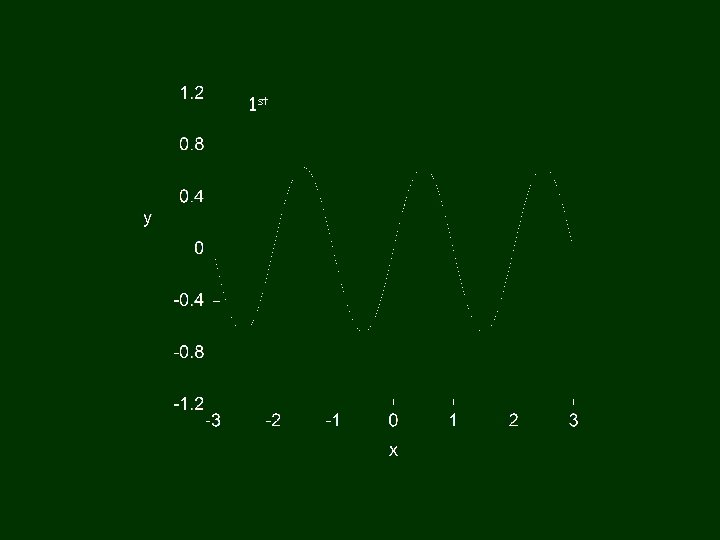
1 st
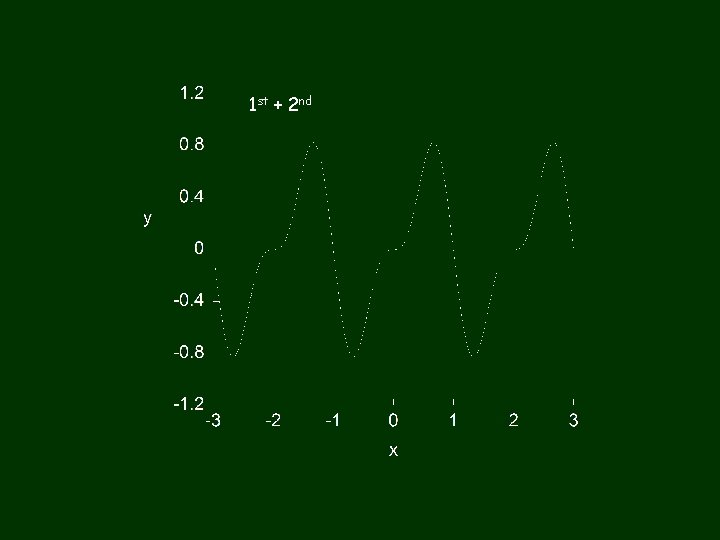
1 st + 2 nd
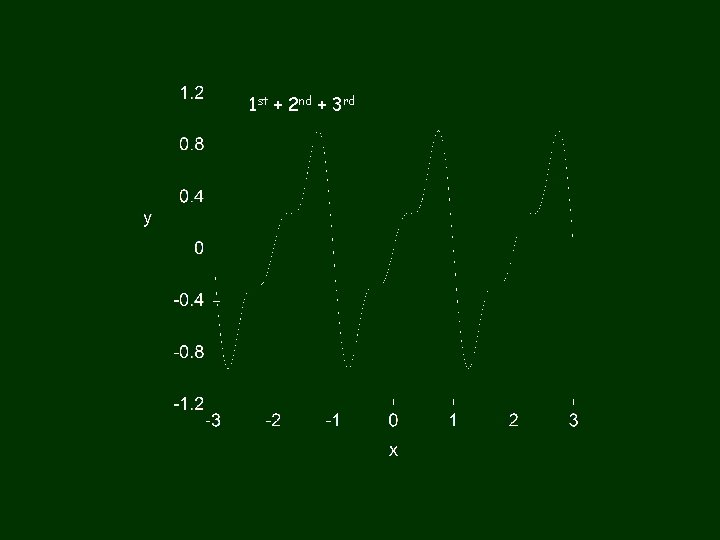
1 st + 2 nd + 3 rd
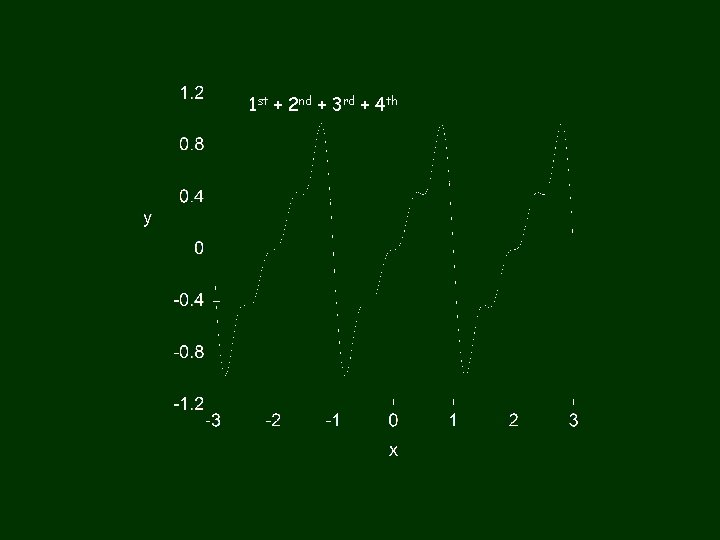
1 st + 2 nd + 3 rd + 4 th
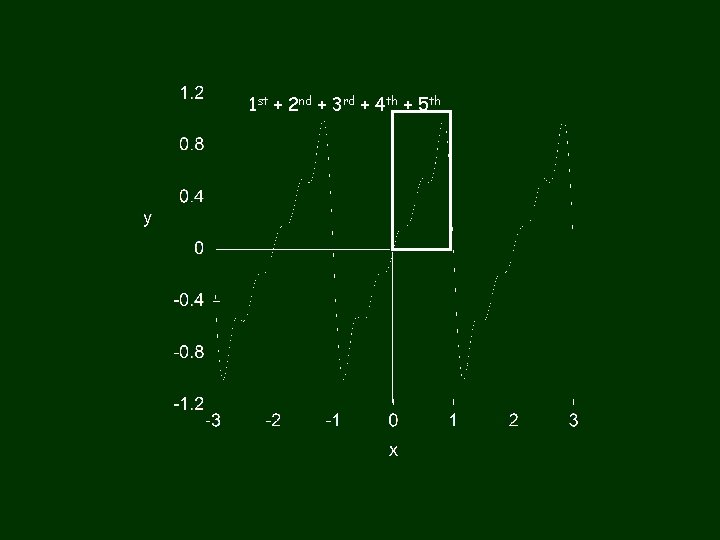
1 st + 2 nd + 3 rd + 4 th + 5 th
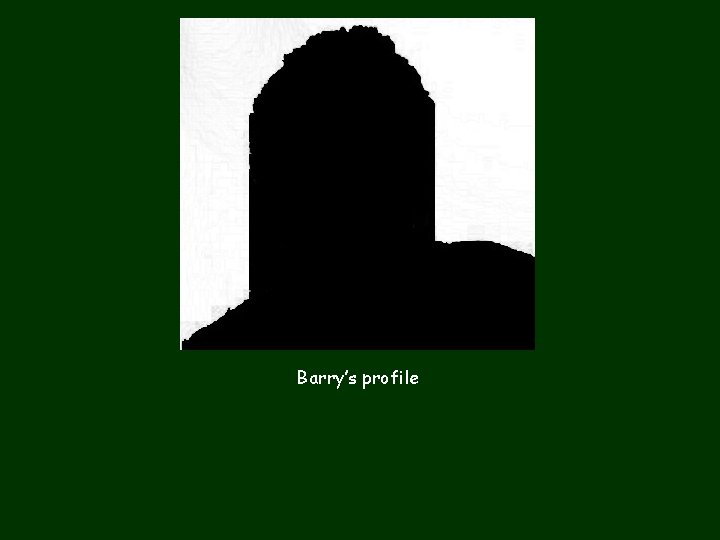
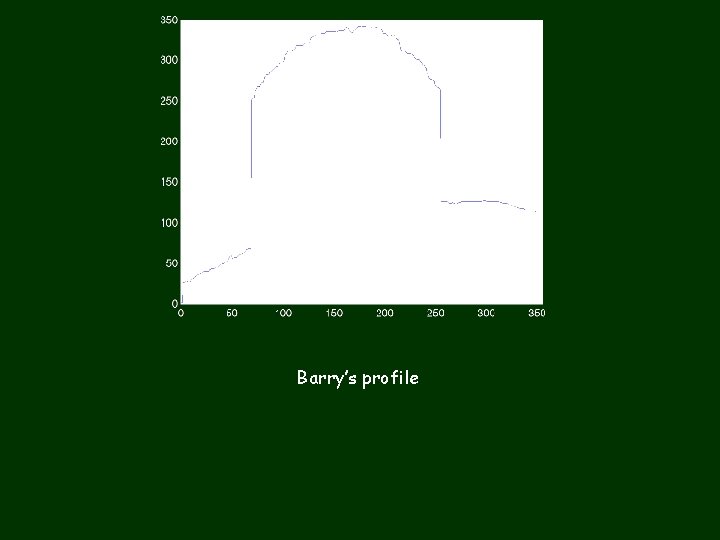
Barry’s profile
Barry’s profile
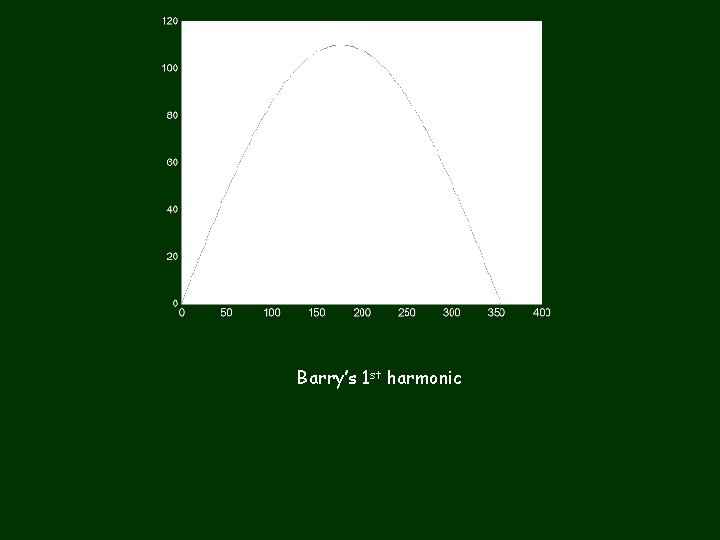
Barry’s 1 st harmonic
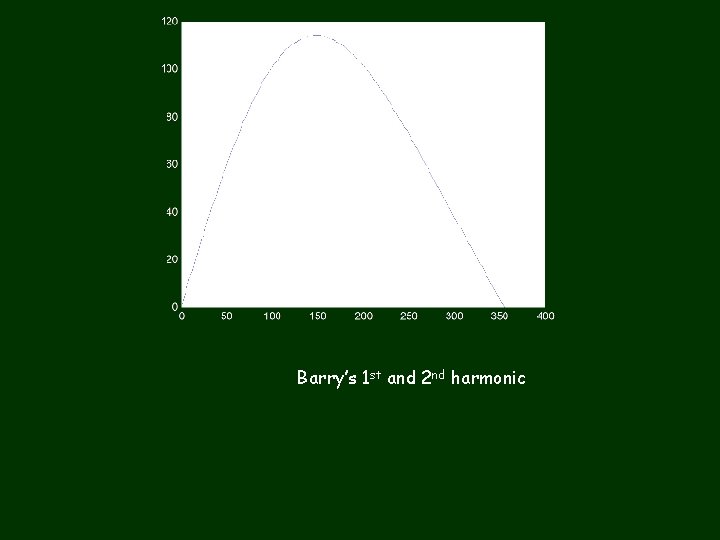
Barry’s 1 st and 2 nd harmonic
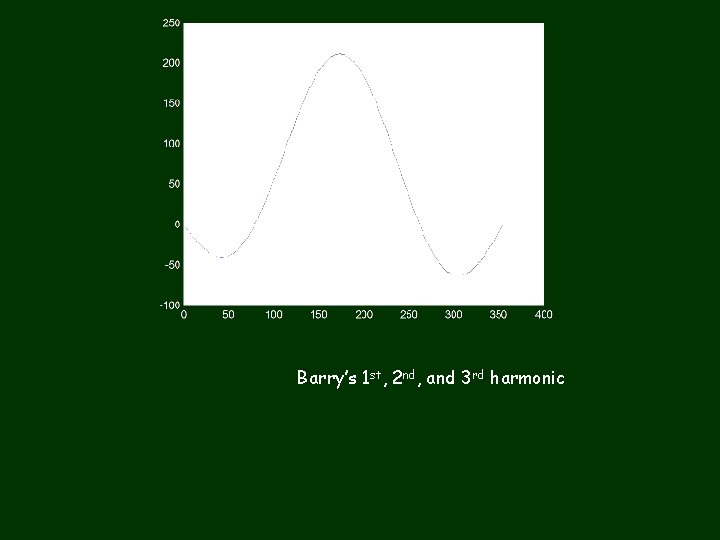
Barry’s 1 st, 2 nd, and 3 rd harmonic
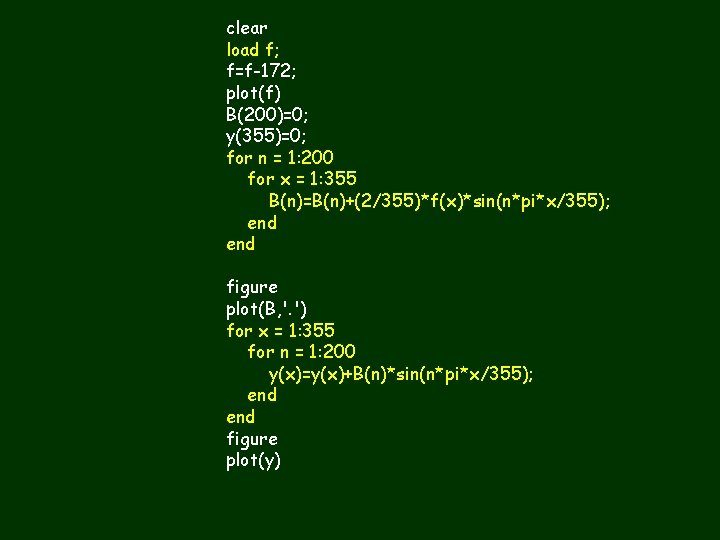
clear load f; f=f-172; plot(f) B(200)=0; y(355)=0; for n = 1: 200 for x = 1: 355 B(n)=B(n)+(2/355)*f(x)*sin(n*pi*x/355); end figure plot(B, '. ') for x = 1: 355 for n = 1: 200 y(x)=y(x)+B(n)*sin(n*pi*x/355); end figure plot(y)
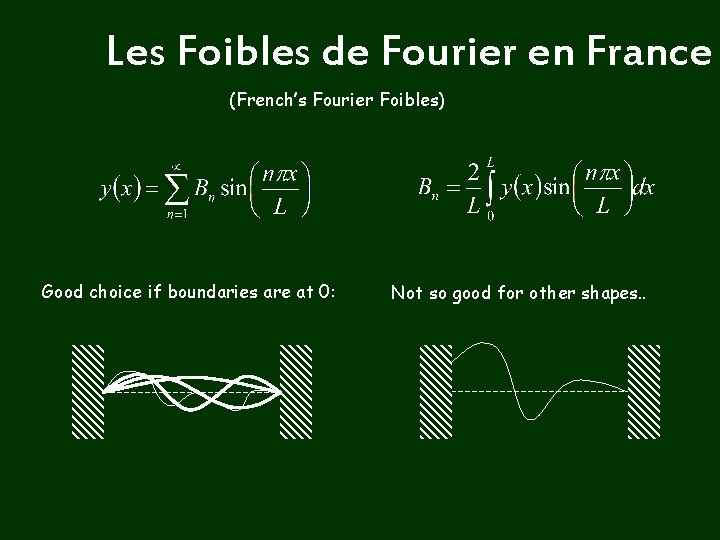
Les Foibles de Fourier en France (French’s Fourier Foibles) Good choice if boundaries are at 0: Not so good for other shapes. .
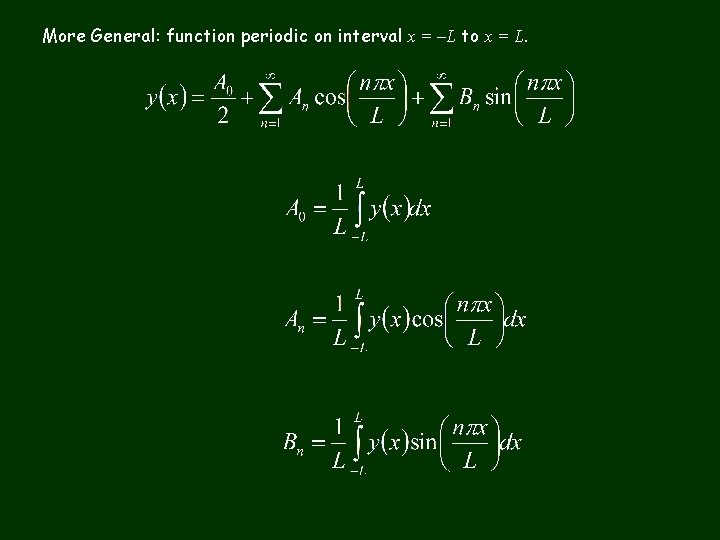
More General: function periodic on interval x = –L to x = L.
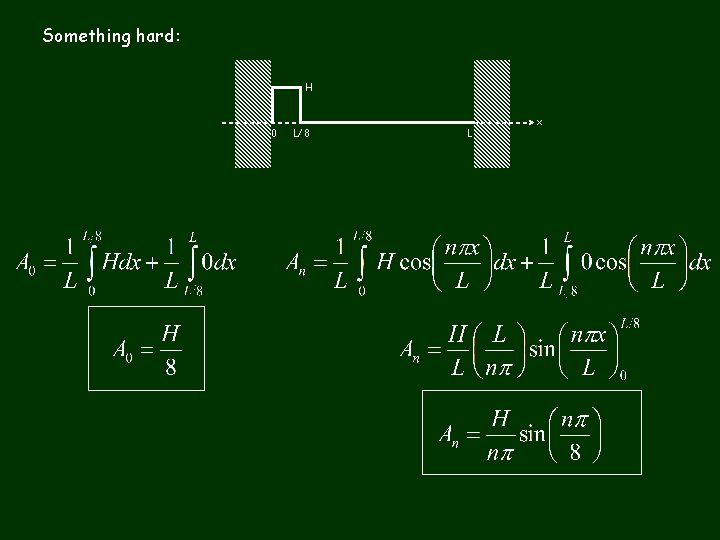
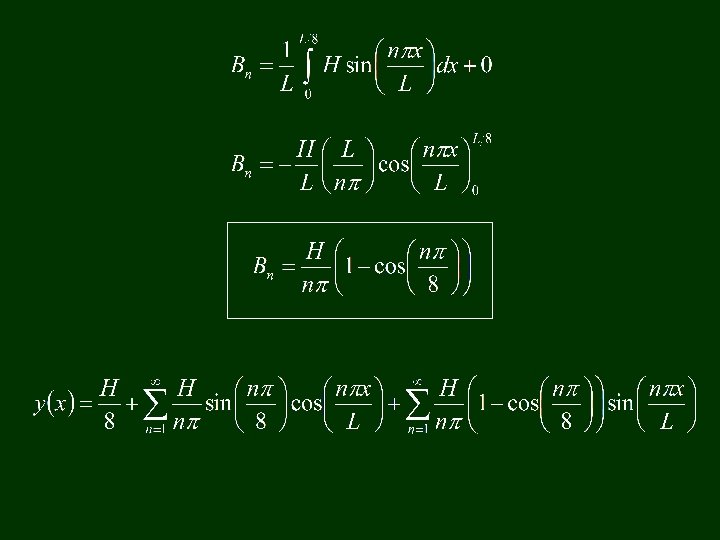
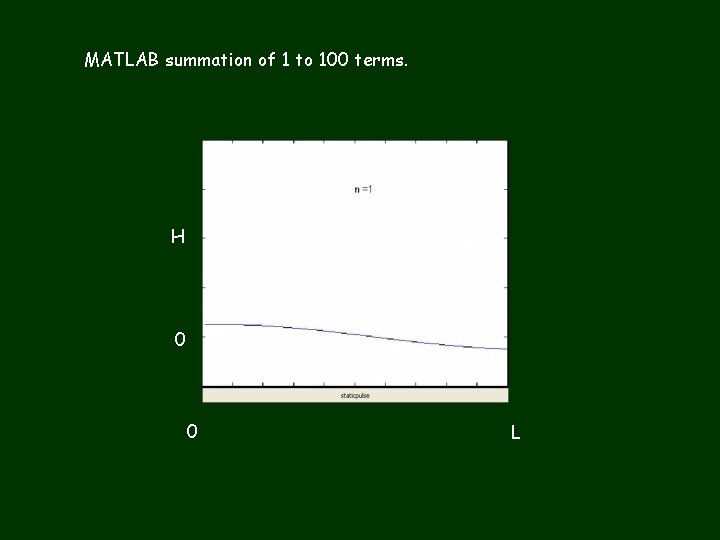
Something hard: H 0 L/8 L x
MATLAB summation of 1 to 100 terms. H 0 0 L
Any well behaved repetitive function can be described as an infinite sum of sinusoids with variable amplitudes (a Fourier Series). On a stretched string these correspond to the normal modes. Fourier analysis can describe arbitrary string shapes as well as progressive waves and pulses.