
Stress Stress The bodys and minds reaction to
Stress
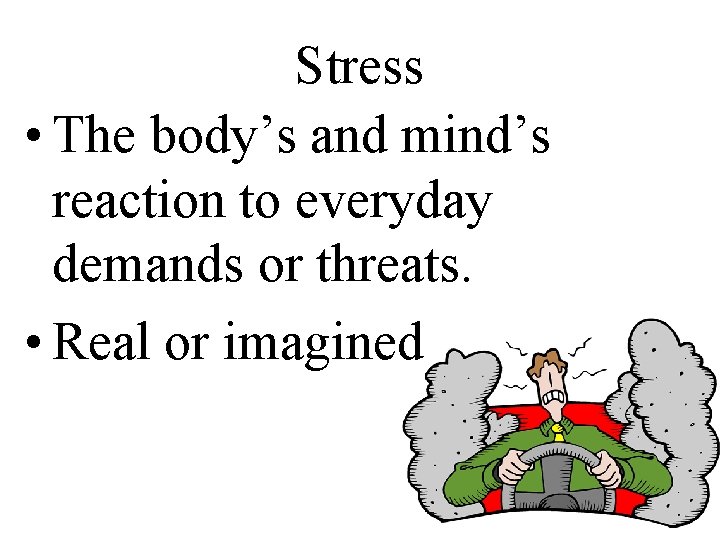
Stress • The body’s and mind’s reaction to everyday demands or threats. • Real or imagined
• Stress can be minor and go unnoticed • Can be useful or harmful, energizing or exhausting • Key-learn to handle it in healthful ways
Distress • Negative stress • Too much pressure or trauma and you don’t know how to deal with it
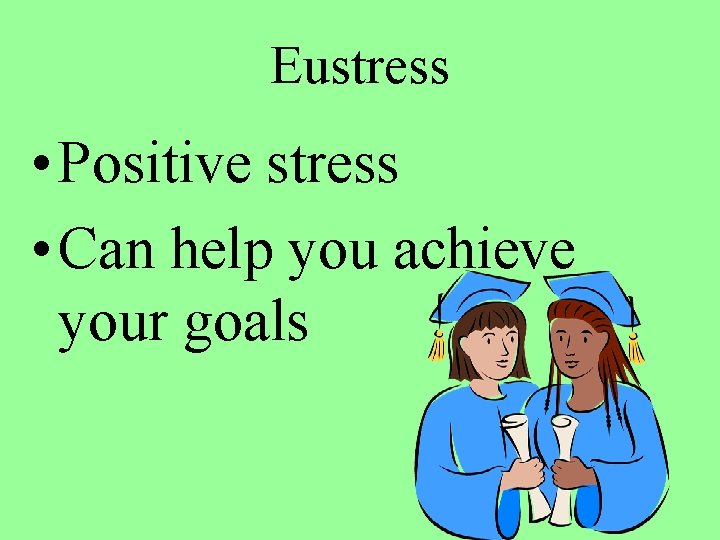
Eustress • Positive stress • Can help you achieve your goals
Kinds of stressors
Stressor • Any stimulus that produces a stress response • People, objects, places, events, or situations
5 general categories of stressors
Biological stressors • Biochemical imbalances • Mental or physical illness • Disabilities or injuries
Environmental stressors • Poverty • Pollution • Crowding • Noise • Natural disasters
Cognitive or thinking stressors • Perceive a situation • What you expect
Personal behavior stressors • Tobacco • Alcohol • Other drugs • Not exercising
Life situations • Relative or pet die • Parents separate or divorce • Trouble with relationships
The body’s stress response
• Perceive a situation or event to be a threat, your body begins a stress response
• Nervous and endocrine systems are active during reaction to stressors • Involuntary • Occur whether physical or emotional, positive or negative
Alarm stage • st 1 stage in the stress response, when the body and mind go on high alert
Adrenaline • “emergency hormone” • Secreted by the adrenal glands to prepare the body to respond to a stressor • Sweat and tears – only way to get rid of
Fight or flight • Heart speeds up • Breath faster • Throat muscles contract • Sweat • Arms and legs tighten • Mind on high alert
Resistance nd • 2 stage in the stress response, body tries to repair the damage and return to normal
Fatigue rd • 3 stage, resulting in a tired feeling that lowers one’s level activity
Three kinds of fatigue
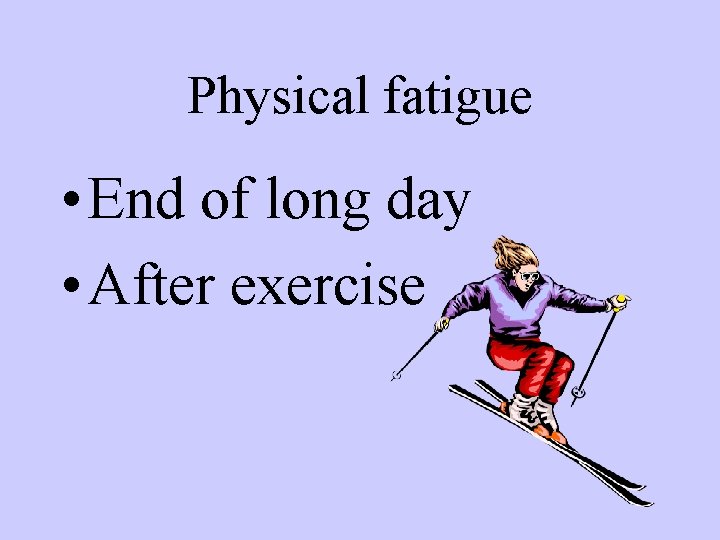
Physical fatigue • End of long day • After exercise
Pathological fatigue • Overworking • Sick, overweight, poor nutrition • Alcohol or caffeine
Psychological fatigue • Constant worry • Overwork • Depression • Boredom • isolation
• Prolonged or repeated stress can lead to stress -related illnesses.
Stress and the brain
• Thrive on challenge or frighten you • New experiences unafraid or change scare you • Neurotransmitters – brain chemicals
Stress tolerance • Amount of stress which you can handle before you reach a state of too much stress.
Stress and your personality type
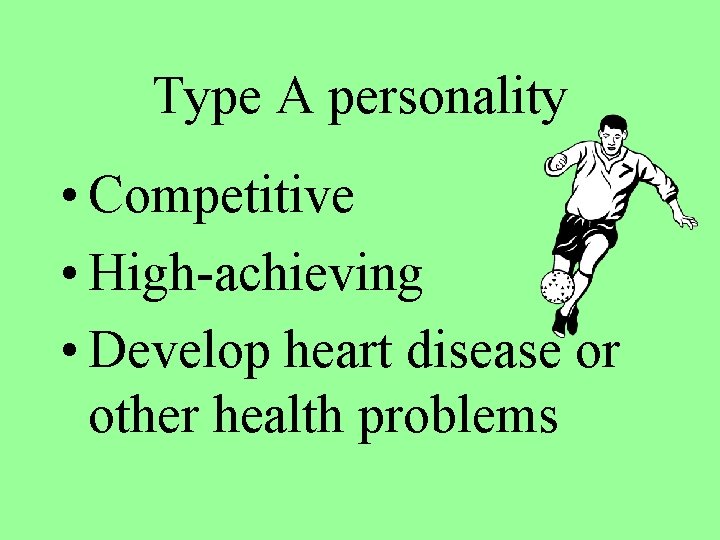
Type A personality • Competitive • High-achieving • Develop heart disease or other health problems
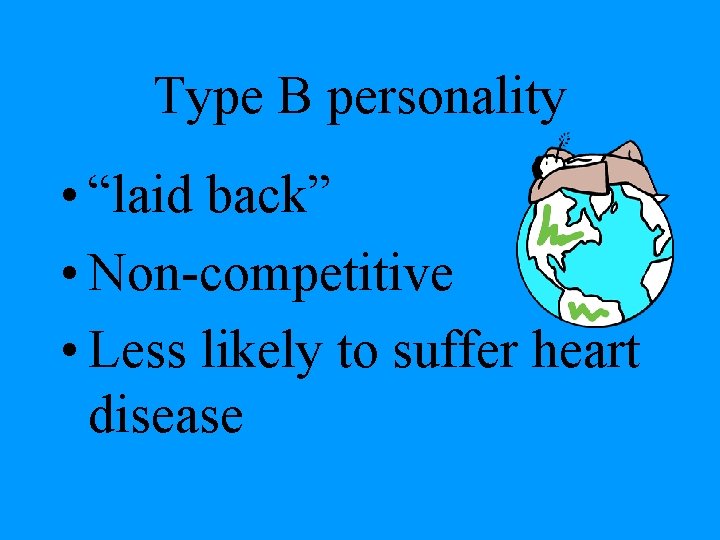
Type B personality • “laid back” • Non-competitive • Less likely to suffer heart disease
Hardy personality • able to stay healthy despite major or traumatic stressors • Resilience • Change • Commitment • control

Psychosomatic response • Physical disorder that results from stress rather than from an injury or illness
Signs of stress
Physical signs • • • Headaches Trembling Upset stomach Sweating constipation • • • Diarrhea Trouble sleeping Grinding teeth Dry mouth Back pain
Emotional signs • • • Frustration Nervousness Feeling powerless Impatience Mood swings • • • Edginess Quick to anger Confusion Crying Low selfesteem
Mental signs • Trouble reading • Not thinking clearly • Constant worry • Obsessive thoughts • Inability to make decisions • Forgetting • No sense of humor • No perspective
Behavioral signs • Not eating • Overeating • Compulsive talking • Fidgeting • Tapping feet • • • Withdrawing Hurrying Drumming fingers Smoking Reckless behaviors
Managing stress • • Identify the problem Stress management Planning Rechanneling energy Relaxing and laughing Seeking support Time management
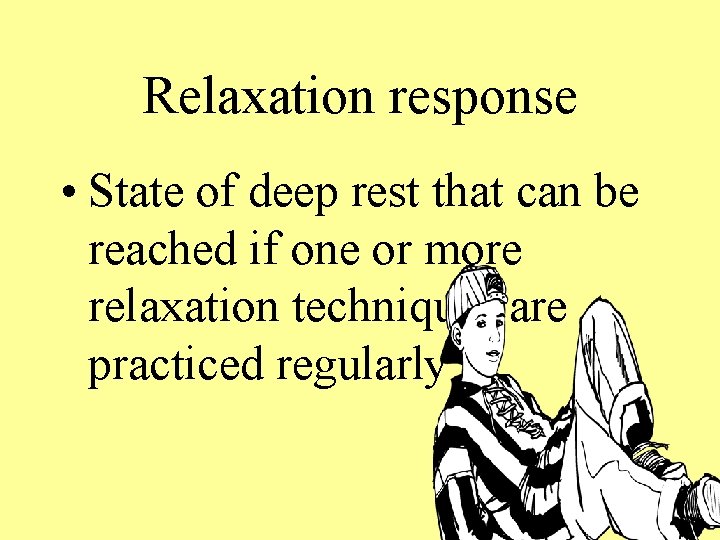
Relaxation response • State of deep rest that can be reached if one or more relaxation techniques are practiced regularly
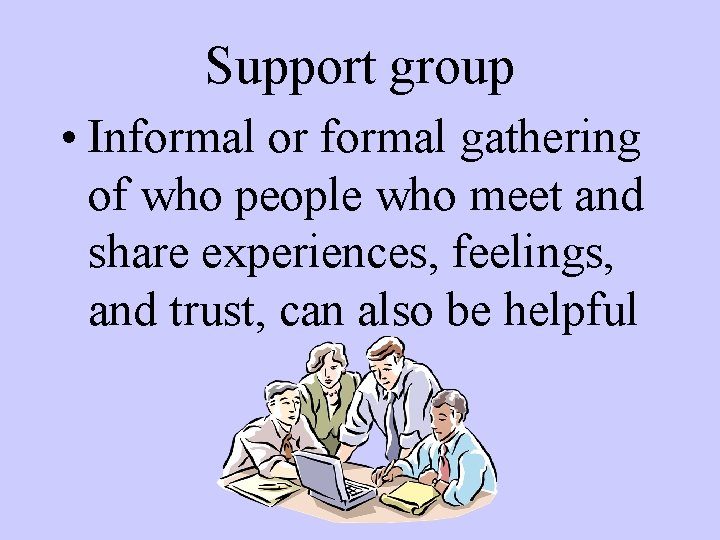
Support group • Informal or formal gathering of who people who meet and share experiences, feelings, and trust, can also be helpful
Time management skills • Specific strategies for planning and using time in effective, healthful ways
Priorities • Goals, tasks, or activities that you judge as more important to do than others
Coping with loss
Grief reaction • Individual’s total response to a major loss
Stages of loss
Stage 1: Denial • Initial reaction • Cannot believe the loss has occurred
Stage 2: Anger • “why me” stage • Critical, demanding, or uncooperative
Stage 3: Bargaining • Pray or promise to change if only the lost person or object can be returned, even for a while
Stage 4: Depression • Silence and withdrawal • Sense of quiet sadness
Stage 5: Acceptance • Sense of power • Person facing reality in constructive ways
Closure • Coming to an end of the most intense parts of the grieving process
Delayed grief response • Putting off stages of grief until the shock wears off • Cover up feelings with drugs • Assuring everyone they are fine
- Slides: 54