
Stress Management Positive and Negative Health Behaviors Allison
Stress Management: Positive and Negative Health Behaviors Allison Jay, M. A. And Jason Mitchell, B. S. University Counseling Center University of Colorado at Colorado Springs
What Is Stress? n Definition l n Benefits l n A physical, mental, or emotional factors that causes bodily or mental tension Can help you rise to meet a challenge Limitations l Repeated exposure can produce physical and emotional problems
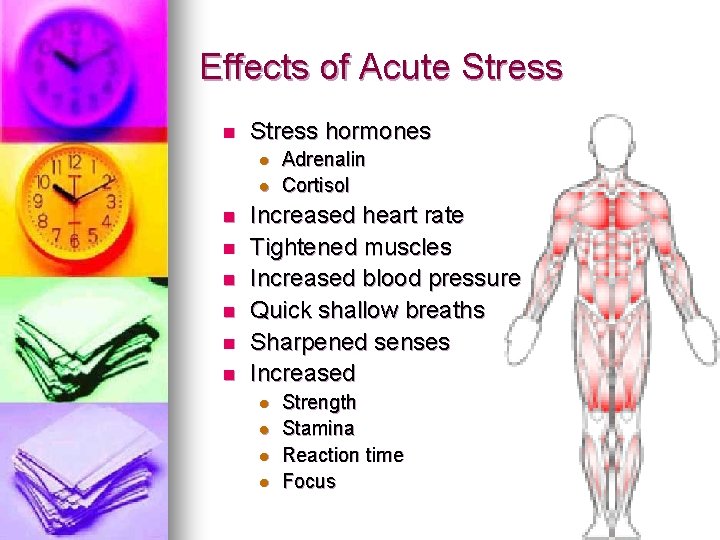
Effects of Acute Stress n Stress hormones l l n n n Adrenalin Cortisol Increased heart rate Tightened muscles Increased blood pressure Quick shallow breaths Sharpened senses Increased l l Strength Stamina Reaction time Focus
Effects of Long-Term Stress Increased blood pressure n Suppressed immune system n Increase risk for heart attack n Increased risk for stroke n Infertility problems n Accelerated effects of aging n Sleep problems n Weight gain n Depression n
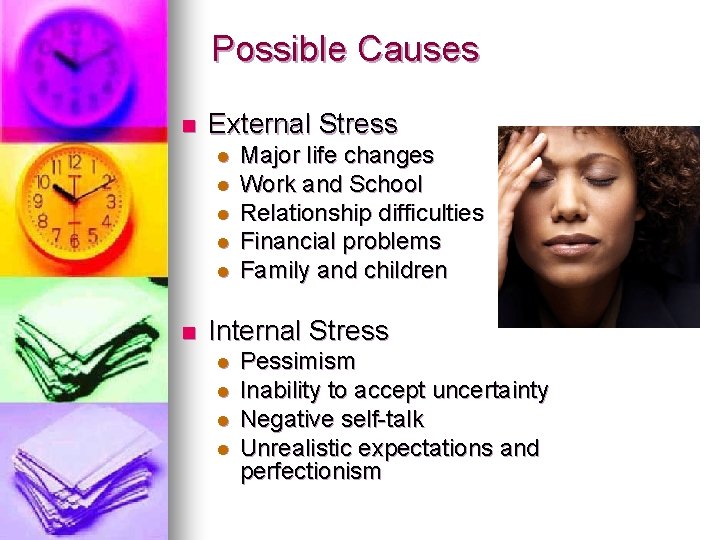
Possible Causes n External Stress l l l n Major life changes Work and School Relationship difficulties Financial problems Family and children Internal Stress l l Pessimism Inability to accept uncertainty Negative self-talk Unrealistic expectations and perfectionism
Stress Tolerance Support network n Sense of control n Attitude and outlook n Ability to deal with emotions n Knowledge and preparation n Stress management strategies n
Stress Management Strategies n Negative Behaviors Avoidance l Substance Abuse l n Positive Behaviors Exercise l Nutrition l Social Supports l
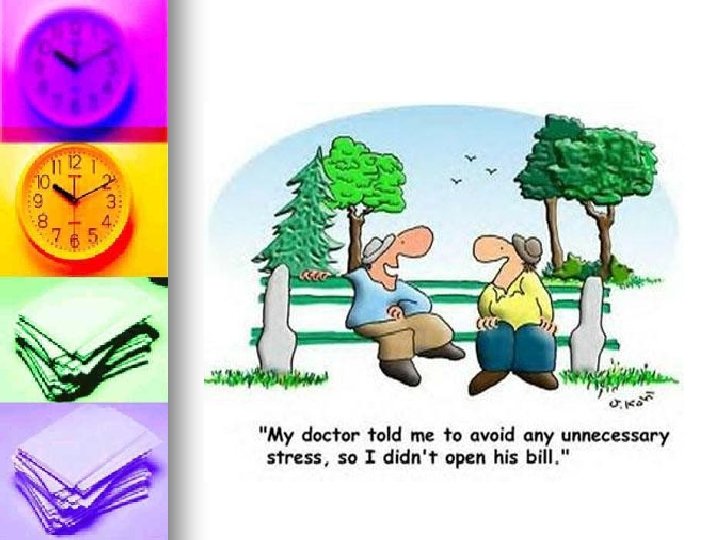
Avoidance n Short-term avoidance l n Avoiding or escaping from a stressful situation can make you feel less stressed Repeated avoidance l Repeatedly avoiding or escaping an activity can create more stress
Substance Abuse n Tension-Reduction Theory l Self-medication hypothesis n Coping Ability n Substance use disorders l l Temporary avoidance What is disordered use?
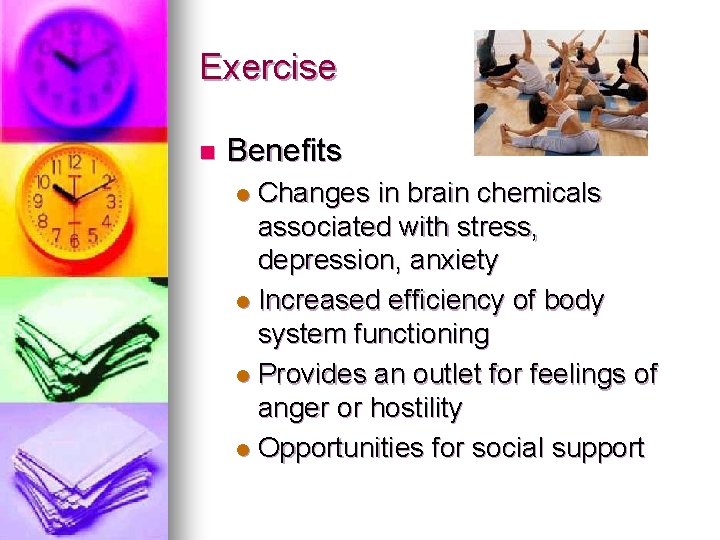
Exercise n Benefits Changes in brain chemicals associated with stress, depression, anxiety l Increased efficiency of body system functioning l Provides an outlet for feelings of anger or hostility l Opportunities for social support l
Incorporating Exercise Identify the time of day is best for you n Find a type of exercise you enjoy n Monitor and record your exercise habits n Set attainable goals for yourself n Reward yourself when your goals are met n UCCS Fitness Center http: //www. uccs. edu/~campusrec/
Nutrition n Healthy vs Unhealthy eating l l l n Balanced diet Avoid caffeine High sugar food/drink Cyclical negative effects l High fat/greasy food n n Tired Lower motivation
Social Supports Social supports can include friends, family, co-workers n Having a strong network of social support can help people manage stress n Benefits n Sense of belonging l Increased sense of self-worth l Feeling of security l
Maintaining Social Supports n n n n Stay in touch Be proactive Know when to say “no” Don’t compete Be a good listener Challenge yourself Don’t over-do it Appreciate your friends and family
Want to find more social support at UCCS? n Consider joining a student club or organization http: //www. uccs. edu/~cao/ n Or, see what the Office of Student Activities has to offer http: //www. uccs. edu/~osa/
Contact Information University Counseling Center 1420 Austin Bluffs Parkway P. O. Box 7150 Colorado Springs, CO 80933 Phone: (719) 255 -3257

Questions?
- Slides: 18