
STRESS MANAGEMENT AND SUPPORT SYSTEMS Case Study Developing
- Slides: 25
STRESS MANAGEMENT AND SUPPORT SYSTEMS Case Study : Developing a Stress Management Plan
INFORMATION GATHERING We need to know this individual
INFORMATION GATHERING Need to consider: Biological and functional age; Individual needs and resources; Gender; Ethnicity; Culture;
Need to consider: How has Frank historically dealt with stress within his life? Patterns or associations?
Need to consider: How is stress affecting Frank’s day to day life What is Frank’s level of commitment to change – how much does he want this to happen?
Need to know. . . Coping strategies that have worked in the past could be utilised to help with the current problems. Identify those ‘scripts’ or rules by which Frank lives his life which could be unhelpful and which may need to be changed. What are his strengths and challenges
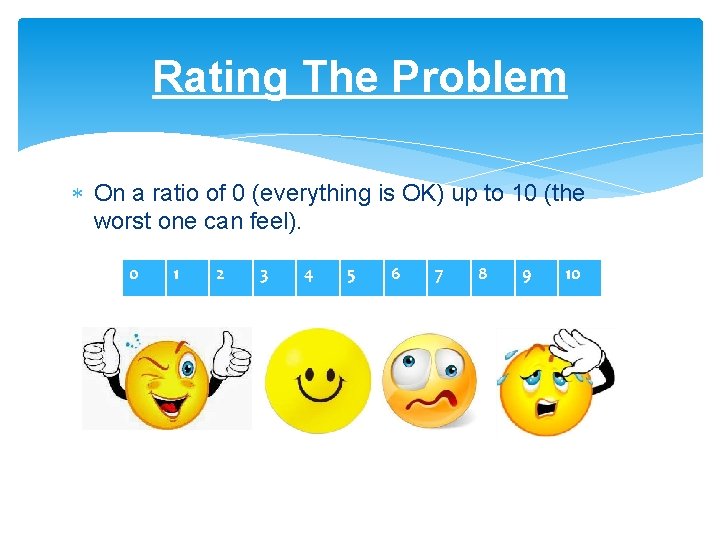
Rating The Problem On a ratio of 0 (everything is OK) up to 10 (the worst one can feel). 0 1 2 3 4 5 6 7 8 9 10
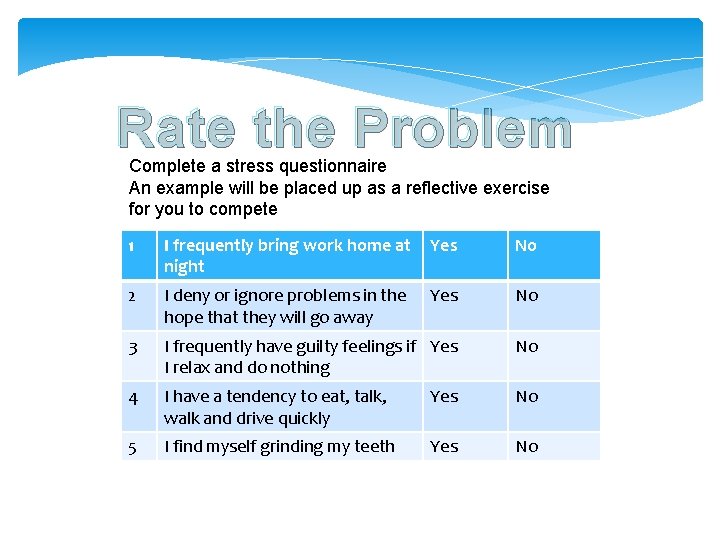
Rate the Problem Complete a stress questionnaire An example will be placed up as a reflective exercise for you to compete 1 I frequently bring work home at night Yes No 2 I deny or ignore problems in the hope that they will go away Yes No 3 I frequently have guilty feelings if Yes I relax and do nothing No 4 I have a tendency to eat, talk, walk and drive quickly Yes No 5 I find myself grinding my teeth Yes No
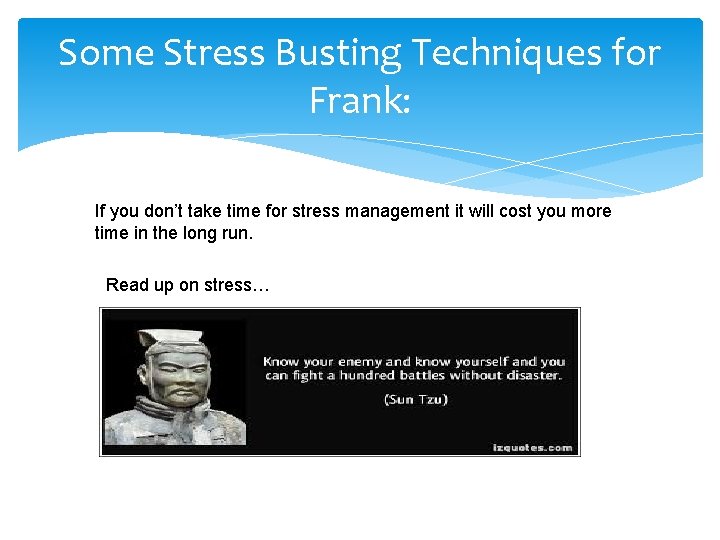
Some Stress Busting Techniques for Frank: If you don’t take time for stress management it will cost you more time in the long run. Read up on stress…
Some Stress Busting Techniques for Frank: • Keep a diary, better still, a journal • Frank decided to keep a ‘stress’ diary in an attempt to identify the ‘triggers’ which were causing his stress • Almost immediately, Frank realised that his ‘stressors’ fell into two categories, issues that he could do nothing about and issues he had some control over
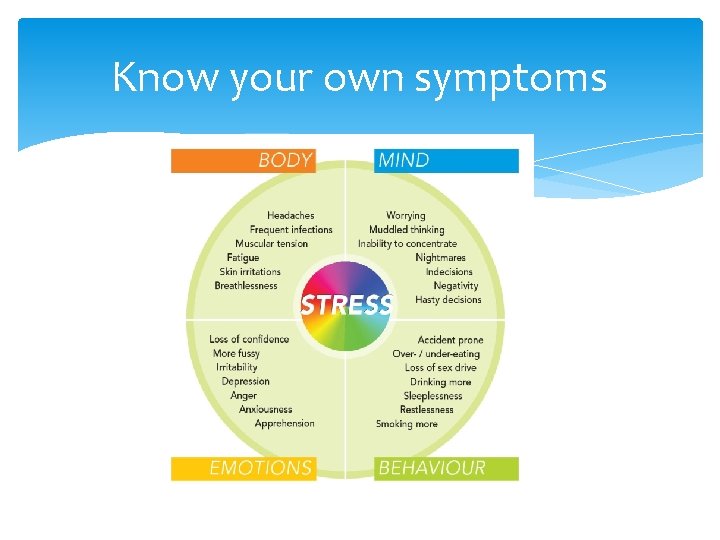
Know your own symptoms
The Empty Pickle Jar Please click this link to watch the 3 minute movie.
Some Stress Busting Techniques for Frank: Exercise Diet Cut down on smoking and drinking Pay more attention to relationships Acknowledge and increase support systems Understand transition processes
RELAXATION TECHNIQUES RELAXATION – IMPORTANT PART OF A STRESS REDUCTION PLAN A Few Techniques will be addressed in seminar Today.
EAP SCHEMES Talking to someone in a confidential context who is not involved in the situation[s]
Commitment Frank has to acknowledge and accept that there is a problem and resolve to try to do something to resolve it This is probably the biggest step that he will take towards relieving the stress within their lives
Imagine a better future Imagine a world where these problems did not exist; Where would Frank be? Who else would be there? Who would not be there? How would Frank feel?
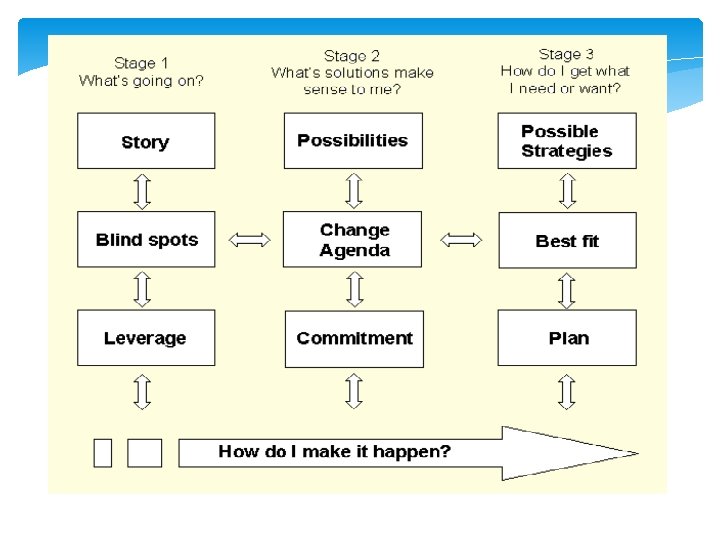
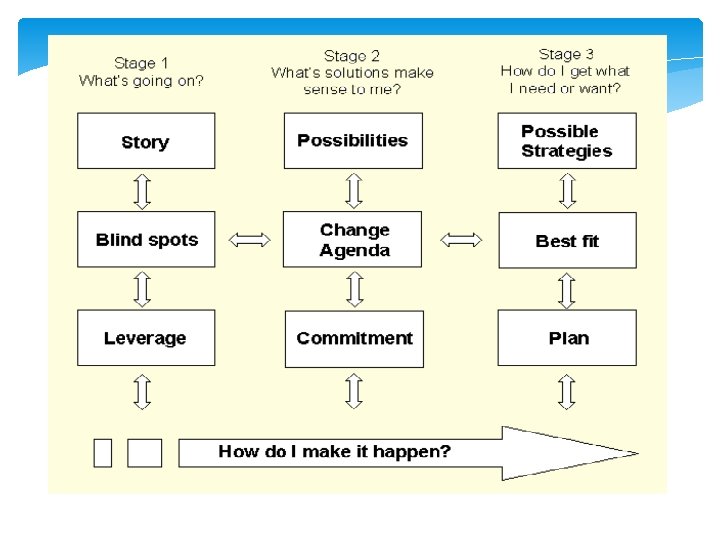
The skilled Helper 3 Main Questions What is Happening? What do I want? How can I obtain what I want? People can move back and forth with these questions.
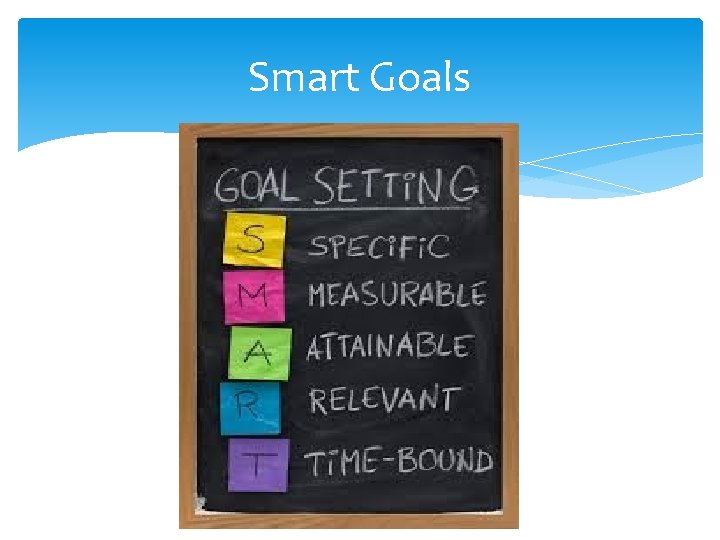
Smart Goals
How is Frank Doing? Frank’s action plan would be evaluated at the end of a six week period by reviewing improvements in his life, using the ‘diagram of being human’ to examine changes within different areas of his life, checking out his stress levels on the 0 -10 indicator retaking the ‘stress test’ and noting any differences in the scores
WHAT TYPE OF HELPING WOULD THIS BE? Looked at Psychodynamic, Humanistic and CBT Dealing with the symptoms themselves, rather than any deep seated underlying concerns.
RELAPSE FRANK IS FEELING BETTER, HOW CAN HE DEVISE A PLAN TO PREVENT RELAPSE
IMPORTANT NOTE: No stress management techniques or self help books are an alternative to seeking professional help if needed. Awareness in knowing yourself and others is the key to determining when you need professional help