
Stress Learning objectives Stress is considered healthy when
Stress
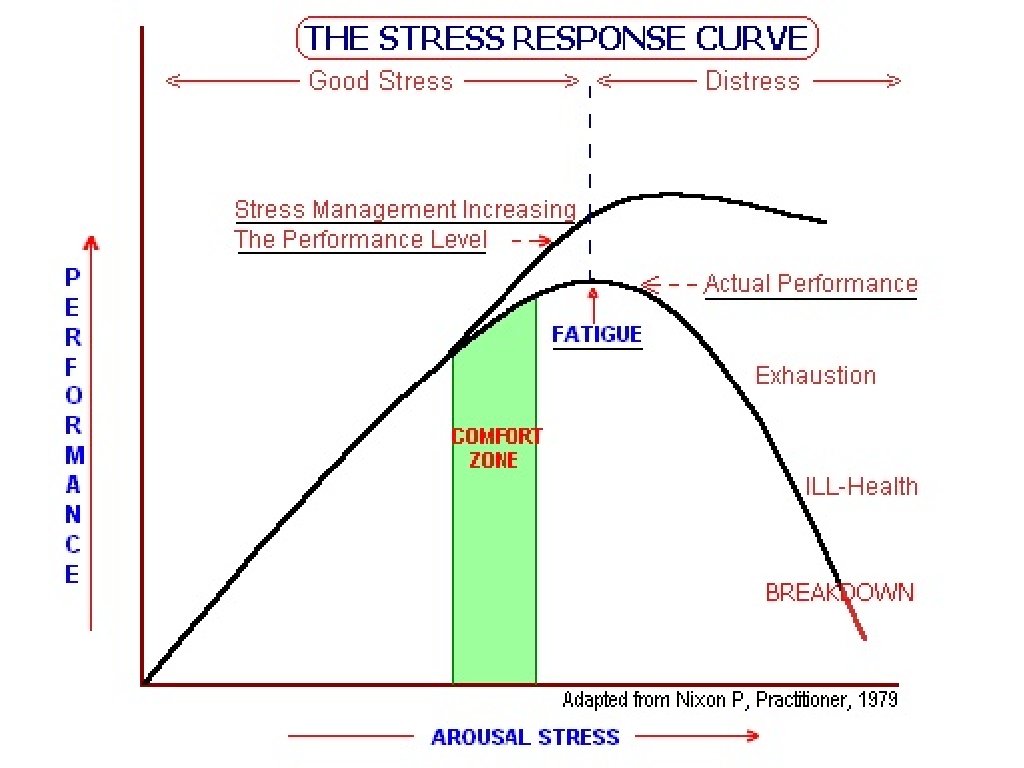
Learning objectives • • Stress is considered healthy when manageable (eustress) Distress is excessive stress. Understand the stress response curve: up to a point, increasing stress is healthy and promotes performance. Beyond some point, additional stress reduces performance. What is the stress response? Be able to explain the general adaptation syndrome. List sources of stress. What are some healthy and unhealthy ways to manage stress?
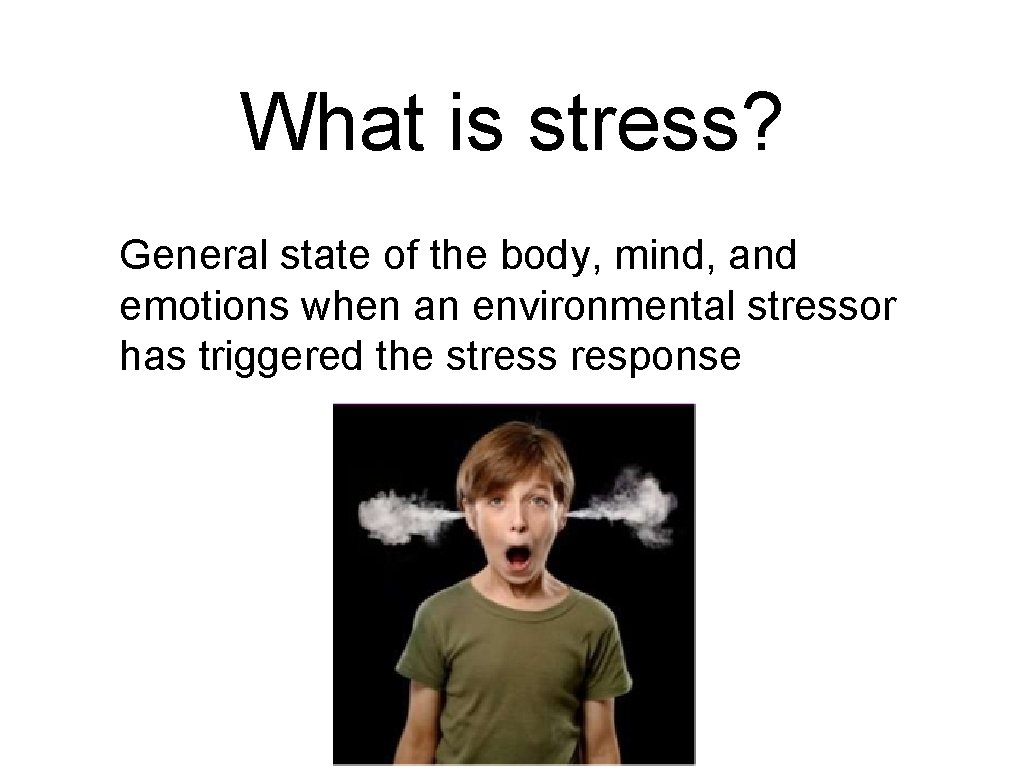
What is stress? General state of the body, mind, and emotions when an environmental stressor has triggered the stress response
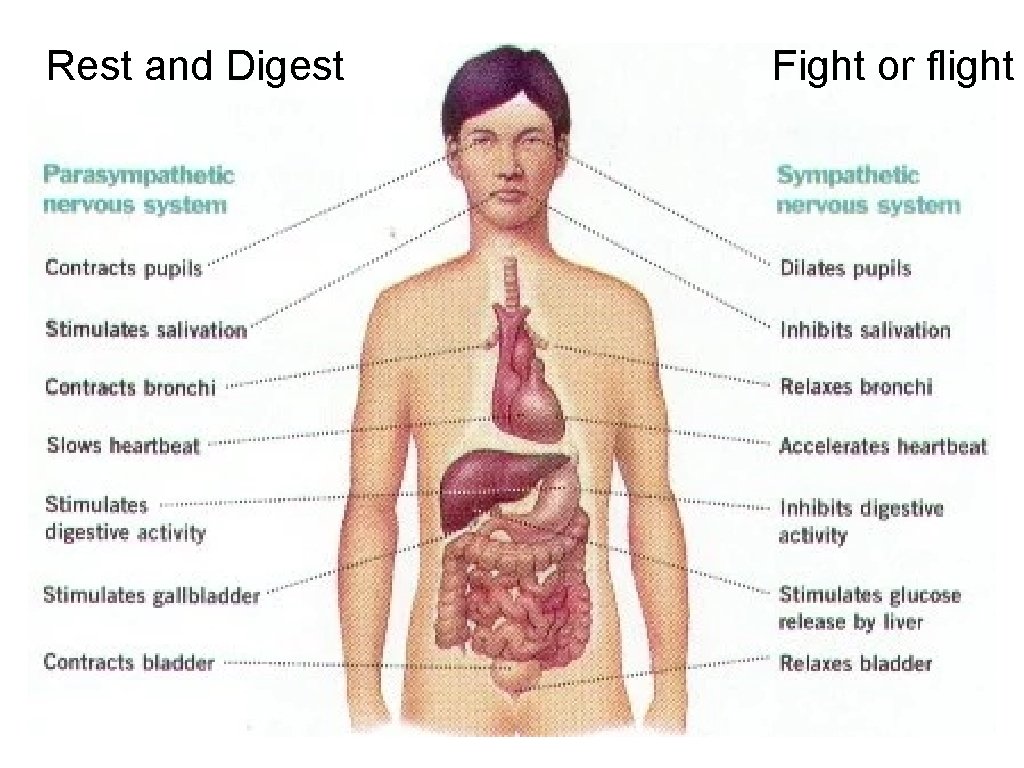
Rest and Digest Fight or flight Stress response
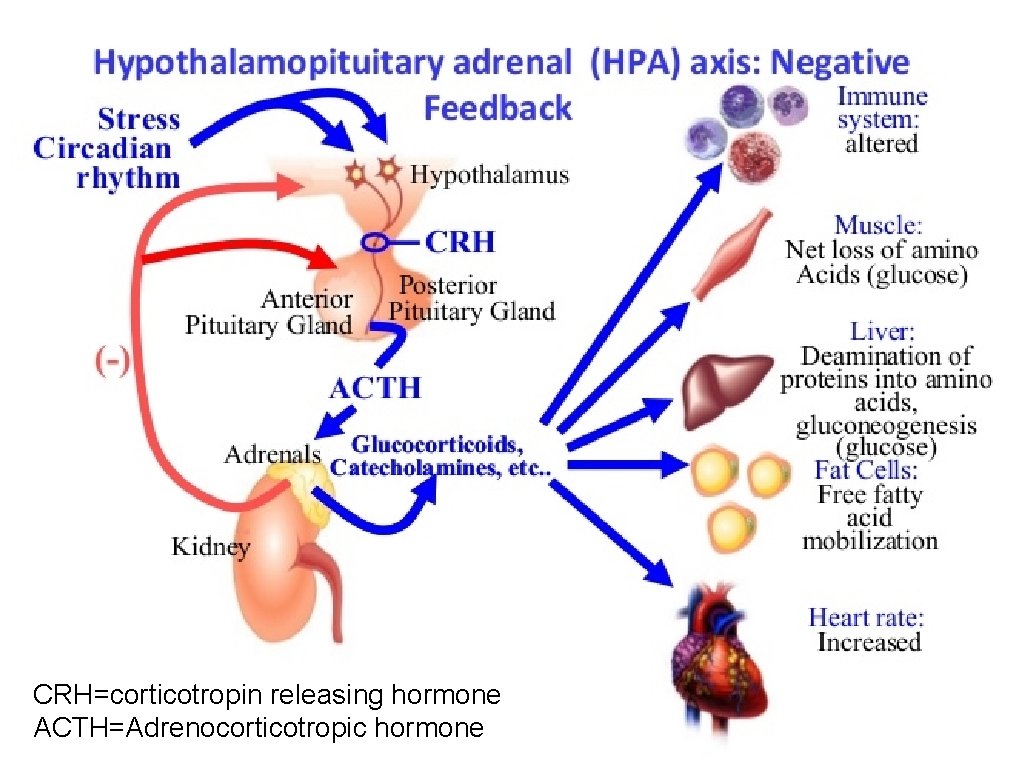
CRH=corticotropin releasing hormone ACTH=Adrenocorticotropic hormone
Not all stress is bad • • Distress Eustress
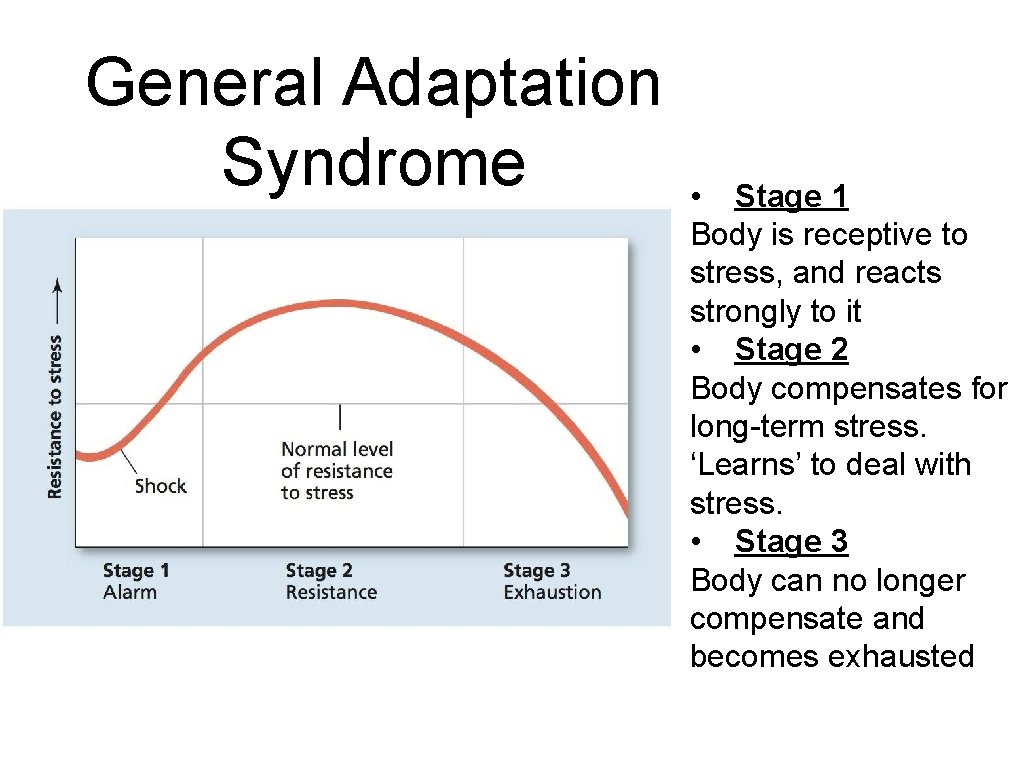
General Adaptation Syndrome • Stage 1 Body is receptive to stress, and reacts strongly to it • Stage 2 Body compensates for long-term stress. ‘Learns’ to deal with stress. • Stage 3 Body can no longer compensate and becomes exhausted
Physical effects of chronic stress Stress hormone cortisol has negative impacts on many systems • Immune system • Cardiovascular system • Gastrointestinal system • Mental health • Reproduction
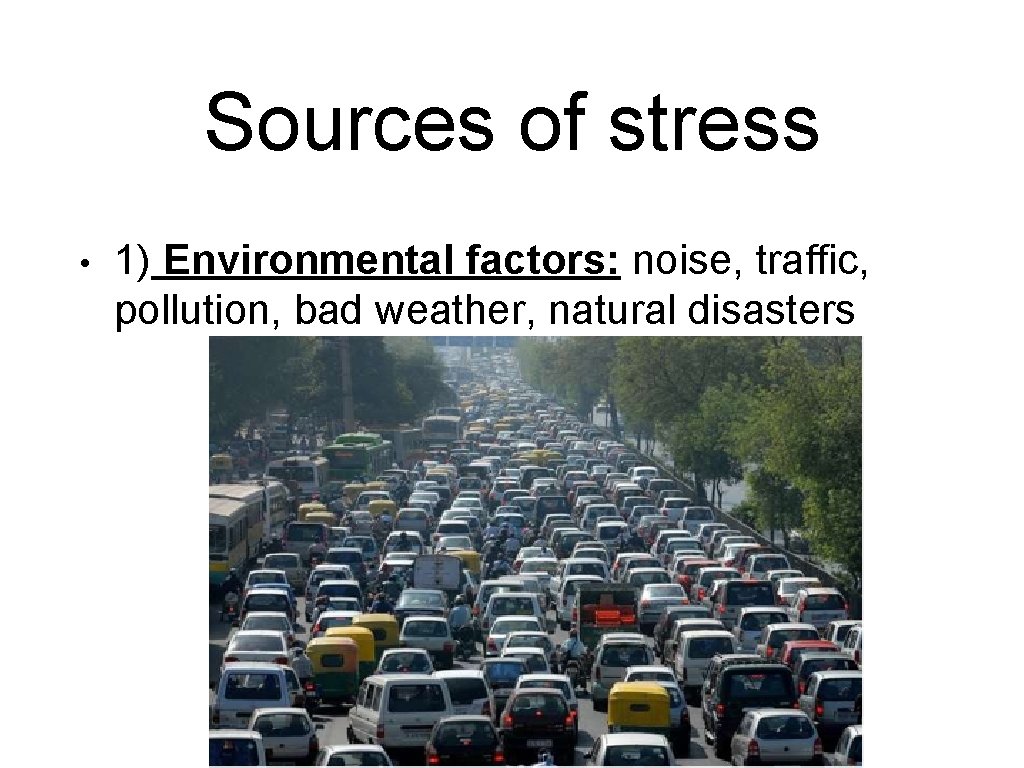
Sources of stress • 1) Environmental factors: noise, traffic, pollution, bad weather, natural disasters
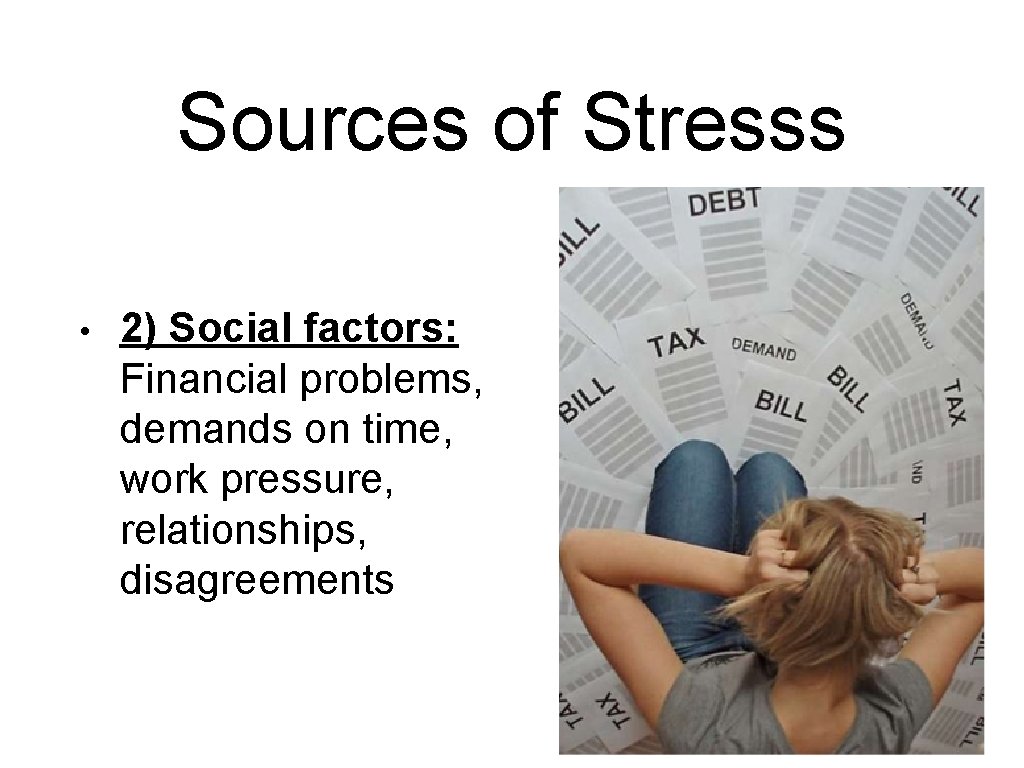
Sources of Stresss • 2) Social factors: Financial problems, demands on time, work pressure, relationships, disagreements
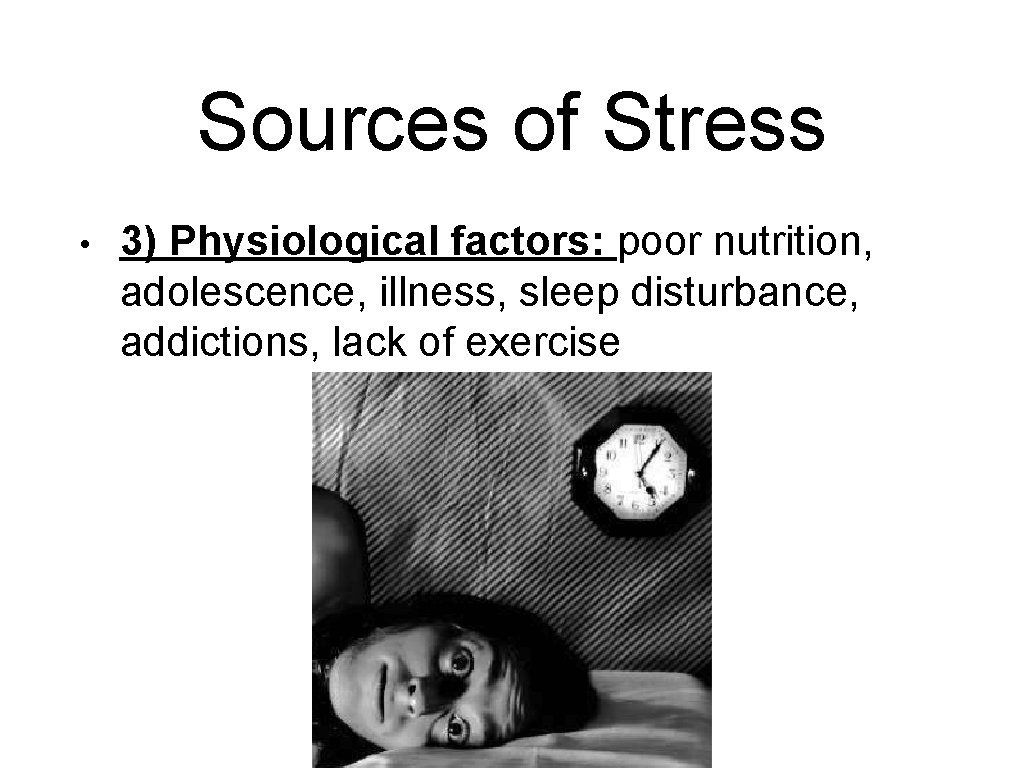
Sources of Stress • 3) Physiological factors: poor nutrition, adolescence, illness, sleep disturbance, addictions, lack of exercise
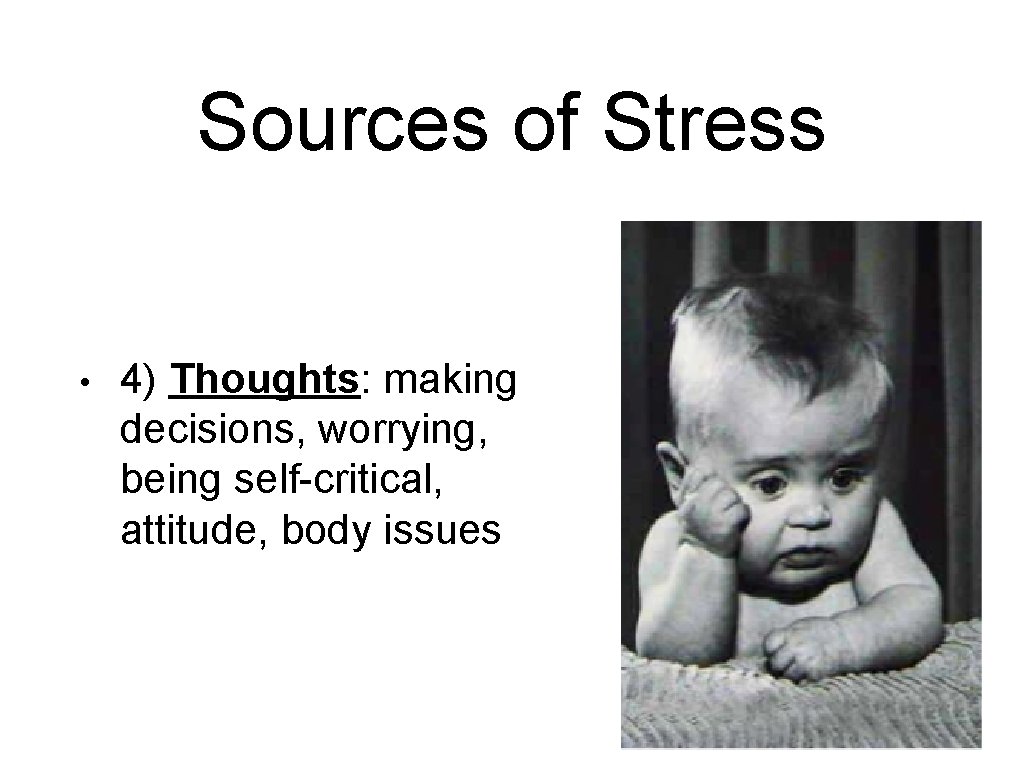
Sources of Stress • 4) Thoughts: making decisions, worrying, being self-critical, attitude, body issues
Stress management techniques • Unhealthy techniques • Tobacco • Alcohol • Other drugs • Food!
Stress management techniques • Healthy techniques • Reduce stress • Reduce your commitments • Manage your time • Plan • Prioritize • Keep ‘to-do’ lists • Maintain social support • Cultivate a variety of relationships • Communicate with friends
Stress management techniques • • Maintain a healthy lifestyle • Eat well • exercise Think positive! • Remember, stress response starts in brain, so things you think about may affect your level of stress
Relaxation techniques • • Deep breathing Visualization (guided imagery) • visualize relaxing scene • use as many senses as you can Meditation such as: • Tai chi • yoga Affirmations • Positive thoughts about yourself
Create a S. M. A. R. T plan • • • Specific: a concrete goal Measurable: how will you know? Achievable: Be realistic Reward: How will you reward yourself? Timeline: When will you start? stop?
- Slides: 18