
Stress First Aid for Wildland Firefighters Two Faces
- Slides: 56
Stress First Aid for Wildland Firefighters
Two Faces of Stress is NECESSAR Y • Stress is essential for: – – – Strength and toughness Growth and development Acquire new skills Meeting challenges Performing difficult missions Stress can be TOXIC • Stress can lead to: – – – Persistent internal distress Functional impairment Misconduct Substance abuse Mental disorders
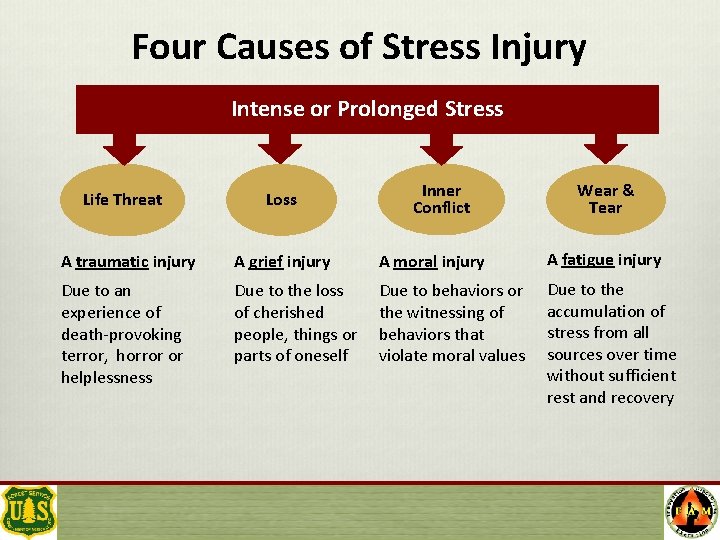
Four Causes of Stress Injury Intense or Prolonged Stress Life Threat Loss Inner Conflict Wear & Tear A traumatic injury A grief injury A moral injury A fatigue injury Due to an experience of death-provoking terror, horror or helplessness Due to the loss of cherished people, things or parts of oneself Due to behaviors or the witnessing of behaviors that violate moral values Due to the accumulation of stress from all sources over time without sufficient rest and recovery
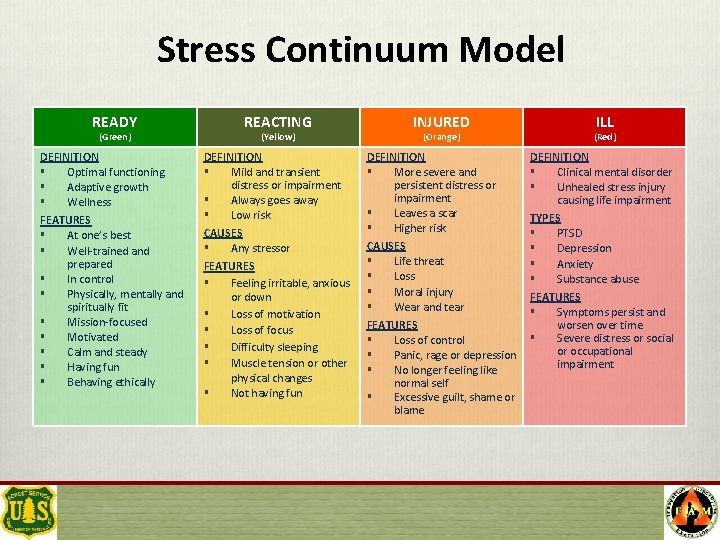
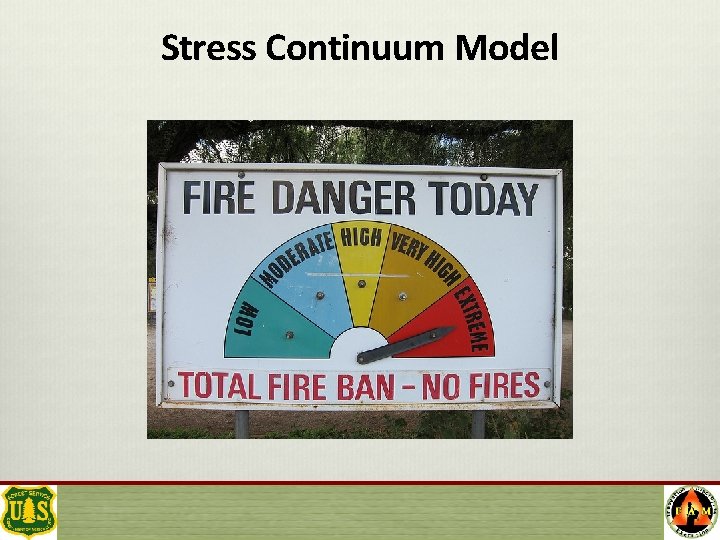
Stress Continuum Model READY (Green) DEFINITION § Optimal functioning § Adaptive growth § Wellness FEATURES § At one’s best § Well-trained and prepared § In control § Physically, mentally and spiritually fit § Mission-focused § Motivated § Calm and steady § Having fun § Behaving ethically REACTING (Yellow) DEFINITION § Mild and transient distress or impairment § Always goes away § Low risk CAUSES § Any stressor FEATURES § Feeling irritable, anxious or down § Loss of motivation § Loss of focus § Difficulty sleeping § Muscle tension or other physical changes § Not having fun INJURED (Orange) DEFINITION § More severe and persistent distress or impairment § Leaves a scar § Higher risk CAUSES § Life threat § Loss § Moral injury § Wear and tear FEATURES § Loss of control § Panic, rage or depression § No longer feeling like normal self § Excessive guilt, shame or blame ILL (Red) DEFINITION § Clinical mental disorder § Unhealed stress injury causing life impairment TYPES § PTSD § Depression § Anxiety § Substance abuse FEATURES § Symptoms persist and worsen over time § Severe distress or social or occupational impairment
Stress Continuum Model
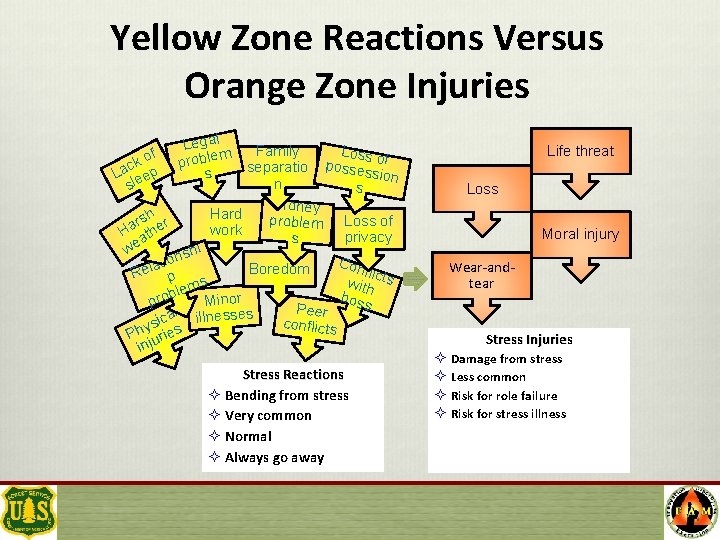
Yellow Zone Reactions Versus Orange Zone Injuries Legal Family Loss o of problem f k p o c separatio ssessi La eep s on n sl s Money Hard h problem Loss of rs r work Ha athe privacy s i we nsh o i Con t a Boredom flicts Rel p w s ith blem Minor b o r oss p P e e l r s e s ca illnes conflicts ysi es h P juri in Stress Reactions Yellow from Zonestress ² Bending Stress ² Very common ² Normal ² Always go away Life threat Loss Moral injury Wear-andtear Stress Injuries Orange Zone ² Damage from stress Stress ² Less common ² Risk for role failure ² Risk for stress illness
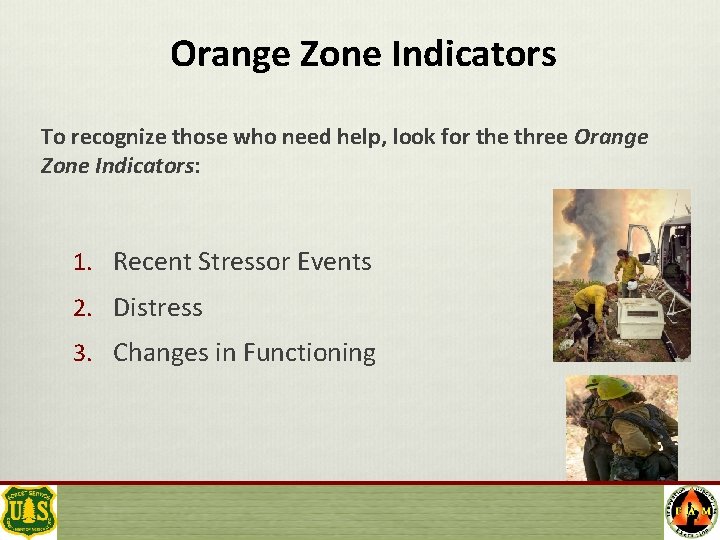
Orange Zone Indicators To recognize those who need help, look for the three Orange Zone Indicators: 1. Recent Stressor Events 2. Distress 3. Changes in Functioning
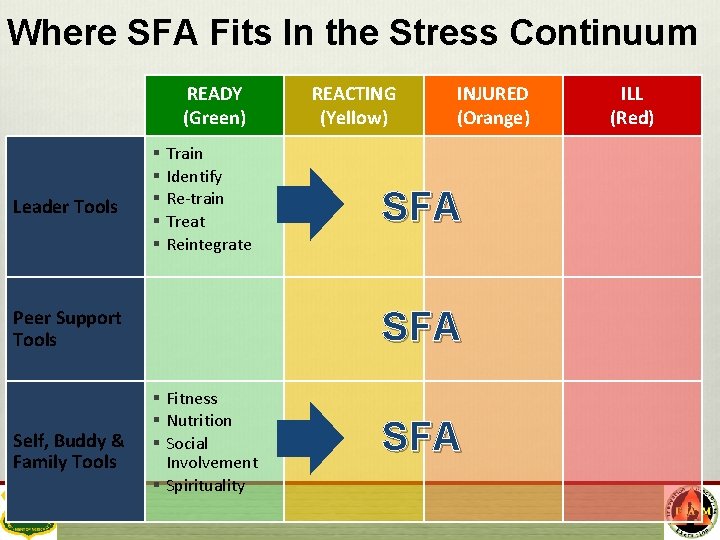
Where SFA Fits In the Stress Continuum READY (Green) Leader Tools § Train § Identify § Re-train § Treat § Reintegrate INJURED (Orange) SFA Peer Support Tools Self, Buddy & Family Tools REACTING (Yellow) § Fitness § Nutrition § Social Involvement § Spirituality SFA ILL (Red)
What Is Stress First Aid? § A flexible framework that gives guidance on how to quickly assess and respond to stress reactions resulting from both personal and work stress § A way to preserve well-being, prevent further harm, and promote recovery § A practical tool which should be used whenever needed for yourself or your peers
Why This Model? Evidenced informed SFA model makes sense and is accessible Addresses the gap between fitness and illness Provides procedures for early care of stress injuries Facilitates further care if needed § § § Earlier access to care § Creates potential links for therapy and healing § Provides foundation for return to duty
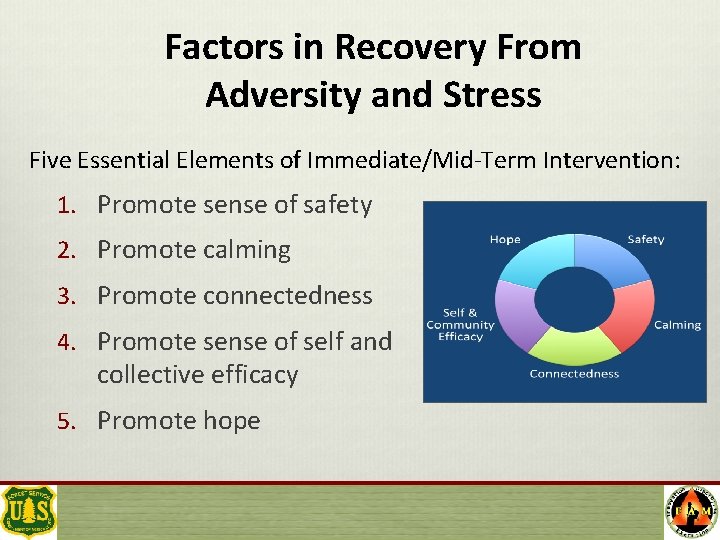
Factors in Recovery From Adversity and Stress Five Essential Elements of Immediate/Mid-Term Intervention: 1. Promote sense of safety 2. Promote calming 3. Promote connectedness 4. Promote sense of self and collective efficacy 5. Promote hope
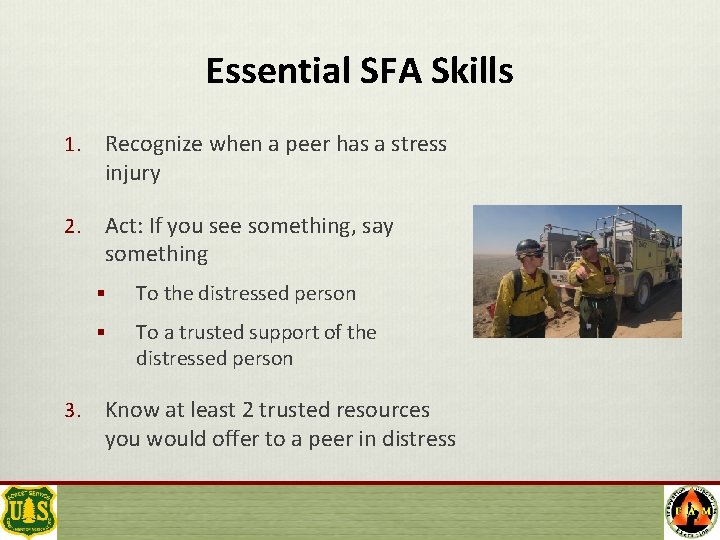
Essential SFA Skills 1. Recognize when a peer has a stress injury 2. Act: If you see something, say something 3. § To the distressed person § To a trusted support of the distressed person Know at least 2 trusted resources you would offer to a peer in distress
Functions of Stress First Aid SFA is designed to: § Reduce the risk for stress reactions § Continuously monitor stress levels § Recognize quickly those who are reacting to a wide range of stressors § Offer a spectrum of interventions § Monitor progress of recovery § Bridge individuals to higher levels of care when needed
Stress First Aid is NOT: § An event only intervention § A one-time only intervention § A replacement for medical or behavioral health interventions § A replacement for prevention efforts
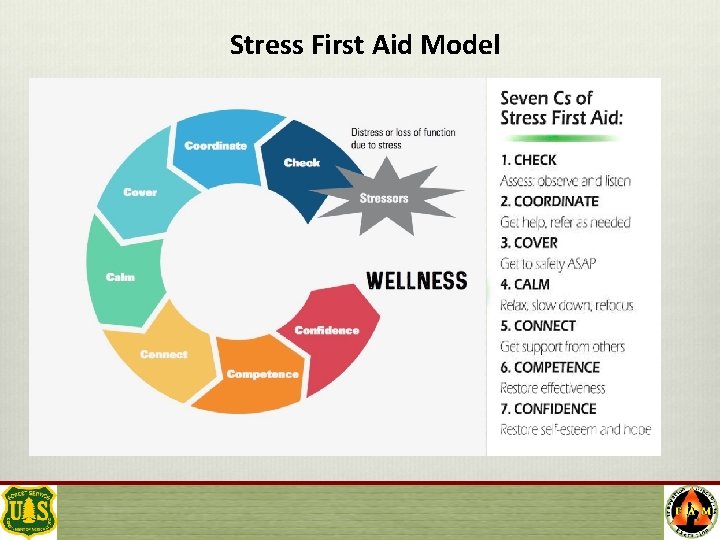
Stress First Aid Model
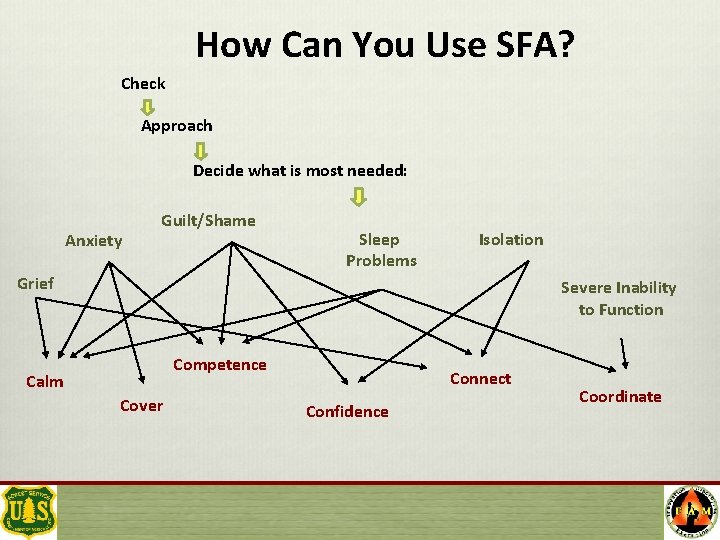
How Can You Use SFA? Check Approach Decide what is most needed: Anxiety Guilt/Shame Sleep Problems Isolation Grief Severe Inability to Function Competence Calm Cover Connect Confidence Coordinate
Stress First Aid Actions
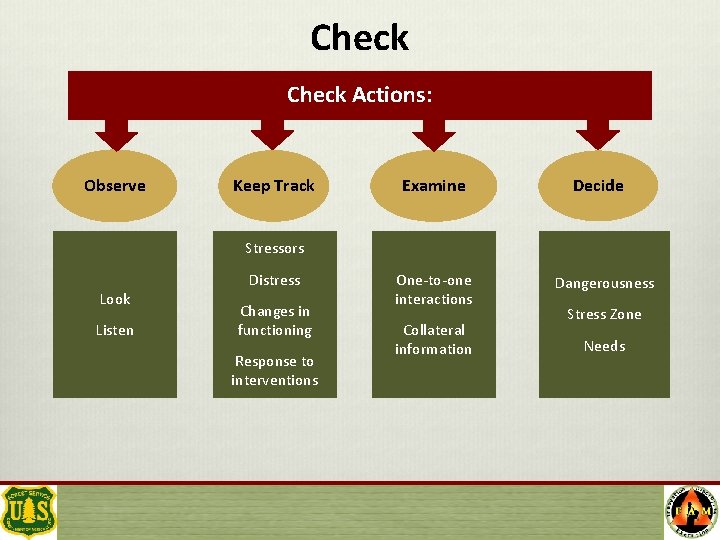
Check Actions: Observe Keep Track Examine Decide Stressors Look Listen Distress Changes in functioning Response to interventions One-to-one interactions Dangerousness Collateral information Needs Stress Zone
Look, Listen and Feel…
Check: Why is it Needed? § Those injured by stress may be the last to recognize it § Stigma can be an obstacle to asking for help § Stress zones and needs change over time § Risks from stress injuries may last a long time
Check Tool: “OSCAR” Communication Observe: Actively observe behaviors; look for patterns State observations: State your observations of the behaviors; just the facts without interpretations or judgments Clarify Role: State why you are concerned about the behavior to validate why you are addressing the issue Ask why: Seek clarification; try to understand the other person's perception of the behaviors Respond: Clarify concern if indicated; discuss desired behaviors and state options in behavioral terms
Check: Indicators of Severe Stress Reactions I § Not feeling in control of one’s body, emotions or thinking § Significant and persistent negative changes in behavior / habits § Frequently unable to fall or stay asleep § Numb, removed from all feelings § Becoming uncharacteristically more isolated from others § Excessive inner turmoil § Wanting to avoid any reminders or triggers related to stress § Significant anxiety about reminders or places related to an incident
Check: Indicators of Severe Stress Reactions II § Becoming obsessive about information or factors related to an incident § Waking up from recurrent or vivid nightmares § Feeling persistent, intense guilt or shame § Feeling unusually remorseless § Experiencing attacks of panic, anger or rage § Loss of memory or the ability to think rationally § Inability to enjoy usually pleasurable activities § Loss of grounding in previously held moral values
Self-Awareness Stress Indicators § Fatigue § Having a hard time focusing § Being short on the fuse § Not exercising § Not doing the things you like § Watching more television § Nervous habits that others might point out, like whistling § Calling home more often
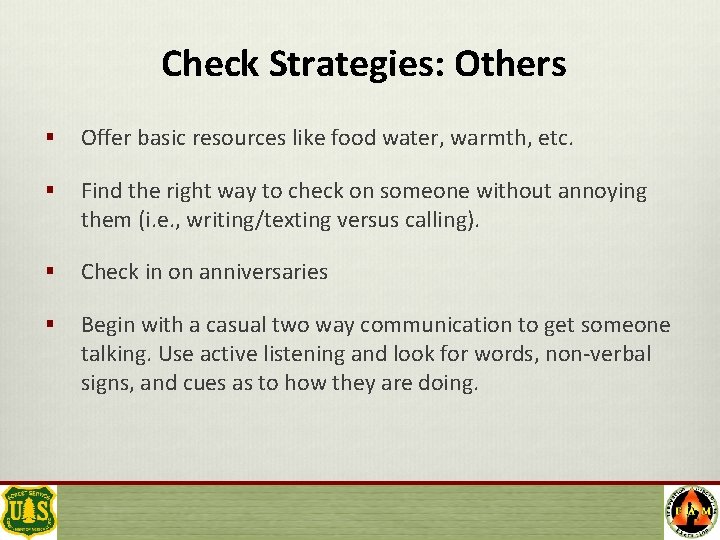
Check Strategies: Others § Offer basic resources like food water, warmth, etc. § Find the right way to check on someone without annoying them (i. e. , writing/texting versus calling). § Check in on anniversaries § Begin with a casual two way communication to get someone talking. Use active listening and look for words, non-verbal signs, and cues as to how they are doing.
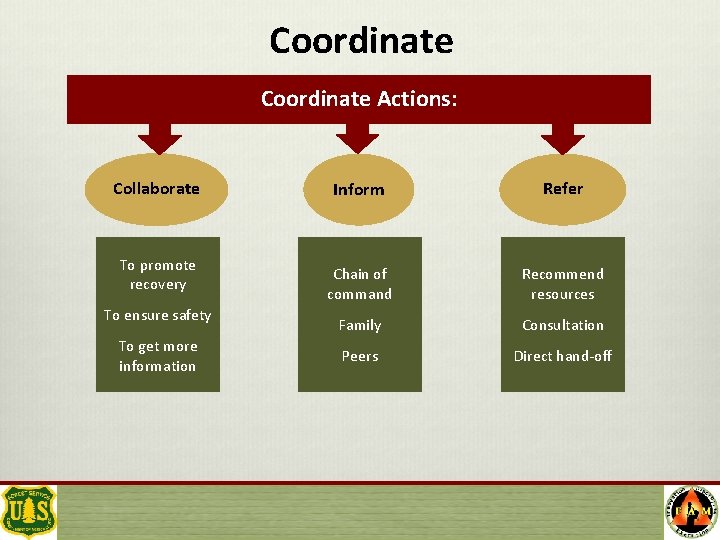
Coordinate Actions: Collaborate To promote recovery To ensure safety To get more information Inform Refer Chain of command Recommend resources Family Consultation Peers Direct hand-off
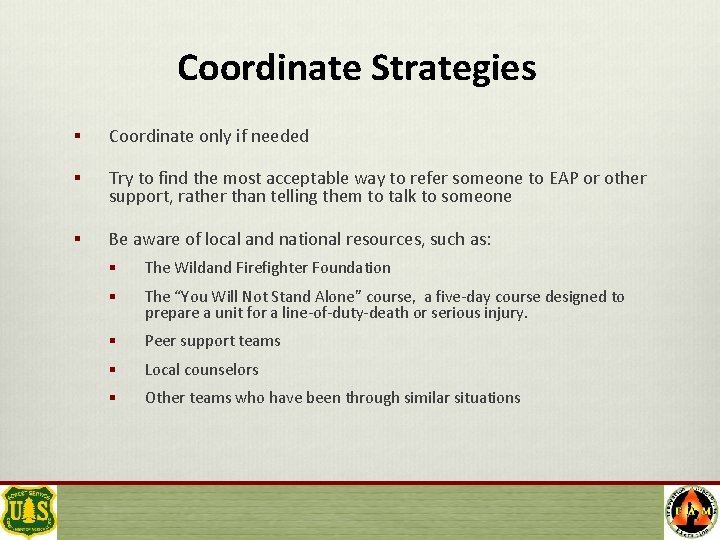
Coordinate Strategies § Coordinate only if needed § Try to find the most acceptable way to refer someone to EAP or other support, rather than telling them to talk to someone § Be aware of local and national resources, such as: § The Wildand Firefighter Foundation § The “You Will Not Stand Alone” course, a five-day course designed to prepare a unit for a line-of-duty-death or serious injury. § Peer support teams § Local counselors § Other teams who have been through similar situations
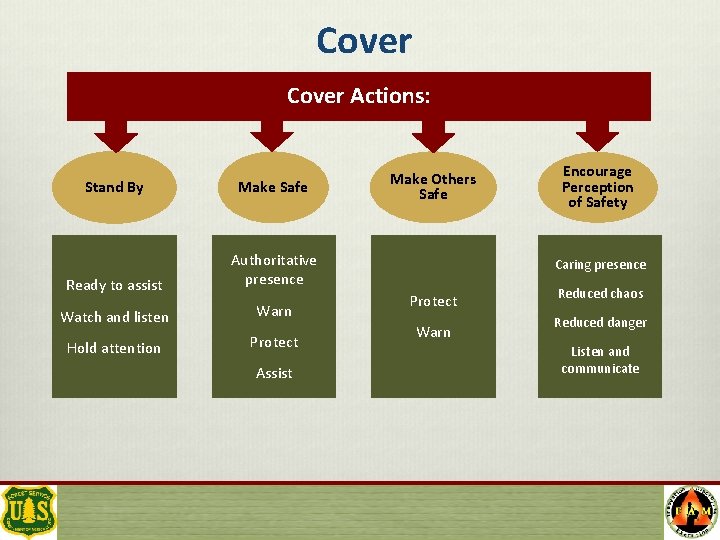
Cover Actions: Stand By Make Safe Ready to assist Authoritative presence Watch and listen Warn Hold attention Protect Assist Make Others Safe Encourage Perception of Safety Caring presence Protect Warn Reduced chaos Reduced danger Listen and communicate
Examples of Need for Cover § A fire with a lot of fatalities caused firefighters to shift their sense of safety towards a need to look out for themselves because they felt the agency was not looking out for them. ” § “In one fire with fatalities, to protect firefighters from media or onlookers, a supervisor attempted to limit crewmembers from leaving the station and from communicating with others. This caused firefighters to feel mistrust and resentment. § Even though his crew uses a learning model, a firefighter still feels like every incident is negatively evaluated, as in “how did you screw up? ” § A supervisor set the tone of an unsafe social environment by cultivating a judgmental attitude in crew members for whoever didn’t fit with the unspoken norms to be cool or tough. § After I large fire, there was a video on the Internet with an hours. A few wives found out their husbands were killed by seeing the video on Facebook.
Cover Strategies: Self § Find those people, places, or actions that feels safe to you and call on them when you need to feel more safe. § When you feel unsafe, distract yourself by focusing on something near you or your own breath or thought (i. e. , counting). § Realize that no one is perfect and everyone is going to have strengths and vulnerabilities – be aware of your own.
Cover Strategies: Others § Slowly implement SFA actions into any organization so it is normal well in advance of anything happening. § Make it a matter of policy to get people to cover as soon as possible after a difficult fire (i. e. , a hotel, or out of the fire camp, or back to family. § Depending on what a person is doing and how they are responding, adjust communication with that person to be more abrupt or directive if it’s necessary to keep them safe. § Educate firefighters about the physiological response to horror or life threat, to minimize the shock of their own potential stress responses. § After line of duty deaths, assign a trusted family liaison who is also given support for the work they do.
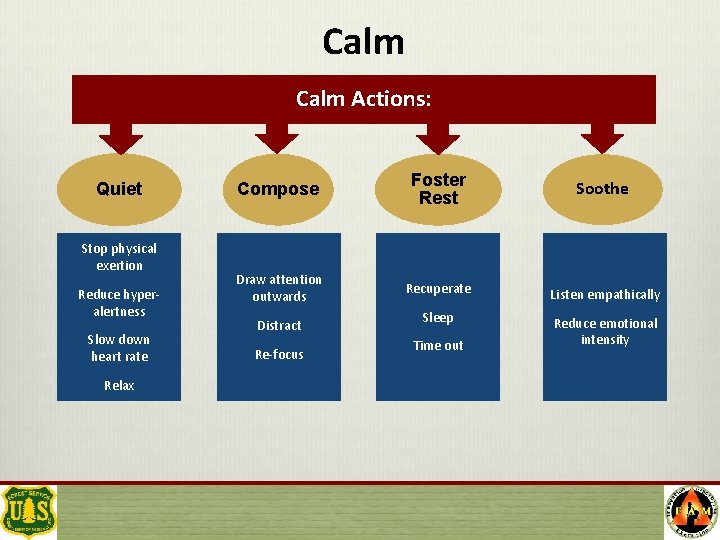
Calm Actions: Quiet Stop physical exertion Reduce hyperalertness Slow down heart rate Relax Compose Foster Rest Soothe Draw attention outwards Recuperate Listen empathically Sleep Reduce emotional intensity Distract Re-focus Time out
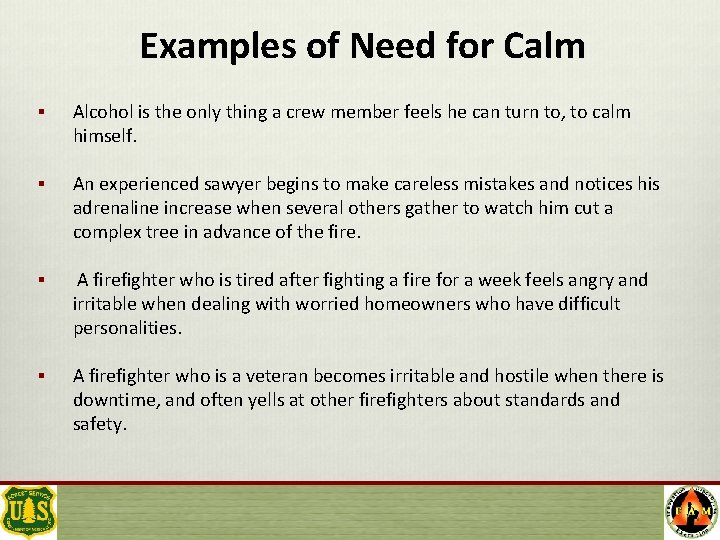
Examples of Need for Calm § Alcohol is the only thing a crew member feels he can turn to, to calm himself. § An experienced sawyer begins to make careless mistakes and notices his adrenaline increase when several others gather to watch him cut a complex tree in advance of the fire. § A firefighter who is tired after fighting a fire for a week feels angry and irritable when dealing with worried homeowners who have difficult personalities. § A firefighter who is a veteran becomes irritable and hostile when there is downtime, and often yells at other firefighters about standards and safety.
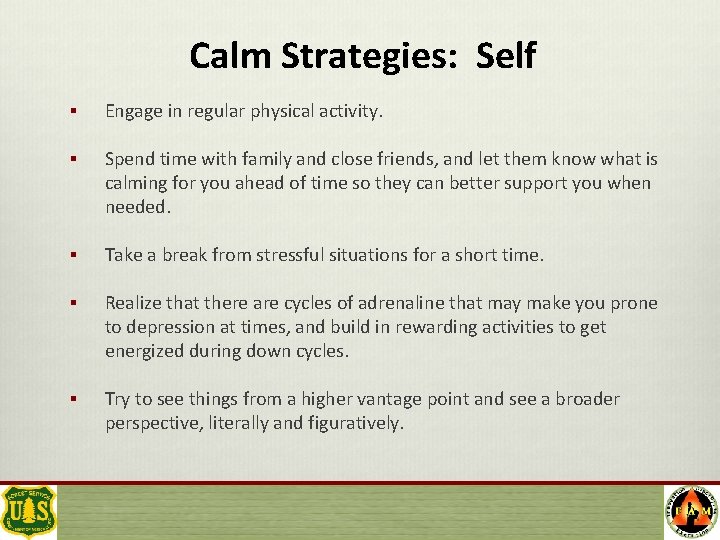
Calm Strategies: Self § Engage in regular physical activity. § Spend time with family and close friends, and let them know what is calming for you ahead of time so they can better support you when needed. § Take a break from stressful situations for a short time. § Realize that there are cycles of adrenaline that may make you prone to depression at times, and build in rewarding activities to get energized during down cycles. § Try to see things from a higher vantage point and see a broader perspective, literally and figuratively.
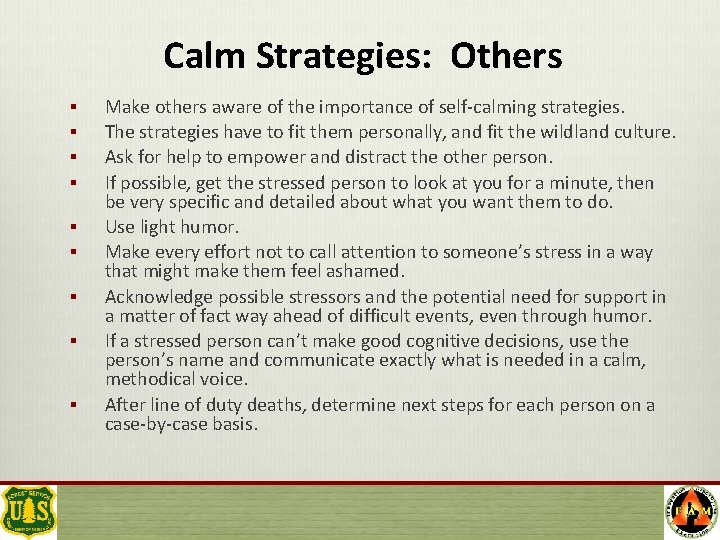
Calm Strategies: Others § § § § § Make others aware of the importance of self-calming strategies. The strategies have to fit them personally, and fit the wildland culture. Ask for help to empower and distract the other person. If possible, get the stressed person to look at you for a minute, then be very specific and detailed about what you want them to do. Use light humor. Make every effort not to call attention to someone’s stress in a way that might make them feel ashamed. Acknowledge possible stressors and the potential need for support in a matter of fact way ahead of difficult events, even through humor. If a stressed person can’t make good cognitive decisions, use the person’s name and communicate exactly what is needed in a calm, methodical voice. After line of duty deaths, determine next steps for each person on a case-by-case basis.
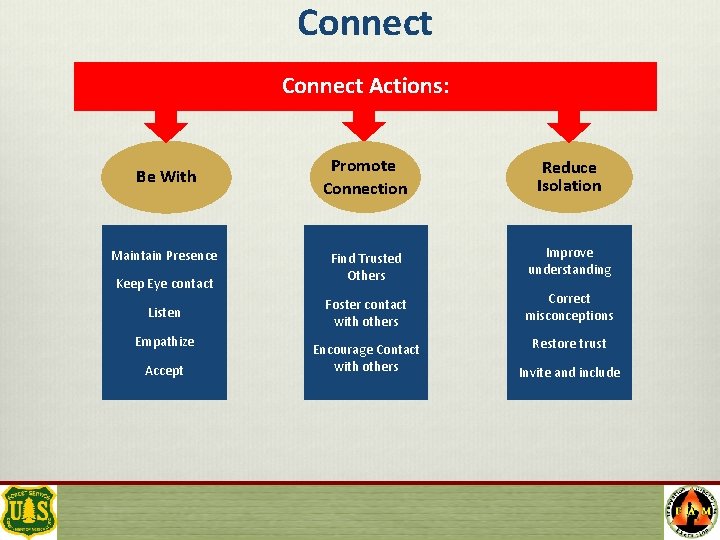
Connect Actions: Be With Maintain Presence Keep Eye contact Listen Empathize Accept Promote Connection Reduce Isolation Find Trusted Others Improve understanding Foster contact with others Correct misconceptions Encourage Contact with others Restore trust Invite and include
Three Types of Social Support § Instrumental support: the provision of material aid § Informational support: the provision of relevant information intended to help the individual cope with current difficulties § Emotional support: the expression of empathy, caring, reassurance and provision of opportunities for emotional expression and venting
Examples of Need for Connect § A firefighter’s sense of connection with fellow crew members falls off when he is not in close proximity in off-season, and he gets depressed. § A near miss makes crew members question the judgment and skill of those involved. § A firefighter gets ostracized because he yells out in fear when he is hit with a falling branch, which violates cultural norms about toughness. § A female firefighter married a firefighter who was gone three months when their daughter was born, and she didn’t have any family close by. She worked full time and took care of the home front. Hearing that he was in harm’s way and knowing that she wouldn’t hear his voice for another 4 -5 days was very stressful. 38 38
Connect Strategies: Self § Know the value of good mentors and friends. § Surround yourself with people who are genuine, authentic, and honest. § Make friends with people you can be yourself with, and talk with about what bothers you. § Discipline yourself to have conversations people who know you well enough to know when something is bothering you. § Reprioritize your schedule to spend more time with those who mean the most to you.
Connect Strategies I: Others § Hold the crew accountable for treating each other with respect. § If someone has retreated because of an incident, find ways to indirectly include them in projects and create collaborative opportunities with peers, to get them back into doing something meaningful. § With introverts, bring them back being connected after they recharge, whatever that looks like for them. § If someone is in the orange/red zone and resistant to getting support, and they trust you, don’t be afraid to be more authoritative in getting them the help they need. § In the middle of intensive stress, keep people moving get them engaged in activities that facilitate talking while you do things. For instance, while moving, have people briefly report out on successes, loose ends, and their plan for the next 24 hours.
Connect Strategies II: Others § Depending on your role, don’t be afraid to sit and just listen and be comfortable letting a stressed person talk. The fact that you’re in the same culture carries a lot of weight and can be more helpful than talking to anyone else. § Keep calling, texting, and writing letters to the families and co-workers of fallen firefighters. Regardless if they pick up the phone or not, the fact that someone remembers them on an anniversary date, or on any random day, is what is helpful.
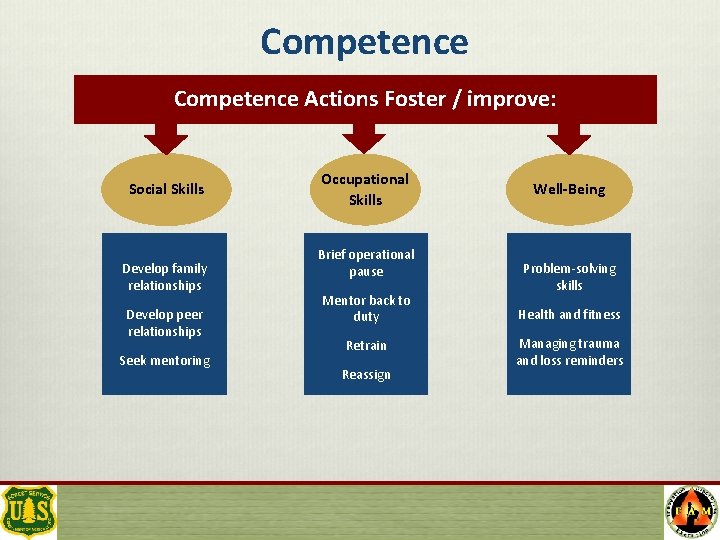
Competence Actions Foster / improve: Social Skills Develop family relationships Develop peer relationships Seek mentoring Occupational Skills Brief operational pause Well-Being Problem-solving skills Mentor back to duty Health and fitness Retrain Managing trauma and loss reminders Reassign
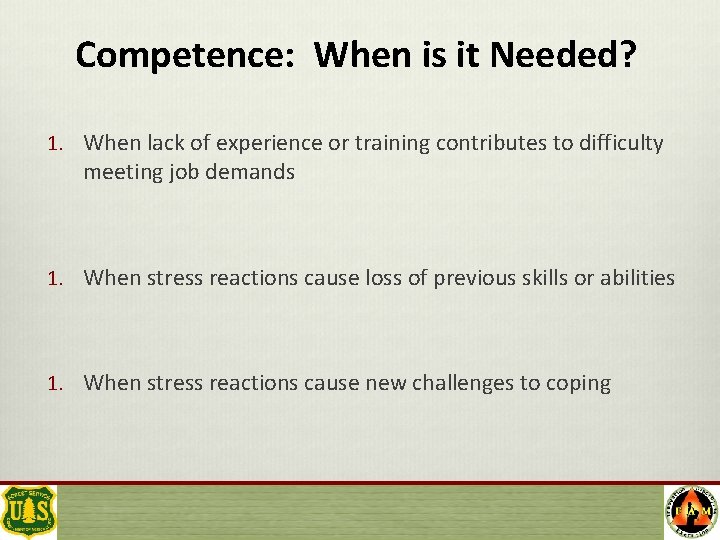
Competence: When is it Needed? 1. When lack of experience or training contributes to difficulty meeting job demands 1. When stress reactions cause loss of previous skills or abilities 1. When stress reactions cause new challenges to coping
Examples of Need for Competence § A firefighter makes a mistake cutting a tree, and the tree falls the wrong direction, causing his saw partner to run. He is shaken and avoids sawing for fear he’ll seriously hurt himself or someone else. § A firefighter who narrowly escaped dying experiences persistent anxiety which he medicates with alcohol. § An firefighter veteran who had life threat and wear-and-tear stress injuries loses the ability to stay calm when dealing with co-workers. § The solar eclipse created a situation that put a lot of stress on people because it was one that the crews had no idea how it was going to turn out, and had never dealt with before with thousands of people showing up like that. 44 44
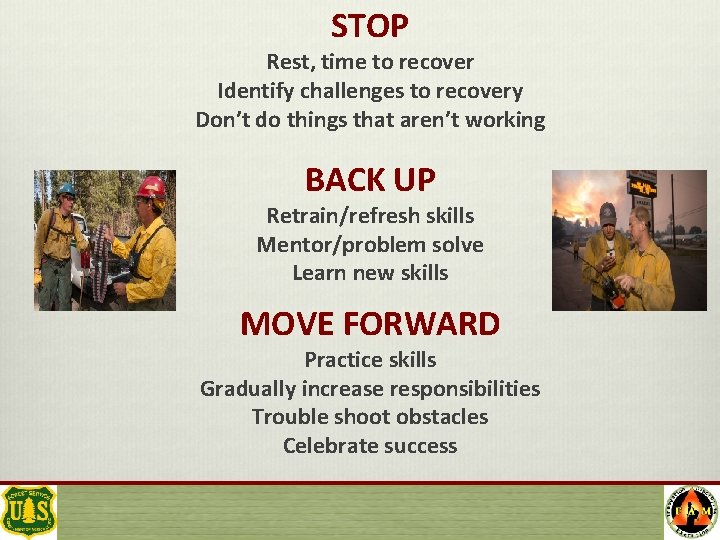
STOP Rest, time to recover Identify challenges to recovery Don’t do things that aren’t working BACK UP Retrain/refresh skills Mentor/problem solve Learn new skills MOVE FORWARD Practice skills Gradually increase responsibilities Trouble shoot obstacles Celebrate success
Competence Strategies: Self § If you’re under too much stress, do something that is easy for you to give you a sense of accomplishment. § Be more disciplined in taking whatever healthy steps support you in dealing with stress. § Regularly reflect on the balance between the satisfaction of fulfilling work duties and the personal sacrifices you are making. Be prepared to adjust behaviors and expectations if that balance changes over time.
Competence Strategies I: Others § If someone is psyching him or herself out, because they are overthinking give them simple systematic ways to occupy their thoughts, like counting random numbers, or counting steps. § Mentor others by figuring out how the person is going to best learn something, and potentially teach the same strategy to others. § If someone is struggling to learn something, find someone who matches their personality, somebody they can relate to and communicate with, and assign that person to them. § Start with absolute basics , and provide stepped escalation of stress and responsibility in a calculated manner.
Competence Strategies II: Others § Give the stressed individual responsibility little by little, so that they are more and more in control, to build a past foundation so that when they are in a situation where serious mistakes could happen, they know that there is a high likelihood that they will be okay, and if they’re not, it’s not because they didn’t try. § After mistakes, help the person become more competent, to help with shaken confidence. Remind them that everyone is human, that all reactions are acceptable in the right context, and help them to figure out what they might do differently in the future. § As a leader, if your crew’s sense of duty and commitment lead to overworking, make sure that they're getting rest, and advocate for them. § Before you have a conversation with somebody who you think needs time off, make sure taking time off is feasible for that individual.
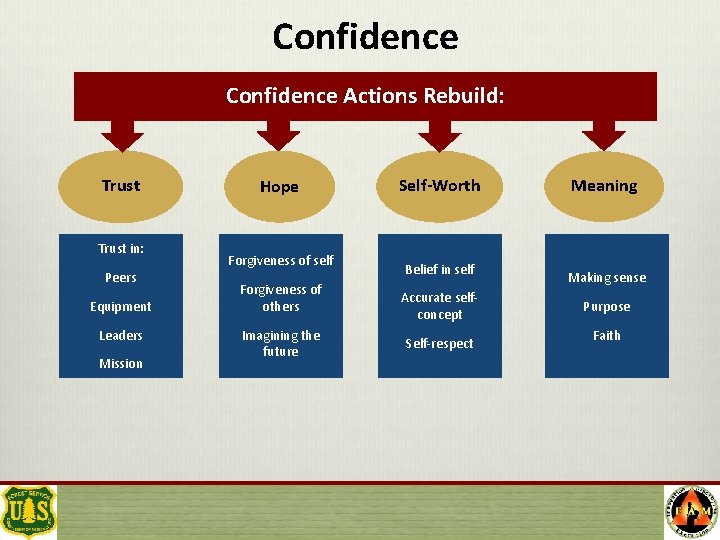
Confidence Actions Rebuild: Trust in: Peers Equipment Leaders Mission Hope Forgiveness of self Forgiveness of others Imagining the future Self-Worth Belief in self Accurate selfconcept Self-respect Meaning Making sense Purpose Faith
Examples of Need for Confidence § § A fire with a lot of fatalities makes a crewmember see that bad things happen to great firefighters even when they do everything right. He starts to question whether fire suppression is worth the risk. After a critical incident, a leader repeatedly questions the events and decisions leading up to the event. He questions whether he is capable of leading others in high-risk situations in the future. He no longer trusts himself. A young firefighter has a question about risks on the job and the way things are being done. He becomes unsure whether what they are doing is serving the land or the people. While his crew is really good at putting fires out quickly and efficiently, he often disagrees with effects of fire suppression on the land wonders about the long-term ecological consequences. You see a change in non verbal cues indicating that a crewmember has low self-confidence, such as slouched posture, the way he is wearing his hat, being hunched over, not standing at attention with shoulders back, not squared away like he normally would be, no eye contact, or a change in healthy routines, such as skipping PT. 50 50
Confidence Strategies: Self § Use small triumphs to build confidence. If you have self-doubt, read more self-help books or tactical reports. § After particularly traumatic situations or losses, don’t push yourself to “process” the situation in any particular time frame, but if something triggers you, give yourself time and space to think it through, integrate it, talk to someone, have emotions, find ways to makes sure it doesn’t cause you to get stuck in suffering, and / or make sense of it. § Use the wisdom gained from hard experiences to reconfirm your values, make changes in your life, appreciate what you value, or help others. § If you have tried to mentor someone and cannot get them up to speed, realize that not all personalities fit this job, and sometimes you have to walk away.
Confidence Strategies: Other § If a firefighter is feeling bad about some reaction he/she had, help them counter their guilt by normalizing their reactions, and letting them know they are not alone in experiencing stress reactions. § If young firefighters are struggling with confidence, give them tasks that they can be successful at, solicit their opinions, set them up for success, or find some way they can contribute to the crew. § If firefighters show severe stress, talk with them, work with them, give them relevant reading materials, and connect them to people who have dealt with similar things. If they continue to get triggered, mentor them to consider their options, including leaving the fire service.
Confidence Strategies: Other II § Consider involving other disciplines or mentors/peers who can implement Confidence either more effectively or in a complementary way to you. § Improve communication, mentoring and information about mission and acknowledgement of person’s value. § Make efforts to confront stigma about stress reactions § Foster and support doing things that will alleviate and mitigate harmful effects of stress. § Help to re-establish belief in colleagues who have stress reactions.
Growth and Resilience § Accept – “It is what it was” § Actualize – “Live in today” § Repair – “Repair the future” move forward with a sense of purpose and hope
Key Point Emphasis § SFA is collaborative, experimental, non-judgmental § Timing and context are important § SFA is not meant to address all ranges of issues § Flexibility and “tiny steps” are emphasized § Mentoring and problem solving are highlighted § Bridge to higher care when indicated
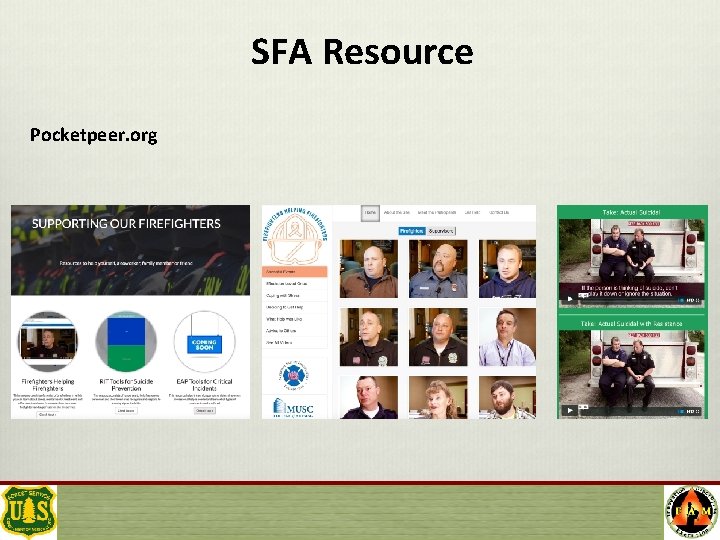
SFA Resource Pocketpeer. org