
Stress Coping Lifeevents Stress Biology Coping Health Impact
Stress & Coping Life-events, Stress Biology, Coping & Health Impact Dr. Anindya Das AIIMS Rishikesh 1
Stress: Definition An internal state due to physical demands on the body (disease, exercise, extreme of temp. /hunger) environmental or social situations judged to be potentially harmful or uncontrollable Stressors: physical, environmental or social causes of stress Response to stressors: Physical/ bodily response Psychological/ emotional response 2
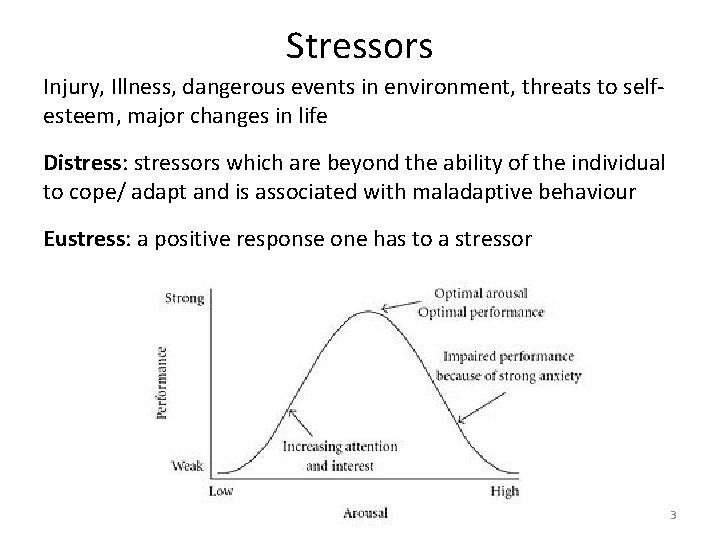
Stressors Injury, Illness, dangerous events in environment, threats to selfesteem, major changes in life Distress: stressors which are beyond the ability of the individual to cope/ adapt and is associated with maladaptive behaviour Eustress: a positive response one has to a stressor 3
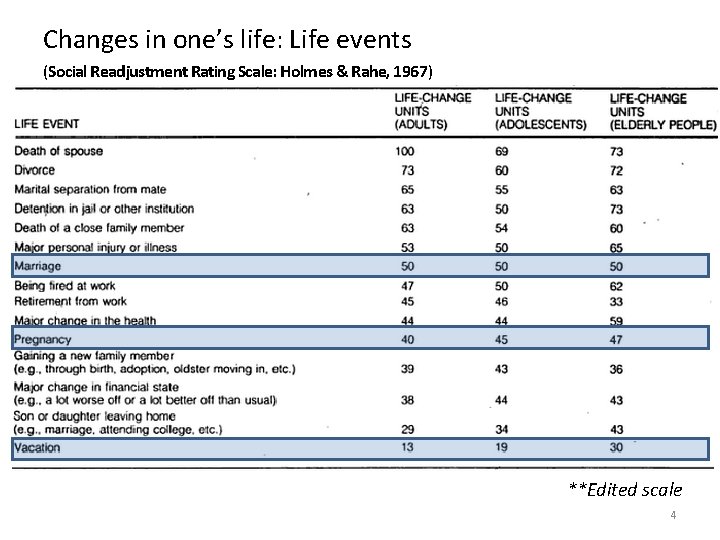
Changes in one’s life: Life events (Social Readjustment Rating Scale: Holmes & Rahe, 1967) **Edited scale 4
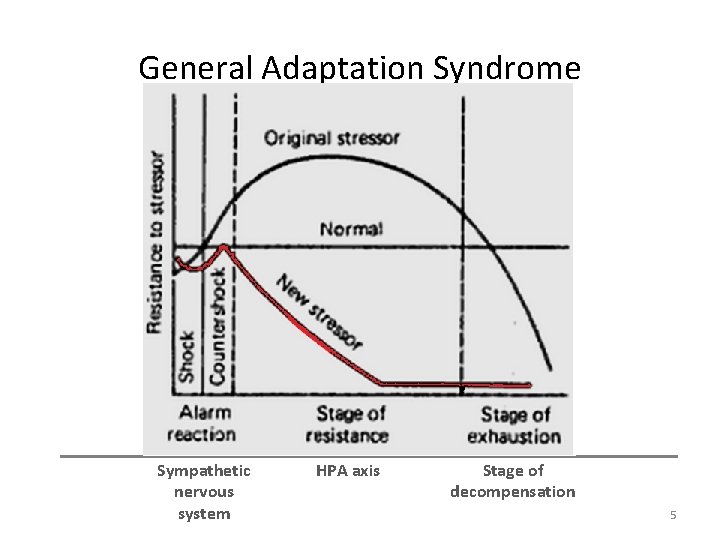
General Adaptation Syndrome Sympathetic nervous system HPA axis Stage of decompensation 5
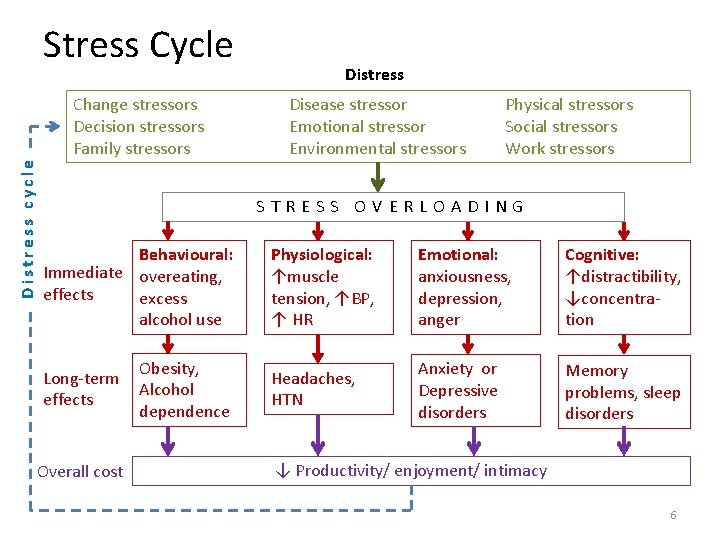
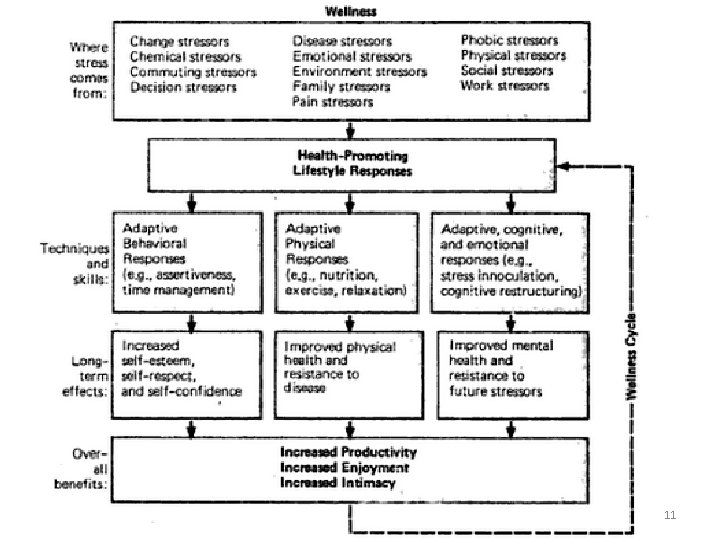
Stress Cycle Distress cycle Change stressors Decision stressors Family stressors Distress Disease stressor Emotional stressor Environmental stressors Physical stressors Social stressors Work stressors STRESS OVERLOADING Behavioural: Immediate overeating, effects excess alcohol use Physiological: ↑muscle tension, ↑BP, ↑ HR Emotional: anxiousness, depression, anger Cognitive: ↑distractibility, ↓concentration Obesity, Long-term Alcohol effects dependence Headaches, HTN Anxiety or Depressive disorders Memory problems, sleep disorders Overall cost ↓ Productivity/ enjoyment/ intimacy 6
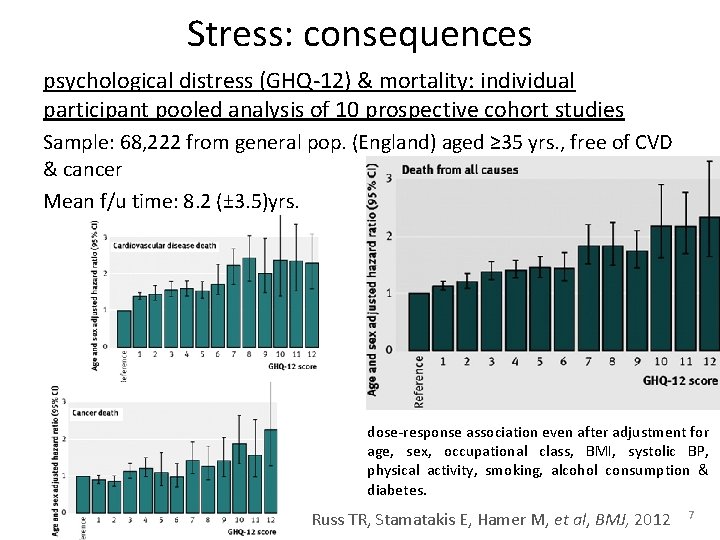
Stress: consequences psychological distress (GHQ-12) & mortality: individual participant pooled analysis of 10 prospective cohort studies Sample: 68, 222 from general pop. (England) aged ≥ 35 yrs. , free of CVD & cancer Mean f/u time: 8. 2 (± 3. 5)yrs. dose-response association even after adjustment for age, sex, occupational class, BMI, systolic BP, physical activity, smoking, alcohol consumption & diabetes. Russ TR, Stamatakis E, Hamer M, et al, BMJ, 2012 7
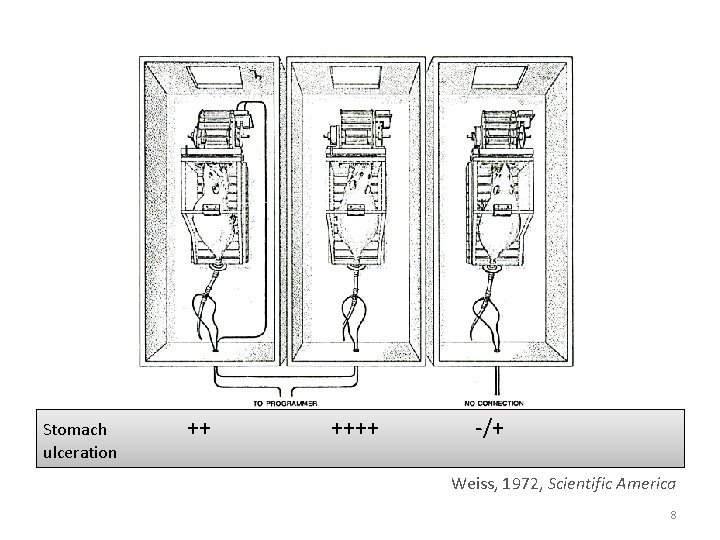
Stomach ulceration ++ ++++ -/+ Weiss, 1972, Scientific America 8
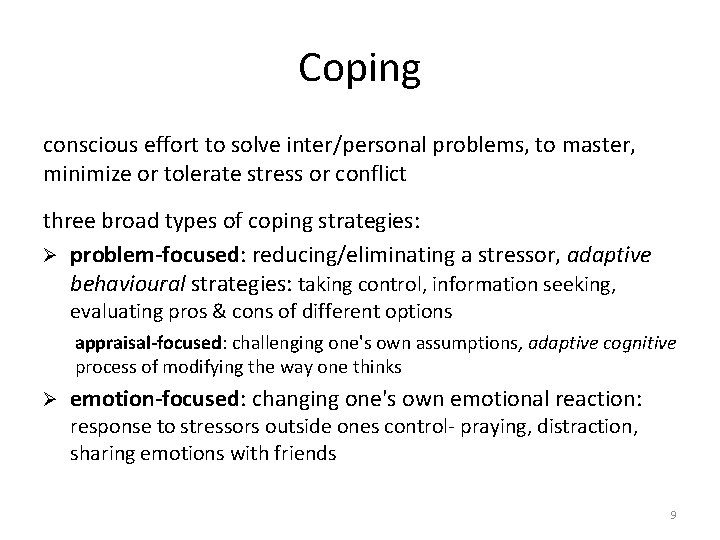
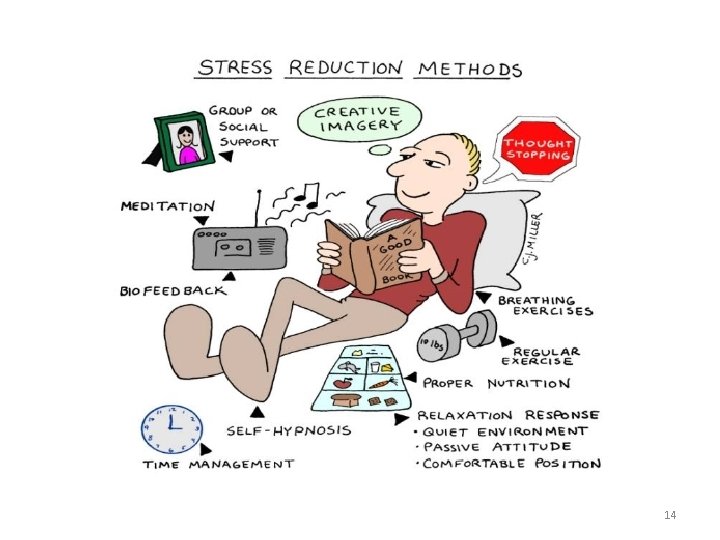
Coping conscious effort to solve inter/personal problems, to master, minimize or tolerate stress or conflict three broad types of coping strategies: Ø problem-focused: reducing/eliminating a stressor, adaptive behavioural strategies: taking control, information seeking, evaluating pros & cons of different options appraisal-focused: challenging one's own assumptions, adaptive cognitive process of modifying the way one thinks Ø emotion-focused: changing one's own emotional reaction: response to stressors outside ones control- praying, distraction, sharing emotions with friends 9
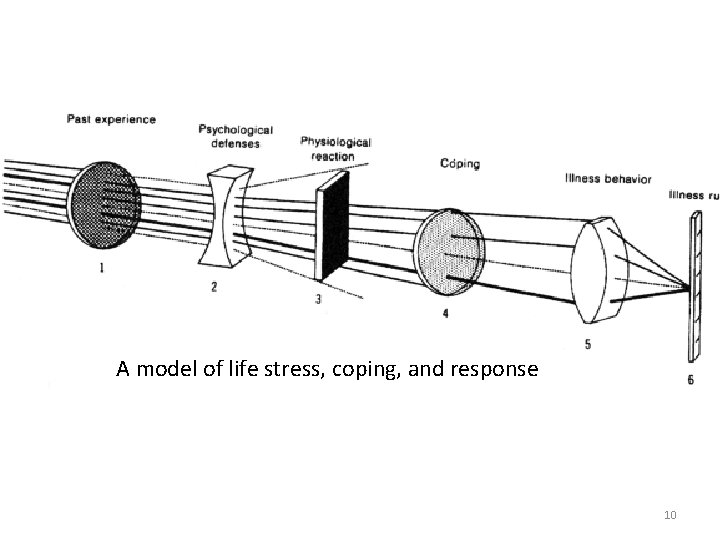
A model of life stress, coping, and response 10
11
Stressors & Psychiatric Disorders • Definitive etiological Role: Acute Stress Reaction, Adjustment disorder, PTSD • Stress Diathesis Model: predisposition/vulnerability and stressful life experience • Stress as precipitator or trigger, relapsing and perpetuating factor 12
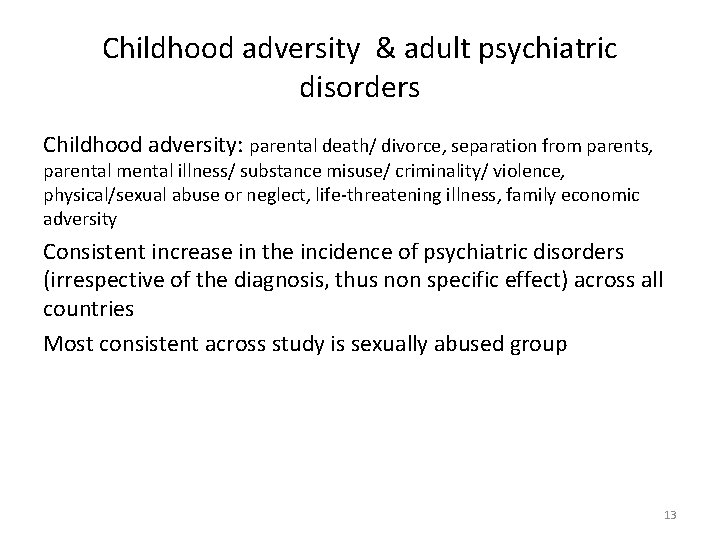
Childhood adversity & adult psychiatric disorders Childhood adversity: parental death/ divorce, separation from parents, parental mental illness/ substance misuse/ criminality/ violence, physical/sexual abuse or neglect, life-threatening illness, family economic adversity Consistent increase in the incidence of psychiatric disorders (irrespective of the diagnosis, thus non specific effect) across all countries Most consistent across study is sexually abused group 13
14
Thanks Bibliography: − Morgan & King’s Introduction to Psychology − Kaplan and Sadock's Comprehensive Textbook of Psychiatry 15
- Slides: 15